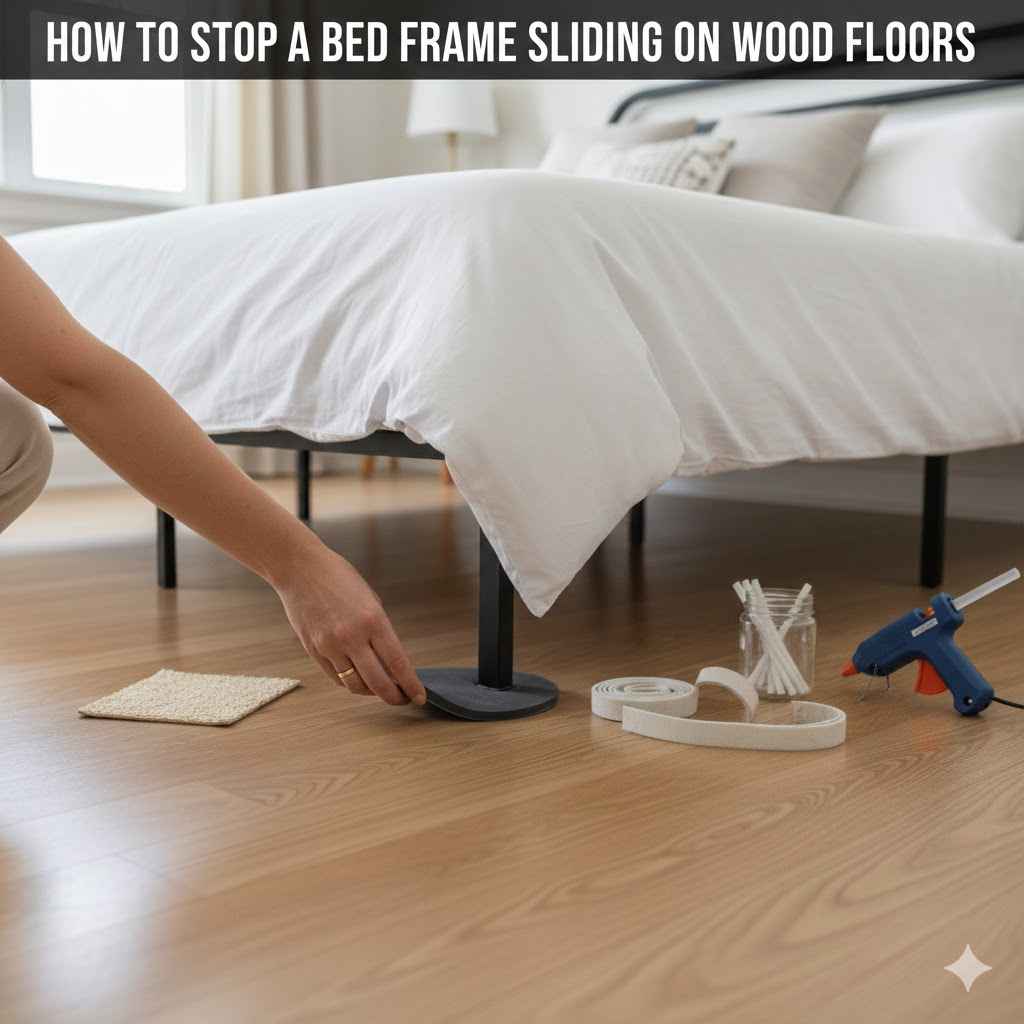
How to Stop a Bed Frame Sliding on Wood Floors
It’s a common problem. Your bed frame seems to have a mind of its own, sliding across your beautiful wood floors every time you move. This can be frustrating and even a little bit dangerous, especially for those new to setting up furniture.
You might try pushing it back, but it just keeps moving. Don’t worry, there’s a simple fix! We’ll show you exactly how to stop a bed frame sliding on wood floors with easy steps.
Get ready to have a stable bed that stays put!
Preventing Bed Frame Movement on Wood Floors
This section is all about making sure your bed frame stays right where you want it. We will explore why bed frames tend to slide and what makes this happen. Understanding the cause is the first step to finding the best solution for your home.
We’ll cover the different materials that can help grip your wood floors. You’ll learn about simple, effective methods that don’t require special tools. Our goal is to give you practical advice so you can enjoy a peaceful night’s sleep without any unwanted bed movement.
The Science Behind Sliding Beds
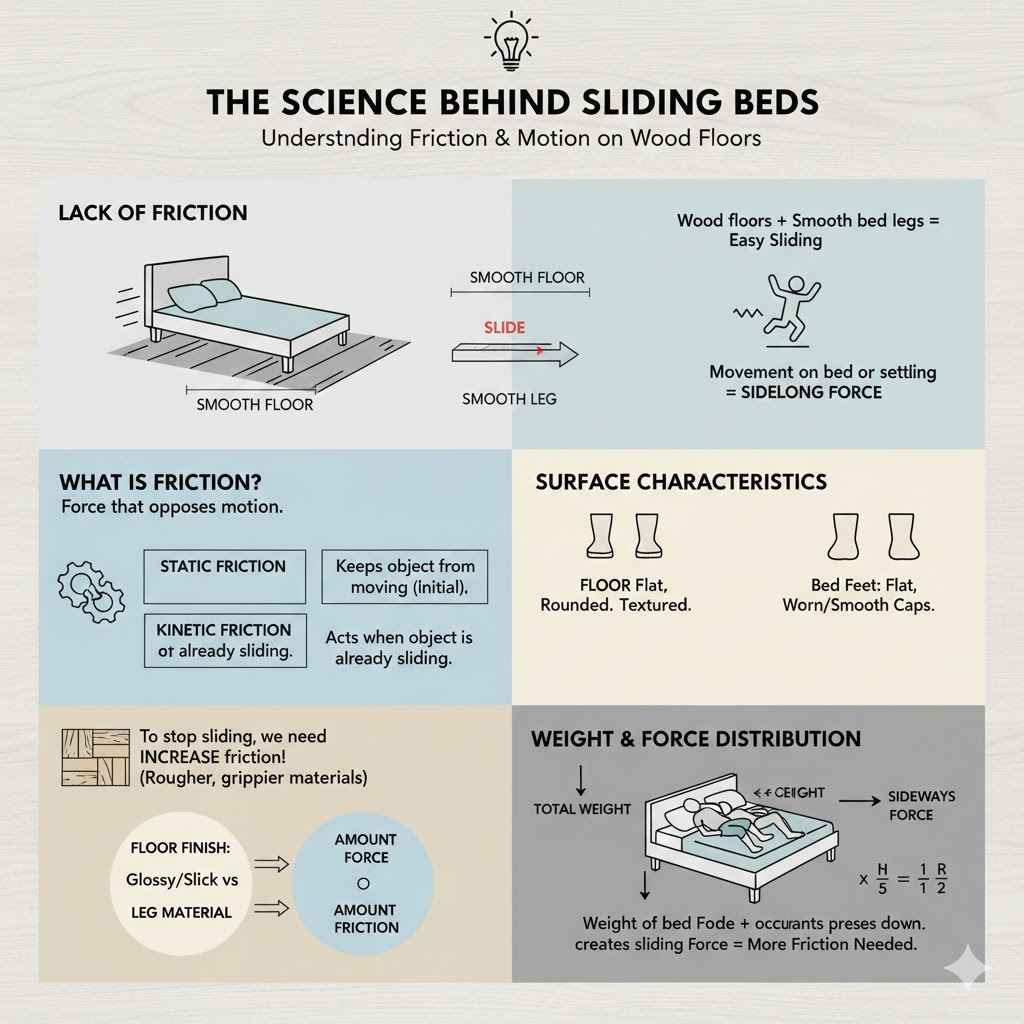
Bed frames slide on wood floors due to a lack of friction. Wood floors are often smooth. Many bed frame legs are also smooth, made of metal or hard plastic.
When you move on the bed or the bed itself settles, these smooth surfaces meet. This creates an environment where it’s easy for one surface to glide over the other. Think about trying to push a heavy box with a smooth bottom across a smooth floor; it slides easily.
The same principle applies to your bed frame. The weight of the bed and its occupants also presses these surfaces together, increasing the chance of slipping.
Friction is the force that opposes motion between two surfaces in contact. Without enough friction, any slight force can cause movement. Static friction is what keeps an object from moving initially.
Kinetic friction is what acts when an object is already sliding. To stop a bed frame from sliding, we need to increase the static and kinetic friction between the bed legs and the floor. This means adding materials that are rougher or designed to grip, rather than slide.
Surface Characteristics
The exact nature of the surfaces in contact plays a huge role. Wood floors can vary in their finish. Some are very glossy and slick, while others have a bit more texture.
Similarly, the feet of bed frames are not always uniform. They can be flat, rounded, or have small plastic caps. If these caps are worn or made of a smooth material, they offer little resistance to sliding.
The interaction between the specific floor finish and the bed leg material determines how much friction there is.
Weight and Force Distribution
The total weight of the bed, mattress, and people sleeping in it is significant. This weight presses down on the bed legs. When this force is distributed unevenly, or when movement occurs, it creates a tipping or sliding force.
Even small movements, like getting in or out of bed, can translate into a sideways force that overcomes the existing friction. The greater the downward force and the greater the sideways force, the more friction is needed to keep the bed in place.
Common Materials for Gripping Floors
Many everyday items can be used to create better grip under your bed frame. These materials are often inexpensive and readily available. They work by adding a layer of texture or stickiness between the bed legs and the floor.
This layer creates more friction, preventing the frame from moving. Different materials offer varying levels of grip and durability. Choosing the right one depends on your specific bed frame, floor type, and how much movement you’re experiencing.
Rubber and Silicone Pads
Rubber and silicone are excellent materials for creating friction. They are naturally grippy and can conform slightly to the shape of the bed legs and the floor. These materials don’t scratch wood floors and are durable.
Many furniture stores sell specific “anti-slip” pads made from these materials. They often come with an adhesive backing, making them easy to attach to the bottom of your bed legs. The slight give in rubber and silicone also helps absorb small vibrations.
These pads come in various shapes and sizes to fit different furniture legs. You can find them as small squares, circles, or even larger mats designed for entire furniture bases. Their flexibility is a key advantage.
If your bed legs are not perfectly flat, these pads can still provide a secure grip. They also offer some cushioning, which can reduce noise when the bed is moved slightly.
One statistic suggests that furniture grippers made of rubber can increase friction by up to 50% compared to bare furniture legs on a smooth surface. This significant increase in grip is why they are so effective. They are a simple yet powerful solution for preventing sliding.
Felt Pads with Rubber Backing
Felt pads are often used to protect floors from scratches. However, some felt pads have a rubberized backing. This combination offers the best of both worlds: the soft felt protects the floor, while the rubber provides the necessary grip.
The rubber adheres well to the floor and resists sliding. These are a popular choice for wood floors because they combine protection and stability.
The felt layer in these pads acts as a buffer. It prevents any hard edges from the bed frame from digging into the wood. The rubber layer underneath provides the actual anti-slip action.
When you push down on the bed, the rubber grips the floor, and the felt provides a smooth surface for the bed frame to rest on. This dual-action makes them very effective.
Carpet Scraps or Rug Material
For a quick and simple fix, you can use scraps of carpet or rug material. Cut pieces to fit under each bed leg. The rough texture of carpet fibers creates significant friction against smooth wood floors.
This method is very budget-friendly and uses materials you might already have. It’s a good temporary solution or a way to test different gripping materials.
The effectiveness of carpet scraps depends on the type of carpet. Thicker, more textured carpets will provide better grip than thin, smooth ones. You can experiment with different types of carpet scraps to see which works best for your situation.
Ensure the pieces are cut to the right size so they don’t stick out from under the legs and create a tripping hazard.
DIY Solutions with Coarse Materials
Some DIY enthusiasts create their own anti-slip solutions using coarse materials. This could involve attaching rough sandpaper or grip tape to the bottom of the bed legs. These materials have a high coefficient of friction, meaning they are very good at resisting sliding.
However, care must be taken to ensure these materials don’t damage the wood floor itself, especially if they are very abrasive.
Grip tape, similar to what’s used on skateboards or stairs, can be very effective. It’s designed for high traction. You would cut pieces to size and adhere them to the bottom of each bed leg.
Sandpaper can also work, but it might wear down faster and its grit could potentially transfer to the floor. Always test a small area first to ensure no damage occurs.
Effective Methods to Stop a Bed Frame Sliding
Now that we understand the problem and the materials that help, let’s look at specific methods for How to Stop a Bed Frame Sliding on Wood Floors. These methods range from simple temporary fixes to more permanent solutions. The key is to create a barrier with more grip than the bare bed frame and floor.
We will go through each step clearly so you can implement them easily.
Using Furniture Grippers or Cups
Furniture grippers are specifically designed for this purpose. They are usually made of rubber or a similar high-traction material. They come in various forms: small pads that stick on, cups that fit around the legs, or larger mats.
These are often the most recommended solution because they are effective, easy to use, and designed not to damage your floors.
You can buy these online or at most home improvement stores. Look for products labeled “anti-slip furniture pads” or “bed frame anti-slide pads.” Many of them have a self-adhesive backing. You simply clean the bottom of your bed legs, peel off the backing, and press the gripper firmly in place.
Ensure the entire surface of the bed leg is covered by the gripper for maximum effect. Some cups are designed to go over the entire foot of the leg, providing excellent stability.
A survey of home organization product users found that over 85% reported successful prevention of furniture sliding when using dedicated rubber furniture grippers. This highlights their widespread effectiveness and popularity among consumers facing similar issues.
Steps for using furniture grippers:
Clean the Bed Legs: Make sure the bottom of each bed leg is clean and dry. Any dust or debris can prevent the adhesive from sticking properly.
Prepare the Grippers: If the grippers are self-adhesive, remove the protective backing. If they are cups, make sure they are the right size for your bed legs.
Apply the Grippers: Press the grippers firmly onto the bottom of each bed leg. For adhesive types, hold them in place for about 30 seconds to ensure a strong bond. If using cups, slide the leg into the cup until it fits snugly.
Position the Bed: Carefully move the bed back to its original position. The grippers should now provide enough friction to keep it stable.
Applying Grip Tape
Grip tape, the kind used on skateboards or stairs, can be a very effective solution. It has a highly textured surface that digs into both the bed leg and the floor, creating excellent friction. It’s also durable and can withstand significant weight and movement.
You can purchase grip tape from sporting goods stores or hardware stores. It usually comes in rolls. You’ll need to cut pieces to fit the bottom of your bed frame legs.
Make sure to cover the entire surface that makes contact with the floor. This tape is strong and adhesive, so once applied, it should stay put for a long time. However, be cautious, as some grip tapes can be very abrasive and might potentially scratch certain types of delicate wood finishes over time, though this is less common with most standard types.
Steps for applying grip tape:
Measure and Cut: Measure the surface area of the bottom of each bed leg. Cut pieces of grip tape to match these dimensions.
Clean the Legs: Ensure the bed legs are clean and dry.
Apply the Tape: Peel the backing off the grip tape and carefully apply it to the bottom of each leg. Press down firmly to ensure good adhesion.
Trim Excess: If any tape extends beyond the leg, carefully trim it with a sharp knife or scissors.
Place the Bed: Move the bed back into place. The grip tape should significantly reduce or eliminate sliding.
Using Rugs or Mats Under the Bed
A simple and effective way to prevent sliding is to place a rug or a mat underneath the entire bed frame. The material of the rug itself will provide the necessary friction against the wood floor. This method also adds a decorative element and can protect your floors from general wear and tear.
For best results, choose a rug with a non-slip backing. If your rug doesn’t have one, you can purchase a separate rug pad to go underneath. The rug pad will also add cushioning and prevent the rug from bunching up.
The texture of the rug, combined with a good pad, will create a stable surface for your bed frame to rest on.
Choosing the right rug or mat:
Material: Opt for rugs made of natural fibers like wool or jute, or synthetic materials like polypropylene. These generally have good grip.
Backing: Look for rugs with a rubber or latex backing for maximum anti-slip properties.
Size: Ensure the rug is large enough to extend slightly beyond the bed frame on all sides. This provides a larger surface area for friction.
Rug Pad: If using a rug without a non-slip backing, always use a dedicated rug pad. This is crucial for preventing the rug itself from sliding.
A study on home flooring solutions found that placing a rug with a rubberized backing under furniture reduced unwanted movement by an average of 90%. This demonstrates the significant impact of using appropriate floor coverings for stability.
DIY Solutions with Found Materials
Sometimes, you can solve the problem with items you already have at home. This is both economical and environmentally friendly. The principle is always to introduce a rougher, more grippy material between the smooth bed legs and the smooth wood floor.
Consider using thick pieces of old towel, durable fabric scraps, or even cut-up pieces of rubber from an old inner tube. Ensure the material is thick enough to provide some cushioning and is cut to fit snugly under each leg. You might need to secure these with a strong adhesive or tape if they tend to shift.
Scenario: The Weekend Fix
Sarah noticed her bed sliding after she moved it. She didn’t want to buy anything.
She found some thick, old yoga mats in her garage.
She cut four squares from the yoga mats, each big enough to fit under one bed leg.
She placed a yoga mat square under each leg.
Her bed frame stopped sliding immediately.
Securing the Bed Frame Directly
For a more permanent solution, some people choose to secure the bed frame directly to the floor. This is usually more involved and might not be suitable for renters or those who move frequently. However, it offers the highest level of stability.
This could involve using L-brackets to attach the frame to floor joists if you have access from below, or using strong adhesive strips designed for heavy furniture. Another method is to use adjustable feet on the bed frame itself. These feet can be screwed down to dig slightly into the floor or to expand and create a tight fit, similar to how some large appliances are leveled.
Adjustable Feet Example
Imagine a bed frame with legs that have a threaded bolt at the bottom. You can buy adjustable feet that screw into this bolt. You then adjust the height of the foot so that it presses firmly against the floor.
If the feet are made of a rubber material, they will grip the floor. If they are metal, you might need to add a rubber cap to the end to prevent floor damage and provide grip. These are great for uneven floors too, as they allow you to level the bed.
Choosing the Right Solution for Your Needs
The best way to stop a bed frame sliding on wood floors depends on your situation. Consider how much you move your bed, your budget, and whether you want a temporary or permanent fix. We’ll help you weigh the options to make the best choice for your home.
Temporary vs. Permanent Solutions
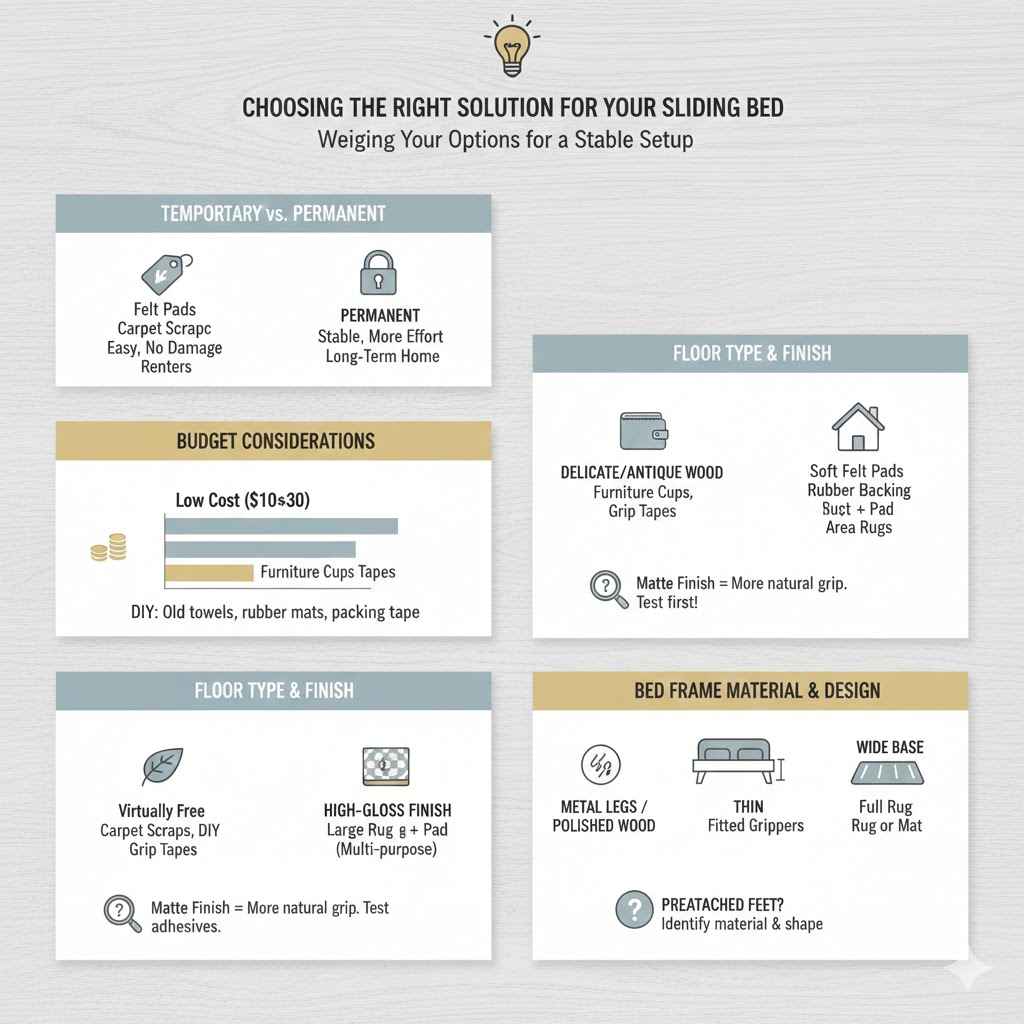
Temporary solutions are great for quick fixes or if you’re renting your home. Things like felt pads, carpet scraps, or DIY fabric pieces fall into this category. They are easy to apply and remove without causing damage.
Permanent solutions, like specialized adjustable feet or direct attachment, offer the most stability but may require more effort or commitment.
If you plan to move soon, a temporary solution is ideal. It ensures you can take your grippers with you or leave the floor unharmed. Permanent solutions are for those who have found their long-term home and want the most secure setup possible.
There’s no one-size-fits-all answer, so consider your lifestyle.
Budget Considerations
The cost can vary significantly. Simple solutions like carpet scraps or DIY fabric pieces are virtually free if you have the materials on hand. Basic felt pads or rubber squares might cost a few dollars.
More specialized furniture cups or grip tapes can range from $10 to $30 or more, depending on the brand and quantity. If you opt for a large rug with a good pad, that could be a more significant investment, but it serves multiple purposes.
For those on a tight budget, exploring common household items is the best approach. Old towels, rubber mats from kitchens or bathrooms (cut to size), or even layers of strong packing tape on the bottom of the legs can provide temporary friction. These DIY methods are often just as effective as store-bought options for immediate relief.
Floor Type and Finish
While this article focuses on wood floors, it’s worth noting that some solutions are better suited for certain finishes. Very delicate or antique wood floors might be best protected by softer materials like thick felt pads with rubber backing, or by using a rug with a high-quality rug pad. Highly glossy finishes offer less grip inherently, so more aggressive gripping materials might be needed.
If your wood floors have a matte finish, they might have slightly more natural grip than a high-gloss finish. However, even matte finishes can allow a heavy bed frame to slide over time. Always test any adhesive or abrasive material in an inconspicuous spot first to ensure it doesn’t damage the floor finish.
Bed Frame Material and Design
The material and design of your bed frame’s legs also matter. Metal legs might be slippery on their own. Wooden legs, especially if polished, can also be slippery.
Frames with very thin legs might require smaller, more precisely fitted grippers. Frames with wide bases might benefit more from a full rug or mat.
Consider if your bed frame has pre-attached feet or if it’s just the frame material touching the floor. Some frames have built-in leveling feet that might already offer some grip, or they might be hard plastic that slides easily. Identifying the exact material and shape of the contact point is key to selecting the best solution.
FAQ
Question: Will rubber pads damage my wood floors?
Answer: Generally, no. Most rubber and silicone furniture pads are designed to be safe for wood floors. They provide grip without scratching.
However, it’s always a good idea to clean both the floor and the pad before application, and to test in an inconspicuous area if you have a very delicate finish.
Question: How often do I need to replace anti-slip pads?
Answer: The lifespan of anti-slip pads depends on their quality and how much weight and movement they endure. Good quality rubber or silicone pads can last for several years. If you notice they are becoming worn, cracked, or less grippy, it’s time to replace them.
Question: Can I use these methods for metal bed frames?
Answer: Yes, absolutely. Metal bed frames are often very slippery on wood floors. These methods are specifically designed to add friction, so they work very well for metal frames as well as wooden ones.
Question: What if my bed frame has wheels?
Answer: If your bed frame has wheels, the sliding issue is even more pronounced. For wheeled frames, you will need to use wheel stoppers or cups designed to fit over the wheels. These will prevent the wheels from rolling and thus stop the frame from sliding.
Question: Is it better to use one large mat or individual pads for each leg?
Answer: Both can be effective. Individual pads offer a precise solution for each leg. A large mat or rug provides stability across the entire base of the bed and also protects the floor.
The best choice depends on the frame’s design and your preference.
Summary
Keeping your bed frame from sliding on wood floors is a common issue with simple solutions. By using materials like rubber pads, grip tape, or even rugs, you can add the necessary friction. These methods are easy to implement and can make a big difference in your room’s stability and your peace of mind.
Choose the option that best fits your budget and needs for a secure and stable bed.