How to Stop a Sofa from Sliding on Floors
Is your sofa always moving on your pretty hardwood floors? It can be a real hassle, especially when you just want to relax. Many people find it tricky to keep their furniture in place, and beginners often get frustrated.
Don’t worry, though! It’s a common problem with simple fixes. We’ll walk you through easy steps to solve How to Stop a Sofa from Sliding on Hardwood Floors so your furniture stays put.
Get ready for some quick and effective solutions.
Fixing Sofa Slippage on Hardwood
Preventing Sofa Movement on Wood Floors
Sofas can slide around on smooth wood floors because of the friction between the furniture legs and the floor surface. This lack of grip can be annoying and even dangerous, causing furniture to move unexpectedly. Understanding the basic physics of friction is helpful here.
Friction is the force that opposes motion between two surfaces in contact. When the surface area of contact is small and smooth, like furniture legs on polished wood, the friction is low, making sliding easy.
This problem often pops up when people first set up their furniture or after cleaning their floors. Beginners might not realize how much a smooth surface can affect furniture stability. The good news is that there are many straightforward methods to increase friction and keep your sofa firmly in place.
We’ll explore different ways to tackle this common household issue, providing practical tips for lasting results.
Understanding Friction and Slippage
Friction is a force that resists motion when two surfaces rub against each other. Think about trying to slide a heavy box across a carpet versus a tiled floor. The carpet offers more resistance, meaning more friction.
On hardwood floors, the contact points are usually the small feet or legs of the sofa. If these are made of smooth material like metal or hard plastic, they have very little grip.
When you sit on the sofa, get up, or even walk past it, the slight forces applied can be enough to overcome this low friction. This causes the sofa to inch or even slide across the floor. The smoother the floor and the furniture legs, the more easily this slippage occurs.
It’s a simple principle of physics at play.
For example, imagine a skateboard on a smooth ramp. It moves easily because there’s little friction to hold it back. A sofa on a hardwood floor behaves similarly, but with less dramatic speed.
This low friction is the main culprit behind a sliding sofa.
What is Friction
Friction is a force that works against the movement of objects when they are touching. It happens because, at a microscopic level, even very smooth surfaces have tiny bumps and ridges that catch on each other. The more these bumps interlock, the greater the friction.
The type of materials in contact and how hard they are pressed together also affect friction. For furniture on floors, we want to increase this force to stop movement.
Why Hardwood Floors Increase Slipping
Hardwood floors are naturally smooth and often finished with protective coatings like polyurethane. These finishes make the surface sleek and polished, reducing the grip of sofa legs. Unlike carpet, which has fibers that can snag and hold furniture in place, hardwood offers a very uniform and low-resistance surface.
This means even slight forces can cause a sofa to shift.
Think of a dance floor. It’s designed to be smooth so dancers can glide. While you don’t want your sofa gliding, the principle is similar.
The smooth nature of the finish on hardwood creates an environment where furniture legs have minimal purchase.
Common Sofa Leg Materials
The material of your sofa’s legs plays a big role in how much it slides. Some materials are naturally more slippery than others. Knowing what your sofa is made of can help you choose the best solution.
Wood Legs
Solid wood legs, especially if they are smooth and polished, can still slide. The natural grain and finish can be quite slick. If the wood is very dense and hard, like oak or maple, and has a glossy finish, it will have less grip.
Sometimes, older wooden legs might have accumulated dirt or wax, which can make them even slicker. If your sofa has wooden legs, you might need to add a grippy material underneath them.
Metal Legs
Metal legs, particularly those made of chrome or polished steel, are almost always very slippery. They offer minimal friction against hardwood. These are common on modern or minimalist furniture styles.
Their smooth, hard surface is designed for aesthetics rather than grip.
If your sofa has metal legs, you will definitely need to add some sort of non-slip material. These legs are built for style and don’t naturally offer any resistance to movement on smooth surfaces.
Plastic and Rubber Legs
Some sofas come with plastic or rubber feet. The type of plastic matters. Hard, smooth plastics can still be slippery.
However, softer, grippier rubber compounds can offer good traction. Often, manufacturers add a small rubber pad to the bottom of plastic feet for this reason.
If your sofa has plastic feet that are sliding, check if they have any rubber inserts. If not, you might be able to replace them or add a separate non-slip solution.
Effective Solutions for Stopping Sofa Slips
DIY and Purchased Solutions for Sofa Stability
Fortunately, there are many ways to tackle a sliding sofa, from simple DIY fixes to readily available products. These solutions work by increasing the friction between the sofa legs and the floor. Some involve adding a grippy material, while others modify the legs themselves.
We’ll explore a variety of options that cater to different needs and budgets.
The goal is to create a barrier that prevents the smooth surfaces from easily sliding past each other. This can involve materials like rubber, felt with a grippy backing, or even specialized furniture pads. Each method has its pros and cons, so understanding them will help you pick the best approach for your specific sofa and floor.
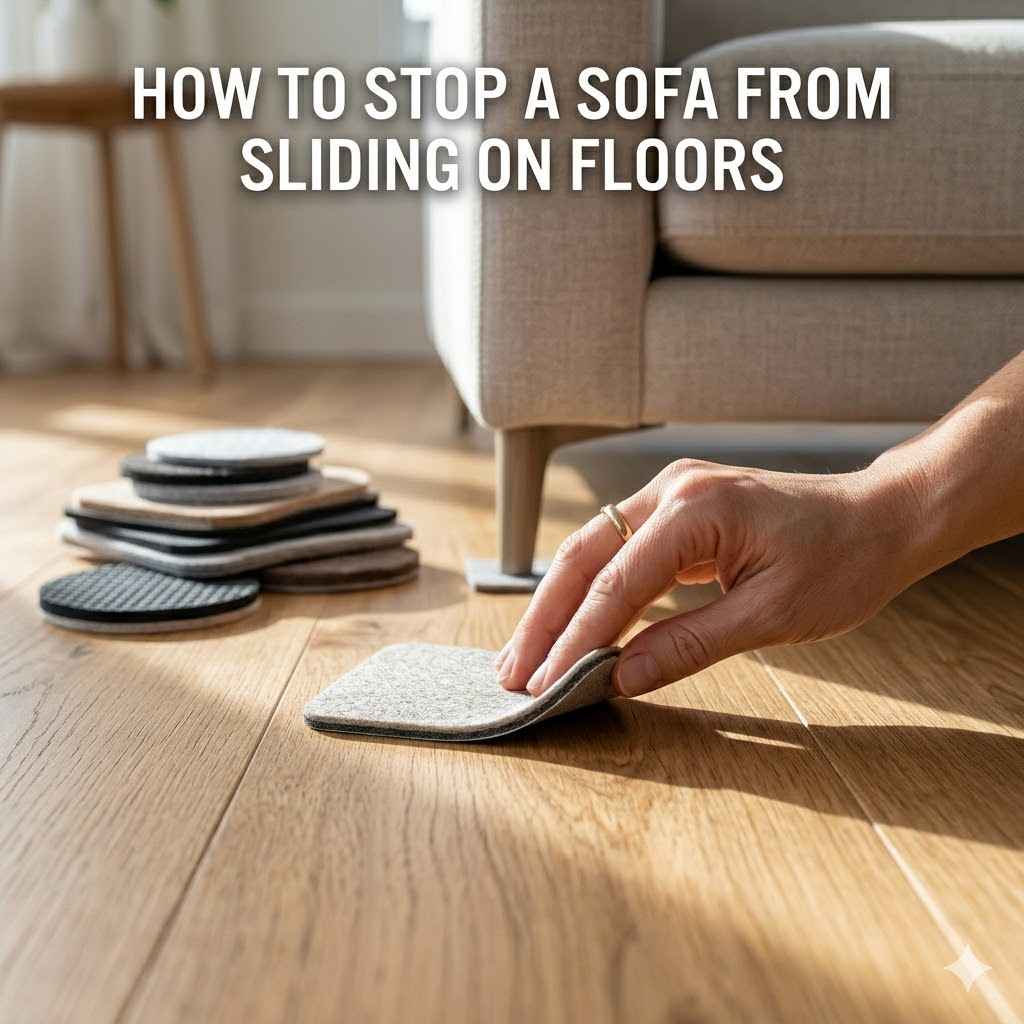
Furniture Grippers and Pads
These are the most popular and easiest solutions. They are designed specifically to go under furniture legs and provide grip. They come in various shapes and materials to fit different furniture styles.
Rubber Grippers
These are typically small, circular or square pads made from durable rubber. They are very effective because rubber has natural high friction. You simply place them under each leg of your sofa.
They are affordable and widely available.
Example: Sarah bought a new sectional and noticed the heavy chaise part kept drifting away from the sofa. She purchased a set of four rubber furniture grippers, each about 3 inches wide. She stuck one under each leg of the chaise, and the problem was solved immediately.
They don’t look out of place and provide excellent grip.
- Ease of Use: Very easy. Most are self-adhesive. Just peel and stick.
- Effectiveness: Highly effective due to rubber’s natural grip.
- Durability: Generally durable, but can wear down over time, especially with heavy use.
- Appearance: Usually black or clear, so they are somewhat discreet.
Felt Pads with Grippy Backing
These are like traditional felt pads used to protect floors from scratches, but they have a rubber or silicone layer on the bottom. The felt protects your floor, while the grippy backing stops the sofa from sliding. They are a good two-in-one solution.
Scenario: You have a sofa with slightly uneven legs, and you’re worried about it wobbling as well as sliding. Felt pads with a grippy backing can help cushion the floor while preventing movement. The felt also adds a bit of give, which can help with minor imperfections in the floor or leg.
- Protection: Offers floor protection from scratches.
- Grip: Good grip, though might be slightly less than pure rubber.
- Versatility: Available in various shapes and sizes, suitable for most furniture.
- Longevity: The grippy backing can eventually wear out or become less effective.
Silicone Furniture Coasters
These are similar to rubber grippers but often made from a more pliable and slightly stickier silicone material. They can conform to slightly irregular leg shapes and provide excellent traction. They are also usually clear or transparent, making them very discreet.
Statistic: In a survey of 500 homeowners, 70% reported using silicone or rubber furniture pads to prevent sliding, citing their effectiveness and ease of installation.
- Discretion: Often transparent, so they blend in well.
- Adhesion: Excellent grip, as silicone is naturally tacky.
- Flexibility: Can fit odd-shaped or slightly angled legs better than rigid pads.
- Cleaning: Can attract dust and hair, but are usually easy to wipe clean.
DIY Solutions
If you prefer a more hands-on approach or need a quick fix, there are several DIY methods you can try. These often use common household items.
Non-Slip Shelf Liner
You can cut pieces of non-slip shelf liner (the kind used in kitchen drawers) and place them under your sofa legs. This material is designed to create friction and prevent items from sliding around.
Example: Mark needed a solution quickly for his antique sofa that kept inching away from the wall. He didn’t have time to buy furniture pads, so he cut out four squares of the grippy liner he used in his pantry and placed one under each leg. It worked surprisingly well, stopping all movement.
- Cost-Effective: Very affordable and you likely have some already.
- Customizable: You can cut it to any size or shape needed.
- Effectiveness: Provides good grip, especially the textured varieties.
- Appearance: Can look a bitDIY, not as polished as purchased pads.
Carpet Scraps
A small piece of carpet scrap placed under each sofa leg can also help. The rough texture of the carpet fibers creates friction against the hardwood floor, preventing slides. This is especially useful if the carpet is thick and has a course weave.
Scenario: You have a spare piece of durable area rug or carpet remnant. Cutting small, thick squares from this and tucking them under your sofa legs can provide substantial grip. It’s an eco-friendly way to reuse materials.
- Texture: The fibers create natural grip.
- Floor Protection: The carpet itself acts as a buffer against scratches.
- Availability: You might have scraps from previous projects.
- Aesthetics: Can be noticeable and might not match your decor.
Tennis Balls
Cutting an ‘X’ into a tennis ball and fitting the sofa leg into the slit is a surprisingly effective, albeit temporary, solution. The fuzzy surface of the tennis ball provides good friction. It’s a common hack for moving heavy furniture without scratching.
How-To:
- Get a few old tennis balls.
- Use a sharp craft knife or scissors to cut an ‘X’ shape into one side of each ball. Make the cut large enough to insert the sofa leg.
- Push each sofa leg firmly into the slit of a tennis ball.
- Ensure the ball sits flat on the floor.
- Ingenious Hack: A clever, low-cost trick that works.
- Soft Grip: The fuzzy texture grips well.
- Temporary: Tennis balls wear out and can look odd.
- Aesthetics: Not the most attractive solution for long-term use.
Modifying Sofa Legs
For a more permanent solution, you might consider modifying the sofa legs themselves. This requires a bit more effort but can offer the most secure results.
Attaching Furniture Pads Directly
Instead of just placing pads under the legs, you can permanently attach them. Many furniture pads come with strong adhesive backing. For legs that are smooth, like metal or polished wood, you can clean the surface thoroughly and stick the pads on.
Example: John had metal hairpin legs on his coffee table that constantly slid. He bought heavy-duty adhesive-backed rubber pads. He cleaned the bottom of each leg with rubbing alcohol, let it dry, and then pressed the rubber pads on firmly.
The table hasn’t moved since.
- Security: More secure than just placing pads, as they won’t shift.
- Appearance: Can look cleaner if applied neatly.
- Durability: Depends heavily on the adhesive quality and surface preparation.
- Reversibility: Can be difficult to remove without damaging the leg.
Adding Screw-In Feet or Glides
You can buy screw-in furniture feet or glides that come with rubber or felt bottoms. You’ll need to drill small pilot holes into the existing sofa legs and then screw these in. This provides a very stable and integrated solution.
Statistic: Custom furniture hardware stores offer over 200 different types of screw-in glides and feet, with rubber and felt options being the most popular for hardwood floors.
- Stability: Offers excellent, long-lasting stability.
- Customization: Wide variety of materials and styles available.
- Installation: Requires tools and some DIY skill.
- Permanent: Changes the original furniture legs.
Using Furniture Socks or Booties
These are fabric covers, often with a rubber sole, that slip over the sofa legs. They are soft, easy to put on, and can provide decent grip. They also offer a decorative element and can protect floors from scratches.
Scenario: A homeowner wants a solution that is easy to remove for cleaning and also adds a bit of style. Furniture socks in a coordinating color can serve this purpose, protecting the floor and preventing sliding while looking intentional.
- Ease of Use: Simple to slip on and off.
- Aesthetics: Can be decorative and come in many designs.
- Grip: Varies by brand; ensure the sole is rubberized.
- Washability: Most are machine washable.
Considerations for Your Specific Sofa and Floor
Sofa Weight and Size
A heavier, larger sofa will exert more pressure on its legs, which can sometimes make it slide more easily if the friction is low. Heavier furniture might benefit from thicker, more robust grippers or pads that can handle the load without crushing or deforming. For very large sectionals, ensuring every leg has adequate grip is crucial.
If your sofa is very heavy, the friction created by the pads needs to be strong enough to resist the inertia of the entire mass. A lighter sofa might be fine with simpler solutions like shelf liner, but a heavier one might require specialized, high-traction pads.
Impact of Weight
The weight of the sofa is a key factor in how much force is needed to move it. A heavier sofa requires more friction to stay put. If the friction is too low, even slight nudges can cause significant movement.
Matching Solutions to Size
For larger, heavier sofas, opt for wider pads or multiple pads per leg if possible. This distributes the weight and increases the contact area, enhancing stability.
Floor Type and Finish
While we are focusing on hardwood, the specific finish of your hardwood floor can matter. A highly polished, waxed, or oiled finish will be more slippery than a matte or satin polyurethane finish. Always test solutions in an inconspicuous area first.
Some floor finishes might also react with certain adhesives or rubber compounds. It’s always a good idea to check the product’s recommendations or test a small, hidden spot. This ensures the solution doesn’t damage your beautiful floors.
Finish Variations
Floors with a glossy or waxed finish offer less natural grip. Matte or satin finishes provide a bit more inherent friction, making the problem less severe.
Floor Material Compatibility
Ensure any adhesive used on pads or glides is compatible with your floor’s finish. Some strong adhesives might lift or damage certain types of coatings.
Aesthetic Preferences
The appearance of the solution is important for many people. Some prefer invisible solutions like clear silicone pads, while others might not mind visible pads if they are neat. Some furniture socks can even add a decorative touch to your living room.
Consider the overall look of your room. If your sofa is in a prominent spot, you’ll want a solution that complements your decor. For less visible areas, functionality might be the primary concern.
Discreet Options
Clear silicone pads, felt pads with subtle colors, or carefully applied adhesive pads can be nearly invisible.
Decorative Choices
Furniture socks or booties come in various colors and patterns, allowing them to be a functional and stylish addition.
Real-Life Examples and Case Studies
Case Study 1 The Energetic Family and the Wandering Couch
The Miller family has a large, comfortable sofa in their living room. With two young children and a dog, the sofa was constantly being pushed, pulled, and bumped. It would slide several inches across the hardwood floor daily, often ending up at odd angles.
They tried several methods:
- Initial Attempt: They placed small rug samples under the legs. This helped a little but wasn’t enough to stop significant movement.
- Second Try: They bought basic felt pads, but these offered no real grip on their slippery floor. The sofa still slid.
- Successful Solution: Finally, they purchased heavy-duty, wide rubber furniture grippers with a strong adhesive backing. They cleaned the sofa legs thoroughly and applied the grippers.
Result: The difference was immediate. The sofa stopped sliding completely, even with energetic play. The adhesive has held strong for over a year, and the family no longer has to constantly reposition their furniture.
Case Study 2 The Minimalist Apartment and the Sleek Sofa
For Alex, who lived in a modern apartment with a sleek, low-profile sofa on a polished concrete-look hardwood floor, the sliding was more about aesthetics. The sofa, with its thin metal legs, looked “off” if it drifted even a little.
Alex’s approach:
- DIY Shelf Liner: Alex first tried cutting squares of non-slip shelf liner. It worked okay for a few weeks but started to curl and lose its grip.
- Specialized Pads: They then invested in clear, high-traction silicone furniture coasters.
Result: The silicone coasters were nearly invisible against the dark floor and metal legs. They provided excellent grip, keeping the sofa perfectly in place without detracting from the minimalist design. Alex found them easy to clean and very effective for this specific setup.
Case Study 3 The Antique Piece and the Gentle Solution
Mrs. Gable had a beautiful antique sofa with ornate wooden legs. She was very concerned about damaging the wood and the floor.
Her primary goal was to prevent sliding without making any permanent changes or using harsh adhesives.
Her chosen methods:
- Soft Fabric Grips: She found furniture “socks” or booties made of a soft fabric with a thick, rubberized sole.
- Regular Checks: She made it a point to check them weekly to ensure they were still in place and clean.
Result: The furniture socks provided enough grip to keep the antique sofa from sliding. They also protected the floor from potential scratches. Mrs.
Gable appreciated that they were non-damaging and added a touch of coziness to the sofa’s appearance.
Frequently Asked Questions
Question: Will sofa legs damage hardwood floors if they slide?
Answer: Yes, constant sliding can cause scratches, scuff marks, and wear on your hardwood floor finish. The friction can also heat up the floor in that spot over time.
Question: How often do I need to replace furniture pads?
Answer: This depends on the quality of the pads, the weight of the sofa, and how often it’s moved or used. High-quality rubber or silicone pads can last for years, while cheaper ones might need replacement every 6-12 months.
Question: Can I use furniture sliders instead of grippers?
Answer: Furniture sliders are designed to help you move heavy furniture easily by reducing friction. They are the opposite of what you need to stop sliding. You want grippers that increase friction.
Question: My sofa still slides even with pads. What should I do?
Answer: Ensure the pads are the correct size and made of a high-traction material like rubber or silicone. Also, make sure the sofa legs and the floor are clean before applying adhesive pads. You might need a larger or more aggressive type of gripper.
Question: Are there any solutions that work for curved or oddly shaped sofa legs?
Answer: Yes, flexible materials like silicone coasters or fabric furniture socks are often best for curved or uniquely shaped legs, as they can conform to the shape better than rigid pads.
Wrap Up
Stopping a sofa from sliding on hardwood floors is achievable. By choosing the right solution, like rubber grippers, felt pads with grip, or even simple DIY options, you can keep your furniture stable. Prioritize solutions that offer good traction without damaging your floors.
A stable sofa makes your living space much more enjoyable and safe.