How to Stop Rugs Slipping on Wooden Floors Fast
It is a common problem. You buy a beautiful rug for your wooden floor, only to find it slides around. This can be frustrating, especially when you just want to enjoy your home.
Many people find How to Stop Rugs Slipping on Wooden Floors Fast a tricky task at first. But it does not have to be complicated. We will show you simple ways to fix this problem easily.
Effective Ways How to Stop Rugs Slipping on Wooden Floors Fast
Dealing with rugs that slide on wooden floors is a common household challenge. It can make your home look messy and, more importantly, create a tripping hazard. For beginners, figuring out the best and quickest solutions can seem overwhelming.
This section explores the most effective methods to secure your rugs, ensuring safety and aesthetics in your living space. We aim to provide clear, actionable steps that anyone can follow to achieve a stable rug setup.
Understanding the Problem Why Rugs Slip
Wooden floors are often smooth. This smoothness is great for cleaning and looks nice, but it means rugs have little to grip onto. Most rugs have a backing, but this backing might not be designed for super smooth surfaces like polished wood.
Over time, the friction between the rug backing and the floor can cause the rug to shift.
This movement can happen with regular foot traffic, vacuuming, or even just the weight of furniture. The result is an uneven rug that looks untidy and can lead to accidents. The material of the rug backing also plays a big role.
Some synthetic backings can become slippery when they get warm or if they have been exposed to certain cleaners.
The type of wood finish matters too. Highly polished or waxed floors offer less friction than a matte or more textured finish. Even the humidity in your home can subtly affect how the rug and floor interact.
Understanding these factors helps us choose the right solutions.
Common Causes of Rug Slippage
-
Smooth Floor Surface: As mentioned, the inherent smoothness of polished wood is a primary reason rugs lack grip. There simply isn’t enough texture for the rug to anchor itself effectively.
-
Rug Backing Material: Many standard rugs come with latex, polypropylene, or jute backings. While good for some floors, these can be too slick on very smooth wooden surfaces, especially when new or if they become worn.
-
Foot Traffic and Movement: Everyday use, walking across the rug, children playing, or pets running can easily nudge a rug out of place. Every step creates a small force that, over time, moves the rug.
-
Furniture Weight: Heavy furniture, like sofas or tables, can press down on the rug. While this might seem like it would hold the rug in place, the pressure can sometimes make the backing more slippery, especially if the furniture legs are also smooth.
-
Cleaning Products Residue: Using certain floor cleaners on your wooden floors can leave a residue. If this residue is slightly waxy or slippery, it can transfer to the rug backing, making it slide more easily.
How to Stop Rugs Slipping on Wooden Floors Fast with Rug Grippers
Rug grippers are one of the most popular and effective solutions for keeping rugs in place. They are designed specifically for this purpose and come in various forms. Using them is a straightforward way to achieve a secure rug.
These grippers work by creating a physical barrier that increases friction between the rug and the floor. They are often made from materials like PVC, rubber, or felt. Some are thin sheets you cut to size, while others are more like a mesh or a padded layer.
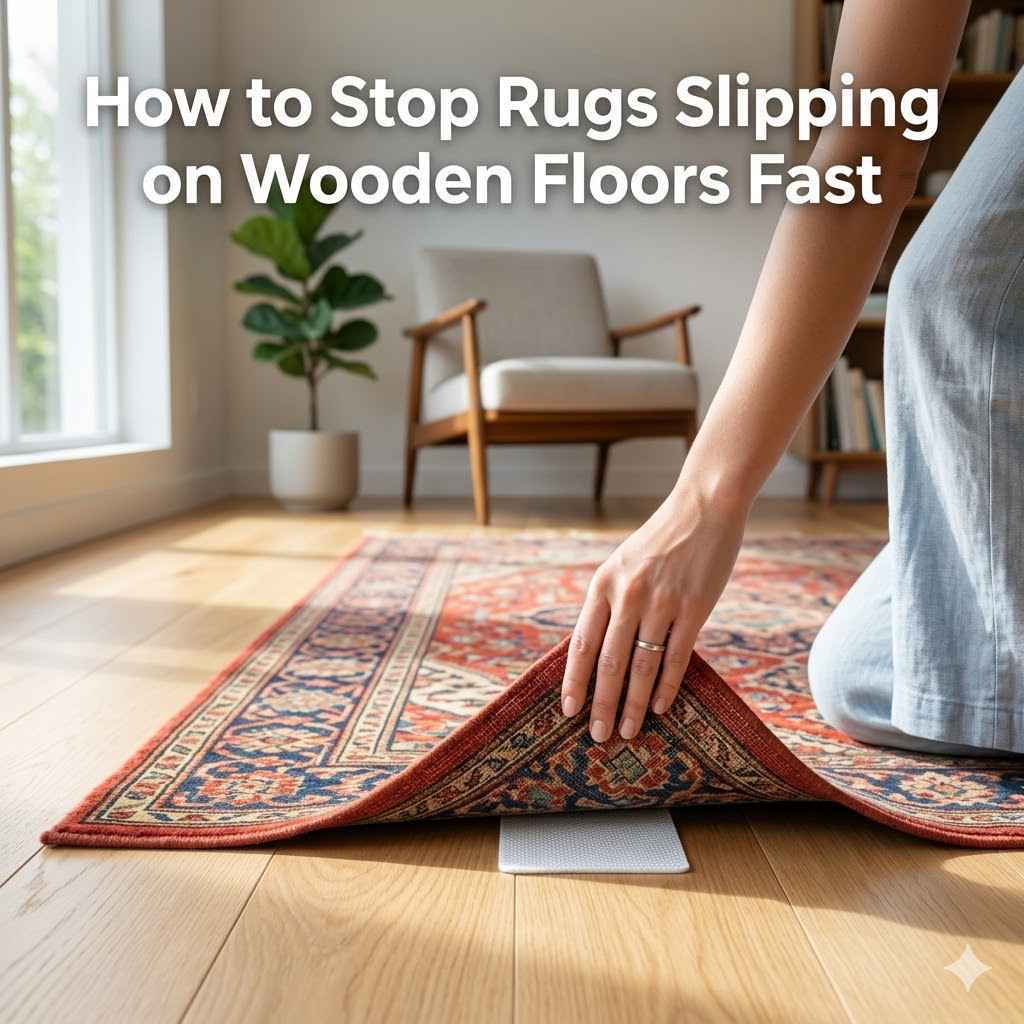
The best part about rug grippers is their ease of use. You typically place the gripper on the floor first, then lay your rug on top. The gripper’s texture grabs onto the floor, and its top surface provides a more stable base for the rug.
Many are also washable, allowing you to refresh them if they lose some grip over time.
Types of Rug Grippers
-
Adhesive Strips or Dots: These are small pieces that you stick to the underside of the rug or directly to the floor. They provide targeted grip points. Some can leave residue if removed improperly, so choosing a reputable brand is important.
-
Full Sheet Grippers: These are large sheets of material that you cut to fit the exact size of your rug. They cover the entire backing of the rug, offering consistent grip across the whole area. They are often made from a porous, non-slip material.
-
Dual-Sided Tape: While not strictly a rug gripper, heavy-duty double-sided tape can also work. You apply it to the edges of the rug or the floor. It’s very effective but can be difficult to remove without damaging the floor or rug, so use with caution.
-
Spray Adhesives: Special spray adhesives designed for rugs can offer a more permanent solution. You spray them onto the rug backing. They create a strong bond but are permanent, so they are best for rugs you don’t plan to move often.
When choosing a rug gripper, consider the material of your wooden floor. Some grippers might be too aggressive for delicate finishes. Always test a small, inconspicuous area first if you are concerned about damage.
Using Double-Sided Carpet Tape for a Secure Hold
Double-sided carpet tape is a strong contender for solving the slipping rug issue quickly. It’s a versatile adhesive product that can offer a very firm hold.
This tape is designed with adhesive on both sides, allowing it to stick to two surfaces simultaneously. For rugs, this means you can adhere the tape to the floor and then press the rug onto it, or apply it to the rug’s backing and then position the rug. It’s a very direct and effective method for immediate stability.
However, it’s crucial to use the right kind of tape. Look for tapes specifically designed for use on hard floors and rugs. Some tapes can leave behind sticky residue or even damage the finish of your hardwood.
It’s always a good idea to check the tape’s compatibility with your specific flooring before applying it widely.
Application Tips for Double-Sided Tape
-
Clean the Floor: Before applying any tape, make sure the wooden floor is clean, dry, and free of dust or wax. This ensures the best possible adhesion.
-
Measure and Cut: Measure the area where you need grip, usually along the edges of the rug or in the corners. Cut the tape to the required lengths. You don’t need to cover the entire rug.
-
Apply Tape to Floor: Carefully peel off the backing from one side of the tape and press it firmly onto the wooden floor in the measured spots. Ensure good contact with the floor surface.
-
Position the Rug: Peel off the backing from the other side of the tape. Then, carefully align your rug and press it down firmly onto the taped areas. Start from the corners and work your way inwards.
-
Test Stability: Once the rug is in place, gently try to shift it. It should feel much more secure. If you notice any movement, you may need to add more tape or adjust the placement.
A common scenario is applying tape in a border pattern around the rug’s perimeter. For larger rugs, you might also add strips across the middle to prevent buckling. This method is great for high-traffic areas where a secure rug is essential.
DIY Solutions for Preventing Rug Slippage
Sometimes, you might need a quick fix without a trip to the store. Fortunately, there are a few DIY methods that can help stop your rug from slipping on wooden floors.
These methods often involve common household items that can provide temporary or semi-permanent grip. While not always as long-lasting as commercial products, they can be very effective in a pinch. They also offer a more budget-friendly approach for those looking to save money.
It’s important to note that DIY solutions might require more frequent reapplication or might not be suitable for all types of wooden floors. Always test on a small area first to avoid any unintended damage.
Household Items That Can Help
-
Silicone Caulk: A thin bead of clear silicone caulk applied around the edges of the rug’s underside can create a non-slip barrier. Let it dry completely before placing the rug. The caulk creates a flexible, grippy surface.
-
Hot Glue Gun: Similar to caulk, you can apply a pattern of hot glue dots to the rug’s backing. Create lines or dots spaced a few inches apart. The hardened glue provides grip.
Be cautious as excessive heat could damage some rug materials.
-
Rubber Shelf Liner: You can cut pieces of non-slip rubber shelf liner to fit the underside of your rug, especially at the corners and edges. This material is designed to grip surfaces and is a very effective temporary solution.
-
Old Yoga Mats: Similar to shelf liner, old yoga mats can be cut to size and placed under your rug. Their rubbery texture provides excellent grip. Make sure the mat is clean and dry before use.
A practical example: Sarah had guests arriving and her new area rug kept sliding. She quickly cut up an old rubber bath mat and placed the pieces under the rug’s corners. It held perfectly for the entire evening, saving her from a potential tripping incident.
Choosing the Right Solution for Your Rug and Floor
The best way to stop rugs from slipping on wooden floors fast depends on several factors. These include the type of rug you have, the finish of your wooden floors, and how much traffic the area receives.
A heavier rug with a natural fiber backing might only need a thin gripper. A lightweight synthetic rug in a high-traffic area will likely require a stronger solution, like double-sided tape or a robust full-sheet gripper. Considering these elements helps ensure your chosen method is both effective and safe for your home.
It’s also about longevity. If you want a permanent fix, a stronger adhesive or a high-quality, dedicated rug gripper is your best bet. If you need a quick, temporary solution or are on a budget, DIY methods can be excellent alternatives.
Considering Rug and Floor Materials
| Rug Material | Floor Finish | Recommended Solutions |
|---|---|---|
| Wool, Cotton, Natural Fibers | Polished, Sealed Wood | Felt-backed grippers, Shelf liner, Yoga mats |
| Synthetic, Polypropylene | Matte or Textured Wood | Lightweight mesh grippers, Silicone caulk |
| Jute, Sisal | Waxed or Oiled Wood | Adhesive dots (use with caution), Dual-sided tape (test first) |
| Any | Painted or Delicate Wood | Very gentle grippers, Avoid adhesives that might damage paint |
For example, if you have a valuable antique rug on a sensitive wood floor, you would avoid strong adhesives. Instead, you might opt for a premium felt-backed gripper that offers grip without sticking directly to the floor, protecting the finish. This thoughtful consideration prevents damage while still solving the slipping problem.
Traffic and Durability Needs
-
Low Traffic Areas (e.g., bedrooms, under a coffee table): A simple rug gripper or shelf liner might be sufficient. These areas don’t experience much movement, so a moderate level of grip is usually adequate.
-
Medium Traffic Areas (e.g., living rooms, hallways): You’ll likely need something more robust. Consider full-sheet grippers or a good quality double-sided tape applied strategically around the edges.
-
High Traffic Areas (e.g., entryways, main hallways): These areas require the strongest solutions. Heavy-duty rug grippers, robust double-sided tape, or even specialized rug pads designed for high traffic would be ideal.
A statistic from a home goods survey indicated that over 65% of homeowners experience rug slippage issues on hard floors, with wooden floors being the most common surface. This highlights the widespread nature of the problem and the demand for effective solutions. Choosing based on traffic ensures your solution lasts.
Preventing Future Slippage
Once you’ve secured your rug, it’s important to maintain its stability. Regular checks and occasional reapplication of your chosen solution will keep your floors safe and your rugs looking their best.
This might involve simply re-pressing the rug onto the gripper or tape every few months. For washable grippers, cleaning them occasionally can restore their grip. This proactive approach prevents the problem from returning.
Consider the environment in your home. If you live in a humid area, wood floors can sometimes expand or contract slightly, which can affect rug stability. Keeping humidity levels consistent can help.
Maintenance Tips
-
Regular Checks: Periodically, lift the corners of your rug to ensure the gripper or tape is still in place and holding firmly.
-
Cleaning Grippers: If you use a washable rug gripper, follow the manufacturer’s instructions for cleaning. This will help maintain its non-slip properties.
-
Floor Cleanliness: Always ensure your wooden floors are clean and free from dust, wax, or other residues that could interfere with grip.
-
Rotate Rugs: If possible, rotate your rugs occasionally. This distributes wear evenly and can help prevent them from settling into one position where they might become more prone to slipping.
A homeowner’s experience shared that by simply pressing down on the rug edges once a month, they kept their hallway runner perfectly in place. This small habit prevented the need for frequent reapplication of tape or grippers, saving time and effort.
Frequently Asked Questions
Question: How quickly can I stop my rug from slipping
Answer: You can often stop a rug from slipping very quickly, sometimes within minutes, by using double-sided tape or placing a non-slip rug gripper sheet underneath it.
Question: Will rug grippers damage my wooden floors
Answer: Most high-quality rug grippers are designed not to damage wooden floors. However, it’s always best to check the product’s compatibility and test in an inconspicuous area first, especially with delicate finishes.
Question: How often do I need to reapply rug grip solutions
Answer: This depends on the solution and traffic. For tapes or grippers, checking monthly and re-pressing or reapplying as needed is common. Washable grippers might need cleaning every few months to regain grip.
Question: Can I use a rug gripper on a newly polished wooden floor
Answer: It’s usually best to wait for new floor finishes to cure fully, typically a few days to a week, before placing a rug with a gripper on it. This ensures the finish is durable and the gripper won’t interfere with the curing process.
Question: What is the best DIY method for stopping rugs slipping
Answer: For a quick DIY fix, cutting up rubber shelf liner or an old yoga mat to place under the rug’s corners and edges is very effective. Silicone caulk or hot glue dots are also good options for a more semi-permanent DIY grip.
Wrap Up
Stopping rugs from slipping on wooden floors fast is achievable with simple methods. Using rug grippers, double-sided tape, or DIY solutions provides immediate stability. Choose the right option based on your rug, floor type, and how much it’s used.
Enjoy a safer, neater home without slippery rugs.