How to Transport 16 Foot Baseboards: Expert Tips for Safe Delivery
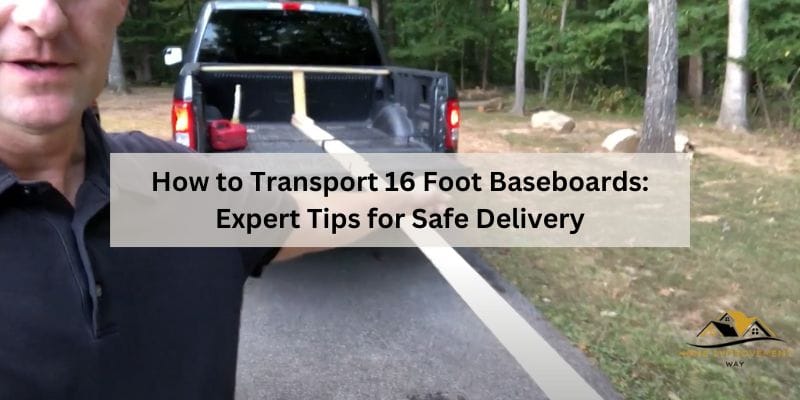
To move 16-foot baseboards safely, keep them flat, fully supported, and strapped so the load cannot shift. Use a trailer or roof rack if the boards would overhang more than a few feet in a pickup or SUV. Bad support can bend finish-grade trim, crush corners, and turn a short drive into scrap. This guide covers vehicle choices, support methods, tie-down steps, and delivery options.
What makes 16-foot baseboards hard to move?


Sixteen-foot baseboards are awkward because their length turns even a short run into an overhang and flex problem. A 16-foot board is treated as a difficult haul because rear overhang increases substantially, and finish trim is more sensitive than rough lumber to crush marks, corner damage, and vibration. A single loose board also twists more easily than a bundled pack.
Finish-grade trim needs gentler handling than framing lumber. A rough board can take more abuse; a primed or finished baseboard can show damage from strap pressure, rack edges, or a slight bend that opens a crack at the miter line later. Bundle the boards when possible so they act as one unit instead of separate springs.
Say your load is two 16-foot baseboards and one 6-foot pickup bed. The tailgate may be down, but the rear span still reaches far beyond the bed, so the rear end can wag in turns and under braking. That extra movement is where finish damage usually starts.
Why a single board is harder to control than a bundled pack
A single board can bow, slide, and whip. A bundled pack has more surface area, more friction between pieces, and less individual movement, so it is easier to stabilize with straps and padding. Keep the bundle tight enough that the ends stay aligned, but not so tight that the finish dents under the strap.
Can you haul 16-foot boards in a pickup?
Yes, but only if you plan for bed length, rear support, and cab clearance. Many standard truck beds range between 5.5 and 8 feet long, so a 16-foot board will overhang a short bed by a lot. The safest pickup setup keeps the load flat, uses solid anchor points, and protects the rear window and roofline from contact.
With a 6-foot bed, FreightRun says a 16-foot board creates substantial rear overhang, and that setup can create tail swing danger. An 8-foot bed reduces the problem, but it does not remove it. The board still needs support, a proper tie-down path, and enough clearance that braking does not drive the bundle into the cab.
How do you transport 16-foot baseboards in a pickup truck?
Place the boards on edge protection or a flat support surface, keep them centered in the bed, and secure them at more than one point so they cannot slide fore and aft. If the tailgate is down, support the rear span with an extender or another approved support so the weight is not hanging from the board itself.
Check the rear window and the top of the cab before you close the tailgate. If the lumber sits close to the rear window gasket or roofliner, add padding and raise the support height so the boards do not press on trim during bumps. A short strap over the middle and a second strap closer to the rear usually controls the load better than one strap alone.
Pickup bed setup that reduces damage
- Keep the boards flat and aligned end to end.
- Pad any spot that touches metal, glass, or painted trim.
- Use anchor points in the bed that hold the strap straight, not at a sharp angle.
- Leave the load low enough to clear the cab and rear window.
- Check strap tension after the first few miles.
Bed, rack, or trailer
The best setup is the one that gives the boards full support with the least overhang and the fewest hard contact points. For a short-bed pickup or SUV, a hitch-mounted bed extender is often the cleaner answer. For longer or heavier bundles, a trailer is usually easier on the finish because the boards stay lower and more stable.
Pickup bed versus hitch-mounted bed extender
A bed extender attached to a tow-hitch receiver can support rear overhang and give you a longer resting surface for the load. Most extenders support 300-800 lbs across the extended arm, and they can also act as a tie-down point. That helps with 16-foot trim, but the added length changes tail swing and parking clearance.
Use a 2-inch tow-hitch receiver only if the extender matches the receiver and the vehicle fitment is correct. A bed-mounted extender can also work, but the same fit-and-clearance checks still matter. Either style should carry the weight without forcing the boards to bend downward at the rear.
Roof rack or ladder rack limits
A roof rack can carry long boards if the rack is rated correctly, but the load must stay within the vehicle’s dynamic weight rating and should be tied down at at least two points. Roof hauling adds wind exposure and raises the center of gravity, so it is better for lighter bundles than for a loose stack of long trim.
Watch the front and rear overhang above the roofline. A board that sits too far forward can hit the windshield area under braking, while one that extends too far back can flex and rub. Padding at the rack crossbars matters here, because hard edges can scar finish trim fast.
When a trailer is the cleaner option
A trailer is often safer when the overhang would be long, the route includes highway speeds, or the boards are finished and easy to mark. It puts the trim lower, gives more tie-down space, and reduces the chance of cab contact. For a one-off haul, delivery may still be simpler if you do not already have a trailer and proper straps.
Baseboard transport decision table
This table matches vehicle type and trip length to the safest transport method. Use it to weigh overhang risk, finish-damage risk, tie-down count, flagging needs, and whether delivery is the better call.
| Vehicle type and trip length | Safest transport method | Overhang risk | Finish-damage risk | Tie-down count | Flagging need | When delivery is better |
|---|---|---|---|---|---|---|
| 8-foot pickup bed, short city trip | Flat in bed with rear support or extender | Moderate | Moderate if padded well | 2 minimum | Needed if rear overhang reaches 4 feet or more | If boards are finished, bundled poorly, or route has tight turns |
| 6-foot pickup bed, local or highway trip | Hitch-mounted bed extender or trailer | High | High without full support | 2 to 4 | Likely, depending on overhang and visibility | If the load would be unstable or if you lack an approved extender |
| SUV with roof rack, short trip only | Roof rack with two-point tie-down | Moderate | Moderate to high at rack edges | 2 minimum | Needed if rear overhang is visible from behind | If the rack is not rated for the load or boards sit close to the glass |
| Pickup or SUV, longer highway trip | Trailer or freight delivery | Low with trailer, high in open bed | Low with proper padding | 4 is safer on trailer | Usually not needed on trailer if fully enclosed by the trailer profile | If the route is long, windy, or the finish cannot be risked |
Do you need a red flag for overhang?
Yes, if the load extends beyond the rear enough to trigger local rules, and you should check those rules before you leave. Red or orange flagging when a load extends 4 feet or more beyond the rear, with a flag at least 12×12 inches. At night or in low visibility, a red light or reflector is needed.
Rules can differ by state and route, so do not assume a flag is optional just because the load feels short. Mark the farthest rear point, not the bed edge. The goal is simple: other drivers need to see where the load ends before they judge passing distance.
How to mark rear overhang so drivers can see it
Attach the flag at the end of the load, not on the tailgate. If the boards are bundled, fasten the marker to the bundle so it stays visible from behind. In low light, add reflective material or a red light if your route or local rules require it.
How to protect the finish trim
Padding and strap placement matter as much as vehicle choice. Contact points need soft material, because sharp rack edges, metal brackets, and hard strap hooks can crush a primed edge or scar a painted face. Keep pressure off the rear window gasket and roofliner, and avoid strap paths that saw back and forth over the finish.
Where to pad and where not to press
Pad the rack crossbars, bed rails, hitch extender contact points, and any spot where the board touches a hard surface. Do not let the board rest directly on the rear window gasket or roofliner. Those parts can deform under pressure, and once the load shifts, the damage can spread to the trim edge.
Ratchet straps should do the holding, not the crushing. Use straps with a working load limit that fits the cargo and a break strength well above that limit, and place them so they pull the load down and in, not across a sharp corner. Two tie-down points is the minimum for a roof rack; longer bundles often benefit from more.
Ratchet strap placement that controls flex
- Set the boards on the support surface and align the ends.
- Pad every hard contact point before tightening anything.
- Run one strap near the front third of the bundle.
- Run a second strap near the rear third.
- Add a third point if the load still bows or shifts.
- Check tension after the first few miles and again after any sudden stop.
Picture a 16-foot bundle in a 6-foot bed with the tailgate down. If the rear support is missing, the boards can bounce on the road’s seam lines and abrade the finish at the back edge first. Add a bed extender or move to a trailer before the load starts to act like a spring.
Frequently asked questions
How many ratchet straps do I need for long lumber?
Use at least two tie-down points, and add more if the bundle can shift, flex, or rub. For roof-rack hauling, two is the minimum. For a long, finished bundle in a pickup or on a trailer, three or four tie-down points can help keep the load flatter and reduce the chance of abrasion at the strap contact points.
What is the safest way to carry long baseboards without damaging them?
The safest method is the one that keeps the boards flat, fully supported, and isolated from hard edges. A trailer or a properly rated roof rack with padding and two-point tie-downs is often safer than a short bed with heavy overhang. Bundle the trim tightly so the pieces do not work against each other in transit.
Can I transport 16 foot boards through the rear window?
Only if the vehicle layout allows it without pressing on the gasket, headliner, or glass. A forum description of this method notes padding at the rear window to help protect the gasket, and that padding is treated as necessary for the method. If the board needs to push into the cab space to fit, use another setup instead.
Is a bed extender or trailer safer for 16 foot trim?
A trailer is usually safer when you want the lowest finish-damage risk and the least cab interference. A bed extender can be a good middle option for short-bed trucks and SUVs, especially for local trips. If the overhang is long or the route is fast, the trailer is the more controlled choice.
Is it cheaper to have 16 foot lumber delivered?
Often, yes, for a one-off haul. Freight delivery may add a flat fee, but that can still be cheaper than buying or renting an extender, trailer, extra straps, and padding, especially if you only need the trim once. Delivery is also better when the boards are finished and hard to replace.
Sponsored / affiliate links. As an Amazon Associate I earn from qualifying purchases. I may earn additional commission from eligible campaigns.