How Walnut Shell Cat Litter Works Simple
Thinking about cat litter can get a bit confusing. You see different kinds, and it’s hard to know which one is best. You might be asking yourself, How Does Walnut Shell Cat Litter Actually Work? It sounds a little unusual, right?
But don’t worry, it’s actually pretty straightforward. This guide will break it all down easily so you know exactly what you’re getting. We’ll look at what makes it special and how it keeps your home clean.
Understanding Walnut Shell Cat Litter
Many cat owners want to find litter that is good for their pets and their homes. Walnut shell cat litter is one option that has become popular. People are curious about how this type of litter works because it’s made from something natural that isn’t typically associated with cat litter.
It’s not like the clay or silica crystals most people are used to. This makes some wonder about its cleaning power and how it handles odors and moisture.
The basic idea behind any cat litter is to absorb liquid waste and trap odors. Walnut shell litter does this in a unique way. Instead of using mined minerals, it comes from a plant-based source.
This natural origin is a big appeal for many pet parents who are looking for eco-friendly and safer options for their furry friends.
What Is Walnut Shell Cat Litter Made Of
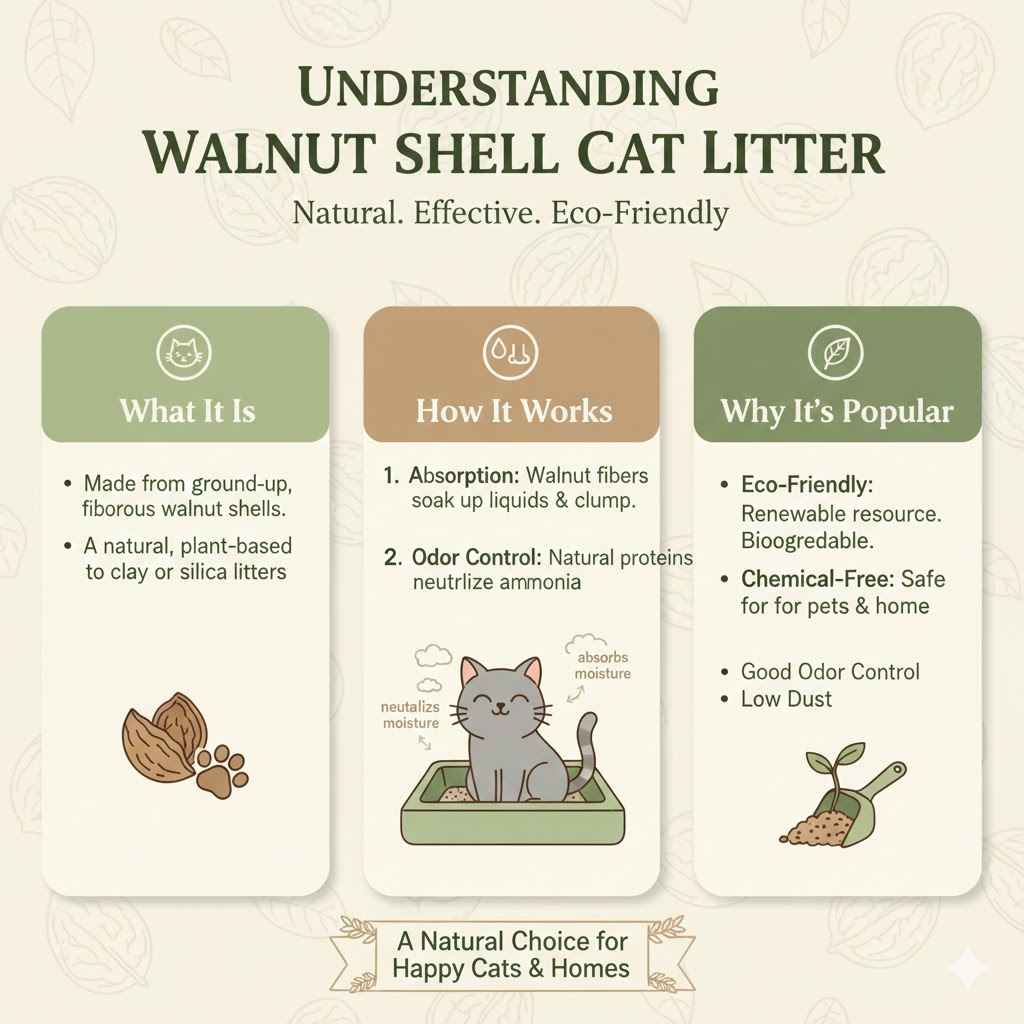
The main ingredient in walnut shell cat litter is, as the name suggests, crushed walnut shells. These shells are a byproduct of the walnut industry. After the walnuts are harvested and processed for food, the hard outer shells are collected.
These shells are then cleaned, ground into small pieces, and formed into granules or pellets.
The size and texture of these granules can vary between brands. Some are fine and sandy, while others are more like small pebbles. This variation can affect how the litter clumps and how it feels under your cat’s paws.
The natural color is usually a light brown, similar to wood pellets.
It’s important to note that it’s the shell material itself, not the walnut nut meat inside. This means it’s safe for cats even if they ingest a small amount, which can happen during grooming. The manufacturing process ensures the shells are free from harmful chemicals or additives.
How Walnut Shells Absorb Moisture
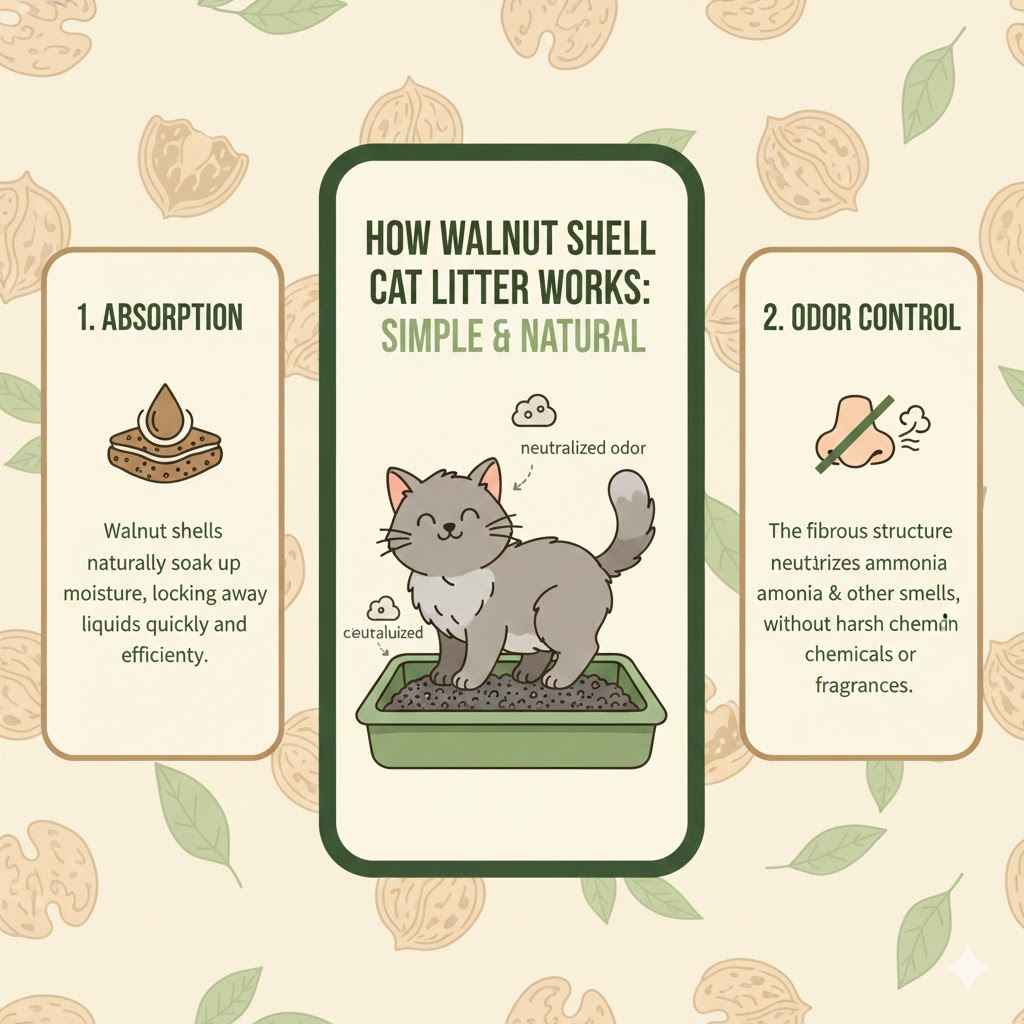
The key to how walnut shell cat litter works lies in the natural properties of the walnut shell material. Walnut shells are porous. This means they have tiny holes and spaces within their structure.
These pores are excellent at trapping liquid.
When your cat urinates in the litter box, the liquid is quickly drawn into the spaces within the walnut shell granules. This absorption prevents the liquid from pooling at the bottom of the litter box or soaking into the tray itself. The more porous the material, the better it is at holding liquid.
The way it absorbs moisture also helps with odor control. As the liquid is trapped within the shell material, it also traps the ammonia and other compounds that cause unpleasant smells. This prevents them from escaping into the air.
Natural Odor Control Properties
Walnut shell litter is often praised for its natural ability to control odors. This isn’t due to added perfumes or chemicals, which can be irritating to some cats and humans. Instead, it comes from the natural composition of the walnut shells and how they interact with waste.
The porous structure we talked about earlier is a major factor. By absorbing liquid quickly, it also traps odor-causing bacteria before they can multiply and release strong smells. The material itself has a natural, subtle scent that is usually not overpowering and is generally pleasing to cats.
Some walnut shell litters also undergo a process that further enhances their odor-fighting capabilities. This might involve baking or special treatments that further break down odor compounds or make the shells even more absorbent. The goal is to neutralize smells rather than just mask them.
Clumping vs. Non-Clumping Varieties
Like other types of cat litter, walnut shell litter comes in both clumping and non-clumping forms. The type you choose will affect how you clean the litter box.
Clumping Walnut Shell Litter
Clumping varieties are made with ingredients that cause the litter to form solid clumps when it comes into contact with moisture. This makes it easier to scoop out solid waste and urine clumps. You simply use a litter scoop to remove these solid masses, leaving the clean litter behind.
The clumping action helps to keep the litter box cleaner and can make it more economical because you only remove the soiled portion. The clumps are typically firm and don’t break apart easily when scooped.
Non-Clumping Walnut Shell Litter
Non-clumping varieties, on the other hand, will absorb moisture but do not form hard clumps. With non-clumping litter, you’ll typically need to stir the litter regularly to help it dry out. You would scoop out solid waste, but liquid waste would remain absorbed within the granules.
This type of litter usually requires more frequent full changes of the litter box.
Some owners prefer non-clumping litter as they worry about the binders used in clumping litter. However, most clumping litters, including those made from walnut shells, are considered safe. The choice between clumping and non-clumping is often a matter of personal preference and convenience.
Environmental Benefits of Walnut Shell Litter
One of the biggest advantages of walnut shell cat litter is its environmental friendliness. Unlike clay litters, which are mined from the earth, walnut shells are a renewable resource. They are a byproduct, meaning they are created from something that would otherwise be discarded.
This makes walnut shell litter a more sustainable choice. The production process also tends to be less energy-intensive than mining and processing clay or creating silica crystals.
Furthermore, many walnut shell litters are biodegradable. This means that when you dispose of used litter, it can break down naturally in the environment, reducing landfill waste. This is a significant benefit for environmentally conscious pet owners.
Is It Safe for Cats
Safety is a top concern for any pet owner. Walnut shell cat litter is generally considered very safe for cats. As mentioned, it’s made from natural materials and usually doesn’t contain the perfumes or dust found in some other litters.
Cats can be sensitive to harsh chemicals or fine dust, which can lead to respiratory problems or skin irritation. Walnut shell litter is typically low in dust, and the natural material is gentle on their paws and lungs. Even if a cat accidentally ingests some litter while grooming, it’s unlikely to cause harm because it’s made from edible shells.
Some owners worry about allergies. While rare, some cats could potentially be sensitive to walnut shells. If you notice any signs of irritation or discomfort in your cat after switching to walnut shell litter, it’s always a good idea to consult your veterinarian and consider switching back to their previous litter.
Comparing Walnut Shell Litter to Other Types
Let’s look at how walnut shell litter stacks up against common alternatives:
vs. Clay Litter
Clay litter is the most traditional type. It’s often inexpensive and effective at absorbing moisture. However, traditional clay litters can be dusty, which can cause respiratory issues for cats and humans.
They are also mined, which is not as sustainable as using a byproduct like walnut shells. Clumping clay litter uses bentonite clay, which swells when wet.
vs. Silica Gel Litter
Silica gel crystals are highly absorbent and excellent at trapping odors. They can last a long time, meaning you don’t have to change the litter box as often. However, silica gel is a synthetic material and is not biodegradable.
Some cats dislike the feel of silica crystals under their paws, and they can sometimes be noisy when cats walk on them. They are also generally more expensive than clay or walnut shell litter.
vs. Wood Pellet Litter
Wood pellet litter, often made from pine or other types of wood, is also a natural and biodegradable option. It’s usually quite absorbent and can offer decent odor control. However, wood pellets can sometimes break down into sawdust, which can be dusty.
The scent of pine can also be strong for some cats and owners. Walnut shell litter offers a similar natural benefit with a less pronounced scent and often a finer granule size.
How to Make the Switch to Walnut Shell Litter
Switching your cat to a new litter can sometimes be tricky. Cats are creatures of habit and can be sensitive to change. Here are some tips to help your cat adjust smoothly:
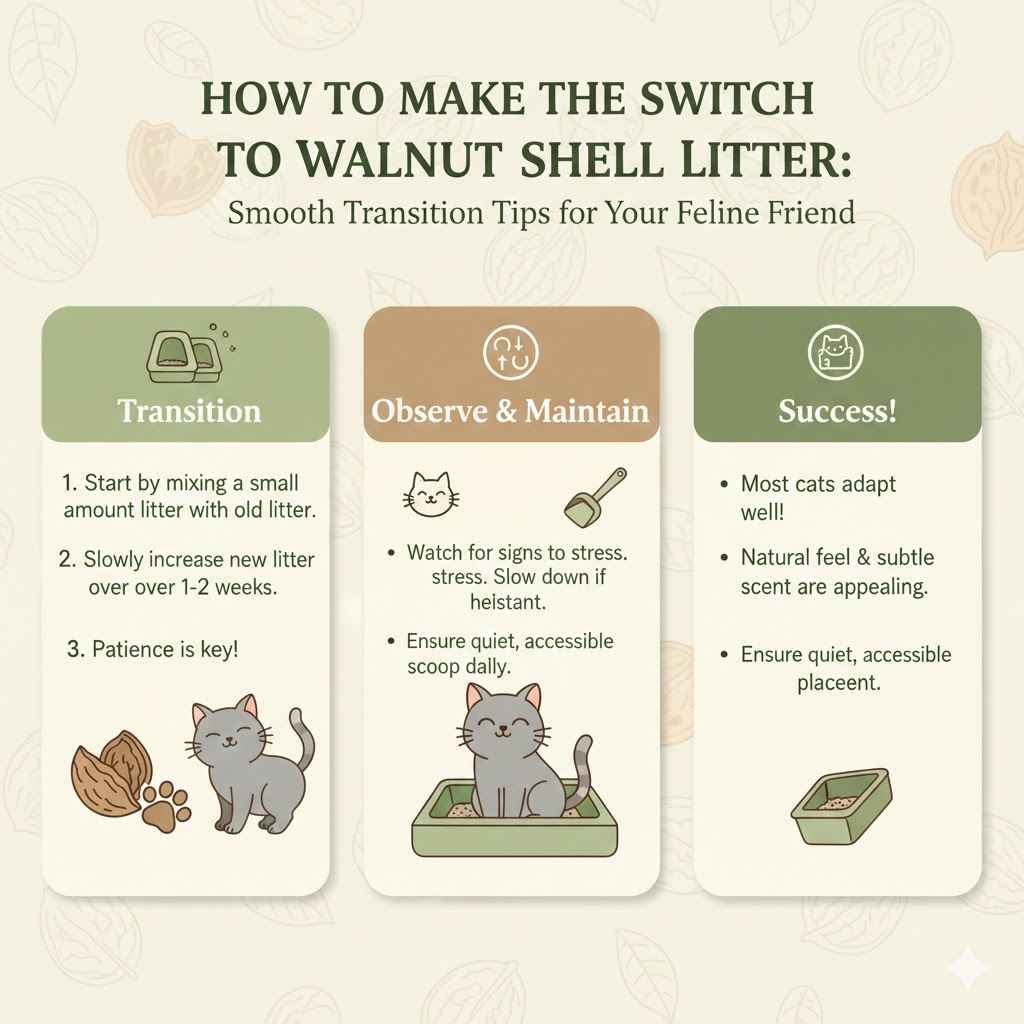
- Gradual Transition: Don’t switch all at once. Start by mixing a small amount of the new walnut shell litter with their old litter. Slowly increase the proportion of walnut shell litter over a week or two.
- Observe Your Cat: Watch for any signs of stress or avoidance. If your cat seems hesitant, slow down the transition process.
- Cleanliness is Key: Ensure the litter box is clean. Cats are more likely to use a clean box, regardless of the litter type.
- Scoop Regularly: Scooping solid waste and urine clumps (if using clumping litter) at least once a day is crucial for encouraging continued use.
- Litter Box Placement: Make sure the litter box is in a quiet, accessible location where your cat feels safe.
Most cats adapt very well to walnut shell litter due to its natural feel and subtle scent. However, patience and a gradual approach are always recommended when introducing any new product for your feline friend.
Frequently Asked Questions
Question: Is walnut shell cat litter flushable
Answer: Most walnut shell cat litters are not designed to be flushed. While they are biodegradable, flushing them can clog your plumbing system or sewer lines. It’s best to dispose of used walnut shell litter in a trash can.
Question: How often should I change walnut shell cat litter
Answer: For clumping walnut shell litter, you should scoop out soiled clumps daily and top up the litter as needed. A full litter box change might be required every 2-4 weeks, depending on the number of cats and usage. Non-clumping litter will need more frequent full changes, often weekly.
Question: Does walnut shell cat litter track
Answer: Walnut shell litter can track to some extent, like most cat litters. However, many brands are designed to minimize tracking, especially those with larger granules or pellets. Using a litter mat outside the box can help catch stray granules.
Question: Can I use walnut shell litter for kittens
Answer: Yes, walnut shell litter is generally safe for kittens. Its natural composition and low dust content make it a good choice for young cats. Just ensure they are transitioning well and not trying to eat large amounts of the litter.
Question: Does walnut shell litter have a strong smell
Answer: Walnut shell litter typically has a very mild, natural scent. It does not usually have the strong perfumes found in some other litters, which is a benefit for cats and people sensitive to fragrances. It’s effective at controlling odors from waste without adding its own strong smell.
Final Thoughts
Walnut shell cat litter offers a compelling natural alternative for pet owners. It works by using the porous structure of crushed walnut shells to absorb liquids and trap odors effectively. This plant-based, renewable resource is eco-friendly and biodegradable, reducing your environmental paw print.
It’s generally safe for cats with low dust and no harsh chemicals, making it a gentle choice for their health. By understanding how it absorbs and deodorizes, you can confidently choose this litter for a cleaner home and a happier cat.