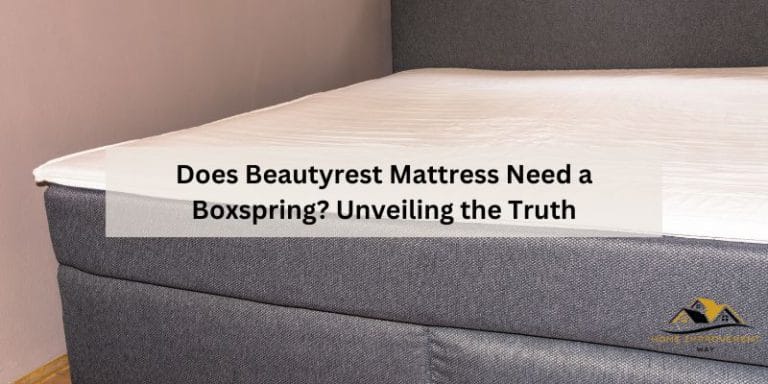
Ideas for Making a Mattress Firmer: Best Tips and Tricks
Start with the least risky fixes: set the mattress on a solid base or a sheet of plywood, rotate it, and add a firm topper only if the mattress still supports you well. Pick the wrong fix and you can waste money fast, while back pain or sagging gets worse. This guide shows which firmness fix fits your mattress type, budget, and risk tolerance.
Why a mattress feels soft is the first thing to check
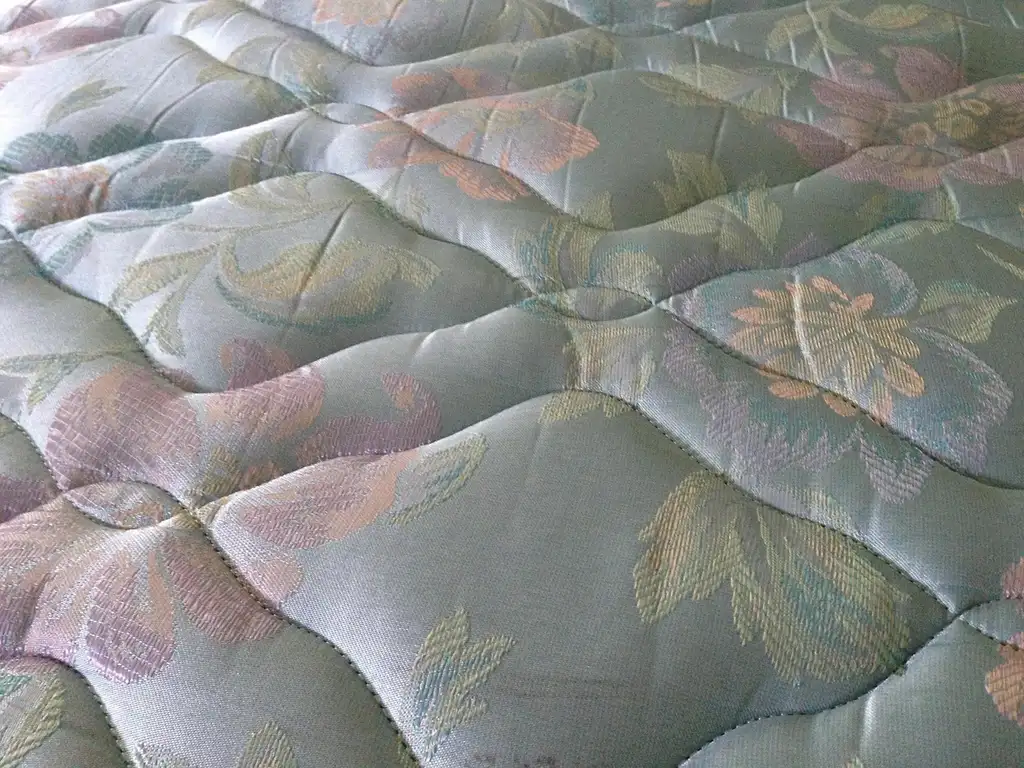


A mattress can feel soft for two different reasons: the comfort layers may be plush, or the support system may be failing. Those are not the same problem. A topper can change the surface feel, but it will not repair a sagging core or a weak base.
Firmness vs support: what changes the feel under your body
Firmness is the surface feel you notice when you lie down. Support is how well the mattress holds the spine and keeps the middle from sinking too far. A bed can feel soft and still support well. It can also feel firm at first and still sag badly.
If the mattress bottoms out at the hips or shoulders, the support structure is usually the issue. If the top merely feels too plush, a topper or temperature change may help. That distinction keeps people from buying the wrong fix twice.
Soft top layers, sagging support, and a worn mattress are not the same problem
Soft top layers compress under body weight and can be changed with a topper or firmer sleep surface. Sagging support means the base, frame, foundation, or inner structure is giving way. A worn mattress often shows body impressions that stay visible after you get up.
When the middle dips more than the edges, the issue is usually structural, not just comfort. That is the point where support fixes matter more than a firmer topper.
How mattress type changes the fix: foam, hybrid, latex, or flippable
Foam mattresses usually react strongly to heat and to weak support underneath. Hybrid mattresses can feel softer when the comfort layers are thick, even if the coils still hold well. Latex mattresses tend to be springier and more responsive, so support changes may be more noticeable than a topper change.
Flippable designs are different again. A flippable mattress can sometimes be turned to a firmer side, but non-flippable models should not be flipped unless the manufacturer says they are built for it.
According to How To Make a Mattress Firmer [13 Tips + Tricks] — Purple says some mattress companies offer a full 100-night trial.
What is the cheapest way to make a mattress firmer?
The cheapest fixes are the ones that do not require buying new comfort materials. Start with room temperature and moisture control, then check whether the mattress can be rotated or flipped, and inspect the base. Those steps cost little and often solve a soft-feeling bed faster than a topper.
Start with room temperature and moisture control
Cooler temperatures can make foam feel firmer, especially memory foam. Heat softens it. In a humid room, the mattress can also feel less stable because moisture changes how the layers behave and how the cover feels against the body.
A dehumidifier helps in coastal rooms or damp bedrooms where the mattress seems to sink or feel heavy. Moisture control will not fix a broken core, but it can improve the feel of foam and reduce the risk of musty odors.
Use rotation or flipping only when the mattress design allows it
Rotate the mattress regularly to spread wear across the sleep surface. Flip it only if the mattress is designed to be flipped. Saatva recommends flipping the mattress only if applicable, and that warning matters because many modern beds are one-sided.
Rotation will not add true firmness. It can, however, move a worn spot away from the main pressure area and make the bed feel more even.
Check the base, frame, or foundation before buying anything else
A weak base can make a good mattress feel soft. Loose slats, a bowed center rail, or an old box spring can all let the mattress sink too much. Fixing the support underneath often costs less than replacing the top layer.
If the mattress already sits on a sturdy platform or a closely spaced slat system, the problem is more likely to be inside the mattress itself. Sleep Foundation notes that slatted bases with less open space are more supportive.
Will a mattress topper make your bed firmer?

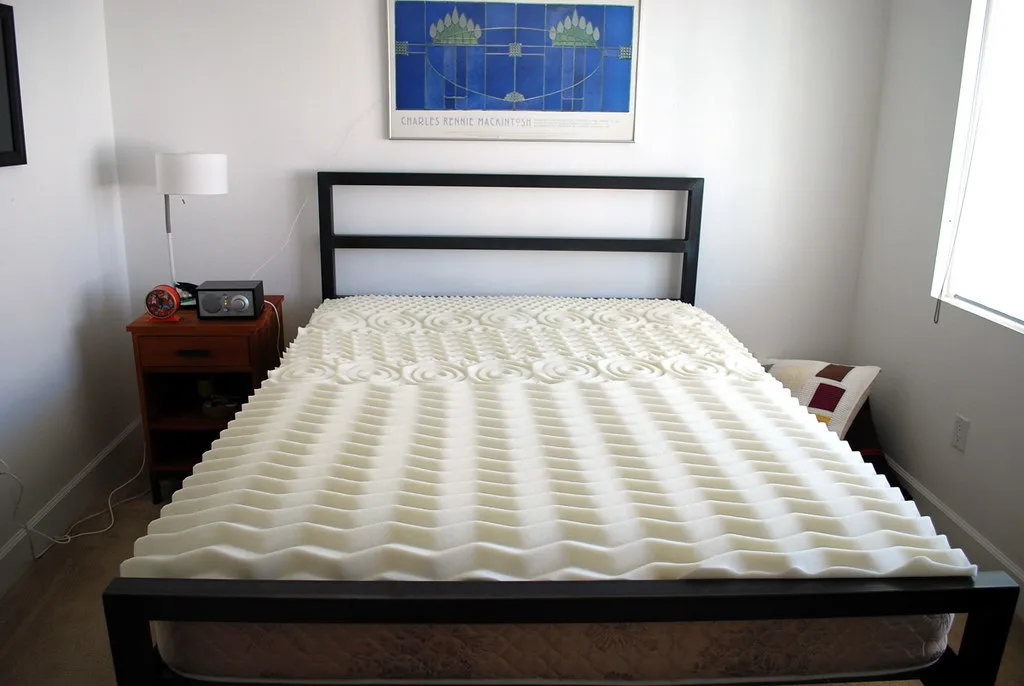
Yes, but only if the topper itself is firm and the mattress underneath still has decent support. A soft topper can do the opposite and make the bed feel plusher. The right topper changes the surface feel; it does not repair a collapsed core or broken foundation.
Which topper materials actually add firmness: latex, polyfoam, and some memory foam options
Firmer topper materials include latex, memory foam, and polyfoam. Purple says a firm mattress topper can be latex, memory foam, or polyfoam. Saatva notes that memory foam toppers can come in different firmness levels, so a dense option may help, while a soft one may not.
Latex is often the safest starting point when the goal is more pushback and less sink. Saatva says latex toppers have a springy feel, and Sleep Foundation says latex toppers are known for durability and temperature regulation.
How thickness changes the result: 1 to 4 inches, and when thinner is better
Most toppers sit in the 1 to 4 inch range. Saatva says mattress toppers are typically 1-3 inches thick, while Sleep Foundation says toppers are usually 1 to 4 inches thick. Thinner toppers usually preserve more support and are less likely to create a too-soft feel.
If the mattress is already soft, a thick topper can bury the body even more. A thinner, firmer topper is usually the better bet when the goal is a small firmness correction rather than a full comfort change.
When a topper backfires and makes the bed feel softer
A topper backfires when the mattress underneath is already sagging, the topper is too plush, or the topper is too thick for the bed’s support system. In those cases, the added layer can let the hips sink deeper and blur the original support.
That is why a topper is best used to adjust feel, not to rescue a failing mattress. If the support core is weak, the topper may only hide the problem for a short time.
Can a mattress base or box spring make a mattress firmer?
Yes. The support structure underneath can change how firm the bed feels and how much it sags. A base that is too soft, too wide between slats, or already worn can make a mattress feel much less supportive than it should.
Slatted vs solid support and how each affects feel
A solid base gives consistent support under the full mattress surface. A slatted base can work well if the slats are close enough together and the frame is strong. Fewer gaps usually mean better support and less sagging between slats.
Box spring compatibility matters too. Some mattresses are built for a foundation or platform, not an active box spring. Put the wrong mattress on the wrong base, and the bed can feel soft even when the mattress itself is not the main problem.
When a worn foundation causes sagging that feels like softness
If the center of the mattress dips more than it used to, inspect the foundation before blaming the mattress. A worn foundation can tilt, bow, or lose resistance over time. That failure often feels like the mattress got softer overnight.
This is common with older box springs and damaged platform slats. Replacing the base is often a better fix than adding foam on top of a failing support structure.
Where a bunkie board fits, and when plywood is a temporary fix
A bunkie board is a thin support board placed between the mattress and the base. Purple says a bunkie board is about 1-to-3 inches thick, and Sleep Foundation says it usually measures 1 to 3 inches thick. It often improves support more than it changes true firmness.
Plywood can be a temporary fix when the frame is the issue and nothing else is available. Use it as a short-term support patch, not a permanent replacement for proper mattress support.
Does putting a mattress on the floor make it firmer?
Yes, it can feel firmer right away because the mattress loses the flex and bounce of a base. But floor placement comes with tradeoffs. It restricts airflow, can trap moisture, and may create dust or mold problems, especially for foam mattresses.
Why floor placement can feel firmer right away
When a mattress sits on the floor, the support underneath is fully rigid. Saatva says putting a mattress on the floor can help firmness. The immediate change is usually strongest on softer foam beds that were sitting on a flexible frame.
That firmer feel may be useful as a short test. It is not always a long-term solution.
Why airflow, dust, and moisture risk matter, especially for foam mattresses
Sleep Foundation notes that floor placement limits airflow to the mattress bottom. That matters because trapped moisture can build up under the bed, especially in humid rooms or on concrete. Foam mattresses can be especially vulnerable on the floor because they may hold heat and moisture more readily.
Dust and debris also collect faster near the floor. If floor placement is used at all, it should be temporary and monitored carefully.
When floor use can affect warranty coverage
Before moving a mattress to the floor, check the sleep trial and warranty terms. Some companies allow a full 100-night trial, according to Purple, and support conditions can affect return or warranty decisions. If the policy requires a certain base, floor use may count against coverage.
That is why the support system should be checked before any major change. A quick firmness test should not turn into a warranty problem.
How do you choose the right firmness fix for your mattress type?
Match the fix to the mattress construction first. Foam mattresses usually respond to temperature, base support, and a firm topper. Hybrid mattresses often need support fixes more than a surface fix. Latex mattresses and flippable designs usually respond best to structure changes rather than thick comfort add-ons.
Foam mattresses: heat, compression, and support changes
Foam softens with heat and repeated compression. A cooler room, better support base, or thinner firm topper often works better than a thick pad. If the foam has visible sagging or a deep body impression, the mattress may be past the point where a topper helps.
Hybrid mattresses: coil support versus plush top layers
Hybrids can feel soft because of the comfort layers even when the coils are still doing their job. If the mattress feels unstable, the base or foundation is often the first thing to check. A firm topper can help, but only if the coil unit still holds shape and the top is the real problem.
Latex mattresses and flippable designs: what responds best
Latex mattresses already have a springier feel, so changing the base or adding a thin topper often works better than piling on more padding. Flippable mattresses may have a firmer side, which is usually a cleaner fix than layering more material on top. Flip only if the mattress was built for it.
Decision table: which firmness fix is most likely to work?
Use this table to match the fix to the mattress, not just the complaint. The best choice depends on construction, cost, reversibility, airflow risk, and whether the mattress still has usable support. A cheap fix that traps moisture is not a good fix.
| Firmness fix | Best fit mattress type | Cost tier | Reversibility | Airflow risk | Warranty risk | Expected firmness impact |
|---|---|---|---|---|---|---|
| Room temperature drop | Foam, especially memory foam | Low | High | Low | Low | Small to moderate |
| Dehumidifier or moisture control | Foam and humid-room setups | Low to medium | High | Low | Low | Small |
| Rotate the mattress | Most non-flippable mattresses | Low | High | Low | Low | Small |
| Flip the mattress | Only flippable designs | Low | High | Low | Medium | Moderate |
| Firm topper, 1 to 4 inches | Foam, hybrid, some latex beds | Medium | High | Medium | Low to medium | Moderate |
| Bunkie board | Slatted bases, weak platforms | Medium | High | Low | Low to medium | Moderate |
| Floor placement | Short-term test only | Low | High | High | High | Moderate to strong |
| Replace support base | Any mattress with a weak frame or foundation | Medium to high | Medium | Low | Low to medium | Moderate |
Use the table to choose between topper, base change, bunkie board, floor placement, or replacement
Start with the least risky fix that addresses the likely cause. If the mattress is soft because of heat, moisture, or a weak base, fix those first. If the mattress is soft because the top layer is simply too plush, choose a firm topper. If the mattress sags, repair support or replace it.
When the support core is worn out, a topper is usually a temporary patch. That is the point where replacement becomes the smarter option.
When is a mattress too soft to fix?
A mattress is too soft to fix when the core sags, the body impression stays after use, or the base no longer holds the bed level. In those cases, the issue is structural. A topper may hide the problem briefly, but it will not restore proper support.
If the mattress is old, the edges collapse, or the center droops even on a good base, replacement is usually the better call. That is especially true when changing the foundation does not improve the feel.
Frequently asked questions
How can I make my mattress firmer without buying a new one?
Start with the support system, then the room, then the mattress itself. A better base, a cooler room, moisture control, rotation, or a firm topper can all help. The right fix depends on whether the problem is plush comfort, weak support, or actual sagging.
What is the cheapest way to make a mattress firmer?
The cheapest fixes are temperature change, moisture control, and rotating the mattress. Those cost little and can improve the feel of foam quickly. If the base is weak, tightening the support underneath may be the best low-cost repair before buying any topper.
Will a mattress topper make my bed firmer?
It can, but only if the topper is firm enough and the mattress beneath still has decent support. Latex, polyfoam, and firmer memory foam toppers are the best candidates. A soft or overly thick topper often makes a soft bed feel even softer.
Does putting a mattress on the floor make it firmer?
Yes, it usually feels firmer because the mattress loses the flex of a base. The downside is poor airflow, more moisture risk, and more dust exposure. That makes floor use a short-term test, not the best long-term answer for most foam beds.
Can a mattress base or box spring make a mattress firmer?
Yes. A stronger base, tighter slats, or a proper foundation can stop extra sink and make the mattress feel more supportive. A worn box spring can do the opposite. If the support structure is failing, changing the base can matter more than changing the mattress surface.
When is a mattress too soft to fix?
If the mattress has deep sagging, a broken-down middle, or a body impression that stays after you move, it is usually beyond a simple firmness fix. At that point, a topper or floor placement may only delay replacement. The issue is support failure, not just feel.
Sponsored / affiliate links. As an Amazon Associate I earn from qualifying purchases. I may earn additional commission from eligible campaigns.