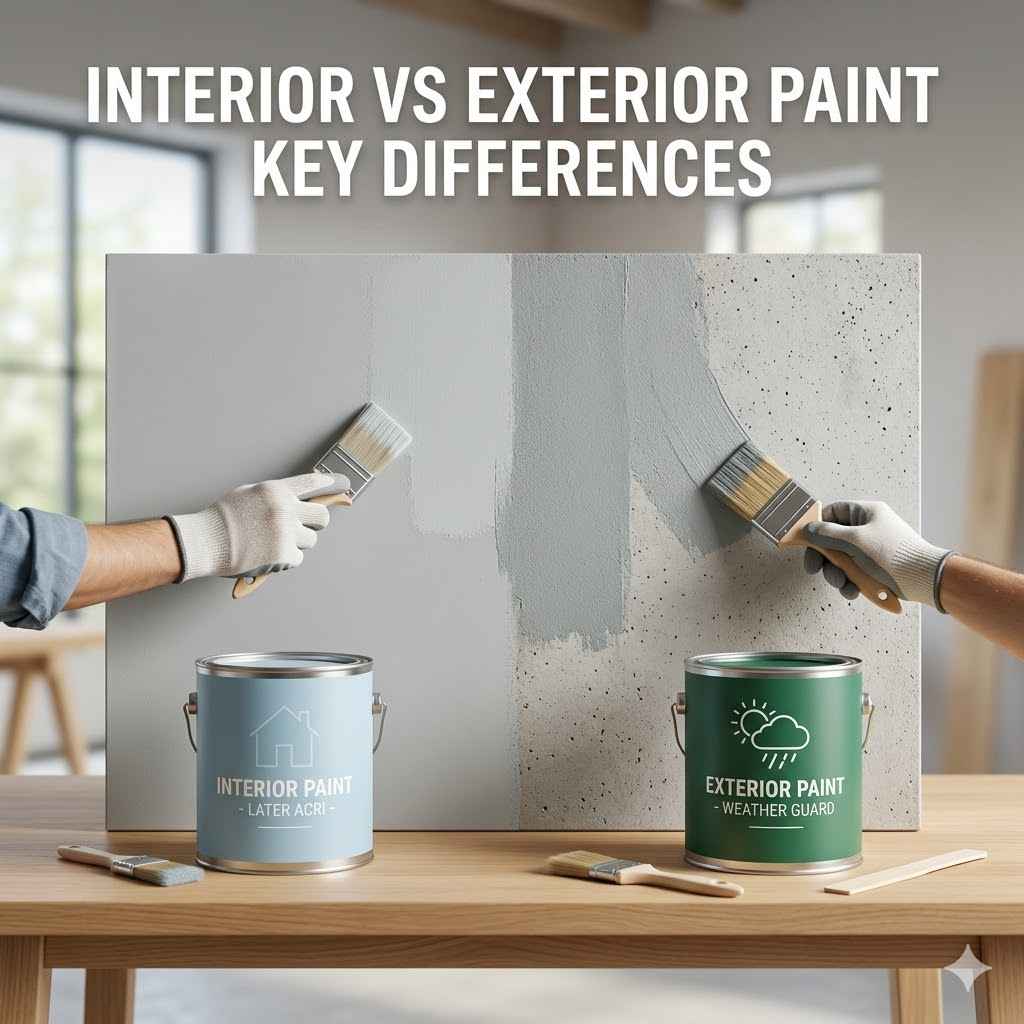
Interior vs Exterior Paint Key Differences
Choosing the right paint can feel a bit confusing when you’re starting out. You might wonder if the paint you use inside your home is the same as what you’d use on the outside walls. It’s a common question for many DIY painters!
The main reason for confusion is that both types are paint, but they have very different jobs to do. This article will make understanding the Interior vs Exterior Paint: Key Differences super simple. We’ll walk through everything you need to know, step by step, so you can pick the perfect paint for your project.
Understanding Interior Paint
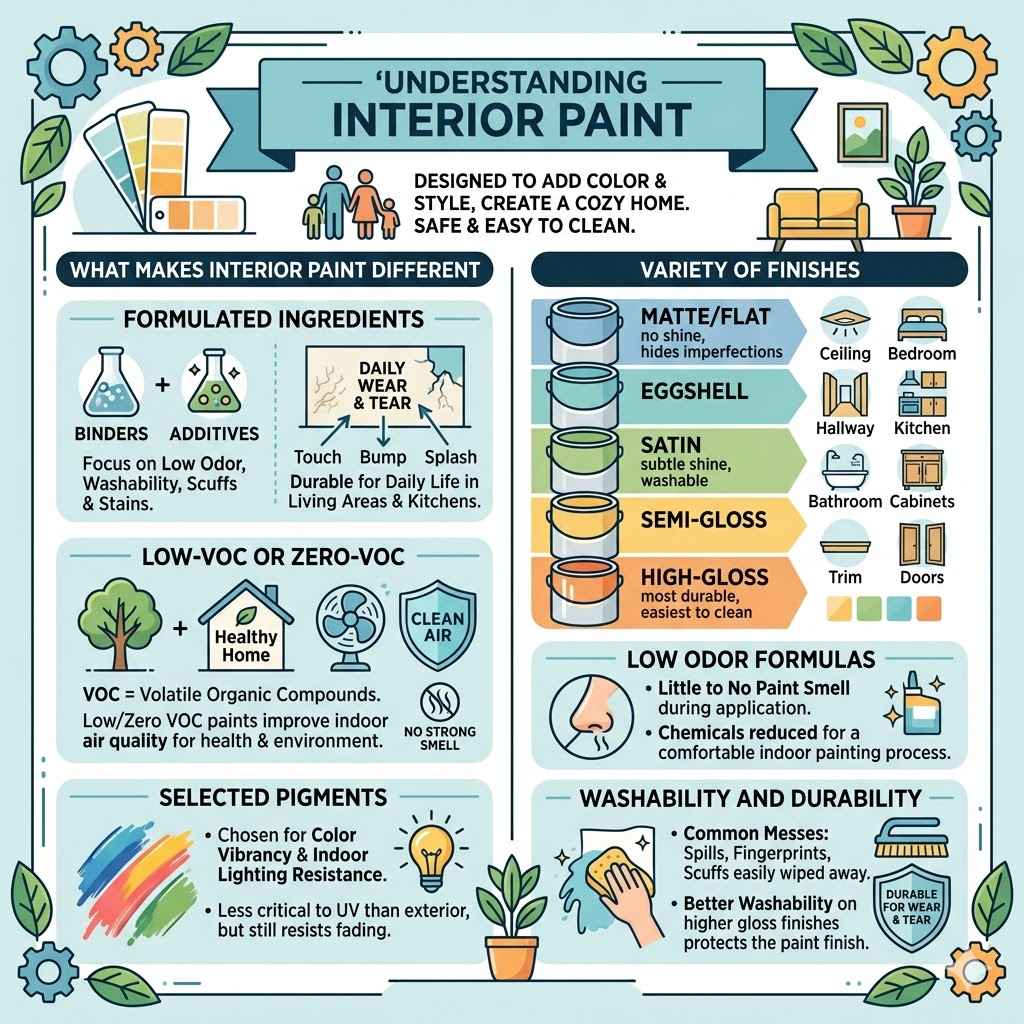
Interior paint is designed to make your home look great and feel cozy. It needs to be safe to be around people and pets, and it should be easy to clean. The main goal of interior paint is to add color and style to your living spaces.
It’s not meant to stand up to harsh weather, sunlight, or moisture from the outside world. Because it stays indoors, durability against the elements isn’t a top priority.
What Makes Interior Paint Different
Interior paints are formulated with different binders and additives than exterior paints. These ingredients focus on things like low odor, washability, and durability against scuffs and stains that happen in daily life. Think about the walls in your living room or kitchen; they get touched, bumped, and sometimes splashed.
Interior paint needs to handle that.
A key aspect of interior paint is its finish. You’ll find options like matte, eggshell, satin, semi-gloss, and high-gloss. Each finish offers a different level of sheen and durability.
Matte finishes hide imperfections well and are good for low-traffic areas like ceilings and bedrooms. Higher gloss finishes, like semi-gloss and high-gloss, are more durable and easier to clean, making them ideal for trim, doors, and kitchens or bathrooms where moisture is common.
Many interior paints also come in “low-VOC” or “zero-VOC” formulas. VOC stands for Volatile Organic Compounds, which are chemicals that can be released into the air as paint dries. These compounds can cause health issues and have a strong smell.
Low-VOC and zero-VOC paints are better for indoor air quality and are often preferred by homeowners concerned about health and the environment.
Consider the pigments used in interior paints as well. They are chosen for their color vibrancy and ability to withstand fading from indoor lighting. While they don’t face direct sunlight, constant exposure to light can still cause colors to change over time, so UV resistance is still a consideration, though less critical than for exterior paints.
Low Odor Formulas
Interior paints are often formulated to have very little to no smell. This is important because people spend a lot of time indoors, and strong paint odors can be unpleasant and even unhealthy. Manufacturers use special chemicals to reduce or eliminate the chemicals that cause strong smells, making the painting process more comfortable.
Washability and Durability
A major focus for interior paints is how well they can be cleaned. Spills, fingerprints, and scuffs are common in homes. Paints with better washability allow you to wipe away messes without damaging the paint finish. Higher gloss finishes tend to be more washable and durable against wear and tear.
Variety of Finishes
Interior paints come in many different sheens, from flat to high gloss. This allows homeowners to choose the look and performance they need for each room. A flat finish might be used on a ceiling, while a semi-gloss finish is great for kitchen cabinets because it’s easy to clean and resists moisture.
Exploring Exterior Paint Requirements
Exterior paint has a much tougher job. It’s the first line of defense for your home against the weather. This means it must protect your walls from rain, snow, sun, wind, and temperature changes.
It also needs to look good for a long time, resisting fading and peeling.
The binders and additives in exterior paint are specially chosen for their ability to withstand harsh outdoor conditions. This includes protecting against UV radiation from the sun, which can break down paint and cause it to fade. It also needs to resist moisture, preventing rot and mold growth on your home’s surfaces.
Exterior paints are generally thicker and more durable than interior paints. They need to cover and protect surfaces that might have minor imperfections. The finishes available for exterior paint also differ.
While you can find some sheen options, the primary focus is on protection and long-term color retention, not necessarily the subtle variations in gloss you see indoors.
When choosing exterior paint, consider the climate you live in. Areas with extreme temperature swings might need a paint that can expand and contract without cracking. Coastal areas might need paint that can resist salt spray.
Hot, sunny climates require paint with excellent UV resistance to prevent premature fading.
The preparation of the surface is also a critical step for exterior paint. The surface must be clean, dry, and sound before painting. This often involves scraping loose paint, sanding, and priming.
Proper preparation ensures the exterior paint adheres well and provides the maximum protection and longevity.
Weather Resistance
Exterior paints must endure the elements. This includes protection from rain, snow, humidity, and extreme temperature fluctuations. They contain special ingredients to prevent water from penetrating the paint film, which helps stop rot, mold, and mildew from growing on your home’s exterior surfaces.
UV Protection and Color Retention
Sunlight’s ultraviolet (UV) rays can break down paint over time, causing it to fade, chalk, or become brittle. Exterior paints contain UV blockers and pigments that are specifically designed to resist fading and keep their color vibrant for many years, even when exposed to intense sunlight.
Flexibility and Adhesion
Exterior surfaces expand and contract with temperature changes. Good exterior paint needs to be flexible enough to move with the surface without cracking or peeling. Strong adhesion is also vital to ensure the paint sticks firmly to the surface and doesn’t lift or bubble, especially in windy conditions.
Key Differences Explained
The primary distinction between interior and exterior paints lies in their intended purpose and the challenges they are designed to overcome. Interior paint focuses on aesthetics, safety, and ease of use within a controlled environment. Exterior paint, on the other hand, is a protective barrier engineered for resilience against the harsh, unpredictable forces of nature.
This fundamental difference dictates their formulation. Exterior paints contain stronger binders that offer superior adhesion and flexibility, allowing them to expand and contract with temperature changes without cracking. They also include robust additives like mildewcides and UV inhibitors, absent in most interior paints, to combat the specific threats found outdoors.
For instance, a paint designed for a south-facing wall in a desert climate would prioritize exceptional UV resistance, while a paint for a shaded, damp wall in a rainforest would emphasize mildew resistance.
The durability requirements also vary significantly. An interior wall might be wiped down occasionally, but an exterior surface endures constant exposure to dirt, dust, pollutants, and the physical impacts of wind-blown debris. Therefore, exterior paints are built to withstand more aggressive cleaning and general wear and tear over a much longer period.
The lifespan of exterior paint is typically measured in many years, whereas interior paint might be repainted more for aesthetic reasons than out of necessity due to wear.
VOC content is another area where differences are often apparent, though regulations are pushing interior paints to be lower in VOCs. Historically, exterior paints could contain higher levels of VOCs because the fumes dissipate more readily outdoors. However, environmental concerns are leading to more eco-friendly exterior formulations as well.
It’s always wise to check the label for specific VOC information for both types.
Durability and Performance
When we talk about durability, exterior paint truly shines. It’s built like a shield for your home. Think about how much a house exterior endures compared to an indoor wall.
Wind can whip dust and debris against it, rain can soak it, and the sun can bake it. Exterior paint needs to withstand all of this without breaking down.
This means exterior paints often use tougher binders, which are the components that form the paint film and hold the pigment together. These binders provide excellent adhesion to surfaces like wood, vinyl siding, stucco, and brick. They also offer superior flexibility, allowing the paint to expand and contract as the building materials shift with temperature changes.
This flexibility prevents the paint from cracking or peeling.
Interior paints are durable enough for indoor use, meaning they can handle everyday scuffs and spills. However, they don’t have the same level of resilience as their outdoor counterparts. Trying to use exterior paint indoors might result in a finish that is too hard or too glossy for the desired look, and it might off-gas for longer periods than intended for indoor use.
The performance criteria are also distinct. For exterior paint, performance means resisting mildew, algae, chalking (where the binder breaks down, leaving a powdery residue), and fading. For interior paint, performance relates to how well it hides imperfections, how easily it can be washed, and its low-odor qualities.
A study by the Paint Quality Institute found that high-quality exterior paints can last 10 years or more with proper application and maintenance, significantly longer than the average repaint cycle for interior walls, which is often around 3-5 years for high-traffic areas.
Composition and Ingredients
The ingredients in paint are what give it its unique properties. For exterior paint, certain components are absolutely essential for protection. Acrylic is a very common and effective binder in exterior paints.
It’s known for its flexibility, durability, and resistance to UV rays and moisture. Many high-performance exterior paints are 100% acrylic.
Exterior paints also contain pigments that are specially treated to resist fading from sunlight. They might include titanium dioxide for opacity and durability, as well as other color pigments that are formulated for outdoor use. Additives play a huge role, too.
These can include mildewcides to prevent mold and algae growth, especially in humid climates, and coalescing agents that help the paint film form properly when applied.
Interior paints, while also using binders like acrylic, vinyl acrylic, or latex, might prioritize different properties. For example, low-VOC formulas are often achieved by using different types of binders and additives that release fewer harmful chemicals. The pigments used in interior paints are chosen for their color vibrancy and ability to be tinted to a vast array of shades.
They don’t need the same level of UV resistance as exterior paints, though some fading can occur from indoor light over extended periods.
Washability in interior paints is often achieved through the binder and the finish. Higher gloss finishes have tighter molecular structures, making them less porous and easier to clean. Some interior paints also include ceramic microspheres, which are tiny, hard particles that increase the paint’s durability and washability without making it look overly glossy.
A key ingredient difference is the absence of robust mildewcides in many standard interior paints, as indoor environments typically have less moisture and better air circulation. However, for bathrooms and kitchens, specific “kitchen and bath” interior paints often do contain mildew inhibitors.
Here’s a simple comparison of common ingredients:
| Ingredient Type | Interior Paint Focus | Exterior Paint Focus |
|---|---|---|
| Binder | Washability, Low Odor, Scuff Resistance (e.g., Acrylic Latex) | Flexibility, UV Resistance, Adhesion, Water Resistance (e.g., 100% Acrylic) |
| Pigments | Color Vibrancy, Wide Tinting Range | Fade Resistance, UV Stability |
| Additives | Low VOCs, Mildew Inhibitors (for specific rooms), Scuff Resistance Enhancers | Mildewcides, Algaecides, UV Blockers, Rheology Modifiers (for flow and leveling) |
Application and Surface Preparation
The way you apply paint and prepare the surface is also critical, and these steps differ between interior and exterior projects. For exterior painting, surface preparation is often more extensive. You need to ensure the surface is clean and free of dirt, grime, chalking, and any loose or peeling paint.
This might involve power washing, scraping, sanding, and sometimes applying a chemical cleaner to kill mildew.
Primer is almost always recommended for exterior projects, especially when painting over a different color, bare wood, or stained surfaces. Exterior primers are formulated to enhance adhesion, block stains, and provide a uniform base for the topcoat, significantly improving the paint’s longevity. Some exterior paints are even “paint and primer in one,” but a separate, high-quality primer usually offers better results for challenging surfaces.
Interior painting preparation is generally less intensive. You’ll still need to clean the walls, fill any holes or cracks with spackle, and sand them smooth. For most interior surfaces, a good quality interior primer will suffice.
However, if you’re painting over a glossy surface or a dark color, priming is essential for good coverage and adhesion. Special primers are available for tricky surfaces like tile or laminate.
When applying, brush and roller techniques might be similar, but the drying times and environmental conditions are vastly different. Exterior paints need to be applied within a specific temperature range and when there’s no rain expected. Humidity can also affect drying and curing.
Interior paints can often be applied in a wider range of temperatures and humidity levels, and they typically have faster recoat times.
A common mistake in exterior painting is rushing the prep work. This can lead to premature peeling and failure, no matter how good the paint is. For instance, painting over a chalky surface without proper cleaning and priming is a recipe for disaster, as the new paint has nothing solid to adhere to.
Here’s a sample scenario for exterior preparation:
- Power Wash: Clean the entire exterior surface to remove dirt, mold, and chalking. Let it dry for at least 24-48 hours.
- Scrape and Sand: Remove any loose or peeling paint with a scraper. Sand the edges of the scraped areas smooth.
- Apply Primer: Use a high-quality exterior primer, especially on bare wood or stained areas.
- Apply Topcoats: Apply two coats of exterior paint for maximum durability and color depth.
When to Use Which Paint
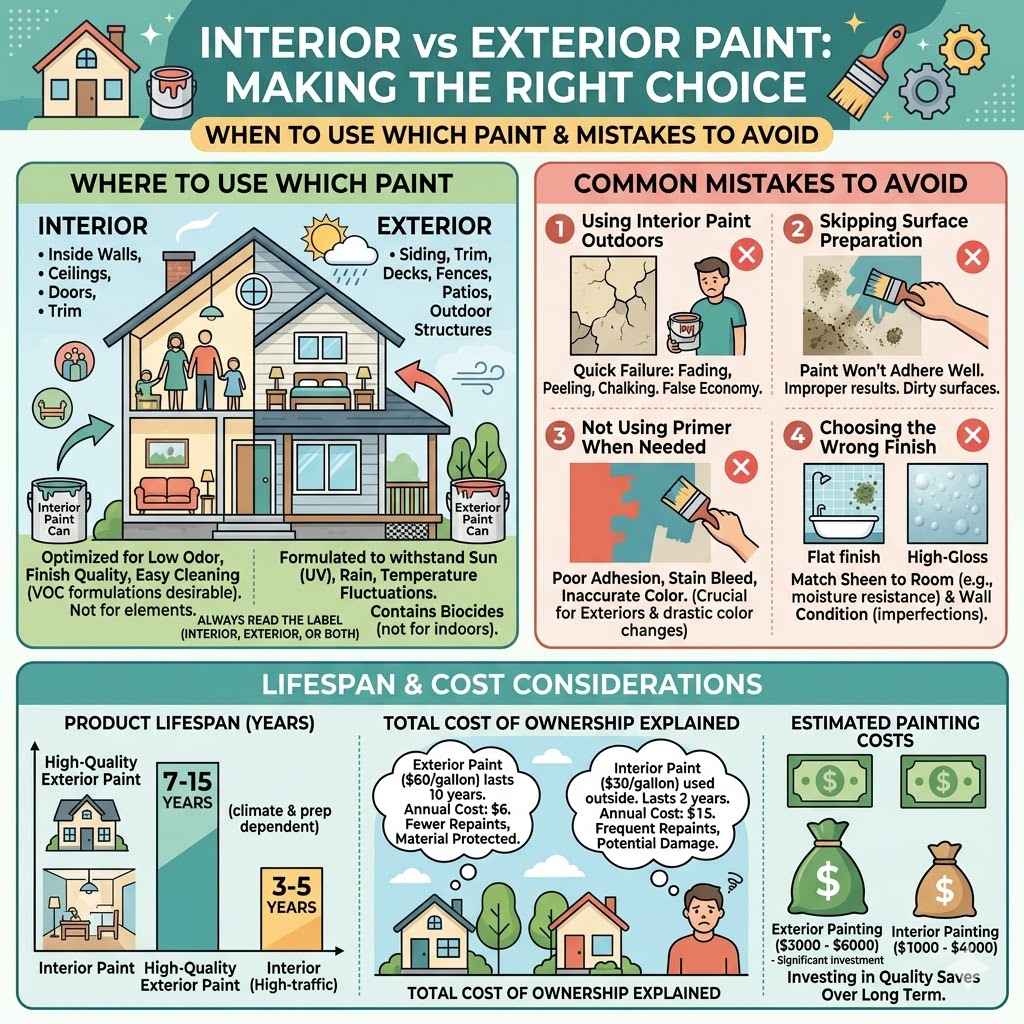
The decision to use interior or exterior paint is straightforward once you understand their purpose. Interior paint is exclusively for use on the inside walls, ceilings, doors, and trim of your home. Exterior paint is strictly for surfaces that are exposed to the elements – your home’s siding, trim, decks, fences, and any other outdoor structures.
Using interior paint on an exterior surface is a recipe for early failure. It simply doesn’t have the protective qualities needed to withstand sun, rain, and temperature fluctuations. It will likely chalk, fade, peel, and crack very quickly, leading to more work and expense down the line.
The money saved on cheaper interior paint will be lost in repeated repainting and potential damage to the underlying material.
Conversely, using exterior paint indoors is generally not recommended, though it won’t cause immediate structural damage. Exterior paints can have a stronger odor, take longer to cure fully, and their finishes might not be as aesthetically pleasing for indoor use. For example, a high-gloss exterior paint might look too harsh on an interior door compared to its interior counterpart.
Also, some exterior formulations might contain biocides that are not necessary or desirable for indoor air quality.
Always read the paint can label carefully. It will clearly state whether the paint is intended for interior use, exterior use, or both. Some products are versatile, but it’s rare for an interior-specific paint to be suitable for outdoor use.
If a paint is labeled for both interior and exterior use, it typically offers a balance of properties, but it might not perform as well as a specialized paint in either category.
Mistakes to Avoid
One of the biggest mistakes people make is trying to save money by using interior paint on the outside of their house. This is a false economy. Exterior paint is formulated to withstand harsh weather, UV rays, and moisture.
Interior paint, designed for a controlled environment, will break down rapidly when exposed to the elements. You’ll end up repainting much sooner and potentially dealing with damage to your home’s structure.
Another common error is not preparing the surfaces properly. For exteriors, this means not cleaning off dirt, mold, or peeling paint. For interiors, it might mean not filling holes or sanding smooth.
Paint adheres best to clean, smooth surfaces. Skipping these steps means the paint won’t last as long and won’t look as good.
Using the wrong finish for the job is also a mistake. For example, using a flat finish in a high-moisture area like a bathroom can lead to mold growth because flat finishes are more porous. Similarly, using a very high-gloss finish on interior walls with many imperfections will highlight every bump and dent.
Choosing the right sheen for the room’s function and the wall’s condition is important.
Finally, not using primer when needed is a frequent oversight. Primer creates a uniform surface, improves adhesion, and can block stains. For exterior painting, it’s often essential for durability.
For interiors, it’s crucial when changing colors drastically or painting over difficult surfaces.
Here are some common mistakes:
Using Interior Paint Outdoors
This is the most critical mistake. Exterior paint protects your home. Interior paint will fail quickly when exposed to weather, leading to costly repairs.
Skipping Surface Preparation
Painting over dirt, grease, or peeling paint means the new paint won’t stick well. Proper cleaning, scraping, and sanding are vital for lasting results.
Not Using Primer When Needed
Primer ensures good adhesion, blocks stains, and helps achieve true color. It’s especially important for exterior painting and drastic color changes indoors.
Choosing the Wrong Finish
A flat finish may not be washable enough for busy areas, while a high-gloss finish can show imperfections on walls. Match the sheen to the room and surface.
Product Lifespan and Cost Considerations
When it comes to product lifespan, exterior paint is designed for longevity. A high-quality exterior paint job can last anywhere from 7 to 15 years, depending on the quality of the paint, the climate, and the preparation. This extended lifespan means fewer repaints, saving you time and money over the long term.
The cost per gallon of exterior paint is typically higher than interior paint because of the specialized ingredients required for weather resistance and durability.
Interior paint, while less expensive per gallon, has a shorter lifespan. For high-traffic areas, you might repaint every 3-5 years for aesthetic reasons or to cover wear and tear. In lower-traffic areas like guest rooms or ceilings, it could last longer.
The cost-effectiveness of interior paint comes from its ease of application, lower material cost, and the fact that it’s not subjected to the same environmental stresses as exterior paint.
Considering the total cost of ownership is key. While a can of exterior paint might cost more upfront, if it lasts twice as long as interior paint would in an outdoor setting (which it would!), it’s actually more cost-effective. The same logic applies indoors; using the appropriate interior paint ensures it performs as expected for its intended duration.
For example, if a high-quality exterior paint costs $60 per gallon and lasts 10 years, the annual cost is $6. If a lower-quality interior paint were used outdoors and only lasted 2 years before needing replacement at $30 per gallon, the annual cost would be $15, not to mention the potential damage and added labor.
Statistics show that the average cost of painting the exterior of a home can range from $3,000 to $6,000, while interior painting can range from $1,000 to $4,000, depending on the size of the home and the complexity of the job. These figures highlight the significant investment in exterior paint and the need for quality products that deliver long-term value.
Frequently Asked Questions
Question: Can I use interior paint on my deck?
Answer: No, you absolutely should not use interior paint on your deck. Decks are exposed to heavy foot traffic, moisture, sunlight, and temperature changes. Interior paint is not designed to withstand these conditions and will peel, crack, and wear away very quickly, offering no protection to the wood.
Question: Does exterior paint have a stronger smell than interior paint?
Answer: Generally, yes. Exterior paints often contain stronger chemicals and solvents to provide durability and weather resistance, which can result in a more potent smell during application and drying. However, many modern exterior paints are formulated with lower VOCs and improved odor profiles.
Question: How can I tell if a paint is for interior or exterior use?
Answer: The easiest way to tell is to check the paint can label. It will clearly state whether the paint is intended for interior use, exterior use, or if it is suitable for both. Always read the product description and intended use on the can before purchasing.
Question: Will exterior paint last longer indoors than interior paint?
Answer: While exterior paint is more durable, it’s usually not the best choice for interior use. It might have a finish that’s too hard or too glossy for walls, and some formulations can off-gas stronger or longer than interior paints, affecting indoor air quality. It’s best to use products designed for their intended environments.
Question: Can I use exterior paint on metal outdoor furniture?
Answer: Yes, exterior paint is ideal for metal outdoor furniture. It provides the necessary protection against rust, UV rays, and moisture, ensuring your furniture looks good and lasts for years. Ensure the metal is clean and properly primed before applying the exterior paint.
Summary
Understanding the distinction between interior and exterior paint is vital for successful DIY projects. Interior paint focuses on aesthetics, safety, and ease of cleaning indoors. Exterior paint prioritizes protection against weather, UV rays, and moisture to safeguard your home’s structure.
Always choose the paint designed for its specific environment to ensure durability, longevity, and the best possible finish for your project.