Is a Ceiling Fan An Appliance? Essential Guide
Quick Summary:
Yes, a ceiling fan is generally considered a home appliance. It’s an electrical device designed to perform a specific function, in this case, circulating air to improve comfort. Like other appliances, it requires electricity to operate and contributes to the functionality of your home.
Hey there, DIYers and home improvement enthusiasts! Md Meraj here, ready to tackle a question that might seem simple but can spark some confusion: Is a ceiling fan an appliance? You’ve probably got one whirring away in your living room or bedroom, keeping things cool. But when we talk about “appliances,” do ceiling fans fit the bill? It’s a common question, especially when you’re thinking about home energy use, maintenance, or even just how to describe your home’s features. Don’t worry, we’ll break it down in a way that makes perfect sense. We’ll explore what defines an appliance and why your trusty ceiling fan definitely qualifies. Stick around, and by the end of this guide, you’ll have a clear answer and a better understanding of this common household fixture!
Understanding What Makes Something an Appliance
Before we can definitively say whether a ceiling fan is an appliance, let’s get a clear picture of what an appliance actually is. Think about the devices in your home that plug into the wall or are hardwired into your electrical system to perform a specific task. These are usually the items we consider appliances. They are designed to make our lives easier by automating or assisting with household chores or comfort. From your refrigerator keeping food cold to your washing machine cleaning clothes, appliances are the workhorses of modern living.
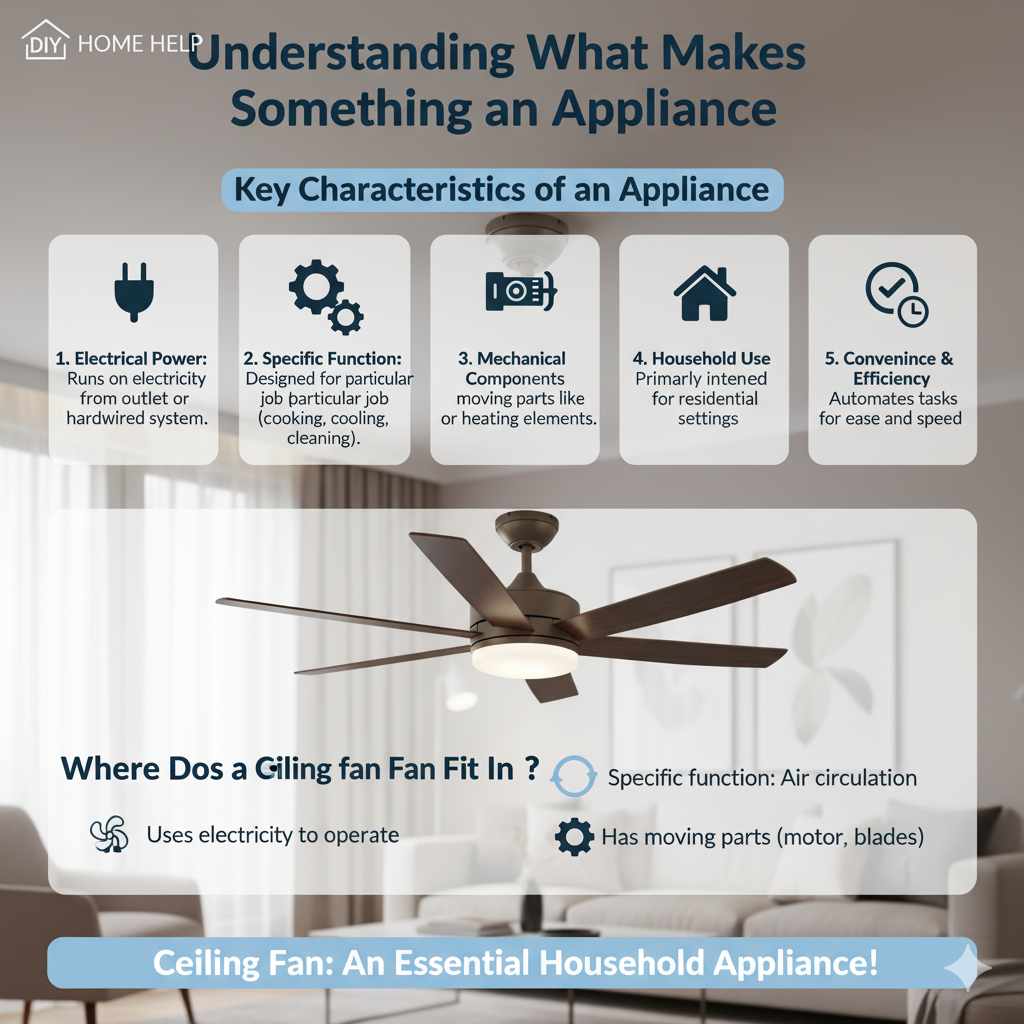
The key characteristics of an appliance typically include:
- Electrical Power: They run on electricity, either from an outlet or hardwired into your home’s system.
- Specific Function: Each appliance is designed to do a particular job, like cooking, cleaning, cooling, or entertainment.
- Mechanical Components: Most appliances involve moving parts, such as motors, heating elements, or fans, to perform their function.
- Household Use: They are primarily intended for use within a residential setting.
- Convenience and Efficiency: Their purpose is to provide convenience and often to perform a task more efficiently than manual methods.
When you look at these points, you can start to see how a ceiling fan fits right in. It uses electricity, it has a specific function (air circulation), it has a motor with moving parts (the blades), and it’s definitely used in homes to increase comfort.
The Ceiling Fan: More Than Just a Pretty Spinner
A ceiling fan is a beautiful piece of engineering designed to enhance your home’s comfort and energy efficiency. At its core, it’s a motorized device with rotating blades that push air downwards, creating a cooling breeze. This breeze doesn’t actually lower the room’s temperature, but it does help evaporate moisture from your skin, making you feel cooler. This is a phenomenon known as evaporative cooling. For more on how air circulation impacts comfort, you can check out resources from organizations like the U.S. Department of Energy’s Energy Saver program, which often discusses the role of fans in home energy efficiency.
Beyond just cooling, many modern ceiling fans offer additional features:
- Lighting: Many fans come equipped with integrated light fixtures, serving a dual purpose as both an air circulator and a room light.
- Reverse Function: In cooler months, the blades can be reversed to push warm air that has risen to the ceiling back down into the living space, helping to make your heating system more efficient.
- Variable Speeds: Most fans offer multiple speed settings, allowing you to customize the airflow to your preference.
- Remote Control: Modern fans often come with remote controls for convenient operation of speed, lights, and reverse function.
These features further solidify its role as a functional household item, much like other appliances that combine multiple functions for user convenience.
Categorizing the Ceiling Fan: Appliance or Fixture?
This is where the discussion often gets a bit nuanced. In home improvement and electrical contexts, we sometimes differentiate between “appliances” and “fixtures.”
Fixtures are typically items that are permanently attached to the building’s structure. This can include things like light fixtures, sinks, toilets, and built-in cabinetry. They are part of the property itself.
Appliances, on the other hand, are usually electrical or gas-powered devices that perform a specific function. While they might be permanently installed (like a dishwasher or oven), their primary identity is tied to their operational function rather than their structural integration.
So, where does a ceiling fan land? Because it’s an electrical device with a motor and moving parts designed to perform the specific function of air circulation and often lighting, it clearly aligns with the definition of an appliance. While it is indeed a fixture in the sense that it’s permanently mounted to the ceiling, its operational nature and reliance on electrical power for its primary function place it firmly in the appliance category for most practical purposes.
Consider it this way: your oven is hardwired into your kitchen, making it a fixture, but we still call it an appliance because its function is cooking. The same logic applies to a ceiling fan.
Why It Matters: Practical Implications of a Ceiling Fan Being an Appliance
Understanding that a ceiling fan is an appliance has several practical implications for homeowners:
- Energy Consumption: Like other appliances, ceiling fans consume electricity. Knowing this helps you manage your home’s energy usage. The U.S. Environmental Protection Agency’s ENERGY STAR program provides valuable insights into energy-efficient appliances, and while ceiling fans themselves might not always have an ENERGY STAR rating, their efficient operation is a key factor in home energy savings.
- Maintenance and Repair: When a ceiling fan malfunctions, you’ll typically look for troubleshooting guides or technicians who deal with home appliances. This might involve checking the motor, cleaning the blades, or inspecting the electrical connections – tasks similar to those for other motor-driven appliances.
- Insurance and Home Inventory: When documenting your home’s contents for insurance purposes, you might categorize ceiling fans as major home appliances, especially if they are high-end models or include complex lighting systems.
- Home Improvement Planning: When planning renovations, understanding the electrical requirements and placement of ceiling fans as appliances can be crucial for electrical work and overall design.
Essentially, classifying it as an appliance helps you understand its role in your home’s electrical system and its contribution to your household’s functionality and comfort.
Types of Ceiling Fans and Their Appliance Status
The classification of a ceiling fan as an appliance holds true across various types:
- Standard Ceiling Fans: These are the most common, designed purely for air circulation.
- Ceiling Fans with Lights: These combine air circulation with illumination, acting as both an appliance for comfort and a lighting fixture.
- Hugger or Low-Profile Fans: Designed for rooms with low ceilings, they still function as air-circulating appliances.
- Damp-Rated and Wet-Rated Fans: For use in covered porches or bathrooms, these are specialized appliances built to withstand humidity.
- Smart Ceiling Fans: These connect to Wi-Fi and can be controlled via smartphone apps or voice assistants, making them sophisticated electronic appliances.
Regardless of their specific design or features, their core function as electrically powered devices for home comfort and utility keeps them within the appliance umbrella.
Ceiling Fan vs. Other Home Appliances: A Comparison
Let’s put a ceiling fan into perspective by comparing it to other common household appliances:
| Appliance | Primary Function | Power Source | Mechanical Components | Is it an Appliance? |
|---|---|---|---|---|
| Ceiling Fan | Air circulation, lighting | Electricity | Motor, blades | Yes |
| Refrigerator | Cooling and preserving food | Electricity | Compressor, motor, fans | Yes |
| Washing Machine | Cleaning clothes | Electricity | Motor, pump, timer | Yes |
| Toaster | Toasting bread | Electricity | Heating elements | Yes |
| Wall Clock (Battery Operated) | Telling time | Battery | Small motor, gears | Generally not considered a major appliance; more of an accessory. |
| Light Fixture (Standard Bulb) | Illumination | Electricity | Minimal (socket, wiring) | Primarily a fixture; less of an appliance due to lack of complex mechanical function. |
As you can see from the table, the ceiling fan shares many characteristics with other devices we universally recognize as appliances. Its reliance on a motor for mechanical action and its purpose of enhancing the home environment through a specific function are key indicators.
DIY Installation: Safety First!
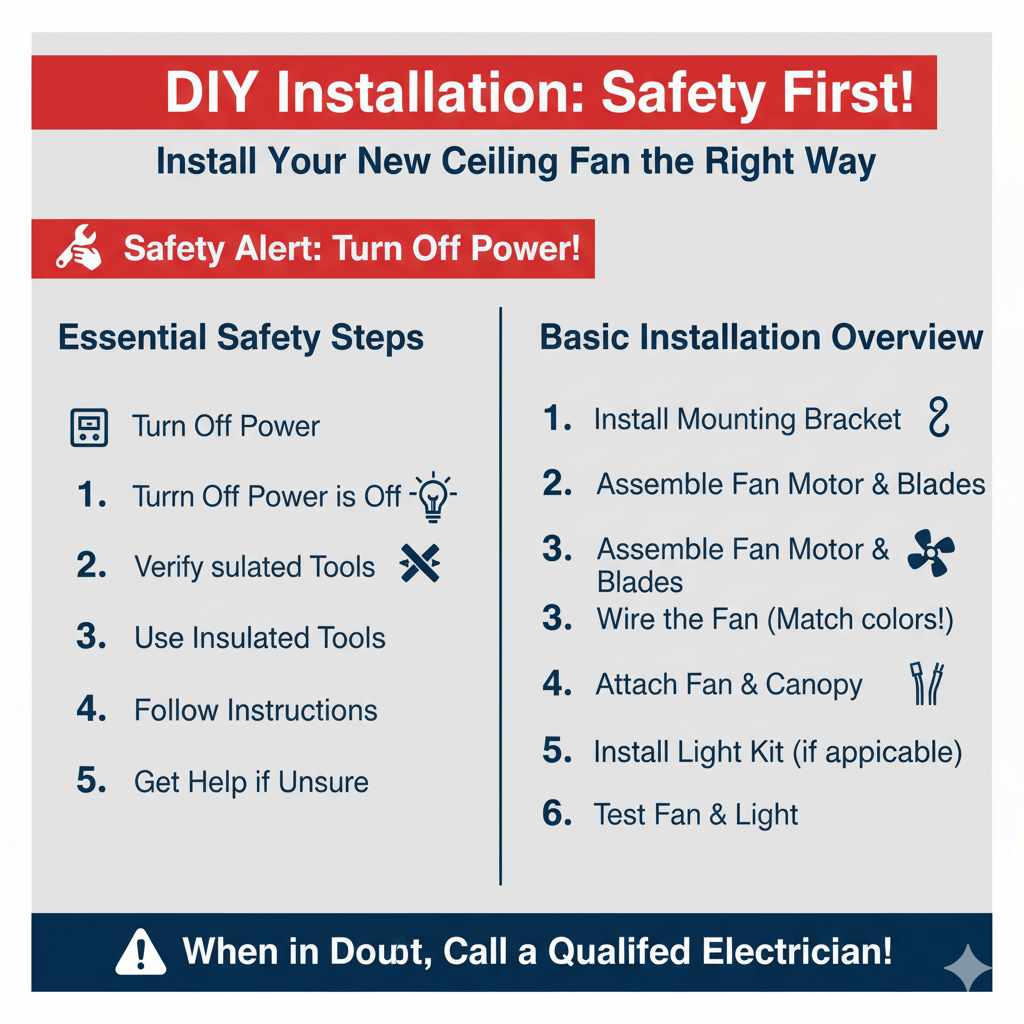
If you’re thinking about installing or replacing a ceiling fan yourself, safety is paramount. Remember, you’re working with electricity. Always ensure the power to the circuit you’re working on is turned OFF at the breaker box before you begin. If you’re unsure about any step, it’s always best to consult a qualified electrician or a detailed guide from a reputable source like This Old House.
Here’s a basic overview of steps involved, but always refer to your fan’s specific installation manual:
- Turn Off Power: Locate the circuit breaker for the room and switch it off. Test the existing light or fan to ensure power is indeed off.
- Remove Old Fixture (if applicable): Carefully detach any existing light fixture or fan, disconnecting wires.
- Install Mounting Bracket: Secure the new fan’s mounting bracket to the ceiling electrical box. Ensure the box is rated for ceiling fan support, as fans are heavier and create more vibration than standard light fixtures. You might need to reinforce the box.
- Assemble Fan Motor and Blades: Follow the manufacturer’s instructions to attach the downrod, motor housing, and fan blades.
- Wire the Fan: Connect the fan’s wires to the house wiring (usually black to black, white to white, and green/bare copper for ground). Refer to your fan’s manual for specific color coding.
- Attach the Fan: Hang the fan motor onto the mounting bracket.
- Install Canopy: Secure the canopy to cover the wiring and mounting bracket.
- Install Light Kit (if applicable): Attach the light fixture and install bulbs.
- Restore Power and Test: Turn the power back on at the breaker and test the fan and light using its pull chains or remote.
Working safely ensures you can enjoy your new “appliance” without any unwanted surprises!
Frequently Asked Questions (FAQ)
Q1: Is a ceiling fan considered a major appliance?
While ceiling fans are appliances, they are typically not classified as “major appliances” in the same way that refrigerators, ovens, or washing machines are. Major appliances are usually larger, more complex, and consume significantly more energy. Ceiling fans are considered smaller or accessory appliances.
Q2: Do I need a special electrical box for a ceiling fan?
Yes, absolutely. Standard electrical boxes are designed to hold the weight of a light fixture. Ceiling fans are heavier and vibrate, so they require a special ceiling fan-rated electrical box that is securely mounted to the ceiling joists to prevent falling and ensure safe operation. Always check the box’s rating before installation.
Q3: How much electricity does a ceiling fan use compared to air conditioning?
Ceiling fans use significantly less electricity than air conditioning. A typical ceiling fan uses about 15-75 watts, depending on its speed and size. In contrast, a central air conditioning unit can use 3,000-5,000 watts or more. Using a ceiling fan in conjunction with AC can allow you to set your thermostat a few degrees higher, saving considerable energy.
Q4: Can I install a ceiling fan myself?
Yes, many homeowners successfully install ceiling fans themselves. However, it involves working with electrical wiring, so it’s crucial to prioritize safety. If you’re not comfortable with electrical work or unsure about any step, it’s always best to hire a qualified electrician to ensure the installation is done correctly and safely.
Q5: What’s the difference between a ceiling fan and an air purifier?
A ceiling fan’s primary function is to circulate air, creating a cooling breeze through evaporation and improving air movement within a room. An air purifier, on the other hand, is designed to remove pollutants, allergens, and odors from the air using filters. While both improve air quality and comfort, they serve distinct purposes.
Q6: Does a ceiling fan make my room colder?
A ceiling fan doesn’t actually lower the room’s temperature. Instead, it creates a wind-chill effect by increasing the rate of perspiration evaporation from your skin, making you feel cooler. In winter, many fans have a reverse mode that pushes warm air down, helping to make the room feel warmer.
Q7: If a ceiling fan breaks, is it a warranty issue for an appliance?
Yes, if your ceiling fan is still under warranty and breaks due to a manufacturing defect, it would typically be handled under the appliance’s warranty. The terms of the warranty will depend on the manufacturer, and it usually covers parts and labor for a specified period. Keep your proof of purchase and the installation manual.
Conclusion
So, to put it simply, yes, a ceiling fan is definitely an appliance. It’s an electrically powered device designed with mechanical components to perform the specific function of circulating air and often providing light, all with the goal of enhancing your home’s comfort and efficiency. While it’s permanently installed like a fixture, its operational purpose and reliance on electricity firmly place it in the appliance category.
Understanding this classification helps you appreciate its role in your home, from managing energy use to knowing how to approach maintenance and repairs. Whether you’re looking to install a new one for the first time or simply curious about the devices that make your house a comfortable home, you can now confidently say that your ceiling fan is a hardworking appliance contributing to your daily living. Keep those blades spinning and enjoy the comfort they bring!