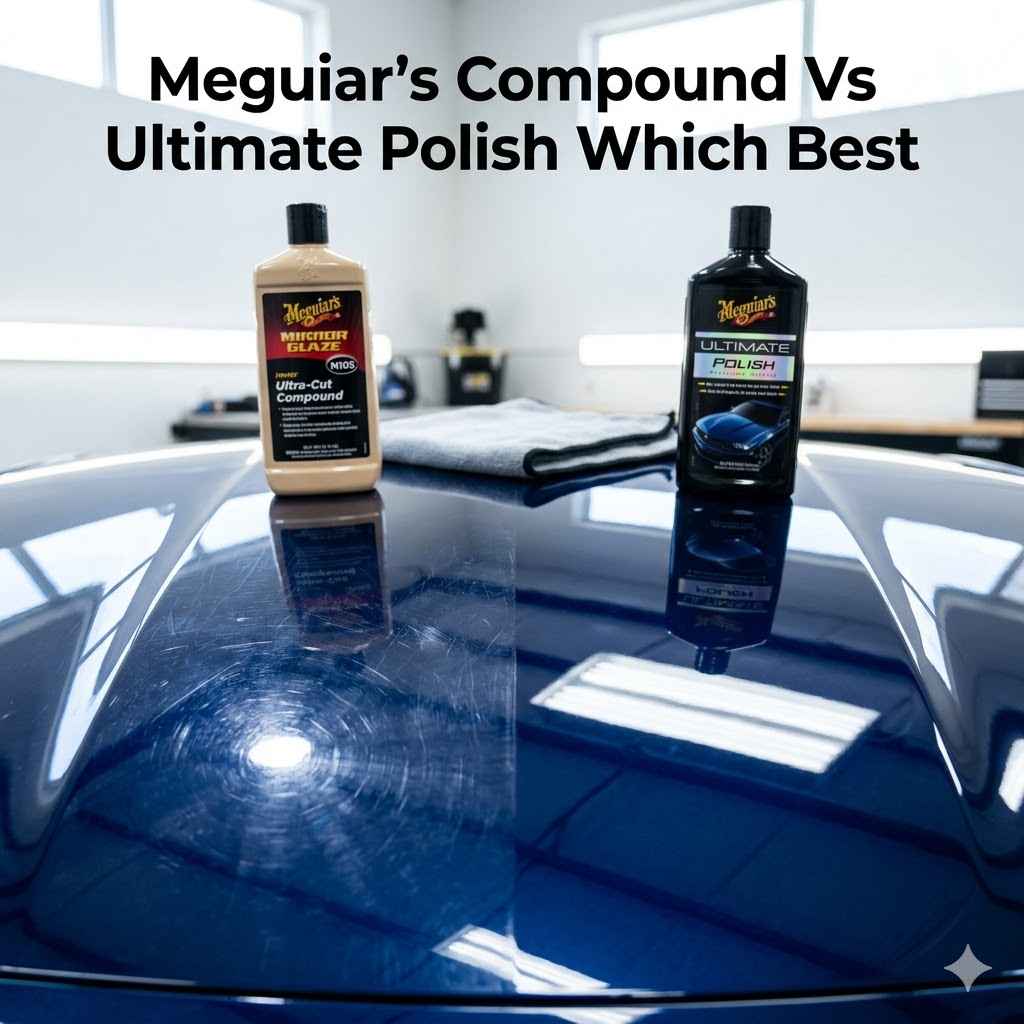
Meguiar’s Compound Vs Ultimate Polish: Which Best
Picking the right Meguiar’s product can feel tricky, especially when you’re just starting out. Many people wonder about Meguiar’s Compound vs Ultimate Polish: Which Best? because they look similar and are meant for paint correction. It’s easy to get confused about what each one does and when to use it.
Don’t worry, though. We’ll break it down simply so you can get that shiny car finish you want. Let’s look at how to make the best choice for your car.
Meguiar’s Compound vs Ultimate Polish Explained
Understanding the difference between Meguiar’s Compound and Ultimate Polish is key to achieving a great finish on your car’s paint. These products serve distinct purposes in the paint correction process, and using them correctly makes a big impact. Compound is a more aggressive product designed to remove deeper defects from your paintwork.
Polish is milder and refines the surface, removing lighter marks and adding shine. Knowing which one to reach for depends on the condition of your paint.
Many car owners face the challenge of deciding between these two popular Meguiar’s products. It’s common to see them side-by-side in auto detailing stores, and the labels can be confusing if you’re new to paint care. The goal of this section is to clear up any confusion.
We will explain what each product is made for. This will help you decide which one you really need for your car.
What Is Meguiar’s Compound?
Meguiar’s Compound, often referred to as a cutting compound, is a powerful abrasive product. Its main job is to remove significant paint defects like deep scratches, oxidation, and stubborn water spots. Think of it as the heavy-duty tool in your paint correction kit.
It works by using larger abrasive particles to grind down the clear coat layer of your car’s paint. This process removes the damaged layer and reveals a smoother surface underneath.
The abrasives in a compound are coarser than those in a polish. This is what allows it to cut through imperfections quickly. However, because it’s so strong, it can also leave behind swirl marks or a hazy finish if not used carefully or followed up properly.
Therefore, it’s essential to use a compound with a light touch and always follow it with a less aggressive product, like a polish, to refine the finish.
The effectiveness of a compound depends on the severity of the paint damage. For instance, if you have deep scratches that you can catch your fingernail on, a compound is likely your first step. It’s also used for removing heavy oxidation that makes paint look dull and faded.
Without using a compound for these issues, a polish would simply not be strong enough to make a difference.
How Abrasives Work In Compounds
Abrasives are tiny, hard particles that work like microscopic sandpaper. In compounds, these particles are relatively large and sharp. When you rub the compound over the paint, these particles create friction.
This friction grinds away the damaged paint surface. The larger the abrasive, the more material it removes and the faster it cuts.
The science behind this is simple mechanical action. As the compound is worked, the larger abrasives break down into smaller ones. This process helps to reduce the aggressiveness over time, but the initial cut is what makes compounds effective for serious damage.
The aim is to remove the top layer of paint where the defects reside, revealing a fresh, smooth surface.
When To Use Meguiar’s Compound
You should reach for Meguiar’s Compound when dealing with noticeable paint imperfections. This includes deeper scratches that you can feel with your fingernail. It is also the go-to product for removing severe oxidation, where the paint has lost its gloss and looks chalky or faded.
Bird droppings that have etched into the paint or deep swirl marks left by improper washing techniques are other common issues that a compound can fix.
Using a compound is crucial if you want to restore a car’s paint to a like-new condition. If the paint is showing its age with dullness and heavy blemishes, a compound is the necessary starting point. It’s not for light cleaning or adding shine; it’s for repairing the paint’s structure.
Think of it as the first step in a multi-stage paint restoration process.
What Is Meguiar’s Ultimate Polish?
Meguiar’s Ultimate Polish is designed for the refinement stage of paint correction. It is a much less aggressive product than a compound. Its primary role is to remove light paint imperfections, such as light swirl marks, haze, and minor scratches that a compound might have left behind.
It also contains rich oils that enhance gloss and reflectivity, making the paint look incredibly deep and shiny.
This polish uses finer abrasive particles. These particles work to smooth out the clear coat without removing a significant amount of material. After using a compound, the surface might be smooth but can look dull or hazed.
Ultimate Polish comes in to clean up this haziness and bring out the paint’s natural shine. It’s the product you use to achieve that showroom-quality finish.
Ultimate Polish is also great for maintaining a car’s paint between more intensive correction sessions. If your car has been recently compounded and polished, regular use of Ultimate Polish can help keep it looking its best. It’s a versatile product that adds a protective shine and removes the everyday light marks that can accumulate.
How Abrasives Work In Polishes
Polishes use very fine abrasive particles. These particles are much smaller and less aggressive than those found in compounds. Their purpose is to gently smooth the surface of the clear coat.
When you apply and work a polish, these fine abrasives level out minor imperfections and remove light scratches.
The abrasives in a polish break down very finely as you work. This breakdown process helps to create a smooth, reflective surface. The goal isn’t to remove a lot of paint, but rather to refine the existing surface to a higher level of clarity and gloss.
It’s like polishing a mirror to make it shine even brighter.
When To Use Meguiar’s Ultimate Polish
Meguiar’s Ultimate Polish is your choice for the finishing steps of paint correction or for light paint enhancement. Use it after a compound to remove any haziness or swirl marks left behind. It’s also ideal for paint that has minor defects, such as light swirl marks from washing, light scratches from drying, or a general dullness that doesn’t require heavy cutting.
If your car’s paint is generally in good shape but could use a boost in shine and clarity, Ultimate Polish is perfect. It can also be used as a standalone product on new or well-maintained paint to add depth and protection. It’s the product that takes your car’s paint from clean to dazzling.
Meguiar’s Compound vs Ultimate Polish Which Best For Your Needs
The question of Meguiar’s Compound vs Ultimate Polish: Which Best? really boils down to the condition of your car’s paint and what you want to achieve. There isn’t one “best” product; rather, there’s a “best” product for a specific job. Understanding the differences we’ve discussed will guide your decision.
It’s not about which product is superior in general, but which one is the right tool for your current situation.
Think about it like fixing a wall. If you have a large hole, you need to patch it with plaster (the compound). Once the patch is dry and smooth, you might lightly sand it and then paint it for a perfect finish (the polish).
You wouldn’t use just paint for a big hole, nor would you use heavy plaster to touch up a tiny scratch. Applying this analogy to car paint, you’ll see how each product has its place.
Assessing Your Car’s Paint Condition
Before you pick up any product, you need to take a close look at your car’s paint. A simple way to do this is by washing and drying your car thoroughly. Then, in good lighting, preferably sunlight or under a strong LED work light, examine the paint surface.
Run your hand lightly over the paint; if you can feel any roughness, you have bonded contaminants.
Next, check for visual defects. Look for:
- Deep Scratches Can you feel them with your fingernail?
- Swirl Marks These look like cobweb patterns, especially under light.
- Oxidation The paint looks dull, chalky, or faded, often on older cars or those left in the sun.
- Water Spots Mineral deposits left behind after water dries, sometimes leaving etching marks.
The presence and severity of these defects will determine if you need a compound, a polish, or both. If the paint is relatively smooth and only shows light haziness or minor swirls, polish alone might be enough. If there are deeper issues, you’ll likely need to start with a compound.
Using Both For Maximum Results
For the best possible outcome, most paint correction jobs benefit from using both Meguiar’s Compound and Ultimate Polish. This is often called a two-step correction process. The compound does the heavy lifting, removing the significant damage.
It corrects the deep scratches and oxidation.
However, the aggressive nature of the compound can leave the paint looking a bit hazy or introduce fine swirl marks. This is where Ultimate Polish comes in. It’s applied after the compound to refine the surface.
It removes those lighter imperfections left by the compound and restores clarity and gloss. This combination ensures that you not only fix the damage but also achieve a deep, mirror-like shine.
Using both products correctly ensures a professional-looking finish. It addresses both the structural damage to the paint and the cosmetic imperfections. This two-step approach is standard in detailing for a reason—it works.
The result is paint that looks far better than it did before any work was done, often looking better than new.
Scenario 1 A Heavily Damaged Car
Imagine a car that has been neglected for years. Its paint is dull, chalky, and covered in deep scratches from automatic car washes and general wear. There are also visible etch marks from bird droppings and heavy swirl marks all over.
This car needs serious help.
In this situation, Meguiar’s Compound is the essential first step. You would apply the compound using a machine polisher or by hand. The compound’s strong abrasives will work to cut down the damaged clear coat, removing the oxidation and the deeper scratches.
This will make a significant difference in the paint’s appearance, but it might still look a bit hazy.
After using the compound and removing all residue, you would then move on to Meguiar’s Ultimate Polish. The polish will refine the surface, removing any fine hazing left by the compound. It will also enhance the gloss and clarity, bringing out a deep, wet-look shine.
The combination of compound and polish is what transforms this heavily damaged car into one with stunning, like-new paint.
Scenario 2 A Car With Light Defects
Now consider a car that is regularly washed and waxed but has started to show light swirl marks from daily use. Perhaps there are a few minor scratches from keys brushing against the paint or some light water spots. The paint isn’t severely damaged, but it lacks that deep, vibrant shine it once had.
For this car, Meguiar’s Compound is likely overkill. You don’t need the aggressive cutting power of a compound. Instead, Meguiar’s Ultimate Polish is the perfect product.
You can apply it to remove the light swirl marks and minor scratches. The polish will level the paint surface and fill in any microscopic imperfections, restoring clarity and that beautiful gloss.
In this case, Ultimate Polish can be used as a standalone product to achieve excellent results. It will brighten the paint, remove light defects, and leave a rich shine. This scenario highlights that sometimes, a less aggressive approach is all that’s needed.
It saves time and effort while still delivering a great-looking finish.
Understanding Paint Thickness And Correction
When you’re working on your car’s paint, it’s important to remember that it’s a very thin layer. The clear coat, which is what you’re usually working with during polishing and compounding, is only a few microns thick. This is why using the correct products and techniques is so vital.
You want to correct defects without removing too much of this precious layer.
Both compounds and polishes work by abrading the clear coat. Compounding removes more material to level out deeper defects. Polishing removes less material to refine the surface and enhance gloss.
Understanding this helps you appreciate why using compound when only polish is needed can be detrimental. It’s about precision and care.
What Is Clear Coat?
The clear coat is the outermost layer of your car’s paint system. It’s a transparent protective coating that sits on top of the color coat. Its main jobs are to protect the paint from environmental damage like UV rays, acid rain, and scratches, and to give the paint its gloss and shine.
Most modern cars have a two-stage or three-stage paint finish, with the clear coat being the final, protective layer.
This layer is what you interact with when you wash, wax, or polish your car. It’s the surface that gets scratched, swirled, and oxidized. Therefore, all paint correction efforts are focused on restoring the clear coat’s integrity and appearance.
When it’s damaged, it needs to be smoothed out and protected again.
The Role Of Paint Thickness Gauges
A paint thickness gauge (PTG) is a tool that measures how thick the paint layer is on your car. It’s an invaluable tool for professional detailers and serious enthusiasts. It helps you understand how much clear coat you have available to work with.
This is crucial when performing paint correction, especially with aggressive compounds.
If you have a very thin clear coat, you need to be extremely cautious with compounds, as you could easily go through the layer, damaging the paint permanently. A PTG allows you to make informed decisions about how much correction you can safely perform. It’s a safety net to prevent costly mistakes.
For example, if the gauge shows only 60 microns of paint, using a very aggressive compound might be too risky.
Statistics show that the average clear coat thickness on a car can range from 30 to 60 microns. However, this can vary significantly depending on the manufacturer and the age of the vehicle. A professional detailer might use a PTG to identify areas where the paint is thinner or thicker, planning their correction strategy accordingly.
Techniques For Using Compounds And Polishes
Whether you use a machine polisher or work by hand, proper technique is essential for both compounds and polishes. For compounding, start with a moderate amount of product on your applicator pad. Work the product over a small section of the paint (about 2×2 feet) using overlapping passes.
For hand application, use firm, even pressure in a cross-hatch pattern (back and forth, then up and down).
With machine polishers (like a random orbital or rotary polisher), follow the manufacturer’s instructions regarding speed and pressure. Always keep the polisher moving to avoid generating excessive heat. For polishes, the technique is similar but generally requires less pressure and can be worked for a slightly longer duration to achieve maximum gloss.
After you have finished compounding or polishing a section, wipe off the residue with a clean microfiber towel. Inspect the paint under good light to see the results. If you are compounding, you will likely need to follow with a polish to achieve the desired shine.
For polishes, the results are often immediate and bring out the final shine.
Sample Application Scenario
Let’s walk through an example. You’ve just washed and clay-bared your car. Now you inspect the hood and see several deep scratches and a lot of swirl marks.
- Step 1: Compounding Apply a small amount of Meguiar’s Compound to a foam cutting pad. Work a 2’x2′ section of the hood with your machine polisher on a medium speed, using moderate pressure and overlapping passes. Work the compound until it begins to break down and become clear. Wipe off the residue with a clean microfiber towel. Inspect the section; the deep scratches should be significantly reduced, but you might see some light hazing.
- Step 2: Polishing Switch to a foam polishing pad. Apply a small amount of Meguiar’s Ultimate Polish to the pad. Work the same 2’x2′ section of the hood on a lower to medium speed, using lighter pressure. Work the polish until it becomes clear and the paint looks glossy. Wipe off the residue with a separate clean microfiber towel.
- Step 3: Inspection Inspect the hood under good lighting. The deep scratches should be gone, and the swirl marks should be removed, leaving a smooth, high-gloss finish. Repeat this process for the rest of the car’s painted surfaces.
Protecting Your Paint After Correction
Once you have corrected your paint using compound and polish, you have achieved a beautiful, smooth surface. However, this surface is still exposed to the elements. The final, crucial step is to protect this corrected paintwork.
This involves applying a sealant or wax. This layer will add an extra barrier against contaminants and UV rays, and it will help maintain the shine you’ve worked so hard to achieve.
Choosing the right protectant depends on your preferences and how long you want the protection to last. Sealants generally offer longer-lasting protection than waxes. Both will enhance the gloss and slickness of the paint.
Skipping this step means all your hard work will be undone much faster as the paint is left vulnerable.
Understanding Waxes And Sealants
Waxes, traditionally made from carnauba, provide a warm, deep glow to the paint. They are excellent at enhancing the look of dark-colored cars. However, they typically last only a few weeks to a couple of months, depending on environmental exposure and washing practices.
They offer good protection but are more susceptible to washing chemicals and heat.
Sealants, on the other hand, are synthetic polymer-based products. They are designed to create a strong, durable bond with the paint. Sealants offer longer-lasting protection, often for six months or more.
They tend to provide a sharper, more reflective shine. Many detailers prefer sealants for their durability and ease of application.
A recent survey of professional detailers found that approximately 65% prefer to use synthetic sealants for long-term paint protection, while 35% still favor natural waxes for their unique aesthetic qualities. This shows a trend towards more durable solutions.
Applying A Final Protection Layer
Applying a wax or sealant is typically the last step in your paint care routine. After you have finished polishing and wiped down the surface to remove all polish residue, you can begin application. For most products, you will apply a thin, even coat using a foam applicator pad or a microfiber applicator.
Work in small sections, applying the product in a back-and-forth or circular motion, depending on the product instructions. Avoid applying too much product; a thin coat is more effective and easier to remove. Allow the product to haze over according to the manufacturer’s recommended time.
This usually ranges from a few minutes to twenty minutes.
Once hazed, use a clean, soft microfiber towel to gently wipe off the product. Flip the towel often to ensure you are using a clean surface. The paint should feel slick and look glossy.
Repeat this process for the entire vehicle. This final layer is what keeps your paint looking great for longer and protects all the effort you put into correction.
Maintenance Washing For Longevity
To make sure your corrected and protected paint lasts as long as possible, proper washing techniques are essential. Always use the two-bucket wash method. One bucket contains your car wash soap solution, and the other contains plain rinse water.
Start by rinsing the car thoroughly to remove loose dirt. Then, dip your wash mitt into the soap bucket and wash a small section of the car. Before returning the mitt to the soap bucket, rinse it thoroughly in the plain water bucket.
This removes dirt from the mitt, preventing you from transferring it back onto the paint and causing new scratches.
Also, use a pH-neutral car wash soap. Harsh chemicals can strip away your wax or sealant prematurely. When drying, use high-quality microfiber drying towels to absorb water quickly and safely, minimizing the risk of introducing new swirl marks.
Regular, gentle washing is key to maintaining that showroom finish.
Frequently Asked Questions
Question: Can I use Meguiar’s Compound on a brand new car?
Answer: It’s generally not recommended to use Meguiar’s Compound on a brand new car unless there’s a specific, noticeable defect. New car paint typically doesn’t have deep scratches or heavy oxidation. Using compound can remove unnecessary clear coat.
You would usually start with Ultimate Polish or even just a good wax for protection on new paint.
Question: How often should I use Meguiar’s Compound?
Answer: Meguiar’s Compound should only be used when necessary to remove significant paint defects. Overuse can thin the clear coat too much. For most cars, this might be once every few years, or only when significant damage occurs, like after a scratch incident.
Question: Is Meguiar’s Ultimate Polish safe for all car colors?
Answer: Yes, Meguiar’s Ultimate Polish is safe for all types of automotive paint colors, including solid colors, metallics, and pearlescent finishes. Its fine abrasives are designed to enhance gloss and remove light imperfections without altering the paint color.
Question: Can I apply a ceramic coating over Meguiar’s Ultimate Polish?
Answer: Absolutely. After polishing with Meguiar’s Ultimate Polish and removing all residue, the paint surface is ideal for applying a ceramic coating. The polish refines the surface, creating a smooth, clean canvas that allows the ceramic coating to bond effectively, leading to superior durability and protection.
Question: What is the difference between compounding and polishing?
Answer: Compounding uses more aggressive abrasives to remove deeper scratches and defects. Polishing uses finer abrasives to remove lighter imperfections, swirl marks, and haze, and to enhance gloss and clarity. Compounding cuts more, while polishing refines and shines.
Final Thoughts
Deciding between Meguiar’s Compound and Ultimate Polish depends on your car’s paint condition. Use compound for deep scratches and heavy damage. Use polish to fix light swirls and add shine.
For the best results, use compound first to remove major issues, then polish to refine the finish and boost gloss. Protect your work with a good wax or sealant.