Mineral Spirits Vs Paint Thinner Vs Lacquer Thinner: Essential Showdown
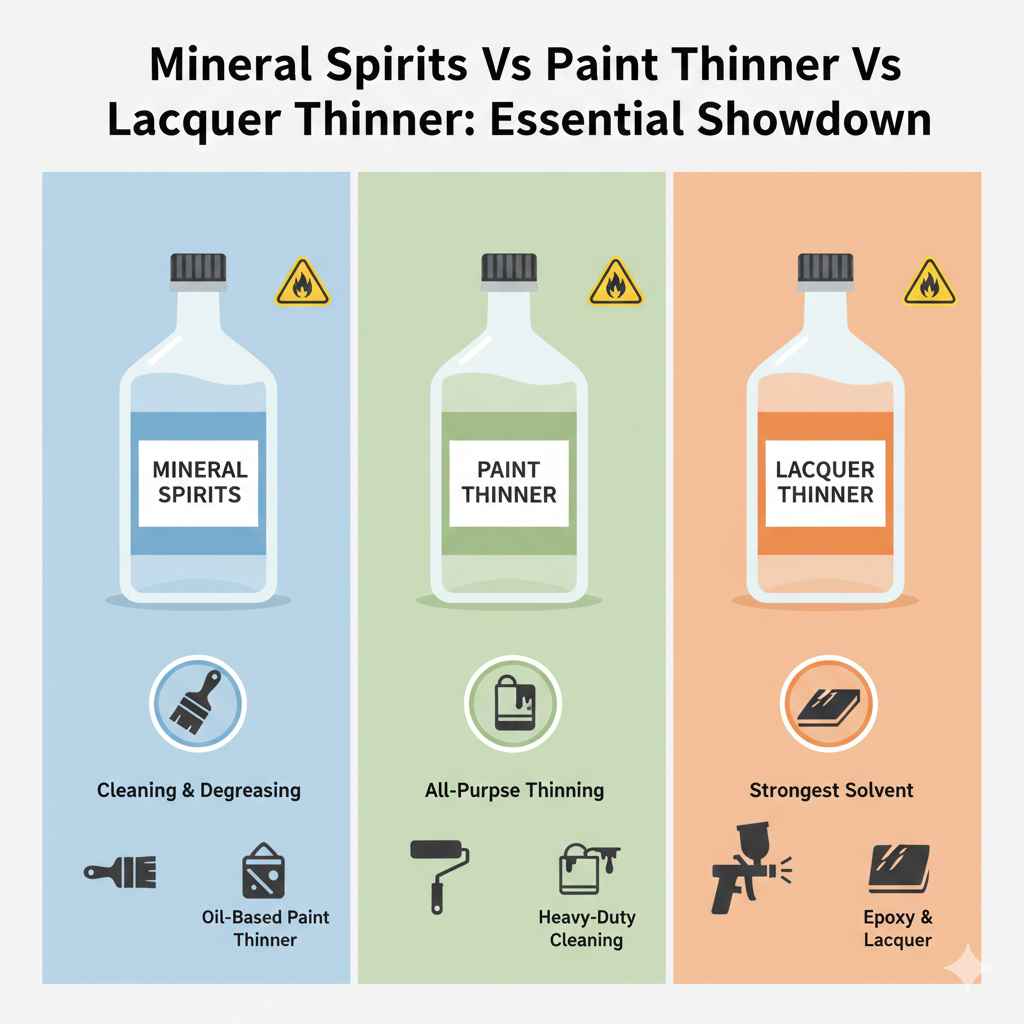
Mineral spirits vs paint thinner vs lacquer thinner: Mineral spirits are the safest and mildest for cleaning tools and thinning oil-based paints. Paint thinner is stronger and often contains mineral spirits mixed with other solvents. Lacquer thinner is the strongest, fastest-evaporating choice, essential only for thinning lacquer or heavy-duty stripping, but requires excellent ventilation.
Welcome, DIY friend! Standing in the paint aisle, staring at those cans—Mineral Spirits, Paint Thinner, Lacquer Thinner—can feel confusing. They all seem to do the same thing: clean up messy paint jobs. Choosing the wrong one can mean a slow, sticky mess or worse, damaging your nice project. Don’t worry! I’m here to clear up the confusion. We will break down exactly what each solvent is, what it does best, and when you absolutely must use (or avoid) it. By the end of this guide, you’ll choose the right cleaner or thinner with total confidence. Let’s dive in and make clean-up easy!
The Solvent Showdown: What’s Actually in the Can?
When we talk about solvents, we are talking about liquids that dissolve or loosen other substances, like dried paint or varnish. Think of them as powerful cleaning buddies for oil-based finishes. However, they are not all created equal; their strength comes from their chemical makeup.
To understand the showdown, we need to look at the primary ingredients. These solvents are usually petroleum distillates, but the refinement level and added ingredients make all the difference in how they act on your project.
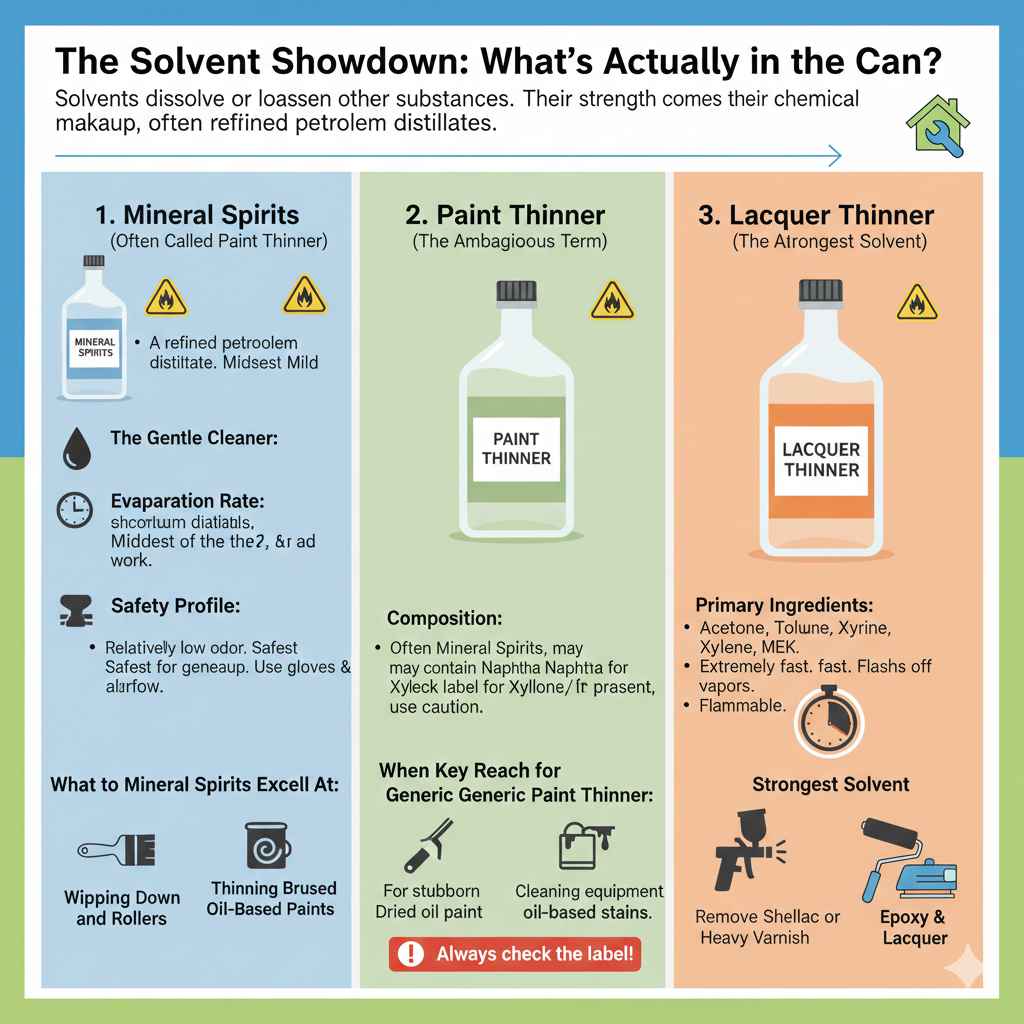
1. Mineral Spirits (Often Called Paint Thinner)
Mineral spirits are the most famous and beginner-friendly of the group. Sometimes, the label “Paint Thinner” is actually just mineral spirits, which is why the terms get confusing!
What are they?
- The Gentle Cleaner: Mineral spirits are a refined petroleum distillate. They are the mildest of the three solvents we are discussing.
- Evaporation Rate: They evaporate slowly. This slow speed is great because it gives you time to work spills without rushing.
- Safety Profile: They have a relatively low odor compared to lacquer thinner and are often the safest choice for general workshop cleanup. Always use gloves and ensure decent airflow, but they are less harsh than the others.
What Mineral Spirits Excel At:
- Cleaning Brushes and Rollers: Perfect for cleaning tools used with oil-based paints, alkyd enamels, and varnishes.
- Thinning Oil-Based Paints: They can be added slowly to oil-based house paints or artists’ oils to make them flow more smoothly (thinner application).
- Wiping Down Surfaces: Excellent for removing grease, wax, or residue before you apply a new coat of paint or stain.
2. Paint Thinner (The Ambiguous Term)
This is where the confusion starts for many DIYers. “Paint Thinner” is often a general term that usually means mineral spirits, but it can sometimes be a blend.
Think of “Paint Thinner” as the mid-ground solution. It’s designed specifically for paint jobs.
- Composition: It often consists primarily of mineral spirits but may contain naphtha or other mild solvents added for slightly quicker cleanup or better performance on certain types of industrial coatings.
- The Key Takeaway: If the can simply says “Paint Thinner” and you are using standard oil-based house paint, it is likely safe and effective. If the can also lists ingredients like Xylene or Toluene (strong chemicals), treat it with much more caution, as it leans closer to lacquer thinner territory.
When to Reach for Generic Paint Thinner:
- When you need something slightly stronger than pure mineral spirits for stubborn dried oil paint on a trowel.
- When cleaning equipment that handled oil-based stains or heavy primers.
- Always check the label! If it’s safe for your specific paint type, use it.
3. Lacquer Thinner (The Powerhouse)
Lacquer thinner is the heavy-hitter. It is designed to aggressively dissolve lacquers, shellac, and certain tough industrial coatings. It is powerful, fast, and should be treated with the highest respect in the workshop.
It is rarely just one chemical. Lacquer thinner is typically a highly aggressive mix of several fast-evaporating solvents.
- Primary Ingredients: Usually includes strong chemicals like Acetone, Toluene, Xylene, and/or Methyl Ethyl Ketone (MEK).
- Evaporation Rate: Extremely fast. It flashes off quickly, which is necessary for smooth lacquer application but means spills dry almost instantly (and odor lingers intensely).
- Safety & Ventilation: This requires serious ventilation. These fumes are strong, potentially flammable, and harmful if inhaled over time. Always wear a respirator rated for organic vapors when using it.
When Lacquer Thinner is Necessary:
- Thinning Lacquer: It is essential for thinning actual lacquer finishes to achieve the right spray consistency.
- Removing Shellac or Heavy Varnish: When mineral spirits won’t touch an old, stubborn finish, lacquer thinner is the stripping agent you might need.
- Aggressive Cleaning: For cleaning spray gun parts used specifically with lacquer or polyurethane finishes.
Head-to-Head Comparison Table
To make this simple, let’s put these three solvents side-by-side. This table summarizes their main uses and relative strengths.
| Characteristic | Mineral Spirits | Paint Thinner (General) | Lacquer Thinner |
|---|---|---|---|
| Cleaning Strength | Mild to Moderate | Moderate | Very Strong / Aggressive |
| Evaporation Speed | Slow | Moderate | Very Fast |
| Primary Use | Thinning oil paint, general cleanup | Cleaning tools/brushes after oil-based painting | Thinning lacquer/shellac, stripping heavy finishes |
| Odor Level | Low to Moderate | Moderate | High / Intense |
| Safety Priority | Good ventilation required | Good ventilation required | Excellent ventilation & respirator mandatory |
| Cost (Relative) | Most Affordable | Mid-Range | Most Expensive |
Beginner’s Guide: Choosing the Right Solvent for Your Project
As a DIY homeowner, your projects usually fall into three main categories: cleaning brushes, thinning paint, or prepping a surface. Here is my step-by-step advice for which can to grab.
Scenario 1: Cleaning Brushes and Rollers
Did you just finish using an oil-based paint, an oil-based primer, or an alkyd paint? You need to clean your tools thoroughly so they don’t become stiff, unusable bricks.
The Best Choice: Mineral Spirits
- Initial Rinse: Scrape off as much excess paint as possible back into the can.
- First Soak: Place brushes into a container with fresh mineral spirits. Swish them gently to loosen the bulk of the paint. Let them sit for 10–20 minutes.
- Agitate and Repeat: Work the bristles against the bottom of the container or a wire brush cleaner. Pour out the dirty spirits and repeat the process with fresh mineral spirits until the liquid stays mostly clear.
- Final Wash: Wash thoroughly with soap and water to remove any lingering solvent residue.
Why not Lacquer Thinner here? Using lacquer thinner for routine brush cleaning is overkill. It strips everything out, potentially drying out the natural bristles on high-quality brushes faster, and the fumes are unnecessarily intense for this job.
Scenario 2: Thinning Oil-Based Paint for Smoother Application
Sometimes, especially when brushing or rolling in warm weather, oil-based paint gets too thick and leaves obvious brush marks. Thinning helps it flow out better for a professional finish.
The Best Choice: Mineral Spirits (or Paint Thinner labeled for thinning)
When thinning paint, remember this rule: less is always more! Adding too much solvent will ruin the paint’s ability to adhere and cure correctly, leading to a soft, sticky finish that never hardens.
- Check Paint Can: Always read the label on your paint can first. The manufacturer will usually specify the recommended thinner (often mineral spirits or “paint thinner”).
- Start Small: For standard latex or oil-based house paint, start by adding no more than 1 cup of mineral spirits per gallon of paint. For artist oils, start with just a few drops.
- Mix Thoroughly: Mix the solvent in slowly until the paint flows off the stirring stick like heavy cream, not water.
- Test: Always test the thinned paint on a scrap piece of wood or cardboard first to ensure it brushes out smoothly without sagging.
Scenario 3: Cleaning Up Hardened Shellac, Varnish, or Heavy Residue
You bought an old piece of furniture, and the finish is brittle, gunky, or you are dealing with old varnish that mineral spirits just slides over.
The Choice: Lacquer Thinner
This is where you need the extra dissolving power. Lacquer thinner works quickly to lift tough, cured finishes.
- Safety First: Put on gloves and ensure you are working outdoors or in a garage with the main door wide open, preferably using an exhaust fan pointing outside. Wear an appropriate respirator.
- Damp Application: Do not pour lacquer thinner liberally onto your wood. Instead, dampen a rag with the thinner.
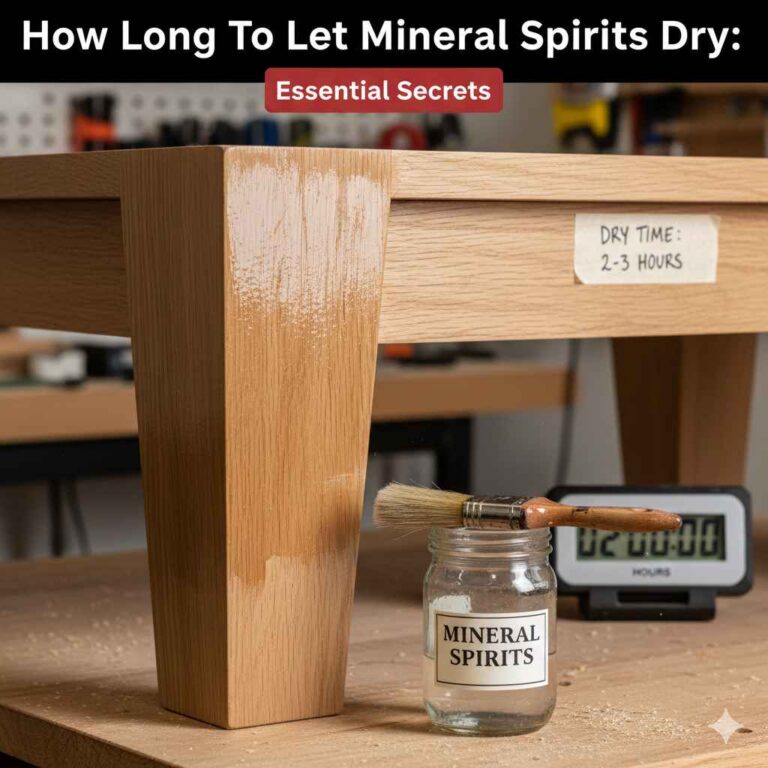
- Work in Small Sections: Rub the dampened rag over a small, inconspicuous area (like the bottom of a table leg). You should see the finish immediately start to soften or dissolve.
- Wipe Clean: Immediately follow up with a clean rag dampened with mineral spirits to neutralize the area, and then wipe dry.
Important Note on Stripping: While lacquer thinner is effective, it’s still better to use dedicated chemical strippers if you are trying to remove thick layers of paint from bare wood, as it can damage the wood grain if left too long.
Safety First: Handling Solvents Like a Pro
These products are powerful tools, but they demand respect. Improper handling is dangerous. Remember, I want you to finish your project safely so you can enjoy the results!
Ventilation is Non-Negotiable
All paint-related solvents release Volatile Organic Compounds (VOCs). Inhaling these can cause headaches, dizziness, and, over long periods, serious health issues. Always follow the guidelines from organizations like the Occupational Safety and Health Administration (OSHA) regarding air quality.
- Never Use Indoors (Unless You Have Professional Ventilation): When working with Lacquer Thinner, always be outdoors or use heavy-duty extraction fans that vent fumes completely outside your workshop.
- Air Exchange: Open windows and use fans to create cross-breezes.
- Respirators: For general mineral spirits use, good airflow might suffice. For Lacquer Thinner, a properly fitted respirator with organic vapor cartridges is essential.
Fire and Flammability
All these solvents are flammable. They give off flammable vapors that can ignite easily from a spark, pilot light, or static electricity.
- Keep all containers tightly sealed when not in use.
- Do not use or store them near heat sources, open flames, or when operating power tools that might create sparks (like grinding).
- Use metal containers for cleaning, not plastic tubs, as plastic can build up static charge.
Skin and Eye Protection
Solvents strip natural oils from your skin, leading to dryness, cracking, and irritation. They can also seriously damage your eyes.
- Gloves: Wear chemical-resistant gloves (Nitrile gloves are generally recommended for moderate exposure). Standard latex gloves will break down quickly.
- Eye Protection: Always wear safety glasses or goggles. If splashing occurs, rinse immediately with water for 15 minutes.
Disposal: Cleaning Up the Cleanup Chemicals
This is a crucial step many beginners skip: you cannot just pour used thinner down the drain or into your yard. Solvents are hazardous waste.
How to Dispose of Used Solvents Safely
- Containment: Pour the dirty solvent from your brush cleaning into a sturdy, labeled metal container with a tight lid.
- Let it Settle: For mineral spirits used in cleaning, let the container sit for several days or weeks. The paint solids will eventually settle to the bottom.
- Reuse the Top Layer: Carefully decant the cleaner liquid from the top back into a clean, sealed container for future use. You can often reuse mineral spirits multiple times this way!
- Disposing of Sludge: Once the container is mostly sludge, allow the remaining liquid to evaporate safely outdoors in a well-ventilated area away from ignition sources (this can take a long time). Once fully evaporated, the hardened sludge can often be wrapped in newspaper and disposed of in your regular trash (check local ordinances first).
- Hazardous Waste Drop-Off: If you have large quantities of contaminated thinner, especially lacquer thinner, check your local municipality’s website for Household Hazardous Waste (HHW) collection days or permanent drop-off sites. These centers ensure the chemicals are handled responsibly.
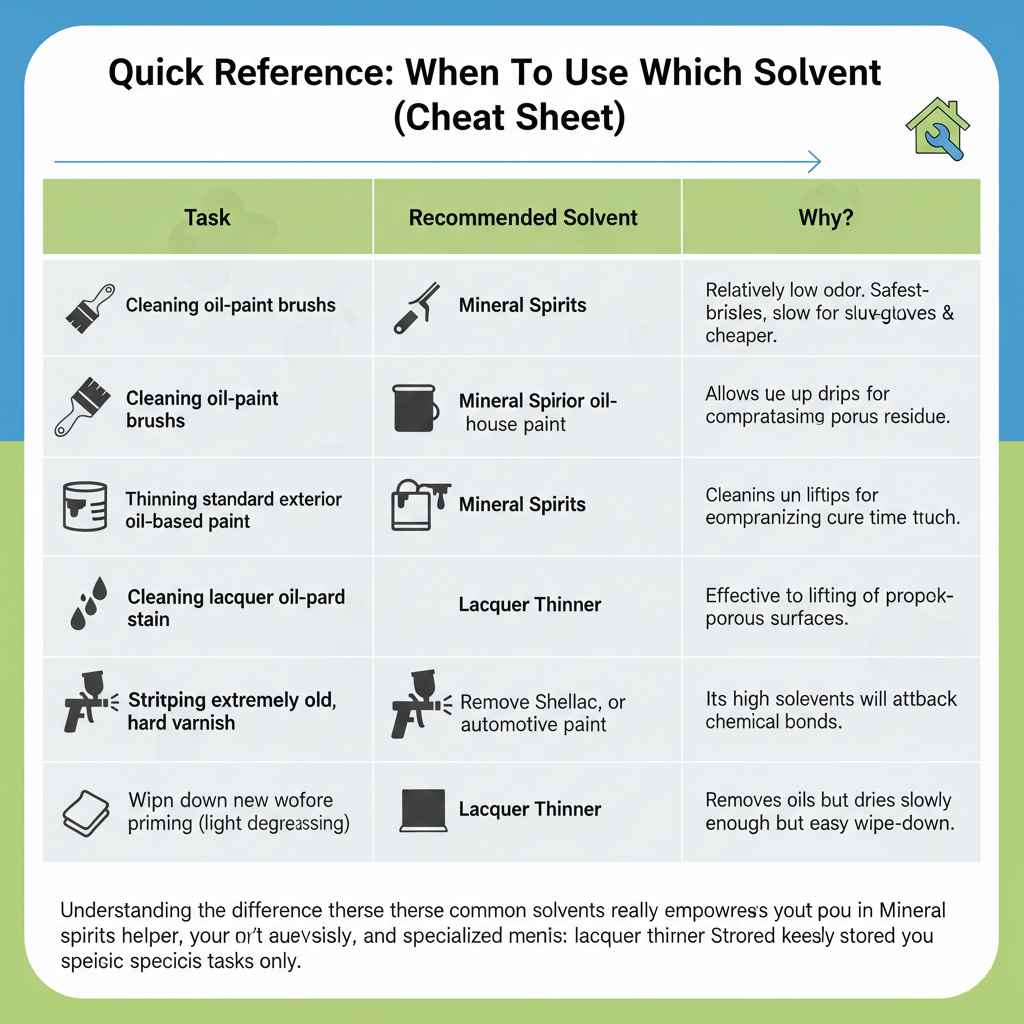
Quick Reference: When To Use Which Solvent (Cheat Sheet)
Here is a simplified guide to help you grab the right can when you are halfway through a messy job.
| Task | Recommended Solvent | Why? |
|---|---|---|
| Cleaning oil-paint brushes | Mineral Spirits | Mild, safe for bristles, slow to evaporate, cheaper. |
| Thinning standard exterior oil-based house paint | Mineral Spirits | Allows paint to flow without compromising cure time too much. |
| Cleaning up drips of oil-based stain | Mineral Spirits | Effective for lifting oil/pigment residue from non-porous surfaces. |
| Thinning lacquer, shellac, or two-part automotive paint | Lacquer Thinner | Required aggressive solvent to properly break down these specialized finishes. |
| Stripping extremely old, hard varnish | Lacquer Thinner | Its high solvency will attack stubborn chemical bonds. |
| Wiping down new wood before priming (light degreasing) | Mineral Spirits | Removes oils but dries slowly enough for easy wipe-down. |
Understanding the difference between these common solvents really empowers you in the shop. Mineral spirits are your everyday helper, paint thinner is the slightly ambiguous middle ground, and lacquer thinner is the specialized, heavy-duty weapon you keep safely stored for specific tasks only.
Frequently Asked Questions (FAQ) for DIYers
Here are the common questions I hear most often when homeowners are starting out with these chemicals.
Q1: Can I use mineral spirits to clean latex (water-based) paint brushes?
A: No, mineral spirits will not effectively dissolve dried latex paint. For latex paint, you should use soap and warm water while the paint is still wet. If the paint is dry, you need a dedicated latex paint remover or simply soak the brush in hot water for a long time.
Q2: If I accidentally use lacquer thinner to thin my exterior house paint, what happens?
A: You will likely ruin the paint job. Lacquer thinner evaporates too quickly, causing the paint to “skin over” on the surface before it has time to level out. This results in a patchy, potentially brittle finish that may peel later. Stick to mineral spirits for house paints.
Q3: Is paint thinner safer than mineral spirits?
A: Generally, no. Because “paint thinner” is a vague label, it often contains stronger, faster-evaporating components than pure mineral spirits. Always treat whatever the can labels as “Paint Thinner” with the same caution you would use for mineral spirits, but be prepared for potentially stronger fumes.
Q4: How do I know if my mineral spirits are “good enough” to reuse?
A: If the liquid you decanted (the top layer) is clear or very pale yellow and you don’t smell strong contaminants like gasoline, it is usually fine for cleaning brushes again. If it looks murky, smells acrid, or you used it for something heavy like stripping varnish, it is better to dispose of it responsibly.
Q5: Can I use lacquer thinner on my spray gun if I only sprayed lacquer?
A: Yes, this is one of the few necessary uses for lacquer thinner. It quickly dissolves the dried lacquer residue inside the gun’s fluid passage and cup. However, you must flush the gun thoroughly with mineral spirits afterward to protect any rubber seals or delicate parts from the aggressive lacquer thinner.
Q6: Where should I store these chemicals in my garage?
A: Store all solvents in a cool, dry area away from direct sunlight and ignition sources. Metal storage cabinets specifically designed for flammable materials are the best option. Keep them tightly sealed and ideally out of reach of children and pets.
Conclusion: Confidence in Your Cleanup
There you have it—the essential showdown between mineral spirits, paint thinner, and lacquer thinner. As you’ve seen, these aren’t interchangeable substitutes; they are specialized tools for specific cleaning and thinning jobs. For most of your oil-based painting cleanup and minor thinning, reach confidently for mineral spirits—they are your best, safest bet for everyday DIY success.
When you face a particularly tough finish or need to work with actual lacquer, that’s when you pull out the heavy-duty lacquer thinner, remembering to prioritize excellent ventilation and safety gear above all else. By knowing the difference and respecting their strength, you ensure your tools last longer, your finishes look better, and your projects stay safe and enjoyable. Happy building, my friend!