Oscillating Tool Vs Reciprocating Saw: Tool Battle Unveiled
When it comes to tackling your home improvement projects, choosing the right tool can make all the difference. You might find yourself standing in the hardware aisle, staring at two intriguing options: the oscillating tool and the reciprocating saw.
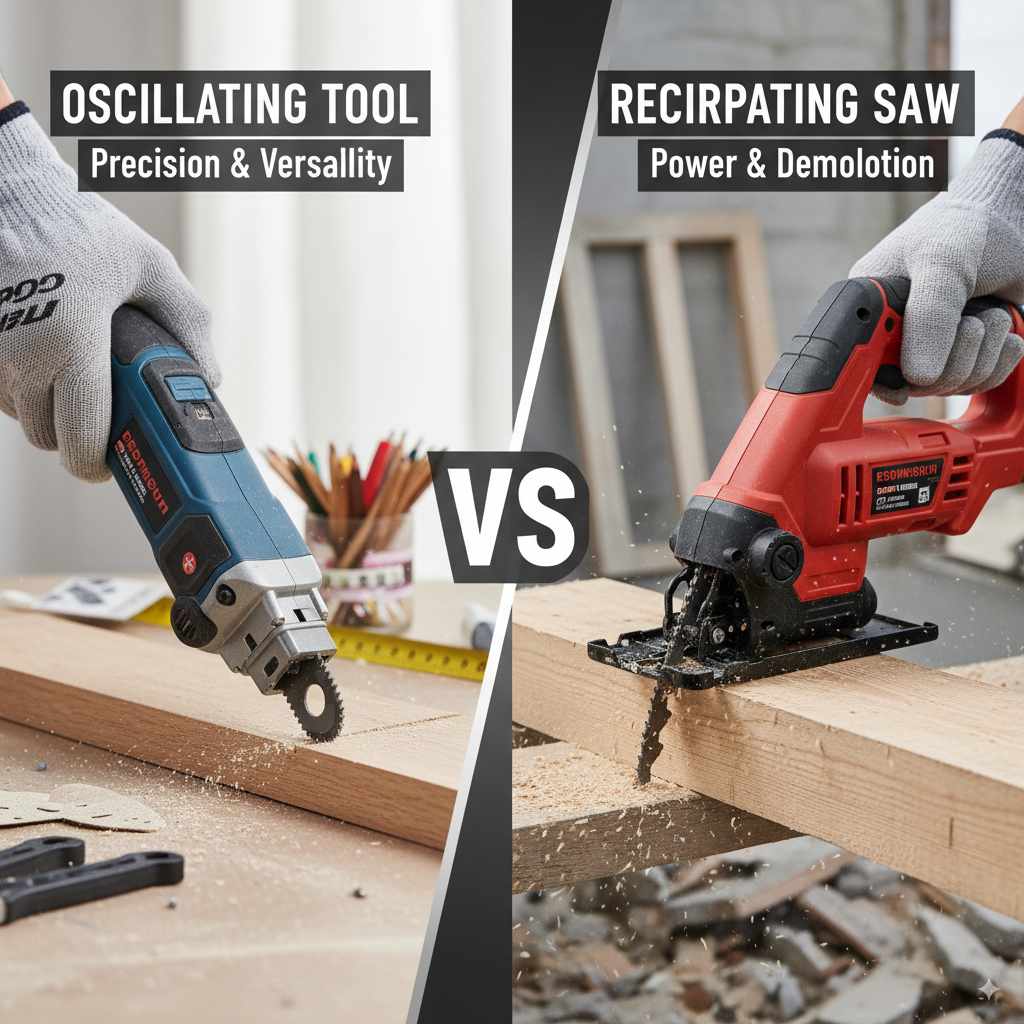
Both are popular choices, but each has its unique strengths that could make or break your DIY dreams. Imagine effortlessly cutting through wood, metal, or drywall with precision and speed. The oscillating tool offers versatility and finesse, perfect for intricate tasks.
Meanwhile, the reciprocating saw is your go-to for raw power and efficiency, ideal for demolition or heavy-duty cutting. But which one truly suits your needs? Before you make a decision that could affect your projects, dive deeper into the essential differences, advantages, and potential drawbacks of each tool. Equip yourself with the knowledge that ensures every cut is clean and every project is a success. Keep reading to discover which tool will become your trusted ally in your next home improvement adventure.
Oscillating Tool Features
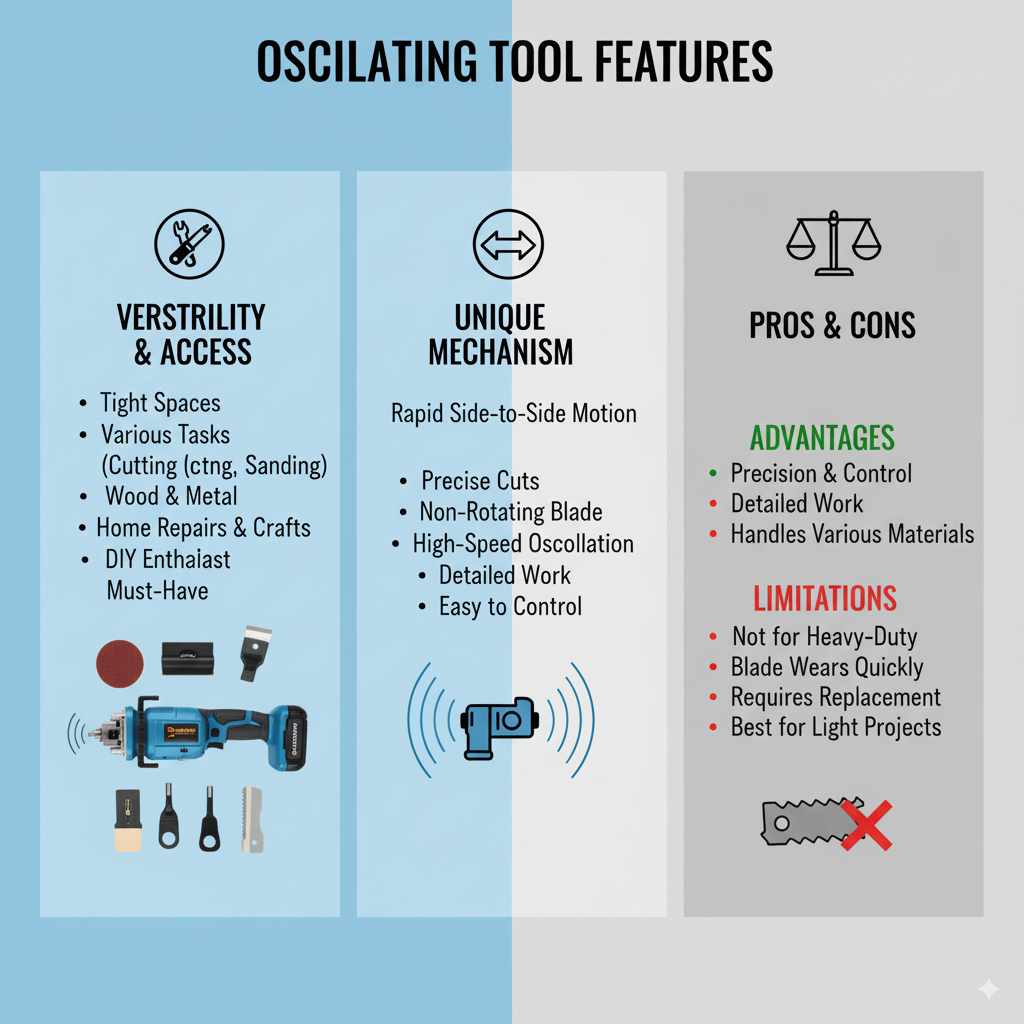
Oscillating tools are known for their versatility. They work well in tight spaces. These tools can perform various tasks. From cutting to sanding, they excel. They handle materials like wood and metal. Suitable for home repairs and craft projects. A must-have for DIY enthusiasts.
The cutting mechanism is unique. It moves side to side rapidly. This allows precise cuts. Unlike other tools, it does not rotate. This reduces the risk of damage. The blade oscillates at high speeds. Ideal for detailed work. Easy to control and manage.
Advantages include precisionand control. Great for detailed work. Handles various materials efficiently. Limitations exist too. Not suitable for heavy-duty tasks. The blade can wear quickly. Requires frequent replacement. Best for light projects.
Reciprocating Saw Features
Reciprocating saws are known for their strong power. They can cut through tough materials like wood and metal easily. Motor strength is key here. It helps the saw move back and forth quickly. This fast movement gives better cutting action. Battery or electric power options are available. Each has its own benefits. Electric ones often have more power.
A reciprocating saw uses a blade that moves back and forth. This action helps in cutting. The blade’s teeth are very sharp. They slice through materials fast. Users can change blades for different jobs. This is useful for cutting different things. It can cut straight lines or curves.
Advantages include fast cutting and ease of use. It handles tough jobs well. Users like its power and speed. Limitations involve noise and vibration. It can be loud during use. Vibration can tire hands quickly. It might not be best for delicate work. It’s heavy and bulky.
Comparing Precision And Control
An oscillating tool offers precision with its small blades. Ideal for tight spaces and intricate cuts. It’s gentle on surfaces, causing less damage. Users can cut with accuracy. The tool is perfect for detail work.
A reciprocating saw has more power. Great for heavy-duty tasks. It can cut through tough materials. The saw works fast, making big jobs easier. Control may be less compared to the oscillating tool. But it handles tough projects well.
Choose based on your needs. For detail, pick oscillating. For power, go with reciprocating. Both have unique advantages.
Ease Of Use
An oscillating tool is light and easy to hold. Its compact design fits well in small spaces. The grip is comfortable for long use. It feels like holding a small pen. No heavy weight on your arm.
A reciprocating saw is bigger and heavier. It needs both hands for control. The handle is large and might be hard to grip. It can be tiring after a while. Not ideal for tight spaces.
Setting up an oscillating tool is quick. Attachments snap on easily. Little time is needed for setup. It does not need much care. Just clean after use.
A reciprocating saw takes more time to set up. Blades are larger and need careful fitting. Maintenance is more involved. Regular checks keep it working well.
Durability And Lifespan
Both tools are strong and last long. Oscillating tools are built for light tasks. They handle small jobs well. Reciprocating saws are made for heavy work. They cut through tough materials. The lifespan of each tool depends on use. Light use means longer life. Heavy use wears them out faster. Keep tools clean for a longer life. Regular checks prevent damage. Replace worn parts promptly. This helps the tool last longer.
Proper storage is also key. Store in a dry place. Moisture can cause rust. Rust shortens the tool’s life. Protect your tools. They will serve you better. In short, care and use matter. Both tools can last long with good care.
Cost And Value For Money
Both tools have different price ranges. Oscillating tools usually cost less. They are great for small projects. Reciprocating saws can be more expensive. They are suited for heavy-duty work. Value also depends on the job. Oscillating tools offer versatility. They can sand, cut, and scrape. Reciprocating saws focus on cutting. They work fast in tough materials. Consider what you need. For budget buyers, oscillating tools are ideal. They offer a lot for their price. Reciprocating saws offer power and speed. They may cost more but handle bigger tasks. Choose based on your project needs.
Best Uses For Each Tool
Oscillating tools are perfect for tight spaces. They help with small cuts and sanding. These tools are great for detail work. Reciprocating saws are used for cutting big pieces. They can cut through wood, metal, and plastic. These saws work well for demolition and remodeling projects.
An oscillating tool is ideal for DIY projects. It is easy to handle. It does not need much space. A reciprocating saw is powerful. It is used in construction. It cuts through thick materials quickly. Choose the right tool for your task.
Choosing The Right Tool For Your Needs
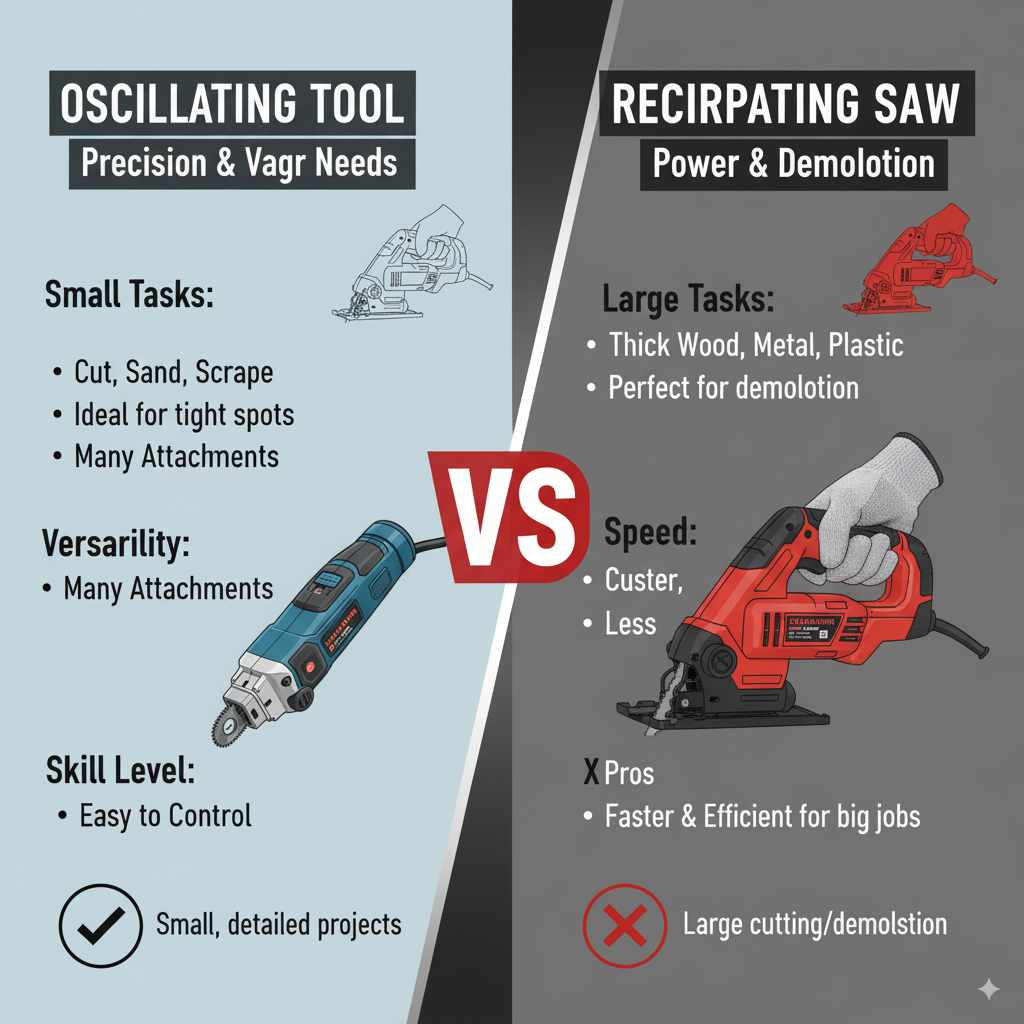
Oscillating tools are great for small tasks. They can cut, sand, and scrape. Ideal for tight spots. Reciprocating saws are powerful. They cut through thick wood, metal, and plastic. Perfect for demolition work. Think about your project size. Small, detailed work? Choose an oscillating tool. Large cutting tasks? A reciprocating saw is better.
Oscillating tools have many attachments. They offer more versatility. Reciprocating saws cut faster. They are less precise. Consider your skill level. Beginners may prefer oscillating tools. They are easy to control. Pros might choose reciprocating saws. Faster and efficient for big jobs.
Frequently Asked Questions
What Is The Difference Between An Oscillating Tool And A Reciprocating Saw?
An oscillating tool moves its blade side-to-side, ideal for precision work. A reciprocating saw moves its blade back-and-forth, suited for rough cutting tasks. Both tools serve different purposes, with oscillating tools excelling in detail work, while reciprocating saws handle heavy-duty jobs.
Choose based on your project’s needs.
What Is The Difference Between Reciprocating And Oscillating?
Reciprocating motion moves back and forth along a straight line. Oscillating motion swings side to side around a pivot point. Both involve repetitive movement but differ in direction and axis.
Can You Cut 2×4 With An Oscillating Saw?
Yes, an oscillating saw can cut 2×4 lumber. Use a high-quality blade designed for wood cutting. Ensure precision by securing the wood firmly. This tool is ideal for small cuts, but a circular saw may be more efficient for larger tasks.
Always prioritize safety while using power tools.
Why Doesn’t An Oscillating Tool Cut Skin?
Oscillating tools vibrate at high speeds but have minimal lateral movement. This makes them efficient on hard materials but gentle on skin. The skin’s elasticity absorbs the vibrations, reducing the risk of cuts. Proper use ensures safety, making oscillating tools ideal for various tasks without harming users.
Conclusion
Choosing between an oscillating tool and a reciprocating saw can be tricky. Each tool has its strengths. Oscillating tools offer precision for tight spaces. Reciprocating saws handle heavy-duty tasks well. Think about your project needs. Consider the material and task complexity.
This helps in making the right choice. Both tools can be valuable in your toolkit. Experiment to find which suits your style best. Proper use ensures safety and efficiency. Equip yourself with the right tool for the job. Your projects will thank you.