Paint Thinner Vs Mineral Spirits: Choosing the Right Solvent
Are you standing in the aisle at your local hardware store, staring at rows of paint thinners and mineral spirits, unsure which one to choose? You’re not alone.
Many DIY enthusiasts and seasoned professionals alike find themselves puzzled by the differences between these two common solvents. Understanding which one to use can make or break your project, affecting everything from the finish to the ease of cleanup. Imagine the satisfaction of completing your painting project with confidence, knowing you’ve chosen the right product.
Dive into our comprehensive guide to unravel the mysteries of paint thinner versus mineral spirits, and make your next decision with certainty.
What Are Paint Thinner And Mineral Spirits?
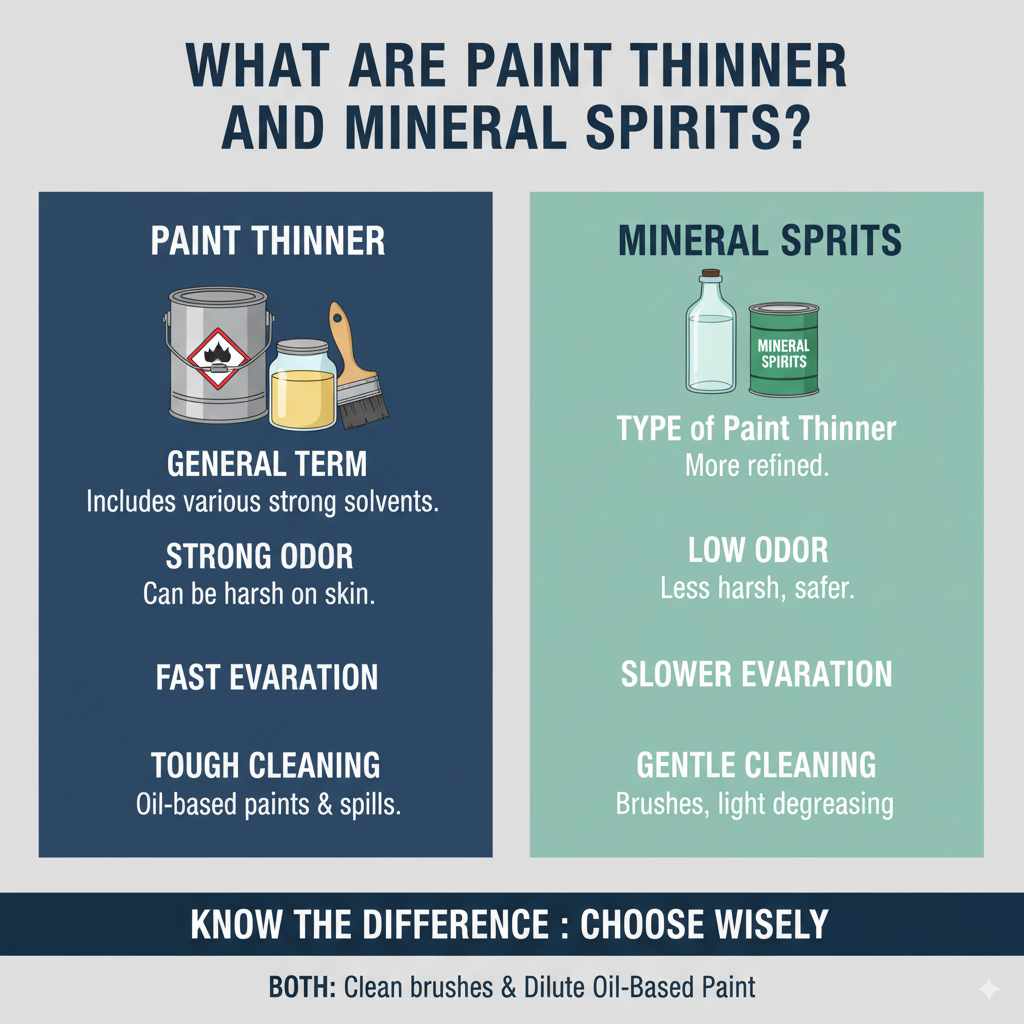
Paint thinners mineral spirits help in cleaning and diluting paint. They are both used in painting projects. But they are not the same. Paint thinner is a general term. It includes various solvents. Mineral spirits are a type of paint thinner. They are more refined and less smelly.
Paint thinner can have a strong smell. It can be harsh on the skin. Mineral spirits are often safer to use. They are less flammable. Both can be used to clean brushes or remove paint. Choose based on your needs. Think about safety and smell.
Some people prefer mineral spirits for delicate work. Others use paint thinner for tough jobs. Knowing the difference helps. It makes your painting work easier and safer.
Composition And Ingredients
Paint thinner is a solvent used to thin paint. It contains varied chemicals like acetone and toluene. These chemicals help dissolve paint. Acetone is a strong solvent. Toluene adds to the strength. Paint thinner can have other ingredients too. They help break down paint. Each ingredient has a role. Some thinners have more acetone. Others have more toluene. Safety is important when using paint thinner. It can be harmful if not used carefully.
Mineral spirits are also solvents. They are made from petroleum. They help clean paint tools. Mineral spirits are less harsh than paint thinner. They have fewer chemicals. Odorless mineral spirits are popular. They do not smell strong. Mineral spirits are used in painting and cleaning. They are safer to use. Less harmful than paint thinner. Easy to handle and store.
Usage And Applications
Paint thinner helps in removing paint from brushes. It cleans spills and stains on surfaces. This liquid is powerful and effective. It is used for thinning oil-based paints. Artists and painters often rely on it. Paint thinner can dissolve certain materials. It makes cleaning jobs easier. It is a must-have for painting projects.
Mineral spirits are used for thinning paint. They are less harsh compared to other solvents. They are great for cleaning brushes. They help in removing sticky residues. This liquid is gentle on materials. It is safe for many surfaces. Mineral spirits are ideal for household cleaning. People use them for light-duty tasks.
Credit: sawsonskates.com
Performance Comparison
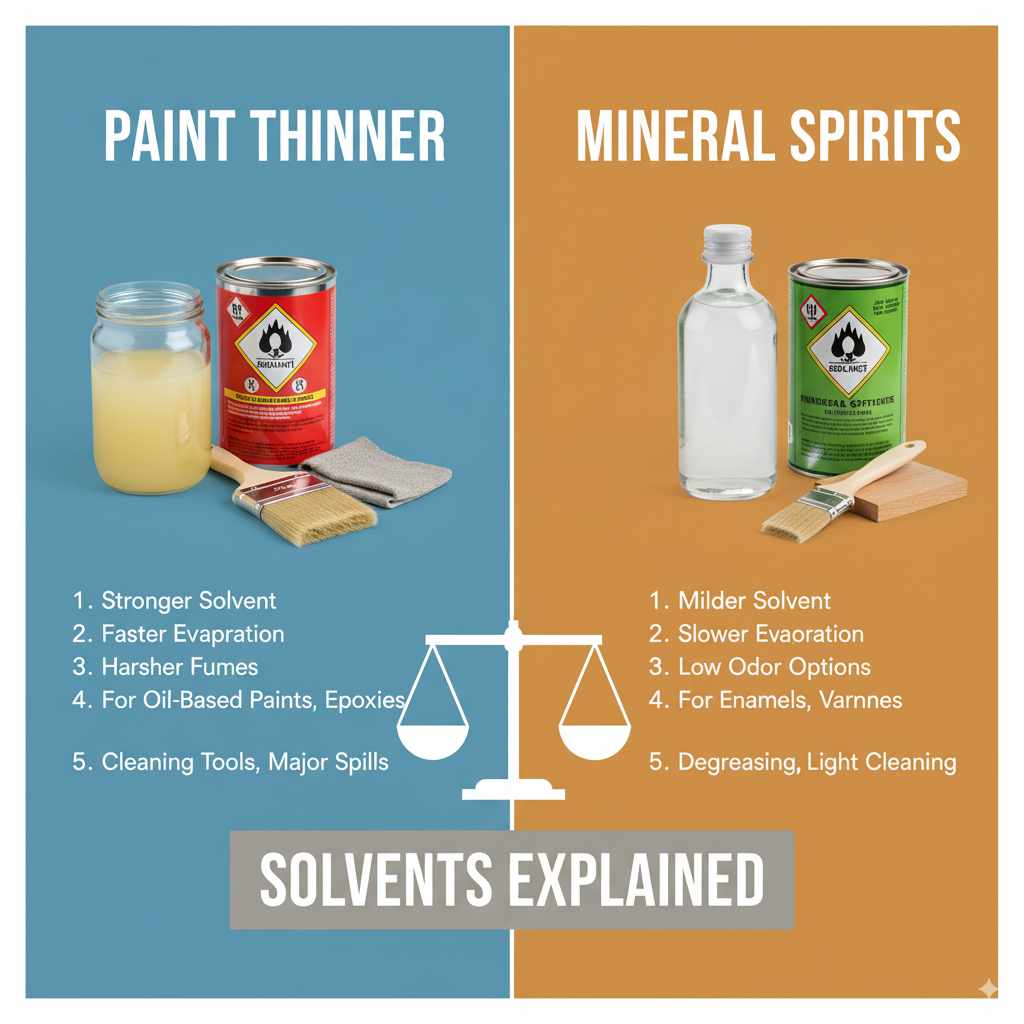
Comparing paint thinner and mineral spirits shows key differences in usage and effectiveness. Paint thinner often evaporates faster, making it suitable for quick jobs. Mineral spirits, less volatile, provide a smoother finish and are easier to handle for detailed work.
Both have their unique benefits in various applications.
Effectiveness In Paint Removal
Paint thinnercan remove paint easily. It works well on tough paints. Mineral spiritsare milder. They take longer to work. Both help in cleaning paintbrushes. Paint thinner is stronger and faster. Mineral spirits are safer for indoor use.
Drying Time Considerations
Paint thinner dries quickly. This makes it good for fast jobs. Mineral spiritsdry slower. This gives more time to work with paint. Faster drying means less waiting. Slower drying can be better for details. Both have different uses based on need.
Health And Safety Concerns
Paint thinner can be very harmful if breathed in. It has strong fumes. These fumes can irritate the lungs. Mineral spirits are less toxic. They produce fewer fumes. Both can be dangerous if swallowed. Always keep them away from kids and pets. Use them in open spaces. This helps reduce the risk of breathing problems. Wear a mask to protect your lungs.
Store paint thinner and mineral spirits safely. Keep them in cool, dry places. Use gloves to protect your skin. If you spill them, clean up fast. Do not smoke near these liquids. They can catch fire easily. Read the labels before using. Follow the instructions on the bottle. This helps keep everyone safe.
Environmental Impact
Paint thinner often struggles to break down naturally. It can linger in the environment. Mineral spirits fare slightly better. They break down over time. But neither is fully biodegradable. Both can harm plants and animals if spilled. Choosing carefully helps protect nature. Small actions make a big difference.
Many green options exist. Water-based solvents are popular. They clean without harsh chemicals. Citrus-based products smell good too. Soy-based solutions offer safe alternatives. They work well for cleaning. Always read labels before use. Environment-friendly choices are best for nature. You can make a positive impact.
Cost And Accessibility
Paint thinner often costs less than mineral spirits. It is a budget-friendly option. Some stores sell paint thinner for a few dollars. On the other hand, mineral spirits may be pricier. They can be double the cost of paint thinner. This makes mineral spirits less appealing for those watching their budget.
Paint thinner is easy to find. Most hardware stores have it. It’s a common item. Mineral spirits are also available, but not everywhere. Some stores do not stock them. You might need to visit specialty shops for mineral spirits. This difference in availability can be inconvenient.
Choosing The Right Solvent
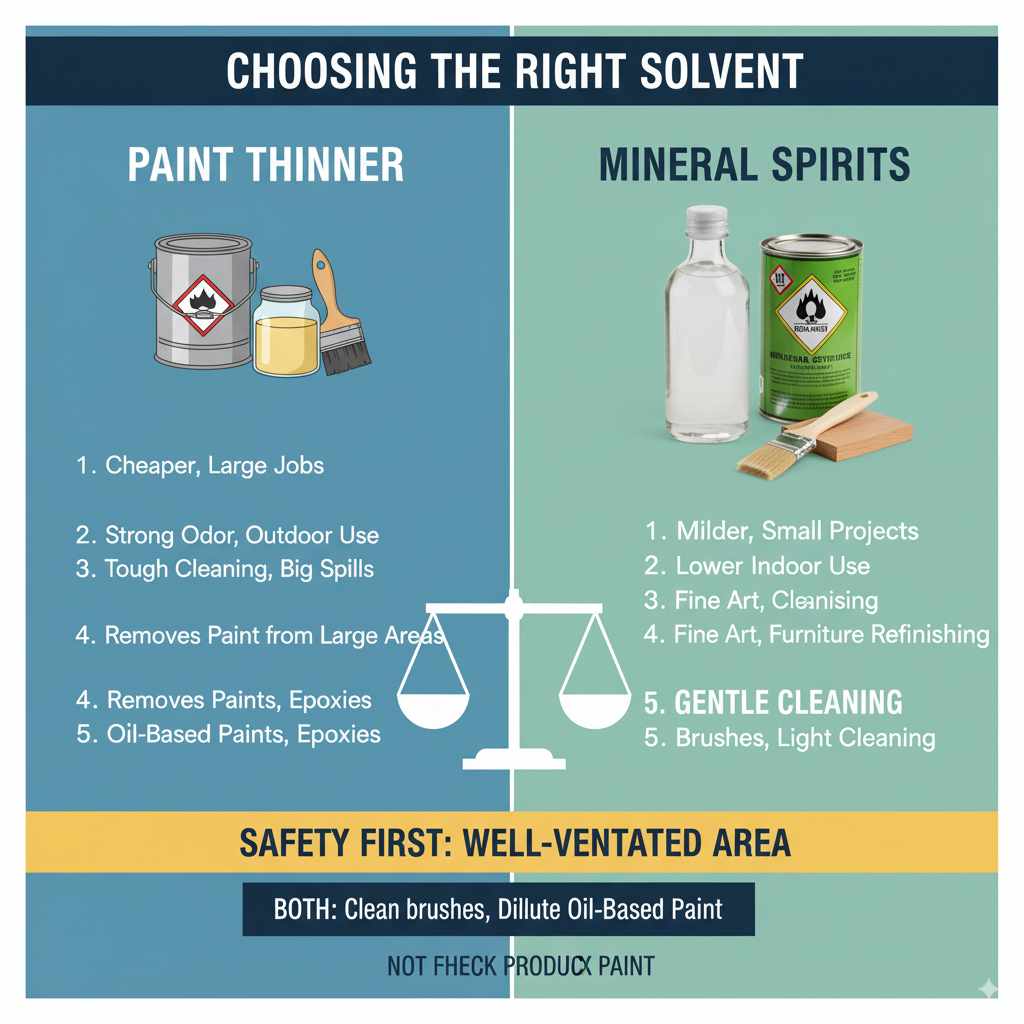
The choice between paint thinner and mineral spirits depends on your task. Paint thinner is cheaper. It is often used for bigger jobs. Mineral spirits are less smelly. They are great for indoor tasks. Both are used to clean brushes. But mineral spirits are milder. They are safer for delicate surfaces. Check the label on your paint can. It may suggest the best solvent.
Paint thinner is ideal for removing paint from large areas. It works well with oil-based paints. Mineral spirits are better for fine art or small projects. They clean brushes without harming them. Use mineral spirits for furniture refinishing. It will not damage wood. Both solvents are not for latex paint. Always work in a well-ventilated area.
Frequently Asked Questions
Can You Use Mineral Spirits Instead Of Paint Thinner?
Yes, mineral spirits can replace paint thinner for oil-based paints. Both are effective solvents, but mineral spirits are less harsh. Always test compatibility with your specific paint. Choose mineral spirits for a safer option with less odor. Ensure proper ventilation when using either product.
What Should You Not Use Mineral Spirits On?
Avoid using mineral spirits on plastics, rubber, painted surfaces, and delicate fabrics. They can cause damage or discoloration. Use mineral spirits carefully, ensuring proper ventilation and protective gear. Always test a small area first to prevent adverse effects. Consider alternative cleaning methods for sensitive materials to preserve their integrity.
Should I Use Paint Thinner Or Mineral Spirits To Clean A Paint Brush?
Use mineral spirits for oil-based paint brushes. It’s less harsh and safer than paint thinner. Always follow safety guidelines and ventilate the area. Dispose of used spirits responsibly to protect the environment.
Why Is Paint Thinner Called Mineral Spirits?
Paint thinner is called mineral spirits because it is derived from petroleum. It effectively dissolves oil-based paints. The name “mineral spirits” indicates its origin from mineral oil refining, making it a versatile solvent. It is widely used for cleaning brushes and thinning paint in artistic and industrial applications.
Conclusion
Choosing between paint thinner and mineral spirits depends on your project needs. Paint thinner is more aggressive and effective for tough tasks. Mineral spirits are milder, suitable for delicate surfaces. Consider the smell and safety of each option. Both can effectively clean brushes and surfaces.
Always ensure proper ventilation when using either. Test on a small area first to avoid damage. Remember, safety first. Wear protective gear like gloves and masks. Both have their own advantages in different situations. Understanding these differences can help you make the right choice.
Happy painting!