Polycrylic Vs Polyurethane: Ultimate Finish Showdown
Choosing the right finish for your woodworking project can feel overwhelming, can’t it? You want your hard work to shine and last, but with so many options, where do you start?
Two of the most popular choices are polycrylic and polyurethane. They sound similar but offer different benefits. Which one should you use? That’s what you’re about to discover. You’ll learn the key differences between polycrylic and polyurethane, helping you decide which is the best fit for your specific needs.
Imagine the satisfaction of confidently picking a finish that enhances and protects your work. Let’s dive in and clear up the confusion, so you can achieve the results you’re dreaming of.
Key Differences
Polycrylic is water-based. It has an acrylic base. Safe for indoor use. Polyurethane can be oil or water-based. Oil-based is tough and strong. Water-based is less smelly. Good for indoor projects. Both protect surfaces.
Polycrylic is easy to apply. Use a brush or spray. Dries clear and fast. Polyurethane needs a good brush. Can be tricky. Oil-based takes more time. Water-based is easier. Use it for small tasks.
Polycrylic dries fast. In just a few hours. Good for quick jobs. Polyurethane takes longer. Oil-based can need a day. Water-based dries faster. Always check the label for time.

Performance And Durability
Polycrylic is less tough than Polyurethane. It can scratch easily. It is not the best for heavy-use areas. Polyurethane is stronger. It can resist scratches and impacts well. It is better for floors and furniture. Polyurethane lasts longer. Polycrylic is good for crafts and light-use items.
Polyurethane resists moisture better. It is great for kitchens and bathrooms. Polycrylic is not as good with water. It can get damaged if wet. Polyurethane also handles heat well. Polycrylic may warp or bubble in heat. Use Polyurethane for outdoor items. Polycrylic is better for indoor use.
Aesthetic Appeal
Polycrylic provides a clear, satin finish ideal for light woods, while polyurethane offers a warm, amber glow. Each option enhances wood’s natural beauty, catering to different aesthetic preferences. Choosing between them depends on the desired effect for your project.
Finish And Sheen Variations
Polycrylic offers a clear finish. It is often less glossy. Many people like its subtle look. Polyurethane comes in different sheens. You can find glossy or semi-gloss options. The choice depends on your taste. Both enhance wood beauty. Polycrylic feels soft to touch. Polyurethane feels tougher and more durable. It suits high-traffic areas. Polycrylic is great for indoor furniture. Polyurethane is best for floors.
Color And Clarity
Polycrylic is clear and doesn’t change wood color. It keeps the natural look. Polyurethane can add a warm tone. Sometimes it can darken wood. Choose based on your project needs. Polycrylic dries fast. It is water-based. Polyurethane takes longer. Oil-based options can smell strong. Polycrylic is easy for beginners. Polyurethane needs careful application. Both protect wood well. Polycrylic is best for light woods. Polyurethane suits dark woods.
Environmental Considerations
Comparing polycrylic and polyurethane, environmental impact plays a crucial role. Polycrylic is water-based, releasing fewer harmful fumes. Polyurethane, especially oil-based, can emit more volatile organic compounds (VOCs), affecting air quality. Choosing the right finish depends on balancing durability needs with environmental concerns.
Volatile Organic Compounds
Both Polycrylic and Polyurethane are types of finishes. They can have Volatile Organic Compounds (VOCs). VOCs are harmful to air quality. Polycrylic often has fewer VOCs. This makes it a bit safer for the environment. Polyurethane can have more VOCs. It might smell stronger and last longer in the air. Always check the label for VOC levels. Choosing a product with low VOCs is better for the planet.
Eco-friendly Alternatives
There are green options available. Many brands make eco-friendly finishes. These have fewer harmful chemicals. Water-based finishes are usually more earth-friendly. They are safer for homes and families. They might cost more, but they help protect nature. Always look for labels that say “low VOC” or “green.” These are better choices for the environment.
Ease Of Use
Polycrylic is very easy to use. It dries fast and is water-based. This makes cleaning up simple. Just use soap and water. No strong smells. Polyurethane, on the other hand, can be tricky. It often needs more time to dry. It can smell strong. Oil-based versions need special cleaners. This might be hard for some users.
Cleaning up polycrylic is a breeze. Water and soap do the trick. No need for harsh chemicals. Polyurethane cleanup is different. Oil-based types need mineral spirits. Water-based ones are a bit easier. But still not as easy as polycrylic. Always wear gloves. Protect your hands from chemicals.
Cost And Availability
Polycrylic is generally more affordable and widely available, suitable for DIY projects. Polyurethane, often pricier, offers durable protection and is favored in professional settings. Each has distinct advantages based on budget and project needs.
Price Comparison
Polycrylic costs less than polyurethane. Polycrylic is a budget-friendly option. Polyurethane is often more expensive. Polyurethane offers more durability. Polycrylic is affordable for small projects. Polyurethane fits larger projects better. Both offer good value for money.
Market Accessibility
Polycrylic is easy to find. Most stores sell it. Polyurethane is widely available. Many shops have it in stock. Both can be ordered online. Delivery is usually quick. Polycrylic and polyurethane are popular choices. Many people use them for wood finishing.
Best Use Cases
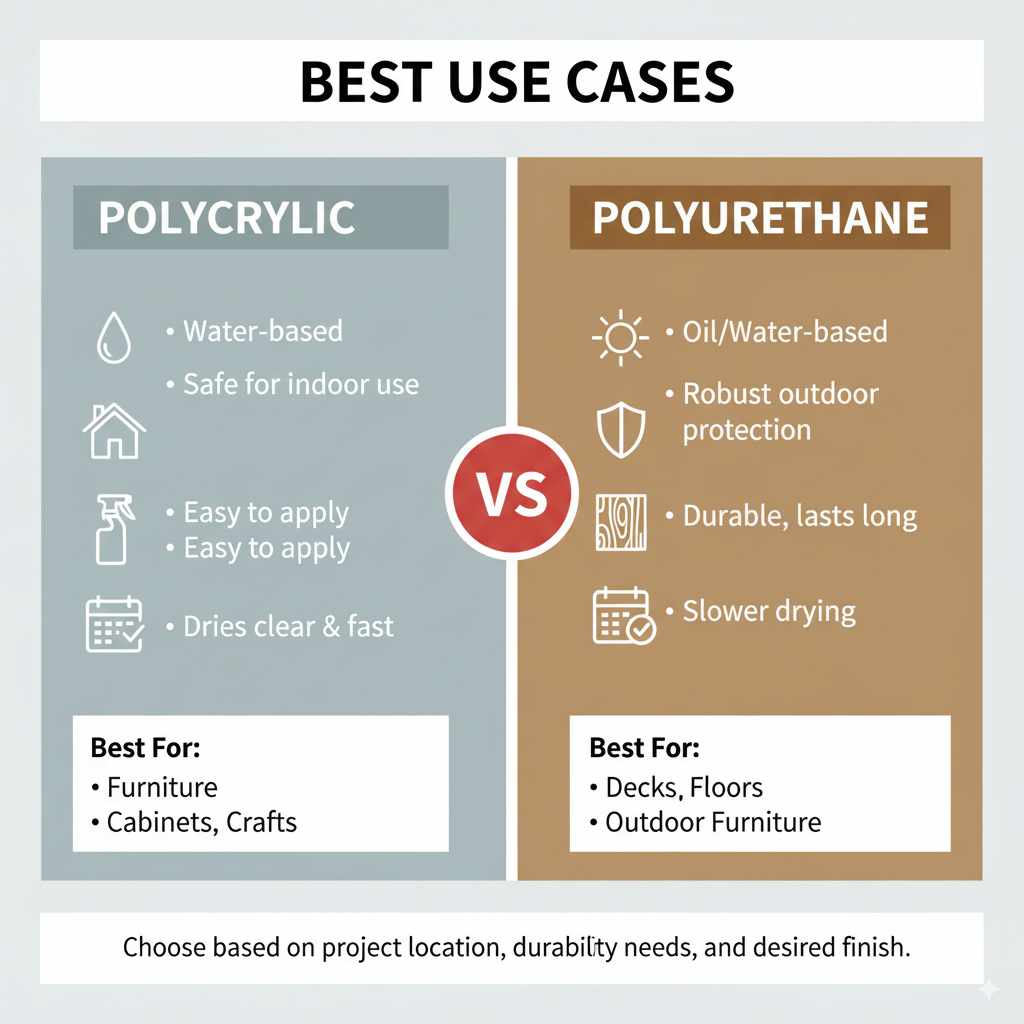
Polycrylic is ideal for indoor projects, providing a clear finish with minimal odor. Polyurethane excels outdoors, offering robust protection against moisture and UV rays. Choose Polycrylic for furniture and crafts, Polyurethane for decks and floors. Each has its strength, catering to different project needs effectively.
Indoor Versus Outdoor Applications
Polycrylicis best for indoor use. It works well on furniture and cabinets. It dries fast and is easy to clean. Polyurethaneis better for outdoor use. It can handle sun and rain. Use it on decks and outdoor furniture. It lasts long and protects wood.
Furniture And Flooring
For furniture, polycrylic is a good choice. It gives a clear finish and won’t yellow over time. It is safe for light-colored woods. Polyurethane is best for flooring. It adds a strong layer and resists wear. It is good for high-traffic areas. Both options protect wood but in different ways.
Frequently Asked Questions
What Is Better, Polyurethane Or Polycrylic?
Polyurethane is better for durability and heat resistance, ideal for floors and furniture. Polycrylic is best for light-colored woods, offering easy application and low odor. Choose based on your project’s specific needs and surface type for optimal results.
Will Polycrylic Seal Wood?
Polycrylic effectively seals wood surfaces, providing protection against scratches and moisture. It dries clear, preserving the wood’s appearance. Suitable for indoor projects, polycrylic enhances durability and longevity. Apply with a brush or spray for best results, ensuring even coverage. Ensure proper ventilation during application for safety.
How Long Does Polycrylic Take To Dry Compared To Polyurethane?
Polycrylic dries faster than polyurethane, typically within 2 hours. Polyurethane may take up to 24 hours. Polycrylic is ideal for quick projects due to its faster drying time. Polyurethane offers greater durability but requires more patience. Choose based on your project’s time constraints and durability needs.
Is Polyurethane Or Polycrylic Better For Kitchen Cabinets?
Polyurethane offers better durability and water resistance for kitchen cabinets. It provides a robust finish suitable for high-traffic areas. Polycrylic is less durable but dries faster and is less toxic. It’s better for lighter woods. For lasting protection in kitchens, polyurethane is the preferred choice.
Conclusion
Choosing between polycrylic and polyurethane depends on your project needs. Polycrylic offers a clear finish, perfect for light woods. It dries fast, making it ideal for quick projects. Polyurethane, on the other hand, provides durability and water resistance. It suits high-traffic areas like floors.
Both have their pros and cons, so consider your specific requirements. Think about the surface, environment, and desired finish. This decision impacts the final look and longevity of your project. So, weigh your options carefully to achieve the best results.
Happy crafting!