Polyurethane Vs Epoxy: Which Coating Reigns Supreme?
Are you standing in the paint aisle, staring at two seemingly similar options—polyurethane and epoxy—and wondering which is the right choice for your project? You’re not alone.
Many people find themselves puzzled by these two popular coatings, each boasting its own set of strengths. The decision you make can significantly impact the durability, appearance, and even the cost of your project. This isn’t just a technical choice; it’s a decision that could determine the longevity and success of your DIY or professional endeavor.
Understanding the key differences and benefits of polyurethane versus epoxy might just be the solution you need to move forward with confidence. Keep reading to discover which coating is best suited for your needs and ensure your project shines with success.
Coating Basics
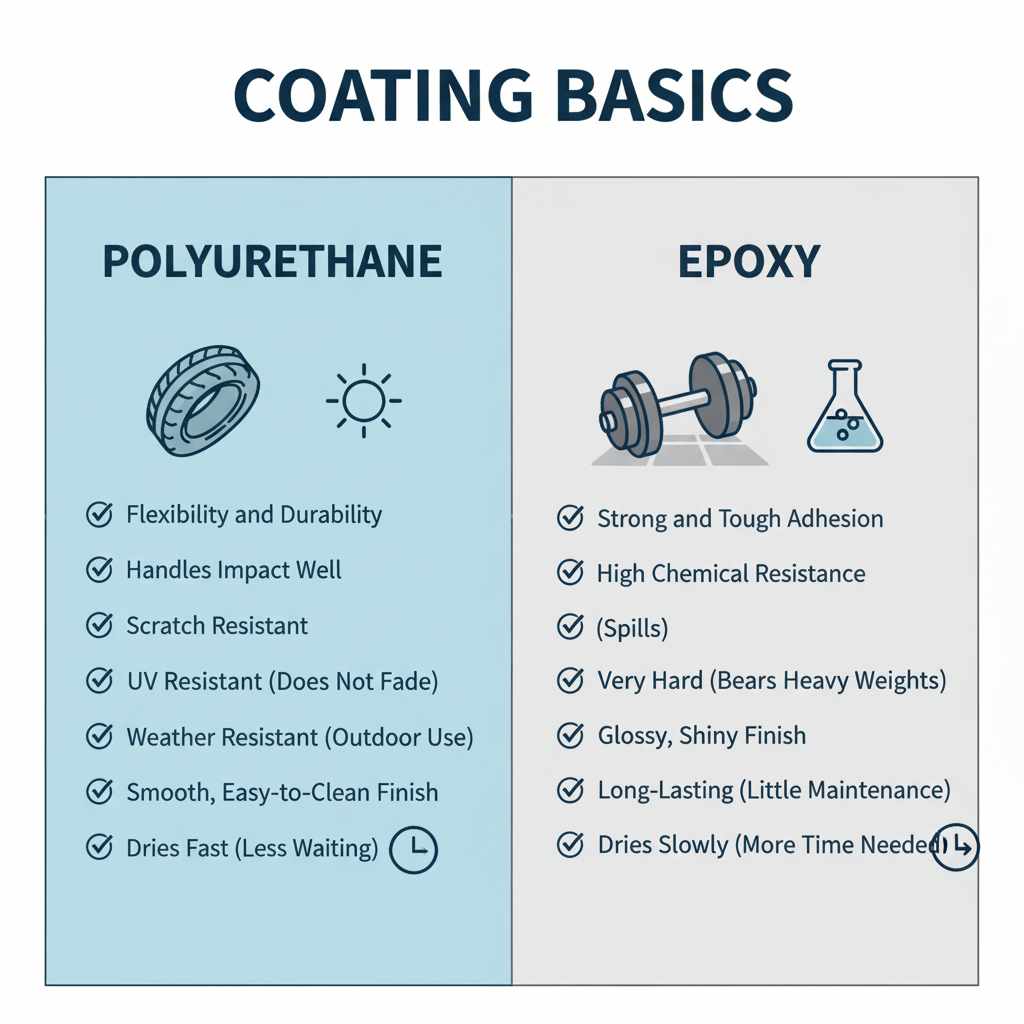
Polyurethane is known for its flexibilityand durability. It handles impact well. Scratches are less noticeable. This coating is also resistantto UV light. It does not fade quickly. Weather changes do not affect it much. It’s perfect for outdoor use. It also provides a smooth finish. Easy to clean. Polyurethane dries fast. Less waiting time.
Epoxy is very strongand tough. It sticks well to surfaces. Great for floors. High chemical resistance. Protects from spills. Epoxy is very hard. It can bear heavy weights. Perfect for garages. It has a glossy finish. Very shiny. Epoxy lasts long. Needs little maintenance. It dries slowly. More time needed.
Application Areas
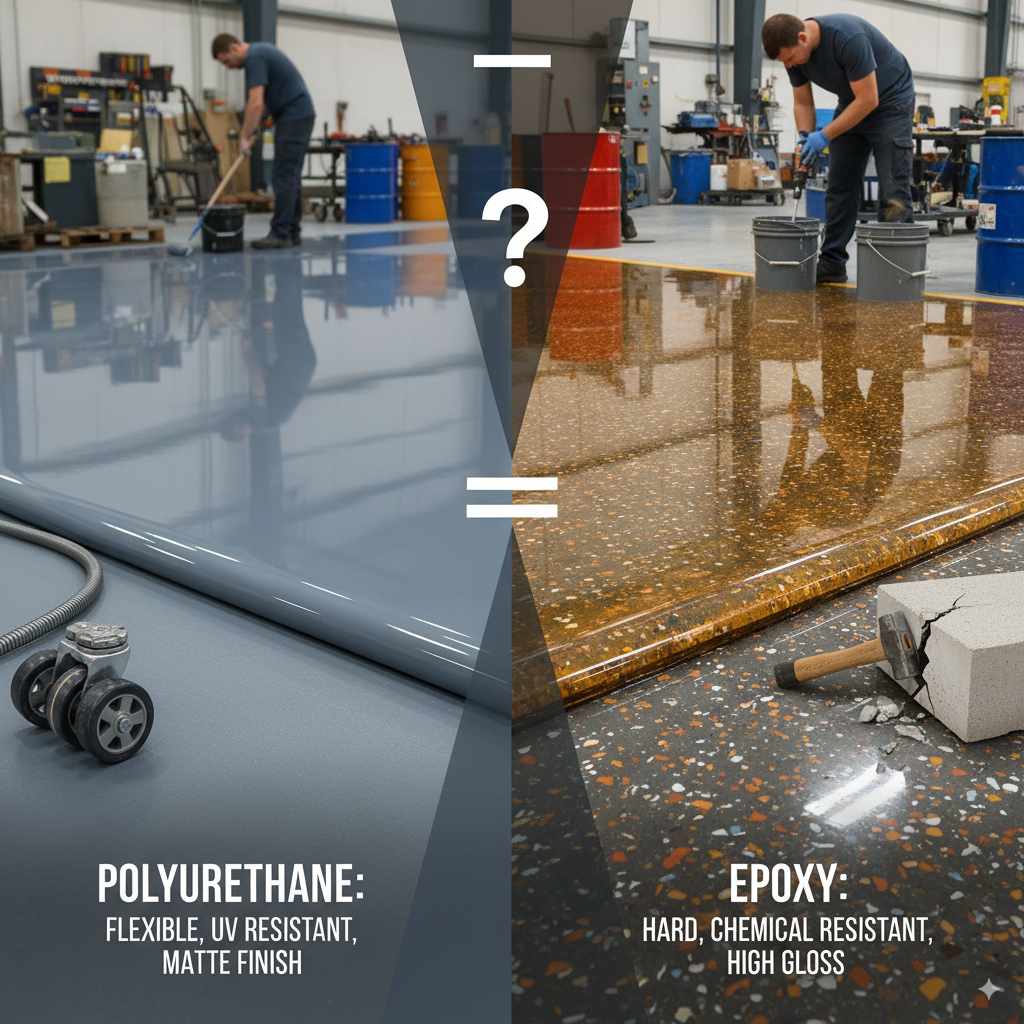
Polyurethane is strong and flexible. It’s used to coat floors in factories. It can handle lots of movement. Epoxy is very hard and durable. It’s great for heavy loads. Many factories use it for their floors. It can resist chemicals too. Epoxy is often used in warehouses.
Polyurethane is often used on furniture. It makes it shiny and strong. People use it on wood floors too. Epoxy is sometimes used in garages. It keeps the floor safe from oil spills. It can make concrete floors look nice. Many people like epoxy for their basements. It stops water damage.
Durability Factors
Polyurethaneis known for its good flexibility. This helps it resist wear and tear. It can handle scratches better than some other materials. Epoxyis very hard and strong. It is great for areas with heavy use. Though it might scratch easier than polyurethane. Both can last a long time if cared for.
Polyurethane can handle sun and rain well. It does not fade or crack easily. Epoxyis more sensitive to sunlight. It might turn yellow over time. But it is very good in places with low sunlight. Both need protection from harsh weather for best results.
Environmental Impact
Polyurethane and epoxy are both used for surfaces. But they have different environmental impacts. Polyurethane has options that are more eco-friendly. It can be made from natural oils. This makes it kinder to the planet. Epoxy, on the other hand, often relies on chemicals. These can be harsh. Some epoxies are improving. They use fewer bad chemicals now. Choosing the right product helps the earth.
Eco-friendly Options
Polyurethane offers bio-based versions. These versions use plant materials. They are better for nature. Epoxy is trying to catch up. Some new epoxies have less impact. They use improved formulas. Always look for labels. Find products that say they are green. This helps make a good choice.
Safety Considerations
Both polyurethane and epoxy need careful handling. Polyurethane can cause skin problems. Wear gloves when using it. Epoxy can irritate the skin too. It can also cause breathing issues. Always use a mask. Work in a place with good air. Be sure to follow safety instructions. Safety is important for everyone.
Cost Considerations
Choosing between polyurethane and epoxy involves understanding cost differences. Polyurethane typically costs more upfront but offers longer durability. Epoxy is cheaper initially but might require frequent maintenance. Consider budget and long-term needs to decide wisely.
Initial Investment
Polyurethane is often cheaper at the start. Epoxy can cost more to buy. Polyurethane is easier to apply. It saves on labor costs. Epoxy needs special tools and skills. This adds to the cost. Both offer good quality. Choose based on your budget.
Long-term Value
Epoxy can last for many years. It stays strong and shiny. Polyurethane may need repairs sooner. Epoxy is good for busy areas. It handles wear and tear well. Both have benefits. Think about how much use the floor will get. This helps you decide.
Aesthetic Qualities
Polyurethane shines with a glossy finish. It feels smooth and sleek. Many people love its shine. Epoxy, on the other hand, can be matte or glossy. Some prefer matte for its subtle look. Others like glossy for its brightness.
Both polyurethane and epoxy offer color choices. Polyurethane has limited colors. But they are vibrant and clear. Epoxy provides many options. It can be bold or soft. Mixing colors is easy with epoxy. This gives more flexibility for designs.
Ease Of Application
Polyurethane requires less preparation. Epoxy demands more work. Polyurethane needs a clean surface. Epoxy needs a clean and rough surface. Polyurethane can go on most surfaces directly. Epoxy might need a primer. Polyurethane saves time. Epoxy takes longer to prepare. Both need good ventilation. Polyurethane is easier for beginners. Epoxy might need more skill.
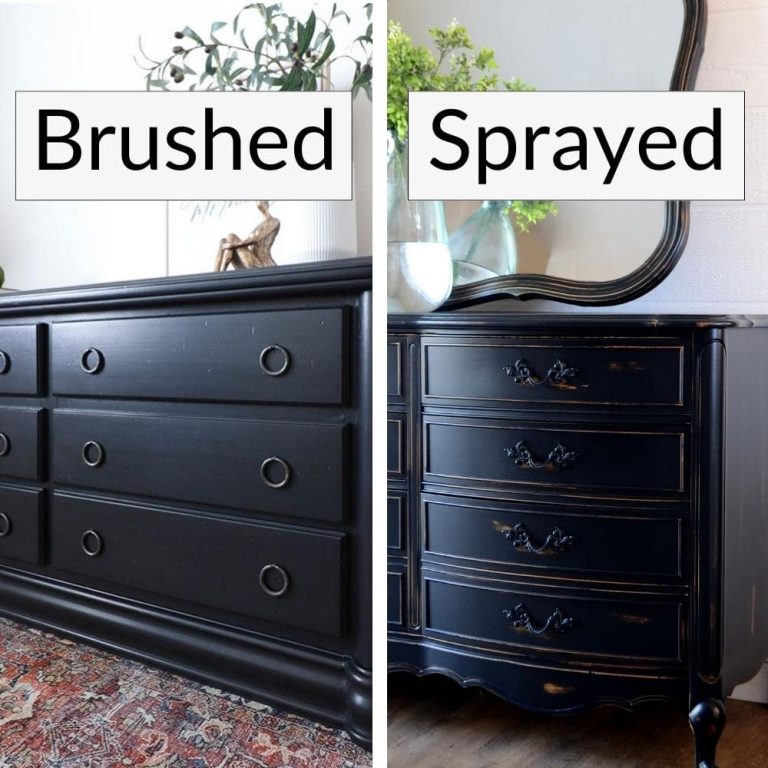
Polyurethane application is simple. Epoxy requires careful steps. Polyurethane can be brushed or sprayed. Epoxy needs mixing before use. Polyurethane dries quickly. Epoxy takes time to set. Polyurethane allows easy touch-ups. Epoxy needs precise application. Polyurethane suits large areas. Epoxy works well for small spots.
Performance Comparison
Polyurethane is known for its flexibility. It bends without breaking. This makes it good for surfaces that might move. Epoxy is very strong. It does not bend easily. It is great for hard, solid surfaces. Both have their uses. Choose based on your needs.
Polyurethane can resist many chemicals. It is good for surfaces with spills. Epoxy also has strong chemical resistance. It handles acids and oils well. Both can protect surfaces from damage. Pick the right one for your project.
Choosing The Right Coating
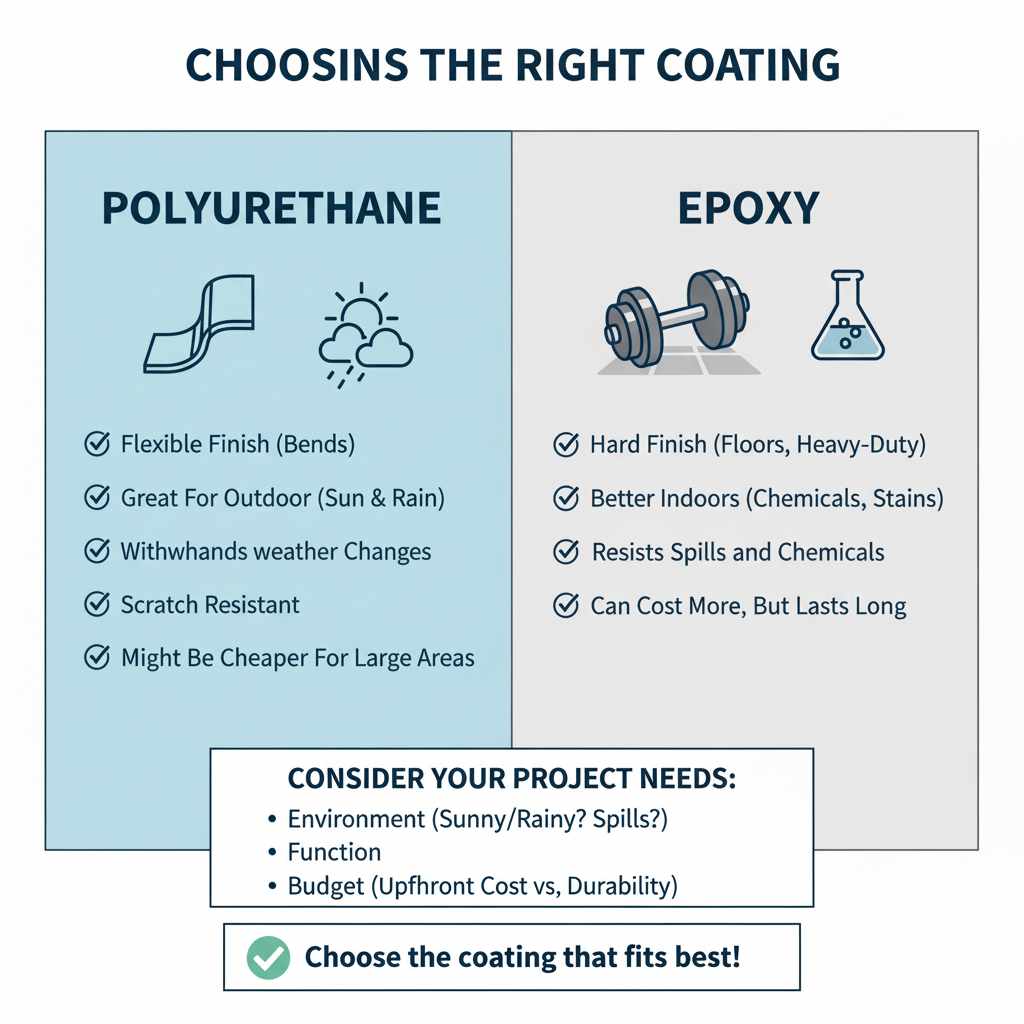
Every project has different needs. Polyurethane offers a flexible finish. It is perfect for surfaces that bend. Epoxy provides a hard finish. It suits floors and heavy-duty areas. Both coatings protect surfaces. They keep them safe from damage. But they serve different purposes.
Polyurethane is great for outdoor projects. It withstands sun and rain. Epoxy is better indoors. It resists chemicals and stains. Before choosing, think about the environment. Is it sunny or rainy? Will there be spills? These factors guide the decision.
Budget is also important. Polyurethane might be cheaper for large areas. Epoxy can cost more, but lasts long. Durability and cost must be balanced. Choose the coating that best fits your project needs.
Frequently Asked Questions
What Are The Disadvantages Of Polyurethane Coating?
Polyurethane coating can yellow over time and may not withstand UV exposure well. It can be prone to cracking and peeling under stress. Application requires careful ventilation due to toxic fumes. Its high gloss finish may show imperfections easily. The coating can be difficult to repair once damaged.
Why Put Polyurethane Over Epoxy?
Applying polyurethane over epoxy enhances UV resistance and adds a protective, glossy finish. It increases durability and protects against scratches and chemicals. Polyurethane offers a variety of finishes, allowing for customization. It also provides a smoother surface, improving the epoxy’s appearance and longevity.
What Is Cheaper, Epoxy Or Polyurethane?
Epoxy is generally cheaper than polyurethane. Epoxy costs less due to simpler production processes and raw materials. Polyurethane offers superior durability and flexibility, making it pricier. Consider specific project needs before choosing. Comparing prices from suppliers can also help in decision-making.
Will Polyurethane Harden Like Epoxy?
Polyurethane doesn’t harden like epoxy; it offers flexibility and durability. Epoxy is rigid and strong, suitable for structural applications. Polyurethane is versatile, used for coatings and sealants, offering a softer finish. Both have distinct properties and uses, but they don’t harden similarly.
Conclusion
Choosing between polyurethane and epoxy depends on your project’s needs. Polyurethane offers flexibility and UV resistance. Ideal for outdoor surfaces. Epoxy provides a hard, durable finish. Best for indoor flooring and industrial use. Consider your environment and desired finish. Each material has its strengths.
Both can deliver excellent results. Think about maintenance and cost too. Polyurethane might need more frequent touch-ups. Epoxy is generally more long-lasting. Weigh these factors carefully. Make an informed decision for your project. Both options offer unique benefits. Choose wisely for best results.