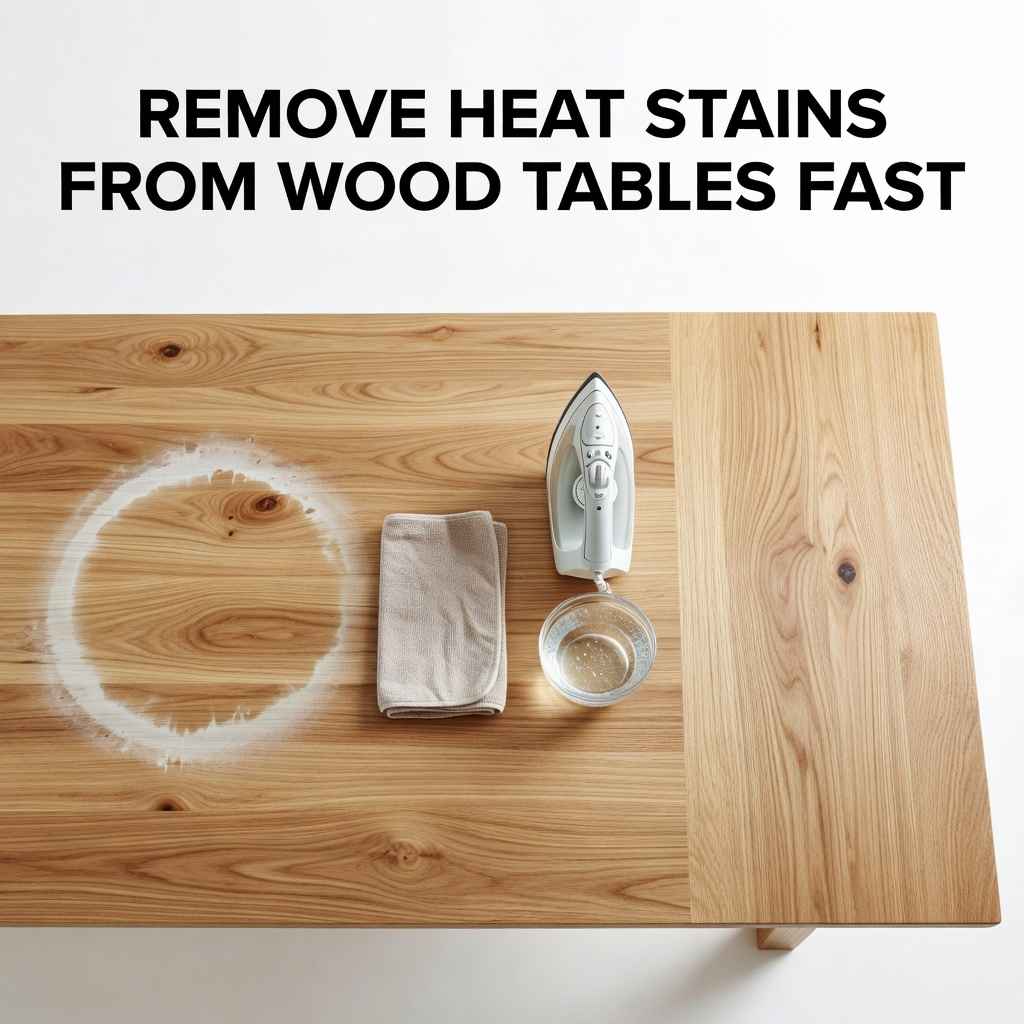
Remove Heat Stains From Wood Tables Fast
White rings or dull spots on your nice wooden table can be frustrating. Many folks wonder how to remove heat stains from wood tables fast, especially when they happen unexpectedly. These marks often appear from hot dishes or mugs left too long.
Don’t worry, it’s usually easier than you think to fix them and make your table look new again. This guide will show you simple steps to get rid of these marks quickly.
Understand Heat Stains On Wood
Heat stains on wood are common problems that pop up when something hot touches the table’s finish. These marks aren’t usually deep damage. They are often a sign that moisture or heat has affected the top layer of the wood’s protective coating, like varnish or lacquer.
They can look like white or light-colored rings or splotches. This is because the heat traps moisture in the finish, causing it to turn cloudy. For beginners, these stains can seem tricky because it’s hard to know what caused them or how to get them out without making the problem worse.
You want to clean them, not damage the wood itself. The good news is that with the right methods, you can often restore the wood’s original look.
What Are Heat Stains Exactly
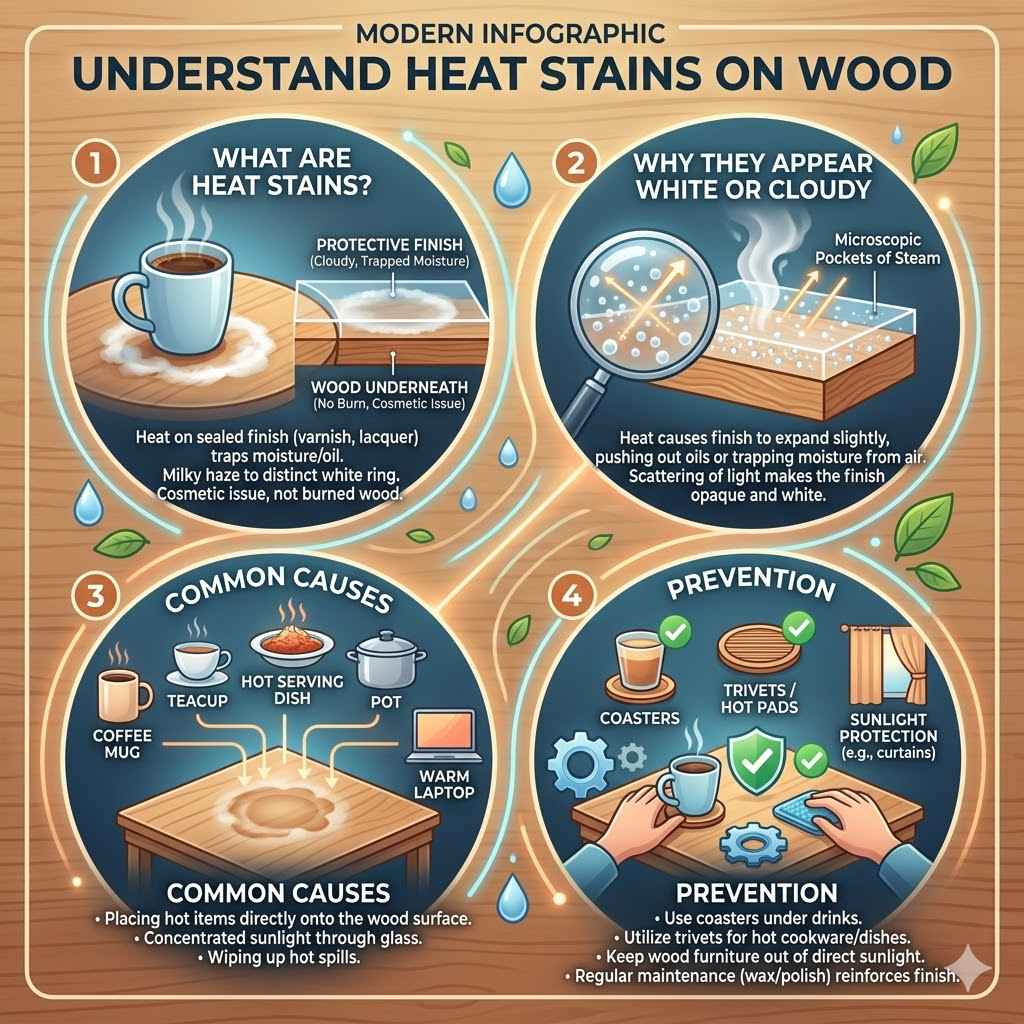
Heat stains on wood are marks left behind when hot items contact a wood surface, especially those with a sealed finish like varnish, polyurethane, or lacquer. The heat causes the finish to become cloudy or milky. This happens because the heat penetrates the finish and traps moisture or oil within it.
It’s like condensation forming under the surface. These aren’t usually a sign of the wood itself being burned or damaged. Instead, they are a cosmetic issue affecting the protective coating.
The severity can range from a slight haze to a distinct white ring. Understanding this is key to knowing how to tackle the problem effectively.
Different finishes react differently to heat. For example, a hard, modern polyurethane finish might show a distinct white ring. An older, softer lacquer finish might absorb the heat more, leading to a duller, more widespread cloudy area.
The speed at which the heat is applied and removed also plays a role. A very hot item placed for just a few seconds can sometimes cause a mark, while a warm item left for a longer period might do the same. Knowing your table’s finish can help you choose the best cleaning method.
Why They Appear White Or Cloudy
The white or cloudy appearance of heat stains is directly related to how the heat interacts with the wood’s finish. Most wooden tables are coated with a protective layer, such as varnish, lacquer, or polyurethane. These finishes are designed to protect the wood from spills and wear.
When a hot object is placed on this finish, the heat causes the finish to expand slightly and can push out any oils or moisture present in the finish itself, or it can trap moisture from the air. This disruption causes the finish to become opaque or cloudy in that spot. It’s not typically the wood itself that’s stained, but the finish that has been altered.
Think of it like steam fogging up a mirror. The heat and moisture create tiny pockets within the finish that scatter light, making it look white or milky. The type of finish also matters.
Some finishes are more porous or flexible than others, making them more prone to these types of temporary changes. For instance, a shellac finish might be more susceptible to heat than a durable epoxy coating. The goal of removing heat stains is to reverse this process and allow the finish to become clear again without damaging it.
Common Causes And Prevention
The most common cause of heat stains on wood tables is placing hot items directly onto the surface without protection. This includes coffee mugs, teacups, hot serving dishes, pots, and even warm laptops. Accidental spills from hot liquids can also leave marks if they aren’t wiped up quickly.
Sometimes, sunlight concentrated through glass can also generate enough heat to cause damage over time. The speed at which these marks appear can be surprising, which is why many people search for ways to remove heat stains from wood tables fast.
Prevention is always better than cure. Using coasters under drinks is a simple yet effective habit. Trivets or hot pads should be used for any hot cookware or serving dishes.
Avoid placing hot items on the table for extended periods. Keeping your wooden furniture out of direct sunlight, especially near windows, can also help prevent heat-related damage. Regular maintenance of the wood’s finish, like occasional waxing or polishing, can also help reinforce its protective qualities.
Easy Methods To Remove Heat Stains From Wood Tables Fast
There are several simple and effective methods you can use to remove heat stains from wood tables quickly. These techniques often involve common household items. The key is to be gentle and test any method on an inconspicuous area of the table first.
For lighter stains, you might only need a soft cloth and a bit of patience. For tougher marks, you might use common kitchen ingredients. The goal is to gently coax the moisture or oil back out of the finish so it can become clear again.
Let’s explore some of these quick fixes.
Using Household Items For White Stains
Many common household items can work wonders on those annoying white heat stains. These are often gentle enough not to harm the wood finish, especially for lighter marks. These methods aim to draw out the trapped moisture or oil from the finish.
They are great because you likely already have them in your kitchen or bathroom. Remember to always use a soft cloth and apply gentle pressure. Avoid anything abrasive that could scratch the surface.
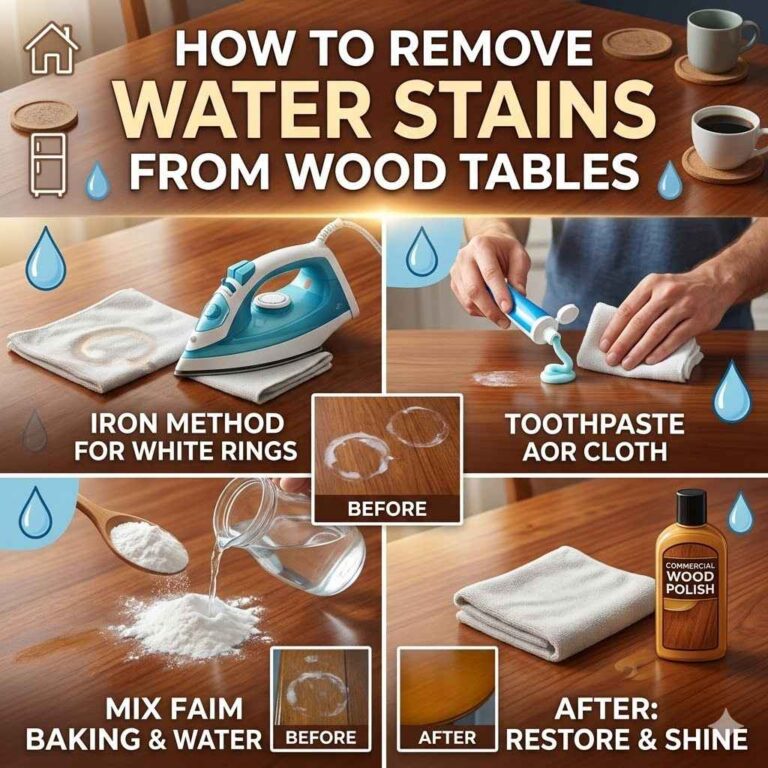
Mayonnaise or Petroleum Jelly: These oily substances can help to displace the moisture trapped in the finish. Apply a generous amount of mayonnaise or petroleum jelly directly onto the stain. Let it sit for a few hours, or even overnight. The oils will slowly work their way into the finish and push out the trapped moisture. Wipe away the excess with a clean, soft cloth and buff the area.
Toothpaste: Non-gel white toothpaste can act as a very mild abrasive. Mix a small amount of toothpaste with a bit of baking soda (optional, for extra gentle abrasion) to create a paste. Gently rub the paste onto the stain using a soft cloth in a circular motion. Wipe clean with a damp cloth, then dry and buff.
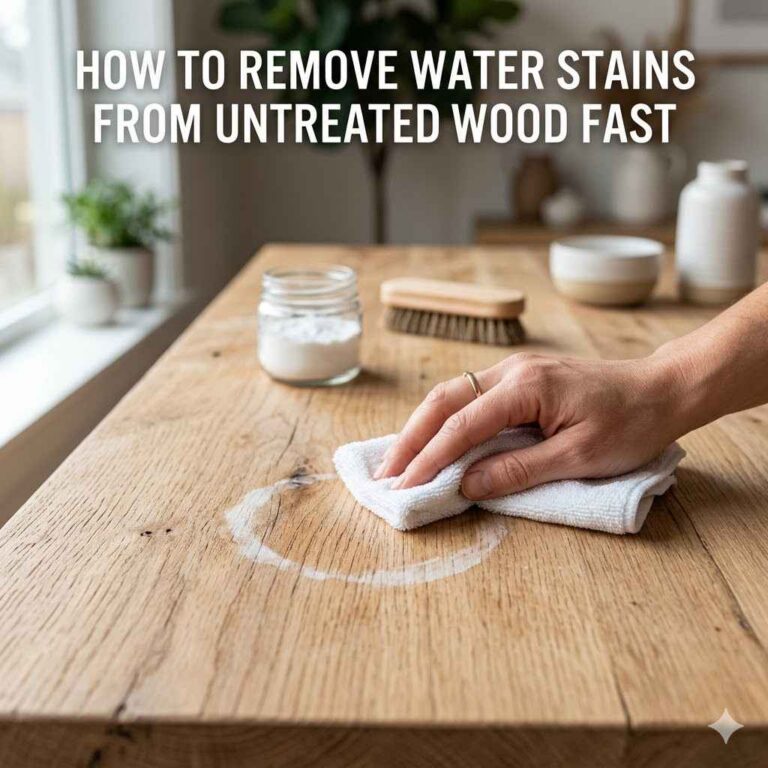
Baking Soda Paste: Similar to toothpaste, a paste made from baking soda and water can be effective. Mix one part baking soda with one part water to form a paste. Apply it to the stain and rub gently with a soft cloth. Wipe clean and dry.
Ironing Method (Use With Caution): This method works by using gentle heat to help evaporate the trapped moisture. Place a clean, dry cloth (like a cotton t-shirt or tea towel) over the stain. Set your iron to a low, dry heat setting (no steam). Briefly (a few seconds at a time) press the warm iron onto the cloth over the stain. Lift the iron and cloth to check the progress. Repeat if necessary, allowing the area to cool between applications. This method requires caution to avoid damaging the finish with too much heat.
These methods are surprisingly effective because they work with the properties of the wood finish. The oils in mayonnaise and petroleum jelly are good at penetrating the finish and lifting out the moisture. Toothpaste and baking soda provide a gentle abrasion that can help to smooth out the disrupted finish.
The ironing method uses heat to re-evaporate the trapped moisture, essentially “drying out” the stain.
Using Specific Wood Care Products
Beyond everyday items, there are specialized wood care products designed to tackle stains and refresh wood surfaces. These can be a reliable option if household remedies don’t fully resolve the issue or if you prefer to use products formulated specifically for wood. These products often contain mild solvents or conditioners that can safely lift stains and restore the finish’s clarity.
Always follow the product instructions carefully.
Wood Polishes and Conditioners: Many commercial wood polishes contain oils and waxes that can help to fill in minor imperfections and restore the luster of the finish. Some are specifically formulated to remove haze or light scratches, which can be helpful for minor heat marks. Apply according to product directions, usually by wiping on with a cloth and buffing off.
Rubbing Compound or Fine Steel Wool: For more stubborn stains, a fine-grit rubbing compound or extra-fine steel wool (0000 grade) can be used. This is a more aggressive approach and should be used with extreme caution. Lightly dampen the steel wool or apply a small amount of rubbing compound to it. Gently rub the stained area in the direction of the wood grain. Wipe clean and assess. If using steel wool, be very careful not to apply too much pressure or rub too hard, as you can damage the finish.
Commercial Heat Stain Removers: There are products on the market specifically marketed as heat stain removers for wood. These are formulated to break down the compounds that cause the staining without harming the wood. Read reviews and choose a reputable brand. Apply as directed, which typically involves applying the product, letting it sit for a short time, and then wiping it clean.
These specialized products leverage chemical formulations or physical abrasion to address the stain. Rubbing compounds and fine steel wool work by gently abrading the damaged top layer of the finish, allowing for a smoother, clearer surface. Commercial removers often contain mild chemical agents that help to dissolve the trapped moisture or oils.
It’s important to remember that these are more advanced solutions and require a careful touch, especially when dealing with delicate finishes.
Dealing With Darker Or Deeper Stains
While white heat stains are often just a surface issue in the finish, darker or deeper stains can indicate that the heat has penetrated further, possibly affecting the wood itself or a darker stain within the wood. These are more challenging to fix and may require more advanced techniques, or even professional refinishing. However, before calling in the experts, there are a few steps you can try.
These methods are more aggressive, so proceed with caution and always test in an inconspicuous area.
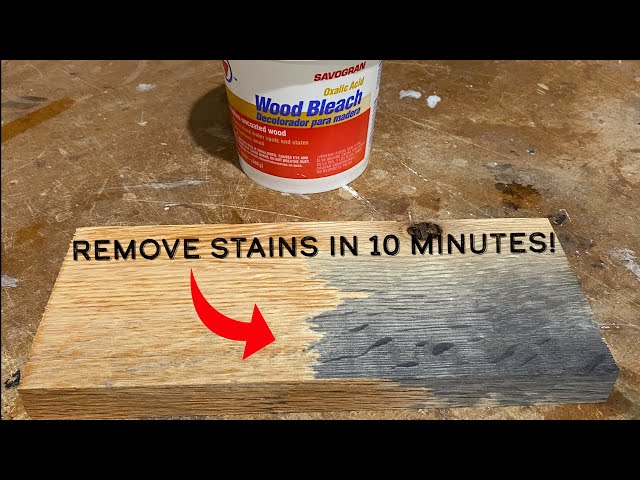
Oxalic Acid (wood bleach): For very dark stains that appear to be in the wood itself rather than just the finish, oxalic acid, often sold as wood bleach, can be effective. This is a chemical treatment that lightens the wood. It requires careful handling and proper safety precautions (gloves, eye protection, ventilation). You typically mix the crystals with hot water, apply the solution to the stained area, let it work, and then neutralize it according to the product instructions. After bleaching, you may need to re-stain and refinish the area.
Sanding and Refinishing: If the stain is deep and cannot be removed by other means, sanding the affected area down to the bare wood might be necessary. This is a more drastic measure and will require you to re-stain and reapply a protective finish to the sanded spot to match the rest of the table. Start with a medium-grit sandpaper and progress to finer grits. Feather the edges of the sanded area into the surrounding finish. This process is labor-intensive and requires a good eye for color matching.
Darker stains are often more than just a cloudy finish. They can be caused by the wood itself absorbing tannins or oils that have been altered by the heat. This is why methods like wood bleaching or sanding become necessary.
Wood bleach works by chemically reacting with the dark pigments in the wood, breaking them down and lightening the color. Sanding physically removes the stained layers of wood. Both methods alter the wood’s surface and require significant follow-up to restore its appearance.
Step-By-Step Guide To Remove Heat Stains From Wood Tables Fast
Now that you know the different methods, here’s a clear, step-by-step approach to tackle heat stains on your wood table. We’ll start with the gentlest methods and move to more aggressive ones if needed. Following these steps will help you remove heat stains from wood tables fast and effectively, restoring your table’s beauty without causing further damage.
Identify The Stain Type: First, look closely at the stain. Is it a cloudy white ring, or is it a darker, more permanent-looking mark? This will help you choose the best method. White rings are usually easier to remove.
Clean The Area: Gently wipe the stained area with a soft, damp cloth to remove any dust or debris. Dry the area thoroughly.
Test Your Method: Before applying any cleaning agent or method to the stain, test it on a hidden spot of the table, like the underside or a corner. This ensures it won’t damage or discolor your finish.
Choose Your Gentle Method: For white stains, start with a gentle option like mayonnaise or petroleum jelly. Apply a small amount to the stain with a clean cloth.
Let It Sit: Allow the chosen agent to work for several hours, or even overnight. This gives the oils or mild abrasives time to penetrate the finish and draw out the moisture.
Wipe And Buff: Gently wipe away the applied substance with a clean, soft cloth. Buff the area to see if the stain has disappeared. You might need to repeat this gentle method a few times for stubborn white marks.
Try A Mild Abrasive If Needed: If the gentle method doesn’t work, you can try a mild abrasive like a non-gel white toothpaste or a baking soda paste. Apply, rub gently in a circular motion with a soft cloth, wipe clean, and buff.
Consider Heat (With Caution): If the stain is still visible, the ironing method might be an option. Place a dry cloth over the stain and lightly press a warm (not hot) iron over it for short bursts. Check progress frequently.
For Darker Stains, Use Caution: If the stain is dark, these gentle methods are unlikely to work. You might need to consider more aggressive treatments like fine steel wool with a polish, or even sanding and refinishing, which are more involved processes.
Recondition Or Refinish As Needed: After removing the stain, the area might look slightly different. You may want to apply a furniture polish or a matching wood conditioner to blend the area and restore shine. If you had to sand, you will need to re-stain and refinish to match the surrounding area.
The initial steps are crucial for success. Cleaning removes surface dirt. Testing prevents accidental damage.
Gentle methods are always the first choice because they preserve the integrity of your table’s finish. By starting softly and gradually increasing the intensity of your approach, you maximize your chances of a successful outcome and avoid making the problem worse. This methodical approach helps you remove heat stains from wood tables fast and safely.
Gentle Approach For White Rings
White heat rings are the most common type of stain, and fortunately, they are usually the easiest to remove. These stains are a sign of moisture or oil trapped within the finish. The key is to use methods that gently draw out this trapped substance without damaging the finish itself.
Often, simple household items are all you need. The process relies on the principle of displacing the trapped moisture with oil or through gentle evaporation.
For instance, mayonnaise, which is oil-based, works by slowly allowing its oils to penetrate the finish. These oils push out the trapped moisture, which is what causes the cloudiness. Similarly, petroleum jelly serves the same purpose.
Toothpaste and baking soda offer a very mild abrasive action, which can help to smooth out the slightly disrupted finish. The ironing method, when done carefully, uses low heat to encourage the trapped moisture to evaporate from within the finish. These methods are preferred because they are less likely to harm the wood’s original coating.
When To Use More Aggressive Solutions
If the white stains persist after trying several gentle methods, or if the stain is dark rather than white, it’s time to consider slightly more aggressive techniques. These methods are more likely to alter the finish, so they require extra care. Always test them in an inconspicuous spot first to ensure they don’t cause unintended damage, such as removing too much finish or creating new marks.
For example, using a fine-grit rubbing compound or extra-fine steel wool (0000 grade) combined with a furniture polish is a step up in intensity. These act as very mild abrasives that can help to smooth the surface of the finish where the stain has occurred. For truly dark stains that seem to be within the wood itself, products like oxalic acid (wood bleach) are used.
These are chemical treatments that lighten the wood. If all else fails and the stain is very deep, sanding the area down to the bare wood and then re-staining and refinishing might be the only option. This is a last resort as it involves removing and replacing the wood’s protective layers.
Protecting Your Table After Stain Removal
After successfully removing a heat stain, it’s important to protect your table from future damage. This involves reconditioning the wood and maintaining its protective finish. If you had to use a more aggressive method, like sanding, you’ll need to completely refinish the area to match the rest of the table.
For lighter stain removals, a good furniture polish or wax can help restore shine and provide an extra layer of protection.
Regularly cleaning and polishing your wood table can help keep its finish in good condition. Using coasters and trivets consistently is the best way to prevent new heat stains from forming. By taking these preventative measures, you can keep your wood table looking beautiful for years to come.
This helps ensure that all your efforts to remove heat stains from wood tables fast pay off in the long run.
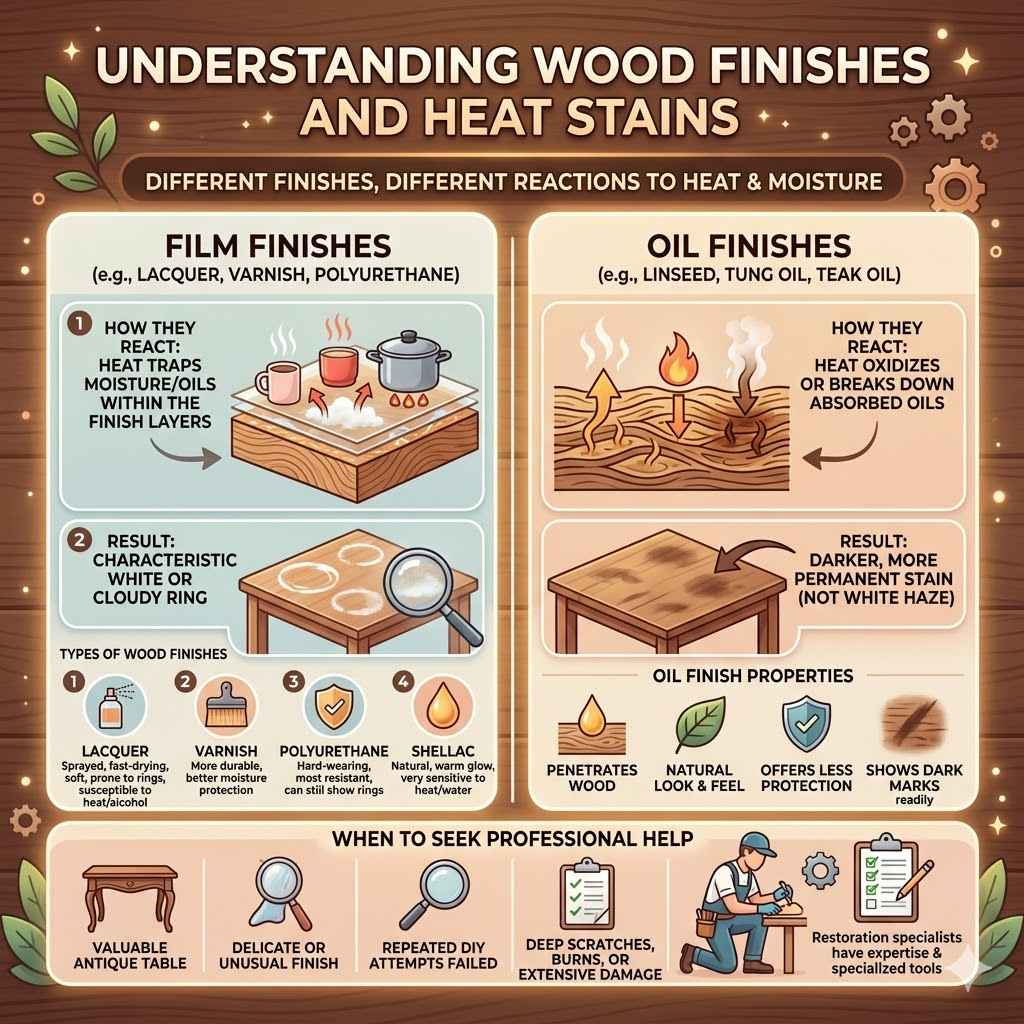
Understanding Wood Finishes And Heat Stains
The way heat stains affect a wood table depends heavily on the type of finish it has. Different finishes have varying levels of durability and resistance to heat and moisture. Understanding these differences can help you choose the most appropriate method for removing stains and can also guide your preventative efforts.
For example, a table with a modern polyurethane finish will behave differently than one with an older, more delicate lacquer.
Types Of Wood Finishes
Wood finishes are the protective coatings applied to wooden surfaces. They enhance the wood’s natural beauty, provide a barrier against moisture and stains, and add durability. Common types include:
Lacquer: This is a fast-drying finish that can be sprayed on. It provides a beautiful sheen but is relatively soft and can be susceptible to heat and alcohol. White heat rings are common on lacquered surfaces.
Varnish: Varnish is more durable than lacquer and offers better protection against moisture and wear. It dries slower than lacquer and can be oil-based or water-based.
Polyurethane: This is a very durable and hard-wearing finish, often considered one of the most resistant to heat, water, and scratches. It can be oil-based or water-based. While very tough, it can still show white rings from extreme heat or prolonged contact.
Shellac: Made from the secretions of the lac beetle, shellac is a natural finish that dries very quickly. It offers a beautiful, warm glow but is quite sensitive to heat, alcohol, and water, making it prone to white stains.
Oil Finishes: These finishes penetrate the wood rather than forming a film on top. They provide a natural look and feel but offer less protection against heat and moisture compared to film finishes. They tend to show dark stains more readily than white rings.
Each of these finishes has its own unique properties. Lacquer and shellac are more prone to immediate white haze from heat. Polyurethane and varnish offer better resistance, but intense heat can still cause damage.
Oil finishes may not show white rings but could absorb heat-altered substances, leading to darker marks. Knowing which finish your table has is crucial for effective stain removal.
How Finishes React To Heat
When heat comes into contact with a wood finish, it can cause several reactions, depending on the finish’s composition and the intensity of the heat. For film finishes like lacquer, varnish, and polyurethane, the primary issue is that the heat can cause the finish to expand and contract. This disruption can trap moisture or oils within the finish layers, leading to the characteristic white or cloudy appearance.
The plasticizers within the finish can be affected, causing the cloudiness.
For oil finishes, the reaction is different. Oil finishes are absorbed into the wood. Heat can cause the oils within the wood to oxidize or break down in a way that changes their color.
This can lead to a darker, more permanent stain rather than a white haze. The underlying wood can also be affected. If the heat is intense enough, it can scorch the wood fibers, creating a dark mark that is much harder to remove and often requires sanding.
When To Seek Professional Help
While many heat stains can be removed with DIY methods, there are times when professional help is the best option. If you have a valuable antique table, a very delicate or unusual finish, or if you’ve tried several methods without success and are worried about causing more damage, contacting a furniture restoration specialist is advisable. They have the expertise and specialized tools to identify the finish and apply the correct treatments without compromising the piece.
Professionals can also handle deep scratches, burns, or extensive finish damage that goes beyond simple heat stains. Attempting aggressive repairs on valuable furniture without proper knowledge can significantly devalue the piece. For most common heat stains on standard furniture, however, the methods described here should provide a clear path to restoring your table’s appearance, allowing you to remove heat stains from wood tables fast.
Frequently Asked Questions
Question: Can I remove heat stains from a laminated wood table?
Answer: Laminate surfaces are different from solid wood. Heat can damage the printed pattern or the adhesive holding the laminate. Try gentle cleaning methods like wiping with a damp cloth.
Avoid abrasive cleaners or excessive heat, as these can damage the laminate itself.
Question: How do I know if the stain is in the finish or the wood?
Answer: White or cloudy stains are usually in the finish. Darker, brownish stains are more likely to be in the wood itself. Gentle methods work best for finish stains.
Wood stains might require sanding or bleaching.
Question: Will these methods work on painted wood tables?
Answer: These methods are primarily for finished wood surfaces like varnish or lacquer. Painted surfaces react differently. Heat stains on paint might be harder to remove without damaging the paint.
Test any method in a very hidden spot.
Question: How long does it take to remove a heat stain?
Answer: Simple white stains can often be removed in minutes or hours using gentle methods. More stubborn stains might take overnight soaking or repeated applications. Deeper stains requiring sanding and refinishing can take much longer.
Question: Is it safe to use a hairdryer on a heat stain?
Answer: A hairdryer on a low heat setting, held at a distance, can sometimes help evaporate trapped moisture for white stains. However, be very cautious, as too much heat can further damage the finish. Test this method carefully and use it sparingly.
Wrap Up
You can effectively remove heat stains from wood tables fast. Start with gentle methods like mayonnaise or toothpaste for white marks. For tougher stains, carefully try mild abrasives or specialized products.
Always test first and work gently to protect your table’s finish. With these simple steps, you can restore your wood table’s beauty and prevent future damage.