Remove Water Rings from Wood Tables Fast
Dealing with water rings on your nice wooden tables can be frustrating. You might worry about damaging the wood or not knowing the best way to fix it. Many people find it tricky to get these marks out without leaving a new problem. But don’t worry, there are simple ways to make them disappear. We’ll guide you step-by-step on how to Remove Water Rings from Wood Tables Fast and make them look good again.
How to Remove Water Rings from Wood Tables Fast
Getting rid of water rings on wood furniture can seem like a big task, but it’s quite manageable with the right approach. This section focuses on the most effective, straightforward methods to tackle these common household blemishes quickly and efficiently. We will explore several techniques, ranging from using common household items to specific wood care products, ensuring you have a variety of options based on what you have readily available and the severity of the water rings. The goal is to restore your wood tables to their former glory without causing further harm.
Understanding Different Types of Water Rings
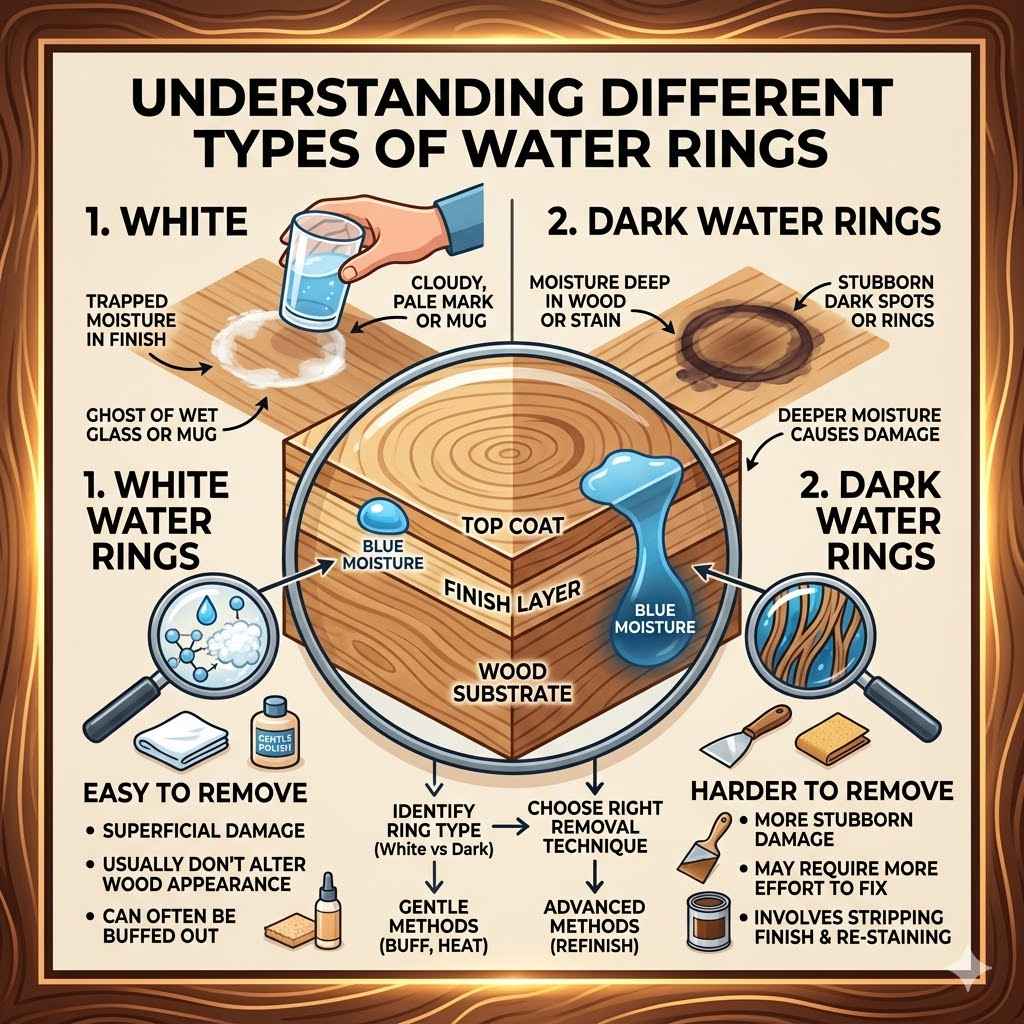
Water rings on wood tables are a common issue, and they usually come in two main types: white rings and dark rings. The type of ring you’re dealing with will determine the best method for removal. White rings are the most common and are often caused by moisture trapped in the top layer of the wood’s finish. They are usually easier to remove because they haven’t penetrated the wood itself. Dark rings, on the other hand, indicate that moisture has gone deeper, possibly into the wood or its stain, and may require more effort to fix. Identifying the type of ring is the first crucial step in choosing the right removal technique.
White Water Rings
White water rings are those cloudy, pale marks that look like a ghost of a wet glass or mug. They happen when moisture gets stuck between the wood’s protective finish, like varnish or lacquer, and the wood itself. This moisture can disrupt the finish, making it appear white or cloudy. The good news is that because the water hasn’t reached the actual wood or its color, these rings are usually superficial. This means they can often be buffed out or gently coaxed back to clarity without altering the wood’s natural appearance or the finish’s integrity. The key is to use gentle methods that lift the trapped moisture without damaging the finish further.
Dark Water Rings
Dark water rings are more stubborn. They show up as dark spots or rings on your wood surface. This happens when moisture not only penetrates the finish but also seeps into the wood itself or its stain. This deep moisture can lift the finish, cause discoloration, and even warp the wood fibers if left untreated for too long. Because the damage is deeper, removing dark rings often requires more than just a simple buff.
It might involve stripping away a layer of the finish or even re-staining and refinishing certain parts of the table. It’s important to approach dark rings with patience and more targeted solutions to avoid making the problem worse.
Quick Fixes for White Water Rings
When you need to Remove Water Rings from Wood Tables Fast, especially the white ones, several everyday items can be surprisingly effective. These methods are gentle enough for most finishes and don’t require special tools or products. They work by drawing out the trapped moisture or gently polishing the finish to remove the cloudiness. I
It’s always a good idea to test any method on an inconspicuous area of the table first to ensure it doesn’t harm the finish. Consistency and a light touch are key to successfully removing these marks without any lasting damage.
Using Household Items for White Rings
Many items already in your kitchen or bathroom can effectively tackle white water rings. These are popular because they are cheap, easy to find, and often less harsh than commercial cleaners. For example, mayonnaise, petroleum jelly, or even toothpaste can work wonders. They often work by displacing the moisture or gently abrading the surface.
These methods are considered “quick fixes” because they can often yield visible results within minutes to a few hours. The science behind them is simple: many of these substances contain oils or mild abrasives that can help lift the trapped moisture and restore the finish’s clarity.
Mayonnaise or Petroleum Jelly Method
One of the most recommended quick fixes for white water rings involves using mayonnaise or petroleum jelly. These products are rich in oils that can help to displace the trapped moisture in the wood finish. Apply a generous amount of mayonnaise or petroleum jelly directly onto the white ring. Let it sit for at least an hour, or even overnight for stubborn rings. The oils penetrate the finish and help to lift the moisture out. After the waiting period, wipe the area clean with a soft cloth and then buff it with a dry cloth. You should see the white ring fade away. This method is safe for most sealed wood finishes and is a great way to start if you’re unsure about other techniques.
Toothpaste Application
Non-gel white toothpaste can also be a useful tool for removing white water rings. It contains very mild abrasives that can help to buff out the cloudiness from the finish. Apply a small dab of non-gel white toothpaste directly onto the water ring. Gently rub it into the ring using a soft cloth or your finger, moving with the grain of the wood. Avoid vigorous scrubbing, as this can damage the finish. After you’ve gently worked it in, wipe the area clean with a damp cloth and then immediately dry and buff the surface with a clean, dry cloth. This method is best for rings that are not too deep into the finish.
Hair Dryer Technique
A hair dryer can be another quick and effective way to remove white water rings. The gentle heat from the hair dryer helps to evaporate the trapped moisture in the finish. Set your hair dryer to its lowest heat setting. Hold it a few inches away from the water ring and move it back and forth continuously. Do not focus the heat on one spot for too long, as this could damage the finish. As you apply gentle heat, you should see the white ring begin to disappear. Once it’s gone, let the area cool completely. You can then buff the spot with a soft cloth. This method is very fast and uses a common household appliance.
Advanced Methods for Tougher Rings
Sometimes, white rings are persistent, or you might be dealing with darker, more challenging water marks that require a bit more power. These methods involve slightly stronger agents or more direct action on the wood’s surface. While they require a bit more care, they can be very effective when the simpler methods don’t quite do the trick. Always remember to test these methods on a hidden spot first to make sure they are suitable for your table’s finish. Patience and precision are key to successfully restoring your wood table.
Iron and Cloth Method for White Rings
For white rings that don’t yield to simpler methods, the iron and cloth technique can be very effective. This method uses controlled heat to draw out the trapped moisture. You’ll need a clean, dry cotton cloth (like a t-shirt scrap or dish towel) and a household iron. Set your iron to a low heat setting with no steam. Place the dry cloth over the water ring. Then, gently place the warm iron on top of the cloth for a few seconds. Lift the iron and cloth and check the ring. Repeat this process, moving the cloth slightly each time, until the ring disappears. The heat gently evaporates the moisture without damaging the finish.
Baking Soda Paste
A paste made from baking soda and water can also be effective for white water rings. Baking soda is a mild abrasive that can help to gently lift the stain from the finish. Mix two parts baking soda with one part water to create a paste. Apply a small amount of this paste to a soft cloth and gently rub it over the water ring, following the grain of the wood. Don’t scrub too hard. Once the ring starts to fade, wipe away the paste with a clean, damp cloth, and then dry and buff the area with a dry cloth. This method is quite effective for rings that are slightly more set in.
Using Steel Wool (Very Fine Grade)
For white water rings that are particularly stubborn, a very fine grade of steel wool, like grade 0000, can be used with caution. This is a more aggressive approach and requires care to avoid scratching the wood’s finish. Use a small piece of the 0000 steel wool and rub it very gently in the direction of the wood grain over the white ring. It’s often recommended to use a lubricant, such as a bit of furniture polish or mineral oil, with the steel wool. After rubbing, immediately wipe the area clean with a damp cloth, then dry and buff with a clean, dry cloth. Follow up with a furniture polish to restore shine.
Treating Dark Water Rings on Wood
Dark water rings signify that moisture has penetrated the wood’s surface, causing discoloration and potential damage to the finish and wood itself. These types of rings require a more intensive approach compared to white rings. The methods here aim to address the deeper damage, which might involve removing the damaged finish layer or even treating the wood color. It’s essential to proceed with these methods cautiously, as they can alter the surface of your wood if not done carefully. Always start with the least aggressive option and only move to stronger methods if necessary.
Sanding and Refinishing
For dark water rings that are deep and have significantly damaged the finish and wood color, sanding and refinishing might be the only solution. This involves carefully sanding down the affected area to remove the damaged wood and finish. You can start with a coarser grit sandpaper and move to finer grits for a smooth surface. Once sanded, you will need to reapply a stain that matches the surrounding wood and then seal the area with a clear finish like varnish or polyurethane. This process requires patience and a good eye for matching color and sheen, but it can completely restore heavily damaged wood.
Choosing the right sandpaper grit is crucial. Start with a medium grit (like 120-150) to remove the bulk of the damage, then progress to finer grits (220-320) to smooth the surface. Sanding too aggressively with a coarse grit can create deeper scratches that are harder to remove later.
When applying new stain, test it on a scrap piece of wood or an inconspicuous area of the table first. Apply thin, even coats, wiping off excess stain to achieve the desired color. Allow adequate drying time between coats.
The final finish needs to match the existing sheen of your table. Whether it’s a matte, satin, or high-gloss finish, choose the appropriate product and apply it evenly. Multiple thin coats are better than one thick coat.
Using Oxalic Acid for Dark Stains
Oxalic acid is a chemical often used to remove dark stains and water marks from wood. It is particularly effective at bleaching out dark discoloration caused by water or rust. You can buy oxalic acid crystals from hardware stores. They need to be mixed with water to form a solution. Always wear gloves and eye protection when working with oxalic acid, as it is a mild acid.
Apply the solution to the dark ring with a brush or cloth, let it sit for the recommended time, and then neutralize it with a baking soda and water solution. Once dry, you may need to lightly sand and refinish the area.
Safety first. Always work in a well-ventilated area when using oxalic acid. Wear rubber gloves, eye protection, and old clothing.
The concentration of the oxalic acid solution can vary, so follow the product instructions carefully. A common starting point is one cup of warm water to a few tablespoons of oxalic acid crystals.
After applying and letting the acid work, it is essential to neutralize the area. A common neutralizer is a mixture of baking soda and water. This stops the acid from continuing to work and potentially damaging the wood further.
Bleaching the Wood
In severe cases of dark water rings, where other methods fail, a wood bleach might be necessary. Wood bleach can lighten dark stains and water marks, making them less visible. There are different types of wood bleaches, including single-part and two-part (often containing sodium hydroxide and sodium hypochlorite). Similar to oxalic acid, proper safety precautions are essential. Apply the bleach according to the manufacturer’s instructions, let it work, and then neutralize and clean the wood. This method can significantly lighten the wood, so you might need to re-stain the area to match the rest of the table.
Understand the type of bleach you are using. Two-part bleaches are stronger and may require more careful handling and application.
Always follow the manufacturer’s instructions for application and dwell time. Over-bleaching can lead to an unnatural, washed-out appearance.
After bleaching and neutralizing, the wood may appear lighter than the surrounding area. You will likely need to re-stain the wood to match the original color of your table. Test the stain on scrap wood first.
Preventing Future Water Rings
The best way to deal with water rings is to avoid them in the first place. Prevention is always easier than repair. Simple habits and the use of protective items can save your wood tables from future damage. Being mindful of moisture and protecting the surface are key. These proactive steps will help maintain the beauty and integrity of your wood furniture for years to come.
Use Coasters and Placemats
The simplest and most effective way to prevent water rings is to use coasters for drinks and placemats for food. Coasters provide a barrier between a wet glass or cup and the wood surface, preventing condensation from reaching the finish. Placemats serve a similar purpose for plates and bowls, protecting against spills and heat. Make sure to have coasters readily available in areas where drinks are commonly placed, such as living rooms and dining areas. This small habit can save you a lot of time and effort in the long run.
Wipe Up Spills Immediately
Don’t let spills sit on your wood table. Any liquid, whether it’s water, juice, or even a sticky soda, can potentially damage the wood finish if left unattended. Use a soft, absorbent cloth to wipe up spills as soon as they happen. For sticky spills, a slightly damp cloth followed by a dry one will help clean and protect the surface. This quick action prevents moisture from seeping into the wood or leaving rings behind. It’s a fundamental part of wood care that often gets overlooked but makes a significant difference.
Consider Wood Sealants and Polishes
Regularly using quality wood sealants or polishes can provide an extra layer of protection for your wood tables. These products create a barrier on the surface that can repel water and resist minor scratches and stains. They also help to maintain the wood’s natural luster and can fill in tiny imperfections in the finish, making it more resilient. Apply polish or sealant according to the product instructions, usually every few months, depending on usage and environmental conditions. This regular maintenance keeps your wood furniture looking its best and helps it withstand everyday wear and tear.
Real-Life Examples and Scenarios
Understanding how these methods work in practice can be very helpful. Here are a few common situations and how people have successfully used these techniques to Remove Water Rings from Wood Tables Fast. These examples show the versatility of the methods and how they can be adapted to different circumstances.
Example 1 A Forgotten Drink
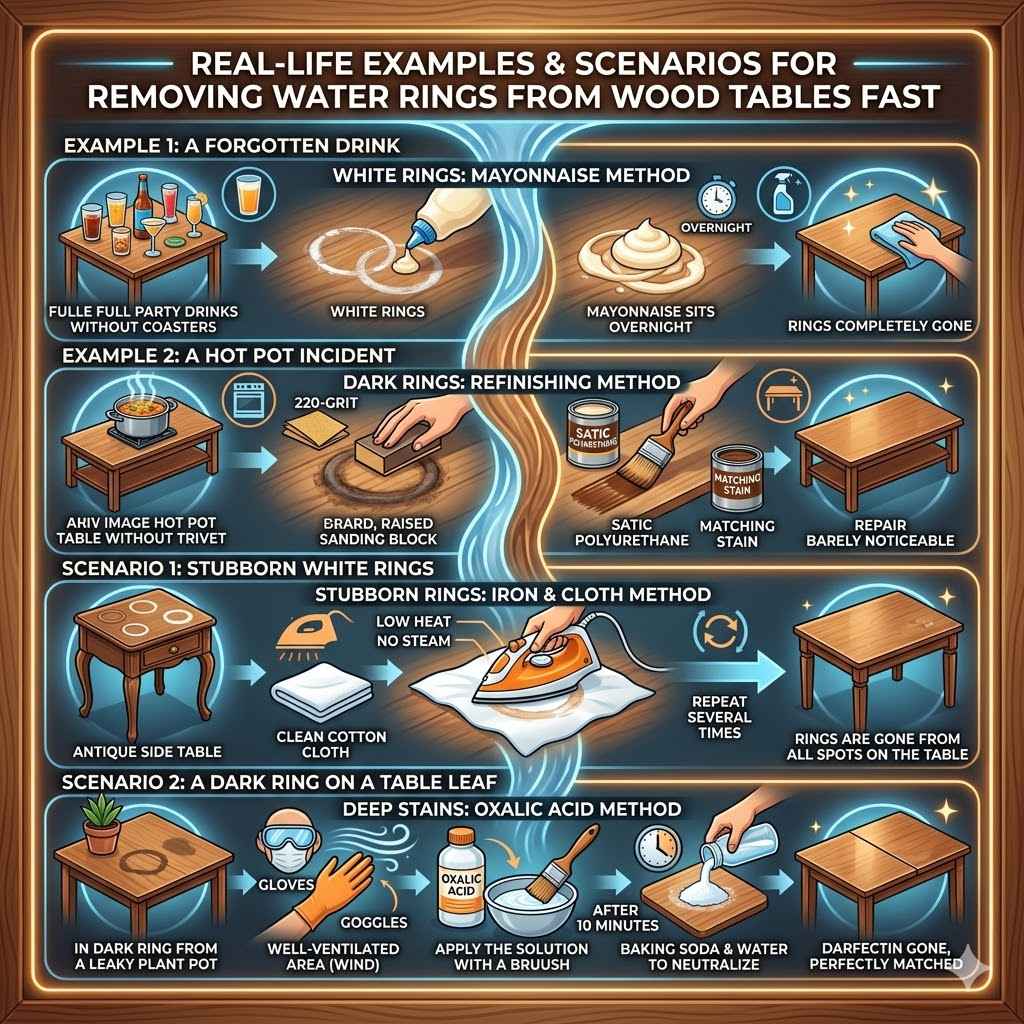
Sarah hosted a party and forgot to ask guests to use coasters. The next morning, she found several white rings on her dining table from condensation on glasses. She decided to try the mayonnaise method. She applied a thin layer of mayonnaise to each ring and let it sit overnight. The next day, she wiped it off and buffed the table. The rings were completely gone, and the table looked as good as new.
Example 2 A Hot Pot Incident
Mark accidentally placed a hot pot directly onto his coffee table without a trivet, leaving a dark, slightly raised ring. He knew this was more serious than a white ring. After cleaning the area, he carefully sanded the ring with 220-grit sandpaper until it was smooth. He then applied a wood stain that matched his table and finished it with a satin polyurethane. The repair was barely noticeable.
Scenario 1 Stubborn White Rings
You have a beautiful antique side table with several white rings from years of use. The simple methods like toothpaste and hair dryer have only slightly improved them. You decide to try the iron and cloth method. You lay a clean cotton cloth over one ring and gently press a warm iron (low heat, no steam) on it for a few seconds. You lift and check. You repeat this several times, moving the cloth, and slowly the ring fades until it’s gone. You do this for all the rings.
Scenario 2 A Dark Ring on a Table Leaf
You have a table that extends, and one of the leaves has a dark ring from a leaky plant pot. The rest of the table is in perfect condition. You decide to use oxalic acid. You mix the crystals with water in a well-ventilated area, wearing gloves and goggles. You apply the solution to the dark ring with a brush. After 10 minutes, you see the dark stain lightening. You neutralize the area with baking soda and water. Once dry, you lightly sand and apply a matching stain and finish.
Frequently Asked Questions
What is the fastest way to remove a white water ring from wood?
The fastest way to remove a white water ring is often the hair dryer method. Use a low heat setting and keep the dryer moving a few inches from the ring. This gently evaporates the trapped moisture.
Can I use nail polish remover to remove water rings?
Nail polish remover is generally not recommended for removing water rings from wood. It contains harsh chemicals that can strip the finish from the wood, causing more damage.
What if the water ring is very deep and dark?
If the water ring is deep and dark, it has likely penetrated the wood. You may need to sand down the affected area and refinish it with stain and a protective topcoat to match the surrounding wood.
Are commercial water ring removers effective?
Yes, there are many commercial products designed specifically to remove water rings from wood. They often contain mild abrasives or solvents that can lift the rings. Always follow the product instructions carefully and test in an inconspicuous area first.
How often should I polish my wood tables to prevent rings?
You should polish your wood tables every few months, or more often if they are in a high-traffic area or exposed to moisture. Regular polishing creates a protective layer that helps prevent rings.
Wrap Up
You’ve learned how to Remove Water Rings from Wood Tables Fast. Whether you faced a faint white mark or a stubborn dark stain, effective solutions exist. By understanding the type of ring and using the right method, you can restore your furniture’s beauty. Simple household items often work wonders for quick fixes, while more advanced techniques address deeper damage. Remember, prevention through coasters and immediate spill cleanup is key to keeping your wood tables looking their best.