Roll of Vinyl Flooring: Choose the Right Type and Install
A roll of vinyl flooring works best when thickness and backing fit the room: in many cases, a mid-range wear layer is used for kitchens and baths, and glue-down or loose-lay can suit large, flat rooms. Pick wrong, and seams can lift, dents can form, or the floor can fail early. This guide compares roll vinyl formats, installation methods, room-by-room choices, and budget ranges before you buy.
What sheet vinyl flooring is and why the roll format matters


Sheet vinyl flooring is vinyl sold in rolls, usually installed as one continuous surface with fewer seams than planks or tiles. That matters because fewer seams mean less dirt buildup, simpler cleanup, and fewer places for moisture to get under the floor. It also changes material planning, since room shape and roll width drive waste and cost.
How roll vinyl differs from planks and tiles
Vinyl composition matters here: the product is often PVC-based, with a printed design layer, a wear layer on top, and a backing layer below. Sheet vinyl covers more area with fewer joints than vinyl planks, but it also needs tighter planning because one bad cut can affect a large section.
Where this format usually fits in a house
Roll vinyl is common in kitchens, laundry rooms, bathrooms, basements, rentals, and busy family rooms. It works best where cleanup matters and the subfloor is reasonably flat. Rooms with many corners, curves, or fixed cabinets can still work, but seam count and waste rise fast.
Which roll vinyl flooring is best for each room?
The best roll vinyl for a room depends on moisture risk, traffic, and shape. Living rooms need better indentation resistance and a wider roll if possible. Kitchens, baths, and laundry rooms need stronger seam control and realistic water resistance. Basements and rentals benefit from simpler installs and products that take abuse without expensive repairs.
Living rooms and hallways
For living rooms and hallways, look for a thicker wear layer and a backing that feels stable underfoot. A mid-range wear layer is a practical residential target, especially in homes with pets or rolling chairs. Long runs and visible seams make layout and pattern match more important than in a small bath.
Kitchens and laundry rooms
Kitchens and laundry rooms need better spill control, so a continuous sheet with well-sealed edges is a smart choice. Glue-down products usually perform better than loose-lay in these rooms because they resist movement around appliances and wet traffic. Check seam sealer compatibility before purchase if the room needs a joint.
Bathrooms, basements, and rentals
Bathrooms need careful perimeter detailing because standing water and toilet-area movement stress seams. Basements need moisture checks before any vinyl goes down over concrete. Rentals usually do best with durable, easy-to-repair sheet vinyl, especially when the owner wants faster turnover and lower-risk installation.
What should you check before buying a roll?

Before buying, compare wear layer thickness, backing quality, and performance ratings instead of choosing by color alone. Wear layer affects scratch and dent resistance. Backing affects comfort, stability, and how the floor handles imperfect substrates. Ratings for slip, scratch, and indentation resistance help separate short-term appearance from real service life.
Wear layer thickness and what it tells you
Wear layer thickness is usually listed in mils or millimeters. For residential use, thinner products can work in low-traffic rooms, while 12–20 mil is a safer range for kitchens, entries, and family areas. Thicker wear layers usually improve scratch resistance and slow visible wear, though subfloor prep still matters.
Backing quality and comfort underfoot
The backing layer influences feel, dent recovery, and how well the sheet sits on the substrate. A better backing can help the floor bridge tiny texture differences, but it will not fix an uneven slab or damaged plywood. If the backing is too soft, heavy furniture can leave marks more easily.
Slip, scratch, and indent ratings
Check slip resistance for bathrooms and laundry rooms, and ask about indentation resistance if the room holds heavy furniture, refrigerators, or office chairs. Scratch resistance matters in homes with grit, pets, or constant foot traffic. Waterproof claims only matter if seams, transitions, and subfloor moisture are also controlled.
| Room | Wear layer target | Suggested install method | Key risk flag |
|---|---|---|---|
| Living room | 12–20 mil | Glue-down or loose-lay | Furniture dents |
| Kitchen | 12–20 mil | Glue-down | Seam exposure near sinks |
| Bathroom | 12–20 mil | Glue-down | Perimeter moisture |
| Basement | 12–20 mil | Glue-down after moisture check | Concrete moisture |
| Rental unit | 10–20 mil | Loose-lay or glue-down | Fast turnover damage |
How the floor underneath changes the job
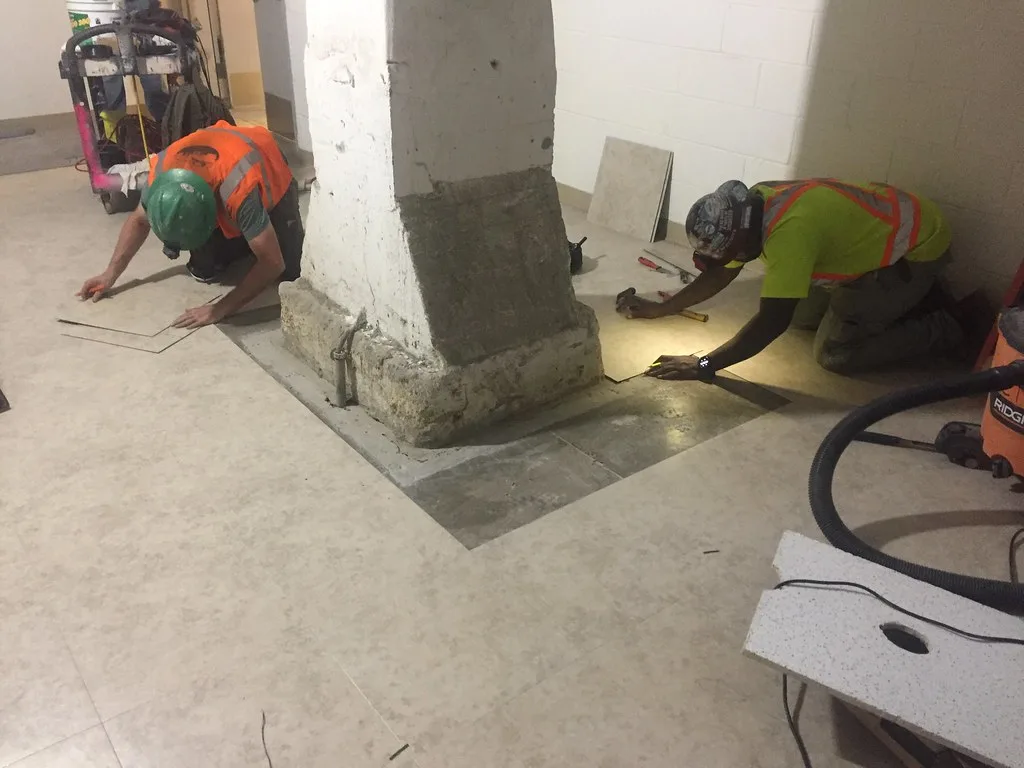
The floor substrate decides whether the installation goes smoothly or turns into a repair project. Sheet vinyl needs a flat, dry base. Concrete and plywood behave differently, and each one can create failure points if moisture, movement, or roughness are ignored before the roll arrives.
Concrete versus plywood
Concrete can work well if it is dry, sound, and within flatness limits. Plywood can also work, but it must be firmly fastened, clean, and free of damaged spots. Concrete brings moisture risk. Plywood brings fastener pops, seams, and localized dips that telegraph through the vinyl.
Flatness tolerances and patching
Small ridges and dips show through sheet vinyl more than many buyers expect. High spots should be sanded or ground down; low spots should be filled with a compatible patch or leveling product. If the floor feels wavy underfoot, the vinyl will usually look wavy too.
Moisture checks and failure signs
On concrete, moisture testing is worth doing before any adhesive goes down. Darkening at seams, curling edges, soft spots, or a persistent odor can all point to moisture trouble. If a slab has recurring dampness, installing over it without a fix is a short path to failure.
How to size a room and estimate material without guessing
Material takeoff starts with room dimensions, roll width, seam count, and waste allowance. A rectangular room may need only one seam or none. Odd shapes, closets, and pattern matches add extra yardage fast. The lowest sticker price can become the highest total once waste is included.
Room-planning checklist and simple material calculator
- Measure the longest and widest parts of the room in feet.
- Check the roll width you plan to buy, which is often in a common range of several feet.
- See whether the room can fit in one width or needs a seam.
- Add waste: a little extra for simple rooms, around a moderate amount for normal cuts, and more for pattern matching or odd shapes.
- Mark subfloor risk flags: moisture, dips, cracks, loose plywood, old adhesive, or baseboard removal needs.
- Choose the install method by room type: glue-down for kitchens and baths, loose-lay for temporary or low-risk areas, pressure-sensitive adhesive where allowed.
Seam count, roll width, and waste allowance
Seam count changes both labor and cost. Fewer seams mean less sealer, less chance of lifting, and a cleaner finish. A wide roll may waste less in a long hallway but waste more in a small square room with many cuts. Patterned products need extra material to keep the design lined up.
How do you install roll vinyl flooring yourself?
DIY installation is realistic when the subfloor is flat, dry, and the room layout is simple. The main steps are measure, dry-fit, trim, fasten with the right method, and seal seams and edges where needed. Rushing layout or skipping substrate prep is where most DIY failures start.
Tools for installation
- Utility knife
- Straightedge
- Tape measure
- Roller
- Seam sealer
Glue-down, pressure-sensitive adhesive, and loose-lay methods
Glue-down can work well when the floor needs to stay put and the room sees regular moisture or heavy traffic. Pressure-sensitive adhesive can make repositioning easier during install, but the substrate still needs to be clean and flat. Loose-lay is usually for temporary or low-risk setups, and it depends on product design and room size.
Cutting seams, sealing edges, and rolling the floor
Cut sheet vinyl with a sharp utility knife and a straightedge, keeping blades fresh so edges stay clean. Dry-fit each piece before adhesive goes down. If a seam is required, align the pattern carefully, apply seam sealer where specified, and roll the floor to press out air and secure contact.
How much does a roll of vinyl flooring cost?
Cost depends on wear layer, width, printed design quality, and how much waste the room creates. Better wear layers and more realistic visuals cost more. Large rooms can be less expensive per square foot if the roll width fits the layout. Small rooms with many cuts often cost more per square foot than expected.
Price drivers: wear layer, width, and print quality
Thicker wear layers usually raise the price, but they can also extend usable life. Wider rolls may reduce seams, though not always total waste. Better printed layers usually look closer to wood or stone, but design quality should never outrank substrate fit and durability.
How seams and waste change total project cost
Every seam adds labor, seam sealer, and one more place for failure. Waste can be minor in a straightforward room and substantial in a room with angles, cabinets, or pattern repeat. That is why room shape often matters more than the sticker price of the roll itself.
DIY cost versus paid installation
DIY cost is usually lower because labor is the biggest line item. Paid installation brings more predictable cutting, seam work, and substrate prep, which matters on concrete or in larger rooms. If the subfloor needs patching or moisture correction, professional labor may save money by avoiding a failed install.
What thickness should vinyl flooring rolls be?
For most homes, the better question is wear layer thickness, not total sheet thickness. A 12–20 mil wear layer fits many residential jobs, while lower-traffic rooms can use less. Thicker products may feel sturdier, but they still need a flat substrate and the right adhesive plan.
Can you put vinyl flooring roll over concrete?
Yes, but only if the concrete is dry, flat, and free of cracks or contamination that can affect adhesion. Concrete is one of the most common substrates for sheet vinyl, yet it is also where hidden moisture causes the most failures. A moisture test is smart before glue-down or pressure-sensitive installs.
Do you need underlayment for roll vinyl flooring?
Usually no. Sheet vinyl is often installed directly over a prepared substrate rather than over a separate underlayment. Extra layers can create movement, height issues, or telegraphing problems unless the manufacturer allows them. Focus on flatness, dryness, and the right patching materials instead.
How do you cut and seam sheet vinyl flooring?
Cut sheet vinyl with a sharp utility knife and a straightedge, then use a careful seam method if the room requires more than one piece. Dry-fit first, match the pattern, and keep edges clean. Seam sealer and a flooring roller help stabilize joints and reduce lifting at the connection.
How long does roll vinyl flooring last?
Service life depends on wear layer thickness, backing quality, traffic, and subfloor prep. A well-chosen residential sheet vinyl floor can last many years, while a poorly prepared one may fail much sooner. Heavy furniture, grit, moisture, and seam stress shorten life more than most buyers expect.
Is vinyl roll flooring waterproof?
Sheet vinyl is highly water resistant, and the surface itself can usually handle spills well. But “waterproof” does not mean every install is safe in every room. Seams, edges, fixtures, and subfloor moisture still matter, especially in bathrooms, basements, and laundry rooms where water can reach below the sheet.
Frequently asked questions
What is the best roll of vinyl flooring for a living room?
The best choice for a living room is usually a sheet vinyl floor with a 12–20 mil wear layer, stable backing, and a look that fits the room’s traffic. If the room is large and open, favor fewer seams and a method that keeps the sheet flat over time.
Is sheet vinyl flooring better than vinyl planks?
Sheet vinyl is often better where water control and fewer seams matter, such as bathrooms, laundries, and basements. Vinyl planks can be easier in smaller sections and may suit DIYers who want modular repairs. The better choice depends on room shape, moisture risk, and seam tolerance.
Sponsored / affiliate links. As an Amazon Associate I earn from qualifying purchases. I may earn additional commission from eligible campaigns.
 Homease Vinyl Flooring Roll 15.7"W x 393.7"L/ 43 Sq.Ft, Wood Grain Peel and Stick Floor Tiles Waterproof Wear-Resistant Vinyl Plank Flooring for Any Room, Easy DIY Flooring Solutions, Grey
 Oxdigi Peel and Stick Vinyl Flooring Roll 15.7"x 118"/12.9 Sq.Ft, Thicken Self Adhesive Vinyl Floor Tiles Wood Plank Flooring Waterproof for Any Room and Wall, Easy DIY Floor Coverings, Dark Walnut