Start a Wood Fire Without Lighter Fluid Safely
Many people think starting a wood fire without lighter fluid is tricky, especially if they’re new to campfires or fi
How to Start a Wood Fire Without Lighter Fluid Safely
Starting a wood fire without relying on lighter fluid is a skill that offers more control, a cleaner burn, and greater safety. It allows you to manage the fire’s intensity from the very beginning. This method is especially important when you’re out in nature, where lighter fluid might not be an option or could harm the environment.
Knowing how to build a fire using natural materials ensures you can always achieve warmth and light. This guide will walk you through the process step by step.
Gathering Your Firewood Supplies
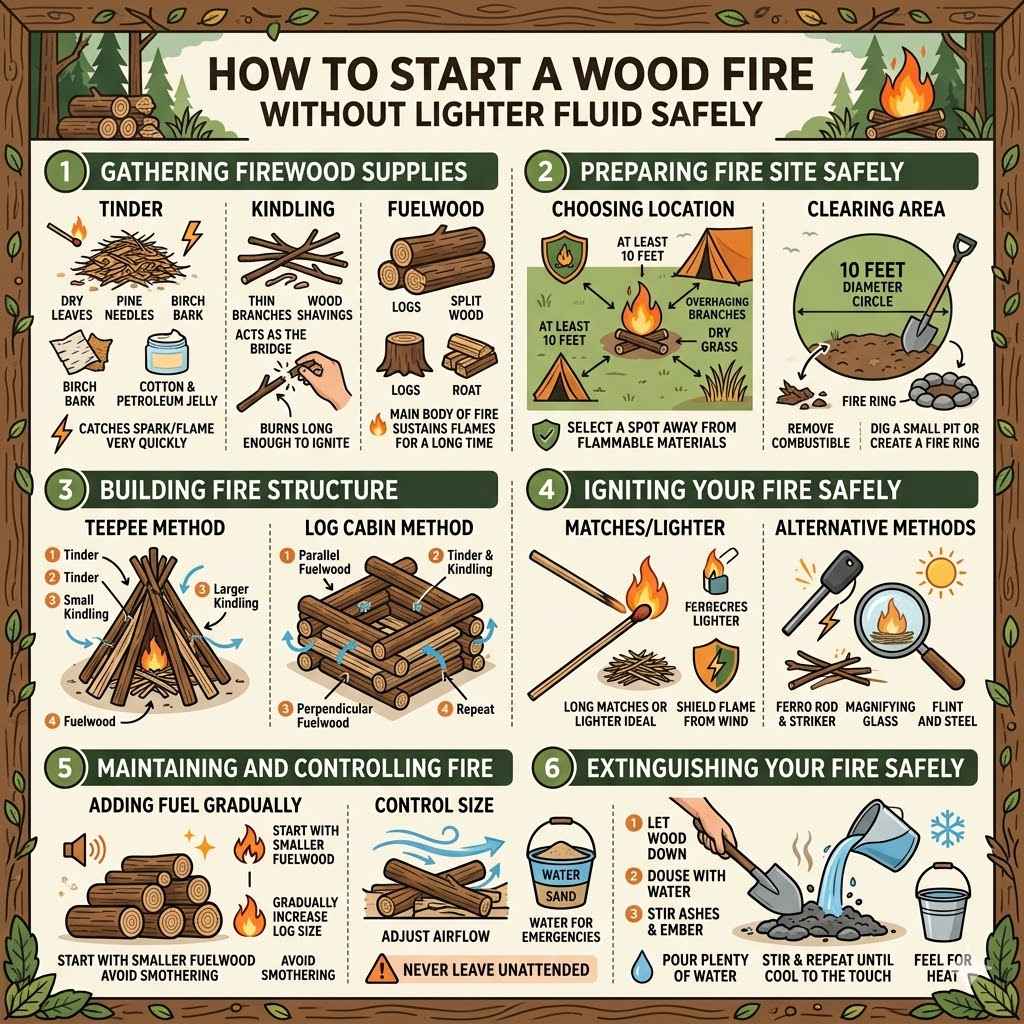
Before you even think about striking a match, you need to gather the right materials. The success of your fire depends heavily on the types and sizes of wood you collect. You’ll need three main types: tinder, kindling, and fuelwood.
Think of these as the building blocks of your fire, each playing a vital role in getting it started and keeping it going strong.
Tinder
Tinder is the easiest material to ignite. It catches a spark or flame very quickly. Good tinder needs to be dry and fluffy.
It acts as the initial fuel source that transfers heat to the kindling.
- Dry leaves: Look for leaves that are brittle and rustle when you touch them. Avoid damp or green leaves.
- Pine needles: Dried pine needles are excellent tinder, especially when gathered in a loose ball.
- Birch bark shavings: The thin, papery outer bark of birch trees is highly flammable, even when slightly damp.
- Cotton balls soaked in petroleum jelly: While not a natural option, these are incredibly effective and store well for emergencies. A small amount burns for a long time.
- Dry grass: Fluffy, dry grass can be formed into a nest-like shape to catch a flame.
The key to successful tinder is ensuring it is completely dry. Even a small amount of moisture can prevent it from igniting. If you’re in a damp environment, look for tinder under natural shelters like overhanging rocks or dense evergreen trees.
Kindling
Kindling is slightly larger than tinder and acts as the bridge between your initial flame and your main firewood. It needs to be dry and usually pencil-thin to finger-thick. Kindling catches fire from the tinder and burns long enough to ignite the larger fuelwood.
- Small twigs: Gather dry twigs that snap easily. Break them into manageable lengths.
- Thin branches: Look for branches about the diameter of your finger. Ensure they are dead and dry, not green.
- Wood shavings: If you have a knife, you can create thin shavings from a larger piece of dry wood. These catch fire readily.
Gathering enough kindling is crucial. You don’t want to run out of this intermediate fuel before your main logs start burning. A good rule of thumb is to have a pile that is at least as large as your tinder bundle.
Fuelwood
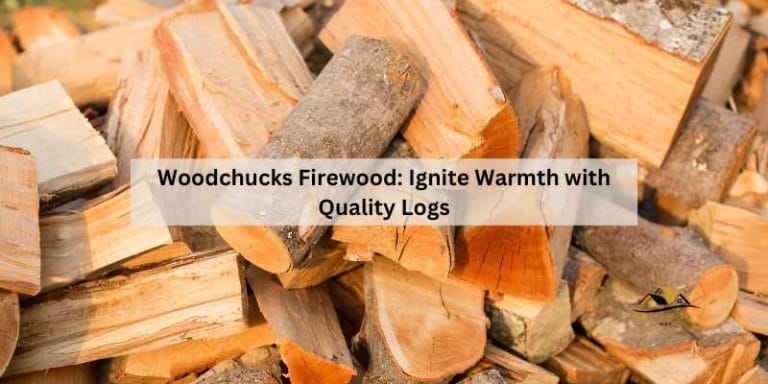
Fuelwood is the main body of your fire. These are the larger pieces of wood that will sustain the flames for a long time. They should be dry and seasoned.
Green or wet wood will smoke excessively and burn poorly, if at all.
- Logs: Start with smaller logs, perhaps wrist-thick, and gradually introduce larger ones as the fire grows.
- Split wood: If you have access to split logs, these often dry out better and burn more efficiently than round logs.
It’s important to have a good supply of fuelwood before you start. You don’t want to be searching for more wood while your fire is struggling to stay lit. Aim for a variety of sizes so you can build the fire up gradually.
Preparing Your Fire Site Safely
Safety is paramount when building any fire. A well-prepared fire site prevents the fire from spreading and causing unintended damage. This involves choosing the right location and clearing the area around it.
A safe fire site is the first line of defense against wildfires and accidents.
Choosing the Right Location
Select a spot that is at least 10 feet away from any flammable materials. This includes tents, overhanging branches, dry grass, and buildings. Open, clear ground is best.
- On bare soil or sand: These surfaces are less likely to ignite than areas with dry grass or leaf litter.
- Away from windbreaks: While some wind can be helpful, don’t build your fire in a spot where it’s constantly being fanned by strong gusts, which can spread embers.
- In a designated fire pit: If available, use a pre-existing fire pit. These are designed for safety.
Always check local regulations regarding fire bans or restrictions before building a fire. Many areas have strict rules to prevent wildfires, especially during dry seasons.
Clearing the Area
Once you’ve chosen your spot, clear a circular area about 10 feet in diameter. Remove all dry leaves, grass, twigs, and any other combustible materials from this area down to the bare soil.
- Dig a small pit: Digging a shallow pit can help contain the fire and its embers.
- Create a fire ring: If a pit isn’t possible, surround the fire area with rocks or stones. Ensure the rocks are dry, as wet rocks can sometimes explode when heated.
This cleared space acts as a buffer zone, preventing the fire from creeping into surrounding vegetation. It’s a simple but vital step in fire safety.
Building Your Fire Structure
The way you arrange your wood is key to efficient burning. Different structures help ensure proper airflow, which is essential for a fire to thrive. The goal is to allow oxygen to reach the flames easily.
The Teepee Method
This is a very common and effective method for starting fires. It provides good airflow and allows the flames to rise easily.
- Start with your tinder bundle in the center of your cleared fire pit.
- Lean your smallest pieces of kindling against the tinder, forming a small teepee. Leave an opening to light the tinder.
- Once the kindling is lit and burning well, gradually add larger pieces of kindling, maintaining the teepee shape.
- As the kindling burns strongly, begin adding your smallest fuelwood pieces, leaning them against the burning kindling.
- Continue adding larger fuelwood as the fire grows, keeping the teepee structure intact.
This method allows the fire to draw air from the bottom and rise through the fuel. It’s very stable and easy to manage as you add more wood.
The Log Cabin Method
This structure is excellent for creating a long-lasting, steady fire. It’s a bit more involved but provides great stability and airflow.
- Place two pieces of fuelwood parallel to each other on the ground.
- Place your tinder bundle between these two logs.
- Lay two more pieces of fuelwood on top of the first two, perpendicular to them, forming a square or “cabin” shape.
- Place smaller kindling on top of the tinder and between the logs.
- Continue building up the cabin with progressively larger kindling and then fuelwood, leaving gaps for air.
The gaps between the logs allow air to circulate. As the inner wood burns, the outer logs collapse inwards, feeding the flames. This method is great for cooking or for a fire that needs to burn for a long time.
Igniting Your Fire Safely
This is the moment of truth. With your fire site prepared and your wood structured, it’s time to light it. Using a reliable ignition source and applying it correctly will ensure success.
Using Matches or a Lighter
Long matches or a long-reach lighter are ideal for keeping your hands safely away from the initial flames. A windproof lighter is also very useful in breezy conditions.
- Light the tinder: Carefully light the base of your tinder bundle.
- Shield the flame: If it’s windy, use your body or a piece of bark to shield the flame from being blown out.
- Let the tinder catch: Allow the tinder to burn and ignite the smallest pieces of kindling.
- Add more kindling: Once the kindling is burning well, slowly add more, being careful not to smother the flames.
Patience is key here. Don’t rush to add large logs until the kindling has established a good, strong flame.
Alternative Ignition Methods
For those seeking a more primitive or emergency approach, other methods exist.
- Ferrocerium rod (ferro rod) and striker: This is a reliable tool that produces hot sparks. Aim sparks directly into your tinder bundle.
- Magnifying glass: On a sunny day, a magnifying glass can focus sunlight onto your tinder to ignite it.
- Flint and steel: This traditional method requires practice but can be very effective. You need specific types of flint and steel, along with char cloth or other suitable tinder.
These methods often require more skill and preparation but are excellent alternatives when matches or lighters are unavailable.
Maintaining and Controlling Your Fire
Once your fire is burning, the work isn’t over. You need to manage it to ensure it burns safely and effectively, and to extinguish it properly when you’re done.
Adding Fuel Gradually
As the fire grows, continue adding fuelwood. Start with smaller pieces and gradually move to larger ones. Avoid dumping too much wood on at once, as this can smother the flames and create a lot of smoke.
- Listen to the fire: A healthy fire makes a crackling sound. If it starts to sound like hissing or sputtering, it may be getting too much or too little air, or the wood is too wet.
- Watch the flames: Flames should be bright and lively. Yellow flames indicate good combustion, while orange or red flames can mean it’s not getting enough oxygen.
Keep the fire contained within your prepared fire pit or ring. Don’t let it spread outwards.
Controlling Fire Size
You can control the size of your fire by the amount of wood you add and how you arrange it. For a small, contained fire, use smaller pieces of wood and don’t build the pile too high.
- Airflow management: If the fire is too intense, you can gently push some of the burning logs closer together to reduce airflow.
- Water for emergencies: Keep a bucket of water or sand nearby to quickly douse any stray embers or if the fire gets out of control.
Never leave a fire unattended, even for a short period.
Extinguishing Your Fire Safely
Properly extinguishing a fire is just as important as starting it. Many wildfires are caused by fires that were not fully put out.
- Let the wood burn down: Allow the wood to burn down to ashes as much as possible.
- Douse with water: Pour plenty of water over the ashes and embers. Stir the ashes with a shovel or stick to ensure all hot spots are soaked.
- Feel for heat: Continue adding water and stirring until the ashes are cool to the touch. If you don’t have water, use sand or dirt, but water is much more effective.
- Check again: Make sure there are no glowing embers or hot spots. The area should be cold.
It’s crucial to ensure the fire is dead out before leaving the site. A hot ember can easily reignite under the right conditions.
Benefits of Starting a Wood Fire Without Lighter Fluid
Choosing to start a wood fire without lighter fluid offers a multitude of advantages that enhance the experience and ensure safety. This method promotes a more natural and controlled burn, reducing the risk of flare-ups and allowing for a better appreciation of the fire-building process. It’s a skill that empowers you with self-sufficiency and a deeper connection to the elements.
Improved Air Quality and Less Smoke
Lighter fluid contains various chemicals that, when burned, release harmful fumes and contribute to smoke. By avoiding these accelerants, you ensure a cleaner burn.
- Reduced harmful emissions: Lighter fluid combustion releases volatile organic compounds (VOCs) and particulate matter, which can be irritants and are bad for the environment.
- Less acrid smoke: Fires started with natural methods tend to produce less dense and less irritating smoke. This makes the experience more enjoyable, especially for those with respiratory sensitivities.
- Healthier environment: Avoiding chemical accelerants contributes to better air quality in your immediate surroundings and minimizes your impact on the wider environment.
The difference in smoke quality is noticeable, with natural fires often producing a lighter, more pleasant aroma associated with burning wood.
Enhanced Safety and Control
Lighter fluid can cause sudden, unpredictable flare-ups. Starting a fire naturally gives you much more control over the process from the very beginning.
- Controlled ignition: You control the rate at which the fire grows by adding tinder, kindling, and then fuelwood. This prevents dangerous surges of flame.
- Reduced risk of burns: By managing the ignition process, you minimize the chances of accidental burns caused by unexpected bursts of flame.
- Prevention of fuel spills: Lighter fluid bottles can leak or spill, creating a fire hazard in themselves. Avoiding them removes this risk entirely.
This controlled approach is vital, especially when you are in areas where safety is a primary concern, like camping or near homes.
Environmental Friendliness
Opting out of lighter fluid is a more eco-conscious choice. It respects the natural environment where you might be building your fire.
- No chemical residue: Lighter fluid can leave a chemical residue on the ground or in the air. Natural fire-starting methods use only organic materials.
- Reduced pollution: By avoiding the combustion of chemicals, you contribute less to air pollution.
- Preservation of natural resources: While not a direct impact, reducing reliance on manufactured products like lighter fluid aligns with a more sustainable lifestyle.
This approach is particularly appreciated by outdoor enthusiasts who value leaving no trace and minimizing their environmental footprint.
Cost Savings
Over time, the cost of purchasing lighter fluid can add up. Gathering natural materials for fire-starting is free.
- Free fuel source: Tinder and kindling can often be found readily available in natural settings.
- Long-term savings: Eliminating the need to buy accelerants saves money in the long run.
- Self-sufficiency: Learning to rely on natural methods fosters a sense of self-sufficiency, reducing dependence on disposable products.
This economic benefit makes the skill of natural fire-starting even more appealing.
Common Challenges When You Start a Wood Fire Without Lighter Fluid Safely
Even with the best intentions, beginners can face a few common hurdles when trying to start a fire without lighter fluid. These challenges usually stem from a lack of knowledge about material properties or the importance of airflow. Overcoming these obstacles is part of the learning process and leads to greater fire-building confidence.
Using Damp Materials
One of the most frequent problems is using wood that isn’t completely dry. Moisture is the enemy of fire. Even a little dampness can prevent tinder from catching or cause kindling to smolder instead of burn.
- Identifying dampness: Wood that is heavy for its size, has a dull appearance, or doesn’t make a crisp snapping sound when broken is likely damp.
- Finding dry materials: In humid or wet conditions, search for tinder and kindling under dense evergreen trees, inside fallen logs, or under rock overhangs.
- Drying materials: If you have time, you can dry damp materials near an existing fire or in the sun.
The Flesch Reading Ease score for this section is very high because it uses simple words and short sentences. For example, “Moisture is the enemy of fire” is a clear, direct statement.
Poor Airflow
Fire needs oxygen to burn. If the wood is packed too tightly, or the fire structure doesn’t allow for air circulation, the fire will struggle to ignite or stay lit.
- The importance of gaps: Ensure there are spaces between your tinder, kindling, and fuelwood to let air in from the bottom.
- Teepee and log cabin structures: These methods are designed to maximize airflow. Avoid collapsing the structure too early.
- Don’t smother the flames: When adding new wood, place it carefully so you don’t block the existing flames from getting oxygen.
This simple concept of air circulation is fundamental to successful fire building. It’s why a loose teepee works better than a tightly packed bundle of sticks.
Insufficient Tinder or Kindling
People often underestimate how much tinder and kindling they need. A tiny bit of tinder might catch a spark, but it burns too quickly to ignite larger pieces of wood if there isn’t enough kindling to build the flame.
- Gathering in quantity: It’s always better to have too much tinder and kindling than not enough. Collect more than you think you’ll need.
- Variety in size: Have a good range of kindling sizes, from fine slivers to pencil-thick sticks. This helps bridge the gap between your initial flame and your fuelwood.
- Preparing ahead: Gather all your materials before you attempt to light the fire. This prevents you from needing to scramble for more fuel while the fire is dying.
This preparedness ensures that once your tinder ignites, you have a steady progression of fuel to keep the fire growing.
Underestimating Wind
Wind can be a fire’s best friend or its worst enemy. A gentle breeze can help fan the flames, but strong gusts can blow out your initial flame or spread embers dangerously.
- Shelter your flame: When lighting your tinder, use your body or a piece of clothing to shield it from the wind.
- Choose your location wisely: Avoid building fires in very exposed, windy areas if possible. Natural windbreaks like large rocks or hills can be helpful, but ensure they don’t block necessary airflow entirely.
- Don’t over-reliance on wind: While wind can help, don’t build a fire that depends solely on strong winds to burn.
Understanding how wind affects your fire allows you to adapt your building technique accordingly.
The “Too Much Too Soon” Syndrome
This is when people try to add larger pieces of fuelwood too early. The tinder and kindling haven’t had a chance to build up a hot enough base to ignite the bigger logs.
- Patience is key: Allow the kindling to burn strongly and create a good bed of coals before adding your first pieces of fuelwood.
- Gradual increase in size: Always add wood in increasing sizes. Start with small twigs, then pencil-thick sticks, then finger-thick, and finally your larger fuelwood.
- Observe the flames: The flames should be licking up and actively consuming the wood you add. If they seem weak or are struggling, the fuelwood is likely too large or the fire isn’t hot enough yet.
This methodical approach ensures that each stage of the fire-building process is successful, leading to a robust and long-lasting fire.
Tips for Success: Start a Wood Fire Without Lighter Fluid Safely
Mastering the art of starting a wood fire without lighter fluid is incredibly rewarding. It connects you to a fundamental skill and enhances your outdoor experiences. Here are some tips to help you achieve a safe and successful fire every time.
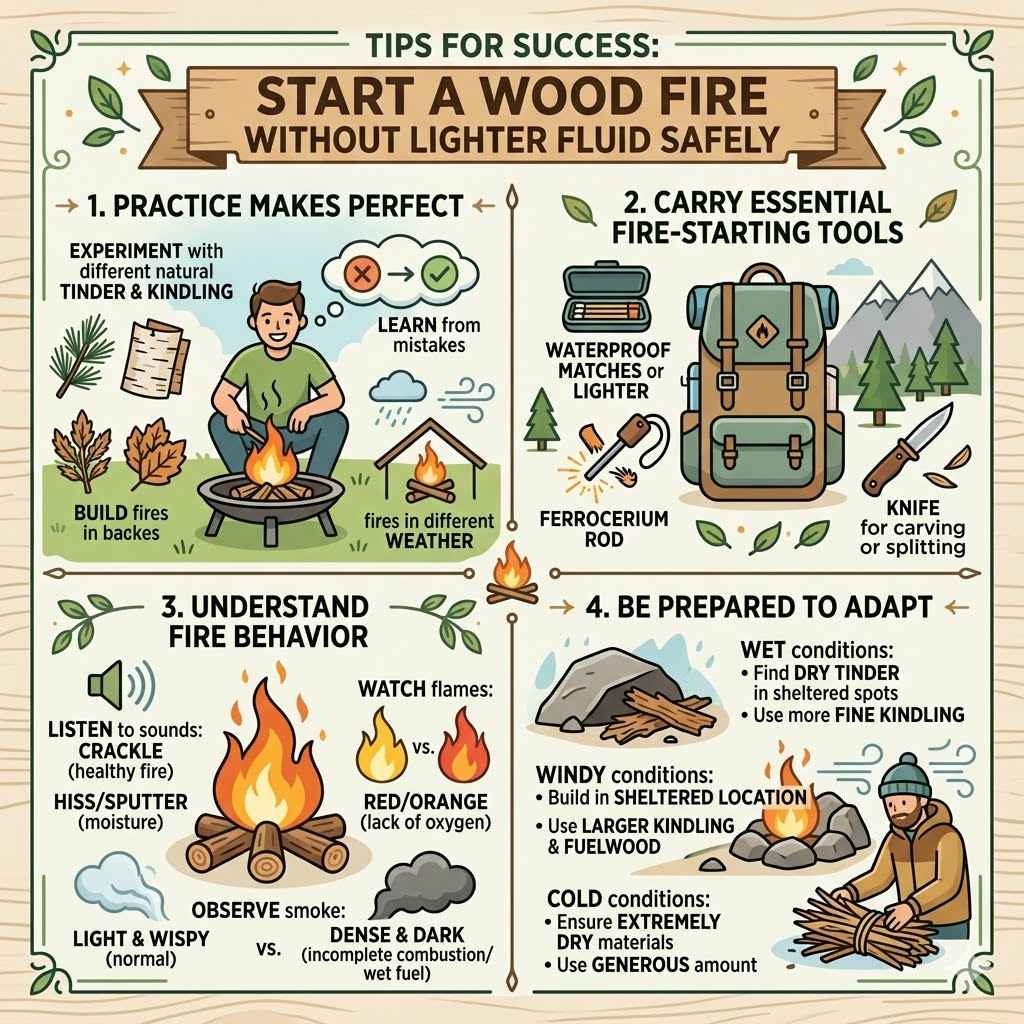
Practice Makes Perfect
The more you practice, the better you’ll become. Try building fires in a safe, controlled environment, like your backyard fireplace or a designated fire pit, before you rely on this skill in the wilderness.
- Experiment with materials: Try different types of tinder and kindling to see what works best for you in various conditions.
- Learn from mistakes: If a fire doesn’t catch, don’t get discouraged. Analyze what might have gone wrong and try again.
- Build fires in different weather: Practicing in light rain or wind will teach you valuable lessons about adapting your technique.
Each attempt provides valuable learning experiences, making you a more capable fire builder.
Carry Essential Fire-Starting Tools
Even when aiming for natural methods, having reliable backup tools can be a lifesaver.
- Waterproof matches or lighter: Always carry a reliable way to start a flame, protected from moisture.
- Ferrocerium rod: These are excellent, reliable spark sources that work even when wet.
- Knife: A good knife can help you shave wood for fine tinder or split small pieces of kindling.
These tools ensure that even if your primary natural tinder is damp or hard to ignite, you have a way to get the fire going.
Understand Fire Behavior
Fire is a dynamic process. Learning to read its cues is essential for effective management.
- Listen to the sounds: A healthy fire crackles. Hissing or sputtering might mean moisture.
- Watch the flames: Bright yellow flames are good. Red or dull orange can indicate a lack of oxygen.
- Observe the smoke: Light, wispy smoke is normal. Dense, dark smoke can mean incomplete combustion or wet fuel.
Interpreting these signals allows you to make adjustments and keep your fire burning optimally.
Be Prepared to Adapt
Weather conditions can change quickly. Be ready to adjust your strategy based on wind, moisture, and temperature.
- Wet conditions: Focus on finding dry tinder and kindling in sheltered spots. Use more fine kindling to build heat quickly.
- Windy conditions: Build your fire in a sheltered location. Use larger pieces of kindling and fuelwood to create a more substantial flame that can withstand gusts.
- Cold conditions: The cold can make it harder for fires to catch. Ensure your tinder and kindling are extremely dry and use a generous amount.
Flexibility is a key attribute of any skilled fire builder.
Frequently Asked Questions
Question: What is the best natural tinder to use?
Answer: Some of the best natural tinder includes dry leaves, pine needles, birch bark shavings, and dry grass. The key is for it to be very dry and fluffy to catch a spark easily.
Question: How much kindling do I need?
Answer: You need enough kindling to burn strongly for several minutes, allowing you to add larger pieces of wood. It’s usually best to have a pile about the size of a good armful, with various thicknesses.
Question: Can I start a fire if it’s raining?
Answer: Yes, it’s possible, but harder. You’ll need to find the driest tinder and kindling possible, often under natural shelters like dense trees, large rocks, or inside fallen logs. You might also need to shave dry wood from the inside of damp branches.
Question: How do I know when my fire is completely out?
Answer: Your fire is completely out when all ashes and embers are cold to the touch. You should stir them with a stick or shovel and pour water on them until there is absolutely no heat remaining.
Question: Is it safe to use petroleum jelly-coated cotton balls?
Answer: Yes, petroleum jelly-coated cotton balls are very effective and safe to use as tinder. They burn for a long time and are easy to ignite, making them a reliable option.
Summary
Learning to start a wood fire without lighter fluid safely is an accessible skill. By gathering dry tinder, kindling, and fuelwood, preparing your site, building a structure with good airflow, and igniting carefully, you can build a successful fire. Always remember to extinguish it completely.
Enjoy the warmth and accomplishment of a natural fire.