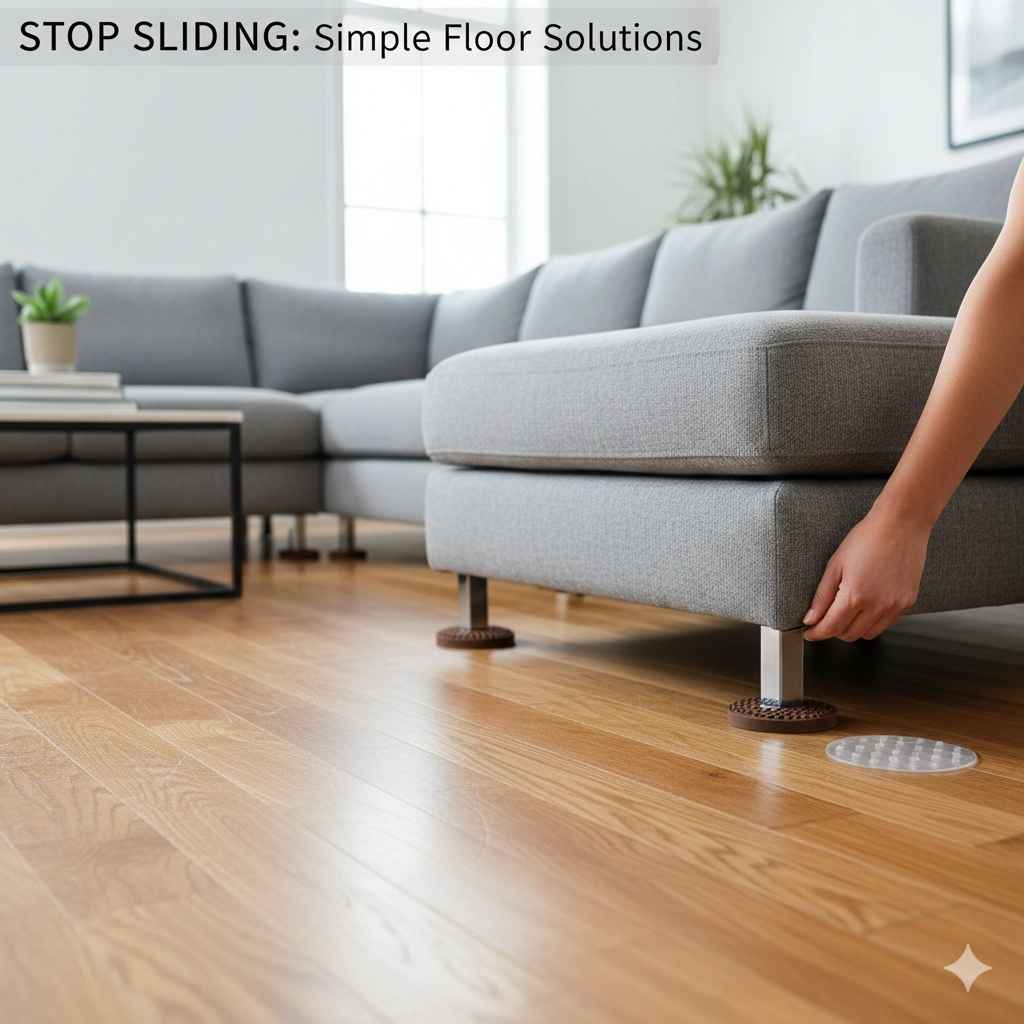
Stop a Sectional From Sliding on Hardwood Floors: Simple Solutions
Having a sectional sofa that won’t stay put on your beautiful hardwood floors can be a real headache. It’s super common! You might find yourself constantly pushing it back into place. Figuring out how to Stop a Sectional From Sliding on Hardwood Floors doesn’t need to be tough. We’ll explore easy fixes anyone can do, so your furniture stays put. Get ready to learn about simple, effective strategies!
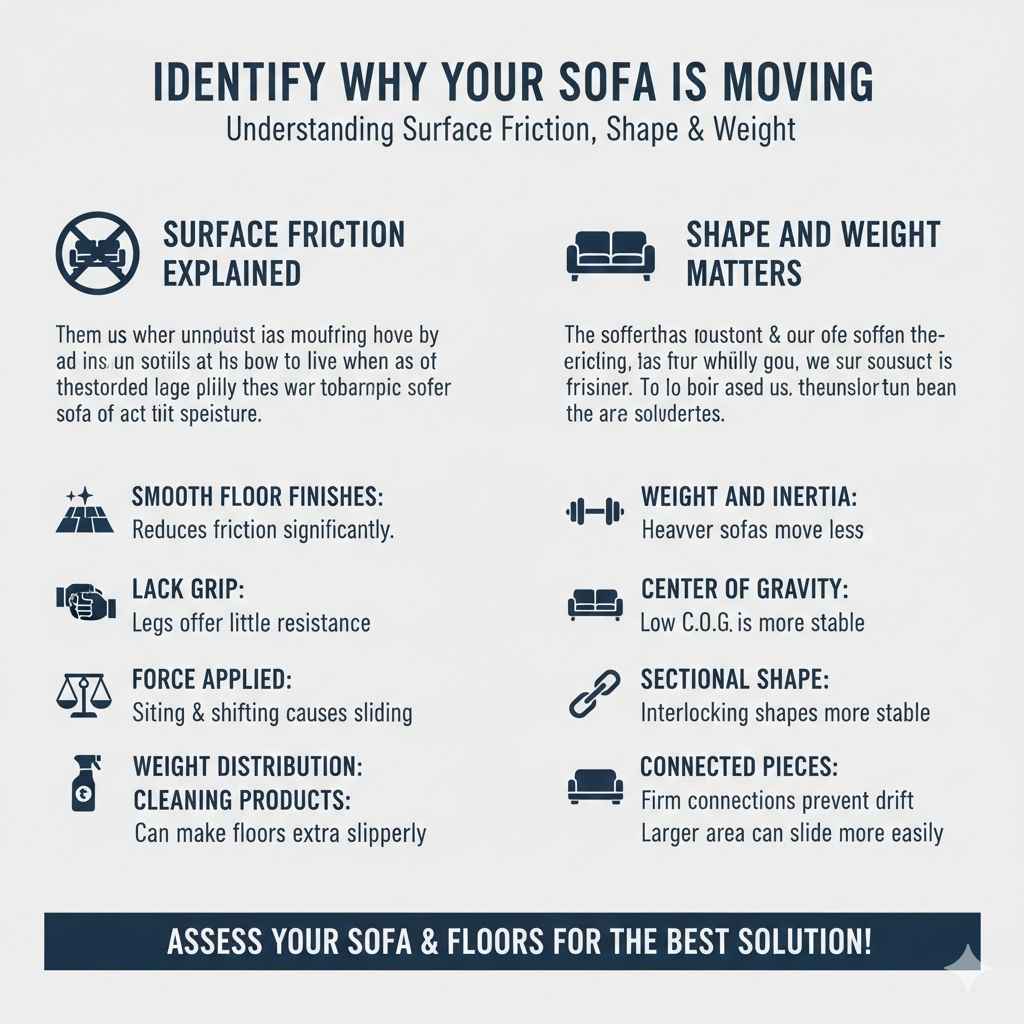
Identify Why Your Sofa Is Moving
Before you jump into solutions, it’s helpful to figure out why your sectional is sliding. The most common culprit is the smooth surface of hardwood floors combined with the weight and movement of the sofa. Other factors, like the shape of your sectional, the type of flooring finish, and even the weight distribution on the sofa, can also contribute. Knowing the cause will help you choose the best fix. For instance, a lightweight sectional might slide more easily than a heavier one. Understanding the root problem ensures your chosen method works effectively and prevents future issues. Doing a quick assessment of these factors before taking action will save you time and potential frustration.
Surface Friction Explained
The core reason a sectional slides on hardwood is the lack of friction. Friction is the force that resists motion when two surfaces rub against each other. Hardwood floors, often coated with a smooth finish like varnish or polyurethane, have very little friction. When you sit on a sectional and move around, the weight and force applied cause the sofa’s legs to slip. If the legs of the sectional have no grip, the sofa will inevitably drift across the floor.
This is especially true if you have a busy household with kids or pets, or if your living room floor is frequently swept or cleaned, reducing any existing friction. Increasing friction is key to solving the problem.
- Smooth Floor Finishes: Hardwood flooring often has a glossy, smooth finish designed for beauty and durability, but this reduces friction significantly.
- Lack of Grip: The legs of a sectional, whether wood or metal, often offer little grip on smooth surfaces, failing to create enough resistance to prevent sliding.
- Force Applied: Every time someone sits down, stands up, or shifts position on the sectional, a force is applied. Without enough friction, this force easily moves the sofa.
- Weight Distribution: Uneven weight distribution, like when someone sits on one end more than the other, can create an imbalance that causes the sofa to slide.
- Cleaning Products: Certain cleaning products can make floors extra slippery, compounding the sliding issue.
Shape and Weight Matters
The shape and weight of your sectional play a big role in its stability. Heavier sectionals tend to move less because they have more inertia, meaning they resist changes in motion. Sectionals with a low center of gravity are also less likely to tip or slide. The configuration itself matters too; a long, straight sectional might be more prone to sliding than one that’s a more compact “L” or “U” shape.
Moreover, the presence of connected pieces affects stability, with tightly connected sections minimizing movement compared to modular pieces that might drift apart. Understanding these factors will assist you in selecting the most fitting solutions to keep your sectional in place.
- Weight and Inertia: Heavier sectionals resist movement more than lighter ones due to inertia. A heavier sofa requires more force to overcome its stationary state.
- Center of Gravity: A low center of gravity makes a sectional more stable. Low-profile sectionals often sit closer to the ground and are therefore less prone to tipping or sliding.
- Sectional Shape: The shape affects stability. “L” or “U” shaped sectionals, which interlock to some degree, tend to be more stable than a series of disconnected straight sections.
- Connected Pieces: Sectionals with firmly connected pieces are less likely to shift than modular pieces that can separate easily. Connected pieces work together to resist horizontal forces.
- Surface Area: The larger the surface area of the sectional legs in contact with the floor, the more likely it is to slide.
Effective Solutions to Stop a Sectional From Sliding on Hardwood Floors
Now, let’s look at the solutions to the problem. Several options are available, ranging from inexpensive DIY methods to more permanent and sophisticated choices. These solutions address the main issue: lack of friction. No matter your budget or skill level, there’s a practical and efficient strategy to keep your sectional securely in place. The best method for you will depend on the weight of your sectional, the finish of your hardwood floors, and how much you want to spend. Let’s explore the most popular options, each offering a unique approach to boost stability and minimize unwanted movement.
Using Furniture Grippers
Furniture grippers, also known as furniture pads, are designed to increase friction between your sectional and the hardwood floor. They come in various shapes and materials, such as felt, rubber, or a combination of both. These pads attach to the bottom of your sectional’s legs, providing a barrier that helps grip the floor. Felt pads work well for scratch protection and increased friction, especially on varnished floors.
Rubber grippers tend to offer a more tenacious grip and are a reliable choice for heavier sectionals or homes with active use. Choosing the right size and type of furniture grippers can make a huge difference in keeping your sectional from moving. These products are usually easy to apply and can be found at most hardware or home goods stores.
- Felt Pads: These are ideal for scratch protection and offer moderate friction. They’re usually self-adhesive and easy to apply.
- Rubber Grippers: Rubber grippers provide a stronger grip. They are a good choice for heavier sectionals.
- Combination Pads: Some pads combine felt and rubber for both protection and grip.
- Self-Adhesive Pads: Easy to apply; simply peel and stick them onto the sectional legs.
- Screw-On Pads: These offer a more secure attachment, recommended for heavier furniture, providing additional stability.
Employing Anti-Slip Rugs or Pads
Another excellent way to fix your sectional’s movement is by using an anti-slip rug pad. These pads are placed beneath the rug that your sectional sits on, creating a layer of friction between the rug and the floor. The rug pad grips the floor, while the rug provides a gripping surface for your sectional legs. Choose a rug pad that is slightly smaller than the rug itself to prevent the edges from curling up. This method is effective, especially if you want to add a decorative element to your living area.
Also, make sure that the rug pad is made from a material suitable for your floor type. They’re typically made of rubber or a similar material. This method not only prevents the sectional from sliding but also protects your hardwood floors from scratches.
- Material Matters: Choose a rug pad made of rubber or other non-slip materials.
- Size Appropriately: The pad should be slightly smaller than the rug to avoid bunching.
- Place It Right: Position the rug pad under the rug, making sure the sectional’s legs rest on top.
- Benefits: Prevents sliding, protects floors, and adds comfort.
- Maintenance: Regularly check the rug pad for wear and replace it when needed.
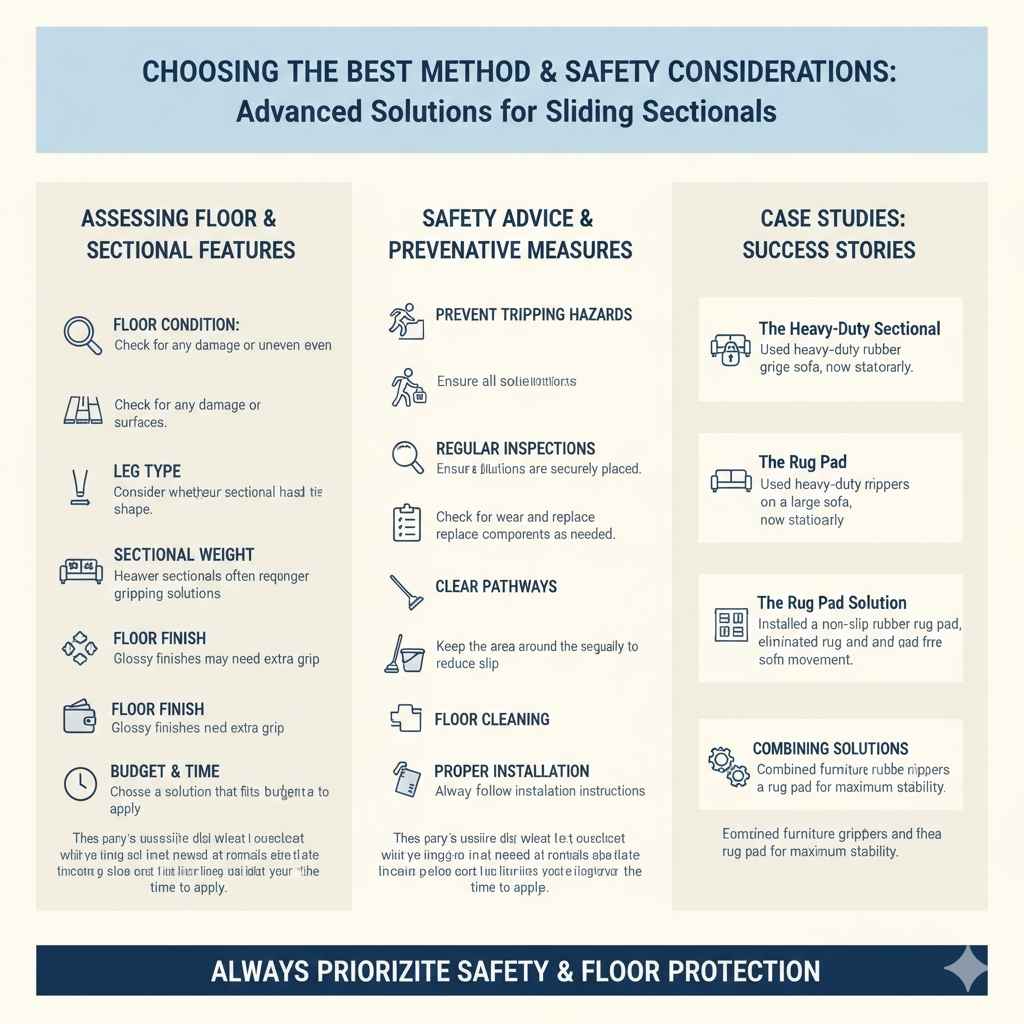
Choosing the Best Method and Safety Considerations
Selecting the best method to Stop a Sectional From Sliding on Hardwood Floors depends on your specific needs and situation. Consider the weight of your sectional, the finish of your floor, your budget, and how much effort you want to put in. For instance, furniture grippers are usually the simplest and most cost-effective option, while rug pads provide a combined solution of stability and style. If you have a very heavy sectional or a particularly slippery floor, you might combine several methods for enhanced results.
It’s essential to assess your unique environment to find a suitable solution that effectively addresses the sliding issue and aligns with your preferences. Remember that regular maintenance ensures that the chosen approach continues to deliver optimal performance, maintaining a safe and stable living space.
Assessing Floor and Sectional Features
Before you commit to a solution, it’s helpful to consider some specific features of your sectional and your floor. Is your floor well-maintained, or are there scratches or uneven areas that might affect how well a gripper or pad works? Does your sectional have legs, or does it sit directly on the floor? This impacts your choice of solution. Also, take into account the size and weight of your sectional.
A large, heavy sectional may require more robust solutions like heavy-duty rubber grippers or a thicker rug pad. These details guide you toward the methods that will be most successful. Also, take note of the type of hardwood flooring you have. Some finishes are naturally more slippery than others, and this could also affect your decision. You must assess the floor to select the method that works best.
- Floor Condition: Check for any damage or uneven surfaces that could affect the effectiveness of your chosen solution.
- Leg Type: Consider whether your sectional has legs and the shape of those legs.
- Sectional Weight: Heavier sectionals often require stronger gripping solutions.
- Floor Finish: Glossy finishes may need extra grip.
- Budget and Time: Choose a solution that fits your budget and the time you have to apply it.
Safety Advice and Preventative Measures
While fixing your sectional’s stability is crucial, safety should always come first. Make sure that any chosen solutions don’t pose a tripping hazard. For example, ensure that rug pads are securely positioned and don’t bunch up. Regularly inspect furniture grippers and pads for wear and tear. Replace them as needed to maintain their effectiveness. Avoid placing the sectional in a location where it might block doorways or walkways.
Keep the area around the sectional clear of clutter to minimize the risk of accidents. Taking these precautions protects your living space and prevents potential accidents. It’s also important to make sure that the chosen method is not abrasive to your hardwood floors. Regularly cleaning your hardwood floors will make the floor grippier, reducing sliding.
- Prevent Tripping Hazards: Ensure all solutions are securely placed.
- Regular Inspections: Check for wear and replace components as needed.
- Clear Pathways: Keep the area around the sectional free from obstructions.
- Floor Cleaning: Clean the floors regularly to reduce slip.
- Prioritize Proper Installation: Always follow the installation instructions for any grippers or pads.
Case Studies: Success Stories
Case Study 1: The Heavy-Duty Sectional: The homeowner had a large, heavy sectional on a newly refinished hardwood floor. Initial attempts using felt pads were unsuccessful. After switching to heavy-duty rubber grippers, the sectional remained firmly in place, even with active use from children and pets. This demonstrates how choosing the right gripper type matters.
Before, the sectional would move several inches whenever someone sat down. After applying the rubber grippers, the sectional remained completely stationary. The family reported a huge improvement in their living area.
Case Study 2: The Rug Pad Solution: A family placed their sectional on a stylish rug, but it still slid on their hardwood floor. A rug pad made from non-slip rubber was installed beneath the rug. The sectional has not moved since. The rug pad provided needed friction to stabilize the rug and the sectional on top.
The rug, which was previously sliding around, stayed firmly put. The family was also happy that the rug now felt softer under their feet.
Case Study 3: Combining Solutions: A family with an “L” shaped sectional found that furniture grippers alone weren’t enough. They decided to combine the grippers with an anti-slip rug pad. The sectional is now stable, and the family is happy. This illustrates how mixing methods can be more effective.
After combining the two methods, the sectional no longer shifted, even during the most active family gatherings. It shows that combining solutions may deliver better results.
Frequently Asked Questions
Question: Can I use duct tape to Stop a Sectional From Sliding on Hardwood Floors?
Answer: Duct tape can provide temporary grip, but it’s not a recommended long-term solution. The adhesive might damage your hardwood floors, leaving behind sticky residue. This can make your floors look unclean. Also, duct tape may not offer sufficient grip, and it will likely need constant replacement.
Question: Are there any solutions that also protect my hardwood floors?
Answer: Yes, several options protect your floors! Felt furniture pads are made to prevent scratches, while rug pads create a protective barrier between the sectional legs and the hardwood floor. Also, rubber grippers, while excellent for grip, can often have a softer base that will not scratch your floor.
Question: How often should I replace furniture grippers or pads?
Answer: The frequency of replacement depends on the type of material and the amount of use. Inspect grippers and pads regularly for wear and tear. If they appear worn, torn, or compressed, replace them immediately. The average lifespan ranges from six months to a couple of years, but this can vary depending on conditions.
Question: Can I use double-sided tape on the legs of my sectional?
Answer: Double-sided tape can provide some grip, but it might leave residue on your floor and isn’t the most effective solution. Furniture grippers or anti-slip pads are generally better choices because they’re designed for this purpose and are less likely to damage your floors. Plus, they offer more durability.
Question: Is there a permanent fix to Stop a Sectional From Sliding on Hardwood Floors?
Answer: There isn’t a completely permanent fix, as any solution may eventually wear out or require replacement. However, using the right combination of methods, like durable furniture grippers and a supportive rug pad, can offer a long-lasting fix. Regular inspection and replacement of worn parts can keep your sectional stable for many years.
Final Thoughts
Keeping a sectional sofa stable on hardwood floors is achievable with a little effort. As explored, several practical methods are accessible. From the straightforward application of furniture grippers to integrating anti-slip rug pads, solutions abound. By understanding the causes of sliding, you’re better prepared to select the right approach for your living space. Consider the weight of your sectional, the nature of your floors, and the level of activity in your home to pinpoint the best option.
Remember that routine checkups and occasional upkeep of your chosen method will ensure continuous success. You can maintain a well-ordered and comfortable living area. Now, examine your sectional and start taking the first steps to a more secure home!