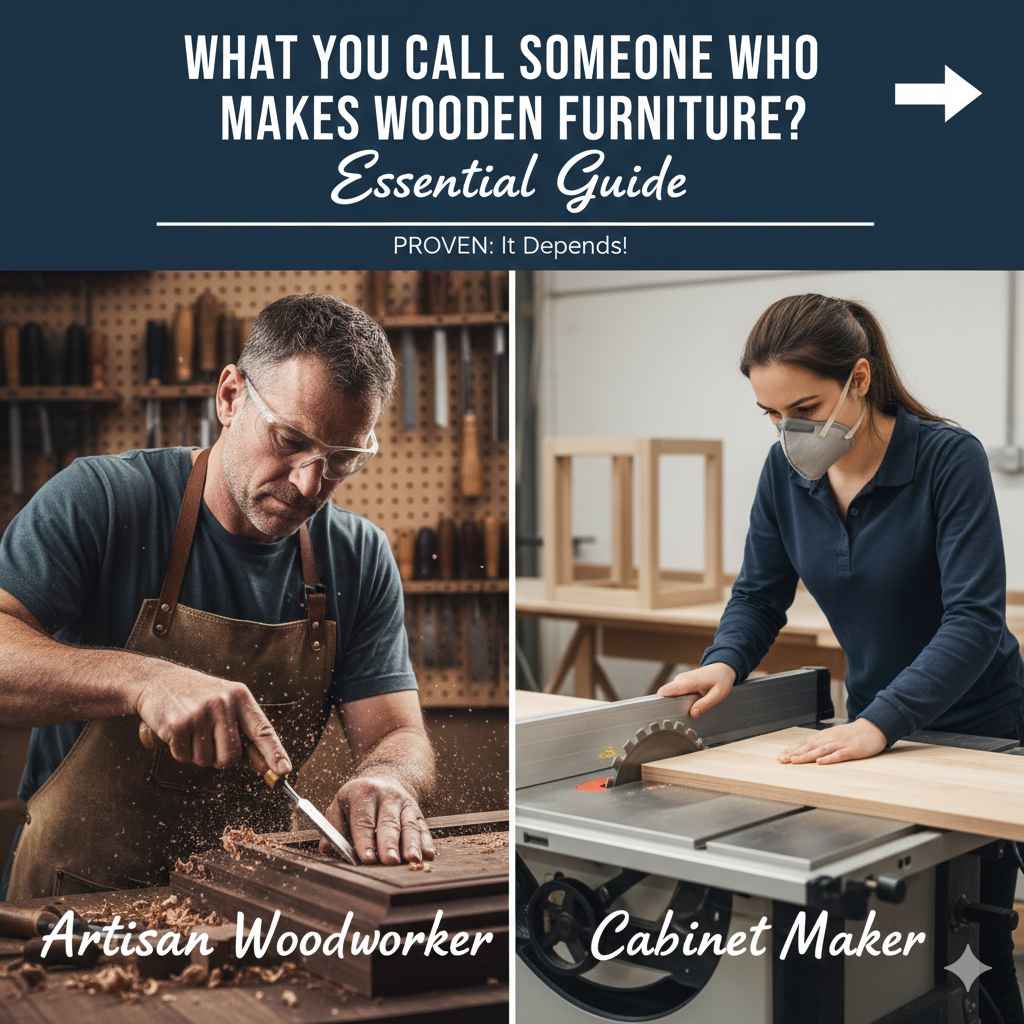
What Do You Call Someone Who Makes Wooden Furniture? Essential Guide
Someone who makes wooden furniture is most commonly called a furniture maker, cabinetmaker, or woodworker. If they create custom, high-end pieces, they are often referred to as artisans or bespoke furniture designers. This guide clarifies all the terms you need to know!
Hello there! I’m Md Meraj, and if you’ve ever admired a beautiful, sturdy wooden table or a handcrafted bookshelf and wondered what magic word describes the person who built it, you are not alone. It can be surprisingly confusing! People use many different titles for those who shape wood into functional art. Does a person making a simple pine shelf have the same title as someone crafting an antique reproduction? Not always! Knowing the right term helps you find the right person for your next project or understand the skill level involved. Don’t worry; we’ll sort through all these titles using simple, clear language. Let’s look at exactly what you call someone who makes wooden furniture and what sets them apart.
The Most Common Titles for Wood Craftsmen
When you are looking to hire someone or just trying to describe what they do, a few key terms pop up repeatedly. These are the general catch-all phrases that work in almost any situation. Think of these as the main entries in our guide!
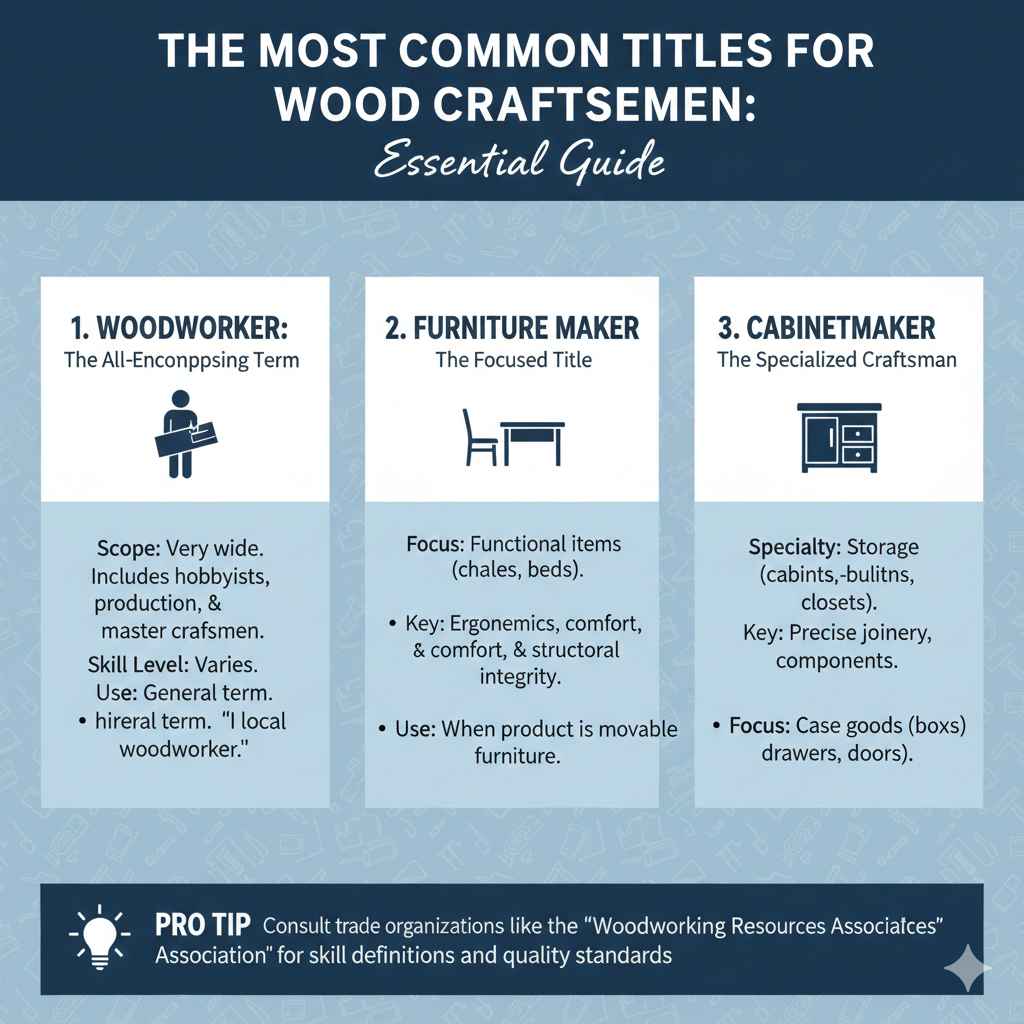
1. Woodworker: The All-Encompassing Term
The term “woodworker” is the broadest title. It covers anyone who works with wood as their primary material.
If someone enjoys cutting, shaping, joining, and finishing wood—whether they make decorative boxes, build simple frames, or design complex cabinets—they are a woodworker. It describes the action they perform.
- Scope: Very wide. Includes hobbyists, production line workers, and master craftsmen.
- Skill Level: Varies greatly from beginner to expert.
- When to use it: Anytime you need a general term. “I hired a local woodworker to build some custom shelves.”
2. Furniture Maker: The Focused Title
This title is more specific than “woodworker.” A furniture maker specifically focuses on creating functional items designed for use within a home or office, such as chairs, tables, beds, and dressers.
If the end product is a piece of movable furniture, this term fits perfectly. They focus on ergonomics, comfort, and aesthetic appeal alongside structural integrity.
3. Cabinetmaker: The Specialized Craftsman
This is where things get interesting! A cabinetmaker is a specialized type of furniture maker. Traditionally, a cabinetmaker focused on building storage items—cabinets, cupboards, built-in shelving, and large closets.
Today, the line between a furniture maker and a cabinetmaker often blurs, but many high-skill cabinetmakers still focus heavily on case goods (boxes, drawers, doors). They often deal with precise joinery needed for repeatable, perfectly fitting components, like the drawers in a chest.
A great resource for understanding the precise requirements and quality standards in this field is often found through trade organizations. For instance, the Woodworking Resources Association often defines specific skill sets recognized by the industry.
Titles Based on Skill and Style
Beyond the general terms, certain titles describe the level of artistic skill, the method of production, or the type of work being done. These terms tell you a lot about what kind of piece you can expect.
Artisan and Craftsman: Focusing on Quality
These terms emphasize high quality, attention to detail, and often, handmade construction.
- Craftsman: Suggests a deep, time-tested knowledge of the materials and tools. A craftsman typically adheres to traditional methods and seeks longevity in their work.
- Artisan: This term leans heavily into the creative and artistic side. An artisan piece is often unique, beautiful, and carries the distinct ‘touch’ of the maker. Think of a coffee table where the wood grain itself dictates the final shape—that’s artisan work.
Joiner: The Connector
In some regions, especially the UK and Commonwealth countries, you might hear the term “Joiner.”
A joiner is traditionally someone who specializes in joining pieces of wood together, often focusing on architectural elements like doors, window frames, and stairs, rather than free-standing furniture. However, in many modern contexts, joiners and cabinetmakers overlap significantly, especially concerning complex frame and panel construction.
Luthier: A Very Specific Artisan
This is a fun one! While not making typical home furniture, a Luthier is a highly skilled craftsperson who builds or repairs stringed instruments, like guitars, violins, or cellos.
These makers use extremely specialized woodworking skills to create items where sound quality and precise measurements are paramount. If you are looking for custom, handcrafted musical instruments, you hire a luthier!
How Titles Relate to Production Scale
The environment where the furniture is made also helps determine the correct title. Are they working alone in a small shop, or running a large factory floor?
Bespoke Furniture Designer: The Custom Order Expert
“Bespoke” means “made to order.” A bespoke furniture designer is heavily involved in the planning and creation process with the client.
They might design a unique dining set perfectly sized for your oddly shaped room, or create a piece that incorporates your specific family history into the design. They handle everything from the initial sketch to the final installation.
Bench Carpenter or Shop Carpenter
These terms often refer to someone working in a controlled, professional workshop setting, as opposed to a “site carpenter” who builds structures outdoors or on a construction site (like framing houses).
A bench carpenter builds things—often standardized or custom pieces—right there at their workbench, using jigs and machinery designed for repeatable quality. This is often synonymous with a professional furniture maker.
Master Craftsman: The Top-Tier Title
This title isn’t usually earned just by making a few nice tables. In many trade guilds, a Master Craftsman designation requires years of documented experience, successful completion of rigorous exams, and often, the ability to train apprentices.
When you hire a Master Craftsman, you are paying for guaranteed expertise, often involving antique restoration or the creation of heirlooms using extremely advanced, traditional joinery techniques.
Understanding the Differences: A Comparison Table
To help solidify these concepts, let’s put the most common terms side-by-side. This comparison will quickly show you where each role focuses its energy.
| Term | Primary Focus | Typical Output | Skill Emphasis |
|---|---|---|---|
| Woodworker | General use of wood tools | Anything from a simple stool to a shelf | Versatility, tool operation |
| Furniture Maker | Creating freestanding, functional items | Tables, chairs, dressers | Ergonomics, structural balance |
| Cabinetmaker | Creating built-in storage and case goods | Kitchen cabinets, media centers, built-ins | Precision fitting, durable joinery |
| Artisan/Master | Unique, high-end, often custom design | Heirloom pieces, complex restoration | Design originality, mastery of technique |
How to Identify the Right Maker for Your Project
As a DIY enthusiast or homeowner, knowing these terms helps you ask the right questions when seeking help. You don’t want to ask a fine furniture maker to handle simple framing, nor do you want to ask a production carpenter to design a unique, museum-quality end table.
Step 1: Define Your Project Goal
Before you look for a person, you must know what you need. Write down the answers to these three questions:
- Is it functional or artistic? (Does it need to hold 500 pounds, or does it need to look stunning and be one-of-a-kind?)
- Is it freestanding or built-in? (A chest of drawers vs. kitchen cabinets.)
- What level of detail is required? (Simple construction vs. intricate dovetail joints.)
Step 2: Match the Goal to the Title
Once you know what you need, match it to the appropriate craftsman:
- Need basic shelving or small projects built? Start by searching for a “local woodworker” or “DIY-friendly woodworker.”
- Need a new bedroom set or dining table? Look for a “furniture maker.” Ask to see examples of their chairs and tables.
- Need custom kitchen refacing or built-in media centers? Search for a “cabinetmaker.” Check their portfolio for drawer slides and door alignment.
- Need a signature piece for your living room and budget isn’t the main concern? Contact a “bespoke furniture designer” or “artisan.”
Step 3: Safety and Standards for the Homeowner
When hiring anyone to work in your home, regardless of their title, safety and professional standards matter just as much as skill. For instance, when dealing with finishes or potential airborne particles, adhering to safety guidelines is critical. The Occupational Safety and Health Administration (OSHA) sets standards for workshop environments that professional makers should adhere to, which reflects a responsible approach to their craft, benefiting everyone.
When you talk to them, remember these practical tips:
Ask for photos: Look at past work that matches your intended project.
Discuss joinery: A good maker can explain why they use dovetails instead of screws for certain joints.
Check their liability insurance: Professional tradespeople should carry insurance for working on your property.
The Difference Between Carpentry and Woodworking
This is another area that confuses many beginners! While both involve wood, their goals are usually completely different.
Carpentry: The Builder
Carpenters primarily focus on the structure and framing of buildings. They work with dimensional lumber (like 2x4s) and handle things that are fixed in place.
A carpenter builds the bones of your house—the roof trusses, the floor joists, the wall studs, and the exterior siding. If it’s structural or part of the building shell, it’s likely a carpenter’s domain.
Woodworking: The Shaper
Woodworkers, conversely, work with finer, often higher-grade lumber and focus on creating detailed, smaller, movable objects.
They work on the contents* of the house: the furniture inside, the decorative molding, and the detailed trim work. They care deeply about the grain patterns, stains, and intricate connections between wood pieces.
Carpentry vs. Woodworking Summary
| Attribute | Carpenter | Woodworker |
|---|---|---|
| Scale of Work | Large (structural elements) | Small to medium (objects, furnishings) |
| Typical Materials | Construction lumber (2x4s, beams) | Hardwoods, veneers, specialized sheet goods |
| Primary Goal | Support and structure | Aesthetics, functionality, detail |
Getting Started: If You Want to Be the Maker
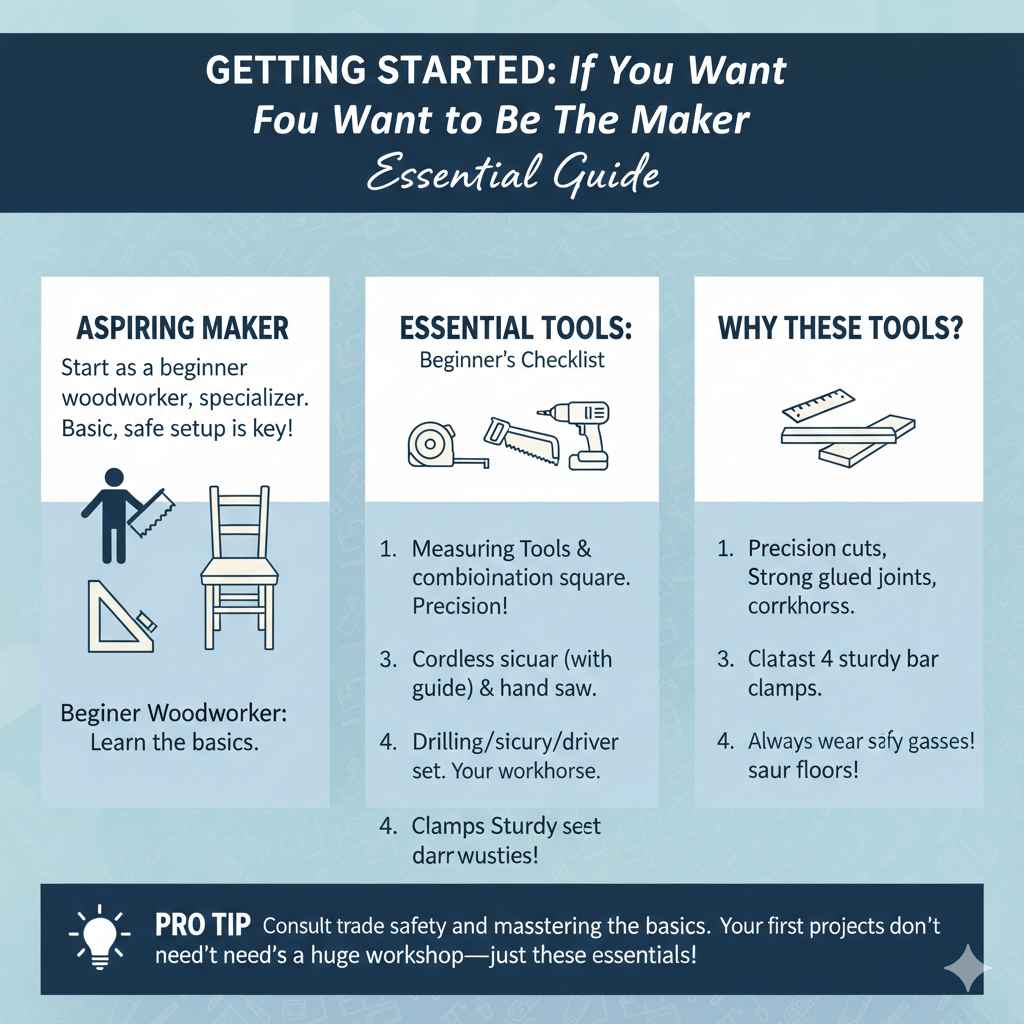
Perhaps you aren’t looking to hire someone, but you feel inspired to pick up a saw yourself! That’s fantastic. If you want to start making wooden furniture, you will start as a beginner woodworker, and you can choose which specialized path you want to follow later.
Essential Tools for the Aspiring Furniture Maker
Don’t get overwhelmed by huge workshops! You can start making surprisingly nice things with a very basic, safe setup. Here are the first few tools I recommend every beginner woodworker invests in:
- Measuring Tools: A reliable tape measure and a good combination square. Precision starts here!
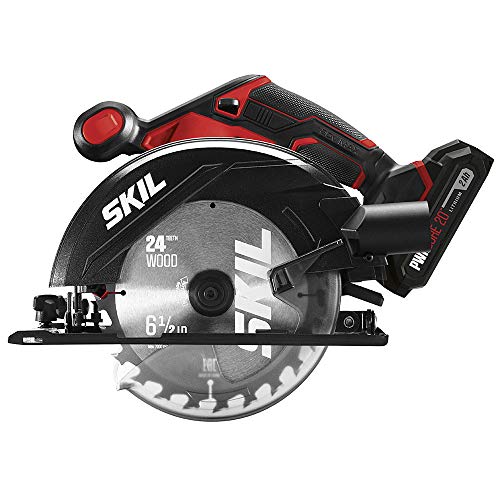
- Cutting Tools: A circular saw (with a proper guide fence for straight cuts) and a hand saw for quick jobs.
- Drilling/Driving: A good quality cordless drill/driver set. This is your absolute workhorse.
- Clamps: You can never have too many clamps! Get at least four sturdy bar clamps. Clamps hold your wood still while glue dries—they are crucial for strong joints.
- Sanding: An orbital sander speeds up finishing immensely compared to hand sanding.
Your First Simple Furniture Project
To build confidence, start with something that forces you to learn basic joinery and finishing techniques, but doesn’t rely too heavily on complex curves or heavy structural support.
- Step 1: Choose Simple Plans. Search for “beginner woodworking projects” online. A simple box or a straight-legged end table is perfect.
- Step 2: Focus on Squareness. This is the key to furniture that looks professional. Measure diagonally across corners to ensure everything is perfectly 90 degrees before the glue sets.
- Step 3: Practice Glue-Ups. Glue joints are stronger than the wood itself when done right. Practice clamping pressure before you commit to your final piece.
- Step 4: Invest in Finish Learning. Spend time learning how to properly apply wood conditioner, stain, or oil finish. The finish is what makes wood furniture truly beautiful and protected.
Remember, whether you call yourself a woodworker, a cabinetmaker, or an artisan, the goal is always to respect the material and build something that lasts longer than you will. That respect is what truly defines the skill.
Frequently Asked Questions for Beginners (FAQ)
Q1: Is a carpenter the same as a furniture maker?
A: No. A carpenter typically builds structures like homes and decks. A furniture maker creates detailed, often movable items like tables and chairs intended for the interior of those structures.
Q2: Do cabinetmakers only build kitchens?
A: Traditionally, yes, their main focus was kitchen and bathroom cabinetry. However, modern cabinetmakers often apply their high-precision skills to make custom entertainment units, fine bookshelves, and other large storage furniture.
Q3: How can I tell if a woodworker is high quality?
A: Look closely at the joints in their photos. High quality usually means invisible seams, tight-fitting drawers that slide smoothly, and beautiful finishes that highlight the wood grain, not hide it.
Q4: What does it mean if a piece is described as using high-level “joinery”?
A: Joinery refers to the way pieces of wood are connected (like using mortise-and-tenon or dovetail joints). High-level joinery means the piece is likely held together primarily by interlocking wood parts rather than just screws or metal fasteners, leading to much greater strength and beauty.
Q5: Is restoration work done by a specific title?
A: Yes, restorers or antique conservators often specialize in repairing old wooden items. They need expert knowledge not just of woodworking, but also of historical finishes and period-appropriate repair methods.
Q6: Is a woodworker always an artist?
A: Not necessarily. A woodworker who builds functional items like simple utility racks is focused on function. A woodworker who creates unique sculptures or highly stylized, never-before-seen furniture pieces would be considered an artist or artisan.
Conclusion: Finding Your Perfect Wood Expert
Navigating the world of wood professionals is much simpler now that we’ve cleared up the terminology. Remember this: Woodworker is the general term; Furniture Maker focuses on movable items; and Cabinetmaker specializes in precise, often built-in storage. The terms Artisan and Master speak to quality and years of dedication, while Bespoke Designer means the piece is made just for you.
As you tackle your next home upgrade or search for that perfect heirloom piece, knowing the difference allows you to communicate clearly and hire the right skilled person for the job. You are now equipped with the vocabulary to confidently ask for exactly what you need, whether you’re commissioning a custom dining table or just looking for friendly advice at the lumberyard. Keep learning, keep building, and enjoy the beautiful potential hidden inside every piece of wood!