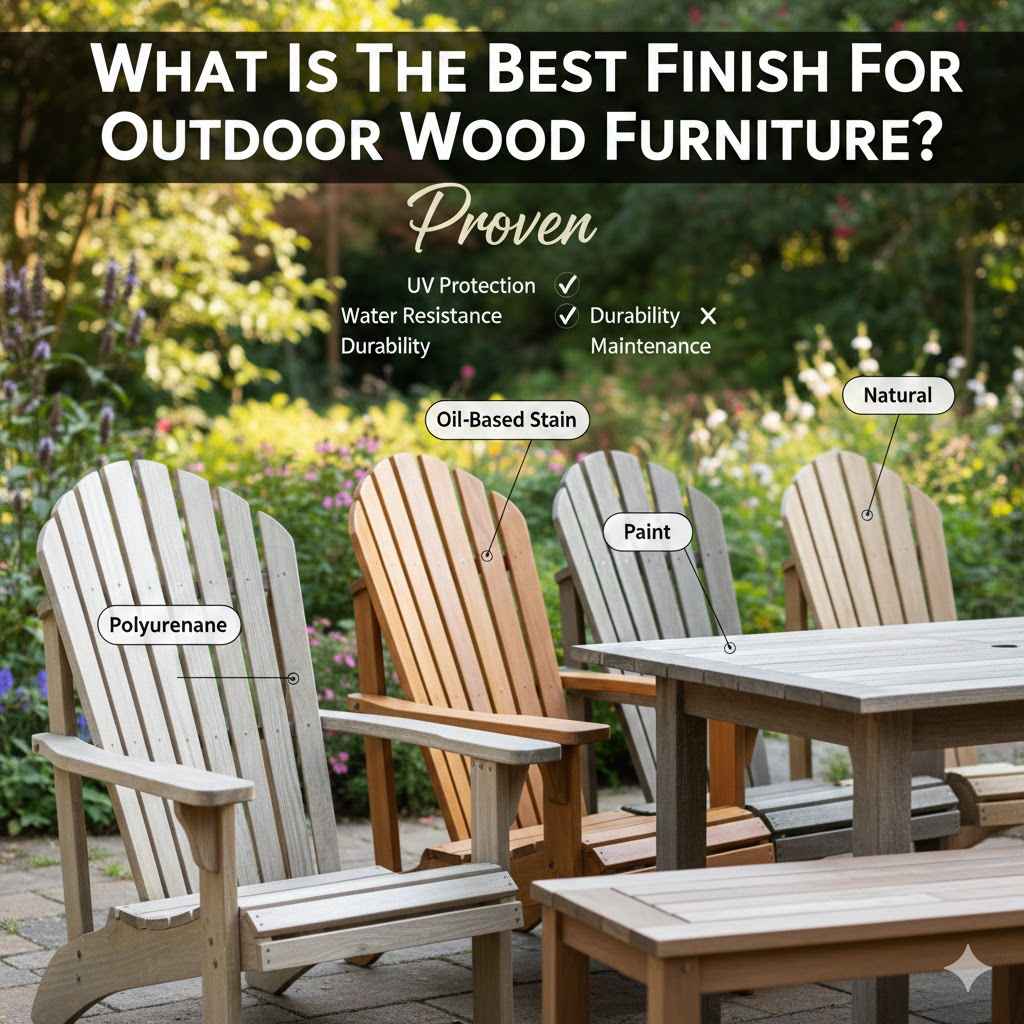
What Is The Best Finish For Outdoor Wood Furniture? Proven
For most outdoor wood furniture, the best finish is a high-quality, oil-based penetrating stain. It soaks deep into the wood to protect it from moisture and UV damage from the inside out. This type of finish offers a beautiful, natural look, won’t peel or flake, and is incredibly easy for beginners to apply and maintain.
Your beautiful wooden patio chairs and table look fantastic when they’re new. But after a few seasons of sun and rain, that fresh look can fade. The wood might turn gray, start to crack, or even feel rough. It’s a super common problem, but I promise, there’s an easy fix!
Protecting your outdoor furniture isn’t a complicated job reserved for professionals. You can do it yourself and get amazing, long-lasting results. In this guide, I’ll walk you through the best finishes available and show you exactly how to apply them. We’ll find the perfect solution to keep your furniture looking great for years to come.
Why Your Outdoor Furniture Needs a Great Finish
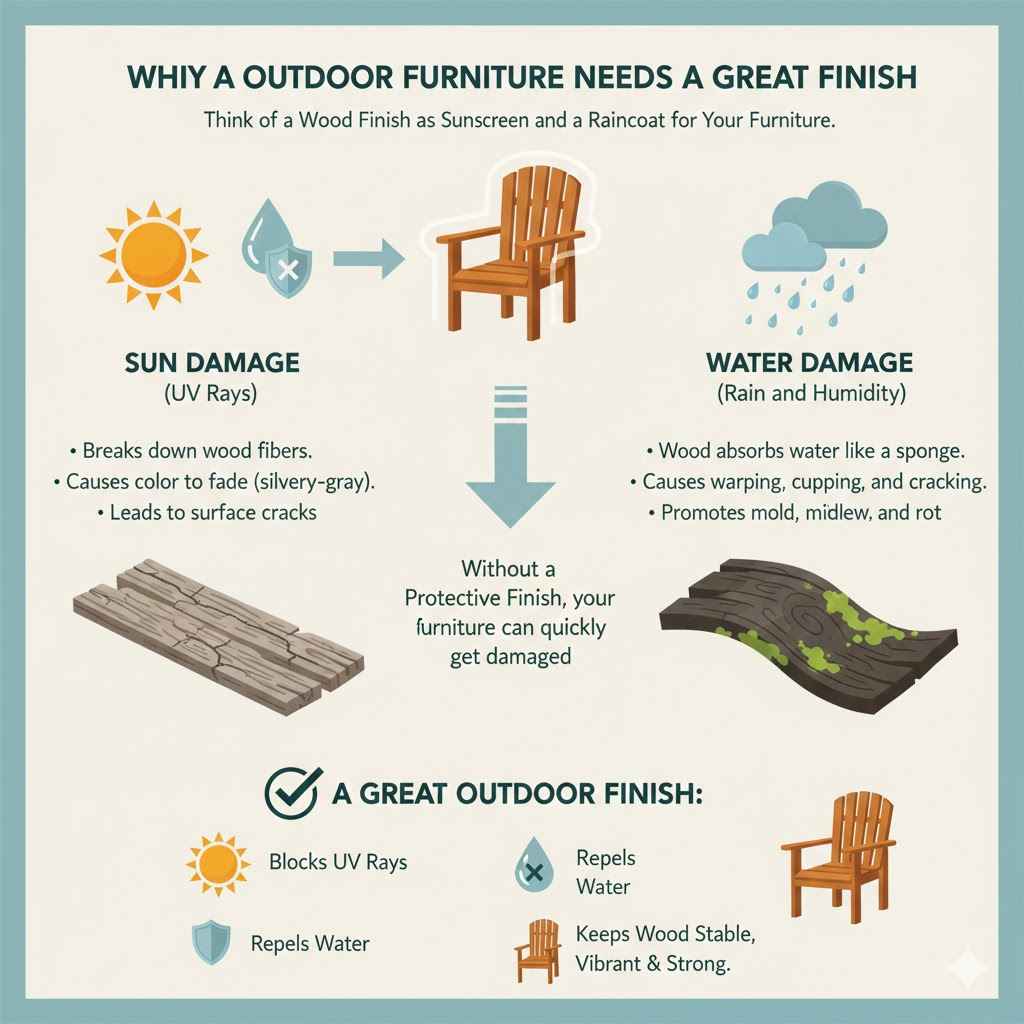
Think of a wood finish as sunscreen and a raincoat for your furniture. Wood is a natural material, and when left unprotected outside, it faces two major enemies: the sun and water. Without a protective coat, your beautiful furniture can quickly get damaged.
- Sun Damage (UV Rays): Just like our skin, wood can get sunburned. The sun’s ultraviolet (UV) rays break down the fibers in the wood. This causes the wood to lose its natural color and turn a silvery-gray. Over time, it can also lead to fine cracks on the surface.
- Water Damage (Rain and Humidity): Wood absorbs water like a sponge. When it gets wet and then dries out repeatedly, it swells and shrinks. This movement can cause the wood to warp, cup, and crack. Constant moisture also creates the perfect environment for mold, mildew, and rot to grow, which can destroy the wood completely.
A good outdoor finish creates a barrier that blocks UV rays and repels water. It keeps the wood stable, vibrant, and strong, so you can enjoy your furniture season after season.
Understanding the Main Types of Outdoor Wood Finishes
When you walk into a hardware store, the wall of finishes can be overwhelming. Let’s break it down into two simple categories: finishes that soak in and finishes that sit on top.
1. Penetrating Finishes (Oils and Stains)
These are my favorite for beginners because they are so forgiving. Penetrating finishes, like oil-based stains, soak deep into the wood fibers. Instead of creating a shell on the surface, they protect the wood from within. They are sometimes called “in-the-wood” finishes.
Pros:
- Easy to Apply: You can often just wipe them on with a rag. No worrying about brush marks!
- No Peeling or Flaking: Since there’s no film on the surface, these finishes fade gracefully over time instead of cracking and peeling.
- Simple Maintenance: To reapply, you just need to clean the furniture and wipe on a fresh coat. No heavy sanding or stripping required.
- Natural Look: They enhance the natural beauty and grain of the wood.
Cons:
- Less Protection: They offer good protection, but not as much as a thick film finish.
- More Frequent Maintenance: You’ll likely need to reapply a fresh coat every 1 to 3 years, depending on your climate.
2. Film-Forming Finishes (Varnishes, Urethanes, and Paints)
These finishes create a hard, protective layer on top of the wood, like a clear coat on a car. This “on-the-wood” shell is excellent at blocking water and UV rays.
Pros:
- Maximum Durability: They offer the best protection against scratches, water, and sun. A good coat can last for many years.
- Variety of Sheens: You can choose from matte, satin, or a high-gloss, shiny look.
- Great for Hiding Flaws: Paint, a type of film finish, can completely cover old, weathered wood and give it a fresh new life with any color you want.
Cons:
- Tricky Application: Applying them smoothly without drips or brush marks takes more skill.
- Can Peel or Crack: If the finish is damaged or applied improperly, water can get underneath and cause it to peel, bubble, or crack.
- Difficult to Repair: Fixing a peeling spot often requires sanding down the entire surface and starting over.
The Top 3 Contenders: Which Finish Is Best for You?
So, what is the best finish for outdoor wood furniture? It really comes down to balancing how you want it to look, how much protection it needs, and how much time you want to spend on maintenance. Here are the top three choices and when to use them.
| Finish Type | Best For | Protection Level | Look & Feel | Maintenance | Application Difficulty |
|---|---|---|---|---|---|
| Oil-Based Penetrating Stain | Beginners, natural wood look, easy upkeep. | Good | Natural, matte finish that shows wood grain. | Low (recoat every 1-3 years). | Easy |
| Marine Spar Varnish | Maximum durability, glossy finish, high-exposure areas. | Excellent | Thick, glossy, or satin film. Can slightly yellow wood. | Medium (recoat every 3-5 years, requires sanding). | Moderate |
| High-Quality Exterior Paint | Total color change, hiding imperfections, ultimate protection. | Excellent | Solid color, completely hides wood grain. | Low (can last 5-10 years before repainting). | Moderate to Hard |
Winner for Natural Beauty & Easy Maintenance: Oil-Based Penetrating Stains
For most DIYers, this is the champion. An oil-based stain soaks into the wood, nourishing it while adding color and water-repellency. Because it’s inside the wood, it can’t peel off. When it starts to fade, you simply clean the furniture and wipe on a new coat. It’s that easy.
Look for stains labeled “semi-transparent” if you want to add rich color while still seeing the beautiful wood grain. Choose a “transparent” stain if you only want to add UV protection and a hint of color, similar to what teak oil does.
Winner for Maximum Durability: Marine Spar Varnish
If your furniture sits in direct, harsh sun all day or gets blasted by rain, spar varnish is your best bet for heavy-duty protection. It was originally designed for wooden boats, so it’s built to handle the toughest conditions. It contains special ingredients that block UV rays and is flexible enough to expand and contract with the wood as temperatures change.
A quick warning: Do not use regular interior polyurethane outside. It doesn’t have UV blockers and will quickly yellow and crack in the sun, leading to a peeling mess.
Winner for Total Transformation & Hiding Flaws: High-Quality Exterior Paint
Have an old wooden bench that’s seen better days? Or maybe you just want a bold pop of color on your patio? Exterior acrylic latex paint is the answer. Paint creates the thickest, most protective barrier of all. It completely blocks UV rays and water. To do it right, you’ll need to apply one or two coats of a good quality exterior primer first, followed by two coats of paint. It’s more work upfront, but a good paint job can last for a very long time.
How to Apply Your Finish: A Simple Step-by-Step Guide
No matter which finish you choose, the preparation is the most important step. Don’t skip it! A great finish applied to a poorly prepared surface will always fail.
Step 1: Clean the Furniture Thoroughly
Your furniture needs to be completely clean. Use a stiff brush and a bucket of warm water with a little mild soap. For tougher grime or mildew, use a commercial deck cleaner or a 3-to-1 mixture of water and oxygen bleach. Scrub everything down and rinse it well with a garden hose. Let the furniture dry completely, which might take a day or two.
Step 2: Sand the Wood Smooth
Sanding gets rid of any fuzzy wood fibers raised during cleaning and opens up the wood pores so the new finish can stick. For old, weathered furniture, start with 80-grit sandpaper to remove the gray layer, then move to 120-grit. For furniture in good shape, a light scuffing with 150-grit sandpaper is all you need. Always sand in the direction of the wood grain. When you’re done, wipe away all the dust with a clean, damp cloth.
Step 3: Choose Your Application Tool
For oil-based stains, a clean cotton rag or a foam brush works wonderfully. For varnishes and paints, a high-quality natural-bristle brush will give you the smoothest results. Read the instructions on the can, as it will often recommend the best tool to use.
Step 4: Apply the First Coat
Find a shady, well-ventilated spot to work. Apply a thin, even coat of your finish. If you’re using a stain, wipe on a coat and then wipe off any excess that hasn’t soaked in after 10-15 minutes. This prevents a sticky, shiny surface. If you’re using varnish or paint, apply a thin coat with long, smooth strokes. Don’t over-brush it.
Step 5: Let It Dry and Apply Additional Coats
Patience is key here. Check the can for recommended drying times. For varnish and paint, you’ll likely need to lightly sand with 220-grit sandpaper between coats to get a super-smooth finish. Most projects will need at least two coats. Varnish often looks best with three or four thin coats.
Step 6: Let It Cure
There’s a big difference between “dry to the touch” and “fully cured.” A finish might feel dry in a few hours, but it can take several days or even a week to fully harden and reach its maximum durability. Keep the furniture protected from rain and heavy dew during this time. The U.S. Forest Service emphasizes that proper application and curing are critical for the long-term performance of wood finishes.
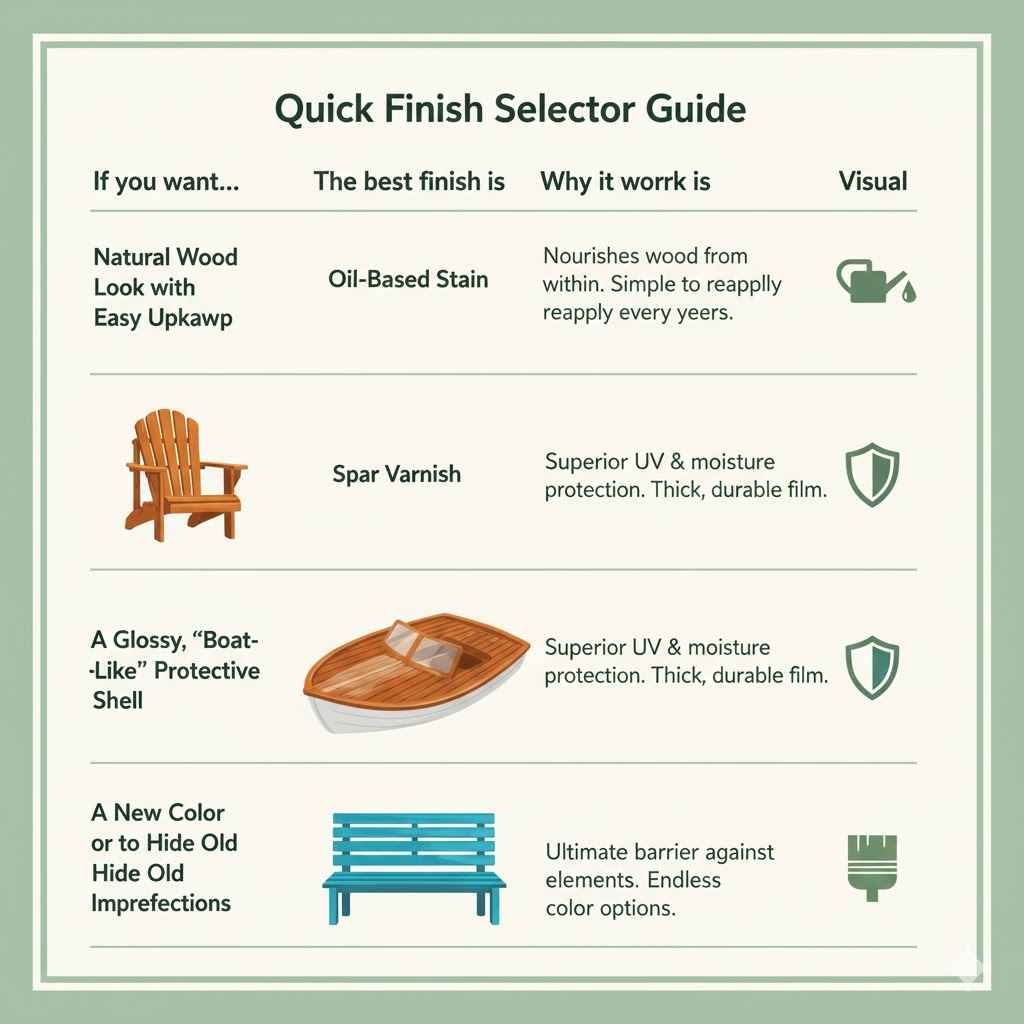
Quick Finish Selector Guide
Still not sure? Here’s a simple table to help you decide at a glance.
| If you want… | The best finish is… | Why it works |
|---|---|---|
| A natural wood look with easy upkeep. | Oil-Based Stain | It nourishes the wood from within and is simple to reapply every few years without stripping. |
| A glossy, “boat-like” protective shell. | Spar Varnish | It offers superior UV and moisture protection with a thick, durable film that’s built for the outdoors. |
| A new color or to hide old imperfections. | Exterior Paint | It provides the ultimate barrier against the elements and gives you endless color options. |
Frequently Asked Questions (FAQ)
What is the most durable finish for outdoor wood furniture?
The most durable finish is a high-quality exterior paint system (primer plus paint) or a marine spar varnish. Both create a thick, tough barrier that provides excellent protection against sun and rain for many years. However, they are also more difficult to apply and repair than oil-based stains.
How often should I refinish my outdoor wood furniture?
It depends on your climate and the finish you use. Oil-based stains may need a fresh coat every 1-3 years. A good spar varnish can last 3-5 years, and a quality paint job can last 5-10 years. A good rule of thumb is to refinish when the wood starts to look faded or when water no longer beads up on the surface.
Can I use polyurethane on outdoor furniture?
It’s best to avoid standard polyurethane for outdoor projects. Most polyurethanes do not have UV inhibitors, so the sun will cause them to yellow, crack, and peel quickly. If you want a clear film finish, choose a product specifically labeled as “spar varnish” or “exterior urethane,” which are designed to handle outdoor conditions.
What’s the difference between a stain and a sealer?
A stain contains pigments to change the color of the wood. A sealer is typically a clear coat designed to block water. Many outdoor products are a combination of both, often called a “stain and sealer.” An oil-based penetrating stain will both color and seal the wood by soaking into it.
Do I need to sand before applying a new coat of finish?
If you are reapplying the same oil-based penetrating stain, you usually just need to clean the wood well. If you are applying a film finish like varnish or paint, a light sanding between coats with fine-grit sandpaper (220-grit) is essential for good adhesion and a smooth result.
Is teak oil a good finish for all outdoor wood?
Teak oil is great for dense, oily woods like teak, but it offers minimal protection on other woods like pine or cedar. It provides a beautiful, natural look but needs to be reapplied frequently (often several times a year) to maintain its protective qualities. For most woods, an oil-based penetrating stain offers better and longer-lasting protection.
Conclusion: Your Furniture Is Ready for Its New Look
Choosing the best finish for your outdoor wood furniture doesn’t have to be complicated. By thinking about the look you want, the climate you live in, and the amount of maintenance you’re comfortable with, you can easily find the perfect fit.
For most people, a good-quality oil-based penetrating stain is the winning choice. It’s easy to apply, looks fantastic, and makes future maintenance a breeze. If you need maximum protection and love a glossy look, marine spar varnish is an unbeatable option. And if it’s time for a complete makeover, exterior paint can make old furniture look brand new.
No matter what you choose, remember that good preparation is the key to a beautiful, long-lasting finish. Take your time, follow the steps, and you’ll be rewarded with outdoor furniture that you can be proud of for many years to come. Now, go enjoy your beautiful outdoor space!