What Is The Most Durable Wood For Kitchen Cabinets? Best
For the most durable kitchen cabinets, hard maple and hickory are the top choices. Both are incredibly hard, dense woods that resist dents and scratches from daily use. Hard maple offers a smooth, clean look perfect for modern kitchens, while hickory provides a rustic, textured appearance with strong grain patterns.
Choosing new kitchen cabinets is exciting! But it can also feel a little overwhelming. You walk into a showroom, and you’re surrounded by options. What’s the difference between oak and maple? Will this wood stand up to kids, pets, and busy family life? It’s a big investment, and you want to get it right.
Don’t worry, I’m here to help. My name is Md Meraj, and I’ve spent years helping homeowners just like you tackle projects with confidence. We’re going to break it down together, step by step. In this guide, I’ll show you exactly what makes a wood durable and introduce you to the best options for a kitchen that will last for decades. Let’s find the perfect wood for your home.
What Makes a Wood “Durable” for Kitchens?
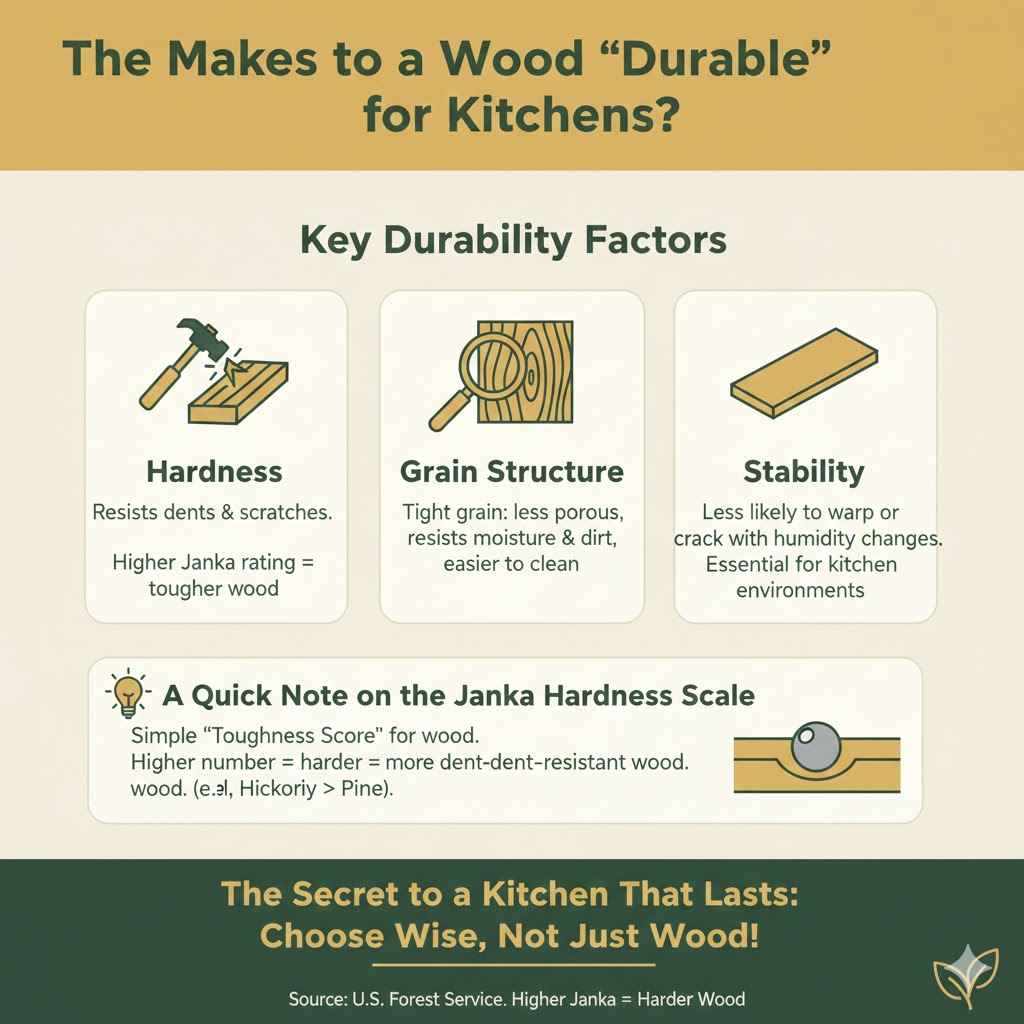
When we talk about durable wood for kitchen cabinets, we’re talking about a few key things. Your kitchen is a high-traffic area. Cabinets get bumped, nicked, and exposed to heat and moisture. A durable wood can handle all of that without showing much wear and tear.
Here’s what to look for:
- Hardness: This is the wood’s ability to resist dents and scratches. A harder wood is better for busy kitchens where pots, pans, and canned goods might bump into the cabinet doors.
- Grain Structure: A wood with a tight, closed grain is less porous. This means it’s less likely to absorb moisture and is easier to clean. Open-grained woods can trap dirt and grease if not sealed properly.
- Stability: Wood naturally expands and contracts with changes in humidity. Stable woods are less likely to warp or crack over time, which is very important in a kitchen environment.
A Quick Note on the Janka Hardness Scale
You might hear people mention the “Janka rating” when discussing wood. It sounds technical, but it’s actually very simple. The Janka Hardness Test measures the force needed to press a small steel ball into a piece of wood. Think of it as a wood’s toughness score—the higher the number, the better it resists dents.
You don’t need to memorize the numbers, but it’s a helpful way to compare different woods. For example, Hickory has a much higher Janka rating than Pine, which is why Hickory is a far more durable choice for cabinets. You can learn more about how this is measured from the U.S. Forest Service, but for now, just know that higher is harder!
The Champions: Top 4 Most Durable Woods for Cabinets
Ready to meet the heavy hitters? These woods consistently perform the best in busy kitchens. They are known for their strength, longevity, and beautiful appearance.
1. Hickory: The Undisputed King of Hardness
If pure, brute strength is what you’re after, Hickory is your answer. It is one of the hardest and strongest domestic woods available. Hickory is known for its dramatic grain patterns and strong color variations, which can range from creamy white to dark brown, all on the same board. This gives it a rustic, natural look that is full of character.
Pros of Hickory Cabinets:
- Extremely Durable: It can withstand serious wear and tear, making it perfect for homes with kids and pets.
- Unique Look: The bold grain and color contrast create a one-of-a-kind, rustic aesthetic.
- Great Value: For its incredible hardness, hickory is often more affordable than other premium hardwoods.
Cons of Hickory Cabinets:
- Busy Appearance: The strong grain isn’t for everyone. It can feel too rustic or busy for modern, minimalist designs.
- Can Be Inconsistent: The color variations can make it tricky to achieve a perfectly uniform look across all your cabinets.
Best For: Farmhouse, rustic, or traditional kitchens where you want a warm, natural feel and maximum durability.
2. Hard Maple: Strong, Smooth, and Stylish
Hard Maple is a close second to Hickory in terms of hardness, but it offers a completely different look. Maple has a fine, uniform grain and a creamy white to light golden color. Its surface is incredibly smooth, which makes it an excellent choice for painted or stained finishes. It provides a clean, bright, and contemporary feel.
Pros of Hard Maple Cabinets:
- Very Durable: It resists dents and scratches almost as well as hickory.
- Smooth Finish: Its non-porous surface is perfect for paint, leading to a flawless, even coat.
- Clean and Modern Look: The light color and subtle grain brighten up a kitchen and work well with modern designs.
Cons of Hard Maple Cabinets:
- Can Be Pricey: It’s considered a premium hardwood, so it often comes with a higher price tag.
- Shows Dark Stains Unevenly: While it takes paint beautifully, it can sometimes absorb dark stains in a blotchy way if not conditioned properly first.
Best For: Modern, transitional, or contemporary kitchens. It’s the perfect canvas for painted cabinets.
3. White Oak: A Timeless and Tough Classic
White Oak is a true classic for a reason. It’s strong, durable, and has a beautiful grain that works well in almost any kitchen style. Unlike its cousin, Red Oak, White Oak has a more closed grain structure, which makes it more resistant to water and rot. It has a straight grain with a lovely ray fleck pattern that becomes visible with certain cuts (called quartersawn oak).
Pros of White Oak Cabinets:
- Highly Durable: It’s a very hard wood that stands up well to daily abuse.
- Water-Resistant: Its closed-grain pores make it naturally more resistant to moisture than many other woods.
- Versatile Style: It can be stained to a wide range of colors, from light and natural to dark and dramatic, fitting both traditional and modern designs.
Cons of White Oak Cabinets:
- Can Be Expensive: High-quality White Oak, especially quartersawn varieties, can be costly.
- Pronounced Grain: The grain pattern is noticeable, which might not suit a sleek, minimalist aesthetic.
Best For: Craftsman, traditional, and transitional kitchens. It provides a warm, classic look that never goes out of style.
4. Cherry: The Elegant Choice That Ages Beautifully
Cherry is famous for its smooth, fine-grained appearance and its rich, warm reddish-brown color. While it’s slightly softer than Maple or Oak, it’s still a very durable hardwood that works great for kitchen cabinets. Its most beloved quality is the way it darkens and deepens in color over time when exposed to light, developing a beautiful, rich patina. This makes it a cherished choice for fine furniture and high-end cabinetry.
Pros of Cherry Cabinets:
- Stunning Appearance: It has a luxurious, elegant look that adds warmth and sophistication to a kitchen.
- Ages Gracefully: The wood develops a richer, darker color over time, adding to its character.
- Smooth and Consistent: Its fine, straight grain makes for a uniform and predictable finish.
Cons of Cherry Cabinets:
- Softer Than Other Hardwoods: It can dent or scratch a bit more easily than Hickory or Maple.
- Light Sensitive: The color will change over time, which is a feature many love, but it means new pieces won’t immediately match older ones.
- Higher Cost: Cherry is one of the more expensive options for cabinetry.
Best For: High-end, traditional, or formal kitchens where elegance and rich color are the priority.
Comparing the Top Cabinet Woods at a Glance
Sometimes, seeing it all laid out makes the decision easier. Here’s a simple table to help you compare our top contenders.
| Wood Type | Janka Hardness (lbf) | Grain Pattern | Best For | Relative Cost |
|---|---|---|---|---|
| Hickory | ~1820 | Bold, Rustic, High Contrast | Farmhouse, Rustic Kitchens | $$ |
| Hard Maple | ~1450 | Fine, Smooth, Subtle | Modern, Painted Kitchens | $$$ |
| White Oak | ~1360 | Straight, Pronounced, Classic | Craftsman, Traditional Kitchens | $$$ |
| Cherry | ~950 | Fine, Straight, Elegant | High-End, Formal Kitchens | $$$$ |
It’s Not Just About the Wood: Other Factors in Cabinet Durability
Choosing a strong wood is a great start, but it’s only part of the story. A cabinet made from the world’s hardest wood will still fall apart if it’s poorly made. Here are two other crucial elements for long-lasting cabinets.
1. The Finish
The finish is your cabinet’s first line of defense. It’s a clear top coat that protects the wood from moisture, grease, stains, and scratches. A high-quality, factory-applied catalyzed conversion varnish or polyurethane finish is much more durable than a simple coat of lacquer you might apply yourself.
This protective layer seals the wood and makes it easy to clean. Without a good finish, even the most durable wood would be vulnerable to the daily challenges of a kitchen.
2. The Construction Quality
How a cabinet is put together is just as important as what it’s made of. Look for these signs of quality construction:
- Solid Wood Frames and Doors: The face frame, doors, and drawer fronts should be made of solid hardwood.
- Plywood Boxes: The cabinet box itself is often best made from high-quality, furniture-grade plywood (at least 1/2-inch thick). Plywood is more stable than solid wood over large surfaces, meaning it’s less likely to warp. It is much stronger and more durable than particle board or MDF.
- Quality Joinery: Look for strong joints like dovetail or dowel joints, especially in drawers. Avoid cabinets held together with just staples and glue, as they won’t last.
- Soft-Close Hardware: Good quality hinges and drawer slides not only feel better to use but also prevent slamming, which reduces stress on the cabinet structure over time.
How to Care For Your Wood Cabinets So They Last a Lifetime
You’ve picked a durable wood and well-made cabinets. Great! Now, a little bit of simple care will keep them looking beautiful for decades to come.
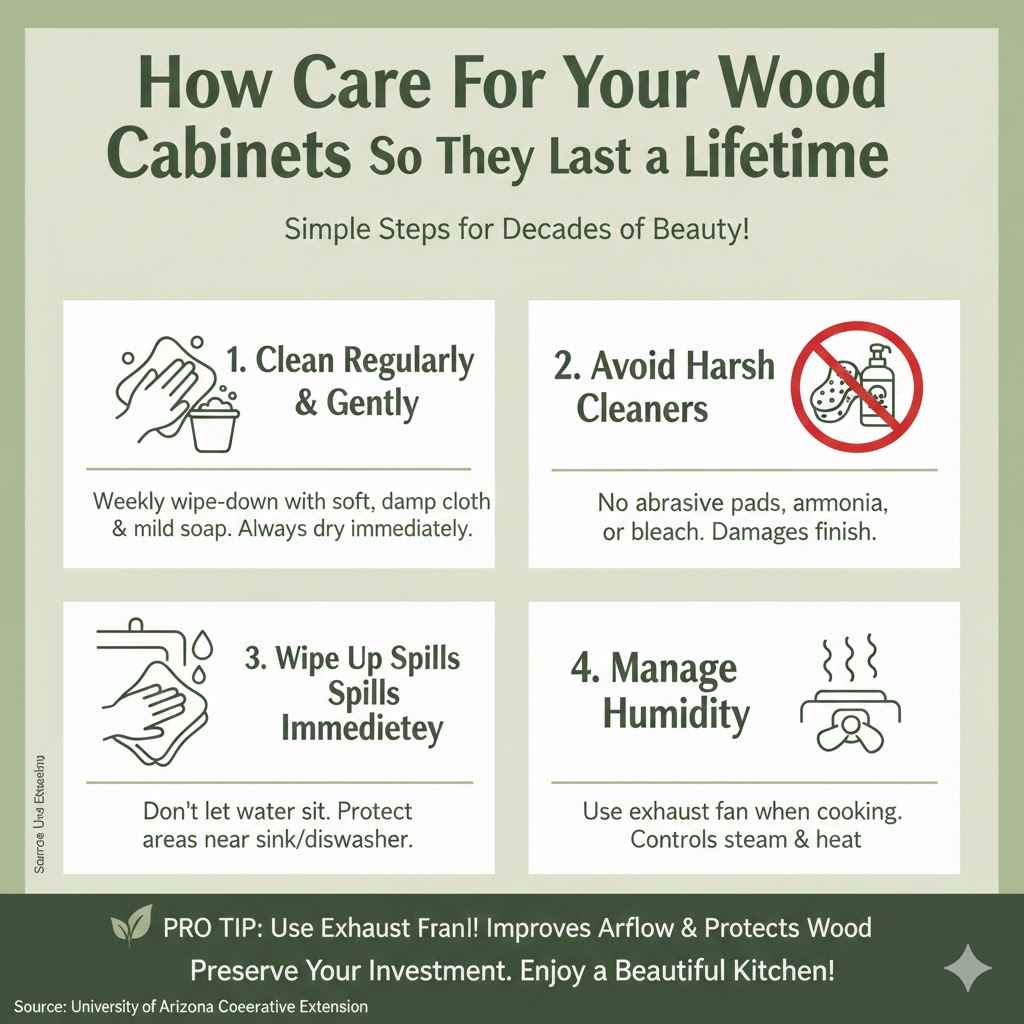
- Clean Regularly and Gently: Wipe down your cabinets once a week with a soft, damp cloth. For tougher grease, use a mild solution of dish soap and warm water. Always dry them immediately with another clean cloth.
- Avoid Harsh Cleaners: Never use abrasive cleaners, scouring pads, or harsh chemicals like ammonia or bleach. These can strip the finish and damage the wood.
- Wipe Up Spills Immediately: Don’t let water or other liquids sit on the surface. Pay special attention to areas around the sink and dishwasher.
- Manage Humidity: Use your kitchen’s exhaust fan when cooking to help manage steam and heat, which can affect the wood over time.
For more detailed information on wood care, this guide from the University of Arizona Cooperative Extension is a great resource.
Frequently Asked Questions (FAQ)
1. Is oak a good choice for kitchen cabinets?
Yes, oak is a very good choice! Both Red and White Oak are strong, durable hardwoods. White Oak is generally considered more premium due to its higher water resistance. Oak has a very prominent grain pattern, which gives it a traditional and textured look that many people love.
2. What is the cheapest durable wood for cabinets?
Hickory and Red Oak often provide the best durability for the price. They are tough, readily available domestic hardwoods that are typically more affordable than premium options like Maple, Cherry, or White Oak. They offer excellent long-term value.
3. How can I tell if my cabinets are solid wood?
Look at the grain pattern. On a solid wood door, the grain pattern on the front should match the grain pattern on the back. Also, check the edges of the door panel. If it’s solid wood, you’ll see the end grain, which looks different from the face grain. If it’s a veneer, you’ll see a thin, uniform line along the edge where the veneer was applied.
4. Is maple or oak more durable?
Both are very durable. Hard Maple has a slightly higher Janka hardness rating (around 1450 lbf) than Red Oak (around 1290 lbf) and White Oak (around 1360 lbf), so it is technically more resistant to dents. However, the prominent grain of oak can help hide minor scratches and dents better than the smooth surface of maple. You can’t go wrong with either for durability.
5. Do painted cabinets last as long?
Yes, a quality paint job can be extremely durable. When done professionally, painted cabinets receive multiple coats of primer and a tough top coat (often a catalyzed varnish) that protects the wood underneath. The key is the quality of the wood (smooth woods like Maple are best) and the quality of the application process.
6. What is MDF and is it durable?
MDF stands for Medium-Density Fiberboard. It’s an engineered wood product made from wood fibers, wax, and resin. High-quality MDF is very stable and won’t warp, making it an excellent, smooth surface for painted cabinet doors. However, it is not as strong as solid wood or plywood and is very susceptible to water damage. If it gets wet, it will swell and crumble. It’s often used for paint-grade doors but is not recommended for cabinet boxes compared to plywood.
7. What is the most low-maintenance wood for cabinets?
Woods with a closed, smooth grain like Maple or Cherry are generally easier to wipe clean than open-grained woods like Oak or Hickory, where grime can settle into the grain. A high-quality factory finish is the most important factor for low maintenance, as it seals the wood and makes cleaning simple regardless of the species.
Making the Right Choice for Your Home
Choosing the most durable wood for your kitchen cabinets doesn’t have to be complicated. It’s all about balancing hardness, style, and your budget. For pure toughness, Hickory and Hard Maple are the clear winners. For timeless style and strength, White Oak is an incredible choice. And for a touch of elegance that deepens with age, Cherry is unmatched.
Remember, the best cabinets are a combination of a durable wood, high-quality construction, and a protective finish. By keeping these three things in mind, you can confidently choose cabinets that will not only look beautiful on day one but will stand up to the demands of your busy life for many years to come.
You’ve got this! Now you have the knowledge to walk into any showroom or talk to any cabinet maker and make a choice that is perfect for your home and family.