What Is The Stabilitrak Warning Light: Essential Guide
Quick Summary
The StabiliTrak warning light indicates an issue with your vehicle’s electronic stability control system, designed to help you maintain steering control during difficult driving conditions. It could be a minor glitch or a sign of a problem needing attention, but understanding its meaning is key to safe driving.
Hey there! If you’ve ever been driving and suddenly saw a little light pop up on your dashboard that looks like a car skidding, you might be wondering, “What is that StabiliTrak warning light?” It’s a common sight for many drivers, and it can feel a bit unnerving. But don’t worry, it’s not as complicated as it sounds. This light is your vehicle’s way of telling you about its StabiliTrak system, which is a super helpful feature designed to keep you safe on the road, especially when things get a little slippery or tricky.
Think of StabiliTrak as your car’s guardian angel for handling. It works behind the scenes to help you stay in control when you need it most, like during sudden swerves or on slick surfaces. When the warning light comes on, it’s usually a signal that this system is either doing its job, or that there might be something that needs a quick check. We’re going to break down exactly what this light means, why it might appear, and what you should do next. By the end, you’ll feel much more confident about what to do when you see that StabiliTrak light flash on your dashboard.
Understanding the StabiliTrak Warning Light
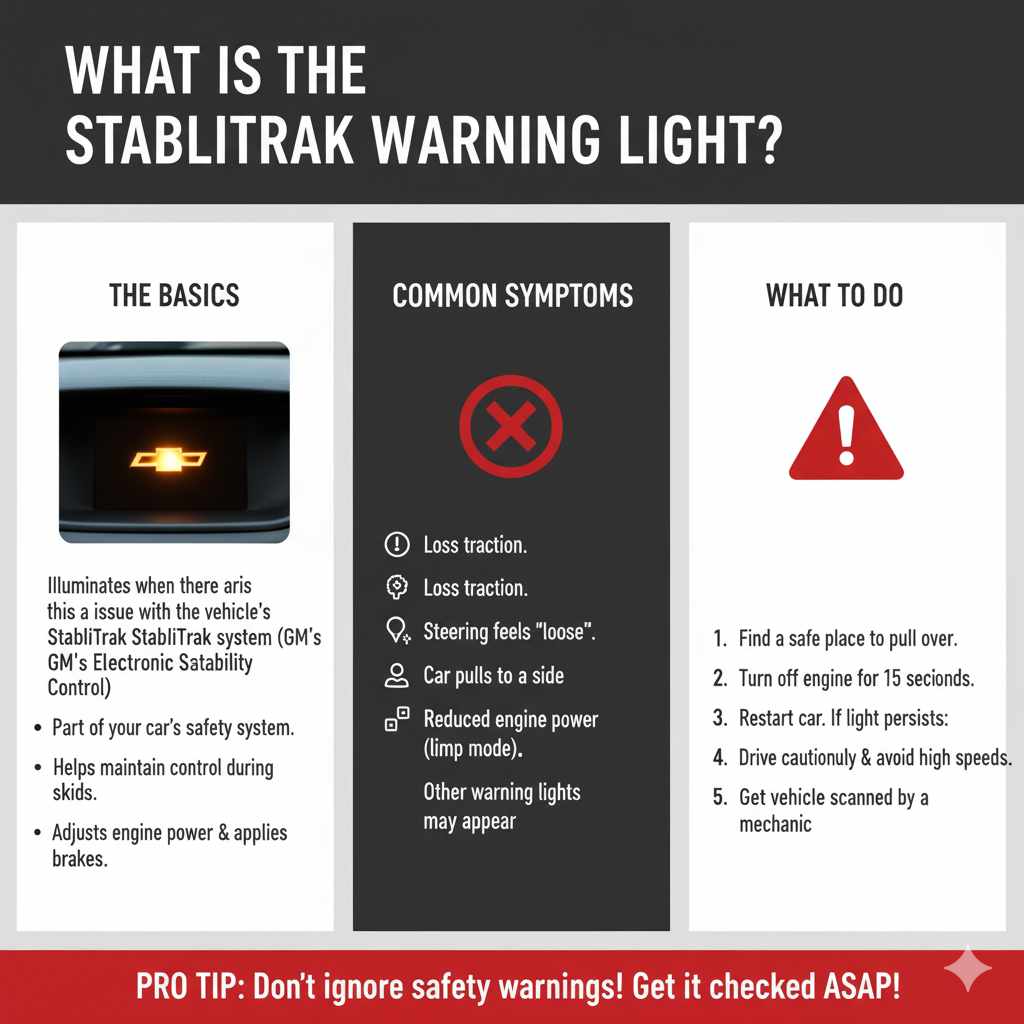
The StabiliTrak warning light is a visual alert from your vehicle’s sophisticated electronic stability control (ESC) system. This system is a crucial safety feature designed to prevent skids and help drivers maintain control of their vehicle, especially in emergency situations or on slippery roads. When the light illuminates, it means the StabiliTrak system is either actively working to help you, or it has detected an issue that might be preventing it from working correctly.
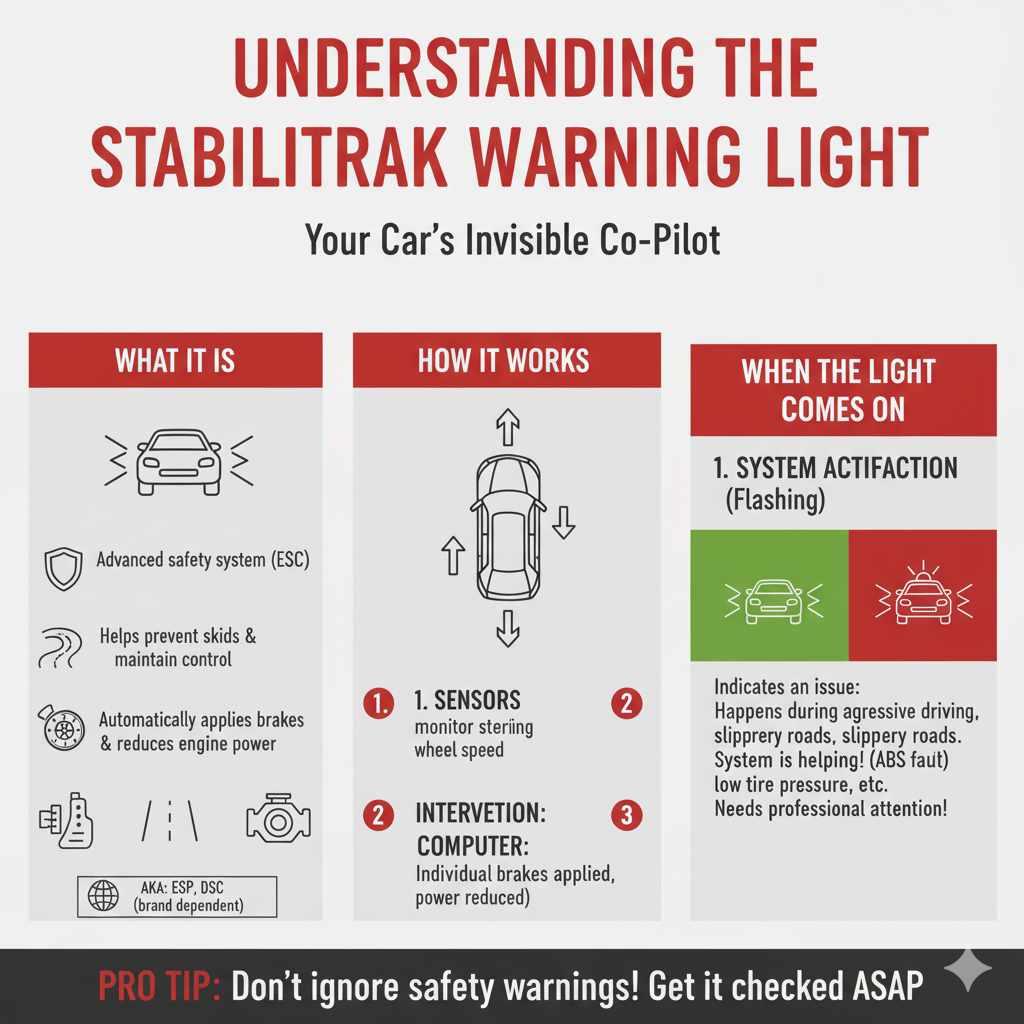
Many different car manufacturers have their own names for stability control systems, but the concept is the same. For example, General Motors vehicles often use the term “StabiliTrak,” while other brands might call it “Electronic Stability Control (ESC),” “Electronic Stability Program (ESP),” or “Dynamic Stability Control (DSC).” Regardless of the name, their purpose is identical: to help you avoid losing control of your vehicle.
What Does StabiliTrak Do?
At its core, StabiliTrak is an advanced safety system that uses sensors to monitor your vehicle’s steering, braking, and wheel speed. If it detects that the vehicle is starting to skid or slide – meaning your intended path isn’t matching the direction the car is actually going – it can intervene automatically. It does this by:
- Applying individual brakes: StabiliTrak can subtly apply the brakes to specific wheels to help steer the vehicle back onto its intended path. For instance, if the rear of your car is sliding out, it might apply the front-right brake to help pull the front of the car back in line.
- Reducing engine power: In some cases, the system may also reduce engine power to help regain traction and control.
This system is incredibly effective at preventing accidents, particularly those involving loss of control during sharp turns or on wet, icy, or gravelly surfaces. It’s like having an invisible co-pilot helping you navigate tricky situations.
When the StabiliTrak Light Illuminates
There are two primary reasons the StabiliTrak warning light might come on:
- System Activation: The most common reason is that the StabiliTrak system is actively engaged. This usually happens when you’re driving in challenging conditions, such as sudden braking, sharp turns, or on slippery surfaces like rain, snow, or ice. If the light flashes briefly and then turns off, it likely means the system did its job and helped you maintain control. You might feel a slight pulse in the brake pedal or hear the engine power change – this is normal system operation.
- System Malfunction: The light can also illuminate if there’s a problem with the StabiliTrak system itself or a related component. This could be due to a sensor issue, a problem with the anti-lock braking system (ABS), a faulty wheel speed sensor, or even a low tire pressure warning. If the light stays on continuously, it suggests that the StabiliTrak system may not be functioning correctly and might need professional attention.
Common Causes for the StabiliTrak Warning Light
When the StabiliTrak warning light stays illuminated, it’s a signal that something needs a closer look. While a mechanic can pinpoint the exact issue, understanding the common culprits can help you anticipate potential problems. These issues often relate to the sensors and systems that StabiliTrak relies on to function.
1. Tire Pressure Issues
This is one of the simplest and most common reasons the StabiliTrak light might come on, especially if your vehicle also has a Tire Pressure Monitoring System (TPMS). The StabiliTrak system needs accurate information about your wheel speeds to function. If one or more tires are significantly underinflated, it can throw off the wheel speed sensors and confuse the StabiliTrak system, triggering the warning light.
Why it happens: Underinflated tires can rotate at a different speed than properly inflated ones, especially during acceleration or braking. The StabiliTrak system interprets this difference as a potential loss of traction, even if it’s just due to low tire pressure.
What to do: Check your tire pressure when the tires are cold. Inflate them to the recommended pressure found on the sticker inside your driver’s side doorjamb or in your owner’s manual. After adjusting the pressure, you might need to drive for a few minutes for the system to reset and the light to turn off.
2. Wheel Speed Sensor Problems
Your vehicle has wheel speed sensors on each wheel that constantly measure how fast each wheel is rotating. This data is critical for both the ABS and the StabiliTrak systems. If a wheel speed sensor is dirty, damaged, or malfunctioning, it can send incorrect information to the vehicle’s computer, leading to the StabiliTrak light coming on.
Why it happens: The StabiliTrak system compares the speed of each wheel. If one sensor is reporting an inconsistent or no-speed signal, the system can’t accurately determine if a wheel is slipping or if the vehicle is stable.
What to do: A faulty wheel speed sensor typically needs to be diagnosed and replaced by a qualified mechanic. Sometimes, debris can accumulate around the sensor, and cleaning it might resolve the issue, but often replacement is necessary.
3. Issues with the Anti-Lock Braking System (ABS)
StabiliTrak and the ABS share many of the same components, including wheel speed sensors and the electronic control module. If there’s a problem with your ABS system, it will often trigger the StabiliTrak warning light as well. This could be due to a faulty ABS module, brake fluid leaks, or issues with the ABS sensors.
Why it happens: The systems are so interconnected that a fault in one directly impacts the other. If the ABS can’t function properly, StabiliTrak also can’t rely on its data and will disable itself.
What to do: ABS and StabiliTrak issues usually require professional diagnosis. A mechanic can scan the vehicle’s computer for error codes related to the ABS and StabiliTrak systems to identify the root cause.
4. Battery Problems
A weak or failing car battery can sometimes cause various warning lights to illuminate, including the StabiliTrak light. Modern vehicles have complex electrical systems, and insufficient voltage can lead to unpredictable behavior in various modules, including stability control.
Why it happens: When the battery voltage drops too low, the electronic control modules might not receive enough power to operate correctly. This can cause them to malfunction or report errors.
What to do: Have your battery tested. Most auto parts stores can do this for free. If the battery is old or failing, it’s best to replace it. Also, check the battery terminals for corrosion and ensure they are clean and secure.
5. Steering Angle Sensor Issues
The steering angle sensor tells the StabiliTrak system which direction you are trying to steer the vehicle. If this sensor is not calibrated correctly or has failed, the system won’t know your intended path, and it might trigger the warning light.
Why it happens: StabiliTrak relies on knowing your steering input to determine if the vehicle is responding as expected. If the steering angle sensor provides inaccurate or no data, the system cannot function.
What to do: A faulty steering angle sensor usually requires professional diagnosis and recalibration or replacement by a mechanic.
6. Other Less Common Causes
- Mass Airflow Sensor (MAF) failure: In some vehicles, a faulty MAF sensor can affect engine performance and, in turn, trigger the StabiliTrak light.
- Throttle Body issues: Problems with the electronic throttle control can also impact engine output, which StabiliTrak monitors.
- Aftermarket modifications: Sometimes, modifications to the vehicle’s suspension, wheels, or tires can interfere with the sensors and cause the StabiliTrak light to illuminate.
- Environmental factors: Extreme temperatures or humidity can occasionally cause temporary glitches in sensitive electronic systems.
What to Do When the StabiliTrak Light Comes On
Seeing that StabiliTrak warning light can be a bit unsettling, but remember, it’s a notification, not necessarily an emergency. Your course of action depends on whether the light is flashing or solid, and how your vehicle is behaving.
Step-by-Step Guide
Here’s a practical guide to help you navigate this situation:
Step 1: Assess the Situation – Is the Light Flashing or Solid?
This is the most crucial first step in understanding the warning.
- Flashing Light: If the StabiliTrak light is flashing, it usually means the system is actively engaged and helping you maintain control. This is most likely to happen during sudden braking, sharp turns, or when driving on slippery surfaces. In this case, ease off the accelerator, avoid sudden steering movements, and allow the system to do its work. The light should stop flashing once you regain stable traction.
- Solid (On) Light: If the StabiliTrak light stays on continuously, it generally indicates that there is a fault or malfunction within the StabiliTrak system or a related component (like ABS or TPMS). The system may be disabled, and it’s advisable to have it checked by a professional.
Step 2: Check Your Tires
As mentioned earlier, tire pressure is a frequent culprit. Even if the light is solid, it’s always a good idea to check your tire pressure first.
- Find your vehicle’s recommended tire pressure on the sticker located on the driver’s side doorjamb or in your owner’s manual.
- Use a reliable tire pressure gauge to check each tire when they are cold.
- Inflate any underinflated tires to the correct pressure.
- Drive for a few minutes to see if the light turns off. If it does, great! If not, proceed to the next step.
Step 3: Observe Vehicle Behavior
Pay attention to how your car is driving. Is it behaving normally, or are there other issues?
- Normal Driving: If the light is solid but the car seems to be driving fine, the issue might be minor, such as a sensor needing recalibration or a temporary glitch. However, it’s still recommended to get it checked to ensure the system is fully functional for future safety.
- Abnormal Driving: If you notice any other problems, such as difficulty steering, braking issues, rough engine performance, or other warning lights appearing simultaneously (like the ABS or Check Engine light), it indicates a more significant problem. In this case, it’s best to pull over safely and arrange for a tow to a repair shop.
Step 4: Consult Your Owner’s Manual
Your vehicle’s owner’s manual is a treasure trove of information specific to your make and model. It will explain what the StabiliTrak warning light means for your particular car and may offer specific troubleshooting steps.
Step 5: Visit a Qualified Mechanic
If the light remains on after checking tire pressure and observing normal driving behavior, it’s time to seek professional help. A mechanic has the specialized diagnostic tools needed to read error codes from your vehicle’s computer. These codes will pinpoint the exact component or system causing the StabiliTrak light to illuminate.
What a mechanic will do:
- Connect a diagnostic scanner to your car’s OBD-II port.
- Read any stored trouble codes related to StabiliTrak, ABS, or other relevant systems.
- Perform visual inspections of sensors, wiring, and related components.
- Test specific components like wheel speed sensors, steering angle sensor, or ABS module.
- Repair or replace faulty parts as needed.
- Reset the StabiliTrak system and clear any error codes.
Can You Drive with the StabiliTrak Light On?
This is a common question, and the answer depends on the circumstances.
- If the light is flashing: This is usually a sign the system is working. You can continue driving, but drive cautiously, especially in adverse conditions.
- If the light is solid: If the StabiliTrak light is solid and your vehicle is driving normally, you can typically continue driving, but it’s advisable to do so with extra caution. The system is likely disabled, meaning you won’t have the benefit of stability control if you encounter a situation where you need it. It’s best to get it checked as soon as possible, especially if you live in an area with unpredictable weather or often drive on challenging roads.
- If the light is solid AND other warning lights are on, or the car is behaving strangely: Do not drive the vehicle. Pull over safely and call for a tow. This could indicate a more serious issue affecting braking or steering.
Driving without a functional StabiliTrak system reduces your vehicle’s ability to help you maintain control in slippery conditions or during emergency maneuvers. It’s always better to err on the side of caution.
StabiliTrak vs. Traction Control
It’s easy to get StabiliTrak (or ESC) and Traction Control (TC) confused, as they are related and often work together. However, they have distinct functions.
Traction Control System (TCS)
Purpose: TCS primarily helps prevent wheel spin during acceleration. It monitors the speed of your drive wheels and compares it to the speed of the non-drive wheels. If it detects a drive wheel spinning faster than the others (like on ice or loose gravel), it will reduce engine power or apply the brake to that specific wheel to regain traction.
When it activates: You’ll typically see the TCS light flashing when you accelerate too aggressively or on slippery surfaces where the drive wheels lose grip.
Electronic Stability Control (ESC) / StabiliTrak
Purpose: ESC is a more advanced system. While it uses some of the same components as TCS (like wheel speed sensors and ABS), its main job is to prevent skids and loss of control by helping you steer the vehicle where you intend to go. It intervenes when it detects oversteer (the rear of the car sliding out) or understeer (the front of the car plowing straight ahead instead of turning).
When it activates: ESC engages when sensors detect that the vehicle’s direction of travel doesn’t match the driver’s steering input. This often happens during sharp turns, evasive maneuvers, or on very slippery surfaces where a loss of directional control is imminent.
How They Work Together
In most modern vehicles, TCS is integrated into the ESC system. StabiliTrak (ESC) uses the TCS components to help it manage traction and stability. When StabiliTrak intervenes, it might also use TCS functions to control wheel spin. Conversely, if TCS detects wheel spin, it might inform the ESC system.
Think of it this way: TCS is like helping you get moving without spinning your wheels. StabiliTrak is like helping you stay on the road when you’re turning or trying to avoid an obstacle. Both are critical safety features that enhance your driving experience and safety.
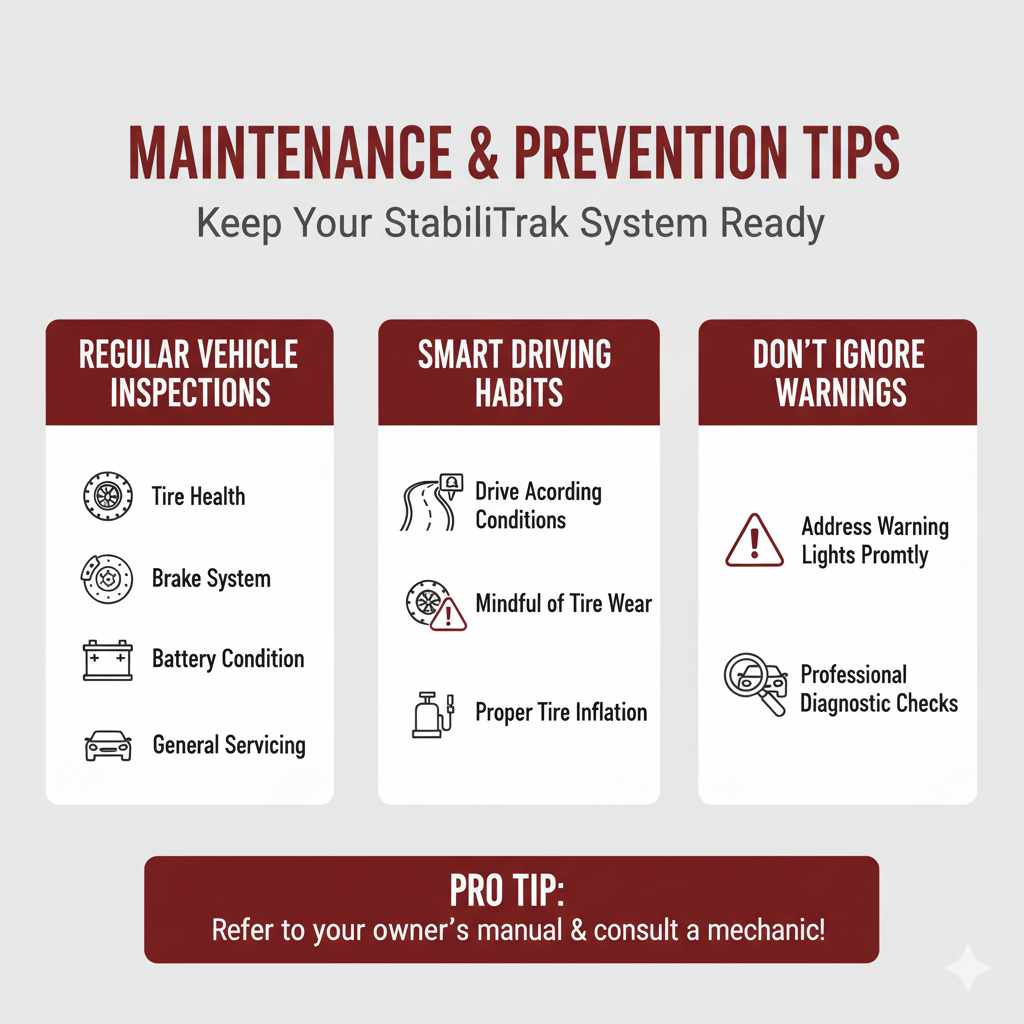
Maintenance and Prevention Tips
Keeping your StabiliTrak system in good working order isn’t complicated. Regular maintenance and being mindful of your vehicle’s needs can help prevent issues and ensure the system is ready when you need it.
Regular Vehicle Inspections
Just like any other part of your car, the systems that support StabiliTrak need to be checked periodically. This includes:
- Tire Health: Regularly check tire pressure, tread depth, and look for any signs of uneven wear. Proper tire inflation is crucial for all vehicle systems, especially those relying on wheel speed sensors. You can find great resources on tire maintenance at the National Highway Traffic Safety Administration (NHTSA).
- Brake System: Ensure your brake fluid is at the correct level and your brake pads and rotors are in good condition. Issues with the braking system can directly affect StabiliTrak and ABS functionality.
- Battery Condition: Have your battery tested annually, especially if it’s more than three years old. A healthy battery provides stable power to all electronic modules.
Driving Habits
Your driving habits play a role in how often your StabiliTrak system engages and how likely it is to encounter issues.
- Drive According to Conditions: Avoid aggressive driving, sudden braking, and sharp turns, especially on wet, icy, or gravelly roads.
- Be Mindful of Tire Wear: Worn tires have less grip, making it more likely for your StabiliTrak system to activate or for related sensors to detect issues.
- Maintain Proper Tire Inflation: As we’ve discussed, this is key. Always ensure your tires are inflated to the manufacturer’s recommended pressure.
Understanding Warning Lights
Don’t ignore warning lights! While some might be minor, others can indicate serious problems. If the StabiliTrak light stays on, it’s a signal to investigate. Prompt attention can often prevent minor issues from becoming major, costly repairs.
Professional Servicing
When you take your car in for regular maintenance, let your mechanic know if you’ve noticed any unusual behavior or if warning lights have been coming on. They can perform diagnostic checks on the StabiliTrak and ABS systems as part of their service.
For example, a mechanic might use a tool like an OBD-II scanner to check for fault codes. Reputable automotive repair chains often offer these checks, and you can find information about recommended service intervals in your owner’s manual or on manufacturer websites.
Frequently Asked Questions (FAQ)
What does the StabiliTrak light look like?
The StabiliTrak warning light typically looks like a car with wavy lines behind it, indicating a skid. It’s often found on the dashboard alongside other warning indicators.
Can I turn StabiliTrak off?
Yes, most vehicles equipped with StabiliTrak allow you to manually turn the system off. There is usually a button on the dashboard, often labeled “StabiliTrak” or with the same symbol as the warning light. However, it’s generally recommended to keep the system on for safety, especially in challenging driving conditions.
Does StabiliTrak affect my ABS?
StabiliTrak and the Anti-lock Braking System (ABS) are closely related and share many components, such as wheel speed sensors. If there’s an issue with your ABS, it will often trigger the StabiliTrak warning light, and vice-versa. A problem with one system can disable the other.
How much does it cost to fix a StabiliTrak warning light?
The cost can vary significantly depending on the cause. Simple issues like low tire pressure are free to fix. Replacing a wheel speed sensor might cost between $150-$300. More complex issues with the ABS module or steering angle sensor could range from $500 to over $1,000. A diagnostic check at a mechanic typically costs $100-$200.
What if my StabiliTrak light and Check Engine light are on at the same time?
If both the StabiliTrak and Check Engine lights are illuminated, it suggests a problem that affects both the engine management system and the stability control system. This often points to an issue with sensors that are shared between systems, such as the mass airflow sensor or throttle body. It’s important to have both issues diagnosed by a qualified mechanic promptly.
How long does it take for the StabiliTrak light to turn off after fixing the problem?
After the underlying issue is resolved, the StabiliTrak light should turn off automatically. In some cases, a mechanic may need to clear the error codes using a diagnostic scanner. If the light doesn’t turn off after a repair, it’s a good idea to have the mechanic re-check the system.
Conclusion
Navigating the dashboard warning lights in your vehicle can sometimes feel like deciphering a secret code, but understanding what they mean is crucial for safe and confident driving. The StabiliTrak warning light, in particular, is a sign from your car’s advanced safety system, designed to keep you in control when the road gets tricky.
Remember, a flashing light usually means StabiliTrak is actively working to help you, while a solid light typically indicates a malfunction that needs attention. Don’t let it stress you out! Start by checking your tire pressure, as this is a common and easy fix. If the light persists, or if you notice any other unusual behavior from your vehicle, it’s always best to consult a trusted mechanic. They have the tools and expertise to accurately diagnose and repair the issue, ensuring your StabiliTrak system is ready to protect you when you need it most.
By staying informed and proactive about your vehicle’s health, you can continue to enjoy smooth, safe journeys, knowing that you’re equipped to handle whatever the road throws your way. Safe travels!