What Size Should Outdoor Garage Lights Be: Essential Guide
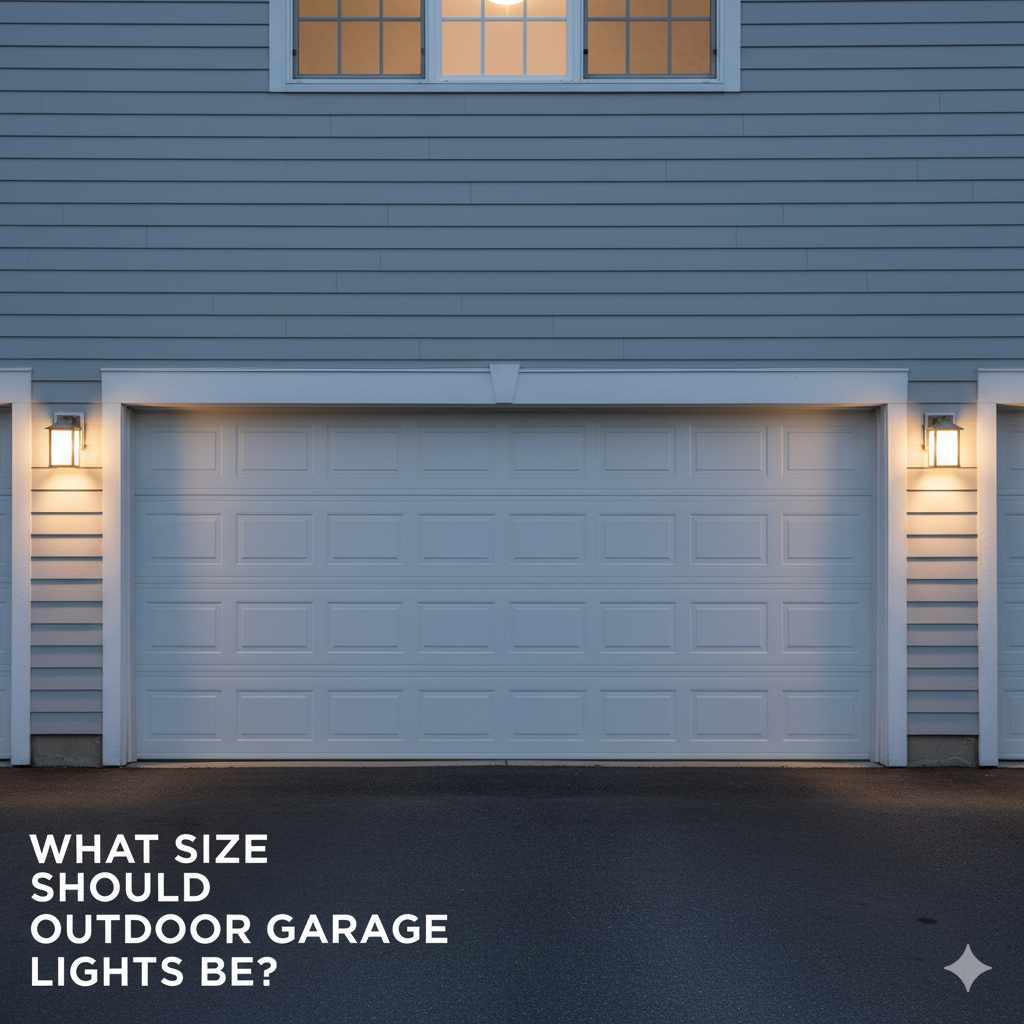
The right size for outdoor garage lights depends on your garage’s size, style, and desired illumination. Generally, aim for fixtures that are about one-third to one-quarter the height of your garage door. Consider the mounting height and the overall aesthetic to ensure balanced, functional lighting.
Hey there, fellow home improvers! Ever stood back and looked at your garage, thinking something just isn’t quite right with the lighting? You’re not alone. Picking the perfect size for outdoor garage lights can feel like a puzzle. Too small, and they look lost and don’t light up enough. Too big, and they can overpower your home’s look. It’s a common frustration, but don’t worry! I’m here to walk you through it, step-by-step. We’ll make sure your garage looks great and is safely lit, just like a pro job. Let’s get your garage shining!
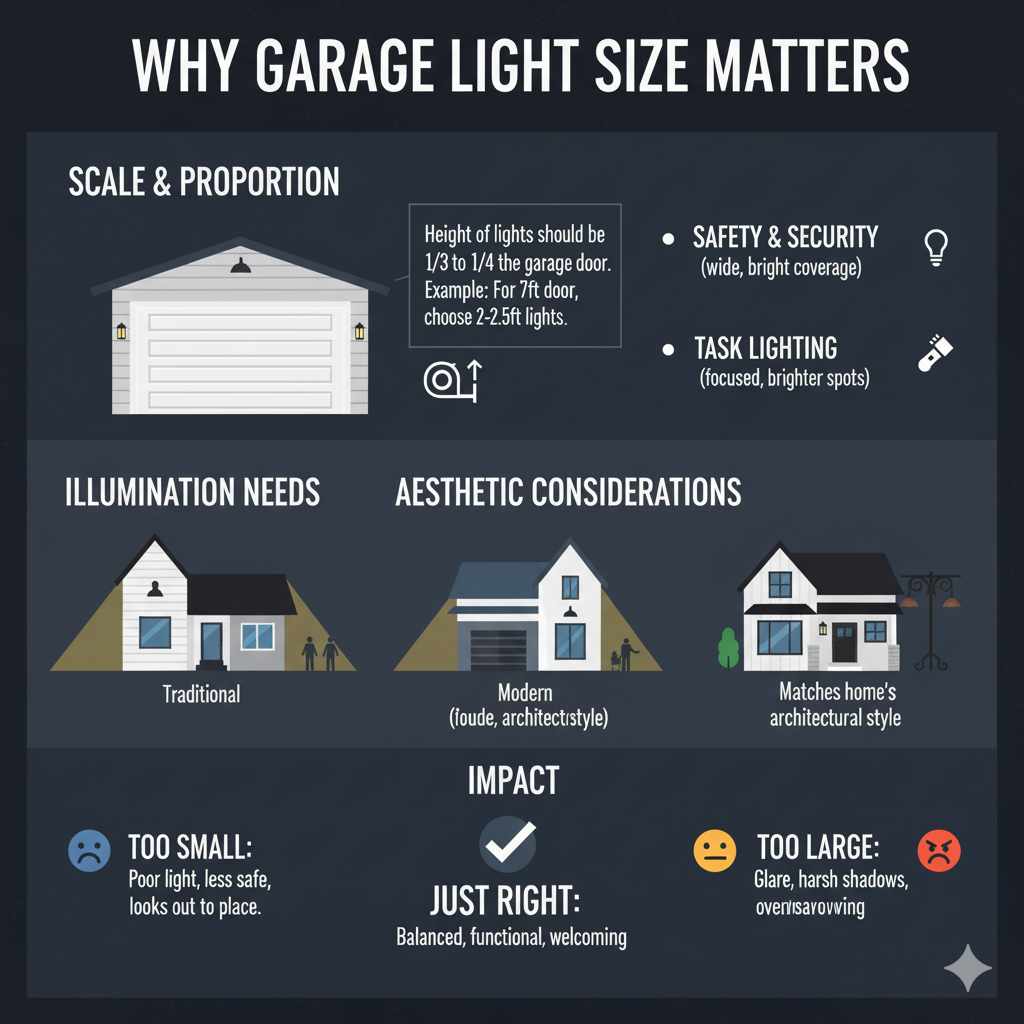
Why Garage Light Size Matters
Choosing the correct size for your outdoor garage lights is more than just an aesthetic choice; it’s a practical one that impacts safety, security, and the overall curb appeal of your home. Think of it like picking out a piece of furniture for a room – the scale has to be just right to make everything feel balanced and functional. When lights are too small, they can seem insignificant, failing to provide adequate illumination for tasks like parking your car, finding tools, or simply navigating the area at night. This lack of light can also be a deterrent to potential intruders, making your property less secure.
On the other hand, lights that are disproportionately large can look out of place, making your garage appear cluttered or even a bit imposing. They can also create harsh shadows or glare, which isn’t ideal for visibility. The goal is to find a size that complements your garage’s architecture, provides sufficient light where you need it, and enhances the welcoming feel of your home’s exterior. Getting this balance right makes a big difference!
The Role of Scale and Proportion
When we talk about scale and proportion in lighting, we’re essentially talking about how the size of the light fixture relates to the size of the area it’s illuminating and the surrounding architectural elements. For your garage, the most prominent feature is usually the garage door. This is your primary reference point. A good rule of thumb is to select light fixtures whose height is roughly one-third to one-quarter of the height of your garage door. This creates a visually pleasing relationship, where the lights are noticeable but don’t dominate the door itself.
Consider a standard two-car garage door that might be 7 feet tall. Following the one-third rule, you’d look for lights around 2 to 2.5 feet (24 to 30 inches) in height. If your garage door is taller, say 9 feet, then lights around 3 feet (36 inches) might be more appropriate. This proportional approach ensures that the lights feel integrated with the garage structure, not just tacked on.
Illumination Needs: Brightness and Coverage
Beyond just size, the intended purpose of your garage lighting plays a huge role. Are you looking for general safety lighting to deter prowlers and make your driveway visible? Or do you need task lighting for specific areas, like a workbench or the entrance to your home? The required brightness, often measured in lumens, will influence the type and number of fixtures you choose. For general security, a moderate level of brightness is usually sufficient, but if you plan on working in your garage at night, you’ll want brighter, more focused lights.
The coverage area is also critical. A single, small light might only illuminate a tiny spot, leaving large areas in darkness. You need to consider how many lights you’ll need and where to place them to ensure even illumination. This might mean placing lights on either side of the garage door, above it, or even on the eaves of the garage roof. The size of the fixture can also impact its light distribution; larger fixtures might house multiple bulbs or have wider shades, allowing for broader coverage.
Aesthetic Considerations: Matching Your Home’s Style
Your garage lights are part of your home’s overall exterior design. They should complement the architectural style of your house. For a traditional home, you might opt for classic lantern-style fixtures. A modern home might suit sleeker, more minimalist designs. The size of the light fixture should harmonize with this style.
For instance, a rustic farmhouse might look best with larger, wrought-iron style lanterns, while a minimalist contemporary home would be better served by slim, geometric fixtures. Even the material and finish of the lights – such as brushed nickel, oil-rubbed bronze, or black – should tie into your home’s existing palette. The size of the light needs to feel “right” for the style you’re aiming for. A tiny, modern fixture on a grand, traditional garage would look odd, and vice-versa.
Factors to Consider When Choosing Garage Light Size
Selecting the right size for your outdoor garage lights involves looking at several key elements. It’s not a one-size-fits-all situation. By carefully considering these factors, you can make an informed decision that leads to a lighting setup you’ll be happy with for years to come.
Garage Dimensions
The most straightforward factor is the physical size of your garage. A single-car garage will have different lighting needs and appropriate fixture sizes than a large, three-car garage or an attached structure. Larger garages often require larger or more numerous fixtures to provide adequate light coverage. For example, a single-car garage door might be 8-9 feet wide, while a double-car door is typically 16 feet wide. This difference in width and height directly impacts how large your lights should appear to be.
Height of Garage Door: As mentioned, this is a primary guide. A taller door can accommodate a larger fixture.
Width of Garage Door: The wider the door, the more you might consider placing lights further apart or using fixtures that offer a wider spread of light.
Overall Garage Height: The total height of the garage structure, not just the door, can influence the perceived scale of light fixtures. A very tall garage might need larger lights to avoid looking dwarfed.
Mounting Height and Location
Where you plan to mount the lights significantly impacts their perceived size and effectiveness. Lights mounted higher up on a wall or under an eave might need to be larger to be effective and visible, whereas lights mounted closer to eye level can be smaller. The ideal mounting height for security and visibility is typically between 6 and 8 feet from the ground. This height allows the light to spread effectively without being too close to cause glare or too far to be ineffective.
Consider the specific location:
- On either side of the garage door: This is a common and effective placement. The size of the light should be in proportion to the door and the wall space beside it.
- Above the garage door: A single light centered above the door can work, especially for smaller garages. The fixture’s size should be proportionate to the door’s width and height.
- On the garage eaves or soffits: Recessed or surface-mounted fixtures here offer a cleaner look but may need to be larger or more numerous to provide sufficient light.
- On a detached garage: Detached garages often benefit from slightly larger fixtures or those with a wider beam angle to cover more ground around the structure.
Architectural Style of Your Home
Your garage lights should blend seamlessly with the overall architectural style of your home. This ensures a cohesive and attractive exterior. Think about the existing design elements: are they traditional, modern, rustic, or something else? The size and style of the lights should complement these features.
Here’s a quick guide:
- Traditional/Colonial: Often suits classic lantern-style fixtures, which can range from medium to large, depending on the scale of the house.
- Craftsman/Arts & Crafts: Look for fixtures with clean lines, often featuring bronze or darker finishes, and a size that feels substantial but not overbearing.
- Modern/Contemporary: Sleek, minimalist designs, perhaps with geometric shapes or simple, linear forms. Size can vary, but proportionality is key – avoid overly ornate or bulky fixtures.
- Farmhouse/Rustic: Larger, more substantial fixtures, often with a distressed metal finish or a cage design, can work well.
Desired Lighting Effect
What do you want the lights to achieve? This is crucial for determining size and type. Do you need broad, ambient light for general visibility and security, or focused task lighting for specific activities?
- General Security Lighting: You’ll want fixtures that cast a good amount of light over a wide area. The size of the fixture can contribute to this by housing larger bulbs or having a wider shade.
- Task Lighting: If you plan to work in your garage, you might need brighter lights. These could be larger fixtures, or you might supplement smaller decorative lights with functional, perhaps larger, work lights.
- Accent Lighting: Smaller, more decorative lights might be used to highlight architectural features, while larger fixtures provide the primary illumination.
Lumens and Light Spread
While size is a primary concern, the light output (lumens) and how the light spreads are equally important. A large fixture with a low-lumen bulb might be less effective than a smaller fixture with a high-lumen LED. Understanding lumens helps you gauge brightness. For general garage lighting, around 800-1600 lumens per fixture is a good starting point, but this can vary greatly.
The design of the fixture’s shade or lens also dictates light spread:
- Downward-facing shades: Direct light downwards, ideal for illuminating walkways and driveways without causing glare.
- Upward-facing shades: Can create a softer, more ambient light but might be less effective for direct illumination.
- Open-design or cage fixtures: Often allow light to spread more freely in multiple directions.
The size of the fixture often dictates the maximum bulb wattage or type it can accommodate, which in turn influences lumen output and spread. A larger fixture can typically house a more powerful bulb or a more complex reflector system for better light distribution.
General Sizing Guidelines by Garage Type
To make things even clearer, let’s break down some general sizing recommendations based on common garage setups. These are starting points, and you should always adjust based on your specific situation and preferences.
Single-Car Garage
For a single-car garage, the focus is usually on adequate lighting for one vehicle and pedestrian access. You don’t want lights that overpower the smaller structure.
- Garage Door Height: Typically 7-8 feet.
- Fixture Height Recommendation: Look for lights around 12-18 inches in height.
- Placement: One fixture centered above the door, or one on each side of the door, placed about one-third to one-half the height of the door from the ground.
- Style: Smaller lanterns, sconces, or minimalist fixtures work well.
Two-Car Garage
This is the most common garage size, and it offers more flexibility in lighting choices. Proportionality becomes more important here.
- Garage Door Height: Typically 7-8 feet.
- Fixture Height Recommendation: Aim for lights around 18-24 inches in height.
- Placement: Typically, one fixture on each side of the garage door, mounted at about one-third to one-half the height of the door. You could also use two smaller fixtures above the door if space allows.
- Style: A wider range of styles is suitable, from classic lanterns to modern sconces.
Three-Car or Larger Garage
Larger garages require more substantial lighting to ensure adequate coverage and maintain visual balance.
- Garage Door Height: Can vary significantly, often 8 feet or more.
- Fixture Height Recommendation: Consider fixtures in the 24-36 inch range, or even larger for very tall doors.
- Placement: Multiple fixtures are usually necessary. Place them on either side of each garage door, or consider a row of lights along the eaves. Mounting height should still be considered proportionally.
- Style: Larger, more robust fixtures are appropriate. Think statement pieces that match the scale of the garage.
Detached Garage / Workshop
Detached garages, especially those used as workshops, often need more robust lighting for safety and functionality.
- Garage Door Height: Varies widely.
- Fixture Height Recommendation: Generally, lean towards larger fixtures (24 inches and up) to provide ample light.
- Placement: Lights on both sides of the door, and potentially additional lighting under eaves or on the side walls for better coverage. Consider task lighting inside.
- Style: Durability and function might be prioritized, but aesthetics still matter. Industrial or utilitarian styles often fit well.
How to Measure and Select the Right Size
Taking accurate measurements and understanding how to apply them is key to selecting the perfect garage light size. Don’t just guess; measure twice, buy once!
Step-by-Step Measurement Guide
- Measure Your Garage Door Height: Start at the bottom of the garage door frame and measure straight up to the top of the frame. This is your primary measurement.
- Measure Your Garage Door Width: Measure the width of the garage door itself. This helps in deciding if you need one central light or multiple lights spaced out.
- Measure Mounting Area Height: If you plan to mount lights on the wall beside the door, measure the vertical space available from where the light will be mounted down to the ground. This helps determine the maximum fixture height that will look balanced.
- Consider Overall Garage Dimensions: Look at the entire facade of your garage. How does the door relate to the roofline, window placement, and overall width? This gives you context for the scale of the lights.
Using the “One-Third Rule”
The “one-third rule” is a great starting point for fixture height relative to garage door height. If your garage door is 8 feet (96 inches) tall, then one-third of that is 32 inches. So, you’d look for fixtures around 32 inches in height. If the door is 7 feet (84 inches) tall, one-third is 28 inches. This rule ensures visual harmony.
Using the “One-Quarter Rule”
The “one-quarter rule” offers a slightly more conservative approach, resulting in smaller fixtures that might be better for smaller garages or when you want the lights to be less dominant.
For an 8-foot (96-inch) garage door, one-quarter is 24 inches. For a 7-foot (84-inch) door, one-quarter is 21 inches. This is a good option if you feel the one-third rule results in fixtures that are too large for your preference or home style.
Visualizing the Size
Once you have a size range in mind (e.g., 18-24 inches tall), it helps to visualize it. You can:
- Use painter’s tape: Mark out the dimensions of potential fixtures on your garage wall. This gives you a real-world sense of scale.
- Look at examples online: Search for images of garages similar in size and style to yours with outdoor lighting. Pay attention to the fixture sizes.
- Consider the fixture’s width and depth: A tall, slender fixture has a different visual weight than a short, wide one. Ensure the overall presence feels right.
Where to Find Reliable Sizing Information
When shopping for lights, look for detailed specifications. Reputable lighting manufacturers and retailers will provide:
- Height: The overall height of the fixture.
- Width/Diameter: The widest measurement of the fixture.
- Extension: How far the light projects from the wall.
- Mounting Plate Dimensions: The size of the base that attaches to the wall.
Always compare these dimensions to your measurements and the rules of thumb discussed. Websites like the U.S. Department of Energy offer great resources on efficient and effective home lighting, which can indirectly inform your decisions about fixture type and output.
Common Pitfalls to Avoid
Even with the best intentions, it’s easy to make mistakes when choosing garage light sizes. Being aware of these common pitfalls can save you time, money, and frustration.
1. Ignoring Proportionality
This is the most common mistake. People buy lights they like the look of without considering how they relate to the garage door or house. A tiny fixture on a large garage looks lost, and a massive fixture on a small garage looks awkward. Always measure your garage door and use the rules of thumb.
2. Overlooking Mounting Height
Where you mount the light matters. A fixture that looks great at 6 feet might be too low or too high at 8 feet. Ensure the placement complements the fixture’s size and provides the right light spread. Lights mounted too low can be a glare hazard; too high, and they may not illuminate effectively.
3. Focusing Only on Style, Not Function
A beautiful light is only good if it also does its job. Don’t pick a fixture solely because it matches your home’s decor if it doesn’t provide adequate light for safety and visibility. Consider the lumen output and the direction of the light.
4. Underestimating the Need for Multiple Lights
For wider garages, especially double-wide doors, one light is rarely enough. You need balanced illumination. Relying on a single, albeit large, fixture can lead to dark spots and uneven lighting.
5. Not Considering the Bulb Type and Wattage
A fixture’s size often dictates the bulb it can take. A large fixture might be wasted if it only accommodates a low-wattage incandescent bulb. Opting for LED bulbs in appropriate sizes will provide more lumens and energy efficiency. Always check the maximum wattage or equivalent LED bulb the fixture supports.
6. Forgetting About Weather Resistance
Outdoor lights are exposed to the elements. Ensure the fixture you choose is rated for outdoor use and is constructed from durable materials that can withstand rain, snow, sun, and temperature changes. Fixture size doesn’t directly relate to weather resistance, but it’s a critical practical consideration.
Table: Garage Light Size Guide (Approximate Recommendations)
This table provides a quick reference for fixture height based on common garage door dimensions. Remember, these are guidelines, and personal preference and architectural style play a significant role.
| Garage Door Height | Recommended Fixture Height (Approximate) | Rule of Thumb Used |
|---|---|---|
| 7 feet (84 inches) | 18 – 28 inches | 1/3 to 1/4 rule |
| 8 feet (96 inches) | 24 – 32 inches | 1/3 to 1/4 rule |
| 9 feet (108 inches) | 27 – 36 inches | 1/3 to 1/4 rule |
| 10 feet (120 inches) | 30 – 40 inches | 1/3 to 1/4 rule |
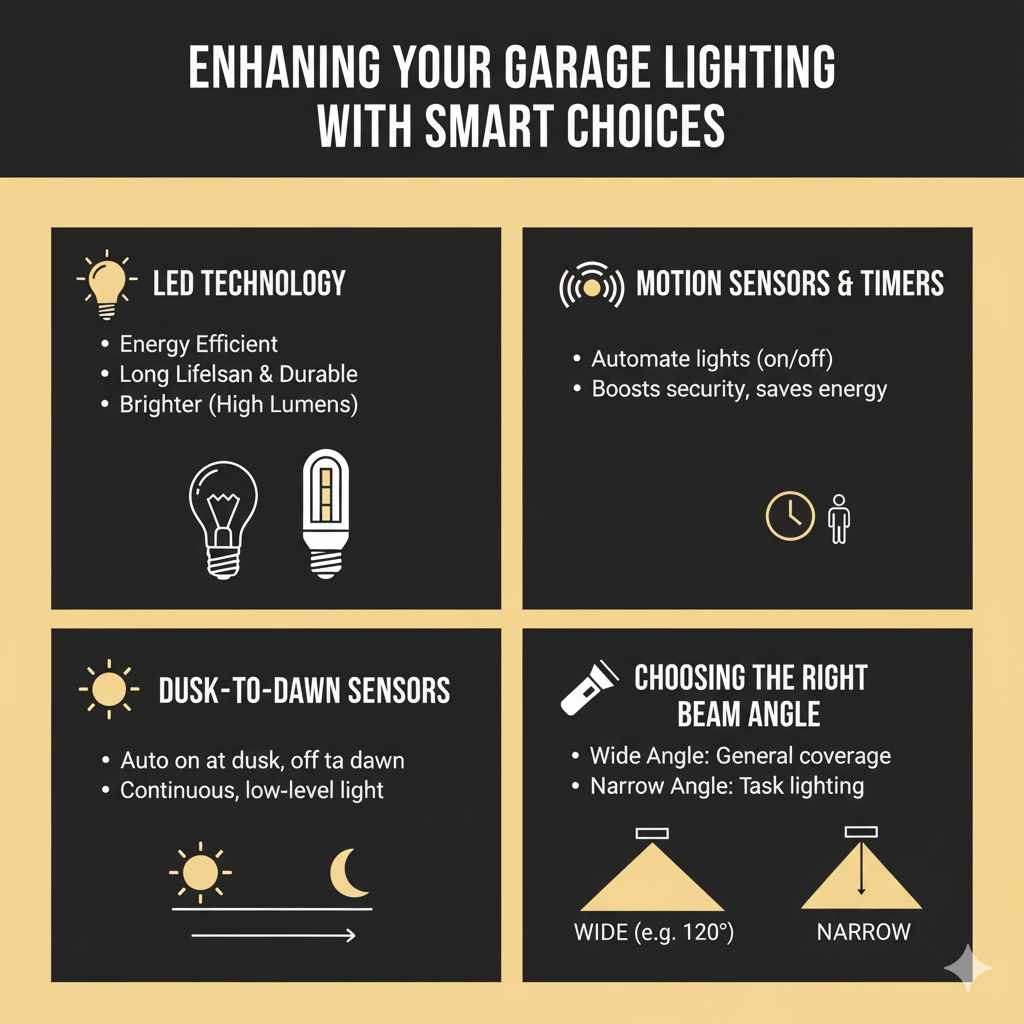
Enhancing Your Garage Lighting with Smart Choices
Beyond just the size, modern lighting offers features that can significantly improve the functionality and efficiency of your garage illumination. Integrating these can make a big difference.
LED Technology
LED (Light Emitting Diode) bulbs are a fantastic upgrade. They use significantly less energy than traditional incandescent bulbs, last much longer, and produce less heat. This makes them ideal for outdoor fixtures. When selecting a fixture, ensure it’s compatible with LED bulbs, or consider fixtures that come with integrated LEDs. The brightness (lumens) of an LED bulb is often higher for its size compared to older technologies, meaning you can achieve excellent illumination without necessarily needing the largest fixtures.
Motion Sensors and Timers
Adding motion sensors or timers to your garage lights is a smart move for both security and energy savings. Motion-activated lights can deter potential intruders by startling them and alerting you to their presence. They also ensure that lights are only on when needed, saving electricity. Timers can be programmed to turn lights on and off at specific times, mimicking occupancy even when you’re away.
Many modern outdoor light fixtures come with integrated motion sensors, or you can purchase them as separate add-ons. This technology works best when the light’s size and placement allow for optimal coverage of the area you want to monitor.
Dusk-to-Dawn Sensors
These sensors automatically turn lights on when the ambient light level drops below a certain point (dusk) and turn them off when it rises above that point (dawn). This provides continuous, low-level illumination throughout the night, enhancing safety and security without requiring manual adjustment. Like motion sensors, they can be integrated into fixtures or added separately.
Choosing the Right Beam Angle
The beam angle of a light refers to how concentrated or spread out the light beam is. For general garage lighting, a wider beam angle (e.g., 120 degrees or more) is often preferred to cover a larger area evenly. For task lighting, a narrower, more focused beam might be better. The size and design of the fixture can influence the achievable beam angle.
A fixture with a deep, reflective housing might create a more focused beam, while a fixture with a frosted globe or open design will diffuse the light more broadly. Understanding this helps ensure the light from your chosen fixture size is directed effectively.
Frequently Asked Questions (FAQ)
Q1: What is the most common mistake people make when choosing garage light size?
A1: The most common mistake is ignoring proportionality. People often choose lights based solely on personal preference without considering how the fixture’s size relates to the garage door and overall house architecture. This can lead to lights looking too small and insignificant or too large and overpowering.
Q2: Can I use the same size lights for a single-car and a double-car garage?
A2: Generally, no. A double-car garage is significantly wider and often taller than a single-car garage. You’ll typically need larger fixtures or more fixtures for a double-car garage to achieve adequate and balanced illumination. A single-car garage can often be well-lit with smaller or fewer lights.
Q3: How high should I mount my garage lights?
A3: A good general rule is to mount lights between 6 and 8 feet from the ground. This height allows for effective light distribution without causing excessive glare. The optimal height also depends on the fixture’s design and the desired coverage area.
Q4: Should I choose lights that are wider or taller?
A4: For fixtures mounted on either side of a garage door, the height is often the most critical dimension for proportionality, typically aligning with the one-third or one-quarter rule of the door’s height. The width should be proportionate to the available wall space and the fixture’s height. Avoid fixtures that are disproportionately wide compared to their height, unless the architectural style specifically calls for it.
Q5: Do LED lights affect the size of garage lights I should choose?
A5: LED technology allows for brighter light output (lumens) from smaller bulbs. This means you might be able to achieve the desired brightness with a slightly smaller fixture than you would with older incandescent bulbs. However, the fixture’s size still needs to be proportionate to the garage itself for aesthetic balance.
Q6: How do I know if a light fixture is large enough for my garage?
A6: Measure your garage door height and use the one-third or one-quarter rule to determine a target fixture height. Also, consider the width and depth of the fixture and how it will look on your garage wall. Visualizing with painter’s tape or looking at online examples of similar garages can help confirm if a size feels right.
Q7: What does “extension” mean for an outdoor light fixture, and why is it important?
A7: Extension refers to how far the light fixture projects out from the wall. This is important because a fixture that extends too far can be a hazard, especially in walkways, and can also create harsh shadows. For garage lights, a moderate extension (usually 6-12 inches) is typically preferred to ensure safety and proper light direction.
Conclusion
Choosing the right size for your outdoor garage lights is all about achieving a harmonious balance between aesthetics and functionality. By considering your garage’s dimensions, the mounting height, your home’s architectural style, and your specific lighting needs, you can confidently select fixtures that not only look great but also provide the necessary illumination for safety and security. Remember the general guidelines, like the one-third rule, but don’t be afraid to use visual aids and consider modern features like LEDs and sensors to enhance your lighting setup. With a little planning and attention to detail, you can make your garage exterior both beautiful and brilliantly lit.