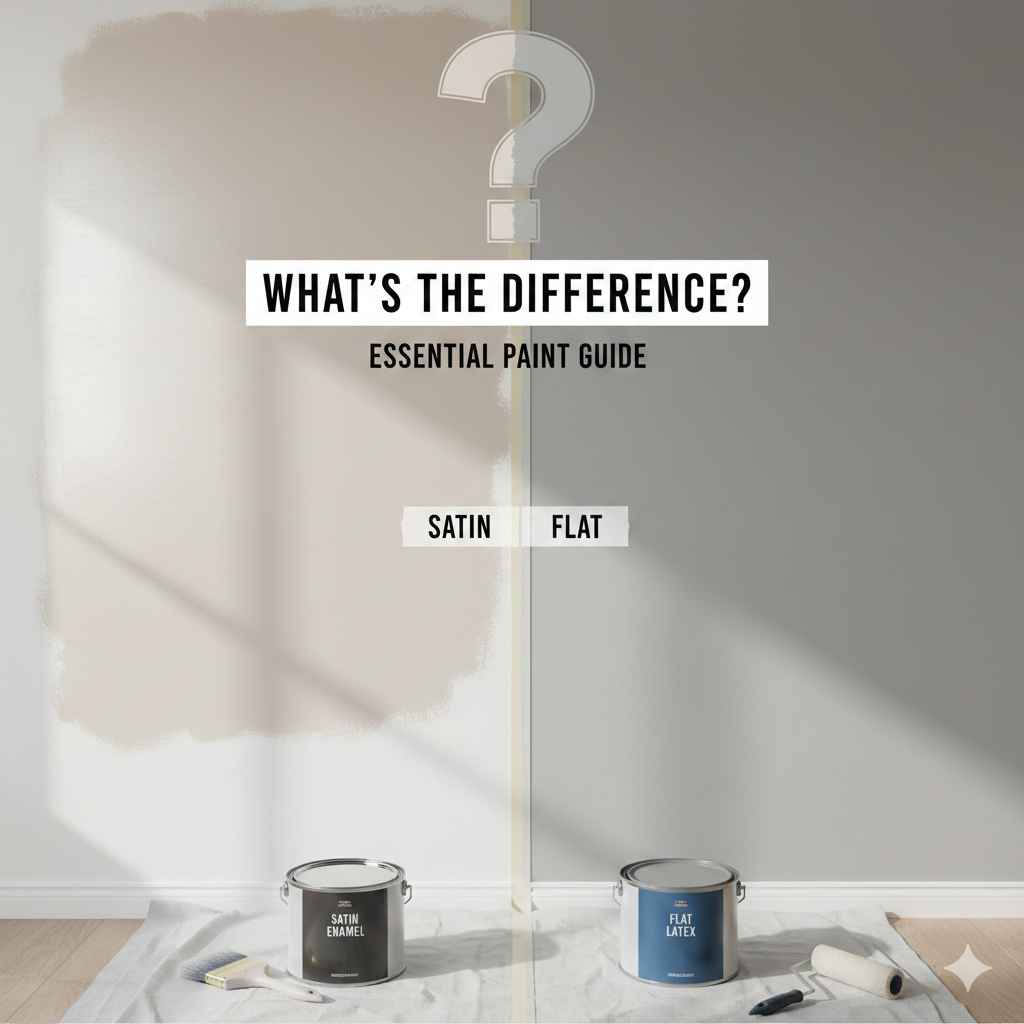
What’s The Difference Between Satin And Flat Paint Essential
The main difference between satin and flat paint is sheen and durability. Flat paint has a matte, non-reflective finish that excels at hiding wall imperfections but is difficult to clean. Satin paint offers a soft, velvety glow that is much more durable and easier to wipe down, making it ideal for high-traffic areas like hallways and kitchens.
Hello friend! Md Meraj here. If you’ve ever stood in the paint aisle staring at a wall of color chips, you know the first choice isn’t the color—it’s the finish. You see words like “flat,” “satin,” “eggshell,” and “semi-gloss,” and suddenly, a simple project feels complicated. It’s a common hurdle, but I promise it’s easier than it looks. Choosing the right paint finish is one of the most important steps for a lasting, beautiful result. In this guide, we’ll break down the difference between the two most popular choices, satin and flat, so you can pick the perfect paint for your project with confidence. Let’s get you ready to paint!
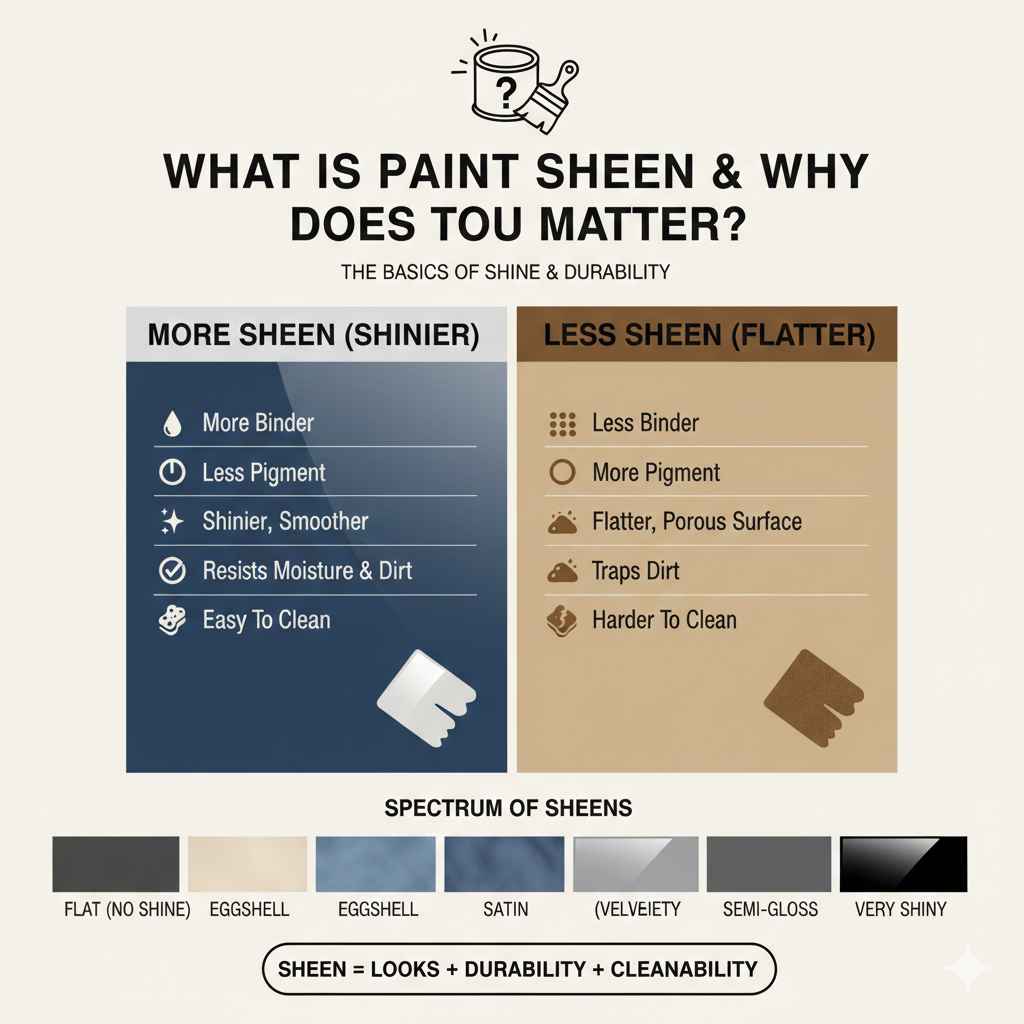
What is Paint Sheen and Why Does It Matter?
Before we dive into satin versus flat, let’s quickly cover the basic idea of “sheen.” Think of it as the shininess of the paint once it dries. The amount of sheen affects not just how the paint looks, but also how durable and easy to clean it is. Paint is made of pigments (for color), binders (that hold it together), and solvents (that evaporate as it dries). The key difference in sheens comes down to the ratio of pigment to binder.
- More Binder, Less Pigment = More Sheen (Shinier): Paints with a higher concentration of binders are shinier, smoother, and more resilient. They create a harder, less porous surface that resists moisture and is easy to wipe clean. This is why high-gloss paints are so durable.
- Less Binder, More Pigment = Less Sheen (Flatter): Paints with more pigment particles and less binder have a rougher, more porous surface. This is what gives flat paint its non-reflective, matte look. While beautiful, this surface traps dirt and is more susceptible to scuffs.
The spectrum of paint sheens generally runs from no shine to very shiny:
- Flat (or Matte): No shine.
- Eggshell: A tiny bit of shine, like a chicken’s egg.
- Satin: A soft, velvety sheen.
- Semi-Gloss: Noticeably shiny and reflective.
- High-Gloss: Very shiny, almost like plastic or enamel.
Understanding this simple principle is the key to everything else. Now, let’s get into the details of our two main contenders.
A Closer Look at Flat Paint
Flat paint is the most non-reflective finish you can buy. It’s often called a “matte” finish. Its purpose is to soak up light rather than reflect it, which creates a very uniform, soft look on your walls. This lack of reflection is its greatest strength and its most significant weakness.
The Pros of Flat Paint
- Hides Imperfections Flawlessly: This is the number one reason to choose flat paint. Because it doesn’t reflect light, it’s incredibly forgiving. It can hide small bumps, dings, patched areas, and other minor flaws on your drywall. If you have an older home with less-than-perfect walls, flat paint is your best friend.
- Creates a Rich, Deep Color: The porous, pigment-heavy nature of flat paint gives colors a deep, velvety richness. The color looks uniform from every angle because there’s no glare to distract your eye. This makes it perfect for creating a sophisticated, modern look in spaces like dining rooms or master bedrooms.
- Easy for Touch-Ups: Since there’s no sheen to worry about matching, touching up scuffs on a flat wall is usually seamless. You can dab a little paint on a mark, and once it dries, it often blends in perfectly with the surrounding area.
The Cons of Flat Paint
- Difficult to Clean: This is the biggest drawback. The same porous texture that hides flaws also grabs onto dirt, dust, and grime. Trying to scrub a mark on a flat wall will often remove the paint itself or leave a burnished, shiny spot behind. It’s not a “washable” finish in the traditional sense.
- Low Durability: Flat paint is not very tough. It scuffs, scratches, and marks easily. Even brushing against it with a handbag or a vacuum cleaner can leave a permanent mark. This makes it a poor choice for high-traffic areas.
- Absorbs Moisture: Because it’s so porous, flat paint can absorb moisture, making it unsuitable for bathrooms, kitchens, or laundry rooms where humidity is high. It can lead to mildew or water stains over time.
Where Should You Use Flat Paint?
Flat paint shines (figuratively, of course!) in low-traffic areas where appearance is more important than durability.
- Ceilings: This is the most common use for flat paint. Ceilings often have imperfections, and you don’t want any glare from lights reflecting off them. Flat white ceiling paint is a standard for a reason.
- Adult Bedrooms: In a master bedroom or guest room where the walls are unlikely to get scuffed, flat paint provides a serene and elegant feel.
- Formal Living and Dining Rooms: For spaces that are used less frequently and where you want to create a sophisticated atmosphere, flat paint is an excellent choice.
- Home Offices: A home office that doesn’t see a lot of physical traffic can benefit from the calm, non-distracting finish of flat paint.
A Closer Look at Satin Paint
Satin paint is arguably the most popular and versatile paint finish available today. It strikes a beautiful balance between the soft look of a lower-sheen paint and the durability of a higher-sheen one. As its name suggests, it has a smooth, velvety finish that offers a soft glow when light hits it, much like satin fabric.
The Pros of Satin Paint
- Excellent Durability: Satin paint is tough. It stands up well to daily wear and tear, including bumps, scuffs, and rubbing. This makes it a workhorse for the busiest parts of your home.
- Easy to Clean: This is a major advantage over flat paint. The smoother surface of satin paint prevents dirt from settling in. Most smudges, fingerprints, and marks can be easily wiped away with a damp cloth and a little mild soap, without damaging the finish.
- Beautiful, Soft Sheen: The gentle glow of satin adds a bit of life and dimension to your walls without being overly shiny or distracting. It gives colors depth and can make a room feel a little brighter and more spacious.
- Moisture Resistant: Satin paint holds up well to humidity, making it a great choice for kitchens and bathrooms where moisture is a constant concern.
The Cons of Satin Paint
- Shows Imperfections: That lovely sheen has a downside—it can highlight bumps, roller marks, and poorly patched spots on your walls. It’s not as forgiving as flat paint, so proper wall preparation is crucial for a great-looking result.
- Touch-Ups Can Be Tricky: Touching up a satin wall is harder than a flat one. Because of the sheen, the new paint can flash (appear as a noticeably different texture or shine) if not applied perfectly. It’s often better to repaint an entire section of the wall, from corner to corner, for a seamless look.
Where Should You Use Satin Paint?
Satin paint is your go-to for almost any room in the house, especially those that see a lot of activity.
- Hallways and Entryways: These are the busiest thoroughfares in your home. Satin’s durability will resist the scuffs from bags, shoes, and people passing through.
- Kids’ Bedrooms and Playrooms: Where there are kids, there are fingerprints and crayon marks. The washability of satin paint is a lifesaver in these spaces.
- Kitchens and Dining Areas: From spaghetti sauce splatters to greasy fingerprints, kitchen walls need to be scrubbable. Satin is the perfect choice.
- Bathrooms and Laundry Rooms: Its moisture resistance helps prevent issues with humidity and makes it easy to wipe down condensation.
- Living Rooms and Family Rooms: For the central hub of your home, satin provides the right mix of a beautiful look and the toughness needed to handle daily life.
Satin vs. Flat Paint: A Side-by-Side Comparison
Sometimes the easiest way to decide is to see the features lined up next to each other. Here’s a quick table to help you compare at a glance.
| Feature | Flat Paint | Satin Paint |
|---|---|---|
| Appearance / Sheen | Completely non-reflective, matte finish. | Soft, velvety glow with a slight sheen. |
| Durability | Low. Scuffs and scratches easily. | High. Resists scuffs, stains, and wear. |
| Cleanability | Difficult. Wiping can damage the paint. | Easy. Most marks wipe away with a damp cloth. |
| Hiding Imperfections | Excellent. Hides bumps, cracks, and patches. | Fair. Can highlight imperfections due to its sheen. |
| Touch-Up Ease | Very easy. Blends seamlessly. | Difficult. Can “flash” and may require repainting a full section. |
| Best For… | Ceilings, adult bedrooms, formal living rooms. | Hallways, kitchens, bathrooms, kids’ rooms, family rooms. |
How to Choose the Right Paint for Your Project
Still on the fence? Let’s walk through a few simple questions to help you make the final call.
1. How will the room be used?
This is the most important question. If you’re painting a room that gets a lot of daily traffic—a hallway, family room, or kitchen—you need durability and washability. Satin is the clear winner here. If it’s a quiet, low-traffic space like a formal dining room or an adult bedroom, you can prioritize appearance over toughness. Flat paint would be a great choice.
2. What condition are your walls in?
Take a close, honest look at your walls. Run your hand over them. Are they smooth as glass, or do they have a history of patches, dings, and uneven texture? If your walls have seen better days, flat paint will be your most forgiving option, hiding those flaws beautifully. If your walls are in great shape or you’re willing to put in the prep work to make them smooth, satin will give you a lovely, glowing finish.
3. What’s your lifestyle like?
Do you have kids, pets, or frequent guests? If your home is a hub of activity, your walls are going to need to withstand a lot. Sticky fingers, muddy paws, and clumsy visitors are all part of life. In this case, the easy-to-clean nature of satin paint is practically a necessity. If you live in a quiet, adults-only household, you can get away with the more delicate finish of flat paint.
Tips for Applying Flat and Satin Paint
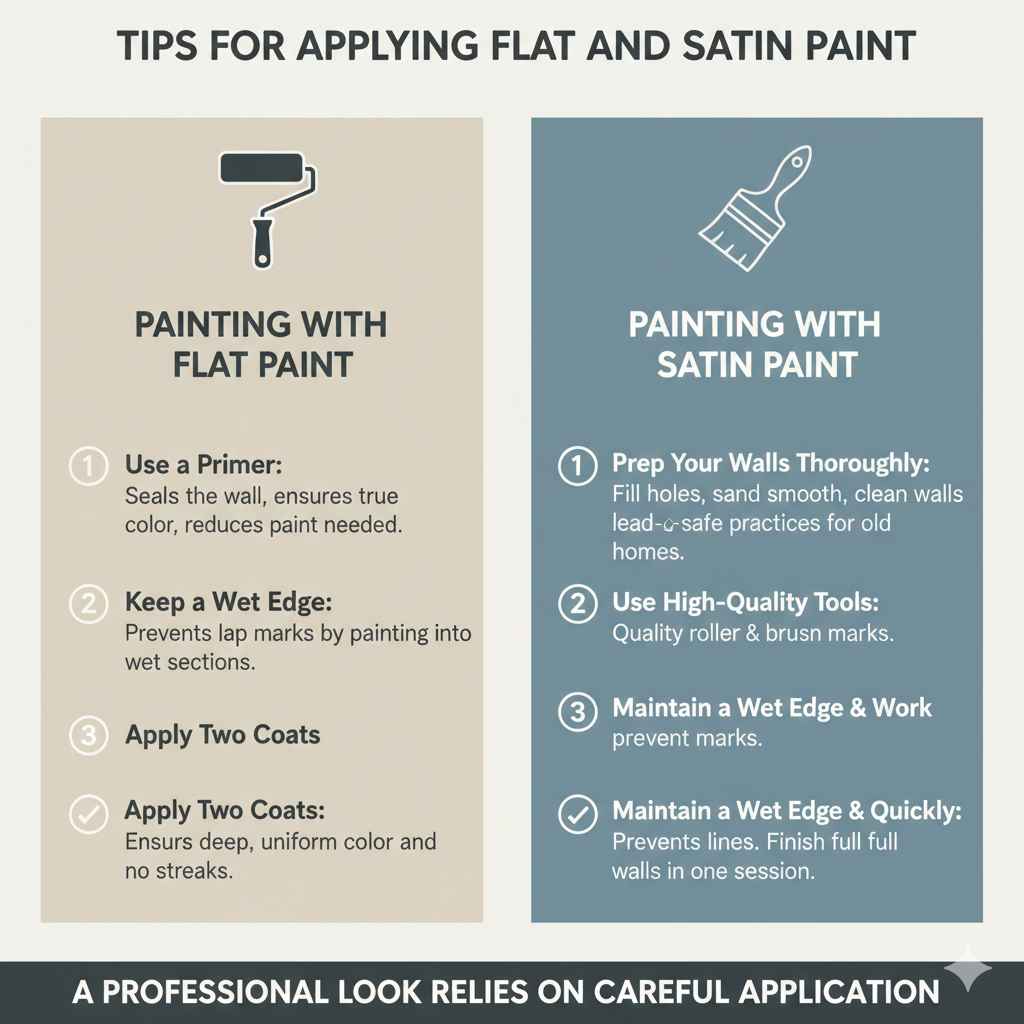
Once you’ve made your choice, a great application is key to a professional-looking result. Here are a few tips for working with each finish.
Painting with Flat Paint
Because flat paint is so forgiving, the application is generally straightforward. However, to get that rich, even color, you should still follow good painting practices.
- Use a Primer: A good quality primer will seal the wall, ensure your color is true, and help you use less paint.
- Keep a Wet Edge: This means you should always paint from an unpainted section back into the last section you just painted, while it’s still wet. This prevents “lap marks,” which are visible lines where your roller strokes overlapped.
- Apply Two Coats: Even with a primer, a second coat of flat paint ensures a deep, uniform color without any streaks or light spots.
Painting with Satin Paint
Satin paint requires a bit more care during application because its sheen can betray sloppy work.
- Prep Your Walls Thoroughly: This is non-negotiable. Fill any holes or cracks with spackle, then sand them smooth. Clean the walls with a mild detergent or TSP substitute to remove any grease or grime. If you’re painting an older home, be sure to follow the EPA’s guidelines for lead-safe practices.
- Use High-Quality Tools: A good quality roller cover (with the correct nap for your wall texture) and a quality brush will make a huge difference in avoiding roller marks and brush strokes.
- Maintain a Wet Edge and Work Quickly: Just like with flat paint, a wet edge is crucial, but even more so with satin. Try to paint a full wall in one session without stopping in the middle, as this can create a visible line where the paint started to dry.
Frequently Asked Questions (FAQ)
Can I paint satin over flat paint?
Yes, you absolutely can! In fact, it’s a very common project. Because flat paint is porous, it provides a great surface for the new paint to adhere to. You generally don’t need to prime the wall, but you should always clean it thoroughly to remove any dust or dirt before you start painting with your satin finish.
Is satin paint very shiny?
No, satin paint is not considered very shiny. It has a low-to-medium sheen that is best described as a soft, velvety glow. It’s much less reflective than semi-gloss or high-gloss finishes, which are noticeably shiny. Satin offers a subtle radiance that adds depth without creating a harsh glare.
Which is better for a bathroom: satin or flat?
Satin is by far the better choice for a bathroom. The moisture resistance of satin paint is essential for handling the high humidity from showers and baths. Flat paint will absorb moisture, which can lead to staining, peeling, and mildew growth over time. Always use at least a satin finish in a bathroom.
Does flat paint scuff easily?
Yes, this is one of the main weaknesses of flat paint. Its porous, matte surface is not very durable and can be easily scuffed, marked, or scratched. This is why it is only recommended for very low-traffic areas like ceilings and formal living rooms.
Is satin paint more expensive than flat paint?
Generally, yes. As you go up the sheen spectrum, the price of the paint tends to increase slightly. This is because the formulas for higher-sheen paints contain more acrylic binders, which are more costly ingredients than the pigment fillers used in flat paint. However, the price difference per gallon is usually small and well worth it for the added durability.
Can I use satin paint on my ceiling?
You can, but it’s not usually recommended. The sheen of satin paint will reflect light and can highlight every bump and imperfection on your ceiling. Flat paint is the industry standard for ceilings because its non-reflective nature provides a smooth, uniform appearance and hides flaws effectively.
How do I clean a wall painted with satin finish?
Cleaning a satin-painted wall is simple. For most scuffs and marks, use a soft sponge or cloth with a little warm water and a drop of mild dish soap. Gently wipe the area in a circular motion. Rinse the soap off with a clean, damp cloth, and then pat the area dry. Avoid using abrasive cleaners or hard-bristled scrubbers, as they can dull the finish.
Conclusion: The Right Finish for a Perfect Project
So, what’s the final verdict in the battle of satin vs. flat paint? The truth is, there’s no single winner. Both are excellent choices, but for very different reasons and for very different spaces.
Think of it this way:
- Choose flat paint when your priority is hiding wall imperfections and achieving a rich, sophisticated look in a low-traffic area. It’s the artist’s choice for serene spaces.
- Choose satin paint when your priority is durability and washability for the busy, high-traffic parts of your home where life actually happens. It’s the practical choice for a beautiful, long-lasting finish.
By considering the purpose of your room, the condition of your walls, and your family’s lifestyle, you can move past the confusion in the paint aisle and pick your finish with total confidence. You’ve got this! Now go grab that roller and transform your space.