What’s The Difference Between Sequoia And Redwood Tree: Proven Guide
Sequoia and Redwood trees are giants of the forest, often confused due to their immense size and reddish bark. While both are magnificent conifers native to California, they belong to different genera and possess distinct characteristics in terms of size, bark, cones, and habitat. Understanding these differences is key for anyone appreciating these natural wonders or working with their timber.
Ever stood beneath a towering tree and wondered if it was a Sequoia or a Redwood? It’s a common question! These colossal trees are California’s iconic giants, and while they share a family resemblance, they’re actually quite different. Mistaking them can happen because their names are often used interchangeably, but for us woodworkers, knowing the specifics can be fascinating, especially when we consider their timber. Don’t worry, by the end of this guide, you’ll be able to tell them apart with confidence. We’ll break down their unique features in a way that’s easy to grasp, so you can appreciate these natural marvels even more. Let’s get started on uncovering the secrets of these magnificent trees!
Sequoia vs. Redwood: A Woodworker’s Quick Guide
For those of us who love working with wood, understanding the nuances between different tree species is part of the craft. When it comes to the giants of California, the terms “Sequoia” and “Redwood” can be a bit confusing. Both are incredibly impressive, but they are, in fact, distinct. This guide is designed to clearly lay out what makes them different, focusing on aspects that might be of interest to a woodworker, from their sheer size to the properties of their wood.
What’s The Difference Between A Sequoia And A Redwood Tree?
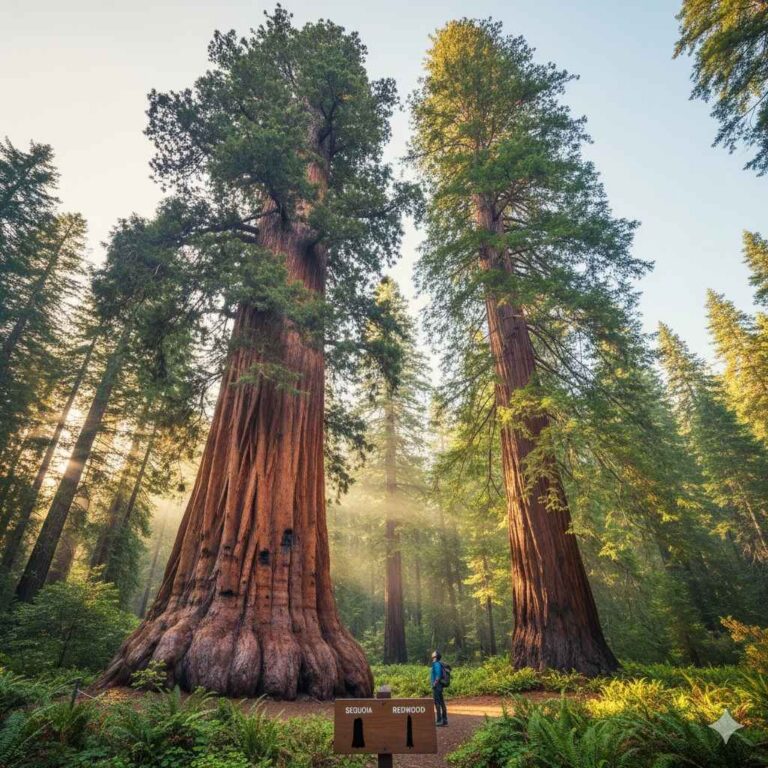
At a glance, both trees are massive, reddish-brown, and command awe. However, they are distinct species, each with its own unique characteristics. The most prominent differences lie in their ultimate size, the texture and thickness of their bark, the size and shape of their cones, and their preferred growing environments. Think of them as cousins rather than twins – closely related, but definitely not the same.
The Giants of California: Unpacking the Differences
Let’s dive deeper into what sets these two magnificent tree types apart.
1. Size and Species
This is often the most striking difference. When people talk about the largest trees in the world by volume, they’re referring to a specific type of Sequoia.
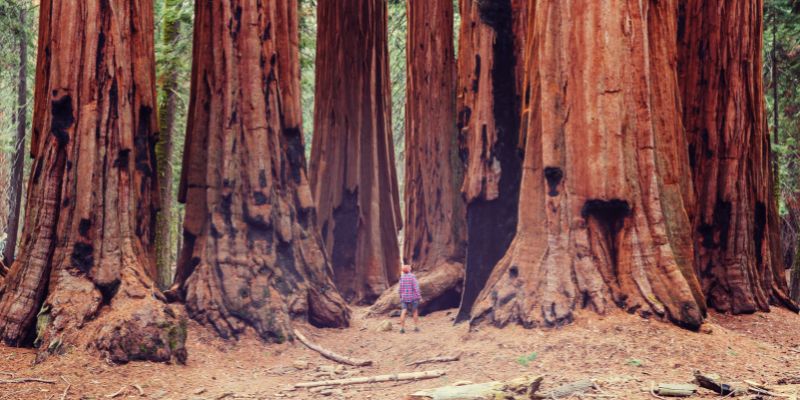
Giant Sequoia ( Sequoiadendron giganteum ): These are the true giants in terms of sheer mass and volume. They are the largest trees on Earth by volume. While they aren’t the tallest, their trunks are incredibly thick and massive. The most famous example is the General Sherman Tree in Sequoia National Park, which is considered the largest living single-stem tree by volume.
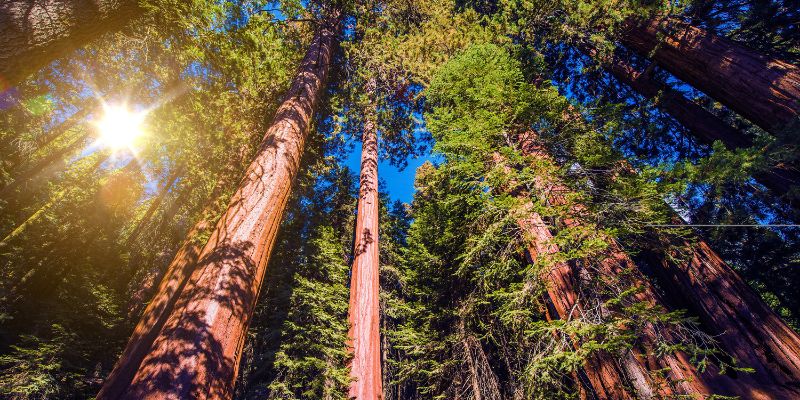
Coast Redwood ( Sequoia sempervirens ): These are the tallest trees in the world. They can reach incredible heights, often exceeding 300 feet. While their trunks are substantial, they are generally more slender than those of Giant Sequoias. They are also the only living species in the genus Sequoia.
2. Bark Characteristics
The bark is a key identifier and also offers insights into the tree’s resilience.
Giant Sequoia Bark: The bark of a Giant Sequoia is incredibly thick, fibrous, and deeply furrowed. It can range from reddish-brown to a purplish-brown color and can be anywhere from 1 to 3 feet thick at the base of mature trees. This thick bark provides excellent insulation and protection against fire, which is crucial for their survival in their natural habitat.
Coast Redwood Bark: Coast Redwood bark is also reddish-brown and fibrous, but it’s generally thinner than that of the Giant Sequoia, typically ranging from 4 to 12 inches thick. It’s also deeply furrowed, but the texture can appear a bit more stringy and less chunky than Giant Sequoia bark.
3. Cones and Seeds
A look at their reproductive structures reveals distinct differences.
Giant Sequoia Cones: Giant Sequoia cones are relatively small, typically 1.5 to 2.5 inches long. They are oval-shaped and woody, and it can take up to two years for them to mature. The cones often remain closed on the tree for many years, sometimes requiring the heat of a fire to open and release their seeds.
Coast Redwood Cones: Coast Redwood cones are even smaller, usually only about 0.5 to 1 inch long. They are more egg-shaped and less woody than Giant Sequoia cones. They mature in a single season and release their seeds readily.
4. Habitat and Distribution
Their preferred environments tell a story about their evolution and needs.
Giant Sequoia Habitat: Giant Sequoias are found only on the western slopes of the Sierra Nevada mountains in California, at elevations between 4,000 and 8,000 feet. They thrive in a specific environment with moist soil, winter snowpack for moisture, and summer drought conditions. They grow in scattered groves, not in continuous forests.
Coast Redwood Habitat: Coast Redwoods are found along the Pacific coast of North America, primarily in Northern California and into southern Oregon. They grow in a narrow belt, typically within 50 miles of the coast, where they benefit from the fog belt. This coastal fog provides essential moisture during the dry summer months.
5. Wood Properties (For the Woodworker)
While both species yield beautiful reddish-brown lumber, there are subtle differences that might influence their use in woodworking projects.
Giant Sequoia Wood: The wood of the Giant Sequoia is generally lighter, softer, and more brittle than Coast Redwood. It’s also less resistant to decay. Because of its protected status and the difficulty in harvesting it, Giant Sequoia lumber is rare and not commonly found in the market.
Coast Redwood Wood: Coast Redwood lumber is prized for its strength, stability, and natural resistance to decay and insects. It’s relatively lightweight, easy to work with, and has a beautiful, straight grain. This makes it a popular choice for outdoor furniture, decking, fencing, and interior finishing. You can learn more about the properties of redwood lumber from resources like the USDA Forest Products Laboratory.
Sequoia vs. Redwood: A Comparative Table
To make these differences even clearer, here’s a handy table summarizing the key distinctions.
| Feature | Giant Sequoia (Sequoiadendron giganteum) | Coast Redwood (Sequoia sempervirens) |
|---|---|---|
| Maximum Size | Largest by volume (massive trunk girth) | Tallest trees in the world (great height) |
| Height | Up to ~310 feet (94 meters) | Up to ~380 feet (115 meters) or more |
| Trunk Girth | Can exceed 100 feet (30 meters) in circumference | Typically narrower than Giant Sequoias, though still very large |
| Bark Thickness | 1 to 3 feet (0.3 to 0.9 meters) | 4 to 12 inches (10 to 30 cm) |
| Bark Texture | Thick, fibrous, deeply furrowed, spongy | Fibrous, deeply furrowed, somewhat stringy |
| Cone Size | 1.5 to 2.5 inches (3.8 to 6.4 cm) | 0.5 to 1 inch (1.3 to 2.5 cm) |
| Cone Shape | Oval, woody | Egg-shaped, less woody |
| Primary Habitat | Western slopes of Sierra Nevada mountains, California | Coastal regions of Northern California and Southern Oregon |
| Key Environmental Need | Winter snowpack, summer drought | Coastal fog |
| Wood Properties | Lighter, softer, more brittle, less decay-resistant, rare in market | Stronger, more stable, decay-resistant, insect-resistant, commonly used in lumber |
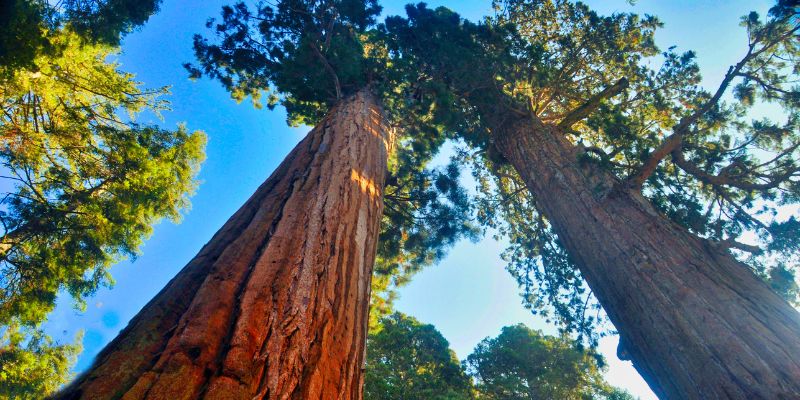
It’s easy to see why people get confused. Both trees are part of the same subfamily, Sequoioideae, within the cypress family (Cupressaceae). They are ancient lineages, with fossil evidence showing their ancestors were widespread across the globe. The name “Redwood” itself is a descriptor of their distinctive reddish-brown heartwood, a characteristic shared by both species.
The confusion is further amplified by common usage and historical naming conventions. For a long time, the scientific classification wasn’t as clear-cut, and many people simply referred to any massive, reddish tree in California as a “redwood.”
A Note on “Redwood” vs. “Sequoia” in Lumber
When you go to a lumber yard or browse online for lumber, you’ll almost always find wood labeled simply as “Redwood.” This refers to the lumber from the Coast Redwood (Sequoia sempervirens). Giant Sequoia lumber is exceptionally rare due to conservation efforts and the limited distribution of the trees. So, if you’re planning a project and looking for redwood, you’re most likely looking at wood from the Coast Redwood.
Working with Redwood Lumber: A Woodworker’s Perspective
If you’re fortunate enough to work with redwood lumber, you’ll find it a rewarding material. Its properties make it excellent for a variety of projects, especially those intended for outdoor use where its natural resistance to decay and insects shines.
Here are some key characteristics that make redwood a favorite among woodworkers:
Durability: Its natural oils and tannins make it highly resistant to moisture, rot, and insect damage. This means projects built with redwood can last for many years, even when exposed to the elements.
Stability: Redwood is known for its dimensional stability. It doesn’t warp, twist, or shrink as much as many other wood species when exposed to changes in humidity. This is a huge plus for woodworking, as it means your projects will stay true to their shape.
Workability: Despite its strength, redwood is relatively lightweight and easy to cut, shape, and fasten. It takes screws and nails well, and it sands to a smooth finish.
Aesthetics: The rich reddish-brown color and straight grain of redwood are visually appealing. It can be finished in various ways to enhance its natural beauty.
For more detailed information on working with different wood species, including redwood, resources like the Wood Database are invaluable.
Tips for Using Redwood Lumber:
Outdoor Projects: Ideal for decks, fences, pergolas, outdoor furniture, and planter boxes.
Interior Projects: Can be used for paneling, trim, and decorative elements where its color can be showcased.
Finishing: While it weathers to a silvery-gray if left unfinished, applying a sealant or stain can help maintain its color and provide additional protection.
Fasteners: Use stainless steel or galvanized fasteners to prevent rust stains, especially for outdoor projects.
Common Woodworking Projects Using Redwood:
Outdoor Benches and Chairs: Their durability makes them perfect for garden seating.
Planter Boxes: Redwood’s resistance to rot means your planters will last for years.
Decking: A classic choice for beautiful and long-lasting decks.
Privacy Fences: Adds a natural, beautiful barrier to your yard.
Birdhouses: A small project where redwood’s natural properties can be appreciated.
Frequently Asked Questions (FAQ)
Here are some common questions beginner woodworkers might have about Sequoias and Redwoods.
Conclusion: Appreciating the Giants
So, there you have it! While both Sequoias and Redwoods are awe-inspiring trees that dominate the California landscape, they are distinct in their size, bark, cones, and habitats. Understanding these differences not only deepens our appreciation for these natural wonders but also clarifies the type of lumber we might encounter in our woodworking endeavors.
Remember, when you see lumber labeled “Redwood,” it almost certainly comes from the Coast Redwood (Sequoia sempervirens), known for its impressive height and excellent woodworking properties. The Giant Sequoia (Sequoiadendron giganteum*) remains the undisputed champion of volume and a symbol of immense, ancient life, though its timber is rarely used.
Whether you’re marveling at them in a national park or planning your next project with redwood, knowing these distinctions helps you connect more deeply with the incredible world of trees. Keep building, keep learning, and enjoy the journey!