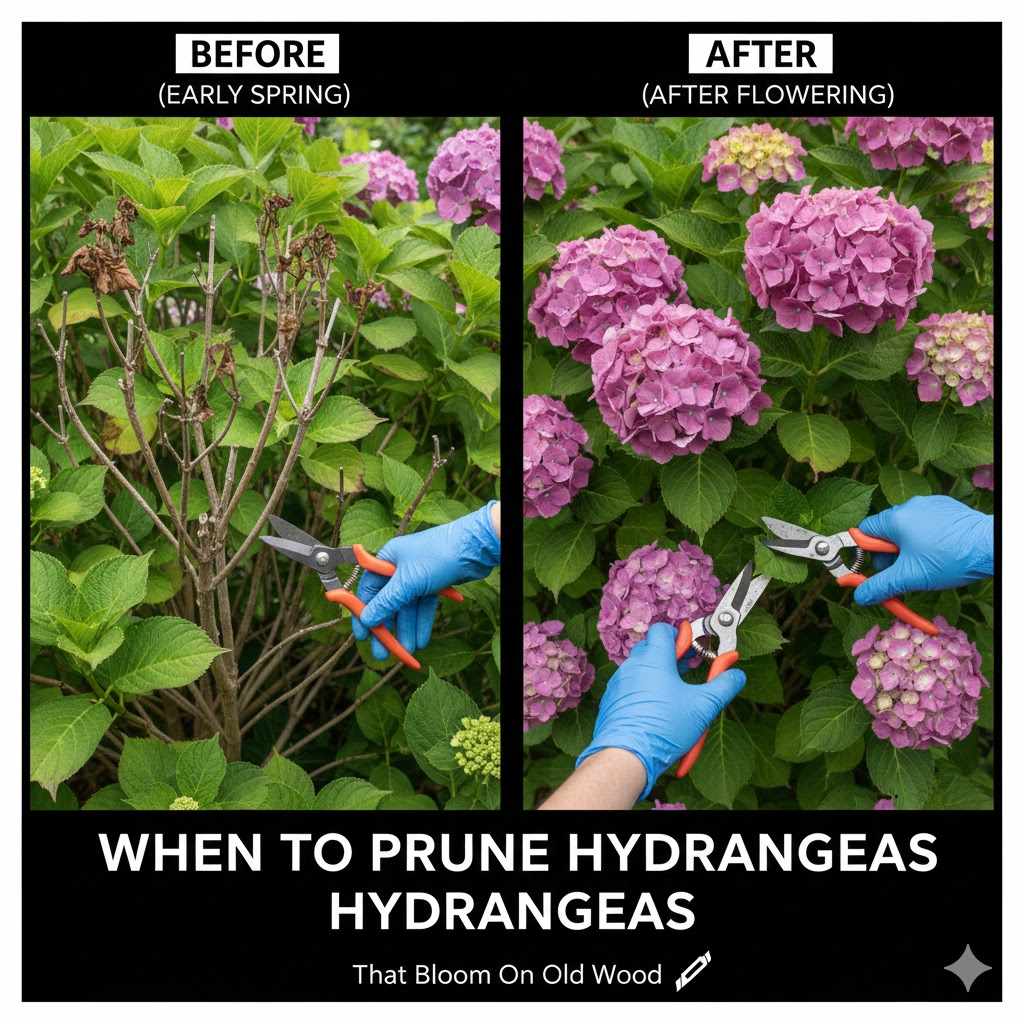
When to Prune Hydrangeas That Bloom on Old Wood
Figuring out when to prune hydrangeas can feel tricky, especially for beginners. You want your flowers to be amazing, but if you cut at the wrong time, you might miss out on blooms for the whole season. This is especially true for hydrangeas that flower on old wood.
Don’t worry, though! We’ll make this super simple. You’ll learn exactly what to do so your hydrangeas can put on a beautiful show year after year.
Understanding Hydrangeas That Bloom on Old Wood
Many gardeners get a little confused when it comes to pruning their hydrangeas. This confusion often stems from not knowing whether their specific type of hydrangea blooms on new growth from the current year or on the old growth from the previous year. For those with hydrangeas that bloom on old wood, timing is everything.
If you prune too late in the season, you risk cutting off the very buds that will produce flowers. This section will clear up that mystery and help you identify your hydrangea type so you can prune with confidence.
What Does “Bloom on Old Wood” Mean
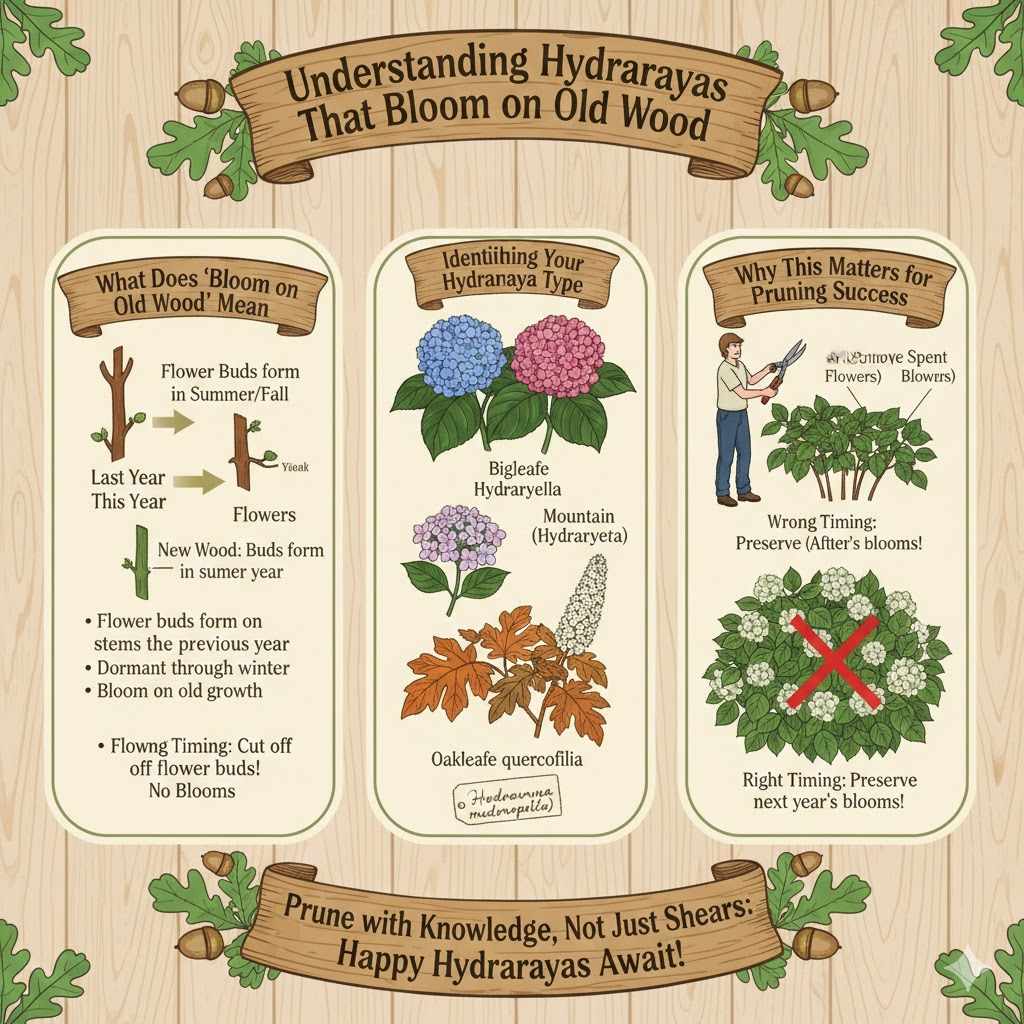
When we talk about a plant blooming on “old wood,” it means that the flower buds for the next blooming season are formed on the stems that grew in the previous year. Think of it like this: the plant makes its flower buds during the summer or fall, and these buds stay dormant through the winter. When spring arrives, these same old stems will produce the beautiful flowers.
Hydrangeas like the popular Bigleaf Hydrangea (Hydrangea macrophylla) and Oakleaf Hydrangea (Hydrangea quercifolia) are classic examples of plants that bloom on old wood.
This is quite different from plants that bloom on “new wood.” With new wood bloomers, all the flower buds are formed in the spring on the brand-new stems that grow that year. Pruning these types of plants in the late winter or early spring is usually ideal because it encourages vigorous new growth, which will then produce flowers. Knowing this distinction is the first, most important step to successfully pruning your hydrangeas for maximum blooms.
Identifying Your Hydrangea Type
To know when to prune, you first need to know what kind of hydrangea you have. The most common types that bloom on old wood are Hydrangea macrophylla (Bigleaf Hydrangeas), Hydrangea serrata (Mountain Hydrangeas), and Hydrangea quercifolia (Oakleaf Hydrangeas). Bigleaf hydrangeas are the ones with those big, round or mophead-shaped flowers, and also the flatter lacecap varieties.
Mountain hydrangeas look very similar to Bigleaf but are often a bit more compact and hardy. Oakleaf hydrangeas are known for their distinctive lobed leaves that turn beautiful colors in the fall, and their cone-shaped flower clusters.
If you’re unsure, take a close look at your plant. Do the flower heads form on the same stems year after year? Do the stems seem sturdy and woody, rather than green and flexible, by the end of the growing season?
If you bought it from a nursery, the tag might have the species name, like “Hydrangea macrophylla.” Sometimes, even gardeners who have had a plant for years aren’t quite sure. Observing the bloom cycle over a year or two is a great way to figure it out.
Why This Matters for Pruning Success
The reason it’s so crucial to know if your hydrangea blooms on old wood is directly tied to how and when you should prune. Pruning a plant that blooms on old wood at the wrong time can lead to a disappointing lack of flowers. For instance, if you cut back those old stems in late winter or early spring, you are essentially removing the flower buds that have been waiting patiently to open.
It’s like trimming off all the potential flowers before they even have a chance to grow.
This is a common mistake that many new gardeners make. They see a plant that looks a bit leggy or overgrown and decide to give it a good trim in the spring, only to wonder why it didn’t bloom. For these types of hydrangeas, the goal of pruning is usually to maintain shape and remove dead or damaged wood, not to encourage new flowering wood.
The right timing ensures you are preserving the plant’s natural flowering ability.
When to Prune Hydrangeas That Bloom on Old Wood
The golden rule for pruning hydrangeas that bloom on old wood is to do it right after they finish flowering. This timing is critical because, as we’ve discussed, the flower buds for the next season are already formed on the existing stems. By waiting until the current blooms have faded, you ensure that you are not removing these precious buds.
This approach allows the plant to set its new buds for the following year without interruption.
The Best Time Immediately After Flowering
For hydrangeas that bloom on old wood, the ideal window for pruning is immediately following their bloom period. If you have a bigleaf hydrangea that blooms in early summer, for example, you would prune it in late summer or early fall, but definitely before the plant starts forming its new flower buds for the next year. This timing is essential for preserving the flower buds that have already developed on the old wood.
This period is often in mid-summer or late summer, depending on your specific climate and the plant’s growth cycle. Once the flowers start to look spent and faded, that’s your signal. It’s important not to delay too long.
If you wait until late fall or winter, you risk cutting off the developing flower buds. The plant needs time to recover from flowering and to set its new buds for the following season.
Avoiding Pruning in Late Winter or Early Spring
Many gardeners instinctively prune their plants in late winter or early spring to tidy them up before the growing season begins. However, this is precisely the worst time to prune hydrangeas that bloom on old wood. By this time, the plant has already formed its flower buds on the previous year’s stems.
Pruning them off in late winter or early spring means you’ll have a healthy plant with lots of green leaves, but very few, if any, flowers.
This is where the confusion often arises. People see other garden shrubs that benefit from early spring pruning and apply the same logic to their hydrangeas, leading to disappointment. The energy and resources the plant has stored for flowering would be removed.
To ensure a beautiful display of blooms, resist the urge to prune these specific hydrangeas during the dormant season.
What to Prune If You Must Prune in Spring
Even though the general rule is to prune after flowering, there might be situations where you need to do some light tidying in the spring. If you absolutely must prune in early spring, focus only on removing dead, damaged, or crossing branches. You can identify dead branches because they will be brittle and brown inside.
Damaged branches might be broken or showing signs of disease.
Only prune wood that is clearly not alive. If a stem is still green and flexible, even if it looks a bit straggly, it likely contains dormant flower buds. It’s far better to leave potentially bud-bearing wood in place and deal with its appearance later, or let it grow out, than to risk cutting off your flowers for the season.
The goal is to preserve as much healthy, old wood as possible.
How to Prune Hydrangeas That Bloom on Old Wood
Pruning these hydrangeas is less about shaping and more about maintenance and encouraging healthy growth. The key is to be selective. You’ll be removing weak growth and keeping the strong, established stems that have the potential to carry blooms.
Follow these steps carefully to ensure your plant thrives and flowers beautifully.
The Selective Pruning Process
When you prune after flowering, start by looking at the overall shape of your hydrangea. Your primary goal is to remove any dead, diseased, or weak stems. Dead stems will be dry and brittle, often breaking easily.
Diseased stems might show unusual spots or discoloration. Weak stems are often thin and spindly, which are less likely to support heavy flower heads and may not survive winter well.
For healthy stems, decide which ones you want to keep. If the plant is too crowded, you can remove a few of the oldest or weakest stems right down to the ground. This opens up the center of the plant, allowing for better air circulation and sunlight penetration, which helps prevent disease and encourages stronger new growth from the base.
Always use clean, sharp pruning shears for a clean cut that heals quickly.
What to Cut and What to Leave
Focus on cutting out any stems that appear unhealthy. This includes stems that are crossing over other branches, as they can rub and cause wounds. Also, remove any stems that are growing inward towards the center of the plant.
For any healthy stems that have finished blooming, you can deadhead them by cutting off the spent flower head just above a pair of healthy leaves.
If the entire stem looks old and woody, and you want to encourage new growth from the base, you can cut a few of these older stems back hard, right to the ground. This is called rejuvenation pruning. However, do this sparingly, perhaps only one or two stems each year, so you don’t remove all the potential flowering wood at once.
Leaving most of the established old stems will ensure blooms next year.
Making Clean Cuts
Using the right tools is essential for healthy plant recovery. Always use sharp bypass pruners for cutting live wood. Bypass pruners work like scissors, with two blades passing over each other, making a clean cut that heals quickly.
Avoid using anvil pruners, which crush the stem and can lead to disease or rot.
When you make a cut, aim to do so just above a leaf node, which is the point on the stem where leaves emerge. This encourages new growth to sprout from that node. For removing entire stems, cut them as close to the ground as possible, but be careful not to damage the main crown of the plant.
Clean cuts minimize stress on the plant and reduce the risk of infection by pests or diseases.
Dealing with Different Hydrangea Varieties
While the general principle for old-wood bloomers remains the same, there are slight variations in how and when you might approach pruning based on specific hydrangea types and your climate. Understanding these nuances can help you achieve the best results for your garden.
Bigleaf Hydrangeas Macrophylla and Serrata
These are the most common hydrangeas and are the classic examples of old-wood bloomers. Pruning should be done immediately after flowering in the summer. If you live in a colder climate, there’s an added consideration: the tips of the old wood can sometimes be damaged by harsh winters.
In such cases, you might need to prune back more significantly in the spring to remove only the dead, winter-damaged tips. However, try to preserve as much healthy wood as possible.
A technique called “rejuvenation pruning” can be used on older, overgrown Bigleaf hydrangeas. This involves removing about one-third of the oldest, thickest stems right down to the ground each year over a three-year period. This gradually
Oakleaf Hydrangeas Quercifolia
Oakleaf hydrangeas also bloom on old wood. Their pruning needs are generally minimal. The best time to prune them is also right after they finish flowering in the summer.
Like other old-wood bloomers, you should focus on removing dead, damaged, or crossing branches. Their distinctive foliage and fall color are often a highlight, so avoid over-pruning that might sacrifice these features.
Oakleaf hydrangeas tend to be quite forgiving. They don’t typically require extensive shaping. If a stem has finished blooming, you can trim back the spent flower head to just above a leaf or bud.
If you need to reduce the size of the plant, do so judiciously after flowering, remembering that the buds for next year are already set on the existing wood.
Climate Considerations and Pruning Adjustments
Your local climate plays a significant role in how you manage your hydrangeas. In milder climates where winters are not severe, the old wood is more likely to survive intact, and you can prune immediately after flowering with confidence. In colder regions, especially those with harsh winters, the tips of the old wood might die back.
If you experience winter dieback, you will likely need to do a spring cleanup pruning. This involves carefully assessing the stems and cutting away only the parts that are brown and brittle. Anything that is still green and flexible should be left in place as it likely harbors viable flower buds.
This adjustment ensures you can still enjoy blooms even after a tough winter.
Common Pruning Mistakes to Avoid
Even with the best intentions, gardeners can fall into common traps when pruning hydrangeas that bloom on old wood. Being aware of these pitfalls can save your blooms and ensure a healthier plant.
The “Spring Cleanup” Catastrophe
The most frequent mistake is the “spring cleanup” pruning, where gardeners cut back all woody stems in late winter or early spring. As we’ve emphasized, this removes the flower buds that formed the previous year. This leads to a plant that grows vigorously but produces no flowers.
If you have hydrangeas that bloom on old wood, this is the single biggest error to avoid.
A good analogy is pruning fruit trees. If you prune off all the fruit spurs in winter, you won’t get any fruit in summer. Similarly, pruning off the flowering wood on these hydrangeas means no flowers.
Resist the urge to “tidy up” by cutting back the main stems unless they are clearly dead or damaged.
Over-Pruning and Shape Confusion
Another common mistake is over-pruning, or pruning for shape too aggressively. While it’s good to maintain a pleasing shape, these hydrangeas are not meant to be heavily pruned into tight forms, especially in spring. Over-pruning can remove too much of the old wood, reducing the number of flowers.
It’s also important to remember that these plants naturally grow into a rounded, bushy shape.
Instead of trying to force a shape, focus on selective removal of weak or unwanted stems. If the plant becomes too large, you can address this by rejuvenating it gradually over several years, as mentioned with Bigleaf hydrangeas. Aim for a natural, beautiful form rather than a geometrically perfect one.
Not Identifying the Hydrangea Type
Perhaps the root of many pruning problems is the failure to identify the specific type of hydrangea. Gardeners often group all hydrangeas together and apply a one-size-fits-all pruning approach. However, the pruning requirements vary significantly between species.
Hydrangeas that bloom on new wood, like Panicle Hydrangeas (Hydrangea paniculata) and Smooth Hydrangeas (Hydrangea arborescens), are pruned differently and benefit from spring pruning.
Spending a little time identifying your hydrangea can prevent major pruning errors. Look at the leaves, the shape of the flower clusters, and the time of year it blooms. This knowledge is the key to understanding its specific pruning needs and ensuring you know When to Prune Hydrangeas That Bloom on Old Wood correctly.
Case Studies and Scenarios
Let’s look at some real-world examples to solidify our understanding. These scenarios show how proper pruning can make a big difference.
Case Study 1 A Gardener’s Bloomless Spring
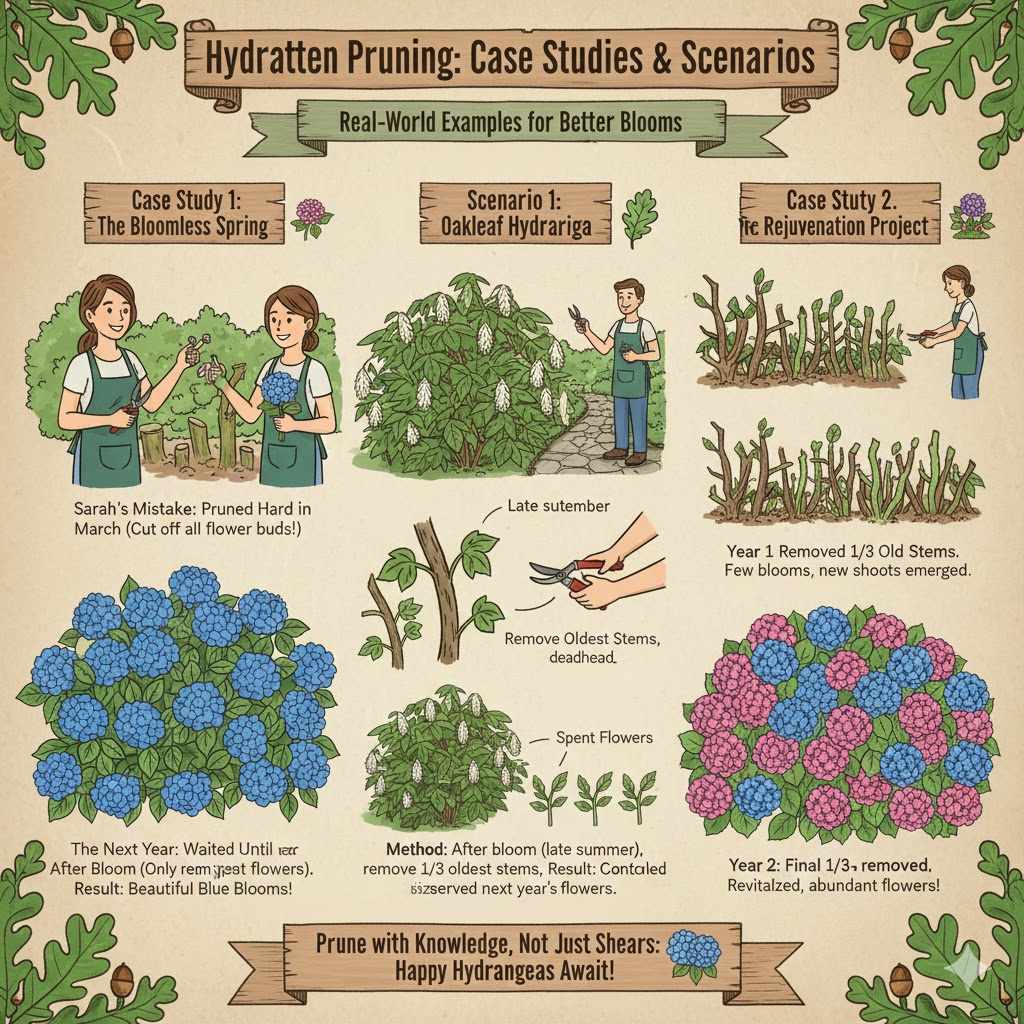
Sarah had a beautiful collection of mophead hydrangeas. Each spring, she’d eagerly prune them back hard in March, thinking she was giving them a good start for the season. For years, she wondered why her hydrangeas were green and lush but never bloomed.
A neighbor finally pointed out that her hydrangeas bloomed on old wood and she was cutting off all the flower buds every year.
The next year, Sarah waited until after her hydrangeas flowered in early summer to prune. She removed only dead stems and spent flower heads. That summer, her hydrangeas were covered in beautiful blue blooms, a sight she hadn’t seen in years.
This experience taught her the vital importance of pruning time for old-wood bloomers.
Scenario 1 Pruning an Overgrown Oakleaf Hydrangea
Mark has an Oakleaf Hydrangea that has become quite large and is encroaching on a walkway. It blooms beautifully each year in mid-summer. He wants to reduce its size without sacrificing next year’s flowers.
- He waits until after the Oakleaf Hydrangea has finished blooming in late summer.
- He carefully examines the plant and identifies a few of the oldest, thickest stems that are growing awkwardly or too close to the ground.
- He prunes these selected old stems back to about six inches from the soil.
- He also removes any dead, damaged, or crossing branches from the rest of the plant.
- He trims off the spent flower heads from the remaining stems.
By doing this, he controls the size and opens up the plant slightly, while preserving the majority of the old wood that will produce flowers next year. He plans to remove a few more of the oldest stems each year for the next couple of years to gradually rejuvenate the plant.
Case Study 2 The Rejuvenation Project
The community garden had a very old, overgrown Bigleaf Hydrangea that was producing fewer and fewer blooms. The stems were thick and woody, but the overall plant was sparse. The garden committee decided to try rejuvenation pruning.
Over three years, they removed about one-third of the oldest, thickest stems each year, cutting them right down to the ground. This was done in late summer, after flowering. In the first year, they saw a slight reduction in blooms but noticed new, vigorous shoots emerging from the base.
By the third year, the plant was filled with healthy new stems and produced an abundance of flowers, revitalizing that corner of the garden.
Frequently Asked Questions
Question: When should I deadhead my hydrangeas that bloom on old wood
Answer: You should deadhead your hydrangeas that bloom on old wood right after they finish flowering in the summer. This involves cutting off the spent flower clusters just above a set of leaves or a bud. This helps the plant conserve energy and directs its resources towards developing new flower buds for the next season.
Question: Can I move a hydrangea that blooms on old wood
Answer: Yes, you can move a hydrangea that blooms on old wood, but the best time to do this is in the dormant season, either in late fall after the leaves have dropped or very early spring before new growth begins. If you move it after it has flowered in summer, you risk disturbing the plant during its active growth and bud-setting period, which could impact next year’s blooms.
Question: My hydrangea has brown tips on its stems; what should I do
Answer: If your hydrangea that blooms on old wood has brown, brittle tips on its stems, it likely suffered winter damage. In early spring, after the risk of frost has passed, carefully prune away only the dead, brown tips. Cut back to the first point where you see healthy, green wood.
This is an exception to the “don’t prune in spring” rule, as you are only removing winter-killed parts and not healthy flowering wood.
Question: How often should I fertilize my hydrangeas
Answer: For hydrangeas that bloom on old wood, it’s best to fertilize them in early spring, just as new growth appears. Use a balanced, slow-release fertilizer. Avoid fertilizing too late in the season, as this can encourage tender new growth that may not harden off before winter, and can also interfere with the development of flower buds for the following year.
Question: Will my hydrangea still bloom if I prune it in fall
Answer: No, pruning your hydrangea that blooms on old wood in the fall is not recommended and will likely prevent it from blooming the following year. The flower buds for the next season are already forming on the stems during late summer and fall. Pruning in fall removes these developing buds.
Always wait until after flowering, or prune only dead wood in spring.
Final Thoughts
Knowing when to prune hydrangeas that bloom on old wood is key to enjoying their beautiful flowers. Remember to prune right after they finish blooming in summer. Focus on removing only dead, damaged, or weak stems.
Avoid the common mistake of spring cleanup pruning, which cuts off your blooms. With this simple approach, your hydrangeas will thrive and reward you with stunning blossoms year after year.