Where to Buy Composite Wood for Outdoor Furniture: A Simple Guide
Figuring out Where to Buy Composite Wood for Outdoor Furniture can feel a little tricky, especially when you’re just starting. You might wonder where to find the best materials or which brands are good. Don’t worry, though! It’s actually easier than you think. This guide will take you step-by-step through the process, making it simple and clear. We’ll explore everything you need to know, so you can start building beautiful outdoor furniture. Let’s get started.
What Is Composite Wood? Breaking Down the Basics
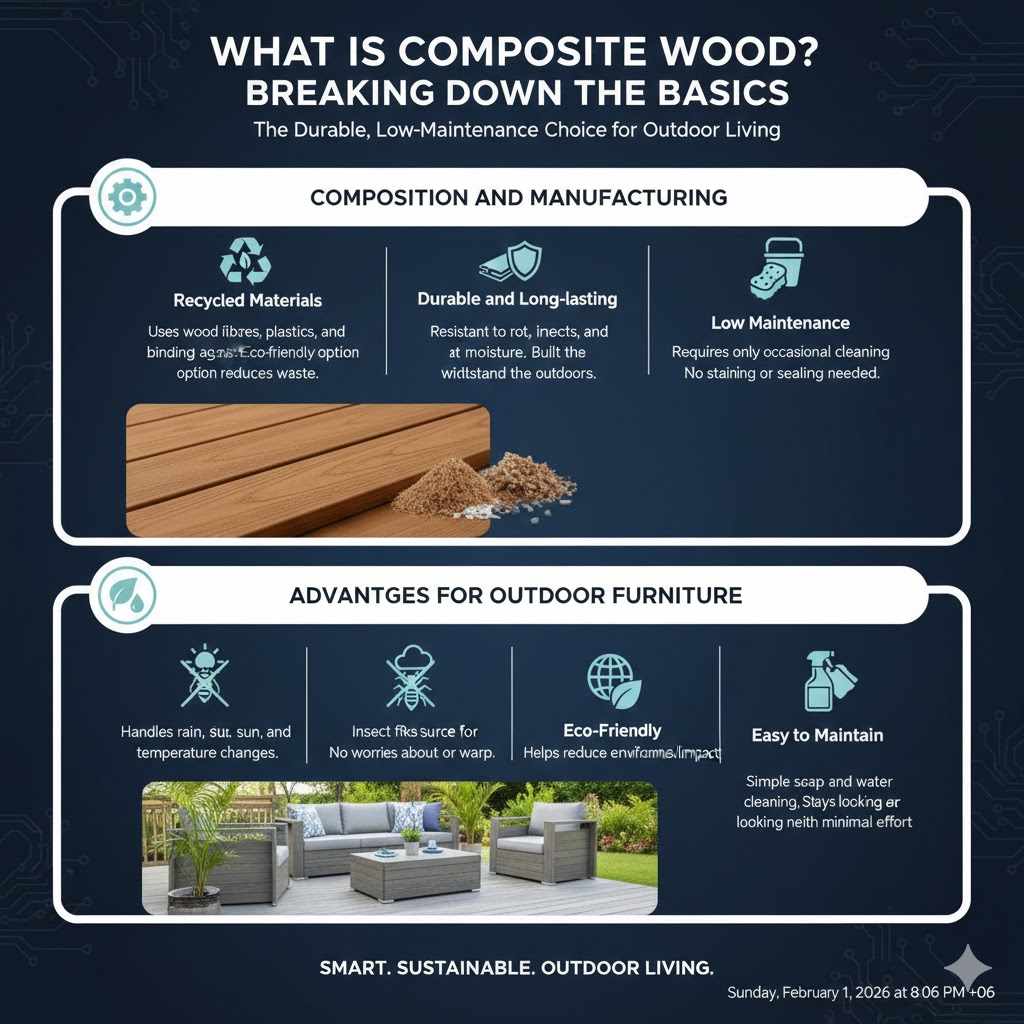
Before you even think about shopping, it’s key to know what composite wood is. Composite wood is a manufactured wood made from a combination of wood fibers, plastics, and binding agents. This mixture results in a material that has several advantages over traditional wood. One of the biggest perks is its resistance to rot, insect damage, and warping, which is perfect for outdoor use. Unlike real wood, which requires regular staining and sealing to protect it from the elements, composite wood requires very little maintenance.
Composition and Manufacturing of Composite Wood
The manufacturing process of composite wood is quite interesting. It typically starts with wood fibers, which can come from recycled wood products, sawdust, or even agricultural waste. These fibers are then mixed with plastic, often recycled polyethylene or polypropylene, and binding agents. The mix is then heated and compressed into boards or profiles.
This process creates a very strong and durable material. Manufacturers can add colorants and textures during production to mimic the look of natural wood. The result is a product that’s both beautiful and able to withstand the outdoors.
- Recycled Materials: Composite wood often uses recycled materials, making it an environmentally friendly option. This reduces the need to harvest new trees and helps to keep waste out of landfills.
- Durable and Long-lasting: Because of its makeup, composite wood is naturally resistant to issues like rot, insects, and moisture damage. This makes it last longer than standard wood.
- Low Maintenance: Unlike natural wood that needs regular care, composite wood only requires occasional cleaning with soap and water to keep it looking great.
- Variety of Styles: Composite wood comes in a wide range of colors, textures, and styles. This gives you many options to make furniture that matches your design.
Advantages of Using Composite Wood for Outdoor Furniture
Using composite wood for your outdoor furniture offers many benefits. It’s built to resist the problems that traditional wood often faces, such as weather damage and pest attacks. This durability means your furniture will look good for years. Plus, the low-maintenance aspect is a big bonus. No more staining or sealing! You’ll spend more time enjoying your furniture and less time working on it. Composite wood is also usually more stable than real wood, which means it is less likely to warp or split, keeping your furniture safe and comfortable.
- Weather Resistance: Composite wood is made to handle rain, sun, and other weather conditions. This helps your furniture last longer, as it won’t decay or get damaged by the elements.
- Insect Resistance: Unlike wood, composite wood isn’t a food source for insects. You don’t have to worry about termites or other pests eating your furniture.
- Eco-Friendly: Many composite wood products are made with recycled materials. By choosing composite wood, you are helping to reduce waste.
- Easy to Maintain: A quick wash with soap and water is often all you need to keep composite wood furniture clean and looking new.
The Best Places to Purchase Composite Wood
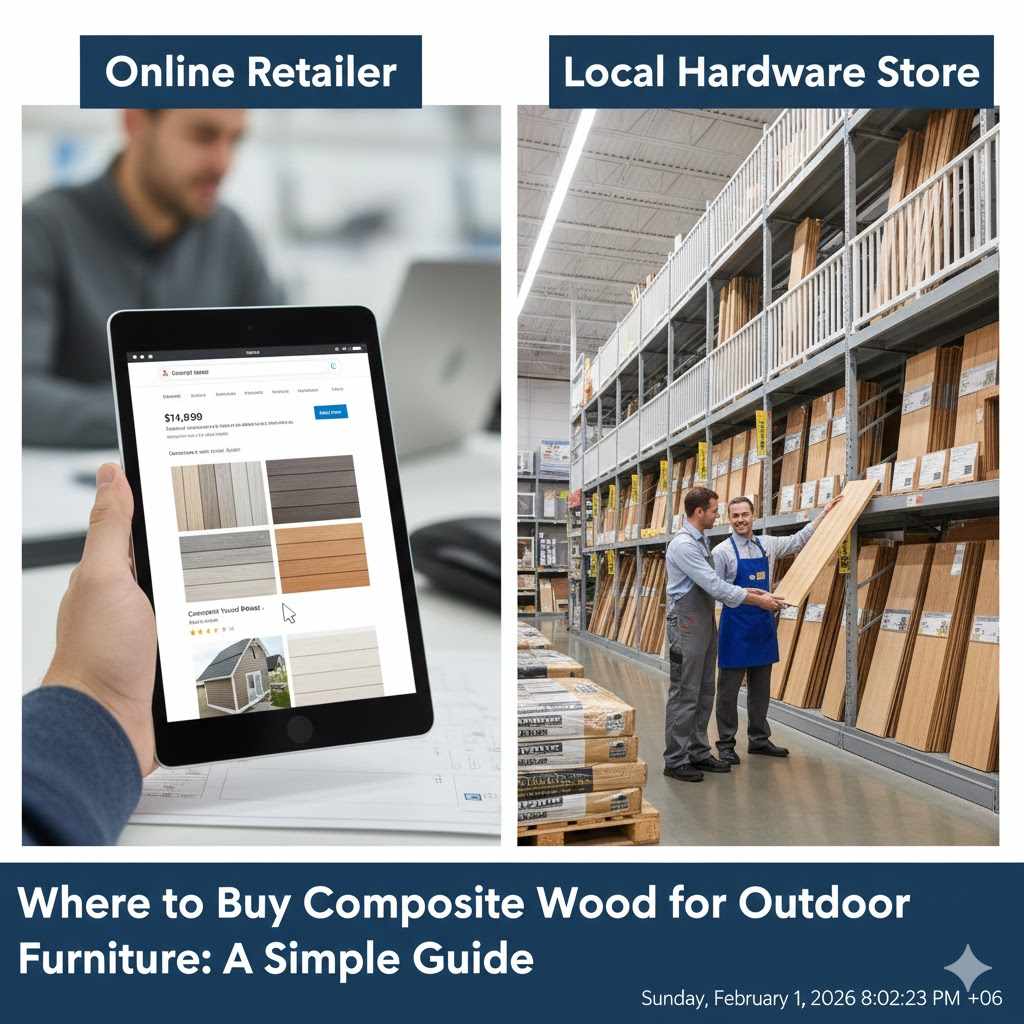
When it comes to Where to Buy Composite Wood for Outdoor Furniture, several options are available, each with its own pros and cons. Big box stores, lumberyards, and specialized composite wood suppliers all offer different advantages in terms of price, selection, and expertise. Depending on your project’s specific needs, choosing the right supplier can greatly impact your overall experience and the success of your outdoor furniture project. Consider the following options carefully to find the best fit for you.
Big Box Stores for Composite Wood
Big box stores are a common starting point for many DIY projects. Stores such as Home Depot and Lowe’s typically have a variety of composite wood products in stock. They often carry popular brands and provide a convenient one-stop shop for all your project needs. The advantages include wide availability, competitive pricing, and the ability to easily compare different products. However, the selection may be limited compared to specialized suppliers, and the staff might not always have in-depth knowledge of composite wood’s specific characteristics.
- Convenience and Accessibility: Big box stores are usually easy to find and have convenient hours, making it easy to purchase composite wood quickly.
- Competitive Pricing: These stores often offer competitive pricing, especially during sales or promotions. This can help you keep your project costs down.
- Availability of Other Materials: You can get all the other needed materials, such as screws, tools, and hardware, from the same place, which is a major convenience.
- Limited Expert Advice: While employees are available, they may not be able to offer the same level of knowledge or expertise as specialists.
Lumberyards and Home Improvement Stores
Lumberyards and home improvement stores, often locally owned, can offer a more personalized shopping experience. These stores often stock a wider range of composite wood products than big box stores, sometimes including specialty items or less common brands. Staff members are often knowledgeable about different wood types and their applications. They can provide specific advice and support for your outdoor furniture project. The cost might be slightly higher than at big box stores, but the added value in terms of expertise and selection often makes it worthwhile.
- Wider Selection: Lumberyards often stock a wider range of composite wood products, including different brands, styles, and sizes, giving you more choices.
- Expert Advice: Staff at lumberyards tend to have more specialized knowledge about wood and related products, giving you useful advice on your projects.
- Local Support: Buying from a local lumberyard supports your community and creates a personal connection. This can be great for any future needs.
- Potential for Higher Prices: Because of the specialized services and wider selection, prices may be slightly higher than at big box stores.
Specialized Composite Wood Suppliers
For the most extensive selection and expert advice, specialized composite wood suppliers are the way to go. These businesses focus solely on composite materials. They usually offer the widest variety of brands, colors, and styles. The staff has deep knowledge of the products they sell and can provide detailed guidance to help you choose the right materials for your project. This can be particularly useful for complex projects or if you have unique design needs. However, the cost may be a bit more, and they may be less accessible in some areas compared to the larger stores.
- Largest Selection: These suppliers usually have the biggest selection of composite wood products, including colors, textures, and sizes.
- Product Expertise: Staff members are specialized in composite wood, offering you detailed advice and support for your project.
- Customization Options: Some suppliers offer custom cutting or other services, letting you create furniture that precisely fits your needs.
- Potentially Higher Cost: Due to their specialized nature, prices might be slightly higher compared to general stores.
Factors to Consider Before You Buy Composite Wood
Knowing Where to Buy Composite Wood for Outdoor Furniture is only half the battle. Before you actually make a purchase, take time to consider different factors to make sure you get the right product for your needs. Things to keep in mind include the specific types of composite wood available, the different colors and textures, and the necessary dimensions for your project. Additionally, understanding the warranties and any return policies is very important to protect your investment.
Types of Composite Wood and Their Characteristics
Various types of composite wood are designed for specific uses. Each type has a unique composition and set of characteristics. Understanding these differences can help you make an informed decision about which material is best for your outdoor furniture project. Some common types include wood-plastic composites (WPCs), which are the most common type for decking and furniture; and capped composite, which offers enhanced protection and longevity. Some varieties may use different ratios of wood fibers and plastics, which affect their strength, durability, and appearance.
- Wood-Plastic Composites (WPCs): WPCs are the most common type, made from wood fibers and plastic. These offer good durability, low maintenance, and are perfect for outdoor use.
- Capped Composite Wood: Capped composite wood has a protective outer layer that resists scratches, stains, and fading. This improves its lifespan and makes it look great for years.
- Hollow vs. Solid Boards: Solid composite boards are stronger and more durable, making them suitable for high-traffic areas. Hollow boards are lighter and less expensive, ideal for less demanding projects.
- Composition Variations: Composite wood composition varies across brands. Some have higher wood content, giving a more natural appearance, while others may contain more plastic for improved moisture resistance.
Colors, Textures, and Dimensions
The look and feel of your furniture are as important as its durability. Composite wood is available in many colors and textures. From smooth, sleek finishes to those that mimic the grain of natural wood, there’s a style to match any design preference. Carefully measure the necessary dimensions for your furniture pieces before you buy the wood. Knowing your needed lengths and widths will help you reduce waste and minimize your project costs. Consider the overall design of your outdoor space and the aesthetic you want to achieve.
- Color Options: Composite wood comes in various colors, from natural wood tones to darker colors. This lets you select a color that perfectly complements your outdoor space.
- Texture Varieties: The texture of composite wood can range from smooth to textured. Some products mimic the natural grain of real wood, adding a realistic look and feel.
- Dimensions and Sizes: It is important to know the right lengths, widths, and thicknesses for your furniture projects. Measure precisely to minimize waste and ensure a good fit.
- Design Compatibility: Think about how the color and texture will work with other elements in your outdoor area, like your house’s style and existing decor.
Warranties and Return Policies
Always review the warranty and return policies before purchasing composite wood. These policies help protect your investment and cover any defects or issues that might arise. Most composite wood manufacturers provide warranties that cover issues like fading, staining, or structural problems for a certain period. Understanding the terms of the warranty gives you peace of mind. Also, check the store’s return policy. This can save you if you buy too much material or if the product doesn’t meet your expectations. Be sure to keep receipts and documentation for future use.
- Warranty Details: Find out what the warranty covers, such as fading, staining, or structural problems. Check the length of the warranty period.
- Warranty Limitations: Understand the things that aren’t covered by the warranty, like damage from improper installation or misuse.
- Return Policies: Know the store’s return policy. Find out how long you have to return the product and any requirements, like keeping the original packaging.
- Customer Service: Ensure the supplier has good customer service. This way, you can easily handle any questions or issues with your purchase.
Cost Comparison and Budgeting for Composite Wood Projects
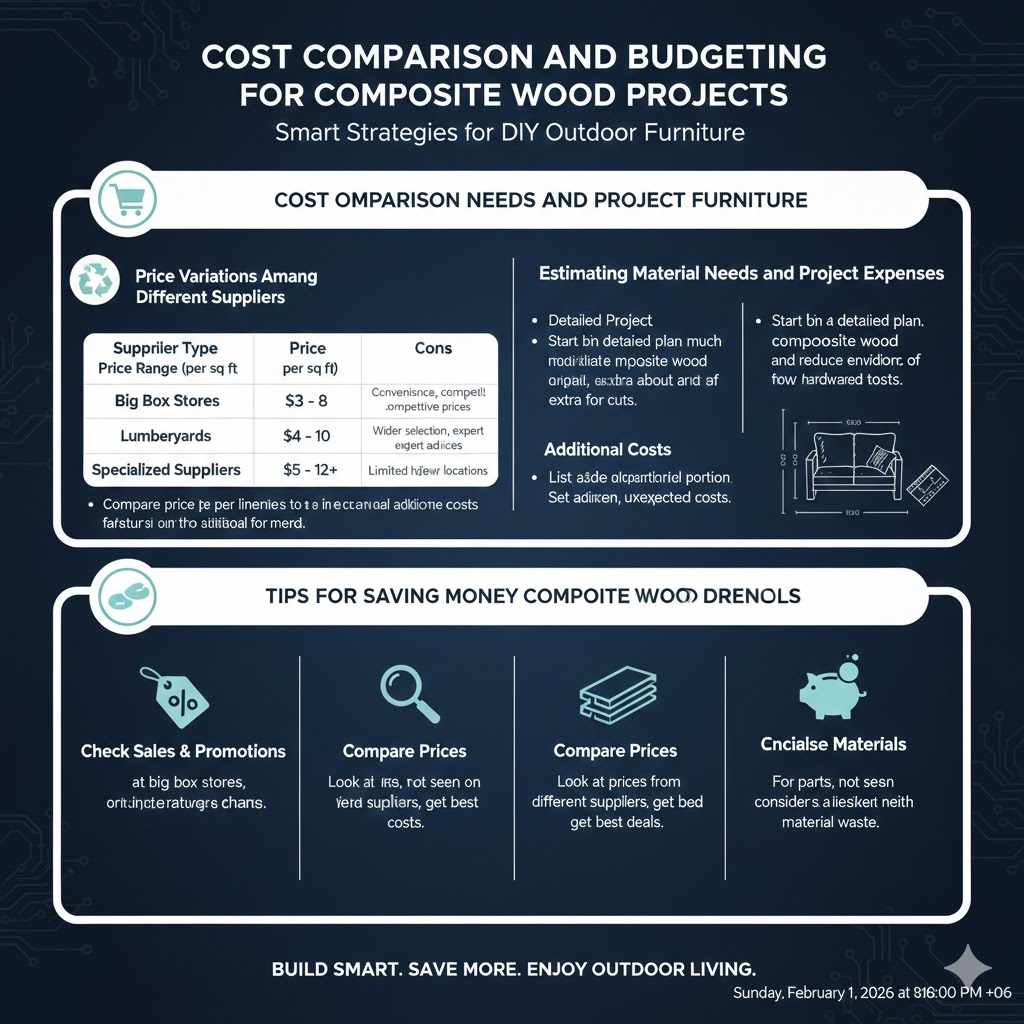
Budgeting is a key part of any DIY project. The cost of composite wood can vary significantly based on the brand, type, and quantity you need. Before buying, compare prices from different suppliers to ensure you’re getting the best value. This may involve examining prices per linear foot or square foot. Consider the total cost, including any additional expenses like fasteners, tools, or delivery fees. Making a detailed budget from the start will help you keep track of your spending and complete your outdoor furniture project successfully, without running over budget.
Price Variations Among Different Suppliers
The price of composite wood varies from store to store. Big box stores sometimes offer competitive prices, especially on common brands, but the selection might be limited. Lumberyards may have a slightly higher cost, but they could have a wider range of products and expert advice. Specialized suppliers are likely to have a diverse selection, but prices may be at the higher end. The best method is to compare prices from various stores, looking at the cost per linear foot or square foot for the materials you want. Factor in other costs, such as delivery fees or any special cuts, to obtain the total price.
| Supplier Type | Price Range (per sq ft) | Pros | Cons |
|---|---|---|---|
| Big Box Stores | $3 – $8 | Convenience, competitive prices | Limited selection, less expert advice |
| Lumberyards | $4 – $10 | Wider selection, expert advice | Potentially higher prices |
| Specialized Suppliers | $5 – $12+ | Largest selection, product experts | Potentially higher prices, fewer locations |
Estimating Material Needs and Project Expenses
Accurately estimating your material needs is key to efficient budgeting. Start by creating a detailed plan of your outdoor furniture project. Note all the dimensions of each piece you plan to build. From this, determine the amount of composite wood needed, accounting for some extra to account for cuts and errors. Don’t forget other expenses like screws, hardware, tools, and protective finishes, if applicable. Take into account delivery costs, which can increase your overall project expense. By adding up all the costs, you can make a reliable project budget and keep track of your spending.
- Detailed Project Planning: Start with a detailed plan with the dimensions of each furniture item. This gives you a clear vision of your project.
- Material Calculation: Calculate how much composite wood you will need, including a bit extra to compensate for cuts and errors.
- Additional Costs: List all additional expenses, such as screws, hardware, tools, and finishes. Don’t ignore things like sandpaper.
- Contingency Budget: Set aside a small portion of your budget for unexpected costs. This helps you deal with any problems that pop up.
Tips for Saving Money on Composite Wood
Keeping costs down while building your outdoor furniture is always good. Look for sales and promotions at big box stores or lumberyards. Comparing prices from multiple suppliers can help you get the best deal. Think about using less expensive composite wood for parts that aren’t visible, like the frame of a table or chair. If possible, consider buying in bulk, as some suppliers provide discounts for larger orders. Carefully plan your cuts to minimize waste and reduce your material needs.
- Check for Sales and Promotions: Look for special deals, sales, and promotional offers at big box stores and lumberyards. These can often greatly reduce costs.
- Compare Prices: Look at prices from different suppliers to make sure you get the best deals. Price comparisons can lead to big savings.
- Consider Using Less Expensive Materials: For parts of your furniture that are not seen, consider less expensive wood. This is a smart way to keep your costs down.
- Plan Your Cuts: Precise planning of your cuts can reduce material waste, saving both time and money.
FAQ: Commonly Asked Questions
Question: Is composite wood really maintenance-free?
Answer: Composite wood is very low-maintenance, requiring only occasional cleaning with soap and water. It does not require staining or sealing like natural wood.
Question: Can I paint composite wood?
Answer: It is generally not recommended to paint composite wood. The paint may not adhere well and could peel. The material is typically colored during manufacturing.
Question: How do I cut composite wood?
Answer: Composite wood can be cut using standard woodworking tools, like a circular saw or miter saw. Ensure you use the right blade for cutting.
Question: Is composite wood eco-friendly?
Answer: Many composite wood products contain recycled materials, making them an environmentally friendlier option compared to harvesting new wood.
Question: What is the lifespan of composite wood furniture?
Answer: Composite wood furniture can last for many years, often 20 years or more, especially when it is well-maintained and protected from harsh conditions.
Final Thoughts
When you’re figuring out Where to Buy Composite Wood for Outdoor Furniture, remember that the best place for you depends on what you need. Consider your budget, the size of your project, and the importance of expert advice when deciding where to buy. Big box stores, lumberyards, and specialized suppliers each offer distinct advantages.
Taking the time to explore different types of composite wood and comparing prices will help you get the most out of your project. Don’t forget to look at the warranties and return policies before you buy. With a little bit of planning and research, you can build amazing outdoor furniture that will last for years. Now it is time to get started on your design.