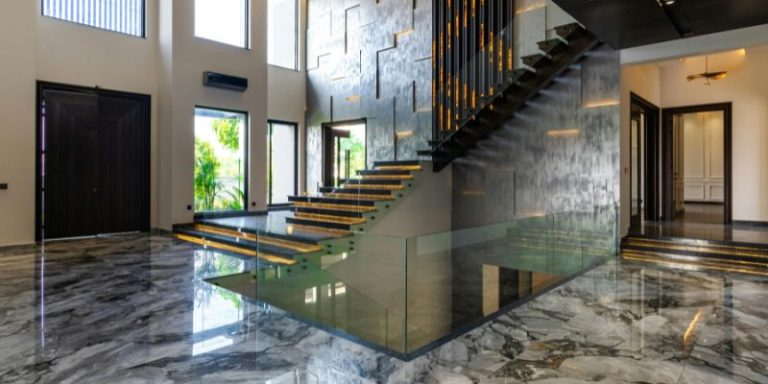
12 Marble Floor Patterns: Herringbone to Bookmatched (2026)
Marble floor pattern usually means one of two things: the stone variety (Carrara, Calacatta) or the tile layout (herringbone, Versailles) — confusing the two can mean paying $60/sqft for Calacatta when $13 Carrara gives the same layout. This guide covers all 12 marble varieties, the real layout patterns, 2026 installed costs, and which pattern fits a small room versus a foyer.
This post contains affiliate links. As an Amazon Associate, we earn from qualifying purchases — see our affiliate disclosure for details.
Quick Answer
The most popular marble floor layout is herringbone, which works in almost any room size. For a lower budget, lay any of the 12 marble varieties below in a simple straight or diagonal pattern instead of herringbone or Versailles — the layout complexity affects labor cost as much as the stone itself. Marble floor installation runs $10–$30 per square foot for tile, more for slabs or bookmatched layouts.
12 Marble Varieties and Their Natural Patterns
Each marble variety below has its own naturally occurring color and veining pattern — this is the stone itself, before you decide how to lay the tiles (see the layout patterns section further down for that).
Carrara Classic: Timeless Serenity
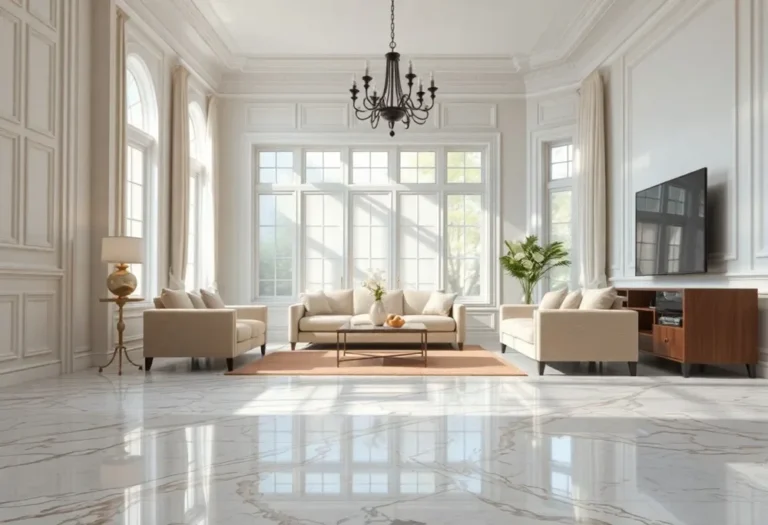
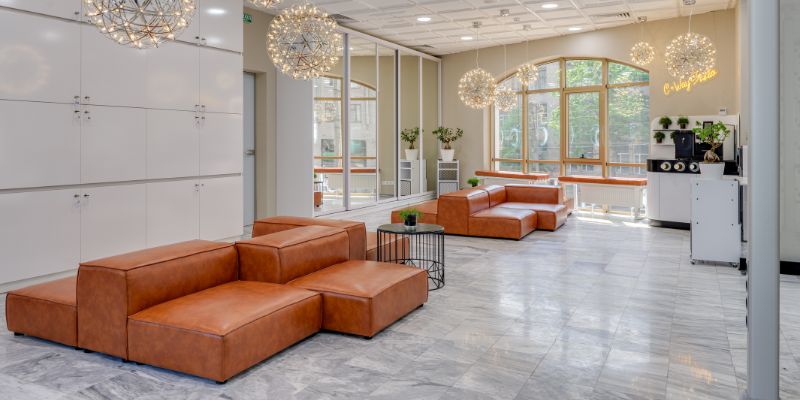
Carrara Classic pairs soft white stone with delicate grey veins — the most widely available marble variety and the benchmark other whites are compared against.
- Picture large Carrara tiles in a living room, reflecting light for a bright, airy feel.
- Its understated veining suits kitchens or hallways with neutral decor.
- Pair with warm wood furniture to balance its cool tones.
- Use polished finishes for a glossy shine that highlights the marble’s purity.
- A staple in elegant homes for centuries, and still the most budget-friendly premium white marble.
Pro Design Tip: Opt for a herringbone layout to add subtle movement to the serene base.
Budget Consideration: Choose smaller tiles or porcelain mimics for a cost-effective alternative.
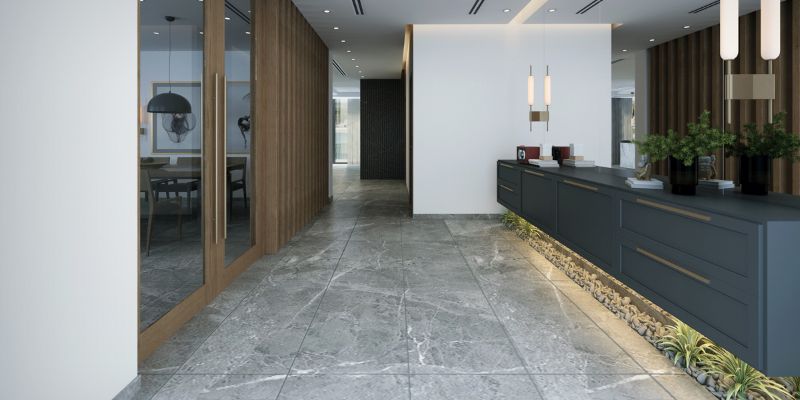
Calacatta Gold: Luxurious Warmth
Calacatta Gold pairs a creamy white base with bold, widely-spaced golden veins — rarer than Carrara and priced accordingly, often $25–$60 per square foot installed.
- Wide Calacatta slabs in a dining area exude opulence and reflect light well.
- Its striking gold streaks suit bathrooms or foyers with metallic accents.
- Pair with dark cabinetry to contrast its luminous tones.
- Install in large formats to showcase the dramatic veining.
- The higher price reflects genuine rarity, not just marketing — large clean Calacatta blocks are less common than Carrara.
Pro Design Tip: Use a diagonal cut to emphasize the veins’ flow across the space.
Budget Consideration: Limit to an accent area like a hearth to manage costs.
Nero Marquina: Bold Contrast
Nero Marquina pairs a deep black base with crisp white veins for the highest-contrast marble on this list.
- Glossy Nero Marquina tiles in an entryway set a bold first impression.
- Its stark contrast suits modern living rooms or bathrooms with white fixtures.
- Pair with sleek furniture and bright lighting to enhance the contrast.
- Lay in a checkerboard pattern with white marble for added drama.
- Because the contrast is so high, even small chips or etching show more visibly than on lighter marble.
Pro Design Tip: Add a subtle border to soften the intensity for smaller rooms.
Budget Consideration: Use as a border or inlay with cheaper tiles to save.
Emperador Dark: Rich Earth Tones
Emperador Dark brings a warm brown palette with golden veins, reading warmer and less formal than black or white marble.
- Rich Emperador tiles in a study ground the space with natural warmth.
- Its deep tones suit kitchens or dens with rustic decor.
- Pair with wooden beams or leather furniture for a harmonious look.
- Use a honed finish for a softer, less reflective texture that highlights the grain.
- Hides scuffing better than white marble, making it a practical choice for high-traffic rooms.
Pro Design Tip: Create a diamond pattern to showcase the marble’s tonal variations.
Budget Consideration: Opt for smaller slabs or mix with neutral tiles.
Statuario White: Pure Sophistication
Statuario White offers a pristine white canvas with soft grey veins — between Carrara and Calacatta in both price and vein boldness.
- Statuario tiles in a bathroom amplify light for a spa-like feel.
- Its minimal veining suits living rooms with modern or classic decor.
- Pair with pastel accents or glass elements for a fresh, airy vibe.
- Install in large, seamless tiles to emphasize its pure surface.
- A common substitute when a client wants Calacatta’s look at a lower price point.
Pro Design Tip: Use a chevron pattern for a subtle, dynamic twist.
Budget Consideration: Substitute with high-quality ceramic lookalikes.
Verde Guatemala: Lush Green Escape
Verde Guatemala features a vibrant green base with white veins — one of the few true green marble varieties available at tile scale.
- Verde slabs in a sunroom evoke a lush, tropical retreat.
- Its rich green tones suit kitchens or bathrooms with earthy accents.
- Pair with natural wood or stone elements for an organic feel.
- Lay in a random pattern to highlight its natural, flowing veins.
- Less commonly stocked than white or black marble, so expect longer lead times from suppliers.
Pro Design Tip: Accent with gold fixtures to enhance the green’s vibrancy.
Budget Consideration: Use as a small feature area to keep costs down.
Rosso Levanto: Warm Red Drama
Rosso Levanto glows with deep red tones and white veining for a variety few competitors’ marble guides even mention.
- Rosso tiles in a dining room add warmth and intensity.
- Its bold red base suits foyers or accent spaces with neutral walls.
- Pair with dark wood or brass for a rich, cohesive look.
- Use polished finishes to amplify its glossy appeal.
- Best used as an accent rather than a full floor — the saturation can overwhelm a large room.
Pro Design Tip: Frame with a white marble border to temper the boldness.
Budget Consideration: Opt for Rosso as an inlay with affordable tiles.
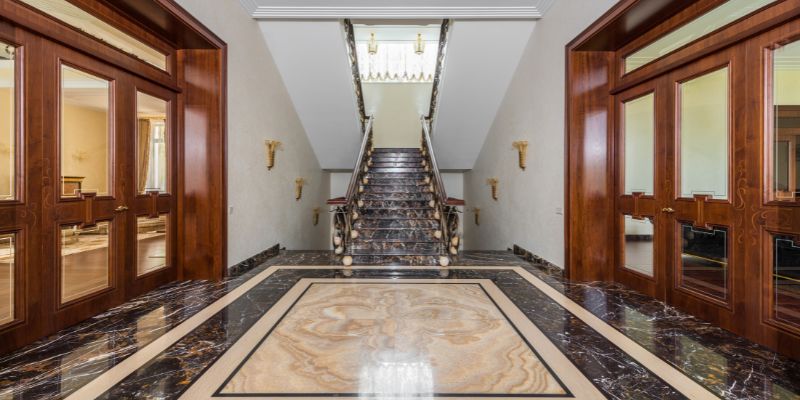
Crema Marfil: Soft Creamy Glow
Crema Marfil radiates warm beige tones with subtle veining, one of the most forgiving marbles for hiding dust and footprints.
- Crema tiles in a bedroom offer a gentle, calming ambiance.
- Its creamy warmth suits living rooms or kitchens with wood accents.
- Pair with earthy textiles or green plants for a natural harmony.
- Install in a basketweave pattern for a touch of intricate charm.
- A practical everyday choice precisely because light beige hides daily wear better than stark white or black.
Pro Design Tip: Use a honed finish for a matte, welcoming texture.
Budget Consideration: Mix with ceramic tiles in similar tones for savings.
Portoro Extra: Dark Opulent Shine
Portoro Extra pairs a black base with golden veins for one of the most expensive marble varieties on this list.
- Portoro slabs in a foyer exude wealth and sophistication.
- Its golden streaks suit bathrooms or living rooms with bold decor.
- Pair with white walls or metallic fixtures to highlight its richness.
- Use large tiles to showcase the intricate veining and glossy finish.
- Reserve for a genuine accent area — the price rarely justifies a full-room installation.
Pro Design Tip: Add a geometric layout to emphasize the gold accents.
Budget Consideration: Use as a small accent or border to stretch your budget.
Breccia Oniciata: Artistic Swirls
Breccia Oniciata blends creamy beige with red and gold swirls in an irregular, painterly pattern rather than linear veining.
- Breccia tiles in a hallway turn floors into a canvas of color.
- Its swirling pattern suits dining rooms or creative spaces with eclectic decor.
- Pair with neutral furniture to let the marble’s pattern shine.
- Lay in a random pattern to mimic natural stone formations.
- Because no two slabs swirl identically, order all tiles from the same lot to avoid visible mismatches.
Pro Design Tip: Polish to a high shine to enhance the swirl effect.
Budget Consideration: Source remnants for smaller areas like a nook.
Bianco Lasa: Crisp Modernity
Bianco Lasa features a bright white base with fine grey veins, closer to Statuario than to warmer Carrara.
- Bianco tiles in a kitchen amplify light for a clean, airy vibe.
- Its subtle elegance suits living rooms or bathrooms with sleek fixtures.
- Pair with light wood or stainless steel for a contemporary edge.
- Use a chevron or straight-lay pattern for a fresh, dynamic flow.
- A good middle-ground choice when Statuario is out of budget but plain Carrara feels too plain.
Pro Design Tip: Add a thin grey grout line to subtly outline the tiles.
Budget Consideration: Opt for ceramic replicas with similar veining.
Onyx Translucent: Ethereal Glow
Onyx Translucent shimmers with semi-transparent hues — often amber or green — and is technically a different mineral (calcite) from true marble, though sold alongside it.
- Onyx slabs in a bathroom can be backlit to reveal their translucent quality.
- Its luminous quality suits small spaces or feature areas with drama.
- Pair with simple decor to let the material’s glow take center stage.
- Use smaller tiles or borders to showcase its unique light-play.
- The rarest and most fragile material on this list — it needs backing reinforcement most marble doesn’t.
Pro Design Tip: Install LED strips beneath for a breathtaking glow effect.
Budget Consideration: Limit to a small accent space due to its rarity and fragility.
Marble Floor Layout Patterns Explained
Every marble variety above can be cut and laid in any of these layouts — the layout is a separate decision from the stone color, and it affects labor cost as much as the marble grade does.
- Herringbone: Rectangular tiles laid at 45° angles meeting in a zigzag — the most requested marble layout, and it visually widens narrow hallways.
- Versailles: A repeating module mixing four or more tile sizes (squares and rectangles) — a French pattern associated with grand foyers and formal rooms.
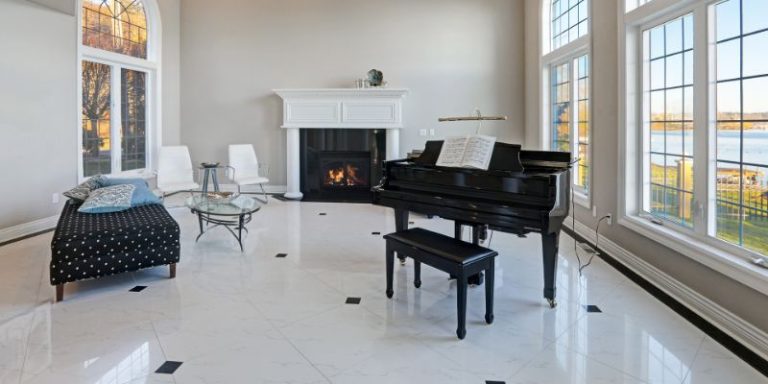
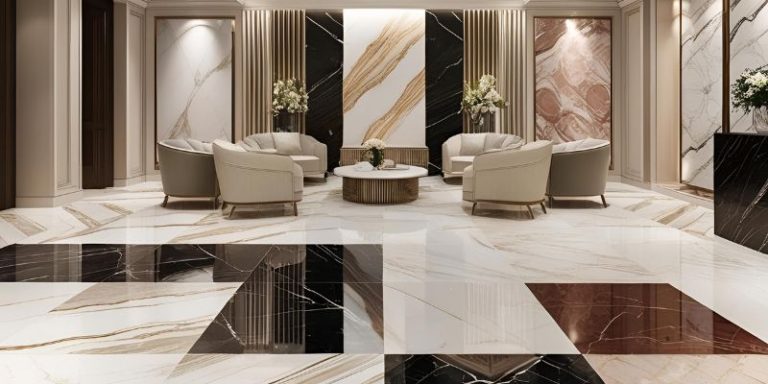
- Checkerboard: Two contrasting marble colors alternated in a square grid, often black-and-white — classic in entryways and bathrooms.
- Basketweave: Pairs of small rectangular tiles alternated to mimic woven fabric — suits smaller rooms like powder baths.
- Diagonal / straight-lay: The lowest-labor layout — tiles set square or rotated 45° to the walls, with no size mixing.
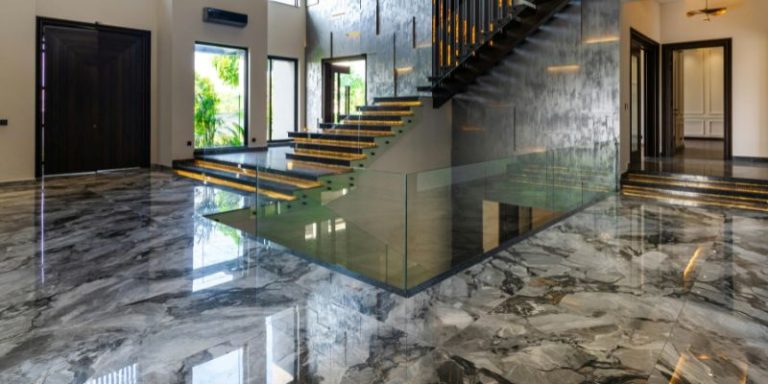
- Bookmatched: Adjacent slabs cut from the same block and mirrored, so the veining forms a symmetrical, often wavy or butterfly-like shape — this is what most people mean when they ask about marble floors with “wavy patterns.”
Bookmatched marble is marble cut and laid so two adjacent slabs mirror each other along the seam, turning the stone’s natural veining into a single symmetrical design. It costs more than a standard layout because slabs must come from the same block in sequence, but it’s the layout searchers usually mean by a “wavy” or “flowing” marble floor pattern.
Which Marble Floor Pattern Fits Your Room and Budget?
| Layout Pattern | Relative Labor Cost | Best Room Size | Best For |
|---|---|---|---|
| Diagonal / straight-lay | Lowest | Any size | Budget-first projects |
| Checkerboard | Low-moderate | Small to medium | Entryways, bathrooms |
| Basketweave | Moderate | Small rooms | Powder rooms, nooks |
| Herringbone | Moderate-high | Any size | Hallways, kitchens |
| Versailles | High | Large / formal | Foyers, great rooms |
| Bookmatched | Highest | Feature area | Statement foyers, lobbies |
📊 Marble tile flooring costs $10–$30 per square foot installed; Carrara White runs $13–$25/sqft while Calacatta runs $25–$60/sqft. — Source: HomeAdvisor, 2026
Best Marble Sealer Pick
Miracle Sealants 511 Impregnator Stone Sealer (Qt) – $29.75
Marble is porous — every variety above needs a penetrating sealer, not a topical coating, so etching and staining don’t ruin the veining pattern you paid for.
- Best for: New marble tile installs and annual resealing
- Why we picked it: Penetrating (not topical) so it won’t change the polished or honed finish discussed above
- Main drawback: Needs reapplication roughly every 1–2 years on floors
Compare more marble care options
 Option 1 Weiman Granite & Stone Sealer Spray (24oz) – $23.88
|
 Option 2 Miracle Sealants Color-Enhancing Stone Sealer (Qt) – $45.99
|
 Option 3 Microfiber Sealer Applicator Pad – $12.99
|
As an Amazon Associate we earn from qualifying purchases.
“I truly think that herringbone floors are timeless and pair well with any style.”
Caring For and Living With a Marble Floor
Whichever variety and layout you choose, marble etches from acidic spills and needs periodic resealing (see the product picks above). If a previous owner already has marble and it’s stained rather than just dull, our marble stain-removal guide covers the safe removal methods before you reseal. If your marble floor meets a different material at a doorway, see our guide to thresholds between wood and tile for a clean transition detail.
For more marble flooring selection, installation, and care guides, see the full marble flooring hub.
Frequently Asked Questions
What Are Marble Floors With Wavy Patterns Called?
They’re called bookmatched marble. Adjacent slabs are cut from the same block and installed as mirror images, so the natural veining forms a symmetrical, often wave-like or butterfly-shaped pattern along the seam. It costs more than a standard layout because slabs must be cut and installed in their original sequence.
What Is the Most Popular Marble Floor Pattern?
Herringbone is the most requested marble floor layout. Rectangular tiles are laid at 45-degree angles to form a continuous zigzag, which works in hallways, kitchens, and most room sizes without the higher labor cost of a Versailles or bookmatched layout.
How Much Does Marble Flooring Cost Per Square Foot?
Marble tile flooring costs $10-$30 per square foot installed as of 2026. Carrara White typically runs $13-$25/sqft, while rarer Calacatta runs $25-$60/sqft. Layout also affects price: herringbone and Versailles patterns add labor cost beyond a simple straight or diagonal lay.
Do You Need to Seal Marble Floors?
Yes. Marble is porous and etches from acidic spills like citrus juice or vinegar. A penetrating sealer (not a topical coating) should be applied when the floor is installed and reapplied roughly every 1-2 years, more often in kitchens or entryways.
What’s the Difference Between a Marble Type and a Marble Floor Pattern?
A marble type (Carrara, Calacatta, Nero Marquina) refers to the stone’s natural color and veining. A floor pattern (herringbone, Versailles, checkerboard, bookmatched) refers to how the tiles are physically laid out. Any marble variety can be installed in any layout pattern.
Conclusion
Marble flooring turns a room into a genuine design statement, but the variety and the layout are two separate decisions. Pick a stone color and veining style from the 12 varieties above, then choose a layout — diagonal for budget, herringbone for the most requested look, bookmatched or Versailles for a true showpiece foyer. Seal whichever you choose, and match the pattern complexity to your actual budget before committing to a quote.
Sponsored / affiliate links. As an Amazon Associate I earn from qualifying purchases. I may earn additional commission from eligible campaigns.