Are All Wax Rings For Toilets The Same Size? Explained
This is a really common point of confusion. Plumbing parts can seem standardized, but often there are subtle differences that matter. Getting this wrong can lead to a lot of frustration, wasted time, and even more mess than you started with. We’ve all been there, trying to solve a simple home repair and feeling overwhelmed by the options. Let’s clear this up together.
This article will walk you through what you need to know about toilet wax rings. We’ll cover if they are all the same, the different types available, and how to pick the right one for your situation. By the end, you’ll feel confident about tackling this common repair.
It’s a common misconception that all toilet wax rings are identical. While many share a standard diameter, their thickness and features can vary significantly. This means that not all wax rings are the same size, and choosing the correct one is vital for a proper seal and preventing leaks.
Understanding Toilet Wax Rings
So, what exactly is a toilet wax ring? Think of it as a seal. It sits between the base of your toilet and the flange on your floor. This flange is what connects the toilet to your home’s drain pipe. The wax ring’s job is crucial: it forms a watertight and airtight barrier.
When you flush the toilet, water and waste go down the drain. The wax ring prevents this from seeping out onto your bathroom floor. It also stops sewer gases from coming up into your bathroom. These gases can smell bad and even be harmful. That’s why a good wax seal is so important.
The wax itself is made from a special type of petroleum-based wax. It’s designed to stay soft enough to create a seal but firm enough to hold its shape. When you tighten the toilet down onto the flange, the pressure spreads the wax, filling any small gaps.
Are All Wax Rings the Same Size?
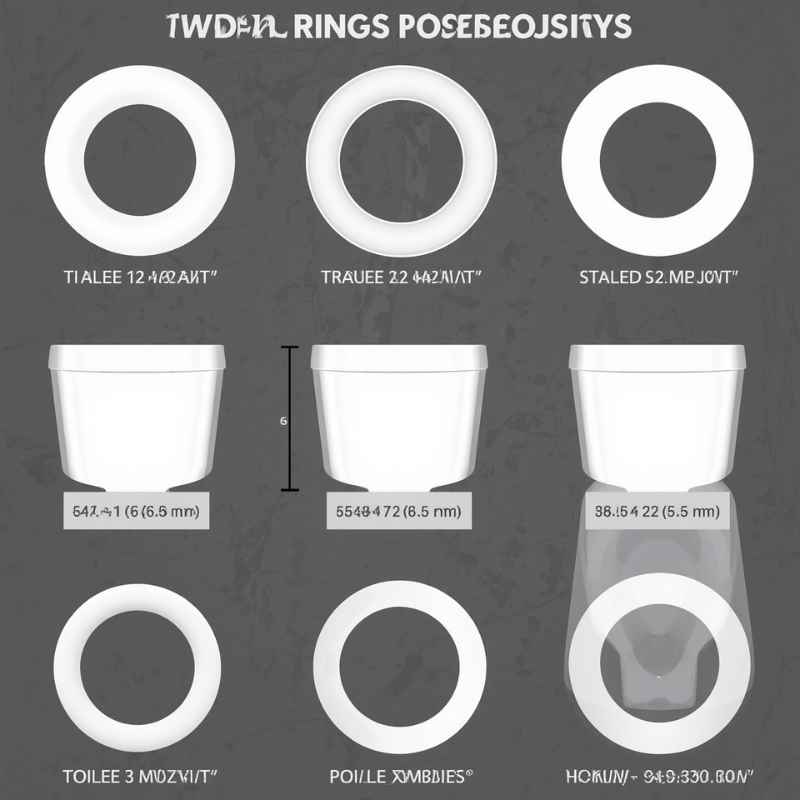
Here’s the direct answer: No, not all wax rings for toilets are the same size. While they share a common diameter to fit over the drain pipe, their thickness is the main difference. This thickness, often called the “height” or “thickness,” is what truly sets them apart.
Most standard wax rings are about 2 inches thick. This is enough for most typical toilet installations. However, sometimes the toilet base doesn’t sit perfectly flush with the floor. This can happen for a few reasons we’ll talk about later.
When there’s a gap between the toilet and the floor, a standard wax ring might not be enough. You need a thicker wax ring to bridge that gap. Using a standard ring in this situation means the seal won’t be complete. This will lead to leaks and unpleasant smells.
Understanding Wax Ring Thickness
Standard Wax Ring: Around 2 inches thick. Good for most toilets that sit firmly on the floor.
Extra-Thick Wax Ring: Often 3 inches or more. Used when the toilet base is slightly raised off the floor, or the flange is higher than usual.
Wax Ring with Horn: This type has a plastic or rubber funnel-like piece (the horn). It helps guide waste into the drain pipe and provides a better seal.
Why Different Thicknesses Exist
The need for different wax ring thicknesses boils down to variations in plumbing and toilet installation. It’s not about a “better” or “worse” ring, but about matching the ring to the specific needs of your bathroom.
One common reason for a gap is the toilet flange. This metal or plastic ring is secured to the floor and connects to the drainpipe. Sometimes, the flange can be set too high above the floor. This might happen if new flooring, like thick tile, was installed after the flange was put in place.
Another factor is the toilet itself. Some toilet bases are naturally a bit uneven. Or, the floor under the toilet might not be perfectly flat. Any slight unevenness can prevent the toilet from sitting flush. This leaves small gaps that a standard wax ring can’t seal properly.
If you have older plumbing, you might notice that the flange sticks up higher than in newer homes. This was more common in older building practices. So, depending on when your house was built and what renovations have happened, your flange height could be different.
Common Scenarios Needing a Thicker Ring
Scenario 1: New Flooring
You just installed thick tile. The toilet flange now sits higher than the floor surface.
Scenario 2: Uneven Floor
The floor around the toilet base isn’t perfectly flat. There are low spots.
Scenario 3: Older Home
The toilet flange in an older house is often positioned higher off the floor than in modern homes.
Scenario 4: Replacement Toilet Fit
The new toilet’s base doesn’t quite match the old one, creating small gaps.
Types of Toilet Wax Rings
Beyond just thickness, wax rings come with a few other variations. Understanding these can help you make the best choice.
Standard Wax Ring: This is your basic, everyday wax ring. It’s usually about 2 inches thick and has no extra features. It’s the most common type and works well for most straightforward toilet installations. If your toilet sits flat on the floor with no wobble, this is likely what you need.
Wax Ring with Horn: Many people prefer this type. It includes a plastic or rubber flange, often called a “horn.” This horn sticks down into the drainpipe. Its purpose is to help guide the waste and water directly into the pipe. It also helps create a more secure seal, especially if the flange is slightly misaligned.
Extra-Thick Wax Ring: As we’ve discussed, these are for situations where a standard ring won’t do. They can be 3 inches, 3.5 inches, or even thicker. They provide the extra height needed to bridge gaps caused by uneven floors or high flanges. Some extra-thick rings also come with the horn feature.
Wax-Free Seals: While not a wax ring, these are an alternative. They are made from rubber or foam. They offer a flexible seal and can sometimes be easier to install. They are also often repositionable, unlike wax which deforms on first use. However, many plumbers still trust the proven seal of wax.
Quick Scan: Choosing Your Wax Ring
| Situation | Recommended Wax Ring |
| Toilet sits perfectly flat. Flange is at floor level. | Standard Wax Ring (with or without horn) |
| Toilet has a slight wobble. Floor is uneven. Flange is slightly above floor. | Extra-Thick Wax Ring (consider with horn) |
| Flange is significantly above the floor. | Extra-Thick Wax Ring (3.5+ inches) |
My Own Experience with a Wobbly Toilet
I remember the first time I had to replace a toilet wax ring. It was in my first apartment, and the toilet had started to feel a bit loose. Not just a little rock, but a definite wobble when you sat down. Honestly, the thought of a wobbly toilet made me feel a bit uneasy about its stability.
I went to the hardware store, grabbed what I thought was a standard wax ring, and got to work. I carefully removed the old toilet, cleaned up the mess (which was a learning experience in itself!), and then I tried to set the new toilet down. It just didn’t feel right. There was still a gap. I pushed down hard, but it felt precarious. I ended up with a slight leak around the base, and that faint sewer smell started creeping back. It was so frustrating!
After a bit of head-scratching and a call to a friend who knew more about DIY than I did, I learned about the different thicknesses. My floor wasn’t perfectly level, and the flange was a bit higher than I realized. I had bought the wrong size wax ring. I had to take it all apart again and get an extra-thick one. That second attempt went much smoother. The toilet sat flush, felt solid, and the leaks stopped. It was a powerful lesson in the details.
How to Tell If You Need a Different Size Ring
Figuring out if your situation needs more than a standard wax ring is key. You can usually tell by looking and feeling. The best time to check is when you’re about to install a new toilet or when you remove an old one.
Check for Wobble: Try to gently rock the toilet. If it moves easily, it’s not sitting flush. This is a big sign that the seal might be compromised or will be when you install a new one.
Inspect the Floor: Look closely at the floor where the toilet base meets it. Are there visible gaps? Is the floor uneven? You can also slide a piece of paper or a thin ruler into any gaps to measure how much space there is. If you can easily slide more than a quarter-inch in, you likely need a thicker ring.
Examine the Flange: When the old toilet is off, look at the toilet flange. How high does it sit above the finished floor? The standard 2-inch wax ring is designed for a flange that is at or slightly below the floor level. If the flange is noticeably higher than the floor, you’ll need a thicker wax ring.
Smell or Leaks: If you already have a leak around the base of your toilet or a persistent sewer smell, it’s a strong indicator that the current wax seal has failed. When you replace it, measure any gaps or flange height to choose the correct new ring.
Simple Checks Before Buying
1. Does the toilet rock?
If yes, there’s a gap.
2. Are there visible gaps under the toilet base?
If yes, you need a thicker ring.
3. How high is the flange above the floor?
Measure it. This is the best guide.
Installation Tips for a Good Seal
Installing a wax ring correctly is just as important as choosing the right one. A faulty installation can lead to leaks, even with the perfect ring.
Clean Surfaces: Make sure both the bottom of the toilet and the toilet flange are clean and dry. Remove all old wax and debris. A clean surface helps the new wax seal properly.
Place the Ring Correctly: Set the wax ring onto the toilet flange, not onto the toilet base itself. The horn (if it has one) should point down into the drainpipe. Center the ring so it covers the entire opening of the flange.
Lower the Toilet Carefully: Slowly and evenly lower the toilet onto the flange with the wax ring in place. Try to get it aligned with the bolt holes on either side.
Press Down Firmly: Once the toilet is in place, press down firmly and evenly on the tank and bowl. You want to compress the wax ring to create the seal. Do NOT rock or twist the toilet back and forth to try and seat it. This can break the seal you just made.
Tighten Bolts Evenly: Tighten the nuts on the toilet bolts. Tighten them a little on one side, then a little on the other. Alternate until they are snug. Do not overtighten, as this can crack the porcelain or damage the wax seal.
Test for Leaks: After installation, flush the toilet several times. Check around the base for any signs of water. Also, check for any lingering sewer smells.
Installation Flow
Step 1: Clean Everything
Remove old wax and debris from flange and toilet base.
Step 2: Place Ring on Flange
Center the new wax ring over the drain pipe opening.
Step 3: Set Toilet Down
Gently lower the toilet, aligning bolts.
Step 4: Apply Even Pressure
Press down to compress the wax seal.
Step 5: Snug Bolts
Tighten nuts alternately, not too tight.
Step 6: Test
Flush and check for leaks or smells.
When a Universal Wax Ring Might Work
The term “universal wax ring” can be a bit misleading. It often refers to a standard-sized wax ring, typically 2 inches thick. These are designed to work in most common situations.
A universal wax ring is a good choice when you’ve inspected your setup and found that the toilet sits flush on the floor. This means there are no significant gaps. It’s also suitable if the toilet flange is at or slightly below the finished floor level.
However, if you suspect any unevenness, a high flange, or a wobbly toilet, a standard “universal” ring might not be sufficient. In those cases, you’d need to opt for an extra-thick ring, which is also readily available and not really “universal” in the sense of fitting everything.
Think of “universal” as meaning “most common.” It covers the majority of home plumbing scenarios. But always do a quick check of your own setup before assuming it will work perfectly for you. The small effort of checking can save you a lot of hassle later.
Universal Wax Ring: Best For.
Ideal Use: Standard toilets with a level floor contact.
Flange Height: When the flange is at or slightly below the finished floor.
No Wobble: If the toilet doesn’t rock when you sit on it.
Consideration: Always double-check your specific installation before deciding.
Can You Reuse a Toilet Wax Ring?
This is a firm no. You should never reuse a toilet wax ring. Once a wax ring is compressed and seated, it deforms. It has done its job of creating a seal.
If you lift the toilet and then try to put it back down with the same wax ring, it won’t create a proper seal. The wax has already been spread and hardened in its first position. It won’t reform to fill new gaps. This will almost certainly lead to leaks and smells.
So, even if the old wax ring looks intact, discard it. Always buy a new wax ring for every toilet installation or reinstallation. They are inexpensive, and using a new one is crucial for preventing future problems.
Alternative Seals: When Wax Isn’t Your Only Option
While wax rings are the traditional choice, there are alternatives available. These are often called wax-free seals or closet flange seals. They use different materials to create a watertight barrier.
These seals are typically made from rubber, foam, or a flexible polymer. They often have a flange built into them that fits into the drainpipe. One of their main advantages is that they can be more forgiving during installation.
For instance, if the flange is slightly misaligned, a flexible wax-free seal might adapt better than stiff wax. Some are also repositionable. If you accidentally set the toilet down slightly off, you might be able to lift it and readjust without needing a new seal. This can be a big help for DIYers.
However, many professional plumbers still prefer wax. They trust its long history and proven ability to create a robust seal. Wax is also not affected by extreme temperatures or age in the same way some rubber compounds might be. The choice often comes down to personal preference and the specific plumbing situation.
Wax-Free Seal Pros & Cons
Pros:
- Flexible, can adapt to minor misalignments.
- Some are repositionable during installation.
- Less messy than wax.
Cons:
- Not as time-tested as wax for all conditions.
- Can be more expensive.
- Performance can vary by brand and material.
What to Do If You Have a Cracked Toilet Flange
A cracked toilet flange is a more serious issue than just needing a different size wax ring. The flange is the critical link between your toilet and the drainpipe. If it’s cracked, a new wax ring won’t fix the problem by itself.
If you discover a cracked flange when you remove the toilet, you need to address this first. For minor cracks, a toilet flange repair ring might be an option. This is a special piece that fits over the old flange to reinforce it.
However, if the crack is significant, or if the flange is broken into pieces, it needs to be replaced entirely. This is a more involved job. It usually requires cutting the old flange out and fitting a new one securely to the drainpipe and the floor. This might be a good time to call a professional plumber.
Trying to seal a cracked flange with just a wax ring is a recipe for disaster. It will fail, leading to leaks and potential water damage. Always ensure the flange itself is in good condition before installing a new wax ring and toilet.
Can a Wax Ring Go Bad Over Time?
A wax ring doesn’t typically “go bad” on its own if it’s properly installed. It’s designed to last the lifetime of the toilet installation, which can be many years. The wax is stable and doesn’t degrade quickly.
The reasons a wax ring fails are usually related to installation issues or external factors. As we’ve discussed, the primary cause is an improper seal from the start. This could be due to the wrong thickness of wax, an uneven floor, or the toilet not being pressed down evenly.
Sometimes, extreme temperature fluctuations might cause the wax to become brittle over a very long time, but this is rare in a typical indoor bathroom. More often, the problem arises from movement. If the toilet is loose and rocks, the wax seal can be broken over time.
The main indicators that a wax ring has failed are visible leaks around the base of the toilet or a persistent sewer gas smell. These are the signals that the seal is no longer intact.
Frequently Asked Questions About Toilet Wax Rings
How thick is a standard toilet wax ring?
A standard toilet wax ring is typically about 2 inches thick. This thickness is suitable for most toilet installations where the toilet base sits flush on the floor and the flange is at or slightly below floor level.
When should I use an extra-thick wax ring?
You should use an extra-thick wax ring when the toilet base doesn’t sit flush on the floor. This happens if the floor is uneven, new flooring has raised the level, or the toilet flange is significantly higher than the finished floor surface. Measure the gap to determine the necessary thickness.
What is the purpose of the horn on a wax ring?
The horn is a plastic or rubber extension on some wax rings. It sticks down into the toilet drainpipe. Its main purpose is to help guide waste and water directly into the pipe, ensuring a cleaner passage and a more reliable seal, especially if the flange is slightly off-center.
Can I use plumber’s putty instead of a wax ring?
No, you should not use plumber’s putty or silicone sealant as a substitute for a toilet wax ring. Plumber’s putty is not designed to create the kind of seal needed for a toilet. It can harden or break down, leading to leaks and potential damage.
A wax ring is specifically engineered for this purpose.
How do I know if my toilet flange is too high?
You can tell if your toilet flange is too high by removing the toilet and measuring its height above the finished floor. If the flange extends more than about 1/4 inch above the floor, a standard wax ring may not create a proper seal, and you’ll need a thicker one.
Will a new wax ring stop a sewer smell?
Yes, if the sewer smell is caused by a failed wax ring, replacing it with a new, properly sized one will typically eliminate the odor. A failed wax ring allows sewer gases to escape into your bathroom. A good seal prevents this.
If the smell persists after replacing the ring, there may be another plumbing issue.
Conclusion: Not All Wax Rings Are Created Equal
We’ve covered a lot of ground, and hopefully, the confusion about toilet wax rings is now much clearer. The key takeaway is that while many wax rings share a basic diameter, they are definitely not all the same size in terms of thickness. That difference in height is critical for a proper seal.
Understanding your specific toilet installation—the floor level, the flange height, and the toilet base—will help you choose the right wax ring. Whether you need a standard ring, an extra-thick one, or one with a horn, selecting the correct type ensures your toilet is sealed tightly against leaks and unpleasant odors.
Sponsored / affiliate links. As an Amazon Associate I earn from qualifying purchases. I may earn additional commission from eligible campaigns.