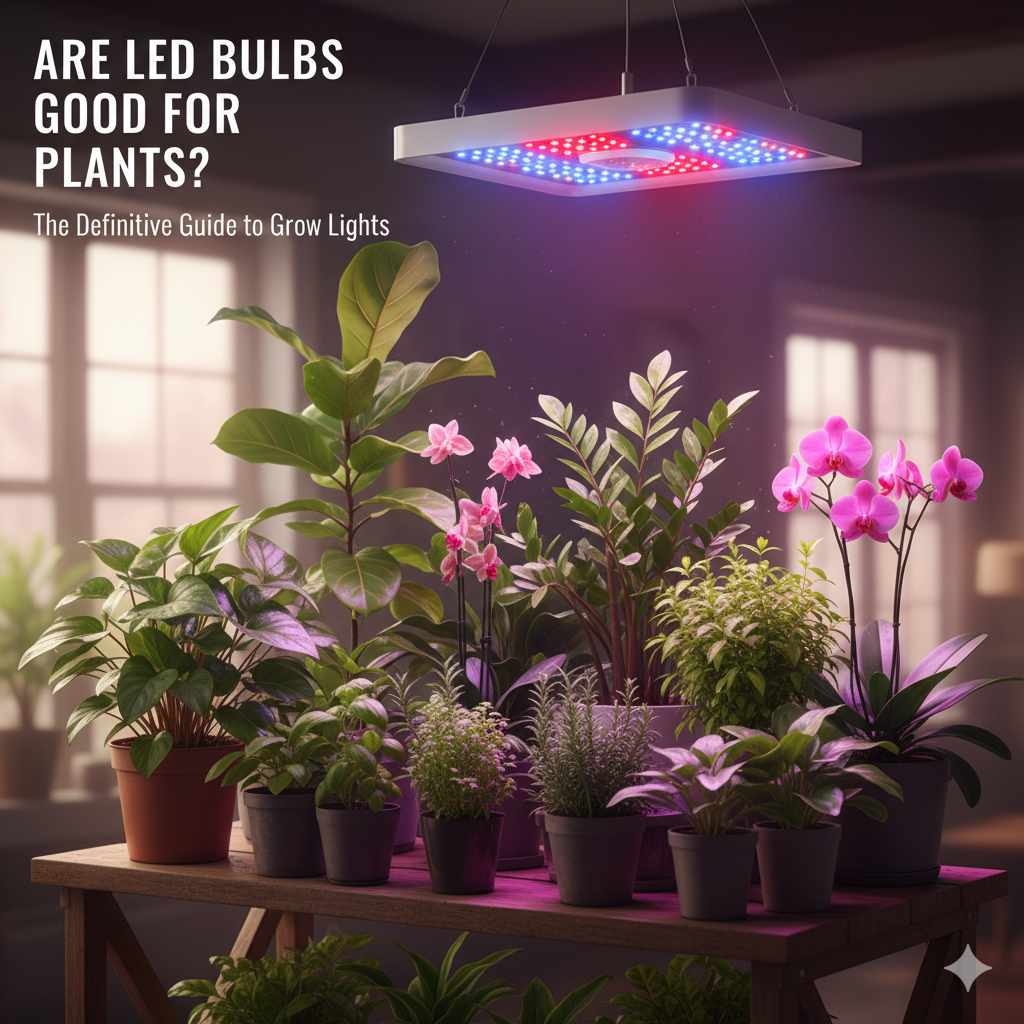
Are LED Bulbs Good for Plants? Essential Guide
Yes, LED bulbs are excellent for plants! They provide the specific light spectrum plants need to grow, are energy-efficient, and generate less heat than older bulb types, making them a safe and effective choice for indoor gardening. This guide will show you exactly why and how to use them.
Ever wondered if those bright LED lights you’re using for your home could also help your houseplants thrive? It’s a great question many home gardeners ask! Trying to figure out the best light for your green friends can feel a bit like a puzzle, especially with so many bulb options out there. You want your plants to be happy and healthy, and getting the right light is a huge part of that. Don’t worry, it’s simpler than you might think! We’re going to break down exactly why LED bulbs are a fantastic choice for your indoor garden and how you can use them to help your plants flourish. Get ready to see your plants reach new heights!
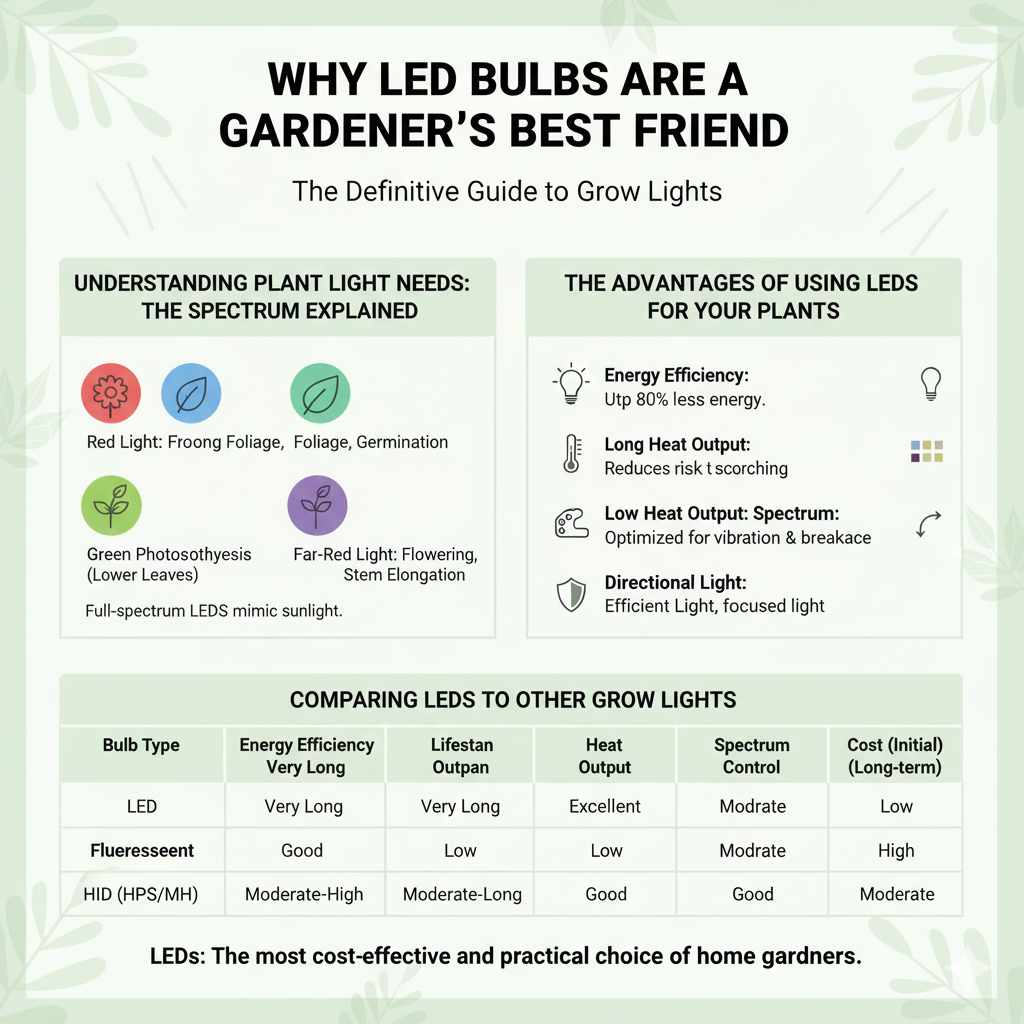
Why LED Bulbs Are a Gardener’s Best Friend
When it comes to indoor gardening, light is everything. Plants use light to make their own food through a process called photosynthesis. Different types of light have different effects on plants, and LEDs have really changed the game. They offer a lot of benefits that older types of lights just can’t match, making them a top pick for both beginners and experienced plant parents.
Understanding Plant Light Needs: The Spectrum Explained
Plants don’t just need light; they need the right kind of light. Think of it like feeding your plants. Just like they need certain nutrients in their soil, they need specific colors of light to grow properly.
Red Light: This is crucial for flowering and fruiting. It encourages plants to bloom and produce seeds.
Blue Light: This helps plants grow strong, leafy foliage and keeps them compact. It’s also important for germination and overall plant health.
Green Light: While plants reflect a lot of green light (which is why they look green to us!), some of it is still used for photosynthesis, especially in the lower leaves.
Far-Red Light: This can influence flowering and stem elongation.
LED grow lights are designed to emit these specific wavelengths. You can often find LEDs that offer a full spectrum, meaning they mimic natural sunlight by providing a balance of all the colors plants need. Some specialized LEDs might focus more on red and blue light, which are the most critical for vegetative growth and flowering.
The Advantages of Using LEDs for Your Plants
LEDs (Light Emitting Diodes) have quickly become the go-to choice for indoor growers, and for good reason. They offer a fantastic combination of efficiency, control, and plant-friendly features.
Energy Efficiency: LEDs use significantly less electricity than incandescent or even fluorescent bulbs. This means lower energy bills for you, which is always a win for home projects. For example, an LED bulb can use up to 80% less energy than a traditional incandescent bulb to produce the same amount of light.
Long Lifespan: LED bulbs last much longer – often 25,000 to 50,000 hours or more. This means you won’t be constantly replacing bulbs, saving you time and money in the long run.
Low Heat Output: Unlike older bulbs that get very hot, LEDs produce very little heat. This is a huge safety benefit for your plants, as it greatly reduces the risk of scorching or burning their leaves. You can place them closer to your plants without worry.
Customizable Spectrum: As we touched on, LED technology allows manufacturers to create bulbs that emit specific light wavelengths. This means you can choose lights that are optimized for different stages of plant growth – from seedlings to flowering.
Durability: LEDs are solid-state devices, meaning they don’t have fragile filaments or glass tubes like some other bulbs. This makes them more resistant to vibration and breakage.
Directional Light: LEDs can be designed to emit light in a specific direction, which can be more efficient for directing light onto your plants rather than scattering it everywhere.
Comparing LEDs to Other Grow Lights
To really appreciate LEDs, it helps to see how they stack up against older grow light technologies.
| Bulb Type | Energy Efficiency | Lifespan | Heat Output | Spectrum Control | Cost (Initial) | Cost (Long-term) |
| :———— | :—————- | :———– | :————– | :————— | :————- | :————— |
| LED | Very High | Very Long | Very Low | Excellent | Moderate | Low |
| Fluorescent | Good | Moderate | Low | Moderate | Low | Moderate |
| Incandescent | Poor | Short | Very High | Poor | Very Low | High |
| HID (HPS/MH) | Moderate-High | Moderate-Long| High | Good | High | Moderate |
As you can see, while LEDs might have a slightly higher upfront cost, their efficiency, longevity, and superior performance make them the most cost-effective and practical choice for most home gardeners.
Choosing the Right LED Bulb for Your Plants
Not all LED bulbs are created equal when it comes to growing plants. You need to select bulbs that provide the right kind of light. Here’s what to look for:
Understanding “Grow Lights” vs. “Standard LEDs”
This is a really important distinction!
Standard Household LEDs: These are the bulbs you use for general room lighting. They are designed to make colors look natural to the human eye and provide a pleasant ambiance. While some may have a bit of blue and red in their spectrum, they aren’t optimized for plant growth. They might be okay for very low-light plants that don’t need much help, but they won’t provide the boost needed for robust growth.
LED Grow Lights: These are specifically engineered to provide the wavelengths of light that plants need most for photosynthesis. They often have a distinctive pinkish or purplish hue because they heavily feature red and blue light. Some “full-spectrum” grow lights aim to mimic natural sunlight, appearing more white or yellow to the human eye but still delivering the critical red and blue wavelengths.
Key Features to Look For in LED Grow Lights
When you’re shopping for LED grow lights, keep these features in mind:
Full Spectrum: Lights labeled “full spectrum” are generally the best all-around choice. They provide a balance of red, blue, and green light, mimicking sunlight and supporting all stages of plant growth.
Color Temperature (Kelvin – K): For vegetative growth (leafy greens), a cooler color temperature (around 6500K) is often preferred, as it’s rich in blue light. For flowering and fruiting, a warmer color temperature (around 2700K-3000K) is better, as it’s richer in red light. Full-spectrum lights will have a balanced range.
Photosynthetic Photon Flux Density (PPFD): This measures how many photons are hitting a square meter of your plant’s surface each second. Higher PPFD means more light energy is available for photosynthesis. The amount you need depends on the type of plant. Leafy greens might need 100-300 µmol/m²/s, while fruiting plants might require 600-1000 µmol/m²/s. This spec is often found on more advanced grow lights.
Wattage: While not the only factor, wattage can give you an idea of the light’s power. However, focus more on the PPFD or the manufacturer’s recommendations for coverage area and plant types. Energy-efficient LEDs can provide high light output with lower wattage.
PAR (Photosynthetically Active Radiation): This refers to the specific range of light wavelengths (400-700 nanometers) that plants use for photosynthesis. Good grow lights will state that they emit PAR light.
Types of LED Grow Light Fixtures
LED grow lights come in various forms, each suited for different needs:
Bulbs (E26/E27 Base): These are the easiest to start with. They screw into standard lamp fixtures or ceiling sockets. Look for bulbs specifically marketed as “LED grow lights” with the features mentioned above. They are great for supplementing natural light or for small setups.
Tubes (T5/T8 Style): These are long, linear lights that are excellent for growing seedlings, herbs, or leafy greens. They provide even coverage over a wider area and can be hung in rows.
Panels/Fixtures: These are larger, more powerful units designed for serious growers or for covering larger areas. They often have a higher output and are more efficient for dedicated grow spaces.
How to Use LED Grow Lights Effectively
Simply screwing in an LED grow light isn’t quite enough. To get the best results for your plants, you need to consider placement, duration, and how to integrate them with your existing setup.
Step-by-Step Guide to Setting Up Your LED Grow Lights
Let’s get your plants bathed in the perfect light!
1. Choose Your Light: Based on your plants’ needs and the space you have, select the right type of LED grow light (bulb, tube, or panel). Look for full-spectrum options if possible.
2. Select Your Fixture: For LED bulbs, you’ll need a standard lamp, pendant light, or a clamp fixture. Ensure the fixture can handle the wattage and is safe to use. For tubes, you’ll need a compatible fixture.
3. Determine Placement: This is crucial!
Distance: Because LEDs produce less heat, you can often place them closer to your plants than older lights. For most LED grow bulbs, start with about 6-12 inches (15-30 cm) above the plant canopy. For more powerful panel lights, you might need to hang them 18-24 inches (45-60 cm) away. Always check the manufacturer’s recommendations. Observe your plants; if they show signs of stress (yellowing leaves, stunted growth), adjust the distance.
Coverage: Ensure the light covers the entire plant or the area where you want your plants to grow. For bulbs, they are best for single plants or small clusters. Tubes and panels offer broader coverage.
4. Set the Light Schedule: Plants need a period of darkness to rest and respire.
Vegetative Growth: Most plants need 14-18 hours of light per day.
Flowering/Fruiting: Many plants switch to 10-12 hours of light per day to initiate flowering.
Seedlings: 16-18 hours of light is generally good.
Use a simple timer (available at any hardware store) to automate your light schedule. This ensures consistency, which is vital for plant health.
5. Observe and Adjust: Keep an eye on your plants. Are they growing well? Do the leaves look healthy? If leaves are stretching out and looking pale, they might need more light or the light might be too far away. If leaves are curling or looking bleached, the light might be too close or too intense. Make small adjustments as needed.
6. Supplement or Replace Natural Light: If you’re supplementing natural light, position your LED grow light to fill in shadowed areas or provide extra intensity during shorter winter days. If you’re relying solely on artificial light, ensure your setup provides adequate coverage and intensity for all your plants.
How Long Should LED Grow Lights Stay On?
The duration, or photoperiod, is as important as the type of light. Most plants thrive on a consistent schedule.
Leafy Greens and Herbs: Typically do well with 14-16 hours of light daily.
Flowering and Fruiting Plants (like tomatoes or peppers): Need specific light cycles. For vegetative growth, they might need 16-18 hours. To encourage flowering, you’ll switch them to a shorter day, like 10-12 hours of light.
Seedlings and Young Plants: Generally benefit from longer light periods, around 16-18 hours, to encourage vigorous initial growth.
It’s best to research the specific needs of the plants you are growing. Using a timer is highly recommended to ensure consistency and avoid forgetting to turn lights on or off.
Integrating LEDs with Natural Sunlight
If your plants are near a window, you can use LEDs to boost their light exposure.
Supplementing: Place LED grow lights strategically to fill in areas where natural light is weak or inconsistent. This is especially helpful during winter months or in rooms with limited window space.
Boosting Intensity: For plants that crave bright light, an LED can add the extra intensity they need, even if they are already near a window.
Consistent Cycles: You can use LEDs to ensure your plants get a consistent amount of light throughout the day, even if the natural sunlight is variable.
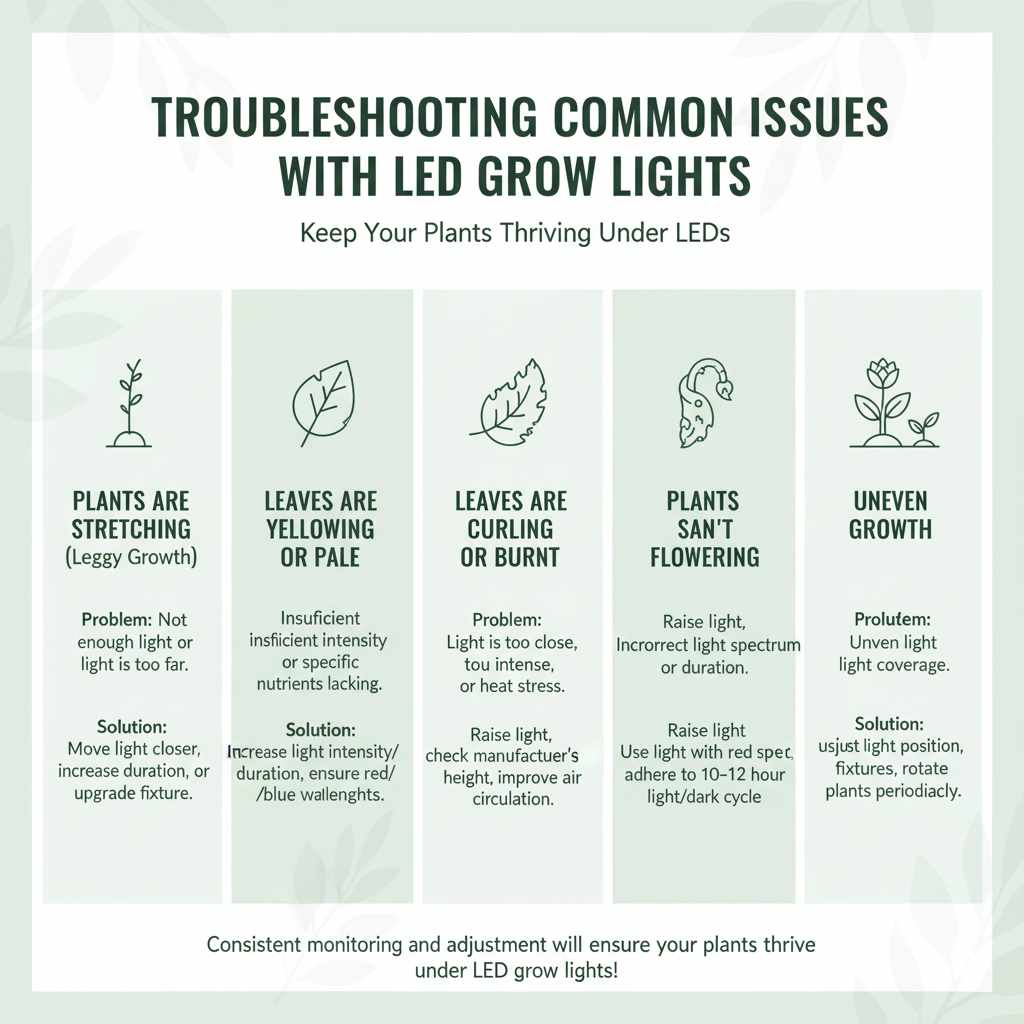
Troubleshooting Common Issues with LED Grow Lights
Even with the best intentions, you might run into a few hiccups. Here are some common problems and how to solve them:
Plants are Stretching (Leggy Growth): This usually means the plants aren’t getting enough light, or the light source is too far away.
Solution: Move the LED grow light closer to the plants, or ensure the light is powerful enough for the number of plants you’re trying to cover. If using a timer, check that it’s set for enough hours of light.
Leaves are Yellowing or Pale: This can indicate insufficient light or a lack of specific nutrients. However, if you’ve ruled out nutrient issues, it’s likely a light problem.
Solution: Increase light intensity or duration. If you’re using a full-spectrum light, ensure it has adequate red and blue wavelengths.
Leaves are Curling or Appearing Burnt/Bleached: This is often a sign that the light is too close, too intense, or the bulb is too hot (though LEDs are much cooler than older bulbs).
Solution: Raise the LED grow light further away from the plants. Check the manufacturer’s recommended hanging height. Ensure good air circulation around your plants.
Plants Aren’t Flowering or Fruiting: If you have flowering plants that aren’t blooming, it could be a light spectrum or duration issue.
Solution: Ensure you are using a grow light with sufficient red spectrum light and that you are adhering to the correct light/dark cycle for flowering (typically 10-12 hours of light).
Uneven Growth: Some parts of the plant are thriving, while others are struggling.
Solution: Adjust the position of your light to ensure even coverage. For larger areas, you might need multiple light sources or a wider-coverage fixture. Rotate your plants periodically if your light coverage isn’t perfect.
Frequently Asked Questions About LED Grow Lights for Plants
Q1: Can I use regular household LED bulbs for my plants?
A1: While some low-light plants might survive under standard household LEDs, they are not optimized for plant growth. For best results, especially for seedlings or plants that need significant light, use LED bulbs specifically designed as “grow lights.” These provide the necessary spectrum of light that plants need to thrive.
Q2: What color light is best for plants?
A2: Plants primarily use red and blue light for photosynthesis. Red light promotes flowering and fruiting, while blue light encourages leafy growth and keeps plants compact. Full-spectrum LED grow lights provide a balance of these and other wavelengths, mimicking natural sunlight and supporting all stages of plant development.
Q3: How close should I hang my LED grow lights?
A3: Because LEDs produce very little heat, they can often be placed closer to plants than older bulb types. For most LED grow bulbs, start with 6-12 inches (15-30 cm) above the plant canopy. For more powerful panel lights, you might need 18-24 inches (45-60 cm). Always check the manufacturer’s specific recommendations for your light model.
Q4: Do LED grow lights need a timer?
A4: Yes, it’s highly recommended to use a timer with your LED grow lights. Plants need a consistent light cycle, including a period of darkness, to grow healthy. A timer ensures your plants receive the correct number of hours of light and darkness each day without you having to manually manage it.
Q5: How many hours a day should LED grow lights be on?
A5: This depends on the type of plant and its growth stage. Most leafy greens and herbs do well with 14-16 hours of light per day. Flowering and fruiting plants may need 16-18 hours during vegetative growth and then a shift to 10-12 hours to encourage blooming. Seedlings typically benefit from 16-18 hours.
Q6: Can LED grow lights be too powerful for plants?
A6: Yes, if a light is too intense or placed too close, it can stress or even burn your plants. This is often referred to as “light burn” or “light shock.” Signs include yellowing, bleaching, or curling leaves. The solution is to move the light further away or reduce the duration it’s on, and ensure adequate ventilation.
Q7: What is PPFD and why is it important?
A7: PPFD stands for Photosynthetic Photon Flux Density. It measures the amount of usable light (photons within the PAR spectrum) that reaches your plants per second per square meter. A higher PPFD generally means more light energy is available for photosynthesis, leading to potentially faster and healthier growth. Different plants have different PPFD requirements.
Conclusion
So, are LED bulbs good for plants? Absolutely! They are an energy-efficient, long-lasting, and highly effective lighting solution for indoor gardeners of all levels. By understanding the basics of plant light needs and choosing the right type of LED grow light, you can create an optimal environment for your plants to flourish, whether you’re starting seeds, growing herbs for your kitchen, or nurturing flowering houseplants.
Remember to consider the spectrum, placement, and duration of your LED lights. With a little attention to these details, you’ll be well on your way to a thriving indoor garden. Don’t be afraid to experiment a little and observe your plants – they’ll tell you what they need. Happy growing!