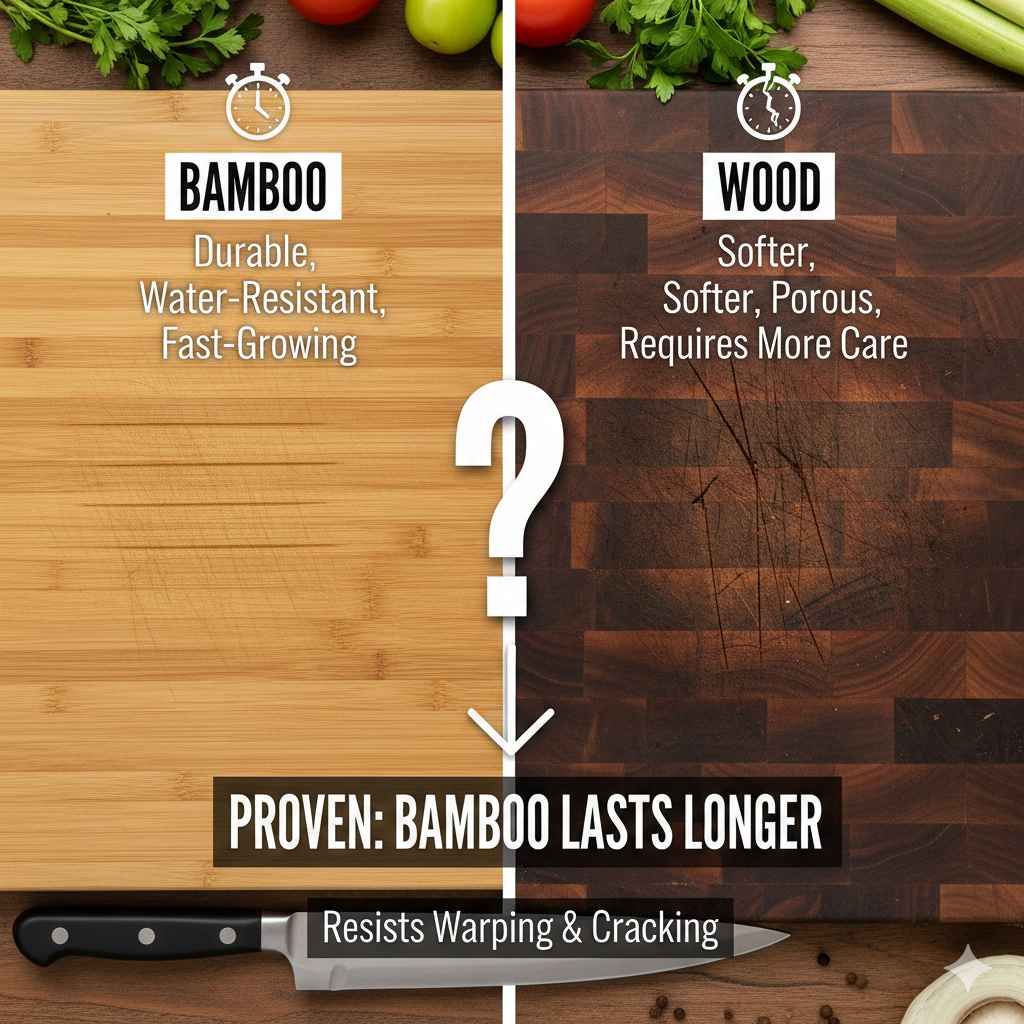
Bamboo Vs Wood Cutting Board Which Will Last Longer Proven
When properly maintained, a high-quality hardwood cutting board (like maple, walnut, or cherry) will last significantly longer than a bamboo cutting board. Wood’s self-healing properties, solid construction, and ability to be refinished give it a lifespan of decades, while bamboo’s brittle nature and glued construction often lead to splitting and dulling knives much sooner.
Picking a cutting board seems simple, right? But then you stand in the aisle, looking at a wall of options. Two of the most popular choices are classic wood and trendy bamboo. They both look great, but you’re probably wondering, “Which one will actually last?” It’s a frustrating choice because you want to buy something that won’t warp, crack, or dull your favorite knives after a few months.
You’ve come to the right place! As a woodworker, I’ve spent countless hours with both materials, and I understand what makes them strong and what makes them fail. In this guide, I’ll break down the real differences between bamboo and wood cutting boards. We’ll look at durability, how they treat your knives, and what it takes to keep them in great shape. By the end, you’ll know exactly which board is the best long-term investment for your kitchen.
What Exactly Is a Wood Cutting Board?
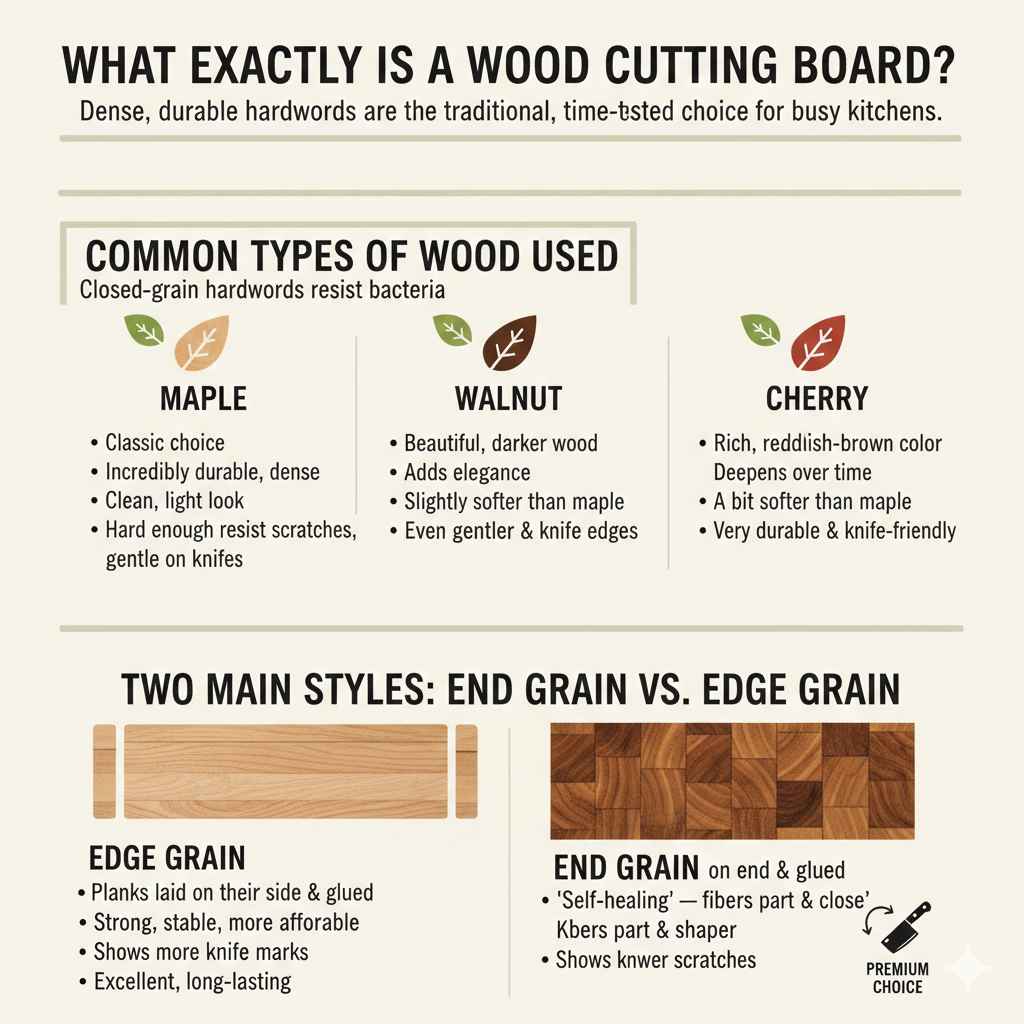
When we talk about “wood” cutting boards, we’re usually talking about hardwoods. These are dense, durable woods that can stand up to the daily chopping and slicing in a busy kitchen. They are the traditional, time-tested choice for a reason.
Common Types of Wood Used
Not all woods are created equal. The best cutting boards are made from closed-grain hardwoods, which means they are less porous and better at resisting bacteria. The top choices include:
- Maple: This is the classic choice. It’s incredibly durable, dense, and has a clean, light look. It’s hard enough to resist deep scratches but not so hard that it will dull your knives.
- Walnut: A beautiful, darker wood that adds a touch of elegance to any kitchen. It’s slightly softer than maple, which makes it even gentler on your knife edges.
- Cherry: Known for its rich, reddish-brown color that deepens over time. It’s a bit softer than maple but still very durable and knife-friendly.
Two Main Styles: End Grain vs. Edge Grain
You might hear these terms and wonder what they mean. It’s all about how the wood is put together, and it makes a big difference in performance.
- Edge Grain: Imagine laying wooden planks on their side and gluing them together. This is an edge-grain board. It’s strong, stable, and more affordable. It shows more knife marks over time but is still an excellent, long-lasting option.
- End Grain: This is the premium choice, often recognizable by its checkerboard pattern. It’s made by standing short blocks of wood on their end and gluing them together. When your knife cuts on an end-grain board, the wood fibers part and then close back up. This “self-healing” quality keeps your knives sharper for longer and shows fewer scratches on the board itself.
And What About Bamboo Cutting Boards?
Here’s a fun fact: bamboo isn’t wood at all! It’s actually a type of grass. To make a cutting board, bamboo stalks are cut into strips, processed, and then laminated together with heat, pressure, and a strong adhesive. This construction method is key to understanding its strengths and weaknesses.
Why People Like Bamboo
Bamboo has grown in popularity for a few good reasons:
- Sustainability: Bamboo is a highly renewable resource. It grows incredibly fast, often reaching maturity in just 3-5 years, compared to decades for hardwoods.
- Affordability: Generally, bamboo cutting boards are less expensive than their high-quality hardwood counterparts.
- Lightweight: They are typically lighter and thinner than wood boards, making them easy to move and store.
- Less Porous: Bamboo is naturally dense and less porous than wood, meaning it absorbs less water.
The Durability Showdown: Head-to-Head Comparison
Now for the main event. Let’s put these two materials side-by-side and see which one really holds up over time. The winner isn’t just about being tough; it’s about how it handles knives, water, and years of use.
Hardness and Your Knives (This Is a Big One!)
You want a cutting board that can take a hit, but if it’s too hard, it will destroy your knives. We measure wood hardness using the Janka scale—a higher number means a harder material.
Here’s where things get interesting. Bamboo is very hard, often harder than maple. While that sounds good, it’s actually a disadvantage. The hard surface offers no “give,” causing the sharp edge of your knife to roll or chip with every cut. You’ll find yourself sharpening your knives much more often.
Hardwood, on the other hand, is in the sweet spot. It’s durable enough to prevent deep gouges but soft enough to be gentle on your blades. End-grain wood boards are the ultimate champions here, as their self-healing fibers protect your knife edge like nothing else.
| Material | Janka Hardness Rating (approx.) | Effect on Knives |
|---|---|---|
| Bamboo | 1,400 – 2,000 lbf | Hard (can dull knives quickly) |
| Hard Maple | 1,450 lbf | Excellent (durable but gentle) |
| American Walnut | 1,010 lbf | Best (very gentle on knives) |
Water Resistance and Warping
Water is the enemy of both bamboo and wood cutting boards. If either one is left soaking in the sink or run through the dishwasher, it will warp, split, or crack.
Bamboo is naturally less porous than wood, so it resists water absorption a bit better on the surface. However, this is where its construction becomes a weakness. Because a bamboo board is made of many small strips glued together, water can seep into the tiny seams between the strips. This can weaken the glue over time, causing the board to delaminate or split apart.
A solid wood board, especially when properly oiled, develops a protective barrier. The oil penetrates the wood grain and repels water, preventing it from soaking in. While wood can still warp if mistreated, a well-maintained board is incredibly stable. According to the U.S. Department of Agriculture, proper seasoning and care are essential to the longevity of wood surfaces in the kitchen.
Maintenance and The Ability to Be Repaired
Every cutting board needs a little love to last. But the kind of maintenance they need, and your ability to fix them when they get worn, is very different.
Caring for Your Cutting Board
- Washing: For both wood and bamboo, wash them by hand with a little soap and warm water right after use. Never, ever put them in the dishwasher or let them soak.
- Drying: Pat them dry with a towel immediately after washing and let them air dry completely, standing on an edge. This prevents water from pooling and causing problems.
-
Oiling: This is the most important step for longevity, especially for wood. Oiling your board creates a protective seal that blocks water and bacteria. A good rule of thumb is to oil it once a month.
- For Wood: Use a food-grade mineral oil. Apply a generous coat, let it soak in for a few hours (or overnight), and then wipe off the excess.
- For Bamboo: Bamboo also benefits from occasional oiling to prevent it from drying out and cracking, but it’s less critical than for wood.
Repair and Refinishing
This is where wood boards prove their long-term value. After years of use, a wood cutting board will have knife marks and stains. The fix? You can simply sand the surface down to reveal a fresh, brand-new layer of wood. With a quick re-oiling, your board will look and perform like it did on day one. An end-grain or thick edge-grain board can be refinished many times, allowing it to last for decades or even generations.
You can’t do this with a bamboo board. Because it’s made of thin, laminated strips, sanding it down is not really an option. Once it’s deeply scarred, stained, or starts to splinter, it’s usually time to replace it.
Which Is More Sanitary?
This is a common myth. Many people think plastic or bamboo is more hygienic than wood. However, research has shown that wood has natural antimicrobial properties. A famous study from the University of Wisconsin’s Food Research Institute found that bacteria, including salmonella, died off within minutes on wood surfaces but survived on plastic boards.
The key to sanitation for any board is cleaning it properly. Deep knife grooves can harbor bacteria on both wood and bamboo. The advantage of wood is that its self-healing nature (especially end-grain) results in fewer deep grooves in the first place. And when it does get heavily scarred, you have the option to sand it smooth again, effectively erasing any bacteria-hiding spots.
The Final Verdict: Which Board Will Last Longer?
After looking at all the evidence, the winner is clear.
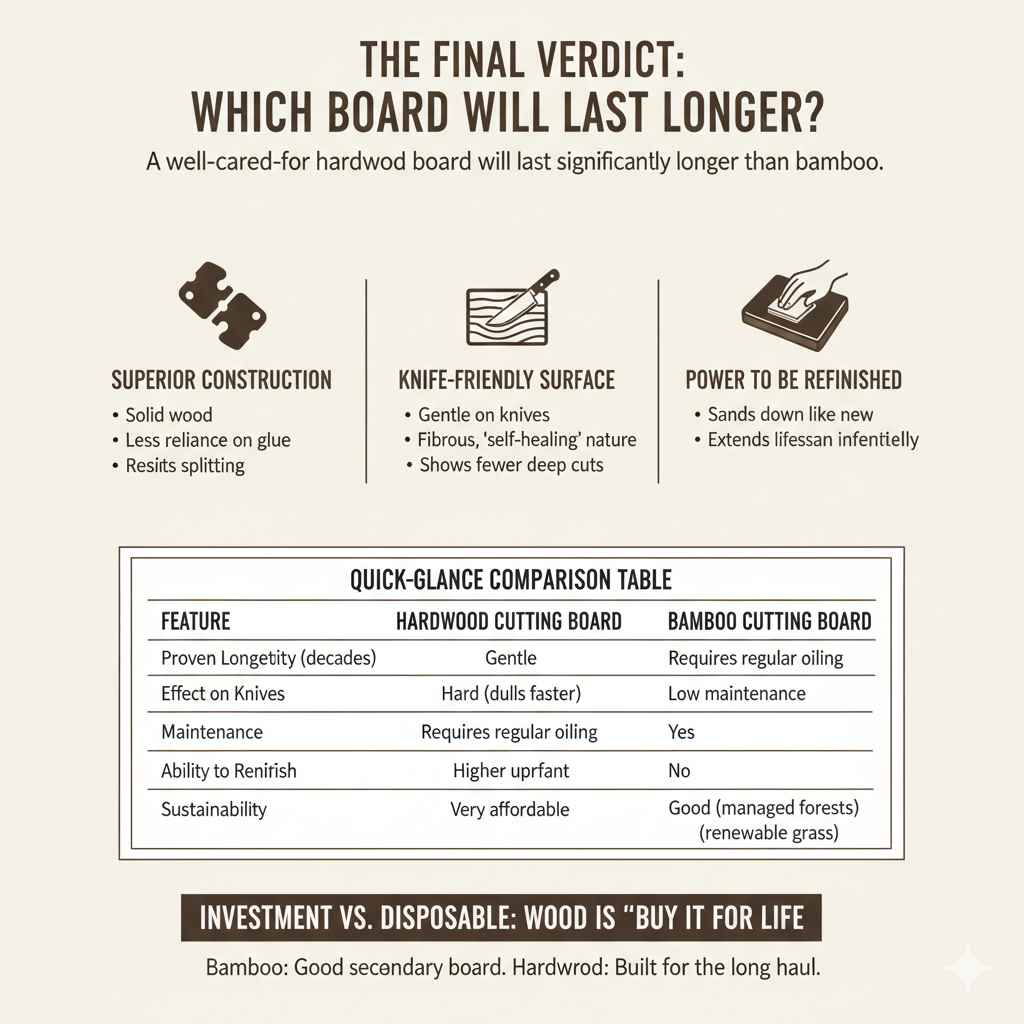
A well-cared-for hardwood cutting board will last significantly longer than a bamboo cutting board.
While a bamboo board might serve you well for a few years with light use, it simply can’t match the long-term resilience of wood. The main reasons are:
- Superior Construction: Solid wood boards don’t rely on glue in the same way bamboo boards do. They are less likely to split or delaminate at the seams.
- Knife-Friendly Surface: Wood is kinder to your knives, but more importantly, its fibrous nature (especially end-grain) is self-healing, showing fewer deep cuts over time.
- The Power to Be Refinished: The ability to sand down a wood board and make it new again is its ultimate superpower. This means its lifespan isn’t limited by surface wear and tear.
A quality maple or walnut cutting board is a “buy it for life” kitchen tool. It may cost more upfront, but it’s an investment that pays for itself by not needing to be replaced. A bamboo board is a good budget-friendly or secondary board, but it’s not built for the long haul.
Quick-Glance Comparison Table
| Feature | Hardwood Cutting Board | Bamboo Cutting Board |
|---|---|---|
| Proven Longevity | Excellent (decades, even generations) | Fair (a few years with care) |
| Effect on Knives | Gentle (keeps knives sharper) | Hard (dulls knives faster) |
| Maintenance | Requires regular oiling | Low maintenance, but benefits from oiling |
| Ability to Refinish | Yes, can be sanded down many times | No, cannot be effectively refinished |
| Cost | Higher initial investment | Very affordable |
| Sustainability | Good (from sustainably managed forests) | Excellent (highly renewable grass) |
FAQs: Your Cutting Board Questions Answered
Can I put a wood or bamboo cutting board in the dishwasher?
No, absolutely not! This is the fastest way to destroy either type of board. The intense heat and prolonged exposure to water will cause them to warp, crack, and split. Always wash them by hand.
How often should I oil my wood cutting board?
A good rule is “once a day for a week, once a week for a month, and once a month forever.” When it’s brand new, oil it frequently to build up a protective layer. After that, oiling it once a month is perfect for keeping it hydrated and protected.
What is the best oil to use on a cutting board?
Food-grade mineral oil is the best and most affordable choice. It’s colorless, odorless, and won’t go rancid like cooking oils (e.g., olive or vegetable oil). You can also buy specialized “board creams” which are often a mix of mineral oil and beeswax for extra protection.
Is bamboo really more sustainable than wood?
Bamboo is a very sustainable resource because it grows so quickly. However, producing bamboo boards requires processing and adhesives, and shipping it from Asia (where most bamboo is grown) has an environmental footprint. Wood sourced from well-managed, local forests can also be a very sustainable choice. For more details on sustainable forestry, you can check resources from organizations like the American Forest Foundation.
My bamboo board is starting to splinter. Can I fix it?
Unfortunately, once a bamboo board starts to splinter or delaminate, it’s very difficult to repair effectively. The splinters can be a safety hazard, getting into your food. At this point, it’s usually best to replace the board.
Which type of wood is the absolute best for a cutting board?
Hard Maple (specifically Sugar Maple) is widely considered the king of cutting board woods. It offers the perfect balance of hardness, durability, a closed grain, and a neutral look. Walnut is a fantastic choice if you want something darker and a bit softer on your knives.
Can I cut raw meat on my wood or bamboo board?
Yes, you can, but you must clean it thoroughly afterward. Wash it immediately with hot, soapy water. To be extra safe, you can wipe it down with a solution of equal parts white vinegar and water to disinfect it. Many people prefer to use a separate, non-porous board (like plastic) just for raw meat to avoid any cross-contamination risk.
Conclusion: Investing in Your Kitchen for the Long Run
So, when it comes to the battle of bamboo vs. wood, the champion of longevity is clear: a solid hardwood cutting board is built to last a lifetime. While bamboo offers a great eco-friendly and budget-conscious option for a few years, it simply can’t compete with the durability, self-healing properties, and repairability of wood.
Choosing a good maple, walnut, or cherry cutting board is more than just buying a kitchen tool; it’s making an investment. With a little monthly care, it will be a reliable, knife-friendly partner for countless meals, and it might even become a treasured piece you pass down. Now you have all the facts to confidently choose the right board for your kitchen—one that will serve you well for years to come.