Hard Maple vs Soft Maple: Janka Hardness Compared (1,450 vs 950)
Hard maple (Sugar Maple, Acer saccharum) rates 1,450 on the Janka hardness scale — nearly double soft maple’s 700–950 range — making it the harder, longer-wearing choice, except where soft maple’s lower cost and easier workability better suit a furniture project. Choosing wrong can mean a butcher block that dents in months instead of years. This guide covers Janka hardness and weight numbers, which species fall into each group, and which one to pick for flooring, furniture, and butcher blocks.
This post contains affiliate links. As an Amazon Associate we earn from qualifying purchases — see our Affiliate Disclosure for details.
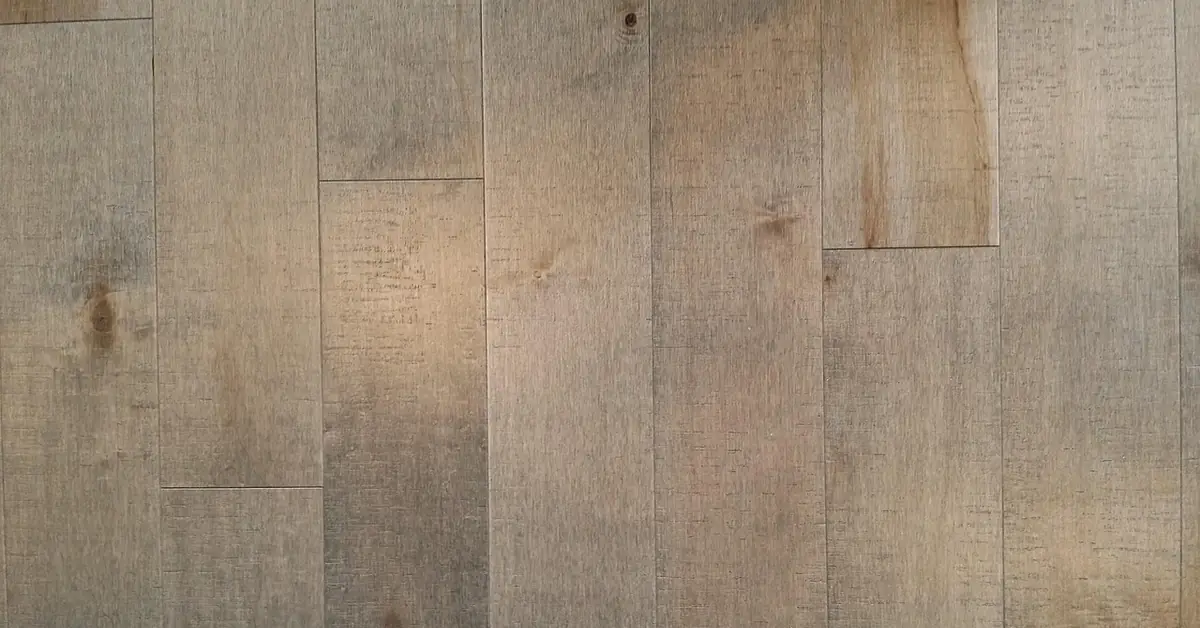
Types Of Maple Trees
Hard maple trees are known for their strong, dense wood. This wood is often used to make furniture. The Sugar Maple (Acer saccharum) is the most common hard maple — it grows tall with smooth, gray bark. Black Maple (Acer nigrum) is the other hard maple species; its leaves are darker and thicker, and it’s often grouped with sugar maple commercially. Hard maples grow in colder northern climates and prefer full sun.
Soft maple trees are lighter and less dense. Silver Maple (Acer saccharinum) is the most common soft maple, identified by its silvery leaf undersides and fast growth. Red Maple (Acer rubrum) is the other major soft maple; its leaves turn bright red in fall, and it’s actually the longer-lived of the two — red maples commonly reach 130 to 300 years old, while silver maples typically live 100 to 130 years in natural settings (35–65 years in stressed urban conditions). Boxelder and bigleaf maple round out the soft maple group. Soft maples tolerate wetter soil and a wider range of climates than hard maples. Not sure if a leaf you found is a maple at all? See oak vs maple leaf for the quick shape and arrangement test.
Physical Characteristics
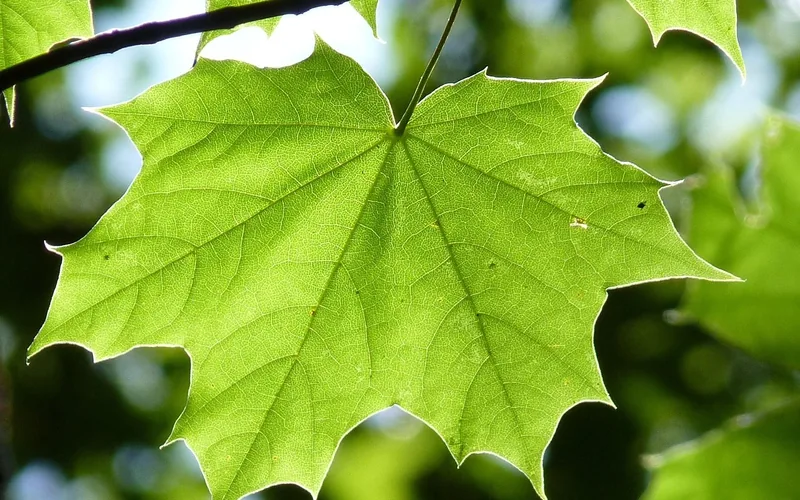
Hard maple leaves are usually smaller, with sharp points and deep lobes. Soft maple leaves are bigger and less sharply cut, with fewer deep lobes. The fall color differs too — hard maple leaves turn bright orange-red, while soft maple leaves (except red maple) usually turn yellow or brown.
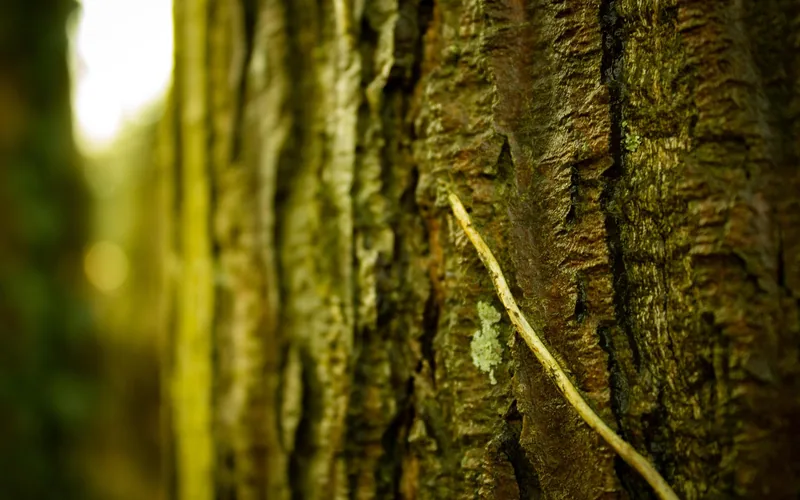
Hard maple bark is smooth and gray, and stays relatively consistent as the tree ages. Soft maple bark is rougher and shaggier, and it peels more easily as the tree matures.
Growth Habits
Hard maple trees grow slowly, taking many years to reach full size, with wide-spreading branches and dark green leaves that turn bright orange and red in autumn. Hard maples prefer sunny, well-drained sites and are exceptionally long-lived — sugar maples commonly reach 300 to 400 years old, and the oldest known specimen in North America is estimated at roughly 500 years.
Soft maple trees grow faster and reach maturity sooner, with thinner branches and lighter green leaves that turn yellow or brown in fall. Soft maples favor wet soil and often grow near rivers and streams. Despite the “soft” name, red maple can outlive most hard maples — it’s disease and drought that most often shorten a soft maple’s lifespan, not the wood’s density.
Wood Properties
Hard maple is very strong and dense — it’s often used for flooring because it resists dents and wear over decades of foot traffic. Soft maple is less dense and easier to work with hand tools, which is why it’s popular for furniture and detailed millwork. Both types share a light, creamy base color, but hard maple’s grain is finer and more uniform, while soft maple more often shows mineral streaks or color variation that some woodworkers specifically seek out for character.
📊 Hard maple rates 1,450 lbf on the Janka hardness scale — nearly double soft maple’s 700–950 lbf range, and hard maple’s average dry weight (44.0 lbs/ft³) also runs heavier than soft maple’s 30.2–38.0 lbs/ft³. — Source: The Wood Database, 2026
Hard Maple vs Soft Maple: Side-by-Side Comparison
| Property | Hard Maple | Soft Maple | Best For |
|---|---|---|---|
| Janka hardness | 1,450 lbf | 700–950 lbf | Hard maple: floors, butcher blocks |
| Avg. dry weight | 44.0 lbs/ft³ | 30.2–38.0 lbs/ft³ | Soft maple: lighter furniture pieces |
| Key species | Sugar Maple, Black Maple | Red Maple, Silver Maple, Boxelder | — |
| Typical cost | Higher | Lower | Soft maple: budget-conscious projects |
| Workability | Harder on tools, less prone to dents | Easier to cut and shape by hand | Soft maple: detailed carving/millwork |
“All MFMA maple flooring is manufactured exclusively from Sugar Maple (Acer saccharum) for its fine, uniform texture, straight grain, and resistance to shock, hardness, dents, and scratches.”
— Maple Flooring Manufacturers Association (MFMA)
Uses And Applications
Hard maple is popular for making strong furniture — tables, chairs, and cabinets that need to survive decades of daily use. Soft maple is also used in furniture; it’s not as strong as hard maple, but it’s easier to cut and shape, which makes it good for detailed designs and turned parts. Both types are used in flooring: hard maple floors handle heavy foot traffic (it’s the official species behind most maple hardwood flooring sold today), while soft maple flooring is more affordable and works well in lower-traffic rooms.
Hard maple is also prized for musical instruments — many guitar necks and violin backs use this wood because its density helps produce a clear, bright tone. Soft maple appears in instruments too, usually in parts that need to be shaped rather than parts that carry structural load. If you’re weighing maple against another common cabinet wood, see how it stacks up in our walnut vs maple comparison.
Best Maple Butcher Block Care Pick
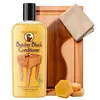
Howard Butcher Block Conditioner & Mineral Oil – $9.98
Whichever maple you end up with for a cutting board or butcher block — hard or soft — both need periodic mineral oil conditioning to keep the surface from drying, cracking, and absorbing moisture the way this guide’s Wood Properties section describes.
- Best for: Routine maintenance of maple butcher blocks and cutting boards
- Why we picked it: Food-grade, the industry-standard brand for wood board conditioning
- Main drawback: Needs reapplying every few weeks with regular use
Compare more maple care options
 Option 1 John Boos 2-Piece Care Set – $25.95
|
 Option 2 Thirteen Chefs Mineral Oil 12oz – $15.99
|
 Option 3 CLARK’S Oil & Wax Applicator – $14.45
|
As an Amazon Associate we earn from qualifying purchases.
Ecological Impact
Maple trees are homes for many animals — birds nest in the branches and squirrels use them for cover and food. Hard maples have strong branches that hold up to nesting weight for decades. Soft maples grow faster and put out more leaf canopy earlier, providing more shade and shelter sooner. Both types matter for local wildlife.
Maple trees also help store carbon through carbon sequestration. Hard maples store carbon over a very long lifespan (a 300+ year sugar maple keeps sequestering carbon the entire time), while soft maples grow and absorb carbon faster early on, then plateau sooner given their shorter typical lifespan. Both contribute meaningfully to local air quality.
Cultivation And Care
Hard maple trees need full sun and well-drained soil. Soft maples tolerate wetter areas. Both types do best in rich soil; hard maples are best suited to cool climates, while soft maples handle warmer weather better. Match the species to your site conditions before planting.
Maple trees face threats from disease — watch for leaf spots and root rot, and keep leaves dry to prevent fungal growth. Trim trees regularly to improve airflow through the canopy, and inspect trees each season; healthy, well-maintained trees resist disease far better than stressed ones. Use natural treatments when possible before reaching for stronger chemical options.
Frequently Asked Questions
How To Tell The Difference Between Hard And Soft Maple Trees?
Identify hard maples by their dense wood, smooth gray bark, and five-lobed leaves with sharp points. Soft maples have lighter wood, rougher and shaggier bark, and leaves with fewer, less-sharp lobes. Weight is the most reliable field test: hard maple runs about 44 lbs/ft³, noticeably heavier than soft maple’s 30–38 lbs/ft³.
Is Soft Maple Cheaper Than Hard Maple?
Yes, soft maple is generally cheaper than hard maple. Soft maple is less dense and more abundant, offering a cost-effective alternative for woodworking projects. Hard maple’s higher price reflects its durability and 1,450 Janka hardness rating. Prices vary based on grade, region, and supplier.
What Is Soft Maple Good For?
Soft maple is ideal for furniture, cabinetry, and flooring in lower-traffic rooms. It offers a smooth finish and is easy to stain. Its affordability makes it popular for interior projects, and its 700–950 Janka rating is still comparable to well-regarded cabinet woods like walnut and cherry.
Is Home Depot Maple Hard Or Soft?
Home Depot stocks both hard and soft maple, usually unlabeled by species. Hard maple is denser and more durable, ideal for flooring. Soft maple is lighter, often used for furniture and decorative purposes. Ask an associate or check the product spec sheet to confirm which type you’re buying.
Is Maple Hardwood Or Softwood?
Maple is a hardwood — including soft maple. The hardwood/softwood classification is botanical (broadleaf/dicot trees vs. cone-bearing conifers), not a measure of actual hardness. So despite its name, soft maple is still a true hardwood; it’s simply softer than hard maple on the Janka scale, not a softwood species like pine or fir.
Which Maple Is Harder, Sugar Maple Or Red Maple?
Sugar maple (a hard maple) is harder, rated 1,450 lbf on the Janka scale versus red maple’s (a soft maple) 950 lbf. That makes sugar maple roughly 50% harder than red maple, which is why sugar maple is the default choice for flooring and butcher blocks while red maple is more often used for furniture.
Conclusion
Choosing between hard maple and soft maple comes down to Janka hardness and budget. Hard maple (1,450 lbf) is dense and durable — the right call for flooring, butcher blocks, and heavy-use furniture. Soft maple (700–950 lbf), on the other hand, is more affordable and easier to shape, making it a solid pick for cabinetry and detailed furniture where extreme hardness isn’t required. Match the wood to the job, and either type will serve you well for decades.
Sponsored / affiliate links. As an Amazon Associate I earn from qualifying purchases. I may earn additional commission from eligible campaigns.