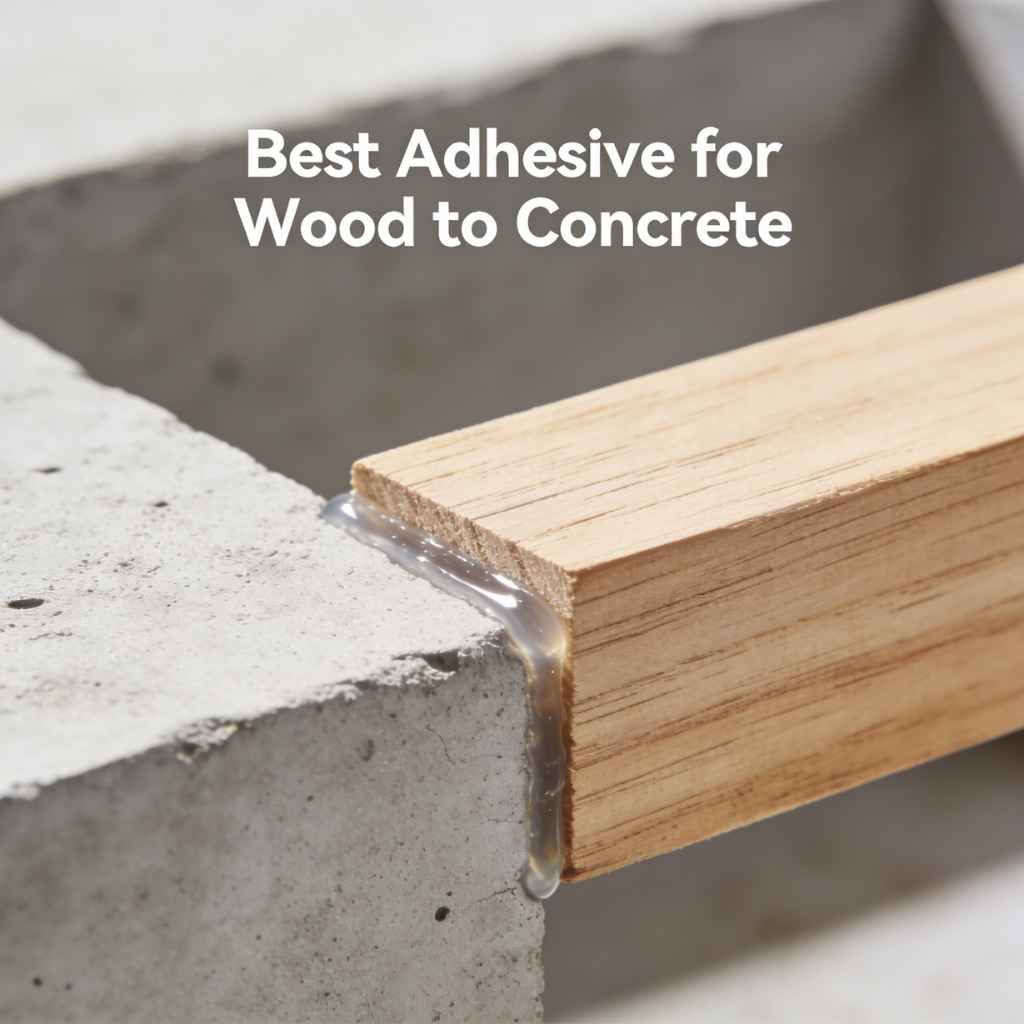
Best Adhesive for Wood to Concrete
Picking the right glue can feel tricky, especially when you need to stick wood to concrete. Beginners might wonder what makes this job special or harder than others. Don’t worry, we make it simple.
This guide shows you the easy steps to get a strong bond. We will cover everything you need to know about the Best Adhesive for Wood to Concrete.
Choosing the Best Adhesive for Wood to Concrete
Selecting the right adhesive is key for any project joining wood to concrete. This process requires careful consideration because wood and concrete are very different materials. Wood is porous and expands or contracts with moisture and temperature changes. Concrete is dense, rigid, and can be rough. The adhesive must bridge these differences, providing a bond that can withstand movement and environmental factors. For beginners, the sheer variety of glues available can be overwhelming, leading to confusion about which product offers the best performance and durability for this specific application. Understanding the properties of each adhesive type will help you make an informed decision and ensure your project lasts.
Types of Adhesives for Wood to Concrete
There are several types of adhesives commonly used for bonding wood to concrete, each with its own strengths and ideal applications. Understanding these will help you choose the best adhesive for your specific needs.
Polyurethane Adhesives
Polyurethane adhesives are a popular choice for wood-to-concrete projects due to their excellent strength and flexibility. They are waterproof, making them suitable for both indoor and outdoor applications. Polyurethane glues expand slightly as they cure, which helps to fill small gaps and create a stronger bond, especially on uneven surfaces. This expansion can also help to absorb vibrations and minor movements between the two materials. The curing process involves a chemical reaction with moisture in the air, so they generally set quite firmly.
- Waterproof Durability: Polyurethane adhesives are inherently waterproof. This is a significant advantage for projects exposed to moisture, such as outdoor decks, garden structures, or even areas prone to spills indoors. The waterproof nature prevents the bond from degrading over time due to water exposure, ensuring a long-lasting connection between the wood and concrete. This makes them ideal for situations where the connection might experience dampness or direct water contact.
- Flexibility and Gap Filling: The slight expansion of polyurethane adhesives as they cure allows them to fill small imperfections and voids on the surfaces of both wood and concrete. This flexibility also means the adhesive can accommodate minor movements or expansions and contractions of the wood due to temperature and humidity changes without cracking or failing. This is crucial because wood is a living material that will move, and concrete remains relatively stable.
- Strong Bonding Power: Once cured, polyurethane adhesives form an incredibly strong bond. They can withstand significant shear and tensile forces, making them suitable for applications that require structural integrity. This strength ensures that the wood will remain securely attached to the concrete under normal use and stress. The chemical bond formed is very tenacious.
- Application Process: Applying polyurethane adhesive usually involves spreading it evenly on one or both surfaces. It’s important to follow the manufacturer’s instructions regarding application temperature and humidity, as these factors can affect curing. Some require moistening one surface slightly to initiate the curing process. Proper clamping or securing of the pieces while the adhesive cures is also vital for achieving maximum bond strength.
Epoxy Adhesives
Epoxy adhesives are two-part systems that, when mixed, undergo a chemical reaction to form an extremely hard and durable bond. They are known for their exceptional strength and resistance to chemicals, water, and extreme temperatures. Epoxies create a rigid bond, making them perfect for applications where there is little expected movement between the wood and concrete. They are often used in structural repairs and high-stress applications.
- Exceptional Strength: Epoxy adhesives are renowned for their superior strength. When properly mixed and applied, they create a bond that is often stronger than the materials being joined. This makes them ideal for load-bearing applications or where the connection will be subjected to significant stress. The resulting bond is rigid and does not flex.
- Chemical and Water Resistance: Epoxies offer excellent resistance to a wide range of chemicals, oils, solvents, and water. This makes them a great choice for environments where the wood-to-concrete connection might be exposed to industrial cleaners, automotive fluids, or constant moisture. The resistance ensures the integrity of the bond is maintained even in harsh conditions.
- Versatility in Bonding: While known for wood and concrete, epoxies can bond a vast array of materials. This versatility means they are reliable for many different types of projects. They are particularly good at adhering to non-porous surfaces, but their strength on porous materials like wood and concrete is also remarkable.
- Surface Preparation is Crucial: For epoxy to perform at its best, the surfaces must be clean, dry, and free of dust, grease, and loose particles. Some roughening of the concrete surface can also improve adhesion by creating more surface area for the epoxy to grip. Proper mixing of the two parts according to the manufacturer’s ratio is also critical for achieving the full strength of the adhesive.
Construction Adhesives (Heavy-Duty Mastics)
Heavy-duty construction adhesives are formulated to bond a wide variety of building materials, including wood and concrete. These are often thick, paste-like adhesives that can fill larger gaps and bridge uneven surfaces. They are designed to be durable and can withstand some movement and vibration. Many are waterproof and can be used for interior and exterior applications.
- Excellent for Uneven Surfaces: Construction adhesives are formulated to be thick and slightly flexible. This makes them perfect for bonding materials that are not perfectly flat. They can easily fill gaps and irregularities found on concrete surfaces, ensuring a good contact area for the wood. This ability to conform to shapes reduces the need for extensive surface preparation.
- High Strength and Durability: These adhesives are engineered for demanding construction applications, meaning they offer high bond strength and long-term durability. They are designed to withstand the stresses and strains of building components. Many are also formulated to be resistant to weathering, temperature fluctuations, and moisture, which are common environmental challenges.
- Easy Application: Typically dispensed from a caulk gun, construction adhesives are relatively easy to apply. This makes them a user-friendly option, especially for DIY projects. The consistent bead application helps ensure an even distribution of the adhesive across the surface, leading to a more reliable bond.
- Wide Range of Formulations: There are many types of construction adhesives available, so it’s important to choose one specifically rated for wood-to-concrete applications. Some are solvent-based, while others are water-based or polyurethane-based. Always check the product label for suitability and any specific application requirements, such as primer use or temperature limitations.
Silicone Adhesives/Sealants
While primarily known as sealants, some high-performance silicone adhesives can also bond wood to concrete. They offer excellent flexibility and are highly resistant to water, UV rays, and temperature extremes. However, their bonding strength might not be as high as polyurethane or epoxy, making them more suitable for applications where extreme structural strength isn’t the primary concern, but rather sealing and flexible adhesion.
- Superior Flexibility: Silicone adhesives are known for their exceptional flexibility. They can stretch and move significantly without losing their bond. This is beneficial for applications where there is substantial expansion and contraction of wood due to temperature and humidity changes, or where vibrations are common.
- Extreme Weather Resistance: Silicones excel in their ability to withstand harsh environmental conditions. They are highly resistant to UV radiation, extreme heat, and cold, making them ideal for outdoor applications where other adhesives might degrade. Their waterproof nature also ensures long-term performance in damp environments.
- Good for Sealing and Bonding: Silicone adhesives offer a dual function – they bond materials together and also create a waterproof seal. This can be advantageous in applications where preventing water ingress is as important as the bond itself, such as around window frames or in areas exposed to the elements.
- Bonding Strength Limitations: Compared to epoxies or polyurethanes, some silicone adhesives may have lower tensile and shear strength. While sufficient for many non-structural tasks, they might not be the best choice for projects requiring very high load-bearing capacity. It is essential to check the product’s specifications for its adhesive strength ratings.
Factors to Consider When Choosing
When deciding on the Best Adhesive for Wood to Concrete, several factors play a critical role. These considerations will guide you to the most suitable product for your specific project.
Project Location Indoor vs. Outdoor
The environment where your wood-to-concrete bond will exist is a major determinant. Indoor projects might tolerate adhesives that are not fully waterproof, but outdoor projects absolutely require them. Outdoor bonds are exposed to rain, humidity, sun, and temperature fluctuations.
- Outdoor Requirements: For outdoor projects, look for adhesives explicitly labeled as waterproof and UV-resistant. Polyurethane and many construction adhesives are excellent choices here. They need to withstand constant exposure to the elements without degrading. Think about decks, fences, or garden furniture attached to concrete bases.
- Indoor Considerations: Indoor applications offer more flexibility. If the area is dry and climate-controlled, adhesives that are water-resistant but not fully waterproof might suffice. However, even indoors, adhesives that offer strong, durable bonds are preferable for longevity. Kitchens and bathrooms, for instance, might benefit from water-resistant options.
- Temperature Fluctuations: Consider how much the temperature will change. Extreme or rapid temperature shifts can cause materials to expand and contract. An adhesive that remains flexible under these conditions will perform better over time, preventing the bond from weakening or breaking.
- Moisture Exposure Inside: Even indoors, some areas are prone to moisture. Basements, garages, or bathrooms can experience condensation or spills. In these cases, choosing a water-resistant or waterproof adhesive provides an extra layer of security and durability for your bond.
Strength and Load-Bearing Requirements
The amount of weight or stress the bonded joint will need to support is a critical factor. Some projects are purely decorative, while others are structural.
- Structural vs. Non-Structural: For structural applications, such as attaching wooden beams to a concrete foundation or building stairs, you need adhesives with very high tensile and shear strength, like epoxies or specialized structural construction adhesives. These are designed to bear significant loads.
- Decorative Elements: For less demanding tasks, like attaching trim or decorative wood pieces to a concrete wall, a moderately strong adhesive might be sufficient. Construction adhesives or even some stronger flexible adhesives can work well here, offering good adhesion without the need for extreme load-bearing capabilities.
- Vibration and Movement: If the wood or concrete is subject to vibration or significant movement, an adhesive that offers some flexibility is preferable. This flexibility helps absorb shocks and prevents the bond from being stressed excessively, which could lead to failure over time.
- Long-Term Durability: Regardless of the immediate load, consider the long-term performance. A high-quality adhesive will maintain its strength and integrity for years, even if the load isn’t constant or extremely high. Investing in a durable adhesive saves on future repairs.
Surface Preparation
How well you prepare the wood and concrete surfaces directly impacts the adhesive’s ability to create a strong bond.
- Cleaning is Essential: Both surfaces must be clean and free of dust, dirt, oil, grease, paint, and any loose debris. For concrete, this might involve sweeping, vacuuming, or even pressure washing. For wood, ensure it’s free of sawdust and any finishes that might prevent adhesion.
- Achieving a Good Profile: Concrete surfaces can sometimes be very smooth, which doesn’t offer much for an adhesive to grip. Lightly abrading or etching the concrete surface (with a wire brush or concrete etcher) can create a better profile, increasing the surface area for the adhesive to bond to. Similarly, roughing up very smooth wood can help.
- Moisture Content: Ensure both surfaces are dry unless the adhesive specifically requires a damp surface (like some polyurethanes). Excess moisture can prevent adhesives from bonding properly or can degrade certain types of glue over time.
- Checking for Sealants or Coatings: Sometimes concrete is sealed or coated. These coatings can prevent adhesives from sticking. If you’re unsure, test a small, inconspicuous area first. Some adhesives may require a specific primer on sealed concrete surfaces.
Application Techniques for Strong Bonds
Proper application is just as important as choosing the right adhesive. Even the best glue won’t work well if applied incorrectly.
Preparing the Surfaces
As mentioned, preparation is key. This step ensures the adhesive can make maximum contact and create the strongest possible bond.
- Cleanliness is Paramount: Before applying any adhesive, meticulously clean both the wood and concrete surfaces. Remove all dust, dirt, oils, old glues, paint, or any other contaminants. A clean surface allows the adhesive molecules to directly interact with the material’s surface.
- Mechanical Preparation: For concrete, a light grinding or wire brushing can create a rougher texture. This increased porosity gives the adhesive more surface area to adhere to, leading to a stronger mechanical bond. For wood, sanding might be necessary if the surface is too smooth or has a finish.
- Drying the Surfaces: Most adhesives require dry surfaces. Ensure both wood and concrete are completely dry to the touch. If you’ve washed the concrete, allow ample time for it to air dry, which can take several days depending on humidity and temperature.
- Degreasing if Necessary: If the concrete has been exposed to oils or grease (e.g., in a garage), a degreaser might be needed. Always rinse thoroughly after using a degreaser and allow it to dry completely. Residual degreaser can interfere with adhesion.
Applying the Adhesive
How you spread and apply the adhesive can significantly affect the final bond strength.
- Follow Manufacturer Instructions: Always read and follow the specific instructions provided by the adhesive manufacturer. This includes recommended application temperature, humidity levels, and methods of application.
- Even Distribution: Apply the adhesive in an even bead or layer across one or both surfaces. Avoid applying too little, which can lead to weak spots, or too much, which can squeeze out excessively and be messy, though some adhesives benefit from a generous application for gap filling.
- Creating a Continuous Bond Line: For maximum strength, aim for a continuous line or coverage of adhesive rather than dots or patches. This ensures that the load is distributed evenly across the entire contact area. For larger pieces, using a trowel or spreader can help achieve even coverage.
- Working Time and Clamping: Be aware of the adhesive’s “open time”—the period during which you can still press the pieces together for a good bond. Once applied, join the wood and concrete surfaces and apply firm pressure. Clamping is often necessary to hold the pieces securely in place while the adhesive cures. Use clamps that apply steady, even pressure without damaging the materials.
Curing Time and Conditions
The time it takes for an adhesive to harden fully is crucial for the bond’s strength.
- Full Cure vs. Handling Strength: Adhesives often reach handling strength much sooner than their full cure. Handling strength is enough to move the pieces carefully without them falling apart. Full cure is when the adhesive has reached its maximum potential strength. This can take anywhere from 24 hours to several days, depending on the product and environmental conditions.
- Impact of Temperature and Humidity: Temperature and humidity can significantly affect curing times. Cold temperatures generally slow down the curing process, while high humidity can speed up the curing of moisture-cured adhesives like polyurethanes. Always check the product data sheet for optimal curing conditions.
- Avoid Stress During Curing: It is vital to avoid any stress, movement, or load on the bonded joint during the entire curing period. Even slight disturbances can weaken the developing bond. Ensure the clamped pieces remain undisturbed until the adhesive is fully cured.
- Allowing for Expansion/Contraction: Remember that wood will expand and contract. If your project involves wood that will move, ensure your adhesive choice accommodates this. Adhesives that remain somewhat flexible after curing are better suited for these situations than rigid ones that might crack under stress.
Troubleshooting Common Issues
Even with the best intentions, sometimes problems can arise. Knowing how to troubleshoot can save your project.
- Bond Fails Prematurely: This often points to poor surface preparation, incorrect adhesive choice, or premature stressing of the bond. Re-evaluate your cleaning and preparation steps. If the bond is failing due to movement or moisture, consider a more flexible or waterproof adhesive.
- Adhesive Doesn’t Cure Properly: This could be due to incorrect mixing ratios (for two-part adhesives), working in temperatures too cold or too hot, or insufficient humidity for moisture-cured types. Ensure you’re following all manufacturer guidelines precisely.
- Messy Appearance: Excess adhesive squeezing out can look unsightly. For some adhesives, you can carefully wipe away excess while wet. For others, it’s best to let it cure and then trim or sand it away. Using painter’s tape to mask off the bond line can help keep things neat.
- Weak Bond on Certain Surfaces: If you notice the bond is weak on a specific type of concrete (e.g., very smooth or painted), it might be the surface itself. Try a different preparation method or consider a primer recommended by the adhesive manufacturer.
Real-Life Examples and Scenarios
Seeing how the Best Adhesive for Wood to Concrete is used in practical situations can provide valuable insight.
Example 1 Attaching Wood Trim to a Concrete Wall
A homeowner wanted to add decorative wooden trim around a fireplace hearth made of concrete. The concrete surface was rough but dusty from construction.
- Surface Preparation: The homeowner first thoroughly vacuumed the concrete hearth to remove all loose dust. They then wiped it down with a damp cloth and let it dry completely to ensure a clean surface.
- Adhesive Choice: A heavy-duty construction adhesive, known for its excellent adhesion to both wood and masonry, was chosen. It offered good flexibility to handle minor surface imperfections.
- Application: The adhesive was applied in a zigzag pattern on the back of the wooden trim pieces using a caulk gun. This ensured good coverage and allowed the adhesive to spread when the trim was pressed into place.
- Installation: The trim was pressed firmly against the concrete hearth. To ensure a strong bond while the adhesive cured, painter’s tape was used to hold the trim pieces in place against the wall.
- Result: After 24 hours of curing, the trim was securely attached and showed no signs of pulling away. The construction adhesive provided a strong, lasting bond that also helped seal against dust.
Example 2 Building a Wooden Platform on a Garage Floor
A DIY enthusiast needed to build a slightly elevated wooden platform in their garage to protect items from moisture on the concrete floor. The platform would need to be sturdy and withstand some weight.
- Surface Preparation: The garage floor was swept and then cleaned with a concrete degreaser, followed by rinsing and a full drying period of 48 hours. This removed oil stains and ensured a clean, dry surface.
- Adhesive Choice: A high-performance polyurethane construction adhesive was selected. Its waterproof nature and flexibility were ideal for a garage environment prone to temperature changes and potential moisture.
- Application: The adhesive was applied in thick beads along the perimeter and in the center of the concrete floor where the wooden frame of the platform would sit.
- Installation: The wooden frame was carefully positioned and pressed down firmly onto the adhesive. Heavy weights were placed on top of the frame to ensure consistent contact while the adhesive cured over 48 hours.
- Result: The platform was extremely solid and stable. The polyurethane adhesive created a strong, waterproof bond that kept the wood securely attached to the concrete, providing a reliable surface.
Scenario 1 Attaching a Wooden Deck Stair to a Concrete Landing
Imagine you’re building an outdoor deck and need to securely attach the first wooden stair stringer to an existing concrete patio. The stair will bear the weight of people walking on it, so strength and durability are paramount.
- Assess the concrete surface: Is it clean, dry, and relatively smooth? If there’s loose concrete or debris, it needs to be removed. You might need to slightly roughen the concrete surface where the stringer will attach for better grip.
- Choose your adhesive: For this kind of structural load, a strong, weather-resistant adhesive is crucial. Consider a two-part epoxy formulated for concrete and wood or a high-strength polyurethane construction adhesive. These offer superior bonding power and can withstand outdoor elements.
- Apply the adhesive: Apply a generous, even bead of adhesive along the bottom edge of the wooden stringer where it will meet the concrete landing. Make sure to get good coverage to maximize the contact area.
- Position and secure the stringer: Carefully place the wooden stringer onto the concrete landing, pressing down firmly to ensure good contact. You will likely need to use mechanical fasteners, such as concrete screws or anchors, in conjunction with the adhesive. The adhesive adds significant strength and helps seal the joint against moisture.
- Allow for full cure: Let the adhesive cure completely according to the manufacturer’s instructions before allowing any weight or stress on the stair. This ensures the bond reaches its maximum strength.
Scenario 2 Securing Wood Paneling to a Basement Concrete Wall
You’re finishing a basement and want to install wood paneling on a cold, concrete wall. The wall is solid but can feel damp, and you need the paneling to stay put for years.
- Check wall conditions: Ensure the concrete wall is free from efflorescence (white powdery residue) and has no active moisture issues. If there’s any dampness, address it first, perhaps with a moisture barrier, before applying wood.
- Select the adhesive: A heavy-duty construction adhesive is often ideal here. It’s formulated to bond wood to masonry, handles minor surface irregularities well, and many are moisture-resistant, which is important for basements. Some paneling adhesives are also specifically designed for this purpose.
- Prepare the paneling and wall: Lightly sand the back of the wood panels if they have a smooth finish. Ensure the concrete wall is clean and free of dust and debris.
- Apply adhesive to panels: Apply the adhesive in vertical beads on the back of each wood panel, spaced a few inches apart. This ensures good contact with the concrete wall when the panel is pressed into place.
- Install and secure panels: Press each panel firmly against the concrete wall. For added security, especially during the adhesive curing period, you can use temporary bracing or a few strategically placed paneling nails (which can be less visible once the paneling is complete).
Comparing Different Adhesive Types
A direct comparison can help highlight the strengths of each adhesive type for wood-to-concrete applications.
| Adhesive Type | Primary Strengths | Best For | Considerations |
|---|---|---|---|
| Polyurethane Adhesive | Waterproof, flexible, gap-filling, strong bond | Outdoor projects, areas with moisture, minor movement | Can expand significantly, follow cure times carefully |
| Epoxy Adhesive | Extremely strong, rigid, chemical and water-resistant | Structural applications, high-stress joints, harsh environments | Requires precise mixing, less flexible, can be brittle |
| Construction Adhesive | Versatile, strong, good for uneven surfaces, easy to apply | General construction, interior/exterior, DIY projects | Varying formulations, check suitability for specific materials |
| Silicone Adhesive | Highly flexible, excellent weather resistance, sealing properties | Applications needing extreme flexibility, sealing, non-structural bonds | Lower structural strength compared to others, ensure good ventilation |
Frequently Asked Questions
Question: Can I use regular wood glue for wood to concrete?
Answer: No, regular wood glue is typically water-based and not designed to bond porous materials like concrete. It will likely fail quickly, especially if exposed to any moisture.
Question: How long does it take for wood adhesive to concrete to fully cure?
Answer: Cure times vary greatly by adhesive type and manufacturer. Most require at least 24-72 hours for full cure, but some may take longer. Always check the product label.
Question: Do I need mechanical fasteners if I use adhesive?
Answer: For structural applications or when significant stress is expected, using mechanical fasteners (like screws or anchors) along with adhesive is highly recommended. The adhesive adds strength and seals the joint, while fasteners provide immediate holding power and long-term structural support.
Question: Can I paint over the adhesive once it’s cured?
Answer: Most construction adhesives can be painted over once fully cured, but it’s best to check the product specifications. Some might require a primer first for best adhesion of the paint.
Question: What is the best adhesive for attaching wood flooring to a concrete subfloor?
Answer: For wood flooring over concrete, specialized wood flooring adhesives are typically recommended. These are formulated for the specific stresses and movement of flooring and are often polyurethane-based or high-performance construction adhesives designed for this purpose.
Summary
Finding the Best Adhesive for Wood to Concrete depends on your project’s needs. Consider the location, required strength, and surface conditions. Polyurethane, epoxy, and heavy-duty construction adhesives are top choices for their durability and bonding power. Proper surface preparation and careful application are essential for a strong, lasting bond. With the right adhesive and technique, you can confidently join wood and concrete for lasting results.