Best Ceiling Fan with Light and Wall Control: Essential Guide
Quick Summary:
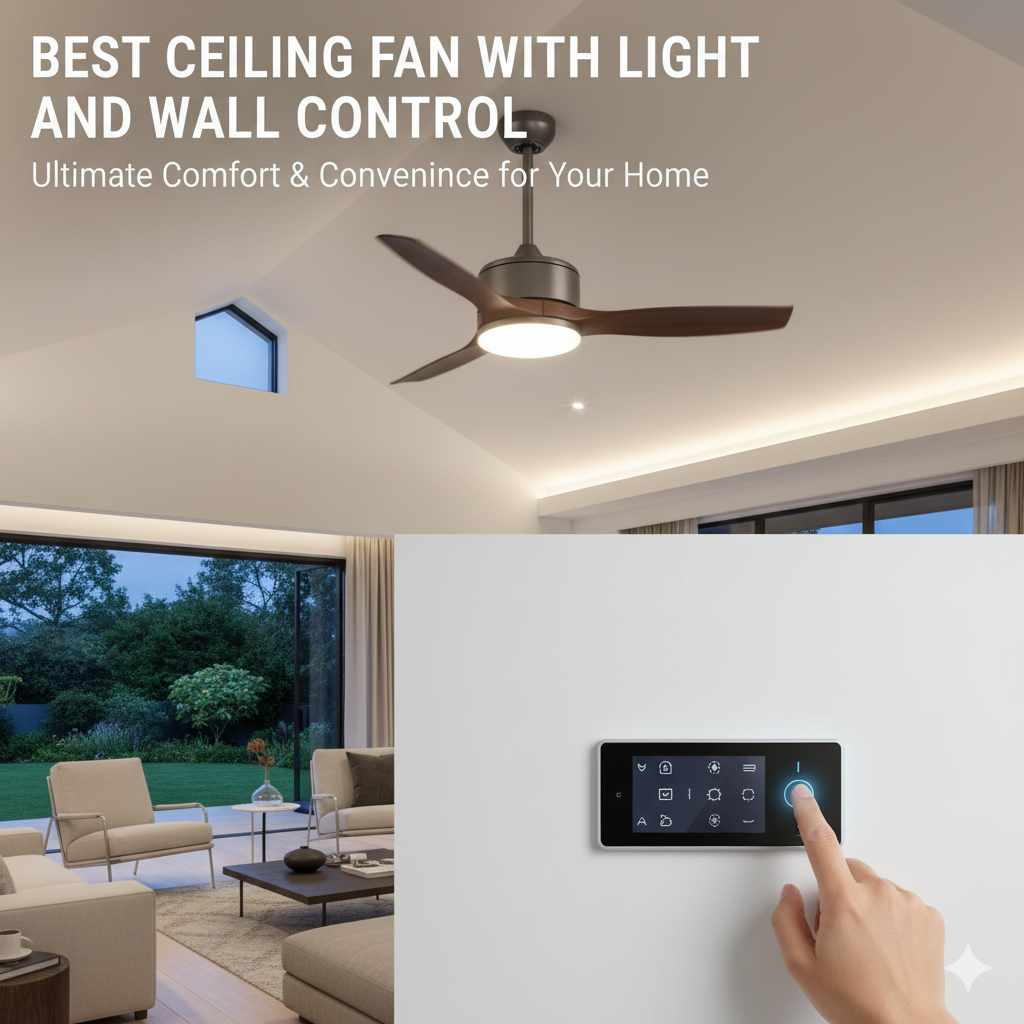
The best ceiling fan with light and wall control offers convenience, comfort, and style. Look for energy efficiency, quiet operation, and user-friendly wall controls for easy adjustments. This guide helps you choose the perfect model to enhance your home’s ambiance and functionality.
Welcome, fellow home improvers! Are you tired of fumbling for pull chains in the dark or wishing you could adjust your fan speed without getting out of bed? You’re not alone. Finding the perfect ceiling fan that also includes a light and, crucially, a convenient wall control can make a huge difference in your daily comfort and the overall feel of your room. It’s a common upgrade that brings both practicality and a touch of modern living. But with so many options out there, how do you pick the one that’s just right for your space and your needs? Don’t worry, I’m here to help you navigate through it all. We’ll break down exactly what to look for, explore the benefits, and guide you toward making a choice you’ll be happy with for years to come. Get ready to bring effortless comfort and style to your home!
Why a Ceiling Fan with Light and Wall Control is a Smart Choice
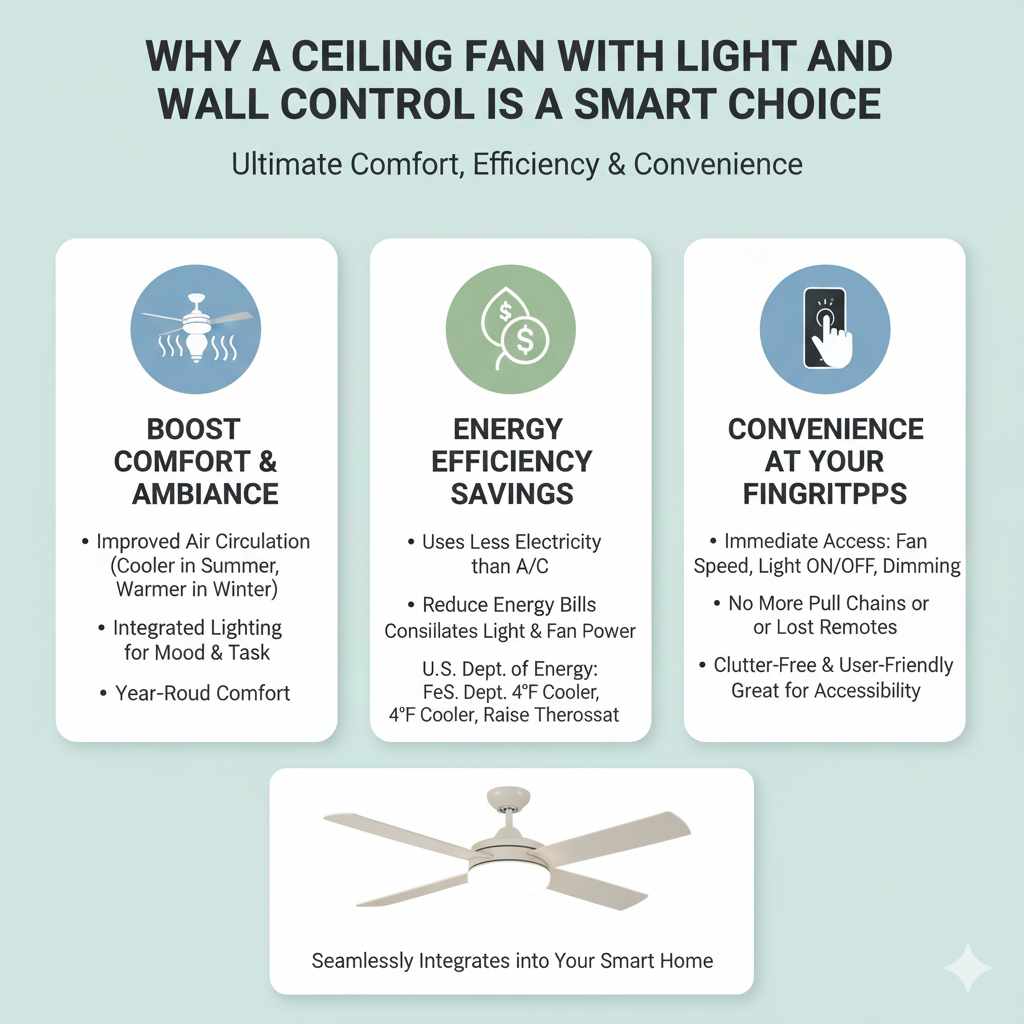
Adding a ceiling fan with a built-in light and wall control is more than just a stylish upgrade; it’s a practical decision that enhances your home’s comfort, energy efficiency, and convenience. Imagine walking into a room and with a simple flip of a switch, you can illuminate your space and set the perfect breeze. No more reaching for chains or dealing with remote controls that always seem to go missing! These systems integrate seamlessly into your home’s electrical setup, offering a streamlined and user-friendly experience.
Boost Your Home’s Comfort and Ambiance
A well-placed ceiling fan can significantly improve air circulation, making any room feel cooler in the summer and helping to distribute warm air in the winter. This creates a more comfortable living environment year-round. The integrated light fixture provides essential illumination, allowing you to set the mood or provide bright light for tasks, all controlled from one central point.
Energy Efficiency Savings
Ceiling fans are incredibly energy-efficient. They use significantly less electricity than air conditioners, allowing you to rely on them for cooling during milder weather, thereby reducing your energy bills. When paired with a light, you also consolidate two essential fixtures into one, potentially saving on electricity costs for lighting as well. The U.S. Department of Energy recommends using ceiling fans to supplement your air conditioning, as they can make a room feel up to 4 degrees Fahrenheit cooler, allowing you to raise your thermostat by a few degrees and save energy.
Convenience at Your Fingertips
The wall control is the star of the show here. It offers immediate access to fan speed, light on/off, and often dimming capabilities, all without needing a separate remote or struggling with pull chains. This is especially beneficial for accessibility and for children or those with mobility issues. It keeps your surfaces clutter-free and ensures that controlling your fan and light is always simple and intuitive.
Key Features to Look for in the Best Ceiling Fan with Light and Wall Control
When you’re on the hunt for the perfect ceiling fan with a light and wall control, a few key features can make all the difference. Think of these as your checklist to ensure you get a fan that’s not only beautiful but also functional, durable, and perfectly suited to your needs. Let’s break down what’s most important.
Fan Performance and Motor Quality
This is the heart of your fan. Look for fans with powerful, quiet motors. Many modern fans use DC (Direct Current) motors, which are known for being exceptionally quiet, energy-efficient, and offering a wider range of speed options. AC (Alternating Current) motors are more traditional and can be very reliable, but they tend to be a bit louder and consume more energy. Check reviews for noise levels, especially if you plan to install it in a bedroom or living area where peace and quiet are important.
Light Fixture and Bulb Type
Consider the type of light you need. Do you want a bright, task-oriented light, or something more ambient and dimmable? Many fans come with integrated LED lights, which are energy-efficient, long-lasting, and often dimmable. Some allow you to choose the color temperature (warm white, cool white, etc.). Ensure the light output (measured in lumens) is sufficient for your room size. Also, check if the bulbs are replaceable, as this offers more flexibility down the line.
Wall Control Functionality and Design
The wall control is what sets this type of fan apart. Ensure it offers the controls you need:
- Fan Speed: Multiple speed settings (usually 3-5) are standard.
- Light Control: On/Off and dimming features are highly desirable.
- Direction Control: Some advanced wall controls allow you to reverse the fan’s direction (for summer cooling or winter heating assistance) directly from the wall.
- Timer Functions: A timer can be a great energy-saving feature, automatically shutting off the fan after a set period.
Pay attention to the design of the wall control too. Does it match your home’s aesthetic? Is it easy to understand and use? Some wall controls are simple toggle switches, while others are more like sleek digital panels.
Size and Blade Span
The size of the fan, specifically its blade span (the diameter from one blade tip to the other), is crucial for effective air circulation. A fan that’s too small for the room won’t move enough air, while one that’s too large can create an uncomfortable draft.
- Small rooms (up to 75 sq ft): 29-36 inch blade span
- Medium rooms (75-144 sq ft): 36-44 inch blade span
- Large rooms (144-225 sq ft): 44-56 inch blade span
- Great rooms (over 225 sq ft): 56 inches or larger
It’s always better to err on the side of a slightly larger fan for better air movement.
Style and Finish
Ceiling fans are a prominent feature in a room, so choose one that complements your decor. They come in a vast array of styles, from modern and minimalist to rustic and traditional. Finishes like brushed nickel, oil-rubbed bronze, matte black, white, and wood tones are common. Consider the style of your existing furniture and the overall aesthetic of the room.
Energy Efficiency Ratings
Look for the ENERGY STAR® label. ENERGY STAR certified ceiling fans are independently verified to be significantly more energy-efficient than standard models. This means lower electricity bills and a smaller environmental footprint. The U.S. Environmental Protection Agency (EPA) offers extensive information on energy-efficient home appliances, including ceiling fans, on their ENERGY STAR website.
Top Picks: Best Ceiling Fans with Light and Wall Control
Choosing the “best” can be subjective, as it depends on your specific needs and budget. However, some brands and models consistently stand out for their quality, performance, and features. Here are a few highly-regarded options that often make the list for the best ceiling fan with light and wall control, categorized by what they excel at.
Best Overall: Hunter Fan Company Models
Hunter is a legacy brand known for its durable and reliable ceiling fans. Many of their models offer integrated wall controls and elegant light fixtures. They often feature powerful, quiet motors and a wide selection of styles. Look for their “Damp Rated” or “Wet Rated” options if you need a fan for a porch or bathroom.
Best for Modern Aesthetics: Minka-Aire Models
Minka-Aire is renowned for its innovative and stylish designs. Their fans often incorporate sleek lines, unique blade shapes, and integrated LED lighting. Many come with sophisticated wall controls that offer multiple speed settings and light dimming. These are perfect for contemporary homes.
Best for Quiet Operation: Haiku Fans (by Big Ass Fans)
While often at a higher price point, Haiku fans are engineered for unparalleled quietness and efficiency. They typically feature advanced DC motors and smart home integration. Many come with wall controls or can be controlled via apps. If silence is golden for you, these are worth considering.
Best Budget-Friendly Option: Honeywell Models
Honeywell offers a range of ceiling fans that provide good value for money. You can often find models with decent performance, attractive designs, and functional wall controls without breaking the bank. They are a solid choice for those on a tighter budget.
Best for Large Spaces: Casablanca Fan Company Models
Casablanca fans are known for their robust construction and powerful performance, making them excellent for larger rooms or spaces that require significant air movement. They offer a range of styles and often include advanced wall control systems.
When comparing specific models, always check the product specifications for motor type, CFM (cubic feet per minute – a measure of airflow), light output (lumens), and the exact features of the wall control.
Installation Guide: Making the Switch to a Wall-Controlled Fan
Installing a ceiling fan with a light and wall control might seem daunting, but with the right preparation and a step-by-step approach, it’s a manageable DIY project. Safety first! Always turn off the power to the circuit you’ll be working on at the breaker box. If you’re unsure about electrical work, it’s always best to consult a qualified electrician.
Tools and Materials You’ll Need
- New ceiling fan with light and wall control kit
- Screwdrivers (Phillips and flathead)
- Wire strippers/cutters
- Wire nuts
- Voltage tester (non-contact is easiest)
- Ladder
- Pliers
- Electrical tape
- Safety glasses
- (Optional) Stud finder
- (Optional) Drywall saw
Step-by-Step Installation Process
This is a general guide. Always refer to your specific fan’s instruction manual, as steps can vary slightly between models.
- Turn Off Power: Locate your home’s breaker box and switch off the power to the room where you’ll be working. Use a voltage tester to confirm the power is off at the existing light fixture or fan junction box.
- Remove Old Fixture: Carefully remove the old light fixture or fan. Disconnect the wires, noting how they were connected.
- Prepare the Junction Box: Ensure the electrical box in the ceiling is rated for ceiling fan support. If it’s not, you’ll need to replace it with a fan-rated box. This is a crucial safety step, as fans are heavier than light fixtures. A properly rated box will typically be marked “For Use With Support of Fan Weight.” You can find guidance on proper electrical box installation on resources like the Consumer Product Safety Commission (CPSC) website.
- Mount the Fan Bracket: Install the mounting bracket that came with your new fan according to the manufacturer’s instructions. It usually screws into the junction box.
- Assemble the Fan (Partially): Most fans require some pre-assembly of the motor housing, downrod, and canopy before hanging. Follow your manual.
- Hang the Fan: Carefully lift the fan motor assembly and hook it onto the mounting bracket’s hook or slot. This allows you to work with both hands free for wiring.
-
Wire the Fan: This is where the wall control comes into play.
- From Ceiling to Wall Control: You’ll typically have a cable running from the ceiling junction box to the location of your new wall control. Connect the wires from the ceiling box to the corresponding wires on the wall control receiver (often located in the fan canopy or a separate unit). Follow the specific wiring diagram for your fan and wall control system precisely.
- From Wall Control to Fan: The wall control unit will then send power to the fan motor and light. Ensure all connections are secure using wire nuts and electrical tape.
- Ground Wire: Always connect the green or bare copper ground wires together.
- Install the Wall Control: Secure the wall control unit into the electrical box on your wall.
- Attach Fan Blades and Light Kit: Once wiring is complete and secure, attach the fan blades to the motor and install the light kit.
- Restore Power and Test: Turn the power back on at the breaker box. Test all functions of the wall control – fan speeds, light on/off, and dimming.
Remember, if you encounter any confusion or feel uncomfortable at any stage, don’t hesitate to call a professional. It’s better to be safe!
Maintaining Your Ceiling Fan for Longevity
Once you’ve got your new, wonderful ceiling fan with light and wall control installed, a little regular maintenance will ensure it runs smoothly and efficiently for years to come. Think of it like tuning up your favorite tool – it keeps everything in top shape!
Regular Cleaning
Dust can accumulate on fan blades, which can affect balance and airflow. Periodically (every few months, or more often if you live in a dusty area), clean the blades.
- Turn off the fan.
- Use a damp cloth or a microfiber duster. For hard-to-reach spots, you can use a duster attachment on your vacuum cleaner.
- Wipe down the light fixture and the fan motor housing as well.
Be careful not to spray cleaning solutions directly onto the motor or electrical components.
Checking for Loose Parts
Over time, screws and mounts can loosen slightly due to the fan’s vibration.
- Periodically check that the canopy holding the fan to the ceiling is secure.
- Ensure the blade screws are tight.
- Check the screws holding the fan motor housing together.
A loose blade can cause wobbling and noise, so it’s important to address this promptly.
Lubrication (if applicable)
Most modern ceiling fans, especially those with ball-bearing motors, are “lubrication-free” and do not require oiling. However, if you have an older fan or one that specifically calls for it in the manual, you might need to add a few drops of specific fan oil to a designated oil hole. Always check your fan’s manual first.
Blade Balancing
If your fan starts to wobble, it might need to be balanced. Most ceiling fans come with a balancing kit. This usually involves attaching small weights to the top of the blades to counteract any unevenness. Follow the instructions in your fan’s manual for the balancing process. Often, a slight wobble can be fixed by ensuring all blades are securely fastened and that the ceiling mount is stable.
Wall Control and Remote Check
Ensure the wall control is functioning correctly. If you have a separate remote, check its batteries periodically. Keep the remote in a designated spot so it doesn’t get lost!

Frequently Asked Questions (FAQs)
Q1: How do I know if my ceiling junction box can support a fan?
A: Standard electrical boxes are often not strong enough for the weight and vibration of a ceiling fan. Look for markings on the box that say “Acceptable for Fan Support” or “For Use With Support of Fan Weight.” If you don’t see these, or if the box is plastic, you’ll likely need to replace it with a metal, fan-rated box that is securely attached to a ceiling joist or a fan brace. The U.S. Occupational Safety and Health Administration (OSHA) provides safety standards for electrical installations, which can offer further insight into safe practices.
Q2: Can I replace my existing light fixture with a fan that has a wall control?
A: Yes, in most cases! If you have a standard ceiling light fixture, you can replace it with a ceiling fan. The main considerations are ensuring the ceiling electrical box is fan-rated and that you have the necessary wiring running from the ceiling box to the desired location for your wall control. You might need to run new wiring if your current setup only has wires going directly to the light fixture. An electrician can help with this if needed.
Q3: My fan is wobbling. What should I do?
A: Wobbling is usually caused by unevenly weighted blades, loose screws, or an improperly installed mounting bracket. First, ensure all blade screws and screws holding the motor housing are tight. Then, check that the mounting bracket is secure. If the wobble persists, use the balancing kit that came with your fan, following the manufacturer’s instructions. Most kits include small weights that you attach to the top of the blades to counteract the imbalance.
Q4: How do I reverse the fan direction using the wall control?
A: Not all wall controls have a reverse function. If yours does, it will typically be a dedicated button or a specific sequence of button presses indicated in the fan’s manual. For fans that don’t have this feature on the wall control, you might need to access a small switch on the motor housing itself, usually requiring you to remove the light kit or canopy. Reversing direction helps circulate warm air down in winter (clockwise rotation) or creates a cooling breeze in summer (counter-clockwise rotation).
Q5: What is CFM, and why is it important for ceiling fans?
A: CFM stands for Cubic Feet per Minute. It’s a measurement of the volume of air a fan can move. A higher CFM rating means the fan is more powerful and will circulate more air. When choosing a fan, you want a CFM rating that is appropriate for the size of your room to ensure effective cooling and air circulation. For example, a living room might need a fan with a CFM of 5,000 or higher, while a smaller bedroom might be fine with 3,000-4,000 CFM.
Q6: Do LED lights in ceiling fans need to be replaced?
A: Many modern ceiling fans with integrated LED lights are designed for long life, often lasting for tens of thousands of hours. In many cases, the LED module is not meant to be user-replaceable. However, some manufacturers do offer replacement LED kits. If the LED light fails outside of its warranty period, you may need to replace the entire light fixture component or, in some cases, the whole fan. Always check the warranty and the manufacturer’s specifications regarding LED replacement.
Conclusion
Choosing the best ceiling fan with light and wall control is a fantastic way to enhance your home’s comfort, style, and energy efficiency. By understanding the key features – from motor quality and blade span to the functionality of the wall control and the elegance of the light fixture – you can make an informed decision that perfectly suits your needs. Whether you’re aiming for modern sophistication, quiet operation, or budget-friendly reliability, there’s a fan out there for you. Remember, a little bit of preparation and care in installation, along with regular maintenance, will ensure your new fan becomes a beloved, functional centerpiece of your room for years to come. Happy upgrading!