Best Drill Bits for Metal Pro Buying Guide
Choosing the right drill bits for metal can seem tricky at first. Many people wonder about the Best Drill Bits for Metal: Pro Buying Guide when they start drilling into metal projects. Don’t worry!
This guide will make it simple. We’ll walk through everything you need to know, step by step. Get ready to pick the perfect bits for your next job.
Understanding Drill Bit Materials
This section explores the different materials used to make drill bits for metal. Knowing these materials helps you pick the strongest and most durable bits. We will cover why some materials are better for certain metals and tasks.
This knowledge is key to getting clean cuts and longer-lasting bits.
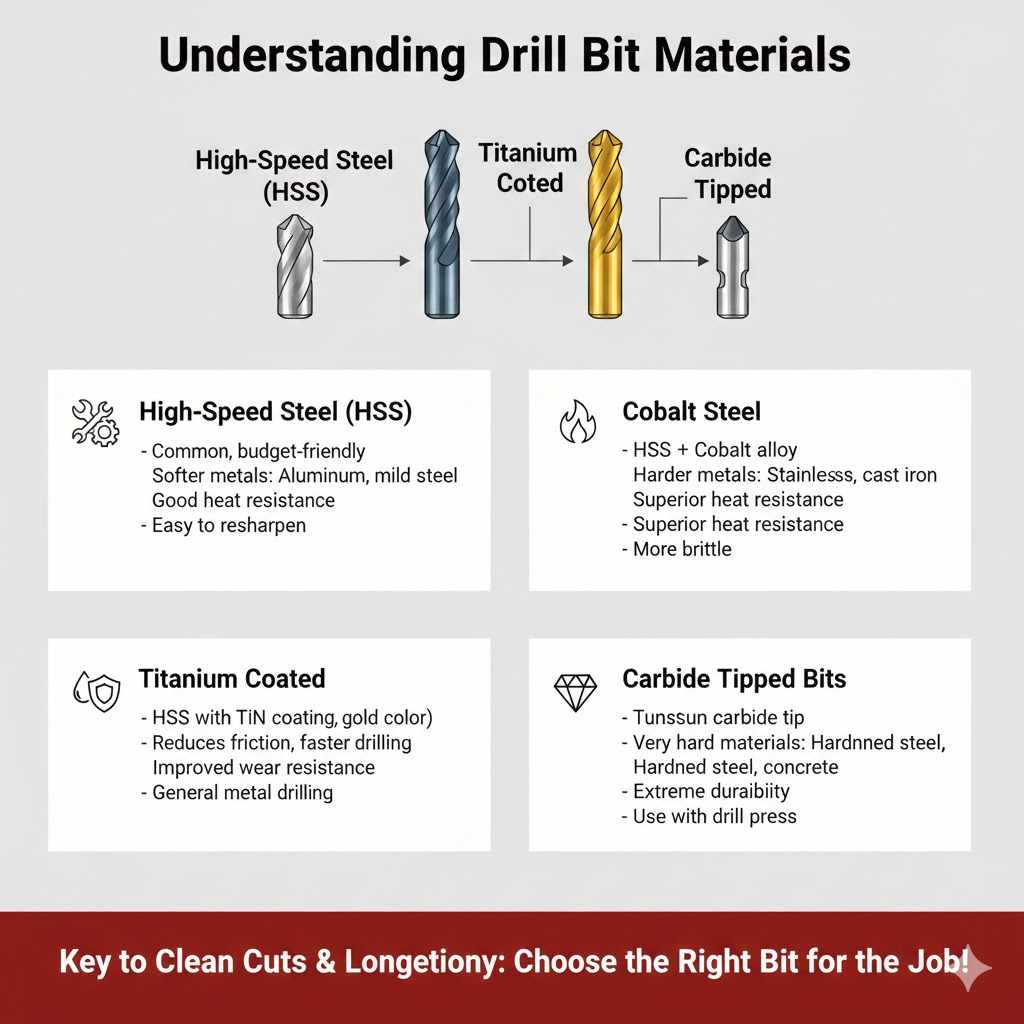
High-Speed Steel (HSS)
High-Speed Steel, or HSS, is a very common material for drill bits. It’s a type of alloy steel that can withstand higher temperatures than regular steel. This means HSS bits can drill faster without losing their hardness.
They are a good choice for drilling into softer metals like aluminum, brass, and mild steel.
HSS bits are a budget-friendly option and work well for many DIY projects. They are tough but can become dull if used on very hard metals or for prolonged periods at high speeds. For general-purpose metal drilling, HSS is a reliable starting point.
One key benefit of HSS is its availability. You can find HSS drill bit sets in almost any hardware store. They are also relatively easy to sharpen if they do get dull, extending their useful life.
Cobalt Steel
Cobalt steel drill bits are a step up from HSS. They are made by adding cobalt to HSS. Cobalt increases the bit’s hardness and heat resistance significantly.
This makes them ideal for drilling into harder metals like stainless steel, cast iron, and tough alloys.
When drilling hard metals, friction generates a lot of heat. Cobalt bits can handle this heat much better than standard HSS bits. This prevents them from softening and losing their cutting edge.
Using cobalt bits on harder materials will result in cleaner holes and fewer broken bits.
A common scenario is drilling into a thick piece of stainless steel. Without a cobalt bit, an HSS bit might overheat, get dull quickly, or even break. A cobalt bit will cut through more smoothly, saving you time and frustration.
- Cobalt bits are great for stainless steel. Their added hardness allows them to penetrate tough materials without dulling as fast. This makes them a professional choice for demanding jobs.
- They offer superior heat resistance. This is critical when drilling at higher speeds or into dense metals where friction builds up heat quickly. The cobalt allows the bit to maintain its hardness even under extreme temperatures.
- Cobalt bits are more brittle than HSS. While they are harder, they can snap if subjected to excessive side pressure or impact. It’s important to use a steady hand and let the bit do the work.
Titanium Coated Bits
Titanium coated drill bits are typically HSS bits that have a thin layer of titanium nitride (TiN) applied to their surface. This coating makes the bit harder and more durable. It also reduces friction, allowing the bit to cut more cleanly and quickly.
The titanium coating provides a gold or brass color to the bit. This coating helps bits last longer by protecting the underlying steel from wear and heat. They are excellent for drilling through a variety of metals, including mild steel, aluminum, and even some hardened steels.
Think about drilling into a sheet of aluminum. A titanium coated bit will glide through with ease, leaving a smooth edge. A regular HSS bit might snag or create rougher edges, requiring more cleanup.
- Titanium coatings reduce friction. This means less heat buildup and faster drilling speeds. The bit stays cooler, which prolongs its life.
- They improve wear resistance. The hard titanium layer acts as a protective shield against abrasion. This is especially useful when drilling through abrasive materials.
- These bits are good for general metal drilling. They offer a good balance of performance and cost for most home and workshop tasks.
Carbide Tipped Bits
Carbide tipped drill bits have a small tip made of tungsten carbide brazed onto a steel body. Tungsten carbide is an extremely hard material, much harder than even cobalt steel. These bits are designed for drilling through very hard materials like hardened steel, concrete, and tile.
Because they are so hard, carbide tipped bits are best used with a drill press or a powerful hammer drill. They are not typically used for general metal drilling by hand unless the metal is exceptionally hard. Their hardness means they must be handled with care.
Imagine needing to drill a hole in a tool bit that has been hardened. A regular drill bit would likely fail. A carbide tipped bit, however, can power through it because of its superior hardness.
Common Drill Bit Types and Their Uses
This part of our guide will look at the different shapes and styles of drill bits designed for metal. Each type has a specific job it does best. Understanding these distinctions will help you choose the right bit for the specific task you have in mind, ensuring efficiency and accuracy.
Twist Drills
Twist drills are the most common type of drill bit. They have helical grooves (the twists) that spiral around the shaft. These grooves are designed to remove chips from the hole as you drill.
Twist drills are versatile and can be used for drilling holes in a wide range of materials, including metal.
They come in various lengths and diameters. For metal, you’ll want twist drills made from HSS, cobalt, or titanium-coated HSS for best results. The angle of the cutting edge is also important for drilling different metals.
A common use is making pilot holes for screws or bolts in metal. For example, when assembling a metal shelf, you would use twist drills to create the initial holes for the mounting screws.
- Twist drills are the workhorses of drilling. Their design effectively clears debris, which is crucial when drilling metal to prevent binding.
- They are available in many sizes. From tiny bits for delicate work to larger ones for substantial holes, twist drills cover a broad spectrum of needs.
- Choosing the right point angle matters. A sharper angle is good for softer metals, while a more obtuse angle works better for harder materials.
Step Drills
Step drill bits, also known as unibits, look like a cone with multiple levels or steps. Each step is a larger diameter than the one before it. This design allows you to drill holes of different sizes with a single bit.
You simply advance the bit to the desired step for the required hole diameter.
Step drills are fantastic for sheet metal. They create clean, burr-free holes. They are especially useful when you need to enlarge existing holes or create a range of hole sizes in thin metal without changing bits.
Imagine you are installing a new car stereo and need to drill holes of 1/4 inch, 3/8 inch, and 1/2 inch in a metal dashboard. Instead of using three separate twist drills, you could use a single step drill bit to achieve all three sizes quickly and cleanly.
- Step drills are ideal for thin metal. They drill holes cleanly, minimizing distortion and burrs that can be problematic with twist drills on thin sheets.
- They allow for variable hole sizes. This reduces the need to carry a large set of bits. One step drill can replace multiple standard bits.
- These bits are easy to use. You just drill until you reach the desired diameter, making them very user-friendly for metal fabrication.
Spade Bits or Paddle Bits
Spade bits, also called paddle bits, have a flat, blade-like cutting surface. They are designed for drilling larger holes in softer materials like wood. While they can be used for some metal applications, they are generally not recommended for precise or clean holes in metal.
Their design can cause them to grab and tear through softer metals, leading to ragged edges. For serious metal drilling, especially where precision is needed, other bit types are far superior. They are more suited for creating rough, large diameter holes quickly.
If you were drilling a large opening for a ventilation fan in a thin aluminum panel, a spade bit might be a quick option. However, for anything requiring a neat finish, you would opt for a step bit or a hole saw.
Hole Saws
Hole saws are cylindrical saws with a pilot drill bit in the center. They are used to cut large diameter holes through various materials, including metal. The saw’s teeth cut a circle, leaving a plug of material in the center.
Hole saws are great for cutting through thicker metal where twist drills would be too slow or impractical. They come in many sizes, from small to very large. For metal cutting, look for hole saws specifically designed for metal with strong teeth.
A plumber might use a 2-inch hole saw to cut a perfectly round opening in a steel pipe for a fitting. This is much faster and cleaner than trying to use multiple twist drills to create such a large hole.
- Hole saws cut large diameter holes efficiently. They are the go-to tool for creating big openings in metal sheets or pipes.
- They produce clean circular cuts. This is essential for applications requiring precise fitting of pipes, conduits, or other components.
- Variable tooth designs exist. Some hole saws have different tooth counts and set for smoother cuts or faster material removal, depending on the metal thickness.
Key Features to Look For
When you are looking to buy drill bits for metal, certain features make a big difference in performance and longevity. This section highlights what to check for, so you can make informed choices and avoid common pitfalls. Paying attention to these details ensures you get the best value.
Point Angles
The point angle is the angle at the very tip of the drill bit. Different angles are designed for drilling various materials. For general-purpose metal drilling, a common point angle is 118 degrees.
This angle works well for softer metals like aluminum, copper, and mild steel.
For harder metals such as stainless steel or cast iron, a sharper point angle, like 135 degrees, is often better. A sharper angle can penetrate harder materials more easily and with less force. It also helps reduce the risk of the bit wandering when starting a hole.
Using the wrong point angle can lead to inefficient drilling, bit damage, or poor hole quality. For instance, trying to drill hard steel with a very obtuse angle might cause the bit to skate across the surface.
- 118-degree points are standard. They are versatile and suitable for a wide range of common metals.
- 135-degree points offer faster penetration. They are excellent for harder alloys and offer better control on tough materials.
- Self-starting points exist. Some bits have special tip designs that prevent wandering when you begin drilling, ensuring accuracy.
Flute Length and Design
The flutes are the spiral grooves on a drill bit. Their depth and shape affect how well chips are cleared from the hole. For drilling metal, shorter flutes are generally preferred because they offer more rigidity and strength.
This is important for preventing the bit from bending or breaking.
Longer flutes can be useful for drilling deep holes, as they provide more room for chips to exit. However, they can be less stable. Bits designed for metal often have precisely engineered flutes to optimize chip removal and bit strength.
Consider drilling a deep hole in a thick steel plate. A bit with well-designed flutes will effectively eject the metal chips, preventing them from clogging the hole and potentially snapping the bit.
- Shorter flutes mean greater strength. This is critical when drilling hard metals or when precise hole alignment is needed.
- Optimized flute design aids chip removal. Efficiently clearing chips prevents overheating and reduces the chance of the bit getting stuck.
- Specialized flute geometries exist. Some bits have polished flutes for better chip flow, especially in sticky materials like aluminum.
Web Thickness
The web is the central core of the drill bit, connecting the two cutting edges. Web thickness increases towards the shank of the bit. A thicker web provides more strength to the bit, making it more resistant to breaking, especially when drilling hard materials or at higher speeds.
Bits designed for metal drilling often have a thicker web compared to bits meant for wood. This extra strength is crucial for withstanding the forces involved in cutting metal. If a bit has a thin web, it’s more likely to fracture under pressure.
When drilling through a thick steel beam, the drill bit experiences significant lateral forces. A bit with a robust, thicker web will hold up much better than one with a thin, weak core.
- Thicker webs increase bit strength. This is vital for durability, especially in demanding metal drilling applications.
- They reduce the risk of breakage. A strong web means the bit is less likely to snap under pressure or during aggressive drilling.
- Look for bits with a progressive web design. Some advanced bits have a thicker web at the shank that tapers towards the point, offering a good balance of strength and cutting efficiency.
Coatings and Treatments
Beyond titanium, other coatings and heat treatments can significantly improve drill bit performance for metal. Black oxide is a common treatment that adds a layer of protection against rust and wear. It also helps the bit run cooler.
More advanced coatings like TiAlN (titanium aluminum nitride) offer extreme hardness and heat resistance. These are used for very demanding applications, often with specialized machinery. Even basic heat treatments can make a standard HSS bit more durable.
Consider drilling repeatedly into mild steel. A black oxide coated bit will resist rust and wear better than an uncoated bit, lasting longer and providing more consistent performance over time.
- Black oxide treatment adds corrosion resistance. It also helps lubricate the bit, allowing for smoother drilling and longer life.
- TiAlN coatings provide exceptional hardness. These are ideal for high-speed drilling into very hard metals, offering superior performance and longevity in extreme conditions.
- Surface treatments reduce friction. This leads to less heat buildup, which is crucial for the longevity of the drill bit and the quality of the hole.
Choosing the Right Bit for Specific Metals
Not all metals are the same, and the drill bit you use should match the material you’re working with. This section guides you through selecting the best drill bits for common metals. Getting this right means easier drilling and better results.
Mild Steel and Aluminum
Mild steel and aluminum are relatively soft metals. For these, standard High-Speed Steel (HSS) drill bits are usually sufficient. They offer a good balance of durability and cost.
A 118-degree point angle is typically ideal for these materials.
You can also use titanium-coated HSS bits for faster drilling and a cleaner finish in aluminum and mild steel. They reduce friction and heat, allowing you to drill at higher speeds without damaging the bit or the workpiece.
When drilling aluminum, it can sometimes be “gummy” and clog the flutes. Using a bit with polished flutes or applying a lubricant can help prevent this.
- HSS bits are a solid choice for mild steel and aluminum. They are affordable and perform well for most tasks.
- Titanium-coated bits offer improved performance. They drill faster and leave cleaner holes, especially in softer metals.
- Use standard 118-degree point angles. These angles are well-suited for the relatively softer nature of mild steel and aluminum.
Stainless Steel and Hardened Steel
Stainless steel and hardened steel are much tougher metals. For these, you’ll need stronger drill bits. Cobalt steel drill bits are highly recommended.
Their added cobalt content makes them harder and more heat-resistant.
A 135-degree point angle is often best for stainless steel. This sharper angle helps the bit penetrate the tough material more effectively and reduces the chance of it wandering. Using a cutting lubricant is also very important to keep the bit cool and reduce friction.
For extremely hard metals, like tool steel that has been heat-treated, you might need carbide-tipped bits. These are significantly harder than steel bits and can cut through materials that would quickly dull or break other types of bits.
- Cobalt drill bits are essential for stainless steel. Their enhanced hardness and heat resistance are crucial for drilling these challenging materials.
- Use a 135-degree point angle for harder metals. This sharper angle improves penetration and control, especially on stainless steel.
- Always use a cutting lubricant. Lubrication is critical for drilling hard metals. It cools the bit, reduces friction, and helps clear chips, extending bit life and improving hole quality.
A common statistic shows that using cobalt bits on stainless steel can increase drill bit life by up to 60% compared to standard HSS bits. This makes them a cost-effective choice for frequent use.
Brass and Copper
Brass and copper are soft and malleable metals. They are also somewhat “gummy,” meaning they can clog drill bits easily. For these metals, you can generally use standard HSS twist drill bits.
It’s often recommended to use a sharper point angle, around 90 to 118 degrees, for brass and copper. A sharper angle helps them cut cleanly. A lubricant is less critical than for steel, but a bit of cutting fluid or even a drop of oil can help prevent clogging.
When drilling brass, you want to avoid excessive heat, as it can cause the material to work-harden and become more difficult to drill. Steady drilling and good chip clearance are key.
- Standard HSS bits work well for brass and copper. Their sharpness allows them to cut these softer metals effectively.
- Sharper point angles are beneficial. Angles between 90 and 118 degrees help create cleaner holes in these less dense materials.
- Prevent clogging with lubricants. Even a small amount of cutting fluid or oil can help keep the flutes clear of soft metal debris.
Best Practices for Drilling Metal
Proper technique is just as important as having the right drill bits. This section covers essential tips for drilling metal safely and effectively. Following these practices will help you achieve great results and keep your tools in good condition.
Securing Your Workpiece
Always secure your workpiece firmly before drilling. Use clamps, a vise, or other holding devices to prevent the metal from moving. A moving workpiece can cause the drill bit to bind, break, or create an inaccurate hole.
A secure workpiece also improves safety. If the drill bit catches on unsecured metal, the torque can twist the material violently, potentially causing injury. For thin sheet metal, consider using a backing material like wood to support it and prevent blowout.
Imagine drilling a hole in a small metal bracket. If it’s not clamped down, the drill bit could spin the bracket around. This makes accurate drilling impossible and is a safety hazard.
Clamping it securely to a workbench ensures it stays put.
- Use clamps or a vise to hold metal steady. This is the most critical step for safe and accurate drilling.
- Avoid drilling freehand. Any free movement of the workpiece will compromise the hole quality and increase the risk of accidents.
- Consider a backing board. For thin metal, a piece of scrap wood underneath can provide support and prevent rough edges on the exit side.
Using Cutting Lubricant
Using a cutting lubricant or coolant is vital when drilling metal. Lubricant reduces friction and heat buildup. This keeps the drill bit from overheating and becoming dull quickly.
It also helps clear metal chips away from the cutting edge.
There are many types of lubricants available, from general-purpose cutting oils to specialized sprays. For most common metal drilling, a standard cutting fluid is effective. Apply it directly to the drill bit and the workpiece at the point of drilling.
Drilling into stainless steel without lubricant generates extreme heat. This can lead to the bit losing its temper (hardness) and becoming useless very fast. A simple stream of cutting oil makes a huge difference in bit life and drilling ease.
- Lubrication significantly extends drill bit life. It prevents the bit from overheating and losing its hardness.
- It helps clear chips and debris. This keeps the cutting area clean and reduces the risk of the bit binding in the hole.
- Cooling the bit is essential. Heat is the enemy of drill bits, especially when working with hard metals.
Drilling Speed and Pressure
The correct drilling speed depends on the drill bit size and the type of metal you are drilling. Generally, smaller bits and harder metals require slower speeds, while larger bits and softer metals can be drilled at higher speeds.
Applying too much pressure can cause the drill bit to overheat, break, or create a poor-quality hole. Let the drill bit do the work. Apply steady, consistent pressure.
If you’re using a variable-speed drill, start slow and increase as needed.
For example, drilling a 1/4 inch hole in mild steel might require a moderate speed and steady pressure. Trying to drill a tiny hole in hardened steel at high speed with heavy pressure will likely result in a broken bit.
Here’s a general guideline for drilling speeds (RPMs) for mild steel with HSS bits:
| Drill Bit Diameter | Recommended RPM |
|---|---|
| 1/8 inch | 1725 |
| 1/4 inch | 860 |
| 1/2 inch | 430 |
| 1 inch | 215 |
- Match drill speed to material and bit size. Slower speeds are safer for hard metals and small bits.
- Apply steady, consistent pressure. Avoid forcing the drill; let the bit cut.
- Listen to your drill and bit. If you hear squealing or see excessive heat, adjust your speed and pressure.
Clearing Chips and Pecks
When drilling deep holes in metal, chips can accumulate and jam the flutes, causing the bit to bind. Periodically withdraw the drill bit from the hole while it’s still spinning. This is called “pecking.”
Pecking allows chips to be cleared from the hole and flutes, and it also helps to cool the bit. For deep holes, it’s a crucial technique to prevent bit breakage and ensure a clean hole.
Imagine drilling a hole an inch deep in a thick steel plate. After drilling about 1/4 inch, pull the bit out briefly to let the chips fall away. Repeat this process every 1/4 inch or so.
This “pecking” action ensures a smooth drilling process.
- Periodically withdraw the bit to clear chips. This is especially important for deeper holes.
- Pecking helps cool the bit and the workpiece. It allows air and lubricant to reach the cutting area more effectively.
- This technique prevents bit binding. By removing chips, you reduce the risk of the drill getting stuck and breaking.
The Best Drill Bits for Metal: Pro Buying Guide Summary
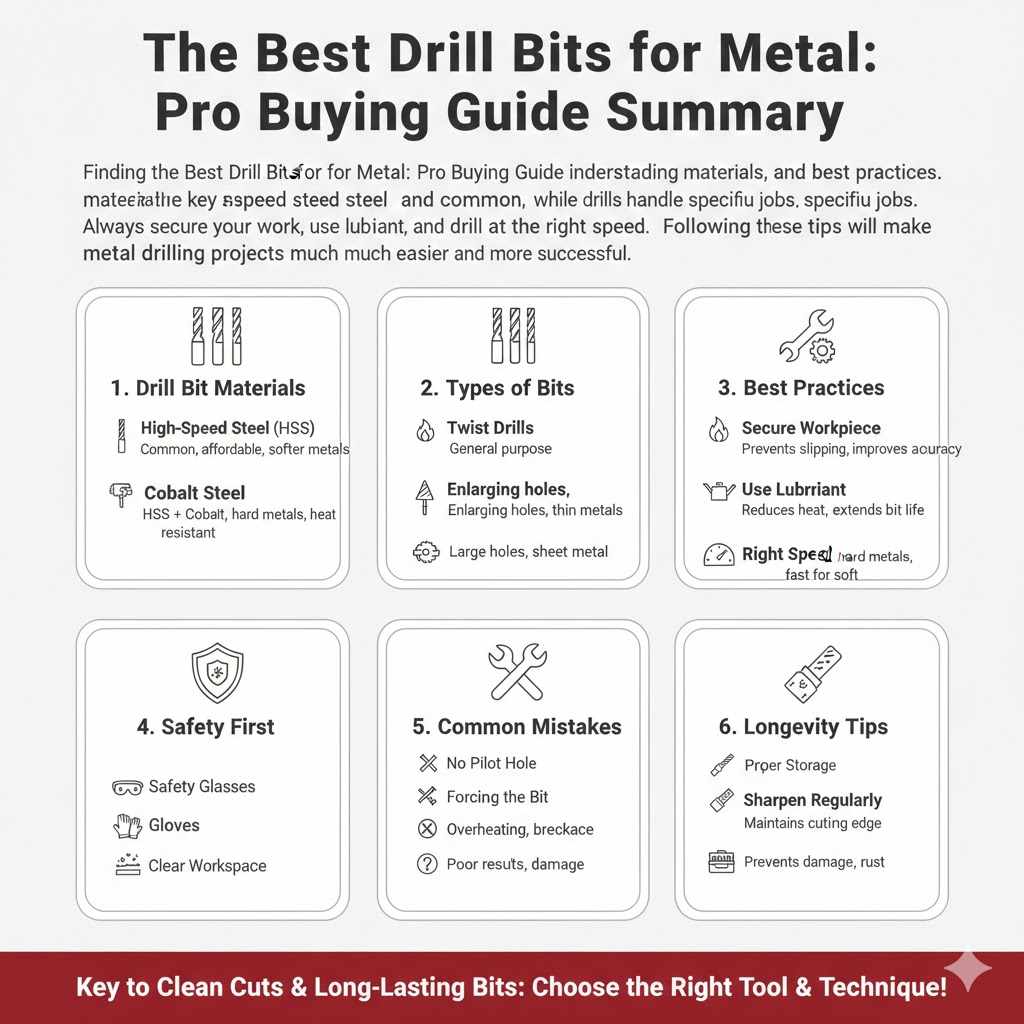
Finding the Best Drill Bits for Metal: Pro Buying Guide involves understanding materials, types, and best practices. High-speed steel and cobalt are key materials. Twist drills are common, while step drills and hole saws handle specific jobs.
Always secure your work, use lubricant, and drill at the right speed. Following these tips will make your metal drilling projects much easier and more successful.
Frequently Asked Questions
Question: What is the hardest type of drill bit for metal?
Answer: Tungsten carbide is the hardest material used for drill bits, often in the form of carbide-tipped bits. These are designed for drilling very hard metals and materials.
Question: Can I use wood drill bits for metal?
Answer: No, wood drill bits are not designed for metal. They are typically made of softer materials and have different cutting edges that will quickly dull or break when used on metal.
Question: How often should I replace my metal drill bits?
Answer: The lifespan of a drill bit depends on its material, the metal being drilled, and how it’s used. With proper care and lubrication, good quality bits can last for many holes. When a bit becomes dull, it’s time for replacement or sharpening.
Question: What is the best drill bit for drilling stainless steel?
Answer: Cobalt drill bits are highly recommended for stainless steel due to their hardness and heat resistance. Using a 135-degree point angle and a cutting lubricant is also crucial.
Question: Should I use a drill press or a hand drill for metal?
Answer: A drill press offers more stability and precision, making it ideal for drilling metal accurately, especially for critical applications. However, for many general tasks, a good quality hand drill can be sufficient if used with proper technique.
Wrap Up
Choosing the right drill bits for metal makes all the difference. Focus on HSS and cobalt for strength. Step bits and hole saws offer special capabilities.
Always secure your work, use lubricant, and adjust your speed. With these simple steps, you’ll master drilling metal like a pro.