Best Glue for Gluing Metal to Metal: Strong & Durable Bonds
Choosing the best glue for gluing metal to metal can be crucial for projects requiring a strong, lasting bond that can withstand various stresses and environments. When two metal surfaces need to be joined securely, ordinary adhesives often fall short, necessitating specialized formulations designed for the unique properties of metals. This guide will walk you through the top options, their applications, and what makes them stand out, ensuring your metal-to-metal projects are a success.
Simply put, the best glue for gluing metal to metal depends on your specific needs: epoxy adhesives offer superior strength for structural bonds, cyanoacrylates (super glues) are fast-acting for small repairs, and polyurethane adhesives provide flexibility and weather resistance. Always prepare metal surfaces properly for optimal adhesion.
Key Takeaways
- Epoxy adhesives are generally considered the strongest and most versatile for metal-to-metal bonding, offering excellent gap-filling capabilities and resistance to chemicals and temperature.
- Cyanoacrylate adhesives (super glues) provide rapid bonding for small, non-structural metal repairs where speed is essential.
- Polyurethane adhesives are a good choice for metal applications requiring flexibility and excellent resistance to moisture and impact.
- Proper surface preparation, including cleaning and abrading, is vital for achieving a durable and long-lasting metal-to-metal bond with any adhesive.
- Consider factors like cure time, working time, temperature resistance, and flexibility when selecting the best glue for gluing metal to metal for your project.
What is Metal Bonding?
Metal bonding involves using adhesives to create a structural connection between two or more metal components. Unlike traditional mechanical fasteners like screws or rivets, adhesives distribute stress more evenly across the joint, reducing stress concentration points and potentially leading to lighter, stronger, and more aesthetically pleasing designs. This method is widely used across industries from automotive and aerospace to electronics and general DIY repairs.
The success of metal bonding hinges on several key factors, including the adhesive’s formulation, the type of metals being joined, and crucially, the preparation of the metal surfaces. Metals can be challenging substrates due to their non-porous nature, potential for oxidation, and tendency to expand and contract with temperature changes.
Adhesives specifically engineered for metal substrates are formulated to overcome these challenges. They often contain specific compounds that promote adhesion to metal oxides, polymers that offer flexibility to accommodate thermal expansion, and fillers that enhance strength and gap-filling properties. Understanding these principles helps in selecting the right product for a reliable bond.
- Surface Preparation: Thorough cleaning and roughening of metal surfaces.
- Adhesive Selection: Choosing an adhesive formulated for metal and the specific application.
- Application Technique: Applying the correct amount of adhesive evenly.
- Curing Process: Allowing adequate time for the adhesive to cure fully under the recommended conditions.
- Environmental Factors: Considering temperature, humidity, and exposure to chemicals or UV light.
- Stress Considerations: Understanding the load the bond will need to bear.
Types of Adhesives for Metal
When it comes to joining metal, a variety of adhesive types are available, each with its own strengths and ideal use cases. The “best” choice often depends on the specific metals, the environmental conditions the bond will face, and the mechanical stress it will endure. Understanding these different categories is the first step to making an informed decision for your metal-to-metal bonding needs.
These adhesives range from fast-acting single-component types to robust two-part systems that require mixing. Some are designed for high-temperature environments, while others offer flexibility to absorb shock and vibration. The underlying chemistry of each type dictates its performance characteristics, including its adhesion to different metal alloys, its shear and peel strength, and its resistance to environmental degradation.
For instance, structural adhesives form permanent, load-bearing bonds, whereas non-structural adhesives are better suited for cosmetic applications or holding components in place temporarily. Knowing whether your project demands a bond that can support significant weight or one that simply needs to hold pieces together for aesthetic purposes will significantly narrow down your choices. This section will break down the most common and effective adhesive types for metal.
- Epoxy Adhesives: Known for their exceptional strength, durability, and resistance to chemicals and temperature. They are two-part systems (resin and hardener) that require mixing.
- Cyanoacrylate Adhesives (Super Glues): Cure rapidly through moisture in the air, making them ideal for quick fixes and small, non-structural bonds.
- Polyurethane Adhesives: Offer a good balance of strength and flexibility, with excellent resistance to moisture, UV, and impact.
- Anaerobic Adhesives: Cure in the absence of air, typically used for threadlocking and retaining cylindrical parts like bearings and shafts.
- Silicone Adhesives/Sealants: Provide excellent flexibility and temperature resistance, often used for sealing and bonding where some movement is expected, but not for heavy structural loads.
- Contact Adhesives: Applied to both surfaces, allowed to dry until tacky, then pressed together. Good for bonding large, thin metal sheets where instant grip is needed.
1. Epoxy Adhesives: The All-Around Champion
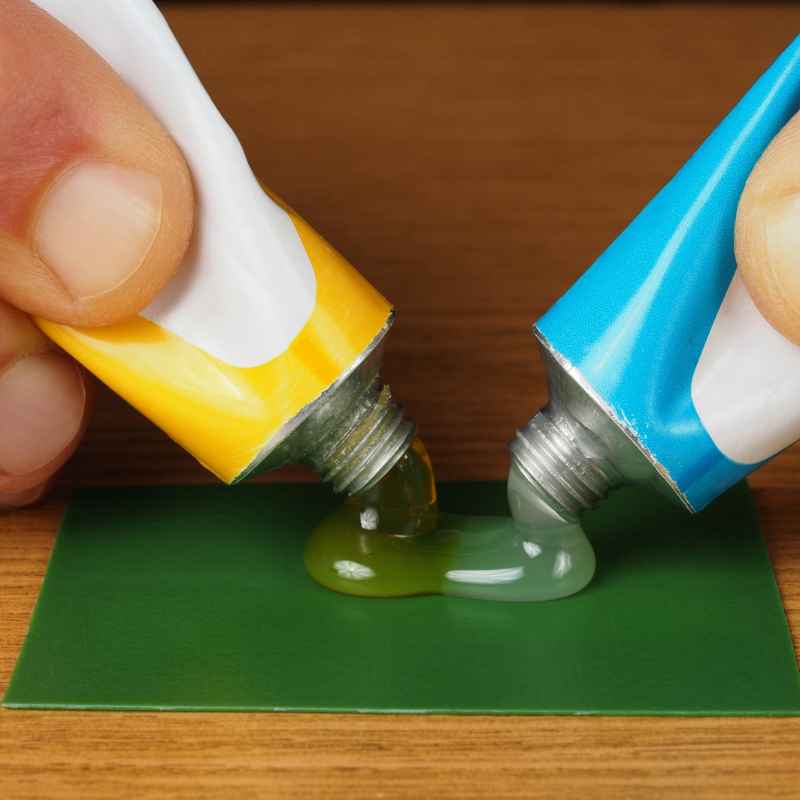
Epoxy adhesives are widely regarded as the gold standard for many metal-to-metal bonding applications due to their exceptional strength, rigidity, and resistance to harsh environments. These are typically two-part systems, consisting of a resin and a hardener, which are mixed before application. The chemical reaction between these two components initiates a curing process that results in a very strong, durable bond.
The versatility of epoxies is a significant advantage. They come in various formulations, including those that are fast-curing for quicker projects, slow-curing for applications requiring more working time to position parts perfectly, and high-temperature resistant epoxies for demanding industrial uses. Many epoxies also possess excellent gap-filling properties, meaning they can effectively bond surfaces that are not perfectly flat or have minor imperfections.
When it comes to metal, epoxies bond exceptionally well to a wide range of alloys, including steel, aluminum, brass, and stainless steel, provided the surfaces are properly prepared. Their resistance to water, chemicals, solvents, and significant temperature fluctuations makes them suitable for applications in automotive repair, aerospace, marine environments, and general construction where durability is paramount.
| Epoxy Adhesive Characteristics | Details |
|---|---|
| Strength | Excellent tensile, shear, and impact strength. |
| Cure Time | Varies from minutes to hours, depending on formulation. |
| Temperature Resistance | Good to excellent, with some formulations tolerating up to 300°C (572°F). |
| Chemical Resistance | Excellent resistance to solvents, fuels, and many other chemicals. |
| Gap Filling | Good to excellent, suitable for bonding slightly uneven surfaces. |
Epoxies are a top choice for applications requiring permanent, high-strength bonds, especially where durability and resistance to environmental factors are critical.
- Pros: Extremely strong, durable, good gap-filling, excellent environmental resistance, versatile formulations.
- Cons: Requires mixing, longer cure times for some types, can be messy if not applied carefully, may require clamping during cure.
Best For: Structural repairs, automotive and aerospace components, marine applications, joining dissimilar metals, electronics encapsulation.
Tip: For best results with a two-part epoxy, ensure you mix the resin and hardener in the exact ratio specified by the manufacturer. Inaccurate mixing can lead to incomplete curing and a weakened bond.
2. Cyanoacrylate Adhesives: The Speedy Solution
Cyanoacrylate adhesives, commonly known as “super glues,” are a popular choice for quick repairs and bonding small metal parts where speed is more important than extreme strength or gap-filling. Their defining characteristic is their incredibly fast curing time, often bonding in seconds once the surfaces are brought together.
These adhesives work by reacting to trace amounts of moisture present on the surfaces being bonded. This rapid polymerization creates a strong, rigid bond. While they are excellent for many applications, they are generally best suited for non-porous materials like metal and for parts that will not be subjected to significant flexing, impact, or high temperatures.
Cyanoacrylates are ideal for delicate repairs, such as reattaching a small metal component to a piece of jewelry or fixing a broken metal emblem on a car. They typically don’t fill gaps well, so the mating surfaces need to be clean and fit snugly together for optimal adhesion. Different viscosities are available, from thin liquids that wick into tight spaces to thicker gels that are easier to control on vertical surfaces.
| Cyanoacrylate Adhesive Characteristics | Details |
|---|---|
| Strength | Good tensile strength, but brittle and low impact resistance. |
| Cure Time | Very fast, typically seconds to minutes. |
| Temperature Resistance | Limited, generally up to 80-100°C (176-212°F). |
| Chemical Resistance | Fair to good resistance to many solvents, but can be degraded by strong acids or bases. |
| Gap Filling | Poor. Requires tight-fitting parts. |
Super glues are excellent for rapid, minor repairs on metal components where speed and ease of use are prioritized.
- Pros: Extremely fast bonding, easy to use, readily available, good for small parts.
- Cons: Brittle bond, poor gap filling, limited temperature and impact resistance, can bond skin instantly.
Best For: Small metal repairs, craft projects, quick fixes on non-load-bearing components, bonding ceramics and plastics to metal.
Warning: Cyanoacrylates bond skin and eyelids in seconds. Use with caution and ensure good ventilation. Keep away from children.
3. Polyurethane Adhesives: Flexible Strength
Polyurethane adhesives offer a unique combination of strength and flexibility, making them an excellent choice for metal-to-metal bonding applications where the joint might experience vibration, impact, or thermal expansion and contraction. Unlike rigid epoxies, polyurethanes can absorb shock and stress, preventing the bond from cracking or failing.
These adhesives are often used in construction, automotive assembly, and marine environments where durability and a degree of resilience are required. They bond well to various metals, including aluminum, steel, and galvanized steel, as well as to other materials like wood, plastic, and glass, making them versatile for mixed-material projects. Many polyurethane adhesives are also known for their excellent water resistance and UV stability.
Polyurethane adhesives are typically one-part moisture-cure systems or two-part systems. The one-part versions cure as they absorb moisture from the air, while two-part versions require mixing. Cure times can vary, but they generally offer a good balance between working time and setting speed.
Their flexibility also means they can maintain a strong bond even if the metal parts experience minor movement.
| Polyurethane Adhesive Characteristics | Details |
|---|---|
| Strength | Good to very good tensile and shear strength, with excellent flexibility. |
| Cure Time | Moderate, typically 24-72 hours for a full cure. |
| Temperature Resistance | Good, generally up to 90-120°C (194-248°F). |
| Water Resistance | Excellent, ideal for outdoor and marine applications. |
| Flexibility | High flexibility, absorbs vibration and shock. |
Polyurethane adhesives are a robust option for metal bonding where flexibility, weather resistance, and impact absorption are critical.
- Pros: Flexible bond, excellent water and UV resistance, good impact and vibration absorption, bonds to multiple substrates.
- Cons: Can be slower to cure than epoxies, may require clamping, some formulations can be sensitive to moisture during application.
Best For: Automotive body panel bonding, marine applications, outdoor metal structures, flexible joints, bonding metal to dissimilar materials.
4. Anaerobic Adhesives: For Threadlocking and Retaining
Anaerobic adhesives are a specialized type of adhesive that cures when deprived of oxygen, typically in the presence of metal ions. This unique curing mechanism makes them ideal for applications where parts are assembled without exposure to air, such as threaded fasteners and cylindrical assemblies like bearings and shafts.
Their primary use is for threadlocking, sealing, and retaining components. Threadlockers prevent nuts and bolts from loosening due to vibration, shock, or thermal cycling. Retaining compounds create a tight, secure fit between shafts and housings, preventing slippage and wear.
Sealants prevent leaks in metal pipe threads and other pressurized systems.
These adhesives are very effective on metal substrates due to the presence of metal ions that initiate the curing process. They come in various strengths and grades, from low-strength threadlockers that allow for easy disassembly to high-strength formulations that create permanent bonds. It’s crucial to select the correct anaerobic adhesive for the specific application to ensure proper performance and to allow for eventual disassembly if needed.
| Anaerobic Adhesive Characteristics | Details |
|---|---|
| Curing Mechanism | Cures in the absence of air and presence of metal ions. |
| Primary Uses | Threadlocking, thread sealing, retaining, gasketing. |
| Strength Grades | Low, medium, and high strength options available. |
| Temperature Resistance | Good, typically up to 150°C (300°F) for standard types. |
| Disassembly | Depends on strength grade; low/medium strength usually require moderate force or heat. |
Anaerobic adhesives are specialized but essential for securing threaded fasteners and ensuring tight fits in critical metal assemblies.
- Pros: Prevents vibration loosening, excellent sealing capabilities, variety of strengths, good temperature resistance.
- Cons: Requires metal contact to cure, limited to specific applications (threads, cylindrical parts), requires proper application to ensure cure.
Best For: Threaded fasteners, bearings, bushings, shafts, pipe fittings, and other cylindrical assemblies that require secure locking or retention.
Important: For threadlocking, ensure the threads are clean and free of oil or old threadlocker. Apply the anaerobic adhesive to the male threads before assembly.
5. Silicone Adhesives & Sealants: For Flexibility and Sealing
Silicone adhesives and sealants are primarily known for their exceptional flexibility, high and low-temperature resistance, and excellent sealing capabilities. While not typically used for high-strength structural bonding of metal-to-metal, they are invaluable for applications where a flexible, watertight, or vibration-dampening bond is needed.
These materials are derived from silicone polymers and are available in various formulations, most commonly as one-part, moisture-curing RTV (Room Temperature Vulcanizing) silicones. They form a rubber-like material when cured, which can accommodate significant movement between metal parts without failing. Their inherent flexibility makes them ideal for sealing joints, bonding dissimilar materials where thermal expansion differs greatly, or applications subject to constant vibration.
Silicone adhesives bond well to many metals, especially when adhesion promoters are used or when the surface is properly prepared. They are resistant to weathering, UV radiation, and a wide range of chemicals, making them suitable for outdoor use, automotive gaskets, and industrial sealing tasks. Common applications include sealing engine components, bonding metal trim, and creating flexible seals around metal frames.
| Silicone Adhesive/Sealant Characteristics | Details |
|---|---|
| Flexibility | Excellent, remains flexible across a wide temperature range. |
| Temperature Resistance | Very good, often from -50°C to over 200°C (-58°F to 400°F). |
| Water Resistance | Excellent. Forms a durable, watertight seal. |
| Adhesion | Good to fair on metals, often requires a primer for optimal bonding. |
| Cure Time | Moderate, typically 24 hours for a full cure. |
Silicone adhesives are ideal for sealing, gasketing, and bonding where flexibility, temperature extremes, and weather resistance are paramount.
- Pros: Highly flexible, excellent temperature range, excellent weather and UV resistance, good electrical insulator, provides a watertight seal.
- Cons: Low structural strength, can be difficult to paint over, some types can degrade with certain fuels or solvents, requires primers for optimal metal adhesion.
Best For: Gasketing, sealing engine components, weatherstripping, bonding metal to glass or other flexible materials, high-temperature seals.
Surface Preparation: The Key to a Lasting Bond
No matter which adhesive you choose, the success of your metal-to-metal bond hinges on proper surface preparation. Metals, especially when exposed to air and moisture, can develop oxides and contaminants that prevent adhesives from forming a strong, direct bond. Skipping or rushing this step is the most common reason for adhesive failure.
The goal of surface preparation is to create a clean, dry, and slightly rough surface that the adhesive can intimately bond with. This typically involves a multi-step process that removes grease, oil, dirt, and existing coatings, followed by mechanical abrasion to increase the surface area and provide a key for the adhesive to grip onto. For critical applications, chemical treatments might also be employed.
The specific steps can vary slightly depending on the type of metal and the adhesive being used, but a general approach can be outlined. Always consult the adhesive manufacturer’s recommendations for the most precise guidelines. Investing time in this crucial phase will significantly increase the longevity and strength of your bond.
Cleaning the Surface
Begin by thoroughly cleaning the metal surfaces to remove any grease, oil, dirt, or other contaminants. This is often best achieved with a solvent such as isopropyl alcohol, acetone, or a specialized metal degreaser. Apply the solvent with a clean, lint-free cloth and wipe the surface until no residue appears on the cloth.
Ensure good ventilation when using solvents and avoid touching the cleaned surfaces with bare hands, as skin oils can interfere with adhesion.
Mechanical Abrasion
Once cleaned, the metal surface should be abraded. This can be done using sandpaper (typically 120-220 grit), a wire brush, or an abrasive pad. The goal is to create a slightly rougher profile on the surface, increasing the surface area and removing any microscopic oxide layers.
This mechanical keying helps the adhesive to “grip” the metal more effectively. After abrading, clean the surface again with a solvent to remove any dust or debris generated by the abrasion process.
Drying and Priming (If Necessary)
Ensure the metal surfaces are completely dry after cleaning. For some adhesives and metal types, a primer may be recommended or required by the adhesive manufacturer to enhance adhesion. Primers act as a bonding agent between the metal and the adhesive, improving the overall strength and durability of the joint.
Follow the primer manufacturer’s instructions precisely.
| Surface Preparation Step | Purpose | Recommended Tools/Materials |
|---|---|---|
| Degreasing | Removes oils, grease, and other organic contaminants. | Isopropyl alcohol, acetone, specialized degreasers, lint-free cloths. |
| Mechanical Abrasion | Creates a rougher surface for better adhesive grip. | Sandpaper (120-220 grit), wire brush, abrasive pads. |
| Dust/Debris Removal | Removes particles from abrasion. | Clean cloths, compressed air (if available). |
| Priming (Optional) | Enhances adhesion to specific metals. | Adhesive-specific metal primer. |
Adhering to these preparation steps is non-negotiable for achieving a strong and durable bond between metal components.
Warning: Always ensure adequate ventilation when working with solvents and adhesives. Wear appropriate personal protective equipment, including gloves and eye protection.
Common Mistakes to Avoid
When attempting to glue metal to metal, several common mistakes can lead to a weak or failed bond. Being aware of these pitfalls can save you time, money, and frustration, ensuring your project is completed successfully. Many of these errors stem from rushing the process or not fully understanding the adhesive’s requirements.
One of the most frequent errors is inadequate surface preparation. As detailed earlier, failing to properly clean and abrade the metal surfaces means the adhesive has nothing strong to bond to. Another common mistake is using the wrong type of adhesive for the specific metals or the intended application.
Not all glues are created equal, and using a general-purpose adhesive when a specialized metal-bonding product is needed will almost certainly lead to disappointment.
Application and curing are also critical stages where mistakes can occur. Applying too little or too much adhesive, not applying it evenly, or failing to clamp the parts together during the curing process are all common issues. Additionally, not allowing the adhesive to cure fully before putting stress on the joint is a sure way to guarantee failure.
Understanding the specified cure time and conditions is essential.
- Insufficient Surface Preparation: Not cleaning or abrading the metal surfaces adequately.
- Using the Wrong Adhesive: Selecting a glue not formulated for metal or the specific application’s demands (e.g., temperature, stress).
- Improper Mixing (for two-part adhesives): Incorrect ratios of resin and hardener.
- Applying Too Much or Too Little Adhesive: Affects bond strength and spread.
- Not Clamping Parts: Allowing parts to shift or separate during the initial cure.
- Shortening Cure Time: Placing the bonded item under load before the adhesive is fully cured.
- Ignoring Environmental Conditions: Applying adhesives in extreme temperatures or humidity outside the manufacturer’s recommendations.
- Bonding Dissimilar Metals Without Consideration: Not accounting for galvanic corrosion or different expansion rates.
Frequently Asked Questions
What is the strongest glue for metal?
For sheer strength and durability in structural applications, two-part epoxy adhesives are generally considered the strongest glue for metal-to-metal bonding. They create a rigid, high-tensile, and shear-resistant bond that can withstand significant loads and environmental stresses. However, for specific applications, other adhesives might be preferable.
Can super glue be used to glue metal?
Yes, cyanoacrylate adhesives (super glue) can bond metal, but they are best suited for small, non-structural repairs. The bond created is typically rigid and can be brittle, making it less ideal for applications involving impact or flexing. Ensure the metal surfaces are clean and fit snugly together for best results.
How long does glue take to dry on metal?
The drying or curing time varies significantly by adhesive type. Cyanoacrylates can set in seconds to minutes. One-part epoxies might cure in a few minutes to an hour, while two-part epoxies typically require several hours for a full cure, though they may be handling-strong in 15-60 minutes.
Polyurethane adhesives usually take 24-72 hours for a complete cure. Always check the product’s specifications.
Do I need to prime metal before gluing?
Priming metal before gluing is often recommended or required by the adhesive manufacturer, especially for certain metal types or when maximum bond strength and durability are needed. Primers create an intermediate layer that enhances adhesion between the metal surface and the adhesive, particularly for challenging substrates or when extreme environmental resistance is required.
What is the best way to clean metal for gluing?
The best way to clean metal for gluing is a two-step process: first, degrease the surface thoroughly using a solvent like isopropyl alcohol or acetone to remove oils and grease. Second, mechanically abrade the surface with sandpaper (120-220 grit) or a wire brush to create a rougher profile. Always follow up with a final solvent wipe to remove any dust created by abrasion.
Final Thoughts
Selecting the best glue for gluing metal to metal requires careful consideration of your project’s specific demands, from the types of metals involved to the environmental conditions and stress the bond will endure. Epoxies offer unparalleled strength, super glues provide speed for minor fixes, and polyurethanes deliver flexibility and resilience. Remember that proper surface preparation is the cornerstone of any successful metal bond, regardless of the adhesive used.
By choosing wisely and preparing meticulously, you can achieve durable, reliable connections for all your metalworking needs.