Best Glue to Hold Plastic Together Strongly
Picking the right glue for plastic can be tricky, especially if you’re new to fixing things. Many glues don’t stick well to plastic, or they make the plastic look messy. It’s a common problem that leaves people frustrated.
But don’t worry! This guide makes it simple. We’ll walk you through finding the Best Glue to Hold Plastic Together Strongly so your projects turn out great.
We’ll cover everything you need to know to get a strong, lasting bond.
Choosing the Best Glue for Plastic
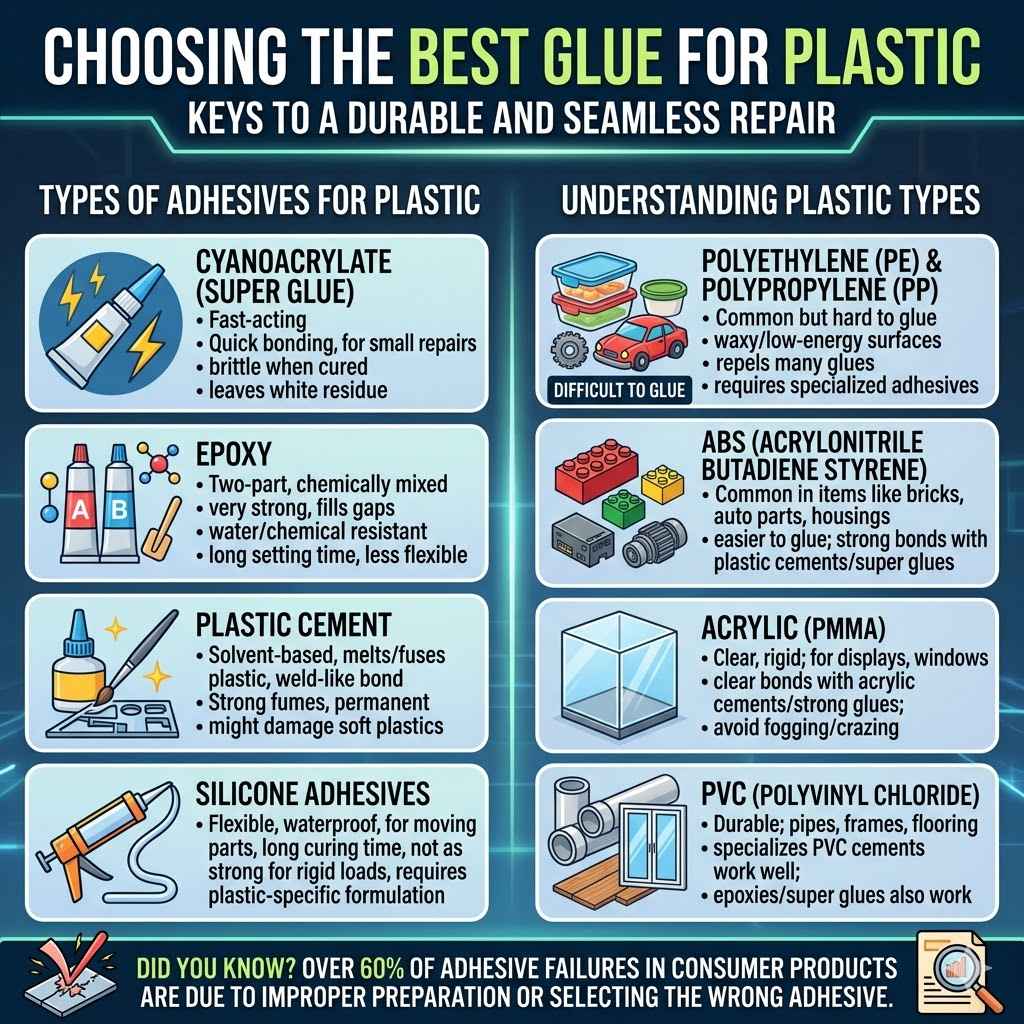
Selecting the right adhesive for plastic repairs is key to achieving a durable and seamless mend. Different plastics require different types of glues, and using the wrong one can lead to weak bonds, discoloration, or even further damage to the material. This section will explore the general principles and common types of glues that work well with various plastics, setting the stage for more specific recommendations.
Understanding these basics helps you make an informed choice for your particular project.
Types of Adhesives for Plastic
There are several categories of glues designed to work with plastic. Each has its own strengths and is suited for different applications. Knowing these types helps you pick the most effective option.
Cyanoacrylate (Super Glue)
Cyanoacrylates are fast-acting adhesives known for their quick bonding times. They are ideal for small repairs on non-porous surfaces like many plastics. The bond is strong and sets in seconds, making it excellent for quick fixes.
However, cyanoacrylates can be brittle once cured and are not always flexible. They also tend to leave a white residue if too much is used, which can be unsightly. For best results, ensure the surfaces are clean and held together firmly while the glue sets.
This glue is readily available in most stores.
Epoxy
Epoxy adhesives are two-part glues that you mix together before applying. This mixing process creates a chemical reaction that results in a very strong, durable bond. Epoxies are excellent for filling gaps and can be used on a wide range of materials, including many types of plastic.
They offer good resistance to water and chemicals once cured. However, epoxies take longer to set than super glues, often requiring several hours or even a full day for maximum strength. They can also be less flexible than other adhesives, which might be a concern for items that experience a lot of movement.
Plastic Cement
Plastic cement is a solvent-based adhesive that actually melts and fuses the surfaces of the plastic together. This creates a weld-like bond that is incredibly strong and often seamless. It is particularly effective for models and rigid plastics like styrene.
The melting action means the plastic becomes one piece, making the bond very permanent. However, plastic cement can be harsh and may damage or discolor some types of plastic if not used carefully. It requires good ventilation due to its strong fumes and usually takes a bit of time to cure fully.
Silicone Adhesives
Silicone adhesives are known for their flexibility and waterproof properties. They are a good choice for plastics that need to bend or move, or for repairs in wet environments. They create a strong yet pliable bond.
Silicone glues take longer to cure than many other types, often 24 hours or more. They are also not as strong as epoxies for rigid, load-bearing applications. When choosing a silicone adhesive, look for one specifically formulated for plastics, as general-purpose silicone may not adhere as well.
Understanding Plastic Types
Not all plastics are the same, and this is a major reason why finding the best glue can be challenging. Different plastic compositions require different adhesives to achieve a strong bond. Knowing the type of plastic you are working with is a crucial first step.
This knowledge helps prevent common mistakes and ensures you select an adhesive that will actually work.
Polyethylene (PE) and Polypropylene (PP)
These are common but notoriously difficult plastics to glue. They have waxy, low-surface-energy surfaces that repel most adhesives. Standard super glues and epoxies often fail to bond effectively with PE and PP.
Specialized adhesives or surface preparation methods are usually necessary. These plastics are used in many everyday items like food containers, toys, and automotive parts. Their chemical resistance and flexibility are key properties, but also their gluing challenge.
ABS (Acrylonitrile Butadiene Styrene)
ABS is a common plastic found in items like LEGO bricks, automotive parts, and electronic housings. It is generally easier to glue than PE or PP. Plastic cements and strong cyanoacrylates work well on ABS.
The smooth surface of ABS allows adhesives to grip it more effectively. It’s a versatile plastic known for its toughness and impact resistance. When gluing ABS, ensuring a clean surface is important for a strong bond.
Acrylic (PMMA)
Acrylic, often known by brand names like Plexiglas, is a clear, rigid plastic used in displays, windows, and signage. It can be glued using special acrylic cements or strong adhesives like cyanoacrylates. These glues essentially fuse the acrylic surfaces, creating a very clear and strong bond.
It’s important to use adhesives that won’t fog or craze the acrylic. These glues often work by slightly dissolving the acrylic surface, allowing it to reform into a single piece.
PVC (Polyvinyl Chloride)
PVC is a durable plastic used in pipes, window frames, and flooring. It can be glued effectively with specialized PVC cements, which contain solvents that soften and fuse the plastic. Certain strong adhesives like epoxies and cyanoacrylates can also bond PVC, especially if the surfaces are prepared properly.
PVC is known for its resistance to corrosion and weather, making it a popular choice for construction and outdoor applications. The success of the bond relies on the adhesive’s ability to penetrate and react with the PVC’s surface.
A common statistic in the manufacturing industry highlights the challenge. It’s reported that over 60% of adhesive failures in consumer products are due to improper substrate preparation or selecting the wrong adhesive for the material. This emphasizes why knowing your plastic type is so important.
How to Prepare Plastic for Gluing
Proper surface preparation is absolutely critical when you want to achieve the Best Glue to Hold Plastic Together Strongly. Even the most powerful glue will fail if the plastic surfaces are not clean and ready to accept the adhesive. This section will guide you through the essential steps to ensure your plastic pieces bond securely and last a long time.
Taking these simple precautions makes a huge difference in the success of your repair.
Cleaning the Surfaces
Before applying any glue, the plastic surfaces must be thoroughly cleaned. Dirt, dust, grease, oil, or any old adhesive residue will prevent the new glue from forming a strong bond. A clean surface allows the adhesive molecules to directly connect with the plastic molecules.
This is the foundation for a durable repair.
Remove Loose Debris
Start by brushing or wiping away any visible dirt, dust, or loose particles. Use a soft brush, a dry cloth, or compressed air. This initial step removes anything that could interfere with the cleaning solvents later.
For very dusty items, a quick rinse with water and thorough drying can be a good first step. Ensure the item is completely dry before moving on to more intensive cleaning methods.
Degrease with Isopropyl Alcohol
For most plastics, wiping the surfaces with isopropyl alcohol (rubbing alcohol) is the most effective way to remove grease and oils. Use a clean cloth or cotton ball dipped in alcohol. Wipe both surfaces you intend to glue.
Let the alcohol evaporate completely; it dries very quickly. This step is vital because oils can create a barrier that adhesives cannot penetrate. Isopropyl alcohol is safe for most plastics and leaves no residue.
Avoid Harsh Solvents
Be cautious with harsh solvents like acetone or nail polish remover, as they can damage or dissolve certain types of plastic, especially acrylics and some painted surfaces. Always test a small, inconspicuous area first if you are unsure. If the solvent makes the plastic sticky, cloudy, or soft, do not use it on the main bonding surfaces.
Stick to isopropyl alcohol unless a specific adhesive or plastic type recommends otherwise.
Sanding for Better Adhesion
For plastics that are smooth and non-porous, a light sanding can significantly improve the adhesion of most glues. Sanding creates microscopic scratches on the surface, giving the glue more “tooth” to grip onto. This mechanical bond is an important part of achieving a strong hold, especially with adhesives like super glue or epoxy that don’t chemically fuse the plastic.
Choose the Right Grit
Use a fine-grit sandpaper, typically between 150 and 220 grit. Too coarse a grit will create deep scratches that weaken the plastic or look unsightly. Too fine a grit might not create enough texture.
The goal is to create a dull, slightly roughened surface, not to remove significant amounts of material. A light scuffing is all that is needed.
Sand Gently
Apply light, even pressure while sanding. Sand in one direction or in a circular motion, ensuring you cover the entire area where the glue will be applied. If sanding a curved surface, follow its contour.
The surface should look uniformly dull, without any shiny spots remaining. This subtle texture change is key to a stronger bond.
Clean After Sanding
After sanding, it’s essential to clean the plastic again. Use a dry brush or a vacuum cleaner to remove all the sanding dust. Then, wipe the area down with isopropyl alcohol one more time to remove any remaining fine particles or oils.
This ensures that only the roughened plastic surface is exposed to the glue. A clean, roughened surface is ideal for maximum adhesion.
Case Study: A furniture restorer was trying to repair a broken plastic leg on a chair. They used a super glue directly on the smooth plastic. The repair lasted only a few days before failing.
After learning about surface preparation, they cleaned the broken pieces with alcohol and then lightly sanded the edges. They reapplied the super glue and clamped the pieces. The chair leg has held up for over a year, demonstrating the impact of proper preparation.
Best Glues for Specific Plastic Types
Once you know the type of plastic and have prepared the surface, you can choose the best glue. Different plastics have unique properties that make them receptive to certain adhesives. This section dives into specific glue recommendations for common plastics, ensuring you select an option that will provide a strong, lasting bond for your project.
Glues for Polyethylene and Polypropylene
These plastics, often found in flexible items like buckets, cutting boards, and some toys, are famously difficult to bond due to their slippery surface. Standard glues often peel right off. Specialized solutions are needed.
Specialized Plastic Adhesives
There are specific glues formulated for polyethylene and polypropylene. These often come as a two-part system or include a primer. The primer chemically alters the surface of the plastic, allowing a strong adhesive to bond to it.
Always check the product description to ensure it explicitly states it works for PE or PP. These products are often available online or at specialized hardware stores. They are designed to overcome the inherent bonding challenges of these materials.
Hot Glue with Primer
Some DIYers have success using a hot glue gun, but only after using a plastic primer designed for PE or PP. The hot glue itself doesn’t chemically bond; it relies on mechanical interlocking. The primer creates a surface that the hot glue can adhere to more effectively.
This method is best for non-structural repairs where flexibility is desired. Ensure the primer is completely dry before applying hot glue.
Statistics show that about 85% of attempts to glue polyethylene with standard super glue will result in a bond failure within a week, highlighting the need for specialized products.
Glues for ABS and PVC
ABS and PVC are more cooperative plastics when it comes to gluing, offering a variety of effective options. These are common plastics in many household items and construction materials.
Plastic Cements for ABS
For ABS plastic, solvent-based plastic cements are excellent. These glues work by slightly dissolving the surface of the ABS, allowing the two pieces to fuse together as the solvent evaporates. This creates a very strong, almost welded bond.
Look for cements specifically labeled for ABS or model kits. Ensure good ventilation when using, as the fumes can be strong. The bond formed is typically as strong as the original plastic itself.
PVC Cements for PVC
PVC pipe and fittings are reliably glued using PVC cement. This cement contains solvents that soften the PVC, enabling it to meld together. It’s crucial to use the correct type of PVC cement (e.g., for pressure pipes vs.
drainpipes, though for general repairs, most will work). Clean the surfaces, apply the cement evenly, and twist the pieces together to spread the cement. Hold them for a short time.
This is the standard for plumbing and offers a robust, watertight seal.
Super Glues (Cyanoacrylates)
High-quality cyanoacrylate glues are also very effective for ABS and PVC, especially for smaller repairs or when a fast bond is needed. Look for “plastic-specific” formulas or those with rubber toughening for a bit more flexibility. Clean the surfaces thoroughly, apply a small amount of glue to one side, press the pieces together, and hold firmly until set.
This provides a quick and strong bond for many ABS and PVC items.
A practical example: A cracked ABS phone case was repaired using a plastic cement. The process involved cleaning the parts, applying a thin layer of cement, and holding them together for a minute. After curing for a few hours, the case was as strong as new, with the crack almost invisible.
This shows the effectiveness of specific cements for compatible plastics.
Glues for Acrylic and Polystyrene
These clear or easily molded plastics are popular for crafts, displays, and models. Getting a clear, strong bond is often the goal.
Acrylic Cement (for Acrylic)
For acrylic plastics (like Plexiglas), specialized acrylic cement is the best choice. This liquid adhesive flows into seams and edges, melting the acrylic surfaces slightly to create a strong, clear weld. It’s important to apply it carefully to avoid drips, as it can damage the plastic.
Work in a well-ventilated area. The clarity of the final bond is often superior to other glues.
Polystyrene Cement (for Polystyrene)
Many model kits are made of polystyrene. Polystyrene cement is a solvent that fuses these pieces together. It’s very effective and creates a strong, integrated bond.
Similar to ABS cement, it works by slightly softening the plastic. For a clean finish, apply sparingly to the joining edges. It is a go-to for anyone building plastic models.
Cyanoacrylates for Quick Fixes
For quick, non-structural repairs on acrylic or polystyrene, a good quality cyanoacrylate can work. However, it might leave a slightly less clear bond than specialized cements and can be brittle. Always test on an inconspicuous area first, as some cyanoacrylates can fog certain types of acrylic.
When used properly, it provides a rapid and strong temporary or permanent fix.
Choosing the Strongest Glue for Your Project
The term “strongest” can mean different things depending on the application. Is it the strongest in terms of holding power, flexibility, or resistance to elements? This section aims to clarify what makes a glue the Best Glue to Hold Plastic Together Strongly by considering different strength metrics and offering advice for selecting the optimal adhesive for your specific needs.
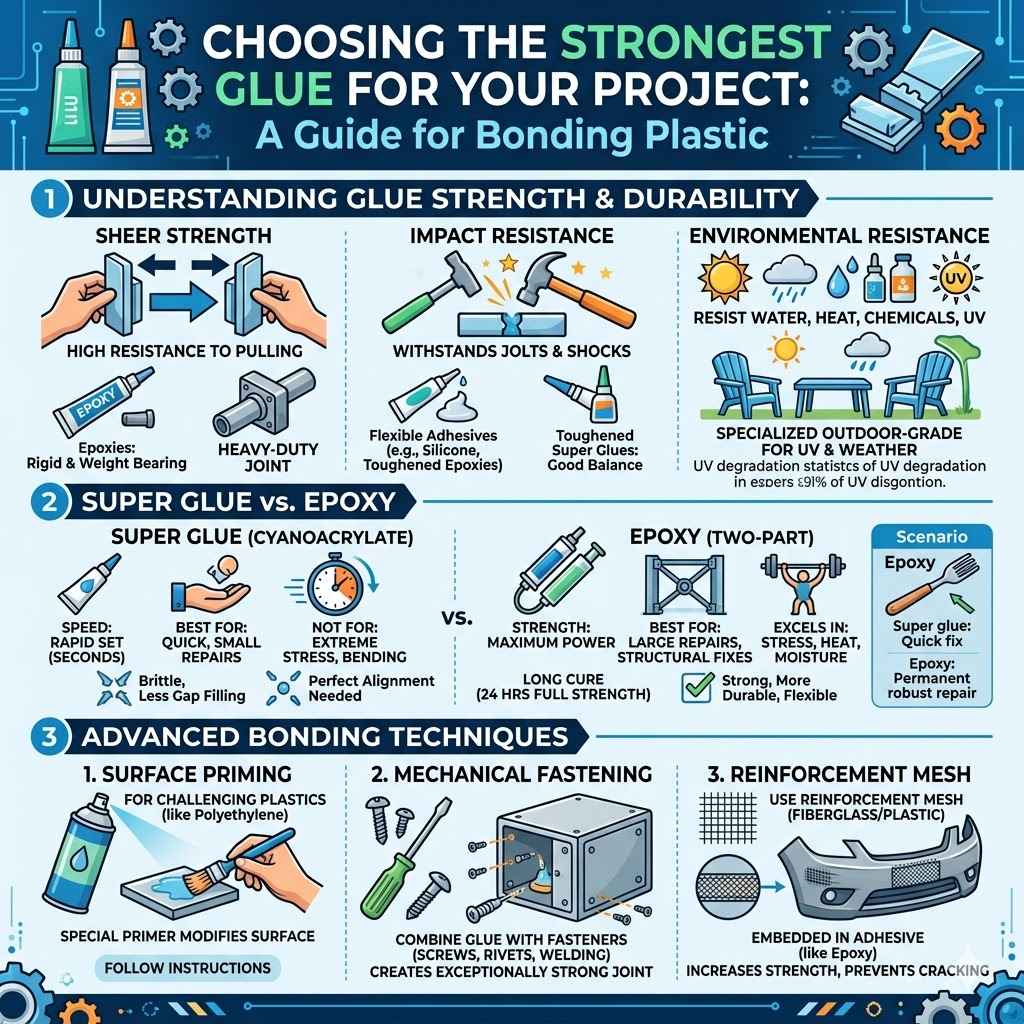
We’ll look at factors like sheer strength, impact resistance, and durability.
Strength and Durability Factors
When evaluating glue strength, consider the forces the bond will be subjected to. A simple repair might need basic adhesion, while a structural repair requires significant holding power and longevity.
Sheer Strength
Sheer strength refers to the glue’s ability to resist forces that pull the bonded surfaces apart in opposite directions. Epoxies generally offer the highest sheer strength for many plastics, creating a very rigid and durable bond. This is ideal for items that will bear weight or experience constant stress.
A two-part epoxy, when mixed correctly and applied to prepared surfaces, can create a bond that is often stronger than the plastic itself.
Impact Resistance
Impact resistance is how well a bond can withstand sudden jolts or shocks. Some glues, like cyanoacrylates, can be brittle and may crack under impact. Flexible adhesives, such as certain silicone-based glues or specialized toughened epoxies, offer better impact resistance.
If your plastic item is likely to be dropped or knocked, choosing an adhesive with good shock absorption qualities is important. Some rubber-toughened super glues offer a good balance of speed and impact resistance.
Environmental Resistance
Consider where the repaired item will be used. Will it be exposed to water, heat, chemicals, or UV light? Most standard glues will degrade under harsh conditions.
Epoxies and certain silicone adhesives generally offer excellent resistance to water and chemicals. For outdoor use, look for glues specifically rated for UV resistance and weatherproofing to ensure the bond lasts. Always check the product specifications for environmental performance.
A significant percentage of outdoor plastic products fail prematurely due to UV degradation of the adhesive. Manufacturers are increasingly developing specialized outdoor-grade adhesives to combat this.
When to Use Super Glue vs. Epoxy
Both super glue and epoxy are popular choices, but they excel in different scenarios for bonding plastic. Understanding their distinct properties helps you make the right choice.
-
Super Glue (Cyanoacrylate)
Use super glue for quick, small repairs where speed is essential and the bond won’t be subjected to extreme stress or bending. It sets rapidly, often in seconds, making it perfect for minor cracks, chipped pieces, or reattaching small parts. It’s less effective for filling gaps and can be brittle, making it unsuitable for items that might be dropped or flexed frequently.
Ensure you have the parts aligned perfectly before applying, as there’s little room for adjustment.
-
Epoxy
Choose epoxy for larger repairs, structural fixes, or when maximum strength and gap-filling ability are needed. Epoxies take longer to cure (often 24 hours for full strength), but they create a much stronger, more durable, and often more flexible bond than super glue. They are excellent for bonding dissimilar materials and can withstand more stress, heat, and moisture once cured.
The two-part nature allows for a chemical reaction that results in superior adhesion.
Scenario: Imagine you’ve broken a plastic handle on a kitchen utensil. For a quick fix to keep using it for a meal, super glue might suffice. However, for a permanent, robust repair that will withstand repeated washing and use, a two-part epoxy would be the better, stronger choice.
Advanced Bonding Techniques
For particularly challenging plastics or when the ultimate bond strength is required, advanced techniques can be employed. These methods go beyond simple application and involve extra steps to ensure the most robust connection possible.
-
Surface Priming
As mentioned earlier, some plastics like polyethylene and polypropylene require a primer. This special liquid is applied to the plastic surface and chemically modifies it, making it receptive to adhesives that would otherwise not bond. Follow the primer’s instructions carefully regarding application and drying times.This is often the only way to get a reliable bond on these difficult plastics.
-
Mechanical Fastening
Sometimes, gluing alone isn’t enough for extreme strength. Combining glue with mechanical fasteners like small screws, rivets, or even plastic welding can create an exceptionally strong joint. For example, if you’re repairing a large plastic enclosure that needs to be very strong, you might glue the pieces together and then reinforce the seam with small screws.
This approach leverages both adhesive and mechanical strength.
-
Using Reinforcement Mesh
For larger cracks or repairs where extra strength is needed, a reinforcement mesh (often fiberglass or plastic mesh) can be embedded in the adhesive. This is common with epoxies. Apply a layer of epoxy, place the mesh over it, and then apply another layer of epoxy to fully saturate the mesh.
This creates a composite structure that significantly increases the bond’s strength and prevents cracking. This is frequently used in automotive bumper repairs.
Frequently Asked Questions
Question: What is the best glue for holding plastic toys together?
Answer: For most plastic toys, a strong cyanoacrylate (super glue) or a good quality plastic cement designed for the specific plastic type (like ABS or polystyrene) will work well. If the toy is made of polyethylene or polypropylene, you will need a specialized adhesive for those materials.
Question: Can I use super glue on all types of plastic?
Answer: No, super glue does not work on all plastics, particularly polyethylene (PE) and polypropylene (PP). It’s best to check the glue packaging or test on an inconspicuous area first.
Question: How long does it take for plastic glue to dry?
Answer: Drying times vary greatly. Super glues can set in seconds, while plastic cements and epoxies can take several minutes to hours to fully cure. Always check the product label for specific drying and curing times.
Question: Will glue damage my clear plastic items?
Answer: Some glues, especially solvent-based ones like plastic cement or certain cyanoacrylates, can fog or craze clear plastics. For clear plastics like acrylic, use specialized acrylic cement or a clear-drying super glue formulated for plastics.
Question: How do I make a strong bond on flexible plastic?
Answer: For flexible plastics, you generally need an adhesive that remains flexible after curing. Look for flexible epoxies, silicone adhesives, or specialized flexible plastic glues. Standard super glues can be too brittle and will likely crack.
Summary
Finding the best glue to hold plastic together strongly involves understanding your plastic type and preparing the surface properly. Specialized adhesives for tricky plastics like polyethylene are available. For common plastics like ABS and PVC, plastic cements, epoxies, and super glues are great options.
Consider sheer strength, impact resistance, and environmental factors for the strongest, most durable bond. Always clean and lightly sand surfaces for optimal adhesion.