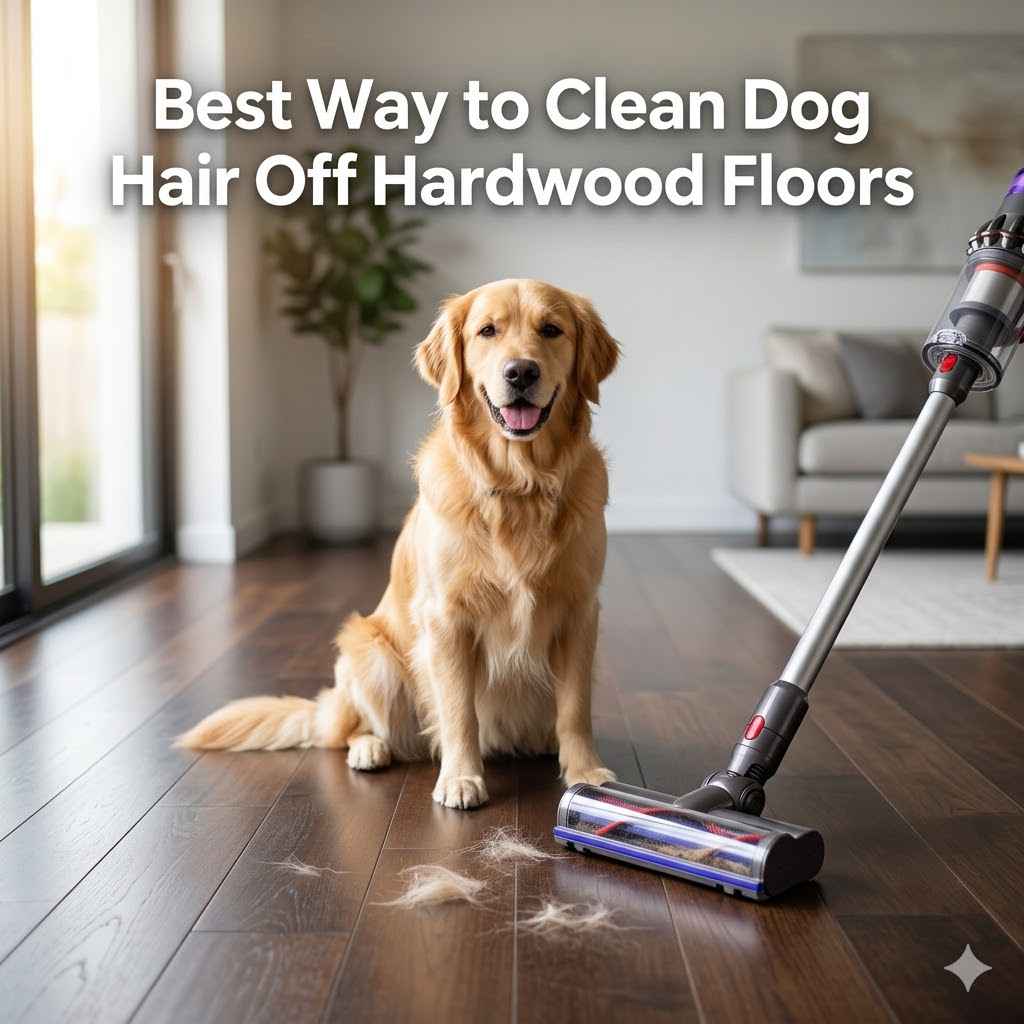
Best Way to Clean Dog Hair Off Hardwood Floors
Dealing with dog hair on hardwood floors can be tricky. It floats around and seems to stick everywhere, making it hard to get a truly clean surface. If you’re new to this, figuring out the Best Way to Clean Dog Hair Off Hardwood Floors might feel a bit overwhelming.
But don’t worry, it’s simpler than you think. We’ll walk you through easy steps to make your floors shine again.
The Best Way to Clean Dog Hair Off Hardwood Floors
Keeping hardwood floors free of pesky pet hair is a common challenge for dog owners. The fine strands often cling to surfaces, and without the right approach, cleaning can feel like a never-ending battle. This guide will show you the most effective methods to tackle dog hair, ensuring your beautiful hardwood floors remain spotless.
We’ll cover everything from daily upkeep to deep cleaning techniques.
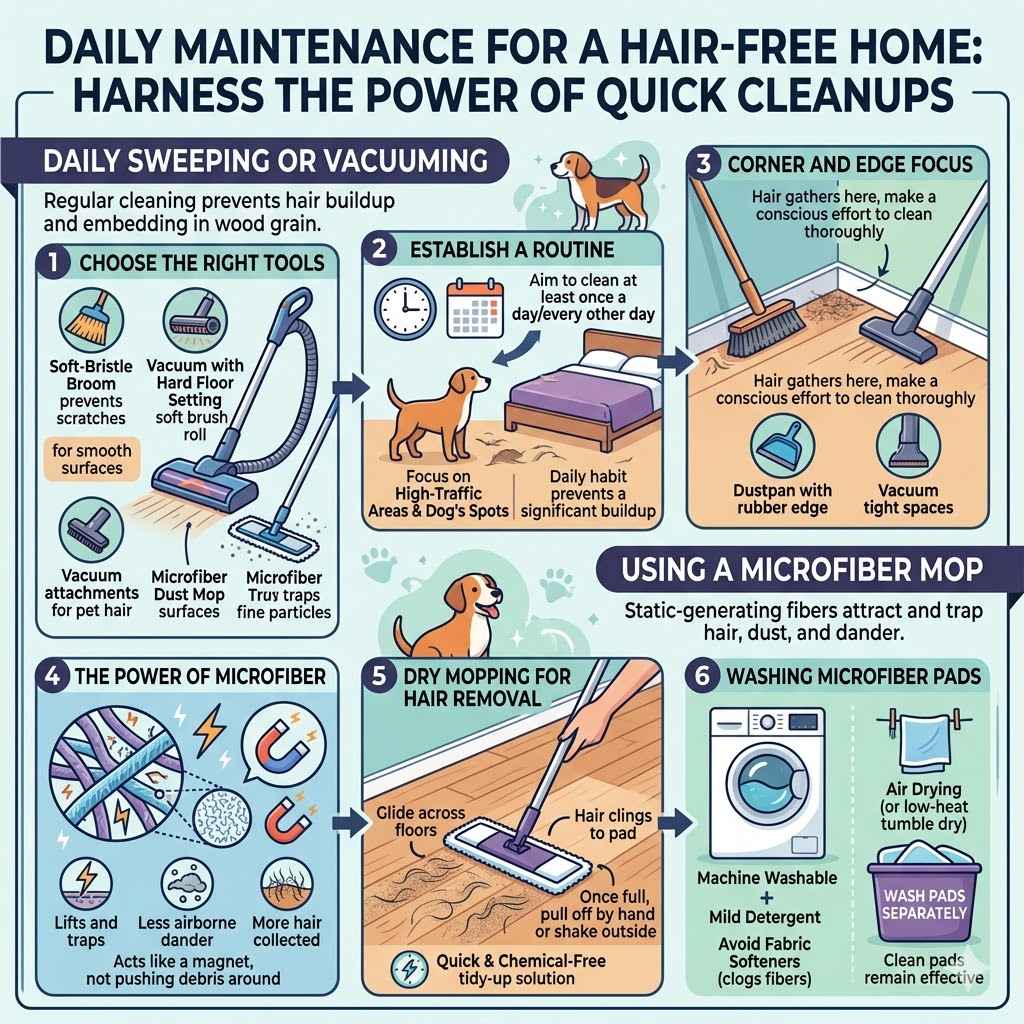
Daily Maintenance for a Hair-Free Home
Consistent, small efforts are key to managing dog hair. Making a habit of quick cleanups prevents the hair from building up and becoming a larger problem. This section focuses on simple routines that fit easily into a busy schedule, making the task of cleaning dog hair less of a chore and more of a lifestyle change.
Daily Sweeping or Vacuuming
Regular sweeping or vacuuming is the first line of defense against dog hair. It removes loose hair before it has a chance to settle into crevices or become embedded in the wood grain. Using the right tools makes this process much faster and more effective, saving you time and effort in the long run.
Choose the Right Tools
For hardwood floors, it’s important to select sweeping and vacuuming tools designed for smooth surfaces. A soft-bristle broom or a vacuum cleaner with a hard floor setting and a soft brush roll attachment will prevent scratches. Avoid stiff bristles or beater bars that can damage your flooring.
Many vacuums also come with specialized attachments for pet hair, which can be incredibly helpful. A good quality microfiber dust mop can also be a lifesaver for daily touch-ups. It’s designed to trap fine particles like dog hair effectively without scattering them around.
Establish a Routine
Consistency is crucial. Aim to do a quick sweep or vacuum of high-traffic areas at least once a day, or every other day depending on how much your dog sheds. Focusing on areas where your dog spends the most time, like near their bed or favorite napping spots, will yield the best results.
Early morning or right after your dog has been playing outside are often good times to catch loose hair before it settles. This daily habit prevents a significant buildup, making weekly deep cleans much easier and less time-consuming. Think of it as a quick check-in to keep your floors looking their best with minimal fuss.
Corner and Edge Focus
Dog hair loves to gather in corners and along the edges of rooms, where brooms and vacuum cleaners can sometimes miss it. Make a conscious effort to sweep or vacuum these areas thoroughly. Using a dustpan with a rubber edge can help guide hair into the pan, and vacuum attachments are excellent for getting into tight spaces.
Regularly cleaning these hidden spots prevents hair from accumulating and then being kicked out into the main floor area. It’s a small detail that makes a big difference in overall cleanliness and reduces the need for more intensive cleaning later.
Using a Microfiber Mop
A microfiber mop is an excellent tool for daily maintenance. Its static-generating fibers attract and trap hair, dust, and dander, preventing them from being pushed around. This is particularly effective for quick cleanups between deeper cleans, maintaining a generally tidy appearance of your hardwood floors.
The Power of Microfiber
Microfiber cloths and mops are made of synthetic fibers that are incredibly fine, much finer than human hair. These fibers create a static charge when they move across a surface. This static electricity acts like a magnet, attracting and holding onto dust, dirt, and, importantly, pet hair.
Unlike traditional mops that might just push debris around or feather dusters that can scatter particles into the air, microfiber effectively lifts and traps them. This means less airborne dander and more hair collected on your mop head, ready to be washed away. It’s a simple yet highly effective technology for keeping your home cleaner.
Dry Mopping for Hair Removal
For daily hair removal, using a dry microfiber mop is often the best approach. Simply glide the mop across your hardwood floors, paying attention to edges and corners. The hair will cling to the microfiber pad.
Once the pad is full, you can usually just pull the hair off by hand or give it a good shake outside. For more persistent hair, you might need to swap out the pad for a fresh one. This method is quick, requires no chemicals, and is incredibly effective at capturing loose pet hair before it becomes a bigger issue.
It’s a perfect quick tidy-up solution.
Washing Microfiber Pads
After using your microfiber mop, it’s important to clean the pads properly. Most microfiber pads are machine washable. It’s best to wash them separately from other fabrics, as lint from other clothes can stick to the microfiber and reduce its effectiveness.
Use a mild detergent and avoid fabric softeners, which can clog the fine fibers and diminish their static-generating capabilities. Air drying is often recommended, though some manufacturers allow low-heat tumble drying. Regularly cleaning your pads ensures they remain effective at trapping pet hair for future use.
Deep Cleaning Techniques for Stubborn Hair
When daily sweeping isn’t enough, or if you’re dealing with a significant buildup, deeper cleaning methods are necessary. These techniques go beyond surface-level removal and ensure that embedded hair and dander are thoroughly extracted, leaving your hardwood floors pristine and hygienic.
The Best Way to Clean Dog Hair Off Hardwood Floors: Wet Mopping Strategies
While dry methods are great for daily upkeep, a proper wet mop is essential for a thorough clean. However, it’s crucial to use the right technique to avoid damaging your hardwood floors. This section details how to effectively wet mop to remove not just hair, but also the grime and dander that can accumulate, all while protecting your beautiful wood finish.
Choosing the Right Cleaner and Water Temperature
For hardwood floors, always opt for a pH-neutral cleaner specifically designed for wood. Harsh chemicals can strip the finish, and too much water can cause the wood to warp or swell. Never pour cleaner directly onto the floor; instead, dampen your mop.
Lukewarm water is generally best. Hot water can sometimes cause the finish to become cloudy, while cold water might not dissolve the cleaner effectively. A good hardwood floor cleaner will help lift dirt and hair without leaving residue.
Always test a small, inconspicuous area first to ensure compatibility with your floor’s finish.
The Damp Mop Method
The key to wet mopping hardwood floors is to use a DAMP mop, not a wet one. Wring out your mop thoroughly until it is just slightly damp to the touch. Excess water is the enemy of hardwood.
Glide the mop over the floor in smooth, even strokes. Work in sections, and rinse and wring out your mop frequently. This prevents you from spreading dirty water and loose hair back onto the floor.
The goal is to clean the surface, not to soak it. Many people find a spray mop or a spin mop with adjustable dampness to be very helpful for this.
Dealing with Stuck-On Hair
Sometimes, hair can get stuck to the floor with spills or pet accidents. A damp microfiber mop is usually effective at lifting this. For very stubborn patches, you might need to let the damp mop sit on the spot for a minute to loosen the hair before gently wiping.
Avoid scrubbing aggressively, as this can scratch the wood. If a spot is particularly difficult, a soft nylon brush used very gently with the damp mop can help dislodge the hair before wiping it up. Always follow up with a dry mop or soft cloth to remove any residual moisture.
Vacuum Cleaners Specifically for Pet Hair
Many vacuum cleaners are marketed as being “pet-friendly,” but not all perform equally well on hardwood floors. Understanding what features to look for can help you choose a vacuum that makes cleaning dog hair significantly easier and more efficient, turning a tedious chore into a quick task.
Key Features for Hardwood Floors and Pet Hair
When shopping for a vacuum for pet hair on hardwood, look for models with excellent suction power to lift embedded hair and dander. A soft roller brush is essential to avoid scratching your floors. Many vacuums designed for pet hair also include specialized attachments, like a mini-motorized brush tool, which is fantastic for upholstery but can also be used on stairs or tight corners on the floor to agitate and pick up stubborn hairs.
Bagless models with easy-to-empty dustbins are convenient, especially for pet owners who deal with a lot of hair. Look for HEPA filters to capture allergens and dander, improving air quality.
Bagged vs. Bagless Vacuums
Both bagged and bagless vacuums have pros and cons when it comes to pet hair. Bagless models offer convenience as you don’t need to buy
Corded vs. Cordless Vacuums
Cordless stick vacuums have become incredibly popular for their convenience and ease of use for quick cleanups. Many high-end cordless models now offer excellent suction and specialized hard floor heads that work very well on hardwood. However, they typically have shorter run times and smaller dustbins compared to corded upright or canister vacuums.
If you have a large home or a lot of shedding, a powerful corded vacuum might be more practical for deep cleaning sessions. For smaller spaces or daily touch-ups, a good cordless vacuum can be a game-changer.
Using Rubber Gloves or Lint Rollers
For targeted hair removal and quick touch-ups, simple household items can be surprisingly effective. Rubber gloves and lint rollers are low-tech solutions that can work wonders on small areas or for grabbing those stray hairs that seem to defy other cleaning methods.
Rubber Gloves for Hair Collection
Dampen a pair of rubber cleaning gloves lightly. Then, simply run your gloved hands over the surface of your hardwood floors. The slight dampness and the texture of the rubber create friction that causes the pet hair to ball up and stick to the glove.
You can then easily pull the clumps of hair off the glove and discard them. This method is excellent for getting into corners, along baseboards, and for cleaning up areas where your vacuum might not reach effectively. It’s a very hands-on approach that is surprisingly efficient for small, localized messes.
Lint Rollers for Precision Cleaning
Giant lint rollers or even standard ones can be incredibly useful for picking up stray dog hairs. While they might not be practical for an entire floor, they are perfect for quickly cleaning up a small pile of hair that has accumulated in a specific spot, or for targeting a few hairs stuck to a particular plank. The adhesive sheets grab onto the hair, and you simply peel off a new sheet when the current one is full.
Keep one by your back door or in a frequently used room for those immediate cleanup needs. They are also great for furniture too!
Static Electricity Tricks
Sometimes, just rubbing a balloon on your hair can create enough static to pick up small bits of debris. While not a primary cleaning method, a similar principle can be applied. Walking across a carpeted area before cleaning your hardwood floors can sometimes generate enough static on your socks to help pick up some loose hair.
Similarly, using a dry microfiber cloth or even a balled-up plastic bag can help attract hair due to static. These are more supplementary tricks but can contribute to a more hair-free environment.
Preventative Measures and Grooming Tips
The best way to manage dog hair on hardwood floors is to reduce the amount of hair that ends up there in the first place. This involves proactive measures, including regular grooming of your pet and creating a designated space for them that is easier to clean.
Regular Brushing of Your Dog
Consistent brushing is one of the most effective ways to minimize shedding. By removing loose undercoat and dead hair before it falls off your dog, you significantly reduce the amount of hair that will end up on your floors. The type of brush you use will depend on your dog’s coat type, so it’s worth researching the best options for your specific breed.
Understanding Shedding Cycles
Dogs shed year-round, but many breeds also have seasonal shedding periods, often in spring and fall. During these times, they may shed significantly more than usual as they adjust their coat to changing temperatures. Recognizing these cycles can help you prepare by increasing the frequency and thoroughness of your dog’s brushing.
Brushing more often during these peak shedding times can dramatically reduce the amount of loose hair that ends up on your floors. It’s like getting ahead of the problem before it overwhelms you.
Choosing the Right Brush for Your Dog’s Coat
For short-haired dogs, a bristle brush or a grooming mitt can help remove loose hair. Long-haired breeds might benefit from slicker brushes or an undercoat rake to get deep into their fur and remove loose strands. Double-coated breeds, like Huskies or German Shepherds, have a dense undercoat that sheds heavily, and tools like a de-shedding tool (e.g., Furminator) are very effective, but should be used with care to avoid damaging the topcoat.
Always consult with your veterinarian or a professional groomer if you’re unsure about the best tools for your dog.
Making Brushing a Positive Experience
If your dog dislikes being brushed, start with short sessions and reward them with praise and treats. Gradually increase the time spent brushing as they become more comfortable. A positive association with brushing will make it a much easier and more consistent part of your routine.
Brushing in an area that is easy to clean, like a kitchen or bathroom, can also help. This proactive approach greatly reduces the amount of hair you’ll need to clean from your main living areas.
Creating Dog-Friendly Zones
Designating specific areas for your dog can help contain the hair. This means providing them with comfortable bedding and toys in a spot that is easy to clean, such as a tile or laminate area, or a large, washable rug on your hardwood floors.
Washable Rugs and Mats
Placing washable rugs or mats in areas where your dog frequently rests can trap a significant amount of hair and dander. These are much easier to clean than hardwood floors. You can simply pick them up and throw them in the washing machine.
Look for mats made of durable, pet-friendly materials that can withstand frequent washing. These can be placed in their favorite napping spots, near food and water bowls, or by the door to catch dirt and hair. This containment strategy significantly reduces the spread of hair.
Designated Dog Beds
A comfortable and easily cleaned dog bed is essential. Many dog beds come with removable, machine-washable covers, making them a practical choice. Placing these beds in strategic locations, such as a corner of the living room or a specific spot in the kitchen, can encourage your dog to spend more time in these contained areas.
This not only helps manage hair but also gives your dog their own comfortable space. Regularly cleaning or replacing the covers will keep them fresh and hair-free.
Containment Near Entrances
When your dog comes inside from playing outdoors, they often bring dirt and hair with them. Keeping a mat or towel near the door specifically for wiping paws and drying off can prevent a lot of debris from being tracked further into the house. This simple habit can make a big difference in maintaining cleaner hardwood floors.
It’s a small step that yields significant results in reducing the amount of dirt and hair that makes its way onto your main living spaces.
Advanced Tips and Tricks
Beyond the basics, there are some advanced techniques and clever tricks that can further enhance your efforts to keep hardwood floors free of dog hair. These often involve simple modifications to your routine or utilizing household items in new ways.
The Benefits of Air Purifiers
While not directly cleaning the floor, air purifiers can significantly reduce airborne pet dander and hair. This means less hair settles on your floors in the first place. Choosing a purifier with a HEPA filter is crucial for capturing fine particles effectively.
Running an air purifier can also improve overall air quality in your home, which is a bonus for everyone.
How Air Purifiers Work for Pet Owners
Air purifiers use fans to draw air through a series of filters. The most important filter for pet owners is the HEPA (High-Efficiency Particulate Air) filter. HEPA filters are designed to capture at least 99.97% of airborne particles that are 0.3 microns in size.
This includes fine dust, pollen, mold spores, and, importantly, pet dander and microscopic hair fragments. By removing these particles from the air, fewer settle on your furniture and floors. Some purifiers also have activated carbon filters that help to neutralize pet odors.
Choosing the Right Air Purifier Size and Placement
The effectiveness of an air purifier depends on its size and where you place it. You need to match the purifier’s Clean Air Delivery Rate (CADR) to the square footage of the room you want to clean. For homes with pets, placing the purifier in the room where the pet spends the most time, or where you spend the most time, will provide the greatest benefit.
Placing it in a central location within the room allows for better air circulation. Remember to clean or replace the filters according to the manufacturer’s instructions for optimal performance.
Beyond Hair: Allergens and Odors
Air purifiers offer more than just a reduction in visible hair. They are highly effective at removing allergens like dander, which are a common cause of respiratory issues and allergies. For pet owners, this can lead to a healthier living environment.
Additionally, many purifiers with carbon filters can help neutralize unpleasant pet odors, leaving your home smelling fresher. This dual benefit makes an air purifier a valuable investment for any pet-owning household with hardwood floors.
DIY Solutions Using Household Items
You don’t always need specialized products to tackle dog hair. Many common household items can be repurposed for effective hair removal, offering budget-friendly and quick solutions.
Vinegar and Water Solution
A simple solution of one part white vinegar to two parts water can be used with a damp mop. The vinegar helps to break down static electricity that makes hair cling to surfaces. It also acts as a mild disinfectant and can help remove odors.
However, always ensure your hardwood floor finish is compatible with vinegar, as some finishes can be dulled by its acidity. It’s best to test in an inconspicuous area first. Use this solution sparingly and ensure floors are dried properly afterward.
Fabric Softener Sheets
Dryer sheets can be surprisingly effective at attracting pet hair. Rubbing a used or new fabric softener sheet over your hardwood floors can create a slight static charge that helps lift and collect hair. While this is best for small areas or a quick sweep, it’s a handy trick to have up your sleeve.
Be aware that some people are sensitive to the fragrances in fabric softener sheets, and they can leave a slight residue if used excessively.
Baking Soda for Odors and Grip
A light sprinkle of baking soda on your hardwood floors before vacuuming can help absorb odors. As you vacuum, the baking soda can also help loosen any stubborn debris or hair. Let it sit for about 10-15 minutes before vacuuming it up.
This is a great two-in-one solution for dealing with both hair and any lingering pet smells. Always vacuum thoroughly afterward to ensure no baking soda residue remains, which could dull the finish.
Maintaining Your Tools
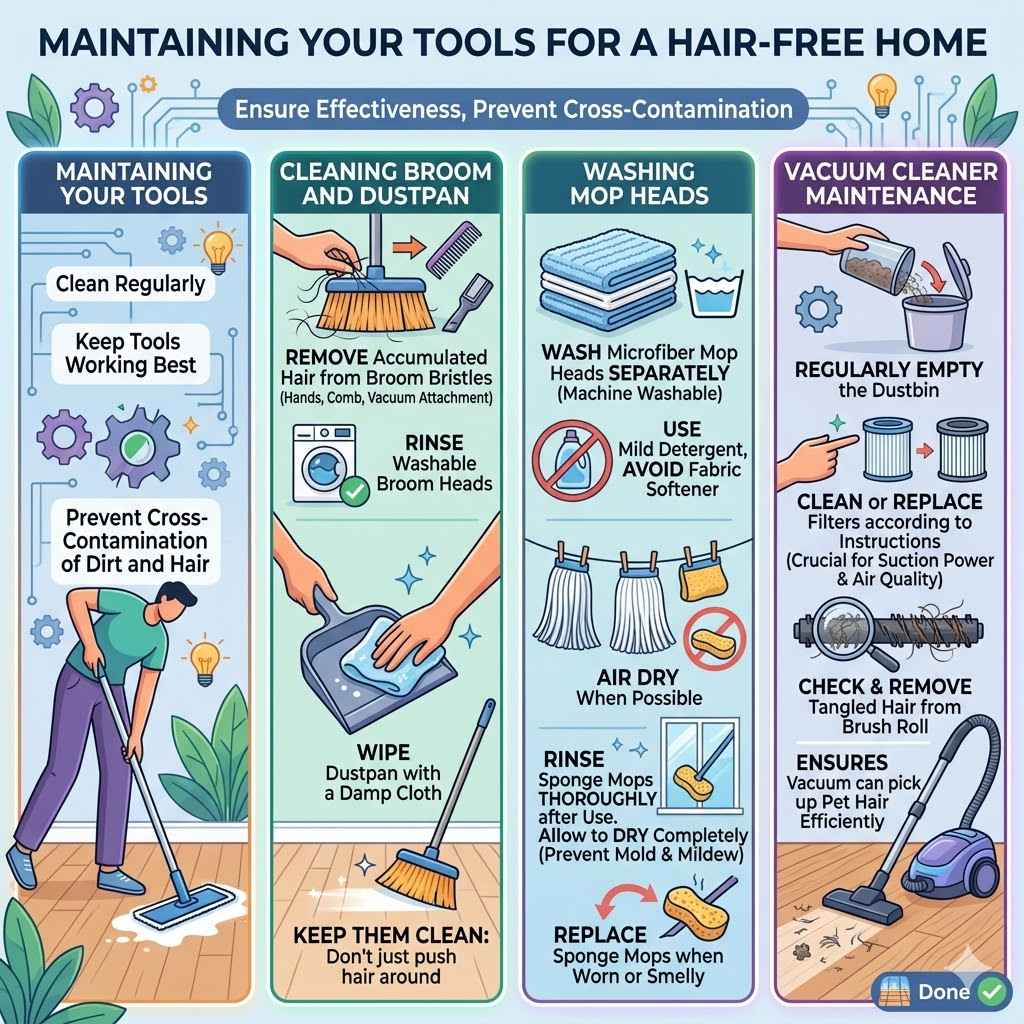
To ensure your cleaning tools are always effective, proper maintenance is key. Clean brushes, mop heads, and vacuum filters regularly to keep them working at their best and prevent cross-contamination of dirt and hair.
Cleaning Broom and Dustpan
After sweeping, remove any accumulated hair from your broom bristles. You can often use your hands, a comb, or even a vacuum attachment for this. Rinse the broom head if it’s washable.
For the dustpan, a quick wipe with a damp cloth should suffice. Keeping them clean ensures they don’t just push hair around the next time you use them.
Washing Mop Heads
As mentioned earlier, most microfiber mop heads are machine washable. Wash them separately from other laundry using a mild detergent. Avoid fabric softener.
Air dry them when possible. If using a traditional sponge mop, rinse it thoroughly after each use and allow it to dry completely to prevent mold and mildew. Replace sponge mops when they become worn or smelly.
Vacuum Cleaner Maintenance
Regularly empty the dustbin of your vacuum cleaner. Clean or replace filters according to the manufacturer’s instructions – this is crucial for maintaining suction power and air quality. Check the brush roll for tangled hair or debris and remove it.
This ensures your vacuum can efficiently pick up pet hair from your hardwood floors.
Frequently Asked Questions
Question: What is the best way to clean dog hair off hardwood floors daily
Answer: For daily cleaning, a good microfiber dust mop or a quick vacuum with a hard floor attachment is your best bet. Focus on high-traffic areas and where your dog spends most of their time to prevent buildup.
Question: Can I use a regular vacuum cleaner on hardwood floors with dog hair
Answer: Some regular vacuum cleaners can be used, but it’s best to use one with a hard floor setting and a soft brush roll. Avoid vacuums with aggressive beater bars that can scratch your floors. Look for pet-specific models for better results.
Question: How often should I wet mop my hardwood floors for dog hair
Answer: Wet mopping should be done less frequently than sweeping or vacuuming, perhaps once a week or every two weeks, depending on shedding and how dirty the floors get. Always use a damp mop and a pH-neutral cleaner designed for hardwood.
Question: What if my dog sheds a lot, how can I manage dog hair
Answer: For heavy shedders, a combination of daily grooming, frequent vacuuming with a good pet vacuum, and regular damp mopping is essential. Consider using washable mats and rugs to contain some of the hair.
Question: Are there any natural cleaning solutions for dog hair on hardwood floors
Answer: Yes, a diluted white vinegar and water solution can help reduce static and lift hair. Ensure your floor’s finish can handle vinegar. Also, regular dry microfiber mopping is a great natural approach.
Conclusion
Getting dog hair off hardwood floors is manageable with the right tools and habits. Daily sweeping or dry mopping with microfiber is key for upkeep. Regular vacuuming with a suitable vacuum cleaner tackles more stubborn hair.
For a deeper clean, use a damp mop with a pH-neutral cleaner. Consistent grooming of your dog and strategic placement of washable rugs also help immensely. By combining these methods, your hardwood floors can remain beautiful and hair-free.