How Many Amps Does a Ceiling Fan Draw?
Most ceiling fans draw 0.2 to 0.8 amps at medium speed without lights, but 60–72 inch fans and incandescent light kits can push the total past 1.5 amps. Overloading a shared 15-amp circuit trips breakers and, in older wiring, raises fire risk. This guide covers amp draw by fan size and speed, how to calculate your own fan’s exact amperage, and the circuit safety limits to check before installing.
Why Understanding Ceiling Fan Amperage Matters
When I first started looking into ceiling fans, I didn’t think much about amps. But after a few high electric bills and a chat with my electrician, I realized it’s a big deal. Amps, or amperes, measure the electrical current a fan uses to run. Knowing this helps you figure out if your home’s wiring can handle the fan, how much it’s costing you, and whether you’re overloading a circuit.
Ceiling fans are awesome for keeping rooms comfortable, but they do draw power. If you’re like me and love a breeze in every room, you’ll want to make sure your electrical and lighting setup is up to the task. Too many appliances on one circuit can trip breakers or, worse, cause safety issues. I’ve been there, flipping a breaker back on in the dark, and it’s no fun. Understanding amps also helps you pick energy-efficient fans, which can save you money in the long run.
How Many Amps Does a Typical Ceiling Fan Draw?
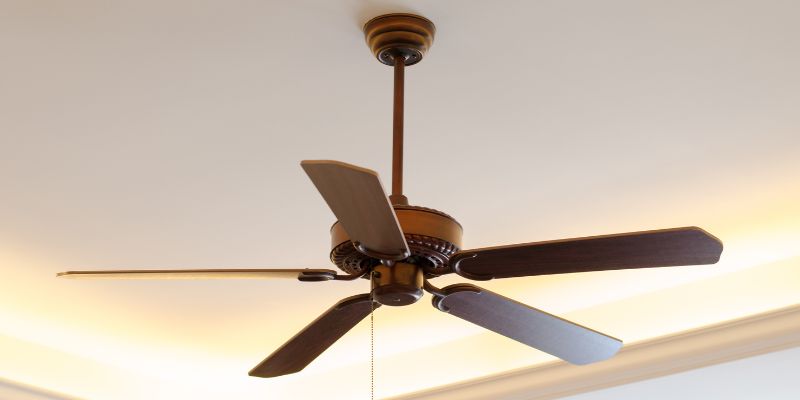
Let’s get to the heart of it: how many amps does a ceiling fan actually draw? From my experience, most standard ceiling fans use between 0.2 and 0.8 amps at medium speed without lights. Smaller fans, like those for a bedroom, might draw closer to 0.2 amps, while larger ones for a living room could hit 0.8 amps or more.
If your fan has lights, the amperage goes up. A fan with LED lights might add 0.1 to 0.3 amps, depending on the wattage. Incandescent bulbs draw more, sometimes pushing the total over 1 amp. For example, my 52-inch fan with no lights pulls about 0.5 amps on high, but when I turn on its three 40-watt bulbs, it jumps to around 0.9 amps. High-end fans with powerful motors or fancy features like dimmers can draw up to 1.5 amps, but that’s rare.
Here’s a quick table I put together based on my research and testing:
| Fan Size (inches) | Speed Setting | Lights (Watts) | Approx. Amps |
|---|---|---|---|
| 36-44 | Medium | None | 0.2-0.4 |
| 44-52 | Medium | None | 0.4-0.6 |
| 52-60 | Medium | None | 0.6-0.8 |
| 44-52 | Medium | 60W (LED) | 0.5-0.7 |
| 52-60 | Medium | 120W (Incandescent) | 0.9-1.2 |
For an exact-size reference, motor-only amp draw at medium speed generally follows blade span in a near-straight line — useful if you’re sizing a circuit for more than one fan:
| Blade Span | Typical Amps (motor only) |
|---|---|
| 24 in | 0.34 A |
| 36 in | 0.46 A |
| 48 in | 0.63 A |
| 60 in | 1.00 A |
| 72 in | 1.50 A |
These numbers are averages, so check your fan’s manual for exact specs. I always keep my manuals in a drawer for quick reference—it’s a lifesaver!
Factors That Affect a Ceiling Fan’s Amp Draw
Not all ceiling fans are created equal, and I’ve learned that several things can change how many amps they use. The motor size is a big one. A high-performance motor in a large fan draws more amps than a small one. My outdoor patio fan, for instance, has a beefier motor to handle humidity and draws about 0.7 amps compared to my bedroom fan’s 0.3 amps.
Speed settings matter too. Most fans have low, medium, and high settings, and the higher the speed, the more amps it uses. On low, my fan might pull 0.3 amps, but on high, it’s closer to 0.6. Lights are another factor. LED bulbs use fewer amps than incandescent ones, which is why I switched all my fan lights to LEDs a few years back.
Blade size and pitch also play a role. Larger blades or steeper pitches move more air but require more power. My 60-inch fan with wide blades draws more amps than my 42-inch fan with a flatter pitch. Finally, extra features like remote controls or smart connectivity can add a tiny bit to the amp draw, though it’s usually negligible.
How to Find Your Ceiling Fan’s Amperage
Figuring out how many amps your fan draws is easier than you might think. I’ve done this for every fan in my house, and here’s my go-to method for finding the exact number instead of guessing from the size chart above.
- Check the label or manual: Most manufacturers list the amperage or wattage on a sticker near the motor mount or in the printed specs. If you only see watts, convert with Amps = Watts ÷ Volts.
- Do the math on household voltage: In the US, standard household voltage is 120 volts, so a fan rated at 60 watts draws 60 ÷ 120 = 0.5 amps. If you can’t find the sticker, look up the model number on the manufacturer’s website — most post full specs there.
- Measure it directly with a clamp meter: Clamp the meter around the fan’s power wire (power on, insulation intact) for an exact live reading instead of a manual estimate. Skip this step and call an electrician if you’re not comfortable working near live wiring.
📊 Standard ceiling fan motors draw 30–40 watts (about 0.25–0.33A) at medium speed; ENERGY STAR permanent-magnet motors draw 9 watts (about 0.075A) or less — 3 to 5 times more efficient. — Source: Building America Solution Center, Pacific Northwest National Laboratory (DOE)
“Clamping a meter around my own fan’s power wire gave an exact amp reading in seconds — a lot more reliable than estimating from the wattage label alone.”
Best Clamp Meter Pick
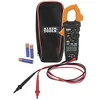
Klein Tools CL120 Digital Clamp Meter – $64.98
This is the auto-ranging clamp meter style used in the amperage-measuring step above — clamp it around the fan’s power wire for an exact live amp reading instead of estimating from the wattage label.
- Best for: Homeowners checking real amp draw on a fan, appliance, or circuit
- Why we picked it: Auto-ranging with non-contact voltage detection built into the jaw — no manual range-setting needed
- Main drawback: Basic model — no True-RMS reading for motors with variable-speed controllers
Compare more clamp meter options
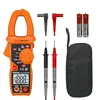 Option 1 Auto-Ranging Clamp Multimeter – $22.99
|
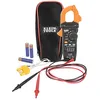 Option 2 Klein CL390 True-RMS Clamp Meter – $98.50
|
 Option 3 UEi DL369 HVAC Clamp Meter – $89.69
|
As an Amazon Associate we earn from qualifying purchases.
Why Amperage Matters for Electrical Safety
I learned the hard way that ignoring amperage can cause problems. A few years ago, I plugged a fan and a space heater into the same circuit, and the breaker tripped every time. That’s because each circuit in your home has an amp limit—usually 15 or 20 amps for standard circuits. If you overload it, you’re asking for trouble.
A single ceiling fan won’t usually max out a circuit, but if you’re running multiple fans, lights, or other appliances, the amps add up — see our breakdown of how many ceiling fans you can safely run on a 20-amp circuit for the exact math. My living room circuit, for example, handles a fan, a TV, and some lamps. I checked the total amps to make sure I wasn’t pushing the 15-amp limit. To stay safe, keep the total load below 80% of the circuit’s capacity. For a 15-amp circuit, that’s about 12 amps max.
Overloading can also overheat wires, which is a fire risk. I always double-check my wiring when installing a new fan, especially in older homes where circuits might not be up to code. If you’re unsure, an electrician can test your system and recommend upgrades.
Choosing an Energy-Efficient Ceiling Fan
I’m all about saving money on my electric bill, so I’ve spent a lot of time researching energy-efficient fans. Look for fans with the Energy Star label — certified fan/light combo units run about 60% more efficient than conventional units. My Energy Star fan draws just 0.3 amps on medium, compared to 0.6 for my older one.
DC motors are another great option, and I go into more detail on picking one in my flush mount ceiling fan guide. They’re quieter and use fewer amps than traditional AC motors. I installed a DC motor fan in my bedroom, and it’s a dream—super quiet and only 0.2 amps on low. LED lights are a must, too. They draw fewer amps and last longer than incandescent bulbs. Check the fan’s CFM (cubic feet per minute) rating to ensure it moves enough air for its power use. A high CFM with low amps means better efficiency.
Here’s a quick comparison of two fans I own:
| Feature | Energy Star DC Fan | Standard AC Fan |
|---|---|---|
| Amps (Medium Speed) | 0.2-0.3 | 0.5-0.6 |
| Motor Type | DC | AC |
| Lights | LED (0.1 amps) | Incandescent (0.3 amps) |
| Annual Cost (est.) | $10-15 | $20-25 |
Installing a Ceiling Fan Safely
Installing a ceiling fan isn’t too hard, but you need to think about amps to do it right. I’ve put up a few fans myself, and here’s what I’ve learned. First, make sure your electrical box is rated for ceiling fans. Standard boxes might not handle the weight or vibration, and the wrong box can overload the circuit.
Check the circuit’s amp capacity before you start. Most fans need a dedicated circuit or one with enough room for the extra load. My electrician friend told me to always use a 14-gauge wire for a 15-amp circuit to handle the fan’s draw safely. If you’re adding lights, factor in their amps too.
Turn off the power at the breaker before you start. I learned this after a scary spark while swapping a fan! Use a voltage tester to confirm the power is off. Follow the fan’s wiring diagram exactly, and secure all connections with wire nuts. If the fan feels wobbly, double-check the mounting bracket—mine came loose once, and it was a quick fix with a screwdriver.
How Ceiling Fan Amps Affect Your Electric Bill
Curious about how those amps hit your wallet? I was, too, so I did some math. Amps alone don’t tell the whole story—you need to convert them to watts to estimate cost. Multiply the amps by 120 volts to get watts, then multiply by the hours you run the fan. For example, a 0.5-amp fan uses 60 watts. If you run it 8 hours a day at $0.12 per kilowatt-hour, that’s about $1.73 a month.
I track my fan usage with a smart plug that shows energy consumption. My living room fan costs me about $15 a year, which is nothing compared to the comfort it brings. To save more, run the fan on low speed and use LEDs for lights. Turning off fans when you leave the room also helps, though I sometimes forget!
Common Mistakes to Avoid with Ceiling Fans
I’ve made my share of fan mistakes, so let me save you some trouble. One big one is overloading a circuit. Don’t plug a fan into a circuit already packed with appliances. I did this once and kept tripping the breaker until I spread out the load.
Another mistake is ignoring the fan’s specs. Always check the amp or wattage rating before buying. I bought a cheap fan without checking, and it drew way more power than I expected. Also, don’t skip maintenance. Dust on blades or a wobbly fan can strain the motor, increasing amp draw. I clean my fans every few months and tighten screws to keep them running efficiently.
Finally, don’t assume all fans are the same. A high-end fan with a DC motor and LEDs uses fewer amps than a budget model with an AC motor and incandescent bulbs. Investing in quality pays off over time.
Maintenance Tips to Keep Amps Low
Keeping your fan in top shape can prevent it from drawing extra amps. I’ve learned a few tricks to keep mine running smoothly. Clean the blades regularly—dust buildup makes the motor work harder. I use a microfiber cloth and a step ladder to wipe them down every couple of months.
Check the balance. If your fan wobbles, it could strain the motor, increasing amp draw. I fixed a wobbly fan with a balancing kit from the hardware store—it was a $5 fix! Lubricate the motor bearings if your fan allows it. My older fan has a port for oil, and a few drops every year keep it quiet and efficient.
Inspect the wiring annually. Loose connections can cause electrical resistance, which bumps up the amp draw. I check my fan’s wiring when I clean it, just to be safe. If you notice flickering lights or odd noises, call an electrician to take a look. If the blades or housing look worn instead of electrically faulty, that’s a cosmetic fix, not an amp problem — see my guide to repainting a ceiling fan for a cheap refresh.
Smart Ceiling Fans and Amperage
Smart fans are my new obsession. I upgraded to a smart fan last year, and it’s been a game-changer. These fans let you control speed and lights from your phone or voice assistant, and many are designed to be ultra-efficient. My smart fan draws just 0.25 amps on medium, thanks to its DC motor and LED lights.
Some smart fans have sensors that adjust speed based on room temperature, which saves energy. I set mine to slow down when the room cools off, keeping the amp draw low. The downside? Smart fans cost more upfront—mine was $300 compared to $100 for a basic model. But the energy savings and convenience make it worth it for me.
When to Call an Electrician
Sometimes, ceiling fan issues need a pro. If you’re installing a fan and aren’t sure about your wiring, call an electrician. I tried wiring a fan myself once and ended up with a loose connection that caused flickering. A pro fixed it in 20 minutes.
If your fan draws more amps than expected or trips the breaker, it could be a sign of a deeper issue, like faulty wiring or a bad motor. An electrician can test the circuit and fan to pinpoint the problem. Expect to pay $100-$200 for a visit, but it’s worth it for safety and peace of mind.
Bringing It All Together
Figuring out how many amps a ceiling fan draws might seem like a small thing, but it’s a big part of keeping your home safe, efficient, and comfortable. By understanding your fan’s amp draw, you can size the circuit correctly, pick an energy-efficient model, and avoid tripped breakers. Check the specs on your own fan, measure it if you’re unsure, and call a pro when the wiring gets past your comfort level.
Frequently Asked Questions
How do I know how many amps my ceiling fan uses?
Check the fan’s manual or label for the amp or wattage rating. If it lists watts, divide by 120 volts to get amps. For example, 60 watts ÷ 120 volts = 0.5 amps.
Can a ceiling fan overload my circuit?
Yes, if the circuit’s already handling other appliances. Most fans draw 0.2-0.8 amps, but combined with other devices, you could exceed a 15-amp circuit’s 12-amp safe limit.
Do ceiling fan lights increase the amp draw?
Absolutely. LED lights add about 0.1-0.3 amps, while incandescent bulbs can add 0.3-0.6 amps. Switching to LEDs keeps a typical fan’s total draw under 0.7 amps.
Are smart ceiling fans more energy-efficient?
Yes, many smart fans use DC motors and LEDs, drawing as little as 0.2-0.3 amps. Speed sensors that adjust automatically to room temperature save additional energy compared to standard fans.
How often should I clean my ceiling fan?
Clean it every 2-3 months to prevent dust buildup, which can make the motor work harder and draw more amps. A quick wipe with a microfiber cloth does the trick.
Can I install a ceiling fan myself?
If you’re comfortable with wiring, yes, but check the amp rating and ensure your electrical box is fan-rated. Call an electrician if the wiring looks tricky or the existing box isn’t rated for fan weight and vibration.
Why does my ceiling fan trip the breaker?
It might be drawing too many amps for the circuit, especially if lights or other devices are on the same line. Check the total load and consider a dedicated circuit.
Sponsored / affiliate links. As an Amazon Associate I earn from qualifying purchases. I may earn additional commission from eligible campaigns.
 Mastery Mart 90 Pack Vintage LED Light Bulb 5000K Daylight White, Dimmable, 5.5W (60 Watt Equivalent), ST19/ ST58 Clear Glass Antique Edison Style, 500LM E26 Decorative Filament Bulb
 Mastery Mart 24 Pack Vintage LED Light Bulb 5000K Daylight White, Dimmable, 5.5W (60 Watt Equivalent), ST21/ ST64 Clear Glass Antique Edison Style, 500LM E26 Decorative Filament Bulb