What Watt Light Bulb Should You Use for a Ceiling Fan?
Most ceiling fans need a 40-60 watt incandescent bulb or a 6-9 watt LED per socket — check the wattage label near the bulb socket first, since exceeding it can trip the fan’s built-in wattage limiter or overheat the wiring. The wrong wattage is the top cause of flickering, early burnout, and voided warranties on brands like Hunter. This guide covers reading your fan’s label, matching lumens instead of watts, and calculating total wattage on multi-bulb fixtures.
Why the Right Bulb Matters
Choosing the right watt light bulb for your ceiling fan isn’t just about brightness. It’s about safety, energy savings, and creating the right light level for the room. A bulb over the rated wattage can overheat the fan’s light kit, cause flickering, or burn out fast. My Hunter fan is labeled “Max 60W” per socket — installing a stronger bulb once made the light kit noticeably hot to the touch within minutes. The right bulb keeps the fixture safe, keeps the energy bill down, and gives the room the light level you actually want.
What Are Watts, Anyway?
Watts measure how much energy a bulb uses, not how bright it is. In the days before LEDs, higher watts usually meant brighter light, but with modern LED bulbs, you get the same brightness using far fewer watts. For ceiling fans, wattage matters because the fixture has a max rating printed on the light kit or in the manual — typically 40 to 60 watts for incandescent bulbs or 6 to 9 watts for LEDs.
Lumens vs. Watts: What’s the Difference?
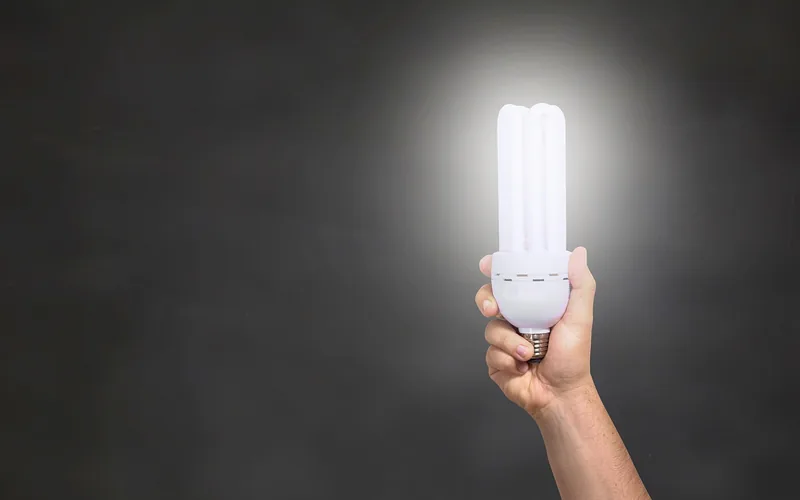
Lumens measure brightness, while watts measure energy use. A 60-watt incandescent bulb gives about 800 lumens, but an LED bulb can give the same 800 lumens using just 8-10 watts. For ceiling fans, focus on lumens for how bright you want the room and watts to stay within the fan’s limit. 800-1000 lumens works well for a cozy living room; a kitchen or workspace usually wants more.
How to Choose the Right Watt Light Bulb
Picking the perfect bulb for your ceiling fan is straightforward once you know what to check. Here’s a step-by-step process to get it right the first time.
Step-by-Step Guide to Picking a Bulb
- Check Your Fan’s Manual or Label: Look for the max wattage on the light kit or in the manual — it’s often a sticker near the bulb socket. My Hunter fan’s label reads “Max 60W.”
- Choose the Bulb Type: LEDs are the best choice for ceiling fans — energy-efficient, long-lasting, and they run cooler. CFLs are an acceptable budget option but less durable. Incandescent bulbs use the most energy and run hottest.
- Pick the Right Base Size: Most ceiling fans use an E26 (medium) or E12 (candelabra) base. Check the old bulb or socket to confirm before buying — the two are not interchangeable.
- Match Lumens to Your Room: For a small room, 800 lumens is enough. For bigger spaces like a kitchen, aim for 1000-1500 lumens.
- Consider Color Temperature: Measured in Kelvins (K), this sets the mood. 2700K is warm and cozy, similar to a sunset. 5000K is bright and crisp, similar to daylight.
How Much Total Wattage Can Multiple Ceiling Fan Bulbs Use?
Most fan labels list a per-socket maximum, not a combined total — so a fixture with three sockets rated “60W max” can typically take 60W in EACH socket (180W combined), not 60W split across all three. A fixture with four 40-watt sockets tops out at 160W combined if you use incandescent bulbs in every socket.
Some older fans instead list one combined wattage rating for the whole light kit, covering all sockets together — if your fixture’s label only shows one number with no “per bulb” language, treat that number as the ceiling for every bulb added together. When in doubt, check the manufacturer’s manual for your specific model rather than assuming either format.
Worked example: a fixture rated for four 60-watt incandescent sockets (240W combined potential) switched entirely to 9-watt LEDs draws only 36W total — well under the original incandescent ceiling, and cool enough that overheating from bulb wattage is no longer a practical concern on that fixture.
Bulb Type Comparison
Here’s a quick comparison of bulb types for a ceiling fan:
| Bulb Type | Wattage (60W Equivalent) | Lifespan | Cost | Best For |
|---|---|---|---|---|
| LED | 6-10W | 15,000-25,000 hours | $3-8 | Energy savings, long life |
| CFL | 13-20W | 10,000-12,000 hours | $2-5 | Budget-friendly, decent efficiency |
| Incandescent | 60W | 1,000 hours | $1-3 | Warm light, dimmable |
Table 1: Comparing bulb types for ceiling fans. LEDs are the top choice for most homes.
Best Ceiling Fan Bulb Pick
MAXvolador E12 LED 60W Equivalent (6-Pack) – $7.99
A 6W E12 candelabra-base LED rated a 60W equivalent (600 lumens) — matches the E12 base size and the 6-9W LED wattage range this guide’s Step 3 covers for candelabra-socket ceiling fans.
- Best for: ceiling fans with small E12 candelabra sockets
- Why we picked it: 6-pack covers a 3-4 bulb fixture in one order, 25,000-hour rated lifespan
- Main drawback: non-dimmable — skip it if your fan has a dimmer switch
Compare more ceiling fan bulb options
 E26 Base Option hansang A15 E26 LED 60W Equiv – $12.99
|
 Bulk Pack BUBO E12 LED 60W Equiv (10-Pack) – $14.39
|
 Standard A19 evelor A19 E26 60W Equiv (6-Pack) – $9.79
|
As an Amazon Associate we earn from qualifying purchases.
Safety Tips for Ceiling Fan Bulbs
Safety matters when picking a bulb. Ceiling fans aren’t just lights — they spin, so heat and fit both matter. Here are the key safety points:
- Don’t Exceed the Max Wattage: Going over can overheat the fan or trip a wattage limiter (a safety feature in newer fans), causing the light to shut off.
- Use LEDs for Less Heat: LEDs run cooler than incandescent bulbs, which reduces fire risk in an enclosed light kit.
- Check for Enclosed Fixtures: If the fan has a glass cover, use bulbs labeled for enclosed fixtures to avoid trapped heat shortening bulb life.
Common Mistakes to Avoid
- Ignoring the Base Size: A mismatched base won’t fit. Always confirm E26 vs. E12 before buying.
- Focusing Only on Watts: Lumens matter more for brightness. A 6W LED can be as bright as a 60W incandescent.
- Skipping Dimmable Bulbs: If the fan has a dimmer, confirm the bulb is labeled dimmable — a non-dimmable bulb on a dimmer circuit can flicker or fail early.
Real Example: Lighting a Living Room Ceiling Fan
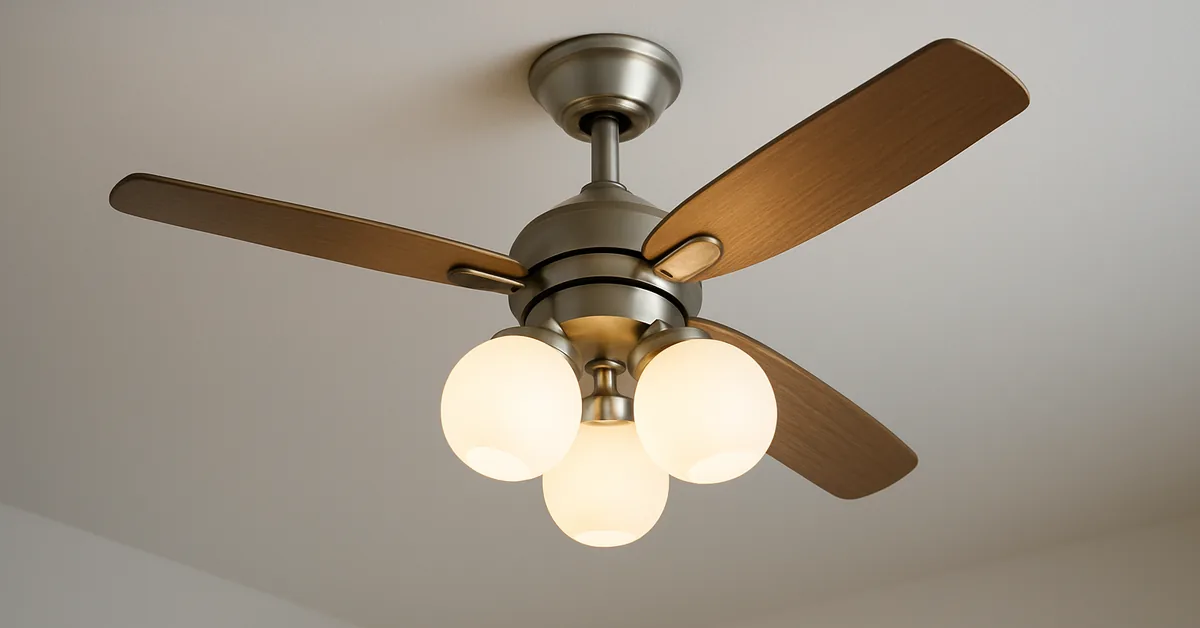
My living room ceiling fan has three light sockets, each rated for a 40W max. I installed 6W LED bulbs (800 lumens each, 2700K) in all three. The room reads warm and inviting, and the energy bill barely moved — three 6W LEDs run for a few hours a night cost only a couple of dollars a year combined. I later added a dimmer switch to adjust the mood for movie nights, which works fine since I specifically bought dimmable-rated LEDs for that fixture.
“Check the max-wattage sticker near the socket before you buy anything — on my own fan, guessing instead of checking cost me a return trip to the store the first time I replaced these bulbs.”
Cost-Saving Ideas
Using the right bulb saves real money over time. Here’s how:
- Switch to LEDs: They use less energy and last for years — a single 6-10W LED costs only $1-2 a year to run at typical use, versus around $12 a year for a 60W incandescent at current electricity rates.
- Buy in Bulk: Multi-packs of LED bulbs cost less per bulb than buying one at a time, especially for fixtures with 3+ sockets.
- Use Dimmers: Dimming lights when full brightness isn’t needed cuts energy use further, but only with dimmable-rated bulbs.
Bulb Cost Comparison
| Bulb Type | Upfront Cost | Yearly Energy Cost | Lifespan (Years) |
|---|---|---|---|
| LED | $3-8 | $1.20-$2.10 | 10-20 |
| CFL | $2-5 | $2.70-$4.10 | 5-10 |
| Incandescent | $1-3 | ~$12.35 | 1-2 |
Table 2: Cost comparison for a 60W-equivalent bulb, based on 3 hours of daily use at the current U.S. average residential electricity rate.
📊 The average U.S. residential electricity rate reached about 18.8 cents per kWh as of July 2026, up from roughly 15 cents per kWh in 2022 — Source: U.S. Energy Information Administration, 2026
My Top Tips from Experience
After years of adjusting ceiling fan lights, here are the go-to tips:
- Start with LEDs: An easy win for both savings and longevity.
- Test Color Temperatures: Try a 2700K bulb for cozy rooms and 5000K for workspaces — keeping a mix on hand covers most rooms.
- Keep Spares Handy: Bulbs burn out at inconvenient times, so a couple of spares in the correct base size save a late-night store run.
Frequently Asked Questions
What Watt Light Bulb Should I Use for My Ceiling Fan?
Check the max wattage on the fan’s light kit or manual, usually 40-60W for incandescent or 6-9W for LEDs. Pick an LED bulb with 800-1000 lumens for most rooms.
Can I Use a Higher Watt Bulb Than Recommended?
No. Going over the max wattage listed on the fan can overheat the fixture or trip the wattage limiter, causing the light to shut off or damaging the fan over time.
What’s the Best Bulb Type for Ceiling Fans?
LEDs are the best choice — they save energy, last longer (up to 25,000 hours), and produce less heat, making them safer for an enclosed fan light kit.
How Do I Know the Right Bulb Base Size?
Check the old bulb or empty socket for the base size, usually E26 (medium) or E12 (candelabra). Bringing the old bulb to the store is the easiest way to match it exactly.
What Lumens Are Best for a Ceiling Fan?
For small rooms, 800 lumens is enough. For larger spaces like kitchens, aim for 1000-1500 lumens for bright, clear light.
Can I Use Dimmable Bulbs in My Ceiling Fan?
Yes, but only if the fan has a dimmer switch, and only with a bulb labeled “dimmable.” A non-dimmable bulb on a dimmer circuit can flicker or fail early.
Why Do My Ceiling Fan Bulbs Burn Out Fast?
Using bulbs over the max wattage, or in an enclosed fixture without proper ventilation, is the most common cause of early burnout. Switching to LEDs largely solves this since they run cooler.
How Do I Choose the Best Ceiling Fan Light Bulbs?
Hunter Fan Company’s own buying guide recommends matching the base size and staying at or under the printed wattage rating before considering brightness or color temperature.
Conclusion
Choosing the right watt light bulb for a ceiling fan comes down to three checks: confirm the max wattage on the label, pick an LED for efficiency and lower heat, and match lumens — not watts — to how bright the room needs to be. For fixtures with several sockets, remember most fans rate wattage per bulb, not combined, so check the manual before assuming a total. Swapping to the right bulbs is a five-minute project that pays for itself within the first year of use. See also: how to replace a ceiling fan light bulb and why ceiling fan lights flicker.
Sponsored / affiliate links. As an Amazon Associate I earn from qualifying purchases. I may earn additional commission from eligible campaigns.