Difference Between Dogwood Cherry Blossom: Local Guide
Figuring out the Difference Between Dogwood and Cherry Blossom: Local Guide can be tricky when you’re just starting to learn about trees. They both bloom in spring and look pretty similar at first glance. This can make it hard to tell them apart.
But don’t worry! We’re here to make it super simple. This guide will walk you through everything step-by-step so you can easily spot the differences.
Get ready to become a tree expert in no time!
Dogwood vs Cherry Blossom Local Identification
This section helps you tell dogwood and cherry blossom trees apart right in your neighborhood. Knowing the key features of each tree makes identification a breeze. We’ll look at their flowers, leaves, and bark so you can confidently identify them.
This knowledge is great for gardeners, nature lovers, and anyone curious about the beautiful trees around them. Learning these simple differences will help you appreciate the spring blooms even more.
Understanding Dogwood Trees
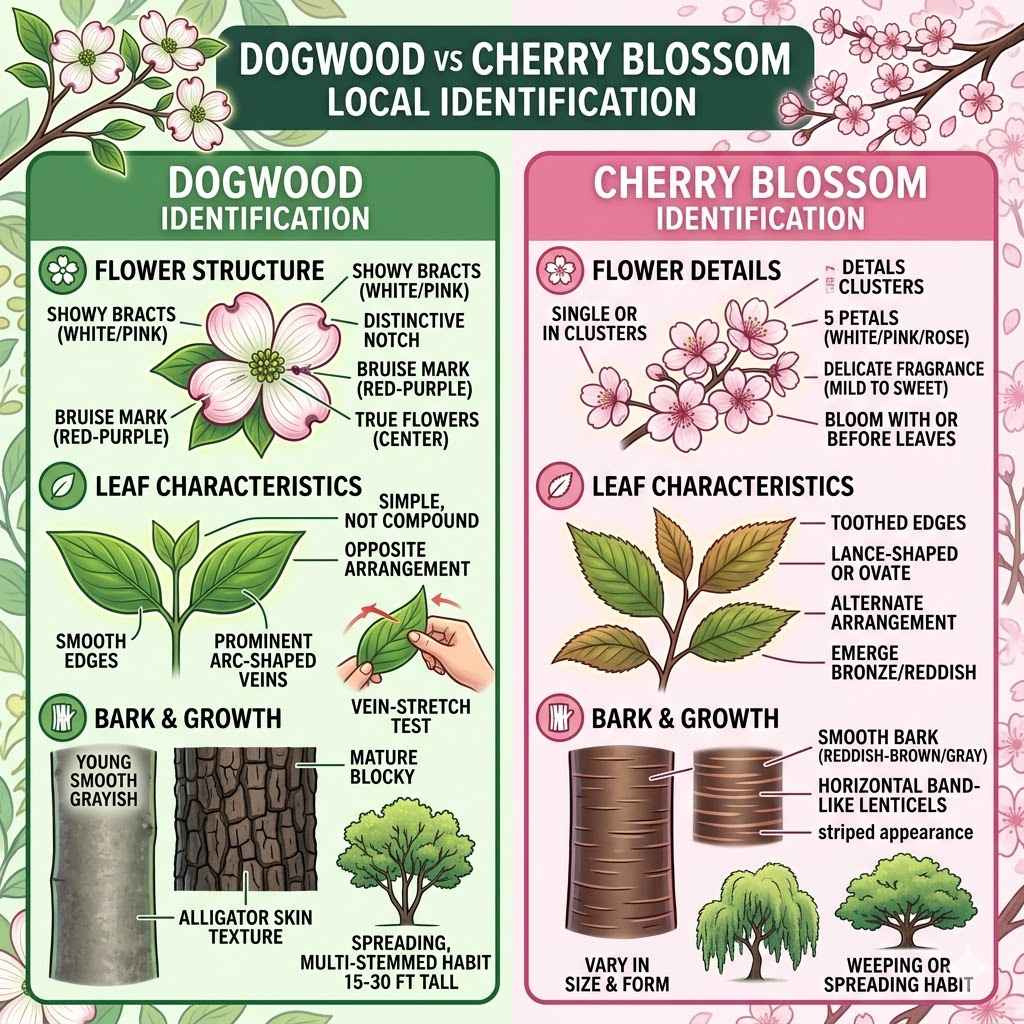
Dogwood trees are beloved for their stunning spring flowers, which are often mistaken for petals but are actually modified leaves called bracts. These bracts typically come in shades of white or pink and surround a cluster of small, greenish-yellow true flowers in the center. The bracts usually have a distinctive notch at the tip, and some varieties even have a reddish-purple streak near the base, resembling a bruise.
Dogwood leaves are arranged oppositely on the stem and have a smooth edge. A unique characteristic of dogwood leaves is their prominent, arc-shaped veins that run parallel to the leaf margin. If you pull on a dogwood leaf, the veins will often stretch like threads before breaking, a reliable test for identification.
The bark of mature dogwood trees is often blocky and dark, resembling alligator skin, while younger trees have smoother, grayish bark.
Dogwood Flower Structure
The “flowers” of a dogwood tree are actually four large, petal-like structures called bracts. These bracts are usually white or pink and are essential for attracting pollinators. They create the showy display we associate with dogwoods in the spring.
- The bracts often have a noticeable notch at the tip, giving them a slightly heart-shaped appearance. This is a consistent visual cue for dogwood identification.
- Many dogwood varieties feature a unique reddish-purple “bruise” mark near the base of the bracts. This mark is often linked to a biblical story but is a practical identifying feature.
- At the center of the bracts, you’ll find a small cluster of greenish-yellow flowers. These are the true flowers of the dogwood and are less conspicuous than the showy bracts.
Dogwood Leaf Characteristics
Dogwood leaves are simple, meaning they are not divided into leaflets. They grow directly on the stem, and if you were to look at how they attach, you’d see they are opposite each other. This arrangement is a key feature to note when identifying dogwoods.
- The leaf edges are smooth, without any teeth or lobes. This smooth margin is a significant contrast to some other flowering trees you might encounter.
- Dogwood leaves are known for their prominent, arching veins. These veins run from the center of the leaf towards the edge, creating a distinct pattern.
- A fun and practical way to test for dogwood is the vein-stretch test. Gently pull on a dogwood leaf; the veins will stretch like threads before snapping. This is due to the unique structure of the vascular tissue in the leaf.
Dogwood Bark and Growth Habit
The bark of a dogwood tree changes significantly as it ages. Young dogwood trees typically have smooth, grayish bark that is quite pleasant to the touch. As the tree matures, however, this bark becomes rougher and develops a pattern of square or rectangular blocks.
- Mature dogwood bark is often described as looking like alligator skin due to its distinctive blocky texture and dark color. This rough texture is a strong indicator of an older dogwood tree.
- Dogwood trees generally have a spreading, multi-stemmed habit, often growing as large shrubs or small trees. This growth pattern contributes to their attractive appearance in landscapes.
- They typically grow to be around 15 to 30 feet tall, with a similar spread, making them suitable for many garden settings without becoming overwhelming.
Exploring Cherry Blossom Trees
Cherry blossom trees, also known as sakura, are famous worldwide for their breathtaking spring displays of delicate pink or white flowers. Unlike dogwoods, the flowers of cherry trees are typically single or in small clusters, appearing directly on the branches. Each flower usually has five petals, and they bloom prolifically, creating a cloud-like effect.
The leaves of cherry trees are toothed, meaning they have small serrations along their edges. They are usually lance-shaped or ovate. A distinctive feature of cherry blossom trees is their bark, which is often smooth and has horizontal, band-like markings called lenticels, giving it a striped appearance.
These trees are prized for their ephemeral beauty and are a symbol of spring and renewal in many cultures.
Cherry Blossom Flower Details
Cherry blossom flowers are the star of the show. They are relatively small individually but bloom in such abundance that they transform the tree. Each flower is a delicate masterpiece.
- Each cherry blossom flower typically has five petals. These petals can be various shades of white, pink, or even deep rose.
- The flowers often have a slight fragrance, ranging from very mild to noticeably sweet, depending on the variety. This scent adds another sensory dimension to their appeal.
- Cherry blossoms usually appear before or with the leaves, creating a stunning visual effect of pure color against bare branches or emerging foliage.
Cherry Blossom Leaf Characteristics
Cherry tree leaves offer a different visual and textural experience compared to dogwoods. They have a more classic leaf shape with a noticeable edge.
- The edges of cherry tree leaves are toothed, meaning they have small, saw-like serrations. This is a significant difference from the smooth edges of dogwood leaves.
- The leaves are generally lance-shaped or ovate, tapering to a point. They are arranged alternately along the stem, another key difference from dogwood’s opposite arrangement.
- As the leaves emerge in spring, they can sometimes be a bronze or reddish color before turning green. This initial color change adds another layer of visual interest.
Cherry Blossom Bark and Growth Habit
The bark of a cherry blossom tree is one of its most distinctive features, especially when young. It’s quite different from the rough, blocky bark of mature dogwoods.
- Cherry tree bark is typically smooth and often has a reddish-brown or grayish hue. It’s frequently adorned with prominent horizontal lines called lenticels.
- These lenticels are small pores that allow the tree to exchange gases with the atmosphere. They often appear as stripes or bands running across the bark.
- Cherry trees can vary greatly in size and form, from small ornamental varieties to larger fruit-bearing trees. Many ornamental varieties have a weeping or spreading habit, adding grace to the landscape.
Key Differences Summarized for Easy Identification
To make identifying dogwood and cherry blossom trees even simpler, let’s summarize the most important differences. Focusing on these key features will help you distinguish between them quickly. This comparison is designed for clarity and ease of use in the field.
Flower Comparison
The flowers are often the most noticeable part of these trees in the spring. Comparing their structure and arrangement is a primary way to tell them apart.
| Feature | Dogwood | Cherry Blossom |
|---|---|---|
| Bracts/Petals | Four large bracts (petal-like structures) | Typically five delicate petals per flower |
| Flower Center | Cluster of small, greenish-yellow true flowers | No central cluster, individual flowers are more complete |
| Bract/Petal Shape | Often notched at the tip, sometimes with a “bruise” | Rounded or slightly pointed petals |
| Arrangement | Solitary “flowers” (bracts) on each twig | Flowers appear in clusters or singly along branches |
Leaf and Bark Comparison
Beyond the flowers, the leaves and bark offer more clues. These elements are present for a longer period, making them useful for identification throughout the year.
| Feature | Dogwood | Cherry Blossom |
|---|---|---|
| Leaf Edge | Smooth | Toothed or serrated |
| Leaf Arrangement | Opposite | Alternate |
| Leaf Veins | Arc-shaped, parallel to margin | Pinnately veined, with branching from central vein |
| Bark (Mature) | Blocky, alligator-skin texture | Smooth with horizontal lenticels (striped appearance) |
Growth Habit and Size
The way a tree grows and its typical size can also be a helpful identifier. While there can be variations, general trends exist.
- Dogwood trees usually grow as small to medium-sized trees, often with a spreading canopy. They are commonly found as understory trees in wooded areas and are popular ornamental choices for gardens.
- Cherry blossom trees encompass a wide range, from compact ornamental varieties to larger trees. Many ornamental types have a graceful weeping or spreading form, making them visually striking.
- The size difference can sometimes be apparent, with dogwoods typically reaching heights of 15-30 feet, while some cherry varieties can grow larger, though ornamental ones often stay smaller.
When to Look for These Differences
Knowing the best times to observe specific features can greatly improve your identification accuracy. Each season offers unique clues for distinguishing dogwood and cherry blossom trees.
Spring Bloom Time
Spring is the most obvious time to differentiate these trees because of their spectacular floral displays. However, the timing of their bloom can provide a subtle clue.
- Dogwood trees typically bloom a bit later in the spring season compared to many cherry blossom varieties. While both herald spring’s arrival, dogwoods often appear as cherry blossoms start to fade.
- Cherry blossoms are famous for their early spring bloom, often appearing as early as late winter in warmer climates or mid-spring in cooler regions. Their bloom is usually shorter-lived and more dramatic.
- Observing the progression of spring in your area can help. If you see trees covered in delicate pink or white flowers that seem to be fading, they are likely cherry blossoms. If you see trees with those distinctive four-notched bracts appearing slightly later, they are probably dogwoods.
Summer Leaf Appearance
Once the flowers are gone, the leaves become the primary identifier. The differences in leaf shape, edge, and vein structure are most apparent during the summer months when trees are in full foliage.
- In summer, the smooth-edged, oppositely arranged leaves of the dogwood are distinct. The prominent, arching veins are easy to spot when you look closely at a leaf.
- The toothed, alternately arranged leaves of the cherry blossom tree are also clear. The serrations on the leaf margins are a key feature that separates them from dogwoods.
- The overall shape of the leaves—dogwood’s being broader and more ovate, cherry’s often more lance-shaped—can also help. Comparing a fallen leaf from each tree side-by-side is an excellent way to solidify your understanding of these differences.
Fall and Winter Clues
Even after the leaves have fallen, clues remain. The bark and the persistent characteristics of the branches can still help identify the trees.
- The blocky, textured bark of mature dogwood trees remains a strong identifier throughout the year. It provides a rough, dark contrast against the winter landscape.
- The smooth bark of cherry trees, with its distinctive horizontal lenticels, also persists. This striped appearance is a telltale sign, especially on younger to middle-aged trees.
- Some dogwood varieties develop attractive reddish-purple berries in the fall, which can persist into winter, offering another identifying feature. Cherry trees may produce small, cherry-like fruits, but these are often not as showy or persistent as dogwood berries.
Common Local Examples and Scenarios
Seeing these trees in real-world settings makes learning about them much easier. Let’s look at some common places you might encounter dogwoods and cherry blossoms.
Urban Parks and Gardens
Both dogwood and cherry blossom trees are very popular choices for landscaping in urban areas, parks, and residential gardens. Their ornamental qualities make them highly desirable.
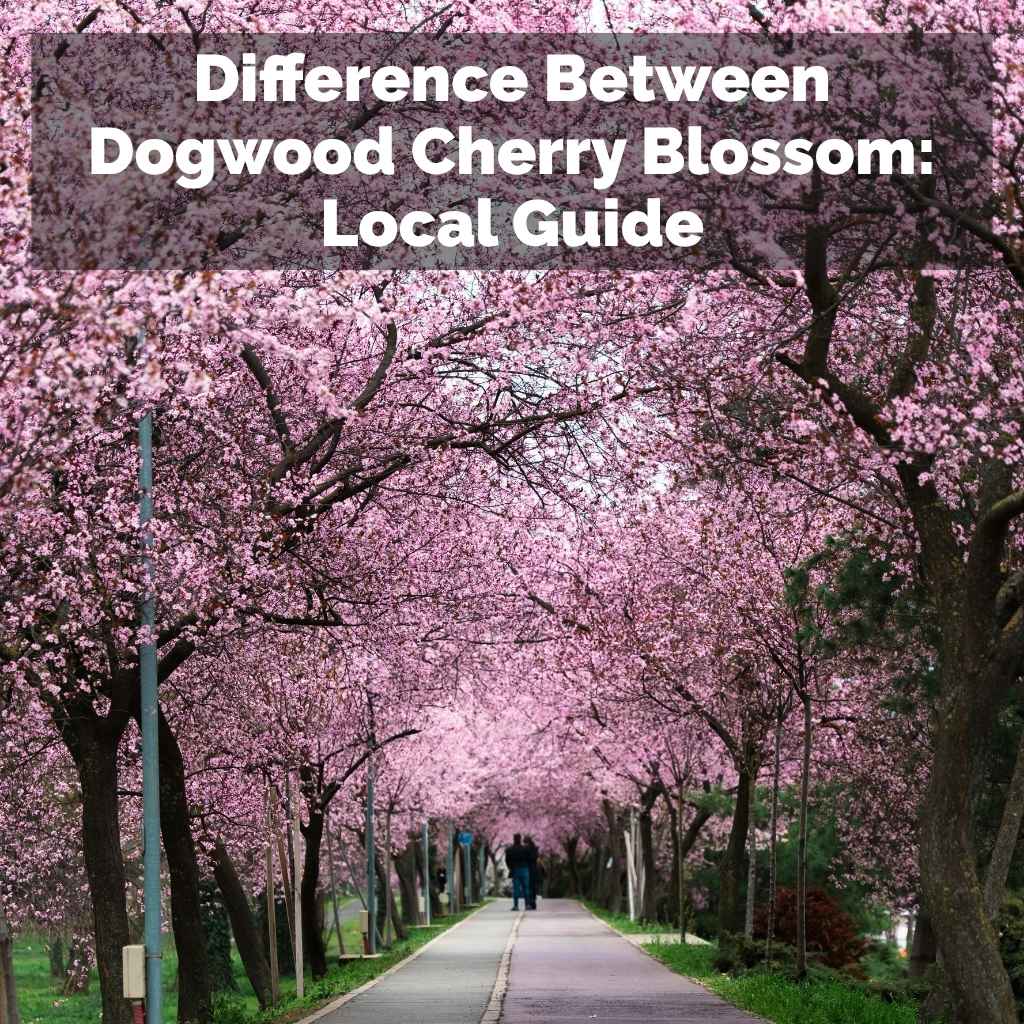
- In many city parks, you’ll find rows of cherry trees planted along pathways to create spectacular spring floral tunnels. These are often the most photographed spots in early spring.
For example, Washington D.C.’s Tidal Basin is famous for its Yoshino and Kwanzan cherry trees, which were a gift from Japan. The peak bloom attracts millions of visitors each year, showcasing the cultural significance and visual impact of cherry blossoms in an urban setting.
- Dogwood trees are frequently used as accent trees in gardens or as part of mixed shrub borders. Their beautiful spring flowers and attractive fall color make them a year-round landscape feature.
Consider a suburban garden where a homeowner has planted a Kousa dogwood for its unique horizontal branching and striking white bracts, followed by edible red fruit in late summer. This choice highlights the dogwood’s suitability for smaller, more intimate garden spaces, offering seasonal interest beyond just the spring bloom.
Woodlands and Natural Areas
In more natural settings, the differences can sometimes be more subtle, but understanding the native ranges is key.
- Native flowering dogwood (Cornus florida) is common in the eastern United States, often found growing in the understory of deciduous forests. It thrives in shady conditions and its spring bloom is a familiar sight in these woodlands.
- While many ornamental cherry trees are planted, some native cherry species exist, though they might be less common or have a different appearance than the iconic ornamental varieties. Identifying them requires careful attention to bark, leaf, and flower details.
Scenario: Springtime Walk Identification
Imagine you are on a walk in early to mid-spring. You see two trees with abundant pinkish-white flowers.
- Tree A has masses of small, delicate flowers, each with five distinct petals, appearing on the branches. The bark is smooth and has noticeable horizontal lines. The leaves are still emerging, showing toothed edges. You identify Tree A as a Cherry Blossom.
- Tree B has larger, four-parted “flowers” that are actually bracts, with a distinct notch at the tip and a hint of red near the base. These appear a bit later than Tree A’s blooms. The bark on nearby older trees is rough and blocky. You identify Tree B as a Dogwood.
Maintaining and Caring for Your Trees
Whether you have dogwoods or cherry blossoms, proper care ensures they thrive and continue to beautify your surroundings. Understanding their specific needs is vital.
Dogwood Tree Care
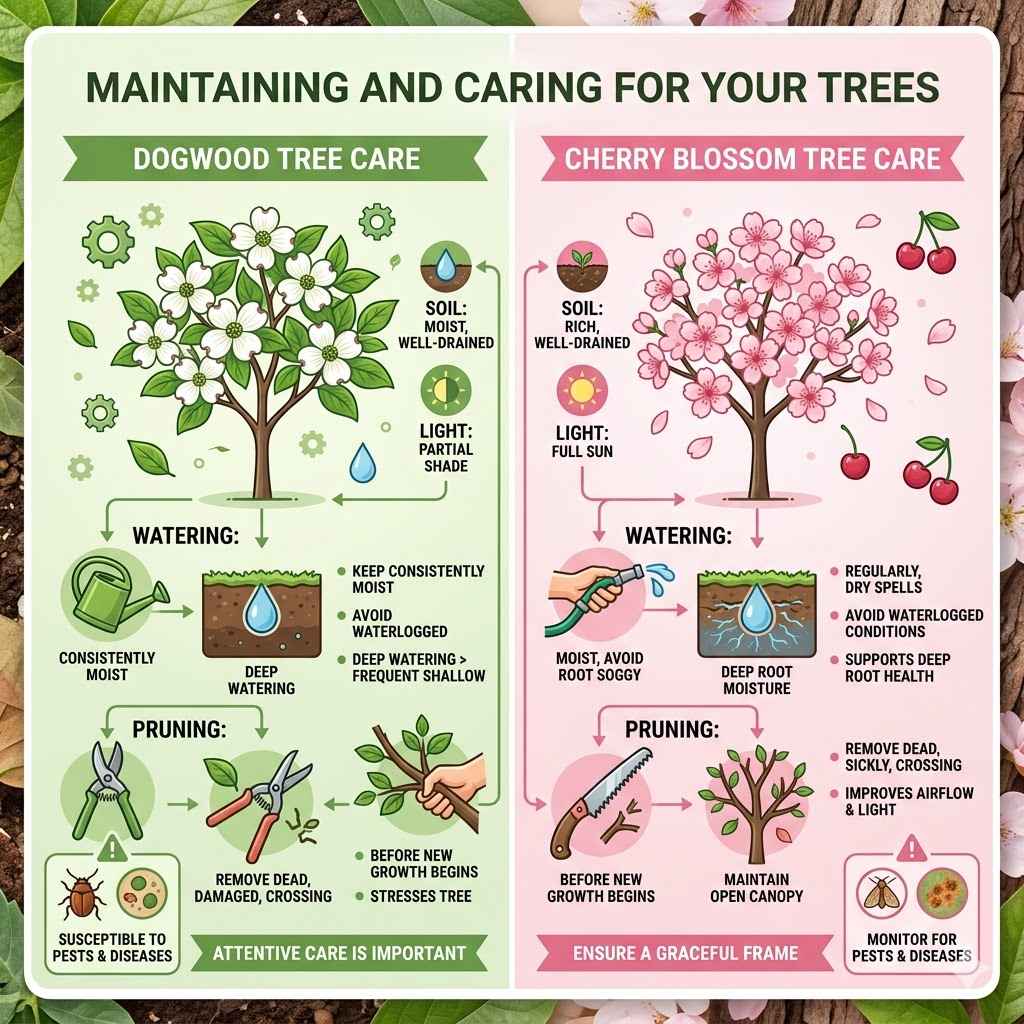
Dogwood trees generally prefer moist, well-drained soil and partial shade. They are susceptible to certain pests and diseases, so attentive care is important.
- Watering: Keep the soil consistently moist, especially during dry periods, but avoid waterlogged conditions. Deep watering is better than frequent shallow watering.
- Pruning: Prune dogwoods in late winter or early spring before new growth begins. Remove dead, damaged, or crossing branches. Avoid heavy pruning as it can stress the tree.
- Pest and Disease Management: Be vigilant for dogwood borers and anthracnose. Good cultural practices, like proper watering and avoiding physical damage to the trunk, can help prevent issues.
Cherry Blossom Tree Care
Cherry blossom trees also benefit from good soil conditions and appropriate care. They can be more sensitive to root disturbance and extreme conditions.
- Planting Location: Choose a sunny spot with well-drained soil. Avoid planting them too close to buildings or other trees where their roots might compete or cause structural issues over time.
- Watering and Mulching: Water regularly, especially when young, and maintain a layer of mulch around the base of the tree to retain moisture and suppress weeds. Keep mulch a few inches away from the trunk.
- Disease Prevention: Cherry trees can be prone to fungal diseases like brown rot. Ensuring good air circulation by proper pruning and avoiding overhead watering late in the day can help mitigate risks.
Frequently Asked Questions
Question: What is the main difference between dogwood and cherry blossom flowers?
Answer: Dogwood flowers have four large, petal-like bracts that often have a notch, while cherry blossoms have delicate, typically five-petaled flowers that bloom more profusely.
Question: How can I tell the leaves apart?
Answer: Dogwood leaves have smooth edges and arching veins, and grow opposite each other. Cherry blossom leaves have toothed edges, are arranged alternately, and have branching veins.
Question: Is dogwood bark the same as cherry blossom bark?
Answer: No, mature dogwood bark is rough and blocky like alligator skin, whereas cherry blossom bark is typically smooth and has horizontal stripes called lenticels.
Question: When do dogwood trees bloom compared to cherry blossoms?
Answer: Cherry blossoms generally bloom earlier in the spring, often appearing before or with the leaves. Dogwoods typically bloom a bit later, often as cherry blossoms are fading.
Question: Are there any easy visual tricks to remember the difference?
Answer: Think of dogwood’s “notched” bracts and opposite leaves, and cherry blossom’s “toothed” leaves and smooth, striped bark. The bark is a great year-round clue.
Summary
Distinguishing between dogwood and cherry blossom trees is straightforward once you know what to look for. Focus on the unique four-notched bracts of dogwoods versus the delicate five-petaled flowers of cherry blossoms. Observe their leaf edges, arrangement, and bark texture.
Paying attention to these key differences will make you a confident identifier of these beautiful spring bloomers in your local area.