Difference Between Solid Wood & Engineered Wood: Proven
Solid wood offers natural beauty and durability, while engineered wood provides stability and versatility, making the choice depend on your project’s needs and budget.
Choosing the right wood for your project can feel like navigating a maze, especially when you’re just starting out. You see “solid wood” and “engineered wood” on labels, and it’s easy to get confused. What’s the real difference? Does one perform better? Will one cost more? Don’t worry, we’ve all been there! Understanding these two types of wood is a fundamental step in building your woodworking confidence. We’ll break down exactly what they are, how they’re made, and how to pick the best one for your next great build. Get ready to see clearly!
What Exactly is Solid Wood?
Solid wood, in the simplest terms, is exactly what it sounds like: wood that comes from a single tree. When you buy a plank of solid oak, maple, or pine, you’re getting a piece that was harvested, milled, and shaped directly from a tree trunk. It’s the traditional choice for furniture, flooring, and cabinetry, prized for its natural beauty, unique grain patterns, and the rich, warm feel it brings to any space.
Think of it like a slice of nature itself. Each piece of solid wood has its own character, its own story told through its grain, knots, and color variations. This natural variation is part of its charm and what makes each project unique.
What Exactly is Engineered Wood?
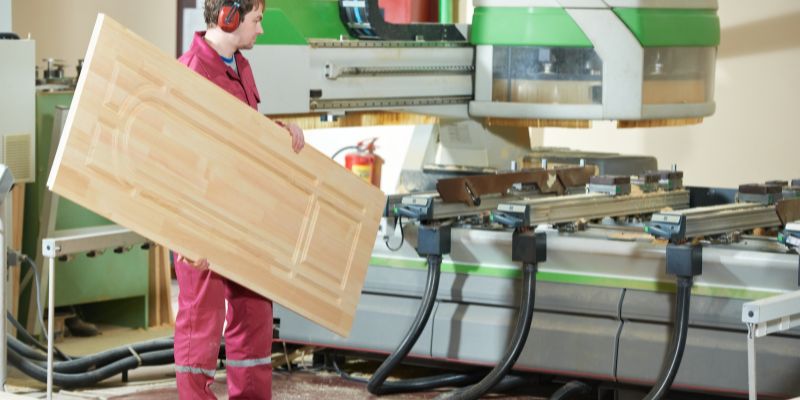
Engineered wood is a bit more of a modern marvel. Instead of a single piece of wood, it’s constructed from multiple layers or components that are bonded together. This construction process gives engineered wood some fantastic properties that make it incredibly useful, especially in situations where stability and moisture resistance are key.
The most common forms you’ll encounter are plywood and composite wood products. Plywood, for instance, is made by layering thin sheets of wood veneer, with the grain of each layer running in a different direction. This cross-graining makes plywood incredibly strong and less prone to warping or cracking than solid wood. Other engineered woods might involve wood fibers, particles, or strands bonded together with adhesives.
The Core Difference: Construction and Composition
The fundamental difference between solid wood and engineered wood lies in how they are made and what they are made of. It’s like comparing a single, perfectly formed apple to a delicious apple pie – both are made from apples, but the way they are put together creates very different experiences.
Solid Wood: The Natural Choice
Composition: 100% natural wood from a single tree.
Construction: Harvested logs are cut into planks, boards, or other shapes.
Appearance: Unique, natural grain patterns, color variations, and potential knots inherent to the species.
Engineered Wood: The Smart Solution
Composition: Combines wood with adhesives, resins, or other materials. Can be made from wood veneers, particles, fibers, or strands.
Construction: Layers of wood are glued together, often with alternating grain directions (like plywood), or wood particles/fibers are compressed and bonded.
Appearance: Can mimic solid wood appearance, but often has a more uniform look due to manufacturing. Some types, like MDF or particleboard, are not intended to show wood grain.
Understanding Wood Grain and Its Impact
Wood grain refers to the pattern created by the fibers and cells within the wood. It’s what gives wood its visual appeal and also influences its strength and how it behaves.
Solid Wood Grain
In solid wood, the grain follows the natural growth pattern of the tree. This means the grain runs in one consistent direction within a single board. This can make solid wood beautiful to look at, but it also means it’s more susceptible to expansion and contraction with changes in humidity, which can lead to warping or cracking if not properly managed.
Engineered Wood Grain
Engineered wood uses various techniques to manipulate grain. Plywood, for example, has alternating grain directions in its layers. This “cross-graining” is a clever engineering trick that significantly increases its strength and stability. It resists warping, twisting, and shrinking much better than solid wood because the opposing grain directions counteract each other’s movement. Other engineered woods, like Medium Density Fiberboard (MDF) or particleboard, are made from wood fibers or particles, so they don’t have a traditional wood grain pattern at all.
Key Properties: Strength, Stability, and Durability
When we talk about woodworking, the properties of the material are crucial. How strong is it? How well does it hold its shape? How long will it last? These are the questions that guide our material selection.
Solid Wood Properties
Strength: Generally strong, especially hardwoods like oak or maple. The strength can vary depending on the species and the direction of the grain.
Stability: Less stable than engineered wood. It’s prone to expanding and contracting with changes in humidity and temperature, which can lead to warping, cupping, or splitting.
Durability: Can be very durable and long-lasting if properly cared for and protected from moisture. It can be sanded and refinished multiple times, which is a big plus for furniture longevity.
Repairability: Can often be repaired by sanding, filling, or replacing sections, making it forgiving for many projects.
Engineered Wood Properties
Strength: Can be exceptionally strong, especially plywood, due to its layered construction. The strength is often more consistent across the panel.
Stability: Much more stable than solid wood. Its cross-grained construction makes it highly resistant to warping, shrinking, and expanding. This makes it ideal for applications where moisture or temperature fluctuations are a concern.
Durability: Varies by type. High-quality engineered woods can be very durable. Plywood, for example, is tough and can withstand significant stress. However, some lower-quality engineered woods can be more susceptible to moisture damage or delamination if not protected.
Repairability: Can be more challenging to repair than solid wood. Damage might require patching or filling, and sanding can sometimes expose the underlying layers.
Pros and Cons: A Direct Comparison
To make your decision easier, let’s lay out the advantages and disadvantages of each type in a clear, concise way.
Solid Wood: The Good and The Not-So-Good
| Pros | Cons |
|---|---|
| Natural beauty and unique grain | Prone to warping, cracking, and splitting |
| Can be refinished and repaired | More expensive than many engineered woods |
| Feels warm and authentic | Can be more susceptible to moisture damage |
| Strong in specific grain directions | Requires careful handling and acclimation |
| Renewable resource (if sourced sustainably) | Can be heavier and harder to work with |
Engineered Wood: The Good and The Not-So-Good
| Pros | Cons |
|---|---|
| High dimensional stability | Can contain formaldehyde (check labels) |
| Resistant to warping and shrinking | Appearance can be less natural/unique |
| Often more affordable than solid wood | Some types can be damaged by excessive moisture |
| Consistent strength and performance | Difficult to repair significant damage |
| Available in large, consistent sheets | May not hold screws as well as solid wood |
When to Choose Solid Wood
Solid wood is often the go-to choice when you want that authentic, natural wood look and feel, and when the project requires a certain level of traditional craftsmanship.
Fine Furniture: For pieces like dining tables, chairs, or heirloom chests where the beauty of the wood grain is paramount.
Decorative Trim and Moulding: Where intricate details and a natural finish are desired.
High-End Cabinetry: Especially for visible door fronts and drawer faces.
Projects Requiring Deep Cuts or Joinery: Solid wood can be carved and shaped more easily than some engineered woods.
When Longevity Through Refinishing is Key: The ability to sand and refinish multiple times makes solid wood a great long-term investment for items that will see heavy use.
For example, if you’re building a beautiful handcrafted bookshelf that you want to stain to highlight the natural grain of cherry wood, solid cherry would be an excellent choice. You’ll get that deep, rich color and unique grain pattern that simply can’t be replicated.
When to Choose Engineered Wood
Engineered wood shines in situations where stability, cost-effectiveness, and practicality are more important than a purely natural aesthetic.
Cabinet Carcasses and Drawer Boxes: The stability of plywood or particleboard makes them excellent for the internal structure of cabinets.
Subflooring and Underlayment: Plywood’s strength and stability make it perfect for creating a solid base for flooring.
Sheathing and Structural Applications: Its strength-to-weight ratio makes plywood ideal for walls and roofs in construction. You can learn more about its structural uses from resources like the U.S. Forest Products Laboratory, which conducts extensive research on wood properties.
Projects Requiring Large, Flat Panels: Engineered wood like MDF or particleboard is often used for large surfaces like tabletops or shelving where flatness is crucial.
Budget-Conscious Projects: When you need a wood product but are working with a tighter budget, engineered options are often more accessible.
Areas with Humidity Fluctuations: The superior stability of engineered wood makes it a better choice for basements, bathrooms, or kitchens where moisture levels can change.
Consider building a workbench. You want a large, flat, and sturdy surface. Using a thick piece of plywood for the top, perhaps laminated with a harder material, offers excellent stability and a durable work area at a reasonable cost.
The “Difference Between Solid Wood and Engineered Wood Flooring”
When it comes to flooring, this distinction is especially important. Both solid wood and engineered wood can create beautiful floors, but they behave differently and suit different environments.
Solid Wood Flooring
What it is: Planks milled from a single species of hardwood.
Look & Feel: Offers the most authentic and natural wood appearance. Each plank is unique.
Installation: Typically nailed or stapled down to a subfloor. Can only be installed on or above ground level.
Durability & Maintenance: Can be sanded and refinished multiple times over its lifespan, allowing for a fresh look or repair of scratches and dents. However, it’s more susceptible to moisture damage and expansion/contraction, which can cause gapping or cupping.
Best For: Living rooms, dining rooms, bedrooms – areas with controlled humidity and less exposure to moisture.
Engineered Wood Flooring
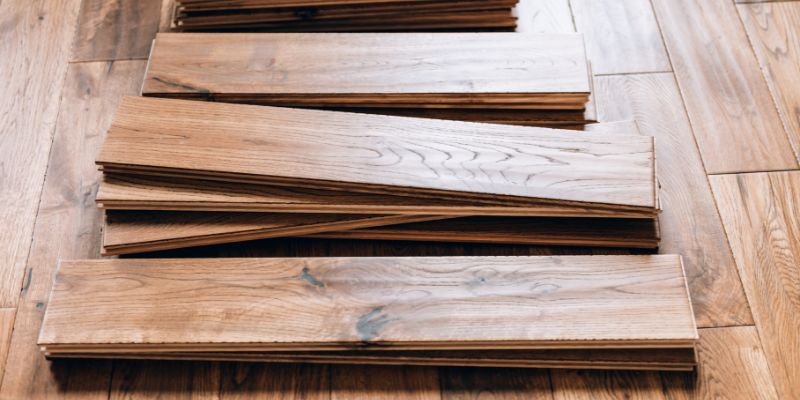
What it is: A core of plywood or high-density fiberboard (HDF) topped with a thin layer (veneer) of real hardwood.
Look & Feel: Can closely mimic the appearance of solid wood, as the top layer is genuine hardwood. The quality of the veneer matters for the final look.
Installation: Very versatile. Can be glued, nailed, stapled, or even floated over a subfloor. Can be installed on, above, or below ground level, making it suitable for basements and bathrooms.
Durability & Maintenance: More dimensionally stable than solid wood, meaning it’s less prone to warping or gapping with humidity changes. It can typically be sanded and refinished once or twice, depending on the thickness of the top hardwood veneer.
Best For: Kitchens, bathrooms, basements, and any area where moisture or temperature fluctuations are a concern. It’s also a great option for radiant heated floors.
A key consideration for flooring is how the wood will react to the environment it’s in. A solid oak floor in a basement might not last long due to humidity, but an engineered oak floor with a stable core would likely fare much better.
Working with Solid Wood vs. Engineered Wood
Your woodworking experience will differ depending on which type of wood you choose. Understanding these differences can save you time and frustration.
Working with Solid Wood
Cutting: Cuts cleanly with hand saws, circular saws, table saws, and miter saws. You’ll need sharp blades to avoid tear-out, especially on figured woods.
Joining: Glues well, and traditional joinery techniques like mortise and tenon, dovetails, and lap joints are easily achieved. It holds screws and nails well, but pre-drilling is often recommended to prevent splitting.
Finishing: Takes stains, varnishes, and oils beautifully, allowing the natural grain to show through.
Sanding: Can be sanded to a very smooth finish. Be mindful of grain direction to avoid scratches.
Working with Engineered Wood
Cutting: Plywood cuts well, but you might get some chipping on the veneer; using a fine-tooth blade and a zero-clearance insert on your table saw can help. MDF and particleboard can be dusty and dull blades quickly; they cut cleanly but can chip on edges if not handled carefully.
Joining: Glues well, but the strength of the bond depends on the adhesive used in the engineered wood. Plywood holds screws and nails very well. MDF and particleboard are more prone to crumbling if screws are driven too close to the edge or over-tightened. Reinforcement or specialized fasteners might be needed.
Finishing: Plywood with good veneer can be stained or painted. MDF and particleboard are often best painted, as they don’t have a natural wood grain to show off. Primer is usually recommended for a smooth finish.
Sanding: Plywood can be sanded, but be careful not to sand through the veneer. MDF and particleboard sand easily and to a very smooth finish, but the dust can be very fine and requires good dust collection and respiratory protection.
Cost Considerations
The price difference between solid wood and engineered wood can be significant and is often a deciding factor for many DIYers.
Solid Wood: Generally more expensive. The price varies greatly by species, with hardwoods like walnut and mahogany being significantly pricier than softwoods like pine. The cost reflects the natural resource, the milling process, and the inherent beauty.
Engineered Wood: Typically more affordable. Plywood is often priced per sheet, with prices varying by grade and thickness. MDF and particleboard are usually the most budget-friendly options, often priced per square foot or per sheet. The cost-effectiveness comes from using wood byproducts and efficient manufacturing processes.
For example, a sheet of high-quality hardwood plywood might cost half as much as a solid hardwood board of the same dimensions, making it a smart choice for larger projects or when budget is a primary concern.
Environmental Impact and Sustainability
Both solid wood and engineered wood have environmental considerations.
Solid Wood: If sourced from sustainably managed forests, solid wood is a renewable resource. Certifications like those from the Forest Stewardship Council (FSC) indicate responsible sourcing. However, harvesting old-growth forests can have significant negative impacts.
* Engineered Wood: Can be a more sustainable option as it often utilizes wood waste, smaller trees, and byproducts from the lumber industry. This can reduce pressure on old-growth forests. However, the adhesives and resins used in some engineered wood products can be a concern. Many manufacturers now offer low-VOC (volatile organic compound) or formaldehyde-free options. It’s always a good idea to look for products that meet environmental standards.
Choosing products with FSC certification for solid wood or low-VOC certifications for engineered wood can help you make more environmentally conscious decisions.
FAQ: Your Burning Wood Questions Answered
Q1: Can I use engineered wood for outdoor projects?
A1: It depends on the type. Some exterior-grade plywoods and treated engineered woods are designed for outdoor use. However, standard MDF or particleboard will likely degrade quickly when exposed to moisture and weather. Always check the product specifications for outdoor suitability.
Q2: Which is better for painting: solid wood or engineered wood?
A2: Both can be painted, but engineered woods like MDF are often preferred for painting. MDF provides an exceptionally smooth, uniform surface that takes paint very well without showing grain. Solid wood can be painted, but you might need to prime it to prevent the grain from showing through, especially with softwoods.
Q3: Is solid wood always stronger than engineered wood?
A3: Not necessarily. Plywood, a type of engineered wood, is often stronger and more stable than solid wood of the same thickness due to its cross-grained construction. The strength of solid wood can also vary greatly depending on the species and the direction of the grain relative to the force applied.
Q4: Will engineered wood last as long as solid wood?
A4: Engineered wood can be very durable, but its longevity can depend on the quality of the product and its exposure to elements. High-quality engineered wood used appropriately can last for decades. Solid wood, with its ability to be repeatedly refinished, can also have a very long lifespan, often outlasting engineered wood that cannot be refinished as many times.
Q5: What is the main difference in how they expand and contract?
A5: Solid wood expands and contracts primarily across its width with changes in humidity. Engineered wood, especially plywood with its cross-grained layers, is much more dimensionally stable and resists expansion and contraction significantly better. This is why engineered wood is preferred in environments with fluctuating humidity.
Q6: Can I use MDF for furniture legs?
A6: While MDF is strong and stable, it’s generally not recommended for furniture legs or structural components that will bear significant weight or stress. It doesn’t hold screws as well as solid wood or plywood, and its edges can be prone to chipping or crumbling under heavy load. Solid wood or sturdy plywood is a better choice for structural elements.
Q7: What does “veneer” mean in engineered wood flooring?
A7: In engineered wood flooring, “veneer” refers to the thin, top layer of real hardwood that you see and walk on. This layer is bonded to a stable core made of plywood or HDF. The thickness of this veneer determines how many times the floor can be sanded and refinished.
Conclusion: Making the Right Choice for Your Project
So, there you have it! The difference between solid wood and engineered wood boils down to construction and composition, leading to distinct properties in terms of stability, strength, appearance, and cost.
Solid wood offers that timeless, natural beauty and the satisfaction of working with a material directly from nature. It’s perfect for projects where aesthetics are paramount and you want the ability to refinish for generations. Engineered wood, on the other hand, is a testament to smart design, offering remarkable stability and versatility, often at a more accessible price point. It’s your reliable workhorse for many modern building and furniture needs.
By understanding these differences, you can confidently choose the right material for your next woodworking adventure, whether it’s a stunning heirloom table or a sturdy workbench. Happy building!