Do They Make 3 Way LED Bulbs: Essential Guide
Yes, they absolutely do make 3-way LED light bulbs! These bulbs are designed to offer multiple brightness levels, just like traditional incandescent 3-way bulbs, but with the energy efficiency and longevity of LED technology. They are a fantastic upgrade for lamps and fixtures that support 3-way functionality, providing flexibility and savings.
Ever stood in front of your lamp, wishing you could dim it down for movie night or brighten it up for reading, but your bulb only offers one setting? It’s a common frustration! Many of us have lamps with those three distinct brightness options, but finding the right LED bulb to match can feel like a treasure hunt. Don’t worry, though! The good news is that the technology you’re looking for exists, and it’s easier than you might think to get your hands on it. We’ll walk through everything you need to know to make sure you get the perfect 3-way LED bulb for your home.
Understanding 3-Way Light Bulbs: A Quick Refresher
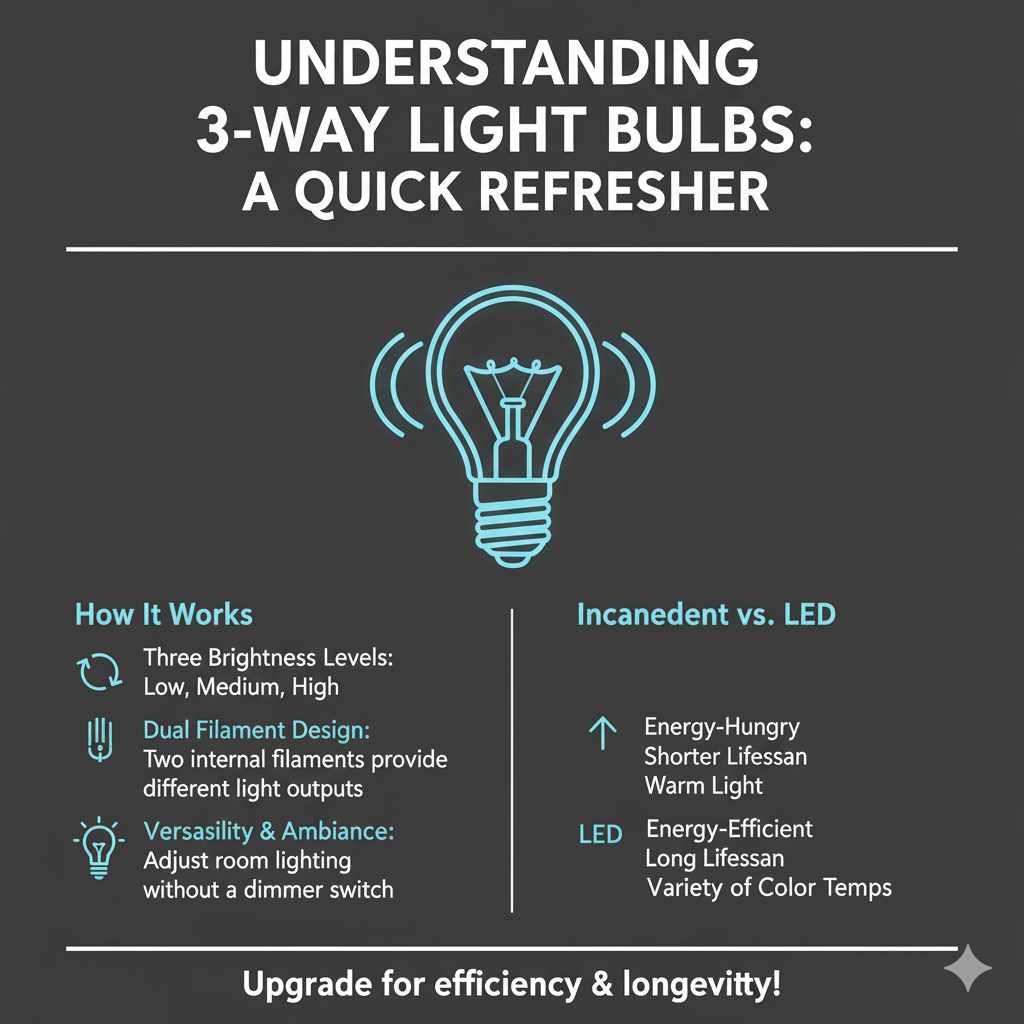
Before we dive into the specifics of LED versions, let’s quickly revisit what makes a “3-way” bulb special. Traditional 3-way bulbs, often found in table lamps, have three distinct brightness settings: low, medium, and high. This is achieved through a clever internal design that utilizes two filaments. When you flick the switch, it cycles through these filaments to provide different levels of light output. This offers a great deal of versatility, allowing you to adjust the ambiance of a room without needing a separate dimmer switch. The challenge has always been that incandescent bulbs are energy-hungry and don’t last as long as newer lighting technologies.
Do They Make 3 Way LED Light Bulbs? The Answer is YES!
The short answer to “Do they make 3 way LED light bulbs?” is a resounding YES! Manufacturers have developed LED bulbs that replicate the functionality of traditional 3-way incandescent bulbs. These innovative LED bulbs offer the same multi-brightness feature but come with all the benefits of LED technology: significant energy savings, a much longer lifespan, and a variety of color temperatures.
These bulbs are designed to work with standard 3-way lamp sockets. You simply screw in the 3-way LED bulb, and the lamp’s existing 3-way switch will cycle through the brightness levels. No rewiring or special fixtures are needed. It’s a straightforward, direct replacement that can make a big difference in your home’s lighting and your energy bills.
How 3-Way LED Bulbs Work
Unlike incandescent bulbs that use separate filaments for each brightness level, 3-way LED bulbs achieve their multi-wattage output through a more sophisticated internal design. They typically contain multiple LED chips, and the internal circuitry directs power to different combinations of these chips as you cycle through the switch. This allows for distinct brightness levels without the heat and energy waste associated with incandescent filaments.
Here’s a simplified look at how it typically works:
- Setting 1 (Low): Only a small set of LED chips are illuminated, providing a dim, ambient light.
- Setting 2 (Medium): A larger set of LED chips is activated, increasing the brightness.
- Setting 3 (High): All LED chips are illuminated for maximum brightness.
This internal design means that 3-way LED bulbs are slightly more complex than single-brightness LEDs, but the technology is now mature and widely available. You can find them in various styles and wattages to suit your needs.
Benefits of Switching to 3-Way LED Bulbs
Making the switch from incandescent to LED for your 3-way lamps isn’t just about replicating functionality; it’s about upgrading your lighting experience. Here are some of the key advantages:
Energy Efficiency
This is perhaps the biggest draw. LEDs use significantly less energy than incandescent bulbs to produce the same amount of light. A typical 3-way incandescent bulb might consume 50/100/150 watts depending on the setting. A comparable 3-way LED bulb might only use 4/8/12 watts for the same brightness levels. This translates directly into lower electricity bills. For example, if you use a 3-way lamp for several hours a day, the energy savings can add up considerably over the year.
Longer Lifespan
Incandescent bulbs have a very limited lifespan, often lasting only about 1,000 hours. 3-way LED bulbs, on the other hand, can last anywhere from 15,000 to 25,000 hours or even more. This means you’ll be changing bulbs far less often, saving you money on replacements and the hassle of frequent bulb changes. Imagine not having to climb on a chair to change a bulb for years to come!
Durability
LEDs are solid-state lighting technology, meaning they have no fragile filaments to break. This makes them much more resistant to shock and vibration than traditional bulbs, which is great for lamps that might get bumped or moved.
Instant On
Unlike some older fluorescent technologies, LEDs turn on to full brightness immediately. There’s no warm-up period, so you get the light you need the moment you flip the switch.
Reduced Heat Output
Incandescent bulbs generate a lot of heat as a byproduct of producing light. This heat can make the lamp itself hot to the touch and can even contribute to higher room temperatures, especially in warmer months. LEDs produce very little heat, making them safer to be around and more energy-efficient as less energy is wasted as heat.
Environmental Friendliness
With their lower energy consumption and longer lifespan, LEDs are a more environmentally friendly lighting choice. They reduce greenhouse gas emissions associated with electricity generation and decrease landfill waste due to fewer replacements.
What to Look for When Buying a 3-Way LED Bulb
Now that you know they exist and why they’re great, let’s talk about what to look for when you’re shopping. Choosing the right bulb ensures compatibility and satisfaction.
Wattage Equivalency (and Actual Wattage)
When looking at LED bulbs, you’ll often see two numbers: the “wattage equivalent” and the “actual wattage.” The wattage equivalent tells you the brightness level compared to an old incandescent bulb. For example, a 3-way LED might be listed as 4W/8W/12W (actual wattage) and equivalent to 50W/100W/150W. Make sure the equivalent wattage matches the levels your lamp is designed for.
Brightness Levels (Lumens)
Lumens measure the brightness of a light bulb. While wattage tells you how much energy it uses, lumens tell you how much light it gives off. A 3-way LED bulb will have different lumen outputs for each setting. Often, the packaging will list these. For instance, it might say something like “500/900/1500 lumens” for the low/medium/high settings.
Color Temperature (Kelvin)
Color temperature, measured in Kelvin (K), describes the appearance of the light.
- Warm White (2700K-3000K): This is similar to the cozy, yellowish light of incandescent bulbs. It’s great for living rooms, bedrooms, and creating a relaxing atmosphere.
- Cool White/Bright White (3500K-4100K): This light is a bit more neutral and often preferred for kitchens, bathrooms, and workspaces where you need good visibility.
- Daylight (5000K-6500K): This is a very bright, bluish-white light that mimics natural daylight. It’s excellent for task lighting, garages, or areas where you need maximum clarity.
Consider where your lamp is located and what you use it for when choosing a color temperature. Many 3-way LEDs come in warm white, but you can find them in other options too.
Base Type
Most standard lamps use an “E26” or “Medium” base. This is the most common screw-in base in North America. Always check the base type of your current bulb to ensure the new LED bulb will fit. Other bases exist, but E26 is overwhelmingly common for home lamps.
Shape and Size
Lamps, especially those with shades, have specific space constraints. Ensure the LED bulb’s shape (e.g., A19, globe, candelabra) and dimensions will fit comfortably within the lamp shade without touching it. Some LED bulbs can be slightly larger than their incandescent counterparts.
Dimmability (Important Note for 3-Way LEDs)
This might sound confusing, but it’s crucial: 3-way LED bulbs are NOT dimmable in the traditional sense. They achieve their brightness levels through the lamp’s built-in 3-way switch, not by responding to a separate dimmer control. If you have a lamp with a rotary dimmer knob or a touch-sensitive dimmer base, a standard 3-way LED bulb will likely not work correctly. In those cases, you need to look for LED bulbs specifically labeled as “dimmable” and ensure they are compatible with your dimmer type. For standard 3-way switch lamps (the kind that click through Off-Low-Medium-High), you want the 3-way LED bulb.
Brand Reputation and Reviews
Stick with reputable brands known for quality lighting products. Reading customer reviews can also give you valuable insights into a bulb’s performance, longevity, and how well it replicates the 3-way functionality.
Are All 3-Way Lamps Compatible with 3-Way LED Bulbs?
In most cases, yes! If your lamp has a standard 3-way rotary switch (the kind that clicks through Off, Low, Medium, High settings), it should be perfectly compatible with a 3-way LED bulb. These switches are designed to cycle through different power levels to the socket, which is exactly what a 3-way LED bulb is designed to respond to.
However, there are a few exceptions to be aware of:
- Lamps with Touch Dimmers: If your lamp has a touch-sensitive base that cycles through brightness levels when you tap it, a standard 3-way LED bulb will likely not work. These touch mechanisms often rely on specific electrical properties of incandescent bulbs. For these lamps, you need to find LED bulbs that are specifically labeled as dimmable and designed to work with touch lamps. Sometimes, these are also called “3-step dimming” LEDs.
- Lamps with Rotary Dimmer Dials: Similar to touch dimmers, lamps with a continuous rotary dimmer dial (that you turn to adjust brightness) are not compatible with standard 3-way LED bulbs. You need to use LED bulbs that are explicitly labeled as dimmable and compatible with that specific type of dimmer.
- Older or Specialty Fixtures: While rare, some very old or specialized lamp designs might have compatibility issues. If your lamp is particularly old or has unusual controls, it’s always a good idea to test a bulb before committing to a large purchase.
When in doubt, check your lamp’s switch. If it clicks through distinct “Off, 1, 2, 3” or “Off, Low, Medium, High” positions, you’re likely good to go with a standard 3-way LED bulb.
Comparing 3-Way Incandescent vs. 3-Way LED
To really highlight the advantages, let’s put them side-by-side. This table shows a typical comparison between a common incandescent 3-way bulb and its LED counterpart.
| Feature | 3-Way Incandescent Bulb (Example: 50/100/150W) | 3-Way LED Bulb (Example: 4W/8W/12W) |
|---|---|---|
| Energy Consumption (Low/Med/High) | 50W / 100W / 150W | 4W / 8W / 12W |
| Brightness (Lumens – Approx.) | ~700 / ~1600 / ~2200 | ~450 / ~900 / ~1500 (Varies by model) |
| Lifespan | ~1,000 hours | 15,000 – 25,000+ hours |
| Heat Output | Very High | Low |
| Durability | Fragile filament | Solid-state, more durable |
| Initial Cost | Low | Higher |
| Long-Term Cost | High (due to energy and replacements) | Very Low (due to energy savings and lifespan) |
| Environmental Impact | Higher | Lower |
As you can see, while the initial purchase price of a 3-way LED bulb is higher, the long-term savings in energy and replacement costs are substantial. The improved durability and reduced heat are also significant practical benefits.
Where to Buy 3-Way LED Bulbs
Finding these bulbs is easier than ever. You can typically purchase them from:
- Major Retailers: Big box stores like Home Depot, Lowe’s, and Walmart usually carry a selection of 3-way LED bulbs.
- Online Marketplaces: Amazon, eBay, and other online retailers offer a vast array of options from different brands. This is often where you’ll find the widest selection and competitive pricing.
- Hardware Stores: Smaller local hardware stores may also stock them, especially those that cater to home improvement needs.
- Specialty Lighting Stores: If you’re looking for very specific features or higher-end options, a dedicated lighting store might be your best bet.
When shopping online, pay close attention to the product descriptions to ensure you’re getting a 3-way LED bulb and not a standard single-brightness LED or a dimmable LED for a dimmer switch.
Installation is a Breeze!
The best part about upgrading to a 3-way LED bulb is that the installation is exactly the same as changing any other light bulb. Here’s how:
- Turn Off the Power: This is the most important safety step! Make sure the lamp is unplugged from the wall outlet, or if it’s a ceiling fixture, turn off the power at the circuit breaker.
- Let the Old Bulb Cool: If you’re replacing an incandescent bulb, allow it to cool down completely. They can get very hot!
- Unscrew the Old Bulb: Gently grip the old bulb and twist it counter-clockwise until it comes free from the socket.
- Screw in the New 3-Way LED Bulb: Take your new 3-way LED bulb and screw it into the socket clockwise. Turn it until it feels snug, but don’t overtighten.
- Restore Power and Test: Plug the lamp back in or turn on the circuit breaker. Turn on the lamp and cycle through the switch to test all three brightness settings.
It really is that simple! You’ve just upgraded your lighting to be more efficient, longer-lasting, and just as functional.
Troubleshooting Common Issues
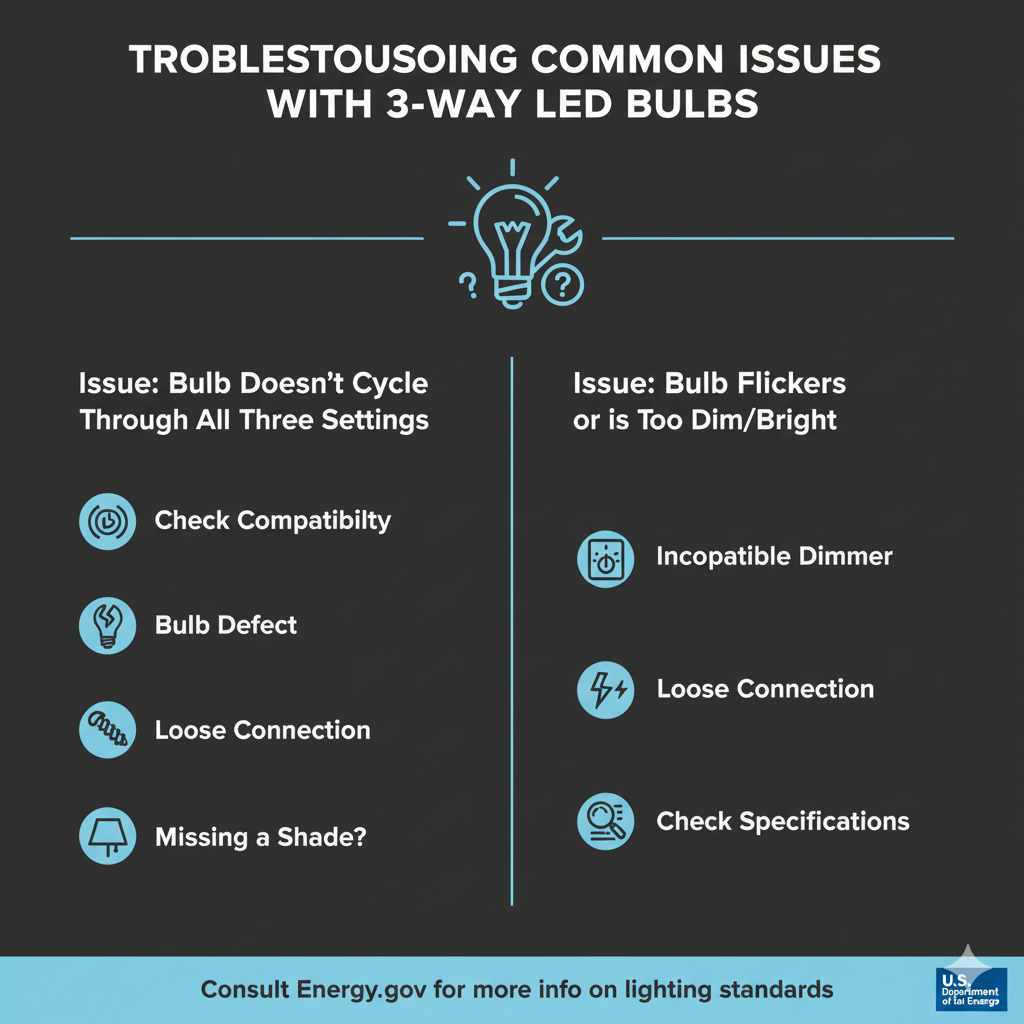
While 3-way LED bulbs are generally very reliable, you might encounter a couple of minor hiccups. Here’s how to address them:
-
Bulb Doesn’t Cycle Through All Three Settings:
- Check Compatibility: Ensure your lamp has a standard 3-way switch and not a touch or rotary dimmer.
- Bulb Defect: If it’s a new bulb, it might be faulty. Try it in a different 3-way lamp or contact the manufacturer/retailer for a replacement.
- Loose Connection: Ensure the bulb is screwed in securely.
-
Bulb Flickers:
- Incompatible Dimmer: Again, this is often an issue if you’re using a standard 3-way LED in a lamp with a dimmer.
- Loose Connection: Check that the bulb is fully seated in the socket.
- Voltage Fluctuations: In rare cases, inconsistent power supply to the outlet can cause flickering. Try a different outlet.
-
Bulb is Too Bright/Dim at a Setting:
- Check Specifications: Ensure the bulb’s wattage equivalent and lumen output match what you expect. Sometimes, an LED might be slightly different in perceived brightness than an incandescent at the same “equivalent” wattage.
- Color Temperature: A cooler color temperature can sometimes appear brighter than a warmer one.
For more in-depth information on lighting standards and safety, the U.S. Department of Energy provides excellent resources on energy-efficient lighting technologies at Energy.gov’s Lighting Section.
Frequently Asked Questions (FAQ)
Q1: Can I use a regular LED bulb in a 3-way lamp?
A: You can screw a regular LED bulb into a 3-way lamp, but it will only function as a single-brightness bulb. You won’t get the low, medium, and high settings. For full 3-way functionality, you need a bulb specifically designed as a 3-way LED.
Q2: How do I know if my lamp has a 3-way switch?
A: Look at the switch mechanism. A standard 3-way switch will usually have distinct positions that click as you turn or pull it, often labeled Off, 1, 2, 3 or Off, Low, Medium, High. If your lamp has a dimmer dial or a touch-sensitive base, it’s likely not a standard 3-way switch.
Q3: What is the actual wattage of a 3-way LED bulb?
A: The actual wattage will be much lower than the equivalent incandescent wattage. For example, a 3-way LED bulb rated as 50/100/150W equivalent might actually consume only 4W on low, 8W on medium, and 12W on high. Always check the packaging for the actual wattage consumption.
Q4: Will a 3-way LED bulb work with a dimmer switch?
A: No, a standard 3-way LED bulb is designed for 3-way switches, not dimmer controls. If your lamp has a dimmer, you need to buy an LED bulb specifically labeled as “dimmable” and ensure it’s compatible with your dimmer type.
Q5: Are 3-way LED bulbs more expensive than regular LEDs?
A: Generally, yes, a 3-way LED bulb will cost more upfront than a single-brightness LED bulb of similar brightness. This is due to the more complex internal circuitry required to manage the multiple brightness levels. However, the long-term energy savings and lifespan often make them a more economical choice.
Q6: Can I use a 3-way LED bulb in a regular (non-3-way) socket?
A: Yes, you can screw a 3-way LED bulb into a standard, non-3-way socket. However, it will only function at its highest brightness setting. You won’t be able to cycle through the lower settings because the socket doesn’t support that functionality.
Conclusion
So, to answer the big question: yes, they absolutely make 3-way LED light bulbs, and they are a fantastic upgrade for your home! They bring the convenience of multiple brightness levels to your favorite lamps, just like your old incandescent bulbs, but with the incredible benefits of LED technology. You get to enjoy significant energy savings, a dramatically longer bulb lifespan, and a more durable, efficient light source. By understanding what to look for – like wattage equivalency, color temperature, and base type – you can easily find the perfect 3-way LED bulbs to replace your old ones.
Making this simple switch is a straightforward DIY project that pays off in lower electricity bills and less hassle. Say goodbye to frequent bulb changes and hello to smart, versatile, and eco-friendly lighting. Happy lighting!