Dual Bevel vs Single Bevel Miter Saw: Pro Selection Guide
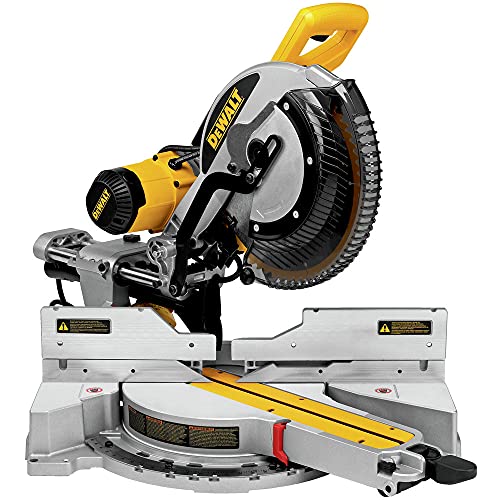
Choosing the right miter saw can feel tricky. Many beginners wonder about the difference between a dual bevel and a single bevel miter saw. The Dual Bevel vs Single Bevel Miter Saw: Pro Selection Guide is popular because it helps clear up this confusion.
Don’t worry, we’ll break it down simply. We’ll show you exactly what makes them different and which one is best for you. Let’s get started by looking at what makes each saw unique.
Understanding Miter Saw Bevel Types
This section will help you learn the basic differences between miter saw types. Understanding the bevel is key to picking the right saw for your projects. We’ll talk about what a bevel cut is and why it matters for your woodworking.
Knowing this will make choosing much easier. We will cover the core function of each bevel type. This will set the stage for looking at specific features and uses.
What is a Bevel Cut?
A bevel cut is an angled cut made through the wood. Instead of cutting straight down, the blade tilts to one side. This is different from a miter cut, which is an angled cut across the face of the wood.
Miter cuts are common for making corners, like picture frames. Bevel cuts are used for joining pieces of wood at an angle, often for things like roof structures or decorative trim where surfaces meet at an angle. Think of making the edge of a shelf sit flush against a wall where the wall isn’t perfectly straight, or creating decorative trim that needs angled surfaces to meet.
The blade on a miter saw can pivot left or right. This pivot is called the bevel. The angle of this pivot determines the angle of the bevel cut.
This feature is super useful for many woodworking tasks. It allows for more complex joinery than a saw that can only make straight cuts or standard miter cuts.
Most miter saws can do both miter cuts and bevel cuts. The difference between single and dual bevel saws comes down to how far the blade can tilt for those bevel cuts. This capability directly impacts the types of projects you can tackle easily and efficiently.
Single Bevel Miter Saw Explained
A single bevel miter saw has a blade that can tilt in only one direction. Usually, this is to the left. This means you can make angled cuts (bevel cuts) to the left of the blade’s center line.
If you need to make a bevel cut to the right, you would have to flip the wood over and make the cut from the other side.
For many common woodworking tasks, a single bevel saw is perfectly fine. Think about making crown molding or simple trim work. These often require bevel cuts on one side only.
You can still achieve a wide range of angles, but you might need to reposition your material more often for certain cuts. This saw is a good choice if you are just starting out or if your projects are not overly complex in their angles.
The advantage of a single bevel saw is often its simpler design and lower cost. They are generally less expensive than their dual bevel counterparts. This makes them attractive for hobbyists or those on a tighter budget who still need the functionality of angled cuts.
Dual Bevel Miter Saw Explained
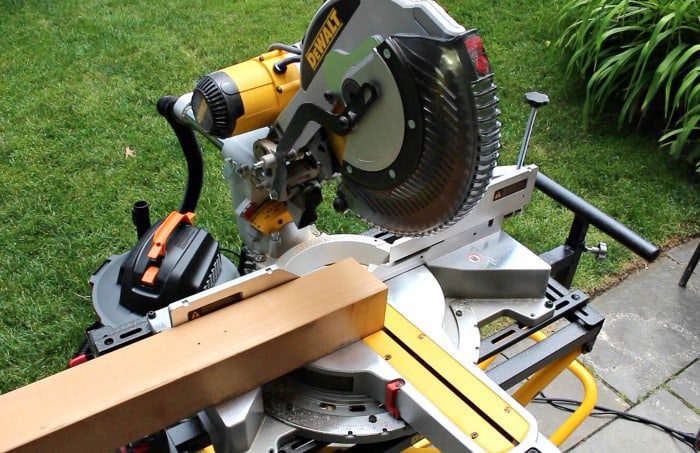
A dual bevel miter saw allows the blade to tilt in both directions, typically left and right. This is a significant advantage because it means you can make bevel cuts in either direction without having to turn your workpiece around. This saves a lot of time and effort, especially when working with long pieces of lumber or when you need to make many compound cuts.
Compound cuts are cuts that combine both a miter angle and a bevel angle. With a dual bevel saw, you can set the miter angle and then tilt the blade to the left or right to achieve the desired compound angle in a single pass. This is incredibly useful for complex projects like intricate trim work, stair treads, or any situation where you need precise angled joints from multiple directions.
The convenience of a dual bevel saw is its main selling point. For professionals or serious DIYers who frequently tackle projects requiring compound cuts or precise angled joints from various directions, the investment is often well worth it. It speeds up workflow and reduces the chances of errors caused by repositioning material.
Key Features of Miter Saws
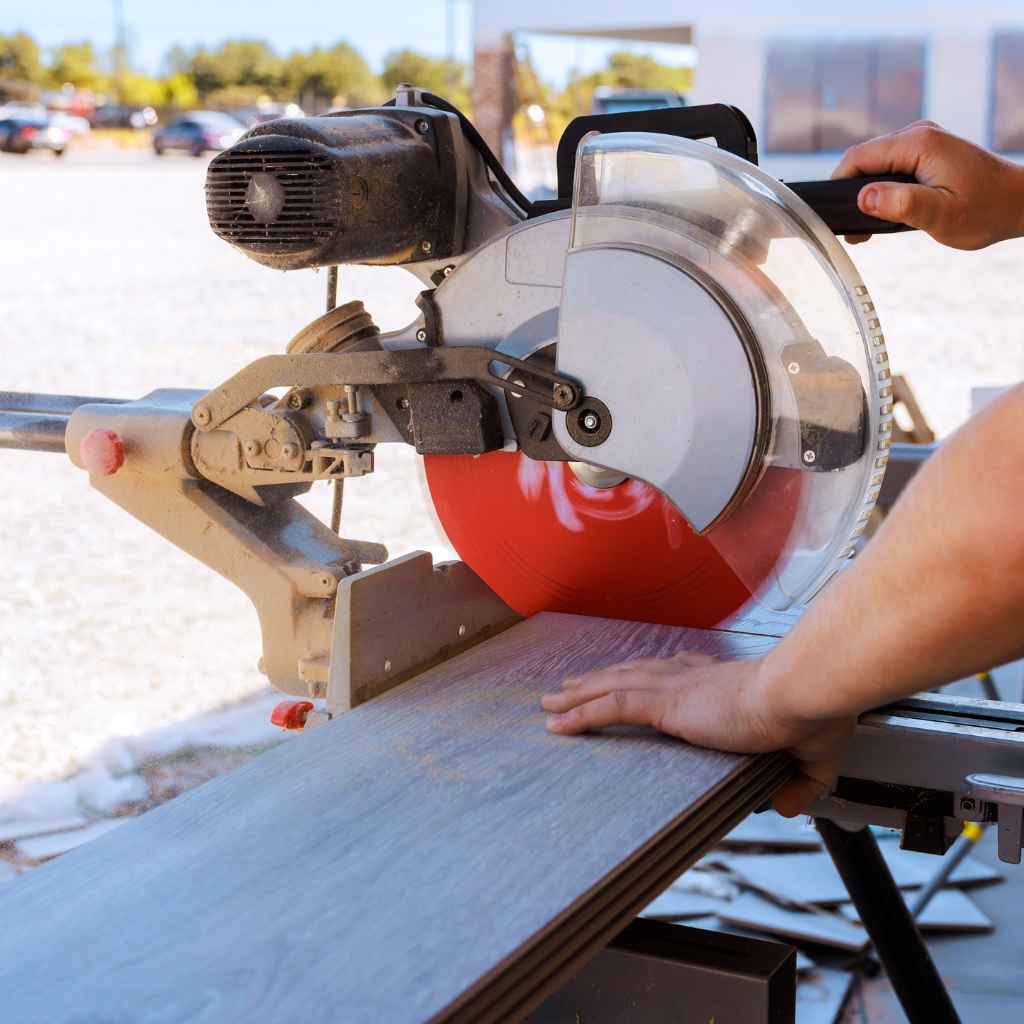
Beyond the bevel type, several other features affect how well a miter saw performs and how easy it is to use. Understanding these will help you make a better choice. We will look at the blade size, power, and the precision offered by different saws.
These elements all contribute to the overall capability and suitability of a miter saw for your specific needs. Getting these details right is important.
Blade Size and Cutting Capacity
Miter saws come with different blade sizes, most commonly 10-inch or 12-inch. The blade size directly impacts the saw’s cutting capacity, meaning the maximum width and depth of material it can cut in a single pass. A larger blade generally allows for wider crosscuts and deeper cuts.
For example, a 10-inch saw might have a maximum crosscut capacity of around 5-1/2 inches at a 90-degree angle. A 12-inch saw, on the other hand, might cut up to 6-1/2 inches or even more at the same angle. When it comes to miter and bevel cuts, the capacity can change depending on the angle.
A larger blade can often handle wider pieces even when angled.
Statistic: Studies show that around 70% of professional woodworkers prefer 12-inch miter saws for their versatility, while 10-inch saws are popular among hobbyists for their portability and lower cost.
Choosing the right blade size depends on the types of projects you plan to do. If you regularly work with wider boards, like 2x6s or larger, a 12-inch saw is a better choice. For smaller trim work or hobby projects, a 10-inch saw might be sufficient and more manageable.
Motor Power and Amperage
The motor is the heart of the miter saw. Its power, usually measured in amps (amperage), determines how efficiently the saw can cut through different types of wood, especially hardwoods or thicker materials. A higher amperage generally means a more powerful motor that can maintain speed under load without bogging down.
For example, a saw with a 15-amp motor will typically cut through tough materials more smoothly than one with a 10-amp motor. This sustained power is crucial when making repeated cuts or when cutting dense woods like oak or maple. A less powerful motor might struggle, leading to rougher cuts and potential kickback, which can be dangerous.
When you’re looking at specifications, pay attention to the amperage. A good rule of thumb is that for general woodworking, 13 to 15 amps is a sweet spot. If you plan on heavy-duty work or frequent use with hardwoods, aim for the higher end of this range or even more if available.
The motor’s performance directly affects the quality of your cuts and the lifespan of the tool.
Accuracy and Repeatability
Accuracy is paramount for any woodworking project. You want a miter saw that allows you to make precise cuts consistently. This involves features like clear angle markings, solid fence adjustments, and a stable base.
Repeatability means that once you set an angle, the saw will cut at that exact angle every time you bring the blade down, even if you lift and re-engage the trigger.
Many saws have detents or positive stops at common angles like 0, 45, and 31.6 degrees. These make it quick and easy to set precise angles without needing to look at a scale. A good fence, which is the vertical support behind the material, is also important.
It should be tall and sturdy to support the workpiece securely and ensure cuts are square to the blade’s path.
Some higher-end saws feature laser guides or LED lights that project a line onto the workpiece, showing exactly where the blade will cut. This helps in aligning your cuts perfectly. For critical projects, ensure the saw you choose has features that promote accuracy and that you understand how to adjust and calibrate it for the best results.
Dust Collection
Cutting wood produces a lot of sawdust. Effective dust collection is important for a clean workspace and for your health. Most miter saws come with a dust port that can be connected to a shop vacuum or a dedicated dust collection system.
The efficiency of this port can vary greatly from one saw to another.
Some saws have better-designed dust shrouds around the blade, which help capture more of the dust as it’s produced. Others rely more heavily on the vacuum attachment. While no miter saw captures 100% of the dust, a good system can significantly reduce the amount of cleanup needed and the amount of fine dust particles that become airborne.
When comparing saws, check the design of the dust port and shroud. Reading reviews can also give you an idea of how well a particular model handles dust. For a cleaner workshop and better air quality, prioritize saws with effective dust collection capabilities, especially if you work indoors or in confined spaces.
Dual Bevel vs Single Bevel Miter Saw: Pro Selection Guide
Now that we have a good grasp of the basics, let’s directly compare the two types. This is where the Dual Bevel vs Single Bevel Miter Saw: Pro Selection Guide really helps users decide. We will lay out the pros and cons of each, focusing on who they are best suited for.
Think about your typical projects and how often you’ll need advanced angled cuts. This comparison will highlight the key differences that matter most to professionals and serious DIYers.
When to Choose a Single Bevel Miter Saw
A single bevel miter saw is an excellent choice for many users, especially those who are new to woodworking or have more basic project needs. If your typical projects involve tasks like cutting trim for a room, building simple shelves, or framing basic projects where most angled cuts can be made with the blade tilting in one direction, a single bevel saw will serve you well.
The primary advantage is cost. Single bevel saws are generally more affordable than dual bevel models. This can make them a more accessible entry point into owning a miter saw.
If budget is a significant factor and your cutting requirements are not overly complex, a single bevel saw is a practical and effective tool. You can still achieve a wide variety of angled cuts; it just requires a bit more thought and potentially repositioning of the material for certain angles.
Consider a single bevel saw if you:
- Are on a budget and need an affordable yet capable saw.
- Primarily work on DIY projects, home repairs, or basic carpentry.
- Don’t frequently need to make compound cuts (combining miter and bevel angles from different directions).
- Have ample space to easily flip and reposition material for cuts that require tilting the blade in the opposite direction.
For many, the simplicity and cost savings of a single bevel saw outweigh the convenience of a dual bevel. It’s about matching the tool to the task and your financial plan. A single bevel saw can deliver professional-looking results when used correctly for the right applications.
When to Choose a Dual Bevel Miter Saw
A dual bevel miter saw is the preferred choice for professionals and serious woodworkers who demand efficiency, speed, and versatility. If your work involves frequent complex joinery, custom trim, cabinet making, or any project requiring numerous compound cuts, the dual bevel feature significantly streamlines your workflow.
The ability to tilt the blade in both directions means you can make all the necessary angled cuts on a piece of material without flipping it. This saves considerable time and reduces the chance of errors. For instance, when installing crown molding, you often need to cut both left and right bevels to fit the corners perfectly.
A dual bevel saw handles this with ease.
Consider a dual bevel saw if you:
- Are a professional carpenter, cabinet maker, or contractor.
- Frequently work on projects that require compound miter cuts.
- Value speed and efficiency in your woodworking process.
- Work with intricate trim, moldings, or complex geometric shapes.
- Want to minimize material handling and potential errors.
While more expensive, the time savings and increased accuracy offered by a dual bevel saw can quickly justify the cost for those who rely on it for their livelihood or for demanding personal projects. It’s an investment in productivity and precision.
Comparison Table
Here’s a quick look at how the two types stack up:
| Feature | Single Bevel Miter Saw | Dual Bevel Miter Saw |
|---|---|---|
| Bevel Tilt Direction | One direction (usually left) | Both directions (left and right) |
| Compound Cuts | Requires flipping material | Easily done in one setup |
| Time Efficiency | Good for simpler cuts | Excellent for complex cuts |
| Cost | Generally more affordable | Generally more expensive |
| Complexity | Simpler operation | More versatile, slightly more complex setup for some cuts |
| Ideal User | Hobbyists, DIYers, basic carpentry | Professionals, serious woodworkers, custom builders |
Understanding Compound Cuts
Compound cuts are a critical concept when choosing between single and dual bevel saws. A compound cut is when you make both a miter cut and a bevel cut at the same time. This means the blade is angled both horizontally (the miter angle) and vertically (the bevel angle) relative to the workpiece.
For example, when installing crown molding, the molding sits at an angle against the wall and ceiling. To get a perfect fit in the corner, you need to cut it with both a miter angle to join it to the next piece and a bevel angle to match the profile against the wall and ceiling. This is a classic compound cut.
With a single bevel saw, to make a compound cut that requires the bevel to tilt to the right, you would have to flip the piece of molding over and cut it from the other side. This can be tricky to get perfect. A dual bevel saw lets you set the miter angle and then simply tilt the blade to the left or right to achieve the exact compound angle needed, all while the material stays in the same position.
The ability to perform compound cuts quickly and accurately is a major reason why professionals opt for dual bevel saws. It dramatically speeds up work on projects involving decorative trim, architectural elements, and other applications where precise angled joinery is essential.
Portability and Size
When considering a miter saw, its size and weight are important factors, especially if you need to move it around your workshop or take it to job sites. Generally, saws with larger blades, like 12-inch models, tend to be larger and heavier than 10-inch saws. This is due to the bigger motor and more robust construction often needed to support the larger blade and handle more demanding tasks.
Dual bevel saws can also sometimes be slightly bulkier than their single bevel counterparts because of the added mechanism for tilting the blade in two directions. However, many manufacturers offer compact or portable models in both single and dual bevel configurations. These often feature lighter materials and designs optimized for easy transport.
If portability is a high priority, look for saws that advertise compact designs, carry handles, or integrated stands that fold up easily. Some models even have carrying cases available. Think about where you will be using the saw most often.
If it will be stationary in a workshop, size might be less of a concern. If you need to transport it frequently, a lighter, more compact model is essential.
Ergonomics and Ease of Use
Ergonomics refers to how comfortable and easy the saw is to operate. This includes the placement of controls, the grip on the handle, and the smoothness of adjustments. For a tool you might use for extended periods, good ergonomics can make a big difference in reducing fatigue and improving your overall experience.
Look for saws with comfortable, non-slip grips and intuitive controls. The levers and knobs for adjusting miter and bevel angles should be easy to reach and operate. Some saws have quick-release levers for major adjustments, while others might require more fine-tuning with a knob.
The quality of the fence system also contributes to ergonomics; a fence that is easy to adjust and provides good support makes the saw much easier and safer to use.
The way the blade guard operates is another ergonomic consideration. It should retract smoothly when you lower the blade and cover it securely when raised. Ease of blade changes is also important.
A spindle lock that makes it simple to remove and install blades without special tools is a valuable feature. Ultimately, a well-designed saw feels natural to use, allowing you to focus on making accurate cuts.
Advanced Features and Considerations
Beyond the basic bevel types and core features, many miter saws offer advanced capabilities. These can significantly enhance precision, safety, and efficiency. Understanding these additions can help you make an informed decision, especially if you’re looking for a tool that offers more than just the essential cutting functions.
We’ll explore some of these premium features and what they mean for your woodworking.
Sliding vs. Non-Sliding Miter Saws
One of the biggest distinctions in miter saws, separate from the bevel type, is whether they are sliding or non-sliding. A non-sliding miter saw has a fixed arm that pivots. When you make a cut, the blade moves down through the material.
The width of the cut is limited by the diameter of the blade and the saw’s design.
A sliding miter saw, on the other hand, has arms that allow the blade assembly to slide forward and backward over the workpiece. This greatly increases the saw’s cutting capacity, allowing it to make much wider crosscuts. For example, a 10-inch sliding saw might be able to cut boards that a 12-inch non-sliding saw cannot.
Here’s a breakdown:
- Non-Sliding: Compact, generally less expensive, good for smaller to medium-sized lumber. Limited crosscut width.
- Sliding: Larger cutting capacity, ideal for wider boards (like 2x10s or 2x12s), more versatile for larger projects. Can be more expensive and take up more space.
The choice between sliding and non-sliding often comes down to the size of the lumber you plan to cut. If you frequently work with wide boards, a sliding miter saw is essential. If your projects are mostly with narrower stock, a non-sliding model might suffice.
Laser Guides and LED Lights
Precision is key in woodworking, and modern miter saws often come with integrated systems to help you line up your cuts accurately. Two common features are laser guides and LED lights.
A laser guide projects a thin red line onto your workpiece, indicating exactly where the blade will cut. You align the laser line with your desired cut mark before lowering the blade. This is a very intuitive way to ensure precise placement, especially for repetitive cuts or when working with intricate patterns.
LED lights can also enhance visibility. Some saws have lights that illuminate the cutting area, reducing shadows and making it easier to see your cut line, even in dimly lit conditions. Others might use a light to cast a shadow where the blade will cut, offering a similar effect to a laser but without a powered light source.
While these features don’t affect the saw’s cutting power or bevel capability, they can significantly improve the accuracy and confidence with which you make your cuts. For many, especially those who prioritize accuracy or work in varying light conditions, these features are well worth considering.
Integrated Work Supports and Clamps
Safety and stability are paramount when operating any power tool. Many miter saws include features designed to improve both. Integrated work supports, often in the form of extendable arms or wings, help stabilize long workpieces, preventing them from tipping or sagging during a cut.
This is especially useful when cutting long boards on your own.
Additionally, some saws come with built-in or optional clamping systems. These clamps allow you to secure the workpiece to the saw’s table, preventing it from moving during the cut. This not only increases safety by reducing the risk of kickback but also improves the precision of your cuts.
A firmly held workpiece will be cut more cleanly and accurately.
These features might seem like minor additions, but they contribute to a safer and more efficient woodworking experience. If you often work alone or with large pieces of lumber, features that enhance stability and workpiece holding are highly valuable.
Dust Collection Efficiency
We touched on dust collection earlier, but its efficiency can vary greatly, and it’s worth considering as an advanced feature. Some saws are designed with more effective dust shrouds that wrap around the blade more comprehensively, capturing a higher percentage of sawdust. The size and angle of the dust port also play a role in how well it connects to your shop vacuum or dust collector.
A well-designed dust collection system can make a significant difference in maintaining a clean workspace. This reduces the need for constant sweeping and can improve air quality, which is important for your health, especially if you work in an enclosed space. Some high-end saws might even feature multi-point dust capture for maximum efficiency.
When researching miter saws, look for reviews or specifications that comment on dust collection performance. If you work in an area where dust is a major concern, prioritizing a saw with superior dust management capabilities can be a smart investment. It leads to a more pleasant and healthier working environment.
Choosing the Right Miter Saw for Your Needs
Deciding between a dual bevel and a single bevel miter saw, or even whether you need a sliding model, ultimately comes down to your specific woodworking habits. Think about the projects you do most often and the types of cuts you’ll be making. This section will help you synthesize all the information and make a confident choice.
We’ll recap the key decision points to ensure you’re well-equipped to select the best saw for your workshop.
Scenario 1 The Hobbyist Woodworker
Imagine someone who enjoys building birdhouses, making small decorative items, or performing occasional home repairs. Their projects typically involve cutting smaller pieces of wood, like pine or poplar, and they rarely need to make complex angles beyond simple 45-degree miter cuts for frames or square cuts.
For this hobbyist, a single bevel miter saw is likely the perfect fit. It offers all the necessary functionality for basic angled cuts at a much more accessible price point. A 10-inch model would be more than adequate for the size of wood they typically use.
The simplicity of a single bevel saw means less to learn and maintain, allowing them to focus on the creative aspects of their projects. They might also opt for a non-sliding model to save space and cost, as wide crosscuts are not a regular requirement.
Key considerations for this user:
- Budget-friendly options are preferred.
- Projects involve smaller lumber and simpler angles.
- Space might be limited.
- Ease of use and basic functionality are prioritized over advanced features.
In this scenario, a good quality 10-inch single bevel miter saw would be a wise and economical purchase, providing years of reliable service for their crafting needs.
Scenario 2 The Trim Carpenter
Consider a professional trim carpenter who installs crown molding, baseboards, window casings, and door frames. These jobs demand precision and speed, often involving complex compound cuts to fit intricate profiles and corners perfectly. They frequently work with materials like oak, maple, or MDF, and need to make accurate cuts on long pieces of molding.
For this professional, a dual bevel sliding miter saw is almost essential. The dual bevel capability allows for quick left and right tilts needed for crown molding and other complex trim. The sliding feature is critical for cutting wider boards and trim pieces efficiently.
A 12-inch model would offer the best capacity for handling various materials and sizes.
Key considerations for this user:
- High precision and accuracy are paramount.
- Speed and efficiency are critical for job site productivity.
- Frequent need for compound miter cuts.
- Working with a variety of wood types and sizes.
Investing in a high-quality 12-inch dual bevel sliding miter saw with good laser guides or LED lighting would significantly enhance this carpenter’s productivity and the quality of their finished work. The added cost is offset by the time saved and the professional results achieved.
Scenario 3 The Cabinet Maker
Think about a cabinet maker who builds custom furniture, cabinetry, and detailed wood projects. Accuracy is paramount, as even small errors can affect the fit and finish of high-value items. They work with a variety of hardwoods and sheet goods, requiring precise cuts for joinery, panels, and frames.
A dual bevel miter saw is highly beneficial for a cabinet maker. While they might not always need the sliding feature for every cut, the ability to make precise compound angles is invaluable for creating strong and attractive joinery. A 10-inch or 12-inch dual bevel saw would be suitable, depending on the typical size of the panels they work with.
Features like excellent repeatability, clear angle indicators, and good dust collection are also very important in a cabinet shop environment.
Key considerations for this user:
- Extreme accuracy and repeatability are essential.
- Need for precise compound and miter cuts.
- Working with hardwoods and fine finishes.
- Maintaining a clean and healthy workshop environment.
For a cabinet maker, a well-calibrated dual bevel miter saw, potentially with a sliding feature if they also handle larger panels, is a cornerstone tool that contributes directly to the quality and efficiency of their craft.
Frequently Asked Questions
Question: What is the biggest difference between a single bevel and a dual bevel miter saw?
Answer: The biggest difference is that a single bevel saw’s blade can only tilt in one direction for angled cuts, while a dual bevel saw’s blade can tilt in both directions, left and right.
Question: Do I really need a dual bevel miter saw for home projects?
Answer: For most home projects, a single bevel miter saw is sufficient. You only really need a dual bevel saw if you frequently work on projects that require complex angled cuts from both sides without repositioning the wood.
Question: Can a single bevel miter saw make compound cuts?
Answer: Yes, a single bevel saw can make compound cuts, but you will have to flip the material over and set up the cut from the opposite side. This takes more time and effort than with a dual bevel saw.
Question: Which type of miter saw is better for crown molding?
Answer: A dual bevel miter saw is significantly better for crown molding because it allows you to easily make the necessary left and right bevel cuts required to fit corners perfectly without having to turn the molding around.
Question: How does blade size affect a miter saw’s cutting capacity?
Answer: Larger blades, like 12-inch, generally allow the saw to cut wider boards at 90 degrees and often at common miter and bevel angles compared to smaller 10-inch blades.
Final Thoughts
Choosing between a dual bevel and single bevel miter saw depends on your projects. For simple tasks, a single bevel is great. For complex angles and speed, a dual bevel is better.
Consider your budget and typical cuts. Both saws can help you make accurate projects when used correctly.