How to Cut a Log Lengthwise With a Chainsaw: Ultimate Guide
Set the log on stable supports, mark a centerline, and use a bar long enough to span the log’s diameter for one pass; if it is shorter, a common approach is to cut from both sides with a guide. Poor setup causes pinch, wandering cuts, uneven slabs, and chain damage. This guide covers layout, support, bar-length planning, safe cutting steps, and fixes for common problems.
What changes when you cut lengthwise?
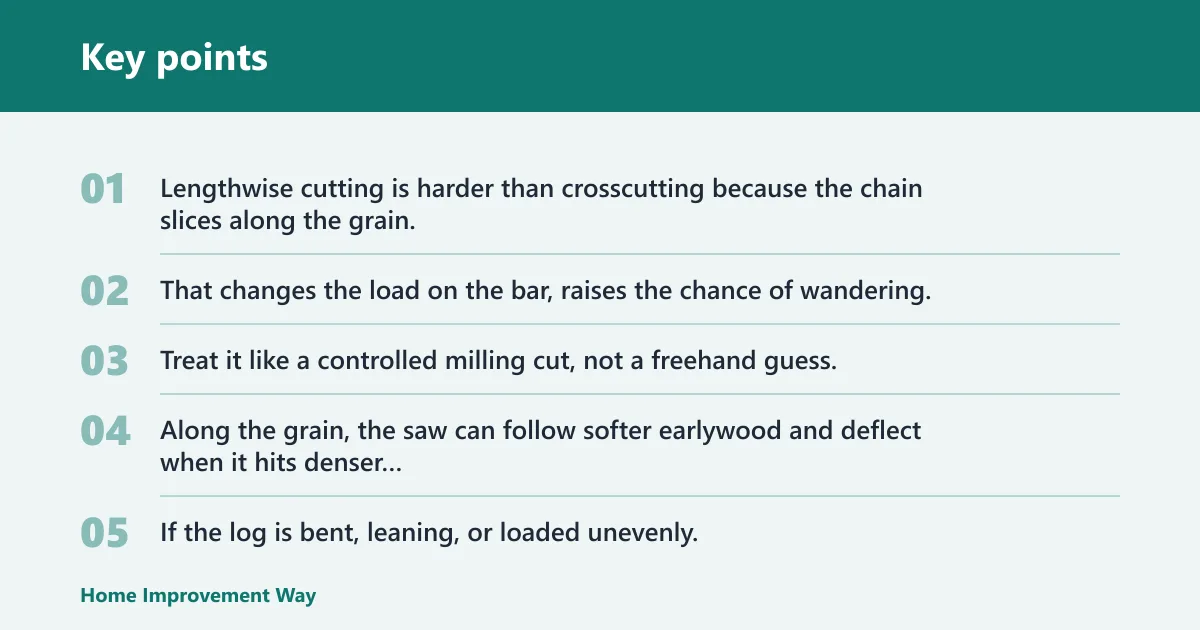


Lengthwise cutting is harder than crosscutting because the chain slices along the grain, not across it. That changes the load on the bar, raises the chance of wandering, and makes pinch more likely as the kerf closes. Treat it like a controlled milling cut, not a freehand guess.
Why the cut behaves differently
Along the grain, the saw can follow softer earlywood and deflect when it hits denser bands or twist in the log. Wood tension matters too. If the log is bent, leaning, or loaded unevenly, the cut can close on the bar and trap the chain.
That is why lengthwise cuts need a stable setup, a marked line, and a plan for how the kerf will stay open. A ripping guide, mill, rail, or straightedge makes the saw act more like a guided tool and less like a freehand one.
When a freehand cut is a bad idea
Freehand ripping is a poor choice when the log is large, twisted, freshly cut, or likely to roll. It is also a bad idea if you cannot keep the saw aligned from start to finish. In those cases, use a guide or make a smaller first pass and finish from the other side.
Say your log is uneven and still wet, with the center lower than the ends. A freehand pass can wander into the low side and pinch near the middle. A guided cut with better support keeps the slab thickness more even and lowers the chance of binding.
Chainsaw bar length guide
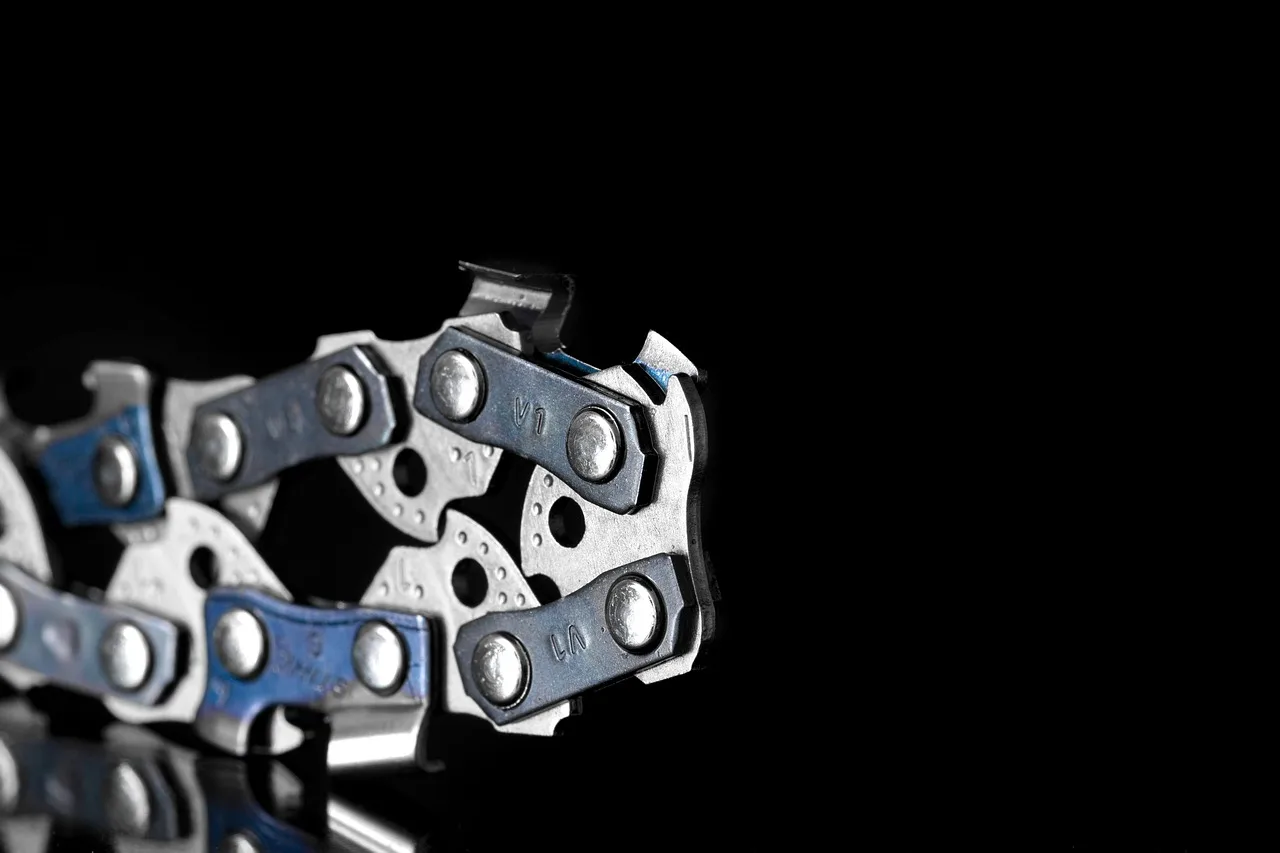
For a lengthwise cut, the bar must be long enough to reach across the working width of the log, or you need a two-sided approach with a guide. Manufacturer bar specifications distinguish cutting length from overall bar length, and that difference matters when you plan the cut. Use the cutting length listed by the maker, not the full physical bar length.
Cutting length versus overall bar length
A bar’s cutting length is different from its total overall length. The cutting length is the usable cutting reach and is rounded to the nearest inch. The overall bar length includes the full bar body, including the portion that does not cut.
That distinction matters when you measure a replacement bar or compare models. Do not size a job from the whole metal length alone. Use the cutting length that the manufacturer lists for that bar.
How to read a bar size stamp
Many bars have their size stamped on the motor end. OREGON bar identification uses a ten-digit number stamped on that end, and the first two digits tell the cutting length. Check the bar body itself; the stamp is often easier to trust than memory or a listing title.
If the stamp is worn or unreadable, check the manufacturer’s listing for your model or the saw’s manual. Bar length and chain match matter together. A bar that is too short or too long for the saw can make the cut harder to control.
What bar length works for larger logs
As log diameter grows, the cut gets harder to start, harder to keep straight, and more likely to pinch. The bar should match the work you plan to do, not just the saw’s maximum claim. For larger logs, a longer cutting length or a guided two-pass approach is usually safer than forcing a short bar through a deep rip.
| Log diameter range | Wood type | Fresh-cut or seasoned | Bar cutting length | Safest approach | Add wedges? | Make a relief cut? | Rotate the log? | When not to attempt the cut |
|---|---|---|---|---|---|---|---|---|
| Under 10 in. | Softwood | Seasoned | At least the working width, or enough to stay fully controlled with a guide | Careful guided cut on stable supports | Usually not needed | No, unless the grain starts closing the kerf | Only if the log rocks or the centerline is hard to hold | If the log rolls, the saw cannot stay aligned, or the chain is dull |
| 10 to 16 in. | Softwood | Fresh-cut | Enough to span the cut line with control, or plan a two-sided cut | Guided cut with a straightedge or rail | Yes, if the kerf starts to tighten | Often helpful for the first pass | Yes, if the first side reveals drift or uneven thickness | If the bar is too short to control the pass or the wood is under tension |
| 16 to 24 in. | Hardwood | Seasoned | Long enough to reach the full working width, or use a two-sided approach | Ripping guide, rail, or sawmill jig | Yes, when the kerf begins to close behind the bar | Yes, before the main pass if the grain is tight or twisted | Sometimes, especially if the grain pulls the saw off line | If the cut line is not straight, the bar chatters, or the saw wanders early |
| Over 24 in. | Hardwood | Fresh-cut | Prefer a cutting length that spans the job, or use a two-sided guided cut | Sawmill jig or another fully guided setup | Yes, but only as a support aid, not a fix for a bad setup | Usually yes, to reduce tension before the main pass | Often, if the first cut exposes a safer orientation | Do not attempt a loose freehand rip, especially if slab thickness matters |
Chainsaw and PPE basics
Electric chainsaws fit basic yardwork and light cutting. They are usually lighter, easier to carry, and simple to start. You do not mix fuel and oil for the engine. Gas chainsaws can handle larger trees and branches, but they are louder and produce fumes.
Gas versus electric for this job
For lengthwise cuts, more power helps once the bar gets buried and the chain starts to heat up. Gas saws are usually the better choice for larger stock. Corded electric saws are lighter, but they need an extension cord, and cord length can limit mobility, routing options, and safe positioning around the log.
Cordless saws are easier to move around the log, but they only run for a limited amount of time and may lack power on bigger logs. A cordless saw can handle some large stock if the log is modest, the chain is sharp, and the cut is guided. For heavy ripping, that limit shows quickly.
Protective gear to wear before you start
Wear protective gear such as gloves, safety glasses, hearing protectors, chaps, cut-resistant high-traction chainsaw footwear, and a helmet with a face shield for flying chips. Good footwear matters here. You need traction, cut resistance, and stable footing around a rolling log. OSHA PPE rules and chainsaw-felling guidance, along with NIOSH chainsaw safety recommendations, support this basic protective setup.
Keep the chain brake engaged while moving, repositioning, or clearing supports around the log. Do not move the saw with the chain free to spin. That one habit cuts risk when you shift a support or adjust the cut line.
Log setup and cut line
A clean lengthwise cut starts with the log held so the kerf can open. If the wood settles on the bar, the chain binds. If the log can roll, the cut can drift. Stable support is part of the cut, not an optional extra.
Support the log so the kerf can open
Place the log on supports that hold it steady and leave room under the cut line for the kerf to open. The support should keep the log from rocking, but it should not clamp the area you plan to cut. If the log is long, add support where sag would close the cut.
Use wedges where appropriate to keep the opening from closing behind the bar. If the grain is tight, the diameter is large, or the log carries internal stress, expect movement as the cut deepens. That is normal. Plan for it before you start.
Mark a straight cut line
Snap or draw a centerline along the top of the log, then confirm the line from both ends. If the goal is a slab, mark the desired thickness before the saw starts. A line that looks straight from one side can drift badly from the other.
Picture a log about 14 inches in diameter with a slight curve. If the line follows the outside curve instead of the true center, the slab will come out uneven. Marking from both ends helps keep the cut centered and makes the saw easier to aim.
Use a ripping guide, rail, or straightedge
Use a ripping guide, mill, rail, or straightedge when the cut needs to stay true for a long distance. These guides keep the saw aligned and reduce the chance of wandering. They are especially helpful when the log is wide, the bark is irregular, or the slab must come out even.
If a guide is not available, stop and judge whether a freehand pass is realistic. A small first pass can create a track for the chain and reveal how the grain behaves. If the saw starts pulling off line early, switch to a guide or change the cutting plan.
Lengthwise cut checklist
- Inspect the log for roll, twist, and visible checks.
- Set the log on stable supports so the kerf can open.
- Mark the cut line from both ends before starting.
- Fit the correct bar and chain for the saw and the log.
- Use a guide, mill, rail, or straightedge if the cut must stay straight.
- Start the cut with the saw aligned on the line.
- Keep the bar nose out of the wood as you enter the cut.
- Use wedges, a first relief cut, or a rotation plan if the wood starts to pinch.
- Pause if the chain wanders, burns, or makes the slab thickness uneven.
- Engage the chain brake before you move or reposition the saw.
How do you avoid pinch and wander?
Use the bar nose carefully, keep the chain brake engaged while moving, and plan for relief cuts or wedges before the kerf closes. Avoid entering the wood with the bar nose or tip; that raises kickback risk. If the saw starts to drift, stop and correct the setup instead of forcing the line.
Use the bar nose carefully
The bar nose and tip are the parts most associated with kickback. For a lengthwise cut, start with the bar aligned to the line and enter the wood in a controlled way. Do not stab the tip into the cut or use it to start the kerf. That habit can send the saw off line fast.
Keep a firm stance and feed the saw steadily. If the cut gets tight, back out, reset the support, and continue with a cleaner approach. Forcing the bar deeper usually makes the cut worse, not better.
Add relief cuts, wedges, or rotation when needed
When the grain, diameter, or stress makes a single pass risky, make a first relief cut or rotate the log. A relief cut can reduce pressure before the main pass. Rotation can move the tension to a safer position and help the slab stay even.
Use wedges to hold the kerf open where the wood begins to close on the bar. Do not wait until the bar is trapped. If the cut starts to bind, stop early and fix the support before the chain overheats.
Guided ripping: one-sided versus two-sided with a short bar
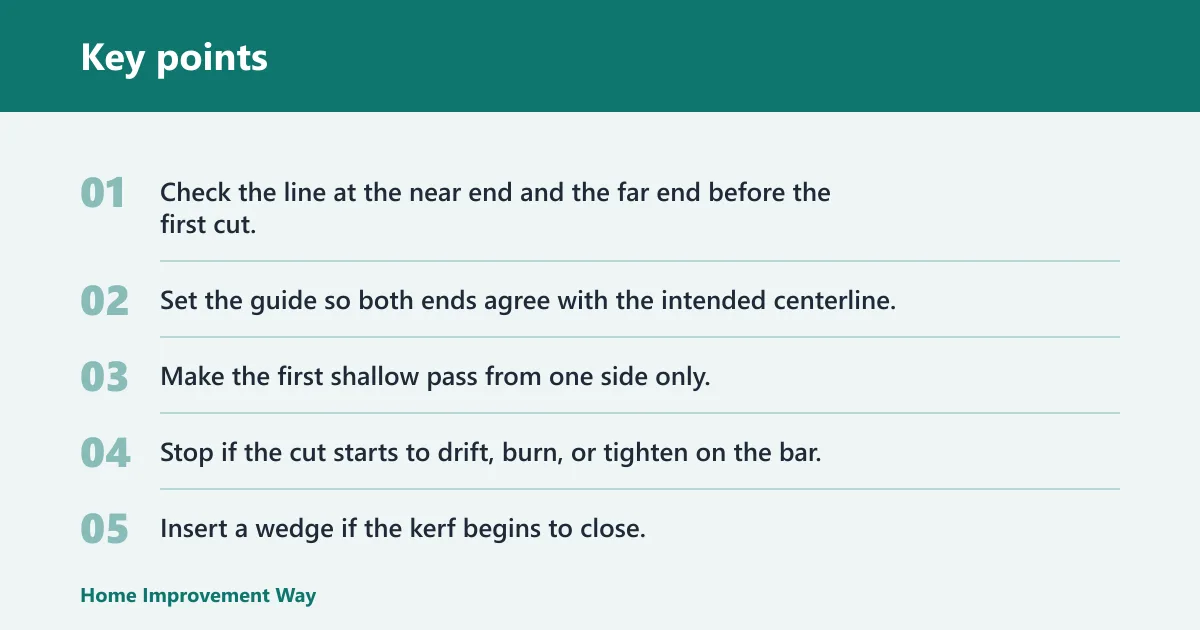
With a short bar, guided ripping usually works better in two controlled stages than in one forced pass. Start with alignment checks at both ends, cut a shallow track from one side, and stop before the bar is buried past its control range. If drift or binding appears, switch sides rather than pushing harder.
Then use the second side to meet the first cut cleanly, keeping the guide or line matched from end to end. This approach reduces pinch, limits bar stress, and makes the slab thickness easier to keep even. It is safer than gambling on a single deep pass.
- Check the line at the near end and the far end before the first cut.
- Set the guide so both ends agree with the intended centerline.
- Make the first shallow pass from one side only.
- Stop if the cut starts to drift, burn, or tighten on the bar.
- Insert a wedge if the kerf begins to close.
- Turn the log or move to the opposite side if the first pass cannot stay true.
- Finish the cut from the second side, meeting the first pass cleanly.
- Stop immediately if the bar binds, the slab thickness changes, or the chain chatters.
A common first-timer mistake is cutting a fresh log with no relief plan. The slab begins straight, then the kerf closes near the middle and the bar stalls. A smaller first pass or a guided setup avoids that failure and gives you a cleaner second pass.
What wood is hardest to cut?
Hardwoods are generally harder to cut than softwoods because they tend to be denser and more resistant to the chain. Fresh-cut hardwood with tension, twist, or wet grain is the most demanding combination. In those logs, a guided setup and a plan for wedges or relief cuts matter more than brute force.
Fresh-cut versus seasoned wood
Fresh-cut wood is harder to split than dried, seasoned wood, and that same moisture can make a lengthwise saw cut feel heavier and less predictable. Wet wood may grab the chain more readily and leave a rougher surface. Dry wood usually cuts more cleanly, though resin, knots, and twist can still create trouble.
When to stop and choose another method
If the log is large, wet, twisted, or made from a dense hardwood, do not assume a freehand rip will stay accurate. Stop if the saw wanders, burns, or makes the slab thickness uneven. That is the point to switch to a guide, make a smaller first pass, or use a sawmill jig.
| Log diameter | Wood type | Moisture level | Safest approach |
|---|---|---|---|
| Small | Softwood | Seasoned | Guided or careful freehand cut if the log is stable |
| Medium | Hardwood | Seasoned | Use a ripping guide or rail; support both sides of the cut |
| Large | Softwood | Fresh-cut | Use a guide and plan a first relief cut if the kerf starts closing |
| Large | Hardwood | Fresh-cut | Use a sawmill jig or two-sided guided cut; do not attempt a loose freehand rip |
Frequently asked questions
How do you cut a log lengthwise with a chainsaw?
Support the log so it cannot roll, mark a centerline, and use a bar that can span the working width or a guide that controls the cut. Start with the saw aligned to the line, avoid the bar nose, and stop if the kerf begins to close or the chain wanders.
What chainsaw bar length do I need for a log
Choose a cutting length that matches the log’s working width with room for control, or plan on cutting from both sides with a guide if the bar is shorter. The needed bar depends on diameter, wood type, and whether you are using a sawmill jig, rail, or freehand setup.
Is it safer to cut a log lengthwise with a gas or electric chainsaw?
Gas saws are usually better for larger stock because they have more power, while electric saws are lighter and easier to manage for smaller yardwork. Corded models need an extension cord, and cordless models have limited runtime. For large logs, a guided setup matters more than the power source alone.
What safety gear do I need when using a chainsaw on logs?
Wear gloves, safety glasses, hearing protectors, chaps, cut-resistant high-traction chainsaw footwear, and a helmet with a face shield. Keep the chain brake engaged while moving, repositioning, or clearing supports. The right gear reduces injury risk from chips, noise, and unexpected log movement.
How do I know my chainsaw bar size?
Look for the stamp on the motor end of the bar. OREGON bar identification uses a ten-digit number there, and the first two digits tell the cutting length. Remember that cutting length is not the same as overall bar length, so check the stamp instead of guessing from the full metal length.
What type of wood is hardest to cut with a chainsaw?
Hardwoods are generally harder to cut because they tend to have a higher density than softwoods. Birch, maple, and oak are common examples. Fresh-cut wood is also harder to split than seasoned wood, so wet hardwood is often the most demanding combination for a lengthwise cut.
Sponsored / affiliate links. As an Amazon Associate I earn from qualifying purchases. I may earn additional commission from eligible campaigns.
 Portable Tile Cutter Hand Tool with 1 Pair Pliers, 47.24 inch Cutting Length Manual Tile Cutters for DIY Enthusiasts, and Construction and Tile Industry Professionals
 16 Inch Chainsaw Chain 3/8" LP Pitch, 050" Gauge, 56 Drive Links, German Steel, fits Husqvarna, Greenworks, Craftsman, Poulan, Homelite, Makita, Jonsered, Echo and more