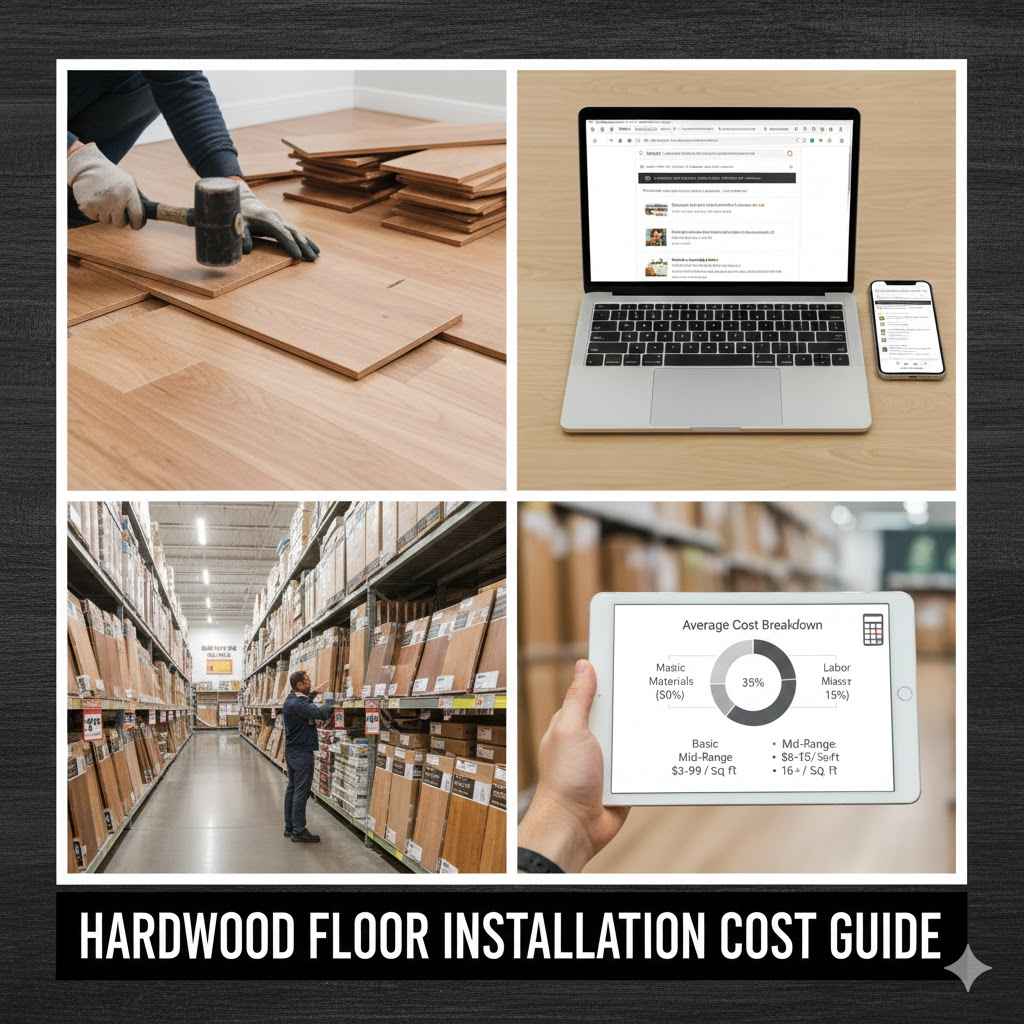
Hardwood Floor Installation Cost Guide
Figuring out the cost of putting in hardwood floors can feel like a puzzle for many folks starting out. There are lots of numbers and choices that seem tricky to sort through. But don’t worry, it’s simpler than it looks!
We’ll break down the Hardwood Floor Installation Cost Guide step by step, so you know exactly what to expect. Get ready for a clear path to a beautiful new floor.
Understanding Hardwood Floor Installation Costs
When you’re thinking about new floors, the price tag for hardwood installation is a big question. Many people find this part confusing because there are so many things that affect the total cost. It’s not just about the wood itself.
Things like the type of wood, how big the room is, and who does the work all play a part. This section will help clear up why these costs change and what you should look for.
Factors Influencing Hardwood Flooring Costs
Several key elements shape the final price of your hardwood floor project. Understanding these will help you plan your budget effectively. It’s like picking ingredients for a recipe; the better you know them, the tastier the result.
- The type of hardwood you choose makes a big difference. Different wood species have unique price points based on their rarity, durability, and how they look. For example, oak is common and often less expensive than exotic woods like teak or walnut. Softwoods like pine are usually the cheapest but can scratch more easily.
- The size of the area you’re flooring is a direct factor. More square footage means more materials and more labor time, which naturally increases the overall cost. A small bedroom will cost far less than a large living room or an entire house.
- The complexity of the installation site adds to the price. Rooms with many angles, doorways, or built-in features like fireplaces require more precise work and time from the installers. Unusual room shapes can also drive up labor costs.
- Whether you choose prefinished or unfinished flooring impacts cost. Prefinished planks come ready to install and have a factory finish, which is often more convenient but can be pricier upfront. Unfinished flooring needs to be sanded and finished on-site, offering more customization but requiring additional labor and materials.
Material Costs for Hardwood
The wood itself is a major part of the expense. The price per square foot can vary wildly. You might see prices from $2 per square foot for basic pine to over $12 per square foot for premium exotic hardwoods.
Common choices like red oak or maple often fall in the $4 to $7 per square foot range. These prices are for the raw material before any installation labor is added.
The width of the planks also plays a role. Wider planks are often more expensive per square foot than narrower ones. This is partly because they require more selection during manufacturing to ensure consistency in grain and color across the wider surface.
Consider engineered hardwood as well. It’s made with a real wood veneer on top of layers of plywood or high-density fiberboard. It can be more stable in changing humidity than solid hardwood and sometimes costs a bit less, though high-end engineered wood can be as expensive as solid options.
Labor Costs for Installation
Labor costs are a significant portion of the total budget. Professional installers typically charge by the square foot or by the hour. The average cost for installation labor often ranges from $3 to $10 per square foot, depending on your location and the installer’s experience.
More complex jobs will naturally command higher labor fees.
Some installers might charge a flat rate for the entire job, especially for standard room sizes. Others prefer an hourly rate, which can be less predictable if unforeseen issues arise. It’s always a good idea to get multiple quotes from different installers to compare prices and services.
Don’t forget to factor in the cost of related materials the installers will need. This includes things like underlayment, nails or staples, adhesive, and transition strips for doorways. Some installers include these in their quote, while others may list them separately.
Estimating Your Hardwood Floor Installation Project
To get a clear picture of your budget, you need to estimate the total cost. This involves adding up the material costs and labor costs, plus any extras. Thinking through each step helps prevent surprises.
It’s about being prepared and making informed decisions throughout the process.
Calculating Square Footage
The first step in any estimate is measuring your space accurately. You need to know the square footage of every room or area where you plan to install the hardwood. Measure the length and width of each rectangular area and multiply them together to get the square footage for that space.
For rooms with irregular shapes, break them down into smaller, manageable rectangles and squares, calculate their areas, and then add them all up.
Always buy about 10% to 15% more flooring than your exact measurements. This extra amount, called waste or overage, accounts for cuts needed to fit around walls, doorways, and other obstacles, as well as for any damaged pieces you might find in the boxes. For rooms with diagonal installation or intricate patterns, you might need even more overage, sometimes up to 20%.
Understanding Different Installation Methods
How your hardwood is installed affects both the time it takes and the final cost. Different methods are suited for different types of flooring and subfloors.
- Nail-down installation is a classic method for solid hardwood floors. The planks are secured to the subfloor using staples or nails. This is a durable method but requires a wooden subfloor (like plywood or OSB). It’s generally more labor-intensive and thus can be more expensive for labor costs.
- Glue-down installation uses a special adhesive to bond the hardwood planks to the subfloor. This method can be used on concrete subfloors as well as wood. It often requires specific types of adhesive and careful application to ensure a strong bond. This can sometimes be a bit faster than nail-down, but the cost of the adhesive can add up.
- Floating installation is common for engineered hardwood and laminate flooring. The planks are joined together, but not attached to the subfloor. They sit on top of an underlayment. This is often the easiest and quickest method for DIYers and can reduce labor costs.
The subfloor itself also matters. If your subfloor is uneven, damaged, or needs significant preparation, this will add to the cost. Installers might need to level it, repair it, or even replace parts of it before they can begin laying the new floor.
This extra work can add $1 to $3 per square foot to the total cost.
Additional Costs to Consider
Beyond the wood and labor, other expenses can pop up. These might include the cost of removing and disposing of old flooring, purchasing new baseboards or quarter-round molding if needed, and the installation of transition strips in doorways between rooms or at different floor heights. Moving furniture out of the way for the installers can also sometimes incur an extra fee if you can’t do it yourself.
The type of finish applied can also be an additional cost if you choose unfinished hardwood. This includes stains, sealers, and topcoats. While many prefinished floors come with a high-quality factory finish, on-site finishing allows for more custom colors and sheen levels but adds to the expense and time.
Comparing Hardwood Flooring Options and Costs
Not all hardwood floors are created equal, and their costs reflect this. Exploring different wood types and grades will help you find a balance between beauty, durability, and your budget. Each option brings its own set of characteristics and price tags, making it important to compare them side-by-side.
Solid Hardwood vs. Engineered Hardwood
Solid hardwood flooring is exactly what it sounds like: planks milled from a single piece of solid wood. This is the traditional choice, offering a timeless look and the ability to be sanded and refinished multiple times throughout its life. However, solid hardwood is more sensitive to changes in humidity and temperature, making it less ideal for basements or rooms with high moisture levels.
Engineered hardwood, on the other hand, is constructed with a top layer of real hardwood veneer over multiple layers of plywood or fiberboard. This construction makes it more stable and resistant to moisture fluctuations. It can often be installed in more challenging areas like basements or over concrete slabs.
While it can be refinished, it typically has fewer refinishing cycles than solid hardwood due to the thinness of the top veneer layer.
| Feature | Solid Hardwood | Engineered Hardwood |
|---|---|---|
| Construction | Single piece of wood | Wood veneer over layered core |
| Moisture Resistance | Lower | Higher |
| Installation | Nail-down or glue-down (wood subfloor) | Nail-down, glue-down, or floating (various subfloors) |
| Refinishing | Multiple times | Limited times |
| Cost per Sq Ft (Material) | $4 – $12+ | $3 – $10+ |
The price difference between solid and engineered hardwood can vary. Sometimes, engineered hardwood is less expensive, especially for certain species or constructions. However, high-end engineered options can easily match or exceed the cost of solid hardwood.
The decision often comes down to where you plan to install the flooring and your budget.
Popular Wood Species and Their Costs
The type of wood you select significantly impacts the price. Different species offer unique aesthetics, hardness, and price points. Here’s a look at some common choices:
- Red Oak: This is one of the most popular and widely available hardwoods in North America. It has a strong grain pattern and a warm, reddish-brown hue. Red oak is moderately hard and durable, making it a good choice for high-traffic areas. Its widespread availability helps keep its cost relatively affordable, typically ranging from $4 to $7 per square foot for material.
- Maple: Maple wood is known for its smooth, fine grain and light, creamy color. It’s a very hard wood, making it highly resistant to dents and scratches, ideal for busy households. Maple is slightly more expensive than oak, often costing between $5 and $8 per square foot.
- Hickory: This is one of the hardest domestic wood species available, offering excellent durability and resistance to wear and tear. Hickory floors often showcase a variety of colors and strong grain patterns, giving them a distinctive rustic look. Because of its hardness and natural beauty, hickory is usually on the pricier side, ranging from $6 to $10 per square foot.
- Walnut: Walnut offers a rich, dark chocolate color and beautiful grain patterns. It’s a softer hardwood compared to oak or maple, meaning it can be more prone to dents and scratches. However, its luxurious appearance makes it a popular choice for those seeking a high-end look. Walnut is also one of the more expensive options, often costing $7 to $12 per square foot or more.
When comparing prices, remember that these are material costs only. Installation labor will be added on top of these figures. The availability of certain species in your local market can also influence pricing.
Understanding Wood Grades
Hardwood flooring is often graded based on the appearance of the wood, such as the size and number of knots, the amount of sapwood, and color variation. The common grades are Clear, Select, Number 1 Common, and Number 2 Common.
- Clear Grade: This is the highest grade, meaning the wood has very few natural imperfections like knots or mineral streaks. It offers a uniform color and grain pattern, giving it a very clean and sophisticated look. Clear grade is the most expensive due to its uniformity and scarcity.
- Select Grade: This grade allows for some small knots and slight color variations but is still quite uniform. It offers a balance between the pristine look of clear grade and the more rustic appeal of common grades. Select grade is moderately priced.
- Number 1 Common: This grade includes more knots, mineral streaks, and wider color variations than select grade. It provides a more natural and traditional appearance. It is generally more affordable than select or clear grades.
- Number 2 Common: This grade has the most natural characteristics, including larger knots, more significant color differences, and open checks. It offers a rustic, casual look and is typically the most budget-friendly option.
The grade of the wood can affect the price per square foot by $1 to $3 or more. Your choice of grade depends on the aesthetic you want and how much you’re willing to spend. For a modern, minimalist look, clear or select grades are ideal.
For a farmhouse or rustic feel, common grades might be a better fit.
DIY vs. Professional Installation
Deciding whether to tackle hardwood floor installation yourself or hire professionals is a major cost consideration. Each option has its pros and cons, and the best choice depends on your skills, tools, and available time.
When to Consider DIY Installation
DIY installation can save you a significant amount on labor costs, which can be as much as the material cost itself. If you are comfortable with basic carpentry, have the right tools, and are patient, you might be able to install your hardwood floors successfully. Floating floors are often the easiest type for DIYers because they don’t require nailing into the subfloor.
You’ll need to rent or buy tools like a miter saw, a tapping block, a pull bar, a flooring nailer (for nail-down installations), and potentially a jigsaw for cuts around obstacles. Proper preparation of the subfloor is crucial, and this might require skills beyond basic DIY. If the subfloor isn’t level or sound, it can lead to problems down the road.
A common scenario for DIY involves a small, simple room like a home office or closet, using an engineered hardwood that clicks together easily. This allows you to gain experience without risking a large area. Another example is installing a floating floor in a bedroom, where the subfloor is in good condition.
The Benefits of Professional Installation
Hiring professionals offers peace of mind and guarantees the job is done correctly. Experienced installers have the knowledge and equipment to handle any challenges that may arise, such as dealing with uneven subfloors or tricky room layouts. They can ensure your floor is installed level, with proper expansion gaps, and finished beautifully.
Professional installers also typically offer a warranty on their work, which can protect your investment. If any issues arise due to installation errors, they will usually come back and fix them. This can save you money and stress in the long run, especially for complex projects or high-end flooring materials.
A homeowner who wants a complex herringbone pattern installed in their dining room and living room would greatly benefit from professional help. This intricate pattern requires precise cuts and alignment, which is where an expert’s skills shine. The time saved and the quality of the finished product often justify the professional’s fee.
Cost Comparison: DIY vs. Professional
To illustrate the cost difference, let’s look at a hypothetical 300-square-foot room with hardwood flooring that costs $5 per square foot for the material ($1,500 total).
- DIY Installation: You would pay for the $1,500 in materials plus the cost of tool rentals or purchases. Let’s estimate tool rental and consumables at $200. The total cost would be around $1,700. You also invest your time and effort.
- Professional Installation: If professional labor costs $5 per square foot, that’s an additional $1,500 for labor. The total cost for professional installation would be approximately $1,500 (materials) + $1,500 (labor) = $3,000. This price might also include some basic transition pieces.
This shows that DIY can save you up to 50% on the total project cost. However, it’s essential to weigh this saving against the risk of costly mistakes if the installation isn’t done perfectly. For most people, especially those new to flooring, professional installation is often the safer and more reliable choice, despite the higher upfront expense.
Frequently Asked Questions
Question: How much does hardwood floor installation cost per square foot?
Answer: The cost to install hardwood floors typically ranges from $7 to $15 per square foot. This includes both the material cost of the flooring and the labor to install it. Basic materials might start around $4 per square foot, with labor adding $3 to $10 per square foot depending on your location and the installer.
Question: What is the cheapest way to install hardwood floors?
Answer: The cheapest way to get hardwood floors is often to choose a less expensive wood species like pine or a basic oak, buy it during a sale, and do the installation yourself. Opting for a floating engineered hardwood floor can also reduce labor costs compared to nail-down solid hardwood.
Question: Does subfloor preparation add to the cost of hardwood installation?
Answer: Yes, subfloor preparation can significantly add to the cost. If your subfloor needs leveling, repairs, or moisture remediation, these services will be an additional charge. Basic preparation might add $1 to $2 per square foot, while more extensive work can cost $5 or more per square foot.
Question: Are installation costs higher for engineered hardwood than solid hardwood?
Answer: Not necessarily. While some engineered hardwoods are less expensive to install because they can be floated, the material cost for high-end engineered hardwood can be similar to or even higher than solid hardwood. The installation method used for the specific type of engineered wood (floating, glue-down, or nail-down) will influence the labor cost.
Question: What is included in a typical hardwood installation quote?
Answer: A typical quote usually includes the cost of the flooring material, the labor for installation, and basic trim work like quarter-round molding. It may or may not include the removal of old flooring, moving furniture, or complex transitions. Always ask for a detailed breakdown of what is included.
Summary
Understanding the hardwood floor installation cost guide means looking at wood types, grades, and installation methods. Costs vary widely, from $7 to $15 per square foot, depending on your choices. Professional installation offers expertise and a warranty, while DIY saves money if you have the skills.
Planning for extra materials and subfloor work prevents surprises. You can achieve beautiful floors by comparing options and getting clear quotes.