How Bright Is 10 Lumens Solar Light: Essential Guide
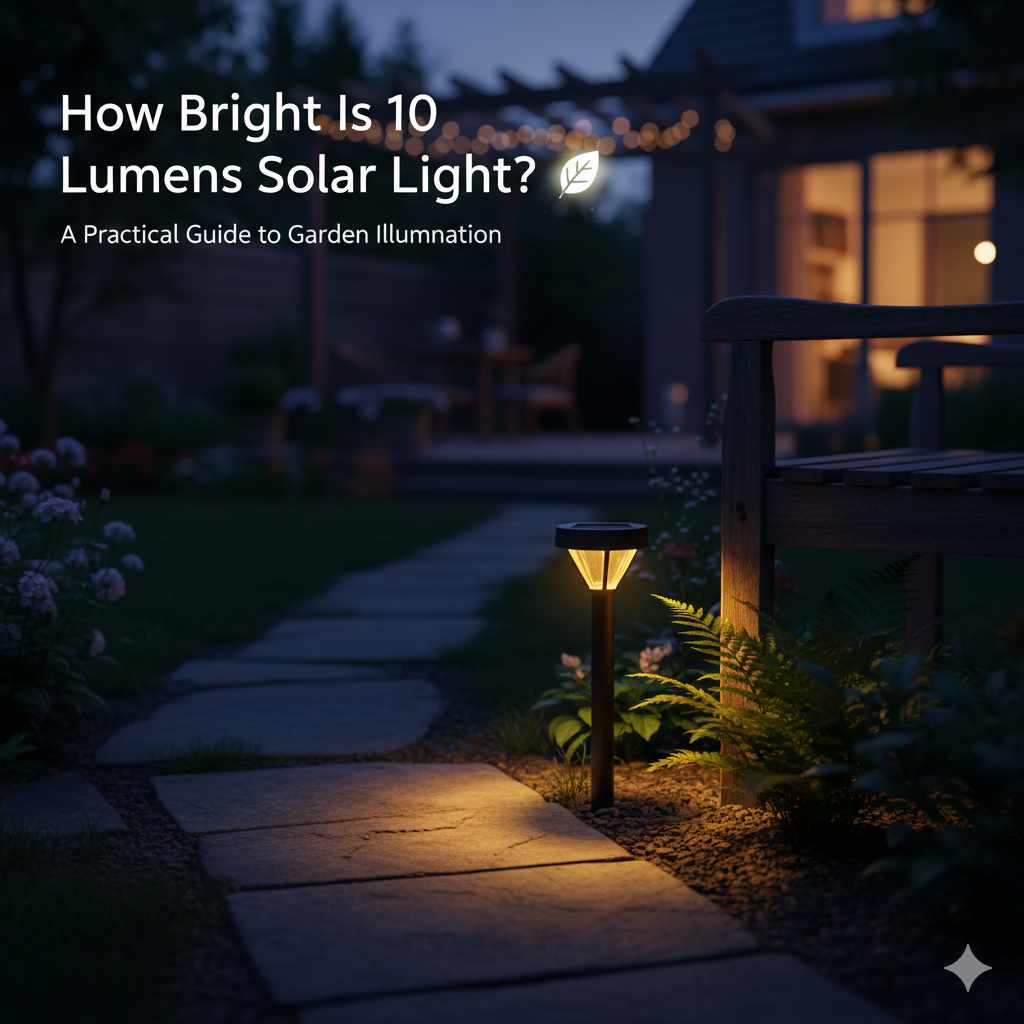
10 lumens is a very dim light, suitable for subtle accent lighting or very small, localized tasks. It’s not bright enough for general illumination or security. Think of it as a gentle glow, like a tiny nightlight or a faint marker.
Hey there, DIY enthusiasts and home improvers! Md Meraj here. Ever find yourself staring at a solar light, wondering just how much light it actually puts out? It can be a bit confusing, especially when you’re trying to figure out if it’s right for your porch, garden path, or maybe even that cozy corner in your workshop. Today, we’re going to demystify one of the most common brightness levels you’ll see: 10 lumens. We’ll break down exactly what that means in practical terms, so you can make smart choices for your home projects without any guesswork. Stick around, and we’ll get your outdoor lighting questions answered, one simple step at a time!
Understanding Lumens: The Brightness Scale
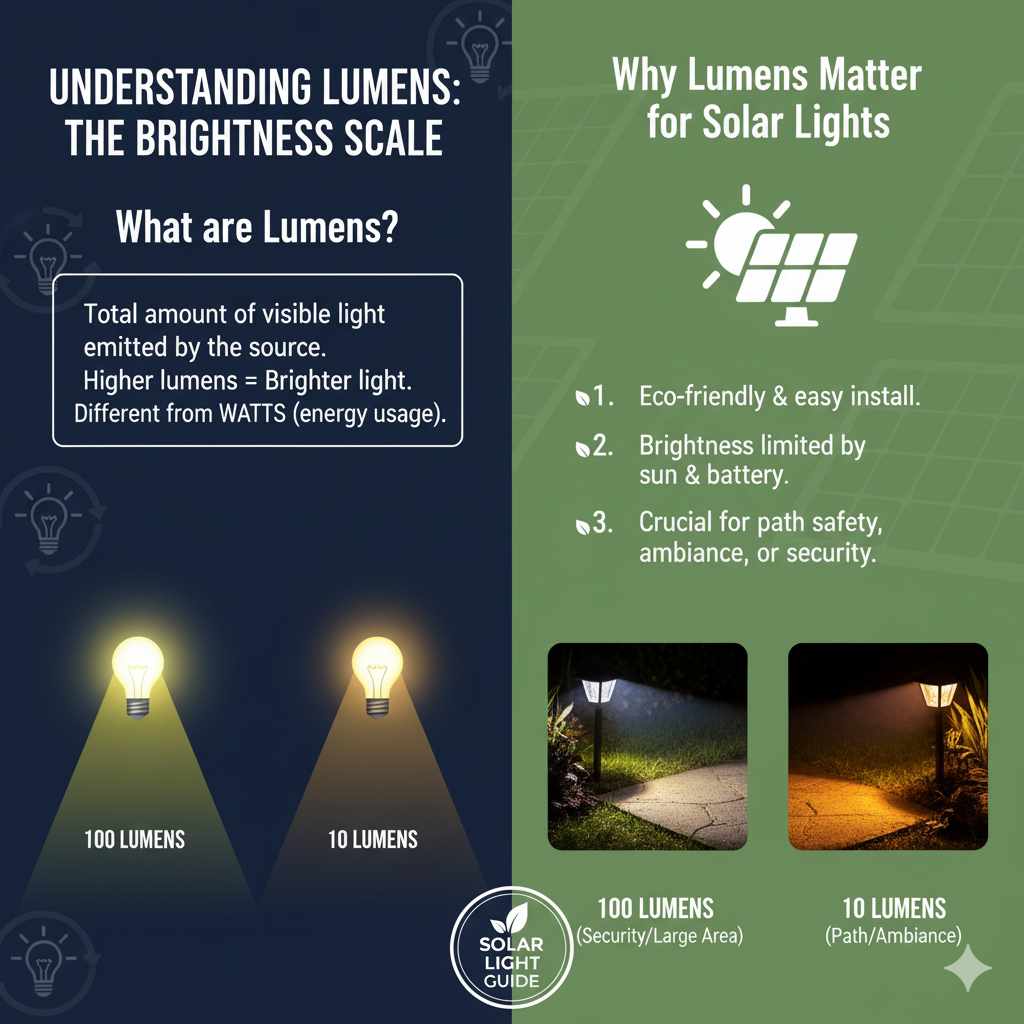
Before we dive into the specifics of 10 lumens, let’s get a handle on what “lumens” actually are. Think of lumens as the total amount of visible light a bulb or light source emits. It’s a measure of brightness, pure and simple. The higher the lumen count, the brighter the light. This is different from watts, which measure how much energy a light uses. For solar lights, understanding lumens is key because they often come with varying brightness levels, and you want to pick the one that does the job you need it to do.
Why Lumens Matter for Solar Lights
Solar lights are fantastic for their eco-friendliness and ease of installation. They harness the sun’s energy to power themselves, meaning no complicated wiring and lower electricity bills. However, their power source (the sun) and battery storage can limit their brightness compared to traditional wired lights. That’s why knowing the lumen output is crucial. A 10-lumen solar light will behave very differently from a 100-lumen one. Getting this right means your garden path will be safely lit, your patio will have a pleasant ambiance, or your security needs will be met.
How Bright is 10 Lumens? A Practical Look
So, how bright is 10 lumens, really? To put it into perspective, 10 lumens is quite dim. Imagine a very small LED flashlight, or the faint glow from a tiny indicator light on an electronic device. It’s not enough to read by, nor is it bright enough to illuminate a large area or deter intruders.
Let’s compare it to some everyday light sources to give you a clearer picture:
Candle: A standard candle produces roughly 10-15 lumens.
Smartphone Flashlight (at lowest setting): Some smartphones have very dim “torch” modes that can be around this level.
Small Keychain LED: Many tiny keychain lights hover around the 5-20 lumen range.
Standard Incandescent Bulb (60W): These typically produce around 800 lumens, showing you the vast difference.
As you can see, 10 lumens is on the very low end of the brightness spectrum.
What Can 10 Lumens Be Used For?
Given its low brightness, 10-lumen solar lights are best suited for specific, subtle applications. They excel at providing a gentle, ambient glow rather than functional task lighting.
Here are some ideal uses for 10-lumen solar lights:
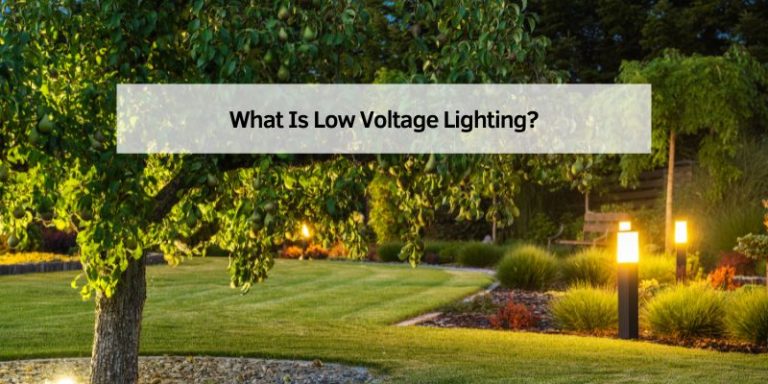
Accent Lighting: Placing these lights around flower beds, small trees, or garden ornaments can create a soft, enchanting atmosphere in your yard at night. They highlight features without being overpowering.
Pathway Markers: For very short, well-defined paths or steps, 10 lumens can provide just enough light to guide your way. They act as subtle markers rather than floodlights.
Decorative Lighting: Many small, decorative solar lights, like fairy lights or small orbs, operate in this low-lumen range. They are purely for aesthetics and mood.
Indicator Lights: In some very specific outdoor setups, they might serve as a subtle indicator of a boundary or a point of interest.
What 10 Lumens is NOT Good For
It’s equally important to know where 10 lumens falls short. Using them for the wrong purpose can lead to disappointment and potential safety issues.
Security Lighting: Absolutely not. 10 lumens is far too dim to deter potential intruders or illuminate areas for security cameras.
Task Lighting: You won’t be able to perform any detailed work, like grilling, reading a menu, or doing repairs, with only 10 lumens.
Illuminating Large Areas: Don’t expect to light up your entire driveway, patio, or backyard with these. They simply don’t have the power.
Replacing Main Outdoor Lights: If you need to see clearly to navigate your property, 10 lumens is insufficient.
Comparing 10 Lumens to Other Solar Light Brightness Levels
To truly appreciate what 10 lumens offers (and doesn’t offer), let’s see how it stacks up against more common lumen outputs for solar lights.
| Lumen Output | Description | Typical Use Cases |
| :———– | :———————————————- | :——————————————————————————– |
| 5-10 Lumens | Very Dim Glow | Subtle accent lighting, decorative lights, faint path markers. |
| 20-50 Lumens | Soft Glow | Small garden path lights, step lights, highlighting specific plants or features. |
| 50-100 Lumens| Moderate Brightness | Illuminating small patios, moderate garden paths, illuminating doorsteps. |
| 100-200 Lumens| Bright Light | Driveway lights, larger patio areas, security lighting for small entry points. |
| 300+ Lumens | Very Bright | Floodlights, security lighting for large areas, illuminating entire backyards. |
This table helps illustrate that 10 lumens is at the very bottom of the scale. If you’re looking for lights to help you see where you’re walking clearly, you’ll need something with significantly more lumens.
Factors Affecting Solar Light Brightness (Beyond Lumens)
While lumens tell us the light’s output, a few other factors can influence how bright your 10-lumen solar light appears and how long it stays bright:
1. Battery Quality and Capacity
Solar lights rely on rechargeable batteries. The quality and capacity (measured in mAh – milliampere-hours) of these batteries are crucial.
Higher Capacity: A battery with a higher mAh rating can store more energy, potentially allowing the light to stay on longer or brighter throughout the night.
Battery Age: Like all batteries, rechargeable ones degrade over time. An older battery might not hold as much charge, leading to a dimmer light or shorter operational time.
2. Solar Panel Efficiency and Cleanliness
The solar panel is the heart of your solar light.
Efficiency: Higher quality solar panels convert sunlight into electricity more effectively.
Cleanliness: Dust, dirt, pollen, or bird droppings on the solar panel can significantly reduce its ability to charge the battery. Regular cleaning is essential. You can often find great tips on solar panel maintenance from resources like the U.S. Department of Energy’s Solar Energy Technologies Office.
Placement: Ensuring the panel gets direct sunlight for most of the day is paramount. Shaded panels won’t charge effectively.
3. LED Type and Quality
Not all LEDs are created equal. The type and quality of the LED bulb itself can affect the perceived brightness and the quality of the light (e.g., color temperature).
4. Weather Conditions
Cloudy days mean less solar energy collected, resulting in a dimmer or shorter-lived light. Rain or snow can also obscure the solar panel.
5. Light Reflectivity of Surfaces
The color of the surface near the light can impact how bright it appears. Lighter surfaces reflect more light, making the area seem brighter than it would be near dark surfaces.
How to Choose the Right Solar Light for Your Needs
When you’re shopping for solar lights, keep these tips in mind to ensure you get the best results:
1. Define Your Purpose
First, ask yourself: What do I want this light to do?
Ambiance? A 10-20 lumen light might be perfect.
Path guidance? Aim for 30-60 lumens.
Security or general illumination? You’ll need 100+ lumens, and often solar isn’t the best choice for critical security.
2. Read Product Descriptions Carefully
Don’t just look at the picture. Check the lumen output, battery life, and any mention of the solar panel size or quality.
3. Consider Multiple Lights for Coverage
For any area larger than a small spot, you’ll likely need multiple lights. Even with brighter lights, spacing them strategically provides better, more even illumination.
4. Look for Adjustable Settings (If Available)
Some solar lights offer different modes, like a dimmer setting that lasts all night versus a brighter setting that comes on with motion. While less common in the 10-lumen range, it’s worth noting for brighter options.
5. Check Reviews for Real-World Performance
See what other users say about how bright the lights are in practice and how long they last.
Installation and Maintenance Tips for Your Solar Lights
Once you’ve chosen your lights, proper installation and a little ongoing care will ensure they perform their best.
Installation Steps (General Guide)
For most simple solar lights, the process is straightforward:
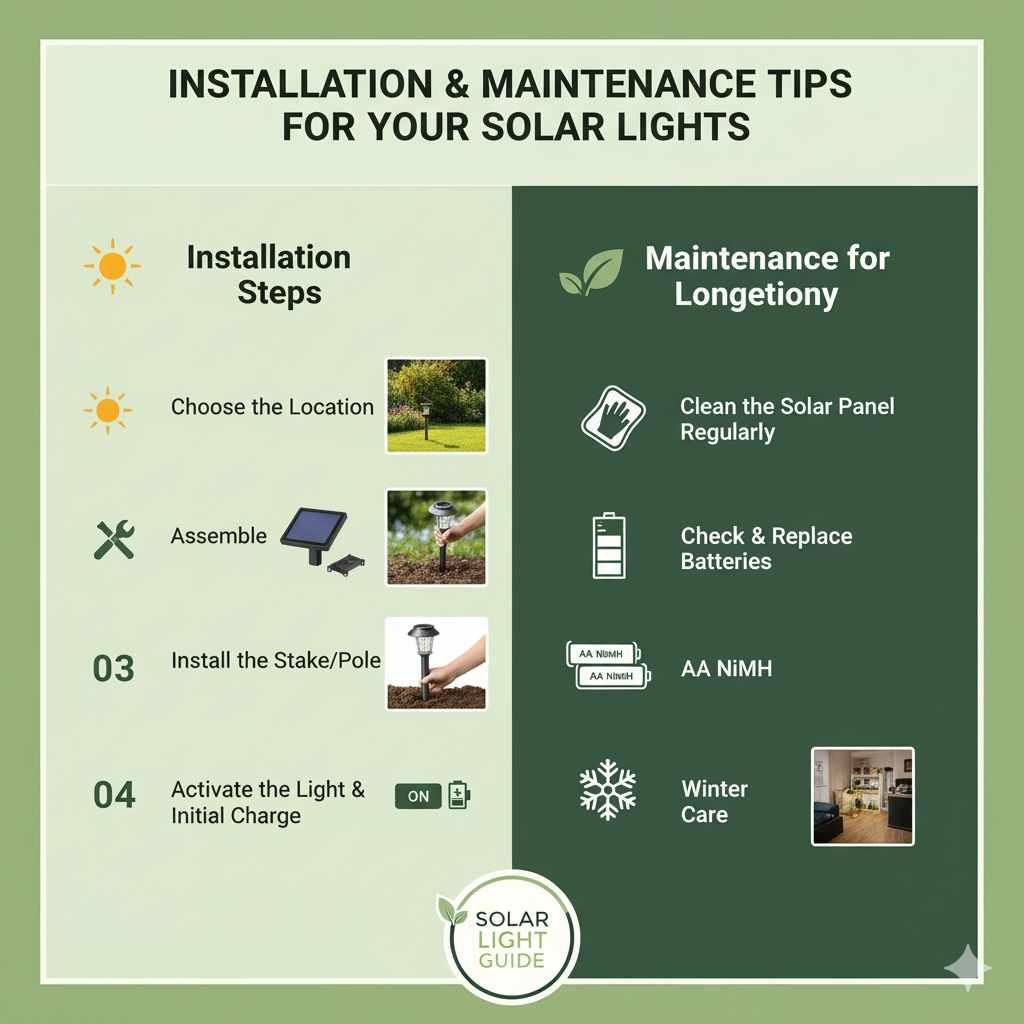
1. Choose the Location: Select a spot that receives maximum direct sunlight for at least 6-8 hours a day. Avoid areas shaded by trees, buildings, or fences.
2. Assemble: Most solar lights come in a few pieces – the light head, the stake or mounting pole, and sometimes the battery compartment. Follow the manufacturer’s instructions.
3. Install the Stake/Pole: If your light has a stake, push it firmly into the ground. Ensure it’s stable. If you’re mounting it on a deck or wall, use appropriate hardware. For ground installation, it can be helpful to pre-dig a small hole or use a rubber mallet to gently tap the stake into place, especially in hard soil.
4. Activate the Light: Many solar lights have an “ON/OFF” switch, often located under the solar panel. Make sure it’s switched ON. Some lights also have a “light sensor” that automatically turns them on at dusk and off at dawn.
5. Initial Charge: For best results, allow the light to charge in direct sunlight for a full day (or two) before expecting it to operate fully.
Maintenance for Longevity
Clean the Solar Panel Regularly: Use a soft, damp cloth to wipe away dirt, dust, and debris. Do this weekly or bi-weekly, depending on your environment.
Check Battery Connections: Occasionally, check that the battery is seated correctly and that the contacts are clean.
Replace Batteries When Needed: Rechargeable batteries don’t last forever. If your lights start dimming significantly or not turning on, it might be time to replace the batteries. Look for rechargeable batteries of the same type and size (e.g., AA NiMH). The U.S. Environmental Protection Agency (EPA) offers guidance on proper battery recycling.
Winter Care: In areas with harsh winters, consider bringing your solar lights indoors to protect them from extreme cold and snow accumulation, which can damage them and prevent charging.
Frequently Asked Questions (FAQ)
Q1: Is 10 lumens bright enough to see by?
No, 10 lumens is very dim and not bright enough to see by for most activities. It provides a faint glow, similar to a candle, suitable for subtle decorative purposes rather than functional illumination.
Q2: Can I use 10-lumen solar lights for my garden path?
Yes, but only for very short, clearly defined paths or as subtle markers. If you need to see your footing clearly, you’ll need lights with higher lumen output (ideally 30 lumens or more) spaced appropriately.
Q3: Will 10-lumen solar lights deter animals or intruders?
No, 10 lumens is far too dim to be effective for security or deterring animals. For security purposes, you would need much brighter lights, often 300 lumens or more, and ideally motion-activated.
Q4: How long do 10-lumen solar lights typically stay on?
A typical 10-lumen solar light, with a fully charged battery and good sun exposure, can last anywhere from 6 to 10 hours. However, this can be affected by battery age, weather, and the quality of the light itself.
Q5: How do I make my 10-lumen solar lights brighter?
You cannot make a 10-lumen light inherently brighter than its design allows. However, you can ensure it performs at its best by keeping the solar panel clean, ensuring it gets maximum direct sunlight, and replacing old batteries with new, high-quality rechargeable ones.
Q6: What is the difference between lumens and lux for outdoor lighting?
Lumens measure the total light output from a source, while lux measures the intensity of light that falls on a specific area (light density). Lumens are a property of the light source itself, while lux is about how much light reaches a surface. For solar lights, lumens are usually the primary specification you’ll see.
Q7: Are 10-lumen solar lights energy efficient?
Yes, solar lights are inherently energy efficient because they use renewable solar energy. A 10-lumen light uses very little energy to operate, making it a low-power option. The efficiency comes from using the sun’s power, not from the low lumen output itself.
Conclusion
Navigating the world of outdoor lighting can feel a bit like deciphering a secret code sometimes, but understanding the basics, like what 10 lumens actually means, makes all the difference. We’ve learned that 10 lumens offers a gentle, subtle glow – perfect for adding a touch of ambiance to your garden, highlighting a specific plant, or marking a very short, safe pathway. It’s not the choice for security or for lighting up your entire yard, and that’s perfectly okay!
By knowing its limitations and its strengths, you can confidently select 10-lumen solar lights for the right job. Remember to keep those solar panels clean, ensure they soak up plenty of sun, and don’t hesitate to replace batteries when they start to fade. With these simple steps, you’ll be well on your way to creating the beautiful, functional outdoor space you’ve envisioned. Happy DIYing, and here’s to a brighter, better-lit home!