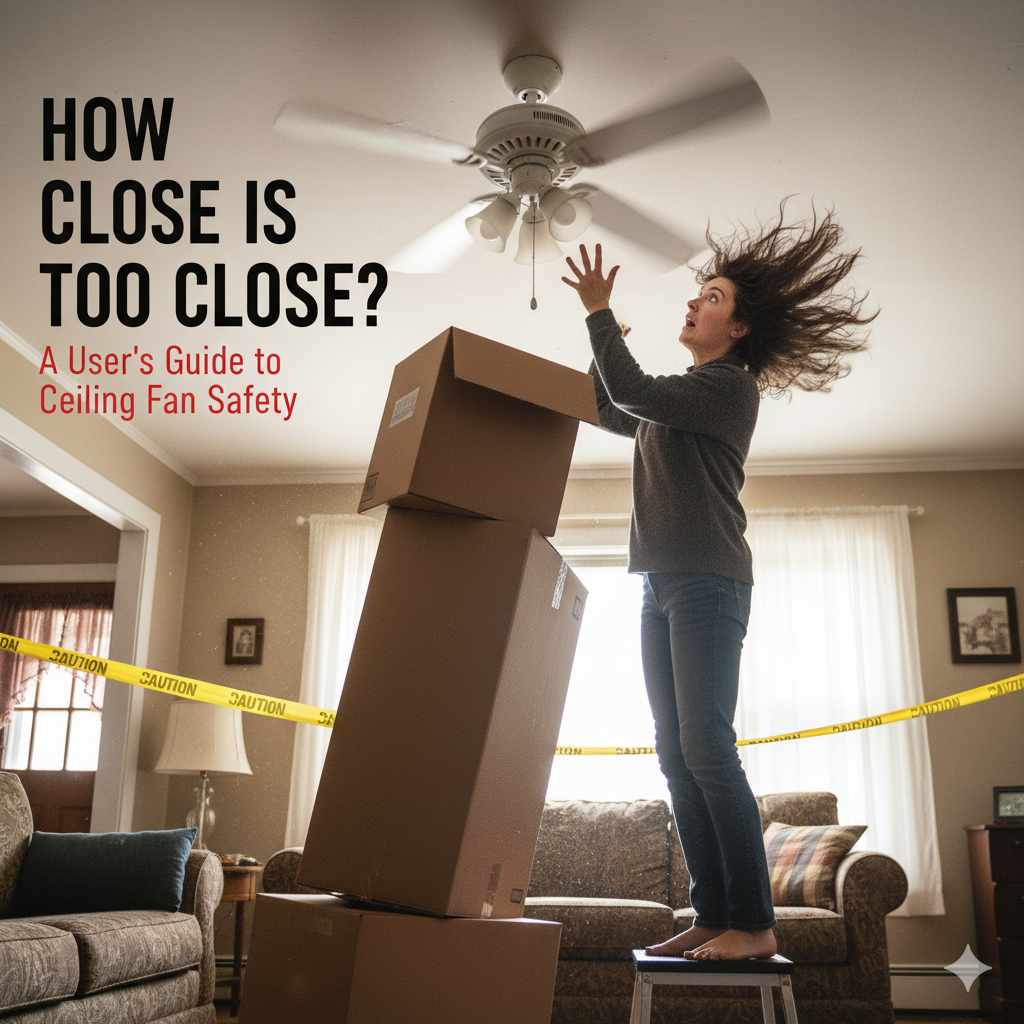
How Close Is Too Close To Ceiling Fan: Essential Guide
Quick Summary:
For safety and optimal airflow, ensure your ceiling fan blades are at least 7 feet from the floor and have at least 18-24 inches of clearance from any walls or obstructions. This guide will show you exactly how to measure and achieve the perfect ceiling fan placement.
Hey there, DIYers! Md Meraj here, your go-to guide for making your home projects not just doable, but enjoyable. Ever stood back after installing a new ceiling fan, only to wonder, “Is this really the right spot?” You’re not alone! It’s a common question, and getting it right makes a huge difference in how well your fan works and, more importantly, how safe your home is. We’ve all seen those fans that seem a little too close to a wall, or maybe you’ve bumped your head on a light fixture hanging down. Don’t worry, we’re going to walk through this together, step-by-step. We’ll cover all the nitty-gritty details so you can install your fan with confidence, ensuring it looks great and works perfectly. Let’s get your room feeling cool and comfortable!
Understanding Ceiling Fan Clearance: Why It Matters
Ceiling fans are fantastic for circulating air, helping to keep your home cooler in the summer and warmer in the winter by redistributing existing heat. But their effectiveness and safety depend entirely on proper installation and placement. When we talk about “how close is too close to ceiling fan,” we’re really discussing two main clearance areas: the distance from the floor and the distance from walls or other obstructions.
Getting these measurements right isn’t just about aesthetics; it’s crucial for:
- Safety: Preventing injuries from hitting the fan blades or being shocked by exposed wiring.
- Airflow Efficiency: Ensuring the fan can move air effectively throughout the room.
- Fan Longevity: Avoiding strain on the motor from obstructions.
- Building Codes: Meeting safety standards and regulations in your area.
Let’s dive into the specifics so you can make an informed decision for your home.

Ceiling Fan to Floor Clearance: The Golden Rule
This is probably the most critical measurement for safety. When you’re walking or standing in a room, you don’t want to be at risk of bumping into a spinning fan. The general consensus and safety guidelines point to a specific minimum height.
The Standard Recommendation
Most experts and safety organizations recommend that the lowest point of your ceiling fan (typically the tips of the blades) should be at least 7 feet from the floor. This measurement is consistent across many building codes and safety standards, including those from organizations like the U.S. Consumer Product Safety Commission (CPSC).
Why 7 feet? It provides a comfortable buffer for most adults to walk around without concern, even when standing on a chair or stepping stool. It also accounts for variations in ceiling height and fan design.
What About Ceiling Height Variations?
This is where things can get a little tricky, especially in rooms with lower or unusually high ceilings.
- Low Ceilings (Under 8 feet): If you have a room with a ceiling lower than 8 feet, installing a standard ceiling fan might be challenging. You’ll need to look for “hugger” or “low-profile” ceiling fans. These are designed to mount directly to the ceiling without a downrod, minimizing the distance between the ceiling and the blades. Even with these, you must ensure the 7-foot clearance from the floor is maintained. This might mean a smaller fan or a fan with very short blades.
- Standard Ceilings (8-10 feet): Most standard ceiling fans with a short or medium-length downrod will work well here. You’ll have plenty of flexibility to achieve the 7-foot floor clearance.
- High Ceilings (Over 10 feet): For rooms with very high ceilings, you’ll likely need a longer downrod to bring the fan down to an optimal height for air circulation. A fan that’s too high won’t effectively move air down to where people are. The general guideline is that the fan should be roughly 8-9 feet from the floor for optimal air movement in higher ceiling spaces.
Measuring for Floor Clearance
Here’s a simple way to check:
- Determine the lowest point of the fan: This is usually the tip of the fan blade.
- Measure from that point straight down to the floor: Use a tape measure.
- Ensure the measurement is at least 7 feet: If it’s less, you may need to adjust your installation or consider a different fan model.
Remember, this measurement is from the floor to the fan blade tips. If your fan has a light kit, the clearance is still measured to the lowest point of the fan blades, not the light fixture itself. However, it’s also wise to ensure the light kit doesn’t hang excessively low, becoming a head-bumping hazard.
Ceiling Fan to Wall Clearance: The Airflow Factor
While floor clearance is primarily about safety, wall clearance is mainly about performance. A ceiling fan needs space to breathe and move air effectively.
The Minimum Obstruction Distance
The general recommendation is that ceiling fan blades should be at least 18 to 24 inches away from any walls or obstructions. This allows the air pushed by the blades to circulate freely without being immediately deflected.
Why is Wall Clearance Important?
- Optimized Air Circulation: When blades have enough space, they can create a smooth, consistent airflow pattern throughout the room. If the fan is too close to a wall, the air is forced back towards the fan, creating turbulence and reducing the fan’s cooling effect. Think of it like trying to blow air through a straw that’s pressed against your hand – it’s not very effective!
- Preventing Strain: While less common, in extreme cases, constant air turbulence against a wall could potentially put a slight strain on the fan motor over time.
- Aesthetics: A fan crammed into a corner often looks awkward and out of place. Proper clearance contributes to a balanced and visually appealing installation.
What Counts as an Obstruction?
This includes:
- Walls
- Tall furniture (bookcases, wardrobes)
- Curtains or drapes
- Light fixtures that are not integrated into the fan
- Shelving units
Measuring for Wall Clearance
To measure wall clearance:
- Identify the fan blade’s path: Imagine the fan spinning.
- Measure from the tip of the blade to the nearest wall or obstruction: Do this at the widest point of the blade’s sweep.
- Ensure the measurement is at least 18-24 inches: Some manufacturers might have slightly different recommendations, so always check your fan’s manual.
Ceiling Fan to Ceiling Clearance: The Airflow Equation
This measurement is about how well the fan can actually move air downwards. It relates to the distance between the ceiling and the fan blades.
The Ideal Distance
For optimal airflow, the fan blades should generally be at least 10-12 inches from the ceiling. This allows the fan to draw air upwards and push it down efficiently.
Why This Matters
If the fan is mounted too close to the ceiling (less than 10 inches), it can create a “dead zone” of air directly above the fan. This reduces the amount of air that gets pulled up and subsequently pushed down, making the fan less effective at cooling the room.
Conversely, if you use a very long downrod and the fan is too low (well below the 7-foot safety mark), it might create too much direct airflow in one area, which can feel uncomfortable.
The ideal scenario is a balanced approach: high enough to be safe, low enough to move air effectively, and far enough from walls to allow for proper circulation.
Table: Ceiling Fan Clearance Guidelines Summary
Here’s a quick reference table to keep these key measurements in mind:
| Clearance Type | Minimum Recommended Distance | Primary Reason |
|---|---|---|
| Fan Blades to Floor | 7 feet (84 inches) | Safety (preventing head injuries) |
| Fan Blades to Walls/Obstructions | 18-24 inches | Airflow efficiency and circulation |
| Fan Blades to Ceiling | 10-12 inches | Optimizing upward air draw and downward push |
Choosing the Right Fan for Your Space
The “how close is too close to ceiling fan” question also depends on the fan you choose and the room it’s going into. Not all fans are created equal, and different rooms have different needs.
Fan Types and Their Impact on Clearance
- Standard Ceiling Fans: These typically come with a short downrod and are suitable for rooms with standard 8-foot ceilings.
- Low-Profile / Hugger Fans: Designed for rooms with lower ceilings (under 8 feet). They mount directly to the ceiling box, minimizing the distance from the ceiling to the blades. You still need to ensure the 7-foot floor clearance.
- High-Ceiling Fans: These often come with longer downrods or are designed to be used with them. They help bring the fan down to an effective height in rooms with ceilings over 10 feet.
- Damp/Wet Rated Fans: For bathrooms or covered outdoor areas, these fans are built to withstand moisture. Clearance rules still apply for safety and performance.
Factors to Consider for Your Room
- Ceiling Height: As discussed, this is the primary driver for downrod length and fan type.
- Room Size: Larger rooms may require larger fans or multiple fans to ensure adequate air circulation. Fan size also affects the sweep of the blades, so consider the overall diameter.
- Obstructions: Look around the intended installation spot. Are there beams, sloped ceilings, or built-in features that will interfere with the fan’s sweep or its ability to hang at the correct height?
- Purpose of the Fan: Is it for general comfort, or are you trying to supplement an HVAC system? This might influence how aggressively you aim for optimal airflow.
Installation Considerations for Proper Clearance
Getting the clearance right often starts during the installation process. Even if you’re replacing an old fan, you might need to adjust how the new one is mounted.
Mounting Bracket and Downrod
The mounting bracket attaches to your ceiling electrical box. The downrod screws into the fan motor housing and then into the bracket. The length of the downrod is what primarily determines how low the fan hangs.
- Standard Downrod: Usually 3-6 inches.
- Extended Downrods: Available in lengths from 12 inches up to 72 inches or more, typically sold separately.
Pro Tip: When installing, consider the fan’s total drop length (from the ceiling to the lowest point of the fan) and the downrod length. Always refer to your fan’s specific installation manual for guidance on downrod selection.
Securing the Electrical Box
Ensure the electrical box in your ceiling is rated for ceiling fan support. This is crucial for safely holding the weight of the fan and any vibrations. A standard light fixture box is often not strong enough. This Old House has great resources on ensuring your ceiling box is fan-ready.
Pre-Installation Checks
Before you even start, measure your room!
- Measure the ceiling height.
- Measure the distance from the ceiling to any potential obstructions (like light fixtures, beams, or sloped areas).
- Identify the location where the fan will be mounted and measure its distance to the nearest walls.
This pre-planning will save you a lot of headaches and ensure you select the correct fan and downrod combination.
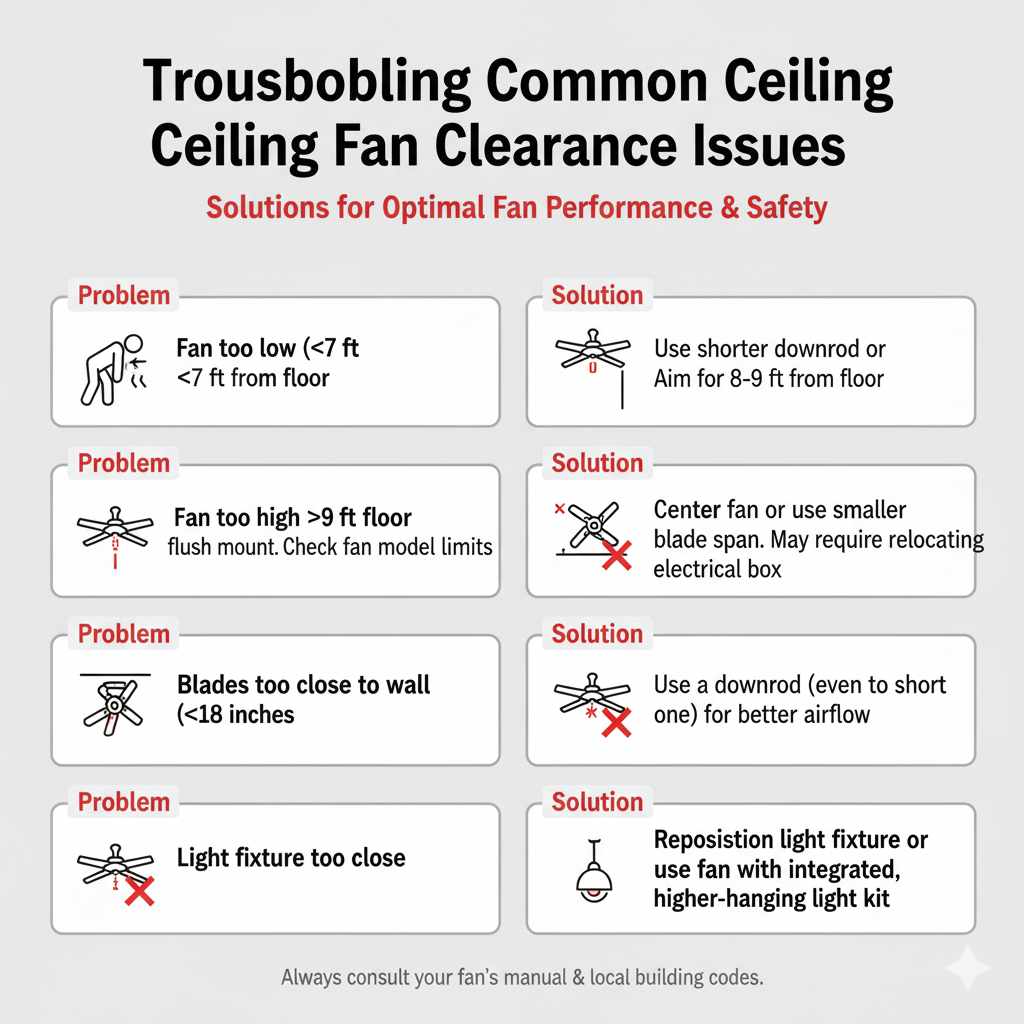
Troubleshooting Common Clearance Issues
Sometimes, despite best efforts, you might run into clearance problems. Here’s how to tackle them:
Problem: Fan is too low (less than 7 feet from floor)
- Solution: If you used a downrod, try a shorter one or no downrod at all (if the fan model allows and your ceiling is low). If it’s a low-profile fan already, and it’s still too low, you may need to reconsider the fan for that room. For very high ceilings, ensure you haven’t used an excessively long downrod that brings the fan too close to the floor.
Problem: Fan is too high (over 9 feet from floor)
- Solution: You likely need a longer downrod. Measure from the ceiling to the ideal fan height (around 8-9 feet for high ceilings) and choose a downrod that achieves this.
Problem: Fan blades are too close to the wall (less than 18 inches)
- Solution: This usually means the fan is mounted too close to a wall for its size. You might need to center the fan in the room more, even if it means relocating the electrical box slightly (a more involved job). Alternatively, consider a fan with a smaller blade span.
Problem: Fan blades are too close to the ceiling (less than 10 inches)
- Solution: You need more space for airflow. Use a downrod, even a short one, to lower the fan slightly.
Problem: Existing light fixture is too close to the fan
- Solution: If the light fixture is separate from the fan, you may need to reposition it or opt for a fan with an integrated light kit that hangs higher.
Frequently Asked Questions (FAQ)
Q1: What is the absolute minimum distance a ceiling fan blade can be from the floor?
A1: The absolute minimum recommended distance is 7 feet (84 inches) from the floor to the lowest point of the fan blade. This is a critical safety measure.
Q2: Can I use a standard ceiling fan in a room with an 8-foot ceiling?
A2: Yes, but you must use a low-profile or “hugger” style fan that mounts directly to the ceiling. Even then, carefully check that the 7-foot floor clearance is maintained. You might need to use a fan with a shorter blade span.
Q3: My fan is in a corner. How close can it be to the walls?
A3: For optimal airflow, your fan blades should be at least 18 to 24 inches away from any walls. If it’s closer, you’ll likely experience reduced circulation and potentially uncomfortable air patterns.
Q4: Does the 7-foot clearance apply to the light kit or the fan blades?
A4: The 7-foot clearance rule applies specifically to the fan blades. While you should also ensure the light kit doesn’t hang excessively low, the primary safety concern is the spinning blades.
Q5: How far should the fan blades be from the ceiling?
A5: For efficient air movement, fan blades should ideally be 10 to 12 inches from the ceiling. This allows for proper airflow intake and expulsion.
Q6: What happens if my ceiling fan is too close to the ceiling?
A6: If the fan is too close to the ceiling (less than 10-12 inches), it can create a “dead zone” of air directly above it. This significantly reduces the fan’s ability to circulate air effectively throughout the room.
Q7: Can I use a ceiling fan with a sloped ceiling?
A7: Yes, most modern ceiling fans can be installed on sloped ceilings using an angled mount adapter or a longer downrod. However, you must ensure the fan blades maintain the correct clearance from the sloped ceiling and walls, and still meet the 7-foot floor clearance. Check your fan’s manual for specific instructions on sloped ceiling installation.
Conclusion
So there you have it! Understanding “how close is too close to ceiling fan” boils down to a few key measurements that ensure both safety and optimal performance. Remember the golden rule: at least 7 feet from the floor to the blades. Add to that the crucial 18-24 inches of clearance from walls and obstructions, and the 10-12 inches from the ceiling for great airflow. By paying attention to these simple guidelines, you can confidently select, install, and enjoy your ceiling fan, knowing it’s working efficiently and safely for everyone in your home.
Don’t be afraid to take out your tape measure and check your current setup or plan for your next fan installation. With a little care and attention to these details, you’ll create a more comfortable, safer, and more stylish living space. Happy DIYing!