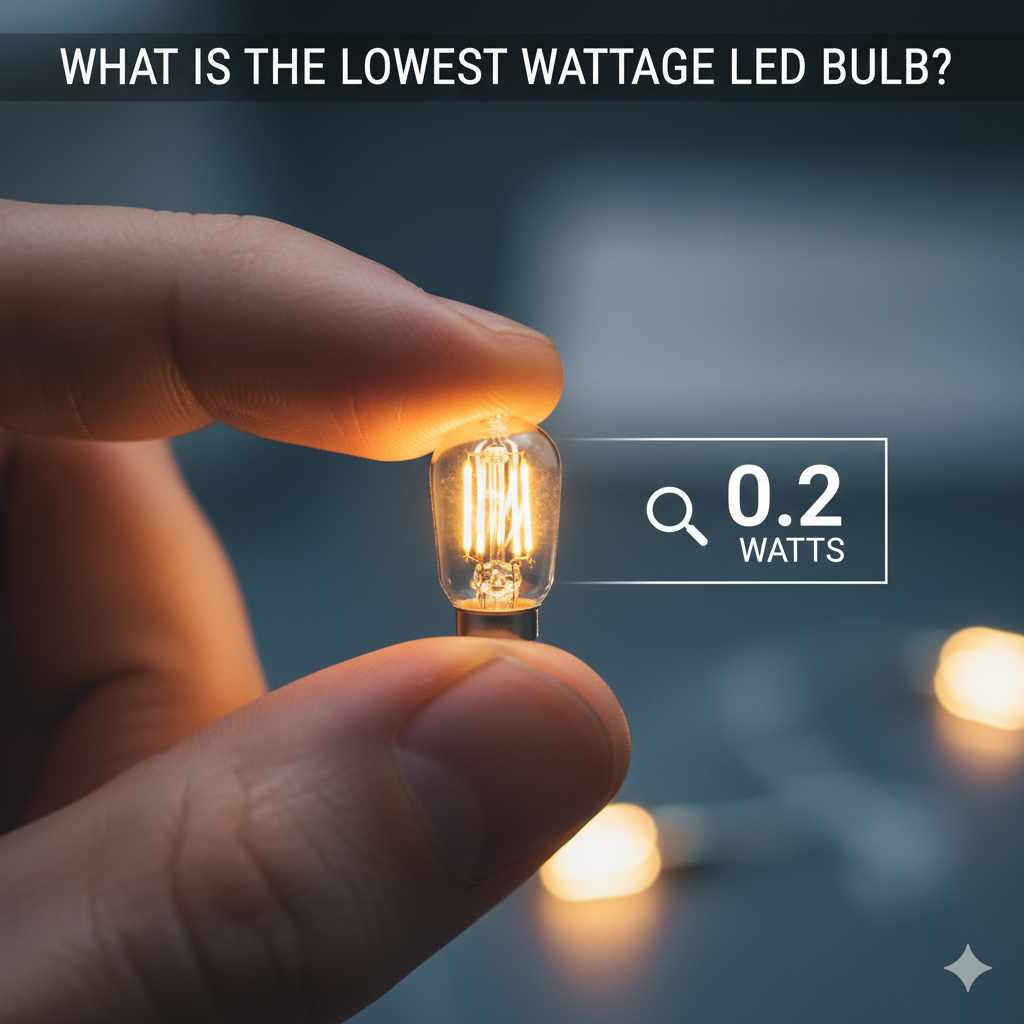
What Is the Lowest Wattage LED Bulb?
The lowest wattage LED bulb for everyday household use is 1 watt — though miniature indicator and C7-style night-light LEDs can draw as little as 0.2 to 0.5 watts. Since January 2023, federal law has required every general-service bulb to hit at least 45 lumens per watt, so wattage alone no longer tells you how bright a bulb actually is. This guide covers real wattage ranges by bulb type, how lumens compare to watts, and exactly where 1-2W LEDs belong in your home.
Understanding Wattage: More Than Just Power
When we talk about light bulbs, wattage is something we see everywhere. But what does it actually tell us? In simple terms, wattage measures how much energy a bulb uses. A higher wattage means more energy consumption, and usually, more brightness. However, with LED technology, this relationship is a bit different compared to older incandescent bulbs.
Think of it like this: older bulbs (like incandescents) were like old gas guzzlers – they used a lot of energy (high wattage) to produce light and a lot of heat. LEDs, on the other hand, are like super-efficient electric cars. They use much less energy (low wattage) to produce the same amount of light, and they don’t get nearly as hot.
LEDs vs. Incandescents: The Wattage Difference
This is where things get really interesting for your energy bill! LEDs are incredibly efficient. This means you can get the same amount of light (measured in lumens) using a fraction of the wattage compared to incandescent bulbs. For example, a 60-watt incandescent bulb that gives off about 800 lumens can be replaced by an LED bulb that uses only about 9-10 watts to produce the same 800 lumens!
This efficiency is a big reason why so many people are switching to LEDs. It’s not just about the initial cost; it’s about the long-term savings on electricity. And for those looking for very specific, low-light applications, the super-low wattage options in LEDs open up a world of possibilities.
📊 Since January 2023, U.S. law bars the sale of any general-service light bulb — incandescent, halogen, or LED — that produces less than 45 lumens per watt. No incandescent or halogen A-line bulb can meet that floor, which is why standard-shape low-wattage bulbs sold today are LED almost by default. — Source: U.S. Department of Energy, General Service Lamp Standard Enforcement Statement (2023)
What is the Lowest Wattage LED Bulb?
When we talk about the “lowest wattage” LED bulbs, we’re generally referring to bulbs designed for applications where high brightness isn’t necessary. These are typically bulbs found at the very bottom of the LED wattage spectrum.
You’ll most commonly find LED bulbs with wattages ranging from:
- 1 watt (W)
- 1.5 watts (W)
- 2 watts (W)
These ultra-low wattage LEDs are not designed to light up an entire room. Instead, they are perfect for tasks that require subtle illumination or for decorative purposes. Their primary benefit is their incredibly low energy consumption, often using less than a tenth of the power of a traditional incandescent bulb for similar (though much dimmer) light output.
How Low Can LED Wattage Really Go? (0.2W Specialty Bulbs)
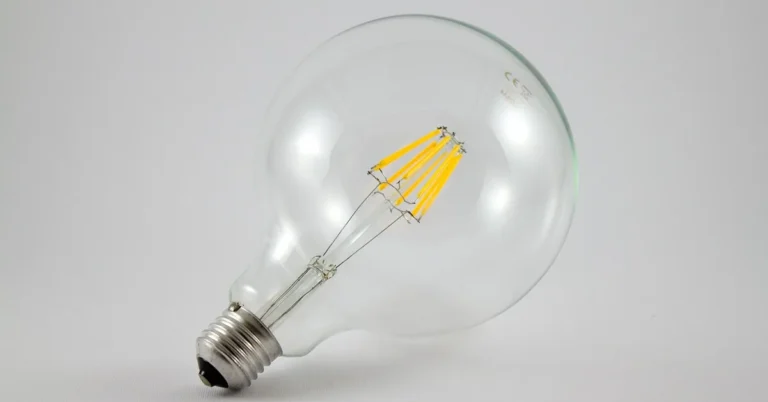
Below the common 1-2W range, a smaller category of specialty bulbs goes even lower. C7-style and E12 candelabra night-light LEDs currently sold run as low as 0.5 to 0.7 watts, and miniature indicator and filament-style LEDs can dip to around 0.2 watts — the same ultra-low class shown at the top of this guide. These aren’t a fit for a fixture with a dimmer or a standard lamp; they exist almost exclusively for night lights, appliance indicators, and decorative string lighting. For broader lighting and ceiling fan projects where you need actual room brightness, you’ll want a bulb well above this range.
Where You’ll Find These Low Wattage LEDs
These super-efficient bulbs are ideal for specific uses around the house:
- Night Lights: Providing just enough light to navigate a dark room without being disruptive — see our guide to what size night light bulbs fit common fixtures.
- Accent Lighting: Highlighting artwork, plants, or architectural features subtly.
- Indicator Lights: For appliances or electronics that need a small, constant light.
- Decorative String Lights: For holidays or mood lighting where a soft glow is desired.
- Cabinet and Shelf Lighting: To gently illuminate the contents of cabinets or shelves.
- Outdoor Landscape Lighting: For path markers or subtle garden illumination.
It’s important to remember that while these bulbs use very little power, they also produce very little light. If you need to read a book or do detailed work, you’ll need a higher wattage (and higher lumen) bulb.
Lumens vs. Watts: The Real Measure of Brightness
This is a crucial point when you’re shopping for LED bulbs. Watts tell you how much energy a bulb uses, but lumens tell you how much light it produces. For a long time, we associated brightness with wattage because incandescent bulbs were pretty consistent. But with LEDs, you have to look at the lumens.
Here’s a simple way to think about it:
- Watts: How much electricity the bulb consumes.
- Lumens: How bright the light is.
When you’re looking for the lowest wattage bulb, you’re likely looking for a specific, low level of brightness. So, while a 1W LED might be the lowest wattage, you’ll still want to check its lumen output to make sure it’s bright enough for your intended use. For example, a 1W LED might produce 50-80 lumens, while a 60-watt-equivalent LED produces about 800 lumens. That’s a massive difference in brightness!
Understanding Lumen Equivalents
To help consumers, manufacturers often provide an “equivalent” wattage for older incandescent bulbs — see our breakdowns of what a 9-watt LED is equivalent to and which LED replaces a 100-watt bulb. However, it’s always best to focus on the actual lumen output for LEDs. Here’s a general idea of how lumens translate to brightness, and how it relates to low-wattage LEDs:
| Approximate Lumens | Typical LED Wattage (for this brightness) | Incandescent Equivalent (approximate) | Typical Use Case |
|---|---|---|---|
| 50-100 Lumens | 1-2 Watts | 5-10 Watts | Night lights, accent lights, indicator lights |
| 200-300 Lumens | 3-4 Watts | 25-30 Watts | Small lamps, decorative fixtures, closet lights |
| 450-500 Lumens | 5-6 Watts | 40 Watts | Hallway lights, small ceiling fixtures |
| 800-850 Lumens | 9-10 Watts | 60 Watts | Standard room lighting (living room, bedroom) |
| 1100-1200 Lumens | 12-14 Watts | 75 Watts | Brighter room lighting, task lighting |
As you can see from the table, even for a very dim light (50-100 lumens), the LED wattage is incredibly low compared to its incandescent counterpart. This highlights the energy efficiency you gain with LEDs.
What to Look for When Buying Low Wattage LED Bulbs
When you’re on the hunt for those super-low wattage LEDs, keep these factors in mind to make sure you get exactly what you need:
Best Low-Wattage LED Night Light Pick
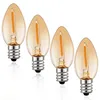
Emotionlite C7 LED E12 Candelabra Bulbs, Amber 2200K, 4-Pack – $7.99
Draws just 0.6W (0.7W max) — squarely in the ultra-low wattage range this guide covers — and fits the E12 candelabra base common in night-light and decorative fixtures.
- Best for: Night lights, decorative string sockets, indicator fixtures
- Why we picked it: Matches the 0.5-1W range this guide identifies as the practical low-wattage LED floor
- Main drawback: Amber 2200K only lights a very small area — not for general room lighting
Compare more low-wattage LED bulb options
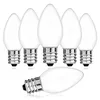
 Option 1 Grensk E12 LED Candelabra, 0.7W – $8.98
|
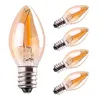
 Option 2 Hcnew C7 LED Night Light, 0.5W, 6-Pack – $8.99
|
 Option 3 Sphoon C7 LED Filament Bulb, 0.5W – $9.39
|
As an Amazon Associate we earn from qualifying purchases.
1. Base Type
Just like any light bulb, LEDs come with different base types. The most common is the Edison screw base (E26 in North America, E27 in Europe), which fits most standard lamps and fixtures. However, you might also find smaller bulbs with E12 (candelabra) bases, often used in decorative fixtures or chandeliers, or even specialized bases for specific applications.
Action: Check the existing bulb or your fixture to see what base type you need. It’s usually printed on the old bulb or in your fixture’s manual.
2. Lumens (Brightness)
As we discussed, this is key! Even for a low-wattage bulb, you need to know how much light it actually emits. If you’re replacing an old, dim bulb, try to get an idea of its lumen output if possible, or look for an LED that offers a similar subtle glow.
Action: Look for the lumen (lm) number on the bulb’s packaging. For night lights or accent lighting, aim for 50-100 lumens.
3. Color Temperature
This refers to the “warmth” or “coolness” of the light, measured in Kelvin (K). Lower Kelvin numbers (around 2700K) are warm and yellowish, like traditional incandescent bulbs, creating a cozy atmosphere. Higher Kelvin numbers (4000K and above) are cooler and bluer, resembling daylight, which can be good for task lighting but might feel less inviting in living spaces.
Action: For accent and mood lighting, warm white (2700K-3000K) is usually preferred. For indicator lights or areas where clarity is key, a cooler temperature might be suitable.
4. Beam Angle
This determines how widely the light spreads. A narrow beam angle (e.g., 15-30 degrees) will focus the light in a specific direction, good for highlighting something. A wider beam angle (e.g., 120 degrees) will spread light more broadly.
Action: Consider where the light will be directed. For accenting a picture, a narrow beam is best. For a general glow in a small area, a wider beam might be better.
5. Dimmability
If you plan to use the bulb in a fixture with a dimmer switch, make sure the bulb is explicitly labeled as “dimmable.” Not all LED bulbs are compatible with dimmer switches, and using a non-dimmable one can cause flickering, buzzing, or even damage the bulb.
Action: Always check the packaging for “dimmable” if you have a dimmer switch.
6. Lifespan
One of the biggest advantages of LEDs is their incredibly long lifespan, often lasting 15,000 to 25,000 hours or more. This means fewer replacements and less hassle. Even low-wattage LEDs benefit from this longevity.
Action: Check the packaging for the estimated lifespan, usually listed in hours.
Benefits of Using Low Wattage LED Bulbs
Switching to low wattage LED bulbs, even for specific uses, brings a host of advantages:
- Massive Energy Savings: This is the big one! Using just 1-2 watts instead of 10-15 watts for a night light can add up significantly over the year. Imagine if you have several of these types of lights running 24/7.
- Reduced Electricity Bills: Lower energy consumption directly translates to lower monthly utility bills.
- Longer Lifespan: LEDs are known for lasting much longer than traditional bulbs, meaning you won’t have to replace them nearly as often. This saves money and reduces waste.
- Lower Heat Output: LEDs produce very little heat, which makes them safer to use in enclosed fixtures and reduces the strain on your air conditioning system in warmer months.
- Environmental Friendliness: Because they use less energy and last longer, LEDs help reduce your carbon footprint and minimize waste from discarded bulbs.
- Durability: Unlike fragile incandescent bulbs, LEDs are more resistant to shock and vibration, making them a more robust lighting solution.
Potential Drawbacks and Considerations
While low wattage LEDs are fantastic for many applications, it’s good to be aware of their limitations:
- Low Light Output: As mentioned, these bulbs are not designed to illuminate large spaces. They are for subtle or accent lighting only. Trying to use them for general room lighting will result in a very dark room.
- Color Rendering Index (CRI): Some very low-wattage LEDs might have a lower CRI, meaning they don’t show colors as accurately as higher-quality bulbs. For most accent or night light applications, this isn’t a major concern, but it’s something to be aware of if color accuracy is important.
- Initial Cost: While the price of LEDs has come down significantly, some specialized low-wattage or decorative LEDs might have a slightly higher upfront cost per bulb compared to basic, higher-wattage LEDs. However, their energy savings and longevity usually make them more cost-effective in the long run.
- Compatibility with Dimmers: Always double-check if a low-wattage LED is dimmable if you intend to use it with a dimmer. Many are not, which can cause issues.
How to Replace a Bulb Safely
Changing a light bulb is a common DIY task, but it’s always important to do it safely, especially when dealing with any electrical fixture. Here’s how to swap out an old bulb for your new low-wattage LED:
- Turn Off the Power: This is the most critical step! Make sure the light switch controlling the fixture is in the “off” position. For extra safety, you can also flip the corresponding circuit breaker in your electrical panel.
- Let the Old Bulb Cool: If you’re replacing an incandescent or halogen bulb, it can get very hot. Wait a few minutes for it to cool down completely before touching it. LEDs run much cooler, but it’s still good practice.
- Remove the Old Bulb: Gently grip the old bulb and twist it counter-clockwise. If it’s a standard screw-in base, it should come out easily. If it feels stuck, try a gentle wiggle while twisting. For bayonet or pin-type bulbs, you might need to push and twist or pull straight out, depending on the type.
- Insert the New LED Bulb: Take your new low-wattage LED bulb. Align the base with the socket and twist it clockwise until it feels snug. Don’t overtighten, as this can damage the socket or the bulb.
- Restore Power: Turn the circuit breaker back on (if you turned it off) and then turn the light switch back on.
- Test the Bulb: Your new LED bulb should light up. If it doesn’t, double-check that it’s screwed in properly and that the power is on. If it still doesn’t work, the bulb might be faulty, or there could be an issue with the fixture itself.
Safety Tip: If you’re working with a fixture that’s difficult to reach or if you’re unsure about any step, it’s always best to call a qualified electrician. You can find resources on electrical safety from organizations like the U.S. Consumer Product Safety Commission (CPSC).
Low Wattage LEDs for Specific Home Improvement Projects
As a DIY enthusiast, you’re always looking for ways to improve your home. Low wattage LEDs can be surprisingly useful in various projects:
1. Enhancing Your Woodworking Projects
If you build custom furniture or decorative items, consider incorporating subtle LED lighting. Small, battery-powered or low-voltage LED strips or puck lights (often in the 1-3W range) can:
- Illuminate inside cabinets or drawers: Make it easier to find tools or items.
- Add accent lighting to shelves: Highlight display items or collectibles.
- Create ambient mood lighting in custom lamps: Add a unique touch to your creations.
When working with these, ensure you understand the power requirements and consider using low-voltage power supplies for safety. For instance, a 1W LED strip might only need a 5V power adapter, which is very safe to handle.
2. Smart Home Integration
Many smart bulbs, even those with very low lumen output for mood lighting, operate on low wattages. They can be programmed to turn on/off at specific times, respond to voice commands, or change colors, all while consuming minimal energy.
Example: Using a 1W smart LED bulb as a gentle “welcome home” light that turns on automatically when you arrive, or a 1.5W smart bulb that mimics a TV’s glow when you’re away to deter potential intruders.
3. Energy Efficiency Audits for Your Home
Understanding where you can save energy is key. By replacing all your old night lights and decorative bulbs with 1-2W LEDs, you’re making a small but consistent saving. Over time, these small changes contribute to larger energy efficiency goals. Resources from the U.S. Department of Energy provide great insights into LED efficiency.
4. Creating Ambiance on a Budget
Want to create a cozy atmosphere for a movie night or a relaxing evening? String lights, small accent lamps, or even bulbs in decorative fixtures can be powered by low-wattage LEDs. They provide just enough light to set the mood without being overpowering or consuming much power.

Frequently Asked Questions (FAQ)
What is the absolute lowest wattage LED bulb available?
The absolute lowest wattage LED bulbs you’ll typically find for consumer use are around 1 watt. Some specialized indicator LEDs might be even lower, but for general lighting purposes, 1W is generally the floor.
Can I use a 1-watt LED bulb to light up a whole room?
No, a 1-watt LED bulb is far too dim to light up an entire room. It’s designed for very specific, low-light applications like night lights or accent lighting where only a subtle glow is needed.
Are low wattage LED bulbs more expensive?
While some specialized low-wattage LEDs might have a slightly higher upfront cost per bulb than basic, higher-wattage LEDs, their incredibly low energy consumption and long lifespan make them much more cost-effective over time. The price difference is usually minimal for common applications like night lights.
Do low wattage LED bulbs get hot?
LED bulbs, including low wattage ones, produce very little heat compared to incandescent bulbs. They run significantly cooler, making them safer to touch and reducing the heat load in your home.
What is the difference between a 1W LED and a 2W LED?
A 2W LED bulb will generally produce more light (lumens) than a 1W LED bulb, while also consuming slightly more energy. The difference in brightness might be noticeable but is still very subtle for both.
Where is the best place to use a 1-2 watt LED bulb?
These bulbs are ideal for night lights, accent lighting in display cabinets, indicator lights on electronics, decorative string lights, and any application where a very soft, subtle illumination is desired without needing to light up a space.
How do I know if a low wattage LED bulb is dimmable?
You must check the packaging. If the bulb is intended for use with a dimmer switch, it will be clearly labeled as “dimmable” on the box. Non-dimmable LEDs can flicker or fail if used with a dimmer.
Conclusion
Navigating the world of light bulbs can seem complex, but understanding the basics of wattage and lumens makes all the difference. When you’re looking for the lowest wattage LED bulb, you’re typically aiming for those incredibly efficient 1-watt to 2-watt options. These aren’t for illuminating your main living areas, but they are absolute champions for specific tasks – think subtle night lights, charming accent lighting, or decorative touches that add character to your home without racking up energy costs.
Remember to always check the lumen output to ensure you’re getting the right amount of light for your needs, and consider the color temperature to create the perfect ambiance. With their energy savings, long lifespan, and cool operation, these low-wattage LEDs are a fantastic choice for any homeowner looking to make smart, eco-friendly upgrades. So go ahead, experiment with these efficient little bulbs and enjoy a brighter, more cost-effective home!
Sponsored / affiliate links. As an Amazon Associate I earn from qualifying purchases. I may earn additional commission from eligible campaigns.